


Career Articles
Capgemini Exceller Technical Assessment 2026: AI + Technical - Best Guide
Cognizant GenC Elevate Exam Pattern & Syllabus for Freshers 2026 - Best Guide
Capgemini Exceller Placement Papers and Solutions 2026 - Best Guide
How to Pass the Accenture Recruitment Process 2026/27: The Complete Guide


Get In Touch For Details! Request More Information
Service-Based vs Product-Based Company Salaries: Which One Actually Pays More?
Sep 02, 2026 5 Min Read 669 Views
(Last Updated)
You’ve seen the LinkedIn posts. A college batchmate joins TCS at 5 LPA. Another joins Flipkart at nearly 19 LPA. Same degree. Same year. Wildly different paychecks.
This isn’t a one-off story. It’s the single biggest pay gap in India’s tech job market, and it doesn’t close with time. It widens. If you’re trying to figure out which path makes sense for you, here’s the honest, numbers-first breakdown
TL;DR
- Product companies typically pay 50-100% more than service companies for the same role and experience level.
- The gap is smallest at fresher level (around 2-4x) and stays significant through senior roles.
- Service companies pay for your time and billable hours. Product companies pay for impact on their own product.
- Service-side jobs offer easier entry, more variety, and steadier hours. Product-side jobs offer faster pay growth, equity, and deeper technical ownership.
- Switching from service to product is the fastest way to jump your salary, but it usually means upskilling in DSA and system design first.
Table of contents
- What Is a Service-Based Company?
- Common Work in Service-Based Companies
- What Is a Product-Based Company?
- Common Work in Product-Based Companies
- Why Do Product-Based Companies Pay More?
- Product Impact Is Direct
- Hiring Bar Is Usually Higher
- Skills Are More Specialized
- Why Do Service-Based Companies Offer Lower Starting Salaries?
- Large-Scale Fresher Hiring
- Training Periods Are Longer
- Work May Be Process-Driven
- Pay Factors: Service-Based vs Product-Based Companies
- Salary Growth: Service-Based vs Product-Based Companies
- Service-Based Company Growth
- Product-Based Company Growth
- Top Companies Hiring: Service-Based
- Top Companies Hiring: Product-Based
- Role-Wise Salary Differences
- Which Company Type Is Better for Freshers?
- Choose a Service-Based Company If:
- Choose a Product-Based Company If:
- Service-Based vs Product-Based Companies: Quick Comparison
- Skills That Help You Earn More in Both Company Types
- Strong Programming Basics
- Data Structures and Algorithms
- Real Projects
- System Design Basics
- Cloud and DevOps Basics
- AI Tool Awareness
- How to Make the Switch (and Actually Get Paid for It)
- Conclusion
- FAQs
- Does a product company always pay more than a service company?
- Can a fresher get into a product company directly?
- Is service-company experience valued by product companies?
- What’s the biggest factor in closing the salary gap?
- Is work-life balance better at product companies?
What Is a Service-Based Company?
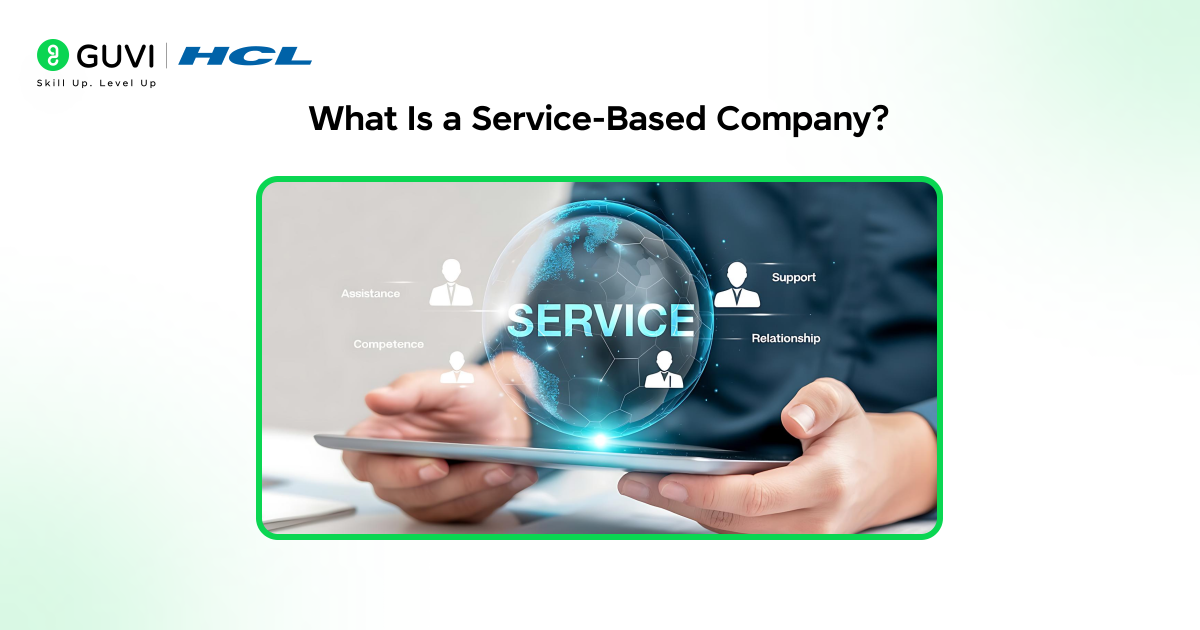
A service-based company provides technology services to external clients. These companies build, maintain, test, support, or modernize software for other businesses.
Common examples include IT consulting firms, outsourcing companies, cloud migration partners, enterprise software service providers, and digital transformation companies.
Common Work in Service-Based Companies
- Software development for clients
- Application maintenance and support
- Testing and quality assurance
- Cloud migration projects
- Data management and reporting
- ERP and CRM implementation
- Cybersecurity and IT operations
What Is a Product-Based Company?
A product-based company builds and sells its own software, platform, app, tool, or technology product. The company earns revenue from users, subscriptions, transactions, ads, enterprise licenses, or product usage.
Common examples include SaaS companies, fintech startups, ecommerce platforms, cloud product companies, AI platforms, edtech products, and consumer tech companies.
Common Work in Product-Based Companies
- Building product features
- Improving user experience
- Scaling backend systems
- Solving product bugs
- Working with product managers
- Improving performance and reliability
- Using data to improve product decisions
Why Do Product-Based Companies Pay More?
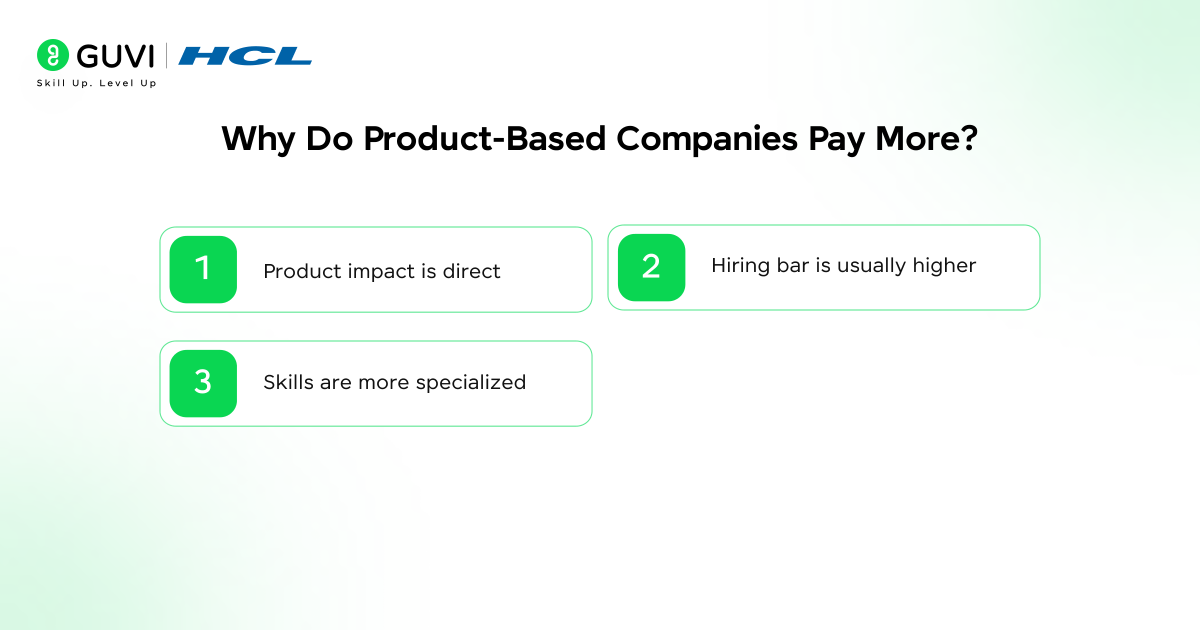
1. Product Impact Is Direct
A small feature improvement can improve user engagement, reduce churn, or increase revenue. That is why companies pay more for engineers who can build reliable product features.
2. Hiring Bar Is Usually Higher
Product-based company interviews often test DSA, coding ability, debugging, system design basics, projects, and problem-solving. The selection process is tougher, so salaries are higher.
3. Skills Are More Specialized
Product companies often need engineers who can work on performance, scalability, architecture, cloud, APIs, data pipelines, AI features, and product analytics. These skills command higher pay.
Flipkart’s average Software Engineer salary on Glassdoor is ₹18,95,000, nearly 4x the TCS average for the same title. Same job title, completely different revenue model behind it.
Why Do Service-Based Companies Offer Lower Starting Salaries?
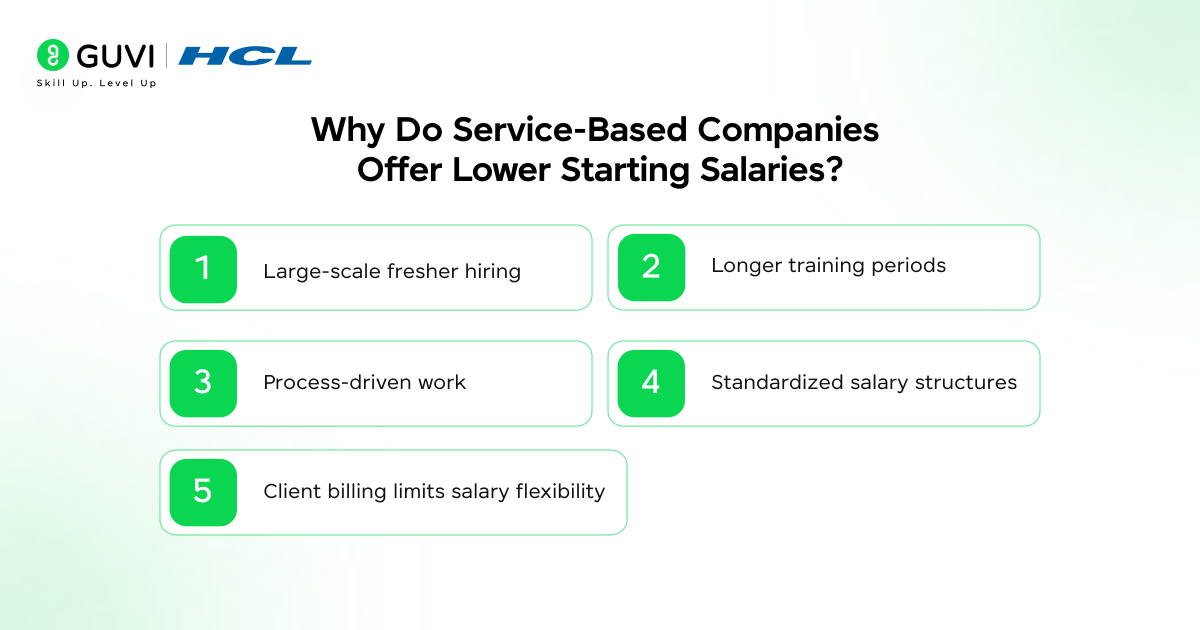
1. Large-Scale Fresher Hiring
Service companies hire many freshers through campus drives and training programs. Since the hiring volume is high, starting salaries are usually standardized.
2. Training Periods Are Longer
Many freshers spend time in training, bench periods, support roles, or internal projects before moving to high-impact work.
3. Work May Be Process-Driven
Some roles focus on maintenance, testing, support, documentation, or implementation. These roles may have slower salary growth than core product engineering roles.
Pay Factors: Service-Based vs Product-Based Companies
| Pay Factor | Service-Based Company | Product-Based Company |
| Pay basis | Tied to client billing and hours | Tied to product revenue and usage |
| Avg. entry salary (Glassdoor) | ₹5,00,000 | ₹16,00,000–18,95,000 |
| Annual increment | 8-12% | 8-12%, often plus performance bonus |
| Hike on switching jobs | Moderate, 20-30% | Steep, 30-50% or higher |
| Bonus structure | Small, often fixed | Variable, tied to performance |
| Equity/ESOPs | Rare | Common, especially at startups |
| Pay ceiling | Capped lower without switching | Scales higher with seniority and equity |
| Pay negotiation room | Narrow, structured bands | Wider bands, more room to negotiate |
Salary Growth: Service-Based vs Product-Based Companies
Salary growth is not only about the first offer. The bigger question is how your salary grows over three to five years.
Service-Based Company Growth
Service-based companies may offer slower yearly hikes. Freshers may start with ₹3.5 LPA to ₹6 LPA and move to ₹8 LPA to ₹15 LPA after a few years, depending on skills and role changes.
Salary growth improves when you move into cloud, DevOps, data engineering, cybersecurity, full-stack development, SAP, Salesforce, or AI-related projects.
Source: Glassdoor
Product-Based Company Growth
Product-based companies usually offer faster salary growth for strong performers. A fresher with strong coding skills may start at ₹10 LPA to ₹20 LPA and grow much faster through promotions, bonuses, and job switches.
Growth is pretty strong in roles linked to backend engineering, frontend engineering, data science, machine learning, platform engineering, and product analytics.
Top Companies Hiring: Service-Based
- TCS
- Infosys
- Wipro
- HCL Technologies
- Cognizant
- Accenture
- Tech Mahindra
- Capgemini
Top Companies Hiring: Product-Based
- Flipkart
- Razorpay
- Zoho
- Freshworks
- Zerodha
- CRED
- Swiggy
- PhonePe
- Meesho
- BrowserStack
Top-tier product companies and FAANG firms in India reject roughly 95-99% of engineering applicants. The bigger paycheck comes with a much narrower door.
Role-Wise Salary Differences
Software developer roles usually pay better in product-based companies because coding depth, architecture, and product ownership matter more.
- Full-Stack Developer
Full-stack developers with React, Node.js, Java, Python, databases, APIs, and cloud basics can earn strong salaries in both company types.
- Data Analyst
Data analyst salaries depend on SQL, Excel, Power BI, Python, statistics, and business understanding. Product companies may pay more for analytics roles linked to user growth and product decisions.
- Cloud Engineer
Cloud roles can grow well in both company types. AWS, Azure, GCP, Docker, Kubernetes, Linux, networking, and DevOps skills can improve salary faster.
- AI and Machine Learning Engineer
AI and ML roles usually pay higher when candidates have strong Python, statistics, ML models, data handling, deployment, and project experience.

- Digital Marketing Roles
Digital marketing salaries also vary by company type. Product companies may pay more for performance marketing, SEO, paid ads, analytics, lifecycle marketing, and growth roles because results directly affect revenue.
Which Company Type Is Better for Freshers?
There is no one perfect answer. The better option depends on your current skill level and career goal.
Choose a Service-Based Company If:
- You want structured training.
- You need a stable first job.
- You are still improving coding skills.
- You want exposure to enterprise clients.
- You are open to learning through projects.
- You want a smoother entry into the IT industry.
Choose a Product-Based Company If:
- You are strong in coding.
- You have solid projects.
- You can clear DSA rounds.
- You enjoy solving product problems.
- You want higher salary growth.
- You are comfortable with tougher interviews.
- You want deeper ownership over features.
Service-Based vs Product-Based Companies: Quick Comparison
| Factor | Service-Based Company | Product-Based Company |
| Business Model | Provides services to clients | Builds and sells own product |
| Fresher Salary | Usually moderate | Usually higher |
| Interview Difficulty | Moderate to high | High |
| Training | More structured | Less handholding |
| Work Type | Client projects | Product features |
| Salary Growth | Slower in early years | Faster for strong performers |
| Job Stability | Often more stable | Depends on company stage |
| Learning | Broad client exposure | Deep product ownership |
| Best For | Entry access and training | High growth and ownership |
Skills That Help You Earn More in Both Company Types
1. Strong Programming Basics
Java, Python, JavaScript, C++, and SQL are valuable for most tech roles. Strong fundamentals help in interviews and real projects.
2. Data Structures and Algorithms
DSA is especially important for product-based company interviews. Arrays, strings, linked lists, stacks, queues, trees, graphs, recursion, sorting, and dynamic programming matter.
3. Real Projects
Projects show practical ability. A strong GitHub profile with deployed projects can make your resume stronger.
4. System Design Basics
Freshers do not need advanced system design, but they should understand APIs, databases, caching, authentication, scalability, and basic architecture.
5. Cloud and DevOps Basics
Cloud skills improve salary prospects because many companies are moving applications to AWS, Azure, and GCP.
6. AI Tool Awareness
Freshers should know how to use AI tools like ChatGPT, GitHub Copilot, Gemini, and Perplexity for faster coding, bug fixing, code explanation, documentation, test case writing, resume customization, and technical research. However, they must verify every output, avoid copying code blindly, protect company data, and understand the logic before using AI-generated suggestions.
Strengthen your problem-solving skills and prepare for top tech roles with HCL GUVI’s DSA for Programmers Course. Master data structures and algorithms across Python, Java, C, and JavaScript through 93 hours of recorded content and hands-on learning designed to help you crack technical interviews and product company hiring processes.
How to Make the Switch (and Actually Get Paid for It)
If the product-side salary is the goal, here’s what actually moves the needle:
- Build real, owned projects. Side projects and GitHub repos that show end-to-end ownership matter more than certificates.
- Get serious about DSA and system design. This is the single biggest filter product companies use, at every experience level.
- Target the switch at the 2-4 year mark. That’s when the market premium for product-side hires is highest relative to the effort to get there.
- Negotiate against market rate, not your current pay. If you’re underpaid at a service company, anchor your ask to what the product-side role pays, not a percentage bump on your old salary.
- Don’t wait for the “perfect” offer. Annual increments average 8-12%. Job switches routinely land 30-50% jumps. Waiting costs you more than switching does.
Conclusion
Service-based and product-based companies both offer good career paths, but they pay differently because their business models, hiring standards, and role expectations are different. Service companies can help freshers enter the industry and build strong foundations, while product companies usually offer higher salaries and faster growth for candidates with strong skills.
The best choice is not just about the first CTC. Compare the role, fixed pay, learning scope, tech stack, and long-term salary growth before deciding.
FAQs
Does a product company always pay more than a service company?
Usually, yes, at the same experience level and city. But a senior service-company role with niche skills can sometimes beat an entry-level product role. Compare like for like.
Can a fresher get into a product company directly?
Yes, though it’s competitive. Strong DSA skills, system design basics, and real projects can get you there without a service-company detour first.
Is service-company experience valued by product companies?
Yes, especially experience with production systems, enterprise patterns, and cross-team delivery. It’s not wasted time if you used it to build real skills.
What’s the biggest factor in closing the salary gap?
Job switching, not annual raises. Market jumps from switching companies consistently outpace yearly increments.
Is work-life balance better at product companies?
It depends on the team and company, not just the model. Some product startups run intense, high-pressure cycles. Some service companies offer steady, predictable hours. Research the specific company, not just the category.
Success Stories

About the Author
Vaishali
I'm a seasoned writer with four years of experience across technical, non-technical, and just about every genre or niche you can imagine. Adaptable and curious, I enjoy exploring new topics and making information engaging and easy to understand. Fueled by a steady stream of tea, I approach each project with creativity, reliability, and genuine enthusiasm for storytelling.
View all posts by Vaishali
Connect with me @













Did you enjoy this article?