


Product Management Articles
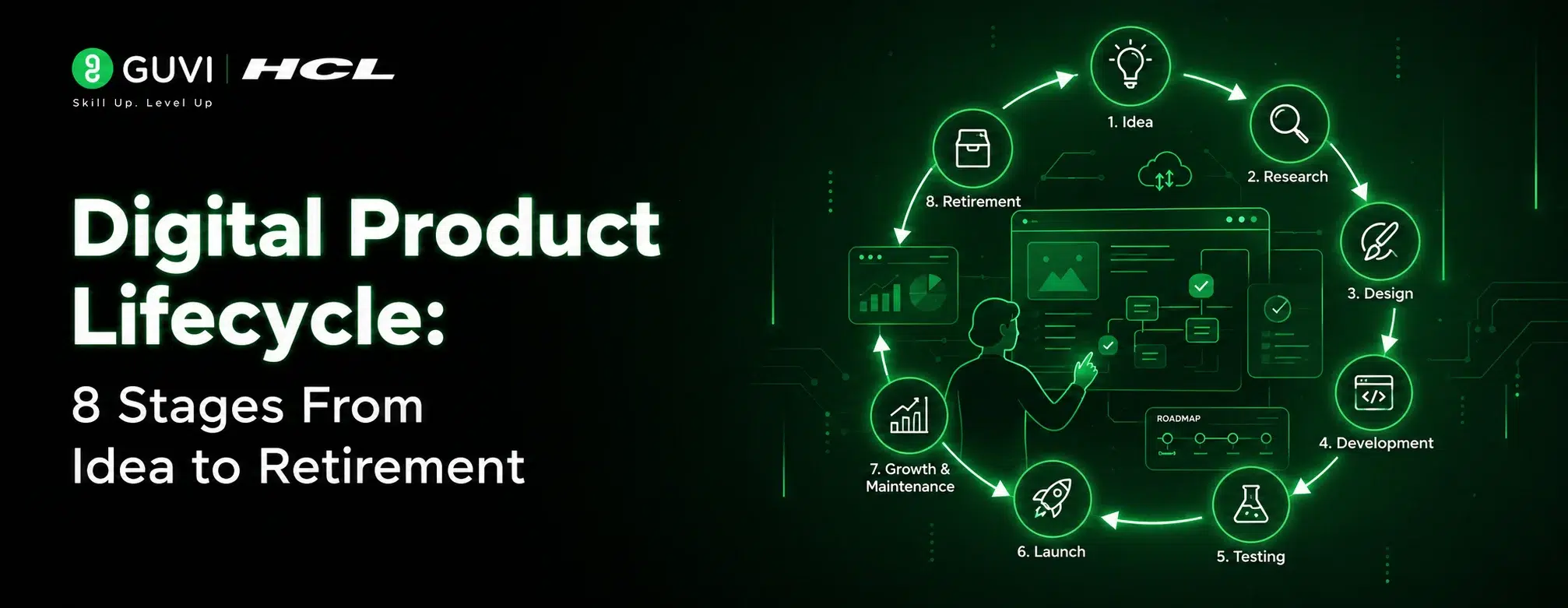
Digital Product Lifecycle: 8 Stages From Idea to Retirement - Best Guide
Future Scope of Product Management in 2026- Best Guide


Get In Touch For Details! Request More Information
Product Manager Interview Questions & Answers Guide
Jun 05, 2026 6 Min Read 550 Views
(Last Updated)
Getting hired as a Product Manager is highly competitive because companies look for candidates who can define vision, make data-driven decisions, and deliver business results.
The role requires balancing user needs, technical constraints, and business goals.
PM interviews typically cover six areas: product strategy, product design, analytics, behavioural skills, technical knowledge, and estimation. Each category evaluates a different aspect of product management and problem-solving.
This guide covers key PM interview questions, sample answers, and interviewer expectations.
With structured preparation and practice, you can confidently showcase the skills needed to succeed as a Product Manager.
Table of contents
- TL;DR
- Product Strategy Interview Questions and Answers
- How would you improve a product you use every day?
- How do you decide what to build next with a full backlog?
- A key competitor just launched a feature your customers want. How do you respond?
- Product Design Interview Questions and Answers
- Design a product that helps remote workers stay focused.
- Our sign-up conversion rate dropped 20%. How do you investigate?
- Analytical and Metrics Interview Questions
- How would you measure the success of a new onboarding flow?
- How would you design an A/B test for a new checkout flow?
- Behavioural Interview Questions and Answers
- Tell me about a time you had to say no to a stakeholder.
- Technical Interview Questions and Answers
- What is technical debt, and how do you factor it into roadmap decisions?
- How does a REST API work, and why does it matter for a PM?
- Estimation Interview Questions and Answers
- How many WhatsApp messages are sent globally per day?
- Questions to Ask Your Interviewer
- Conclusion
- FAQs
- What types of questions are in a PM interview?
- How do I structure answers to PM interview questions?
- What is the STAR method and when should I use it?
- Do PM interviews test coding or technical ability?
- How should I prepare for PM estimation questions?
TL;DR
- PM interviews cover six question types: strategy, product design, analytical, behavioural, technical, and estimation.
- Strategy and product design questions test vision, prioritization, and user empathy.
- Analytical and estimation questions reward a structured process; the reasoning matters more than the exact answer.
- Behavioural questions use the STAR framework: Situation, Task, Action, Result.
- Technical questions test collaboration literacy, not coding ability.
- Always close interviews by asking two or three thoughtful, strategic questions of your own.
What Are Product Manager Interview Questions?
Product Manager interview questions are assessment questions used by companies to evaluate a candidate’s ability to define, develop, and manage successful products. These questions typically explore six core areas: product strategy, product design, analytics, behavioural skills, technical knowledge, and estimation. Together, they help interviewers assess how well a candidate understands customer needs, prioritizes features, makes data-driven decisions, collaborates with cross-functional teams, and drives products toward business goals.
Want to become a successful Product Manager?
Join IIM Indore’s 8-month Certificate Programme in Product Management (CP PM) and gain the strategic, analytical, and leadership skills needed to create products that drive innovation and growth.
Product Strategy Interview Questions and Answers
Strategy questions assess whether you can connect day-to-day product decisions to long-term business goals, make defensible trade-offs, and communicate a clear vision. Interviewers want to see frameworks, not opinions.
1. How would you improve a product you use every day?
| Answer:Start by clarifying the goal: growth, retention, or revenue, and identify the target user segment and their biggest unmet need.Example (Spotify): If the goal is retention, focus on casual listeners who churn after the free trial. Their key pain point is discovering music that matches their mood quickly. A potential solution is a mood-based playlist generator on the home screen that creates personalized playlists in just two taps.Success Metrics: Measure 7-day retention, session length, and 30-day retention, aiming for a 15% increase in retention within the first quarter after launch. |
2. How do you decide what to build next with a full backlog?
| Answer:I prioritize features using the RICE framework Reach, Impact, Confidence, and Effort) to objectively compare initiatives. I then align priorities with the company’s current strategic goals, such as growth, retention, or monetization.Features that score high on both RICE and strategic importance are prioritized first. I also reserve about 20% of team capacity for bug fixes, technical debt, and experiments, ensuring flexibility to respond to new insights and user needs. |
3. A key competitor just launched a feature your customers want. How do you respond?
| Answer:I wouldn’t react immediately to a competitor’s feature. First, I’d investigate by speaking with customers to understand the underlying problem they’re trying to solve and whether the competitor’s solution truly addresses it.Next, I’d analyze data such as customer demand, churn risk, and potential revenue impact. Based on the evidence, I’d decide whether the feature deserves prioritization. If the business case is strong, I’d include it in the roadmap; if not, I’d stay focused on higher-impact opportunities, since not every competitor move requires a response. |

Product Design Interview Questions and Answers
Product design questions, also called product sense questions, test user empathy, problem framing, and solution quality. The most common mistake candidates make is jumping to a feature idea before defining the user and the problem.
4. Design a product that helps remote workers stay focused.
| Answer:I’d first define the target user segment and focus on knowledge workers who need uninterrupted deep-focus time. Their main challenge is constant interruptions from notifications, meetings, and context switching.To solve this, I’d build a Focus Mode app that integrates with calendars, Slack, and email. When activated, it silences notifications, updates status automatically, blocks distractions, and provides a summary of missed messages afterward.Success Metrics: Deep-focus minutes per user, productivity satisfaction scores, and 30-day user retention. |
5. Our sign-up conversion rate dropped 20%. How do you investigate?
| Answer:I would first verify that the drop is real by checking for tracking or analytics issues. If the data is accurate, I’d identify when the decline started and correlate it with product releases, marketing changes, or external events.Next, I’d segment the data by channel, device, and geography to pinpoint where the drop is occurring. Then, I’d use funnel analysis and session recordings to find where users are abandoning the process.Finally, I’d develop a few hypotheses, run A/B tests to validate them, and prioritize fixes based on their potential impact on conversion. |
Analytical and Metrics Interview Questions
Analytical questions test whether you define the right metrics, diagnose problems systematically, and design sound experiments. Process and structure matter more than arriving at a perfect number
6. How would you measure the success of a new onboarding flow?
| Answer:I would measure onboarding success primarily through activation rate, the percentage of new users who reach a key milestone within their first 7 days. This is the strongest indicator that onboarding delivers value.Secondary metrics would include time-to-activation, step completion rates, and overall onboarding completion rate to identify friction points.Guardrail metrics would include support ticket volume and page load time to ensure the new experience doesn’t create new problems. Finally, I’d compare 30-day retention between users on the old and new onboarding flows to measure long-term impact. |
7. How would you design an A/B test for a new checkout flow?
| Answer:I would begin with a clear hypothesis, such as: reducing the checkout flow from four steps to two will increase purchase completion rate by 15% without lowering average order value.Next, I’d determine the required sample size using the baseline conversion rate, expected impact, and a 95% confidence level. Traffic would be randomly split 50/50 between the control and variant groups.The primary metric would be checkout completion rate, while guardrail metrics would include average order value and refund rate. The test should run for at least two full business cycles to account for normal usage variations before concluding. |
Google helped popularize the modern structured Product Manager (PM) interview process in the early 2000s by introducing a rigorous hiring framework that went far beyond traditional résumé screening. Candidates were evaluated through product design exercises, analytical and estimation problems, behavioral interviews, and cross-functional collaboration assessments. The goal was to identify people who could think strategically about users, business goals, and technical constraints simultaneously. As Google’s influence grew, many leading technology companies—including Meta, Amazon, Microsoft, and Uber—adopted similar interview structures, making product sense, execution, analytics, and leadership interviews standard components of PM hiring across Silicon Valley.
Behavioural Interview Questions and Answers
Behavioural questions ask you to draw on real experience to demonstrate PM skills. Use the STAR framework: Situation, Task, Action, Result, and always use I rather than we to make your individual contribution clear. Quantify results wherever possible.
8. Tell me about a time you had to say no to a stakeholder.
| Answer (STAR):Situation: Sales requested an urgent CSV export feature for a major enterprise deal, but it was not on the roadmap.Task: Evaluate the request and make a data-driven prioritization decision.Action: I conducted an opportunity cost analysis and found that building the feature would delay a retention initiative expected to reduce churn. I presented the trade-offs to leadership and collaborated with sales on a manual workaround.Result: The deal closed successfully using the workaround, while the retention feature launched on time and reduced churn by 0.4%, helping retain approximately £120,000 in annual recurring revenue. |
9. Describe a product you shipped that failed. What did you learn?
| Answer (STAR):Situation: We launched a social sharing feature that let users post workout achievements to social media.Task: As the PM, I was responsible for defining the feature, success metrics, and launch strategy.Action: We set a goal of 10% user adoption within 30 days and launched the feature with a prominent sharing prompt after workouts.Result: Adoption reached only 2.3%. We learned that most users viewed fitness data as private and saw little value in sharing workout screenshots. The key lesson was to validate user motivation through research before investing significant engineering effort. |
Technical Interview Questions and Answers
Technical questions assess whether you have enough fluency to collaborate effectively with engineers, understand feasibility, and earn the trust of technical teams. You are not expected to write code; you are expected to ask the right questions and understand trade-offs.
10. What is technical debt, and how do you factor it into roadmap decisions?
| Answer:Technical debt is the cost of choosing a quick solution today that makes future development harder and slower. If left unaddressed, it increases engineering effort and risk over time.To manage it, I typically reserve 15–20% of sprint capacity for technical debt and platform improvements. I also assess the impact of technical debt when prioritizing new features, especially if they depend on fragile systems.Finally, I work closely with engineering leaders to maintain a technical debt register, ensuring risks are visible and addressed proactively. |
11. How does a REST API work, and why does it matter for a PM?
| Answer:A REST API is a standard way for software systems to communicate over the internet using HTTP requests. A client sends a request to an endpoint, and the server returns data, usually in JSON format.For a Product Manager, understanding APIs helps in planning integrations, estimating effort, and discussing technical trade-offs with engineers. It also helps identify dependencies, authentication needs, rate limits, and potential implementation challenges, leading to more accurate scoping and prioritization. |
Estimation Interview Questions and Answers
Estimation questions test structured thinking under ambiguity. The process of stating assumptions, breaking the problem into components, and calculating step by step matters far more than the exact number.
12. How many WhatsApp messages are sent globally per day?
| Answer:I would estimate WhatsApp messages using a top-down approach:WhatsApp has about 2 billion monthly active users.Assume 60% are daily active users (DAU) → 1.2 billion DAU.Estimate each active user sends or receives 80 messages per day on average, considering both personal and group chats.Calculation: 1.2 billion × 80 = 96 billion messages per dayThis estimate is close to publicly reported figures of around 100 billion messages daily. The most important assumption is the average messages per user, as small changes in this number significantly affect the final estimate. |
Questions to Ask Your Interviewer
The questions you ask your interviewer carry as much weight as your answers. Strong candidates use this time to demonstrate genuine curiosity, strategic thinking, and preparation. Avoid questions about salary, benefits, or hours at this stage.
• What does success look like for this role in the first 90 days, and how will it be measured?
• What is the biggest product challenge the team is currently facing?
• How are roadmap priorities decided who has the final say?
• How does the product trio PM, design, and engineering) collaborate day-to-day?
• What does career growth look like for PMs in this organization?
To learn more about how to become a Product Manager, enroll in IIM Indore’s 8-month Certificate Programme in Product Management (CP PM). This comprehensive program helps you develop the skills and confidence to build, launch, and scale products that drive growth and innovation in today’s AI-powered economy, equipping you with industry-relevant expertise to excel in strategic product leadership roles.
Conclusion
PM interviews are broad because the Product Manager role requires a mix of strategy, user empathy, analytics, technical understanding, and communication skills.
Strong candidates stand out by thinking aloud, structuring answers clearly, focusing on user and business impact, and demonstrating product curiosity.
The key to success is preparation: build strong STAR stories, practice estimation and product design questions, and research the company’s products thoroughly. With a structured approach and consistent practice, you can confidently showcase the skills needed to succeed as a Product Manager.
FAQs
1. What types of questions are in a PM interview?
PM interviews typically cover six categories: product strategy, product design, analytical and metrics, behavioural, technical, and estimation. Each category tests a different PM skill from strategic vision and user empathy to data literacy, soft skills, engineering collaboration, and structured problem-solving.
2. How do I structure answers to PM interview questions?
Clarify the goal first, state your assumptions, apply a relevant framework (RICE, STAR, user journey), make a clear recommendation, and acknowledge trade-offs. Always connect your answer to user value and business impact rather than describing features in isolation.
3. What is the STAR method and when should I use it?
STAR stands for Situation, Task, Action, Result. Use it for all behavioural questions. Start with the context, explain your specific responsibility, describe what you personally did and why, then quantify the outcome. Always use ‘I’ instead of ‘we’ so your individual contribution is clear.
4. Do PM interviews test coding or technical ability?
No. Technical questions test collaboration literacy: whether you understand APIs, databases, technical debt, and feasibility trade-offs well enough to work effectively with engineers. You are not expected to write code or design system architecture.
5. How should I prepare for PM estimation questions?
Practice breaking problems into components, stating assumptions clearly, and calculating step by step out loud. Focus on process, not precision. Always sanity-check your final answer against a known benchmark and identify which assumption would most change your answer if it were wrong.
Success Stories

About the Author
Vishalini Devarajan
An Aerospace Engineer turned content writer, I focus on making complex concepts easy to understand through well-structured, reader-friendly blogs. Whether it’s a technical topic or a non-technical one, I love creating content that is clear, engaging, and impactful.
View all posts by Vishalini Devarajan
Connect with me @







Did you enjoy this article?