


Python Articles
Freelancing as a Python Developer: Getting Your First Client
Common Python Mistakes Beginners Make And How to Fix Them
Python Best Practices: Writing Clean, Maintainable Code Like a Pro

Get In Touch For Details! Request More Information
How to Build a Python Developer Portfolio That Gets You Hired
Aug 13, 2026 4 Min Read 525 Views
(Last Updated)
A Python developer portfolio is a collection of projects, code samples, and technical achievements that showcase your Python skills to recruiters and hiring managers. A strong portfolio includes GitHub repositories, real-world applications, project documentation, and a portfolio website. Building a well-structured Python developer portfolio can significantly improve your chances of securing interviews and getting hired.
Table of contents
- TL;DR
- What Is a Python Developer Portfolio?
- Why Is a Python Developer Portfolio Important?
- What Should a Python Developer Portfolio Include?
- What Are the Best Python Projects for Your Portfolio?
- How to Build a Python Developer Portfolio Step by Step
- Step 1: Define Your Career Goal
- Step 2: Build Relevant Projects
- Step 3: Write Clean Code
- Step 4: Create Strong Documentation
- Step 5: Deploy Your Projects
- Portfolio Website vs GitHub: Do You Need Both?
- Common Mistakes to Avoid
- Key Takeaways
- Conclusion
- FAQs
- What is a Python developer portfolio?
- How many projects should a Python portfolio contain?
- Do I need a portfolio website if I already have GitHub?
- Which Python projects impress recruiters the most?
- Can beginners build a Python developer portfolio?
TL;DR
- A Python developer portfolio showcases your practical Python skills.
- Recruiters use portfolios to evaluate candidates before interviews.
- Include 4–8 high-quality projects that demonstrate real-world problem-solving.
- Maintain an active GitHub profile and portfolio website.
- Focus on quality, documentation, and presentation over quantity.
What Is a Python Developer Portfolio?
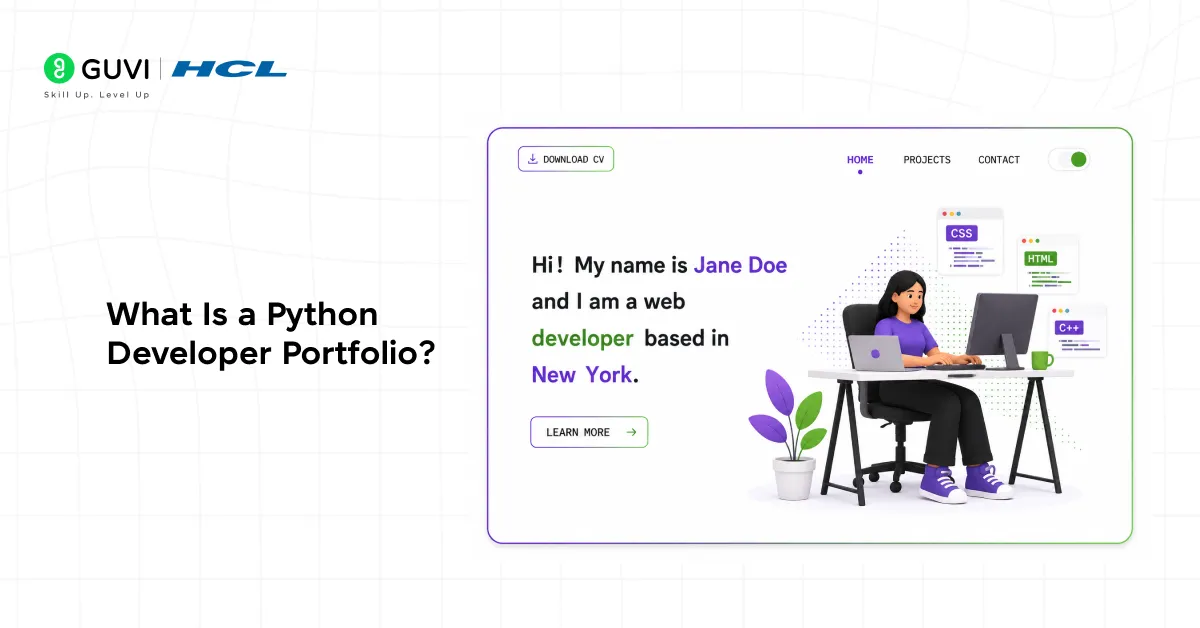
A Python developer portfolio is a professional collection of projects that demonstrates your ability to build software using Python. It acts as proof of your skills and gives employers a clear understanding of what you can accomplish.
In today’s competitive hiring landscape, listing Python on your resume is no longer enough — recruiters want to see evidence of your abilities. A portfolio provides that evidence by showcasing real projects, technical solutions, and practical experience.
A strong portfolio typically includes:
- GitHub repositories
- Real-world projects
- Project documentation
- Resume and certifications
- Contact information
Many recruiters spend only a few minutes reviewing a portfolio during the initial screening stage. A clean layout, intuitive navigation, and clear presentation of your best projects, technical skills, and business impact can be just as important as the quality of your code when making a strong first impression.
Read More: How to Build a Developer Portfolio That Stands Out in 2026
Why Is a Python Developer Portfolio Important?
A portfolio helps bridge the gap between theoretical knowledge and practical application. While a resume tells recruiters what you know, a portfolio shows them how you use that knowledge.
For freshers, a portfolio can compensate for limited professional experience. For experienced developers, it serves as a platform to highlight expertise and demonstrate technical growth.
Some major benefits include:
- Demonstrates practical skills. Employers can see how you solve problems and implement solutions using Python.
- Builds credibility. Publicly available projects provide tangible evidence of your technical capabilities.
- Increases interview opportunities. A strong portfolio helps you stand out from other applicants.
- Supports career transitions. Whether you’re moving into data science, backend development, or automation, a portfolio can showcase relevant skills.
Data Point: Hiring managers consistently rank project experience among the most valuable factors when evaluating junior developer candidates.
Want to build a Python developer portfolio that stands out to recruiters? Explore HCL GUVI’s Python Programming Course, designed to help you master Python through hands-on projects, real-world applications, and industry-relevant skills.
What Should a Python Developer Portfolio Include?
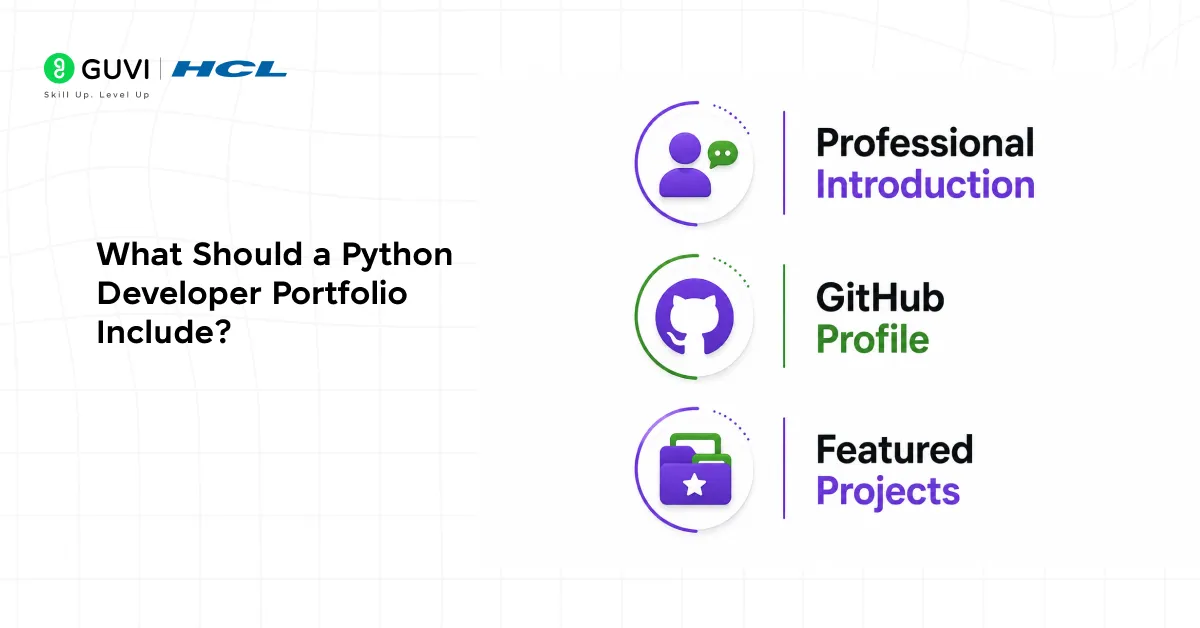
Building an effective portfolio requires more than uploading random projects to GitHub. Every component should contribute to demonstrating your technical abilities.
- Professional Introduction
Start with a brief introduction that explains who you are and what you specialize in.
Your introduction should include:
- Name and role
- Technical skills
- Areas of interest
- Contact details
A concise introduction helps recruiters understand your background quickly.
- GitHub Profile
GitHub is often the first platform recruiters visit after reviewing a resume. A well-maintained GitHub profile reflects professionalism and consistency.
Your GitHub profile should contain:
- Organized repositories
- Clear README files
- Consistent commit history
- Project screenshots
- Detailed documentation
Best Practice: Pin your strongest repositories to the top of your profile — recruiters should be able to find your best work immediately.
- Featured Projects
Projects are the most important part of your portfolio. They provide concrete examples of your technical skills and problem-solving approach.
For every project, explain:
- The problem
- The solution
- Technologies used
- Challenges encountered
- Results achieved
The easier it is for someone to understand your project, the more impact it will have.
Want to build a Python developer portfolio that stands out to recruiters? Explore HCL GUVI’s Python Programming Course, designed to help you master Python through hands-on projects, real-world applications, and industry-relevant skills.
What Are the Best Python Projects for Your Portfolio?
The best portfolio projects demonstrate both technical competence and practical value. Instead of building dozens of applications, focus on creating a few meaningful projects.
| Project Type | Skills Demonstrated |
| Expense Tracker | Databases, CRUD Operations |
| Weather App | APIs, JSON Processing |
| Task Manager | Flask or Django |
| Automation Tool | Python Scripting |
| Data Dashboard | Pandas, Visualization |
| Recommendation System | Machine Learning |
| E-commerce API | Backend Development |
A balanced portfolio might include:
- One automation project
- One web application
- One API project
- One data-focused project
This combination demonstrates versatility — a quality many employers actively seek.
Pro Tip: A well-documented intermediate-level project often creates a stronger impression than a highly advanced project with poor documentation.

How to Build a Python Developer Portfolio Step by Step
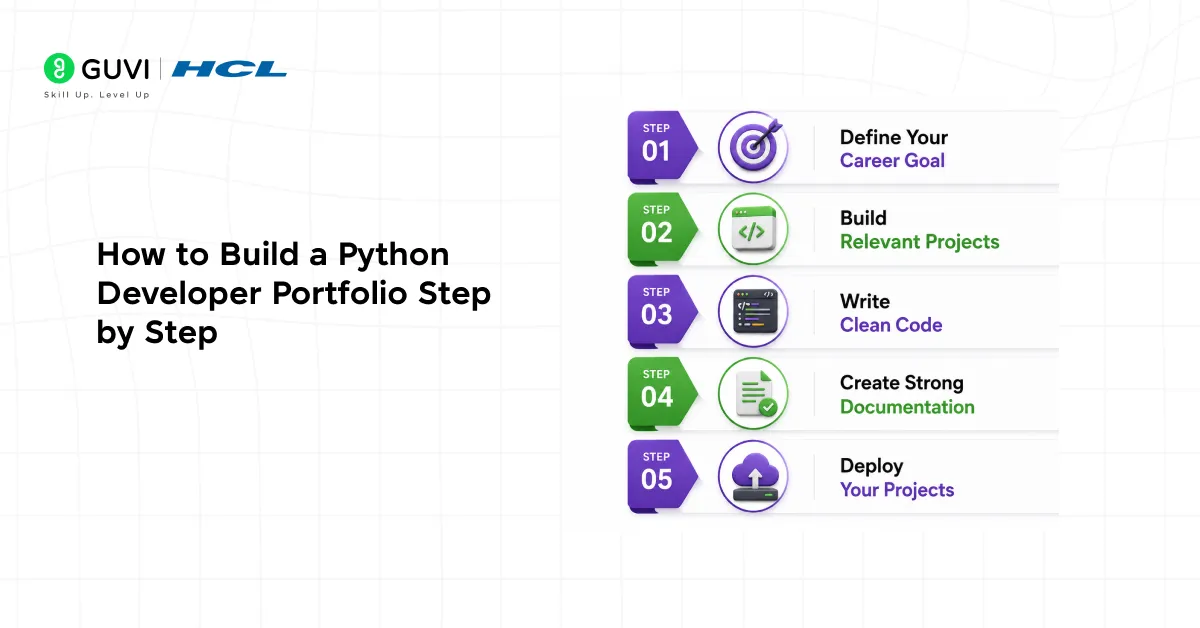
Creating a portfolio becomes much easier when you follow a structured process.
Step 1: Define Your Career Goal
Before building projects, identify the role you want to pursue.
Examples include:
- Python Developer
- Backend Developer
- Data Analyst
- Data Scientist
- Machine Learning Engineer
Your portfolio should align with the skills required for your target role.
Step 2: Build Relevant Projects
Choose projects that reflect real-world business needs. Focus on projects that solve problems rather than projects that simply demonstrate syntax.
Projects with practical value tend to resonate more with recruiters.
Step 3: Write Clean Code
Code quality matters. Recruiters often review repositories to assess coding practices and project structure.
Focus on:
- Clear variable names
- Consistent formatting
- Modular architecture
- Readable code
Warning: Messy code can reduce the impact of an otherwise impressive project.
Step 4: Create Strong Documentation
Documentation helps recruiters understand your project quickly. Without documentation, even excellent projects can be difficult to evaluate.
Include:
- Project overview
- Features
- Installation guide
- Technologies used
- Screenshots
Step 5: Deploy Your Projects
Deploying projects demonstrates that you can move beyond local development environments. It also allows recruiters to interact with your applications directly.
Popular deployment platforms include:
- Render
- Railway
- Vercel
- AWS
- GitHub Pages
A deployed project instantly appears more professional and complete.
Portfolio Website vs GitHub: Do You Need Both?
The answer is simple — yes.
GitHub showcases your code, while a portfolio website presents your work in a professional format. Together, they provide a complete picture of your capabilities.
A portfolio website should include:
- About section
- Featured projects
- Resume
- Contact information
- Links to GitHub and LinkedIn
Think of GitHub as the technical side of your portfolio and your website as the presentation layer.
Did You Know? Many developers use personal blogs alongside their portfolios to demonstrate communication skills and technical expertise.
Common Mistakes to Avoid
Many candidates make avoidable mistakes that weaken their portfolios.
Some of the most common include:
- Uploading only tutorial projects
- Neglecting project documentation
- Failing to deploy projects
- Including unfinished applications
- Using inconsistent project structures
Remember — recruiters are evaluating professionalism as much as technical skill.
A portfolio should tell a clear story about who you are, what you can build, and where you want to go in your career.
Key Takeaways
- A Python developer portfolio demonstrates practical skills through projects.
- Focus on quality rather than quantity.
- Include projects aligned with your target role.
- Maintain an organized GitHub profile.
- Document and deploy your projects whenever possible.
- Use both GitHub and a portfolio website.
- Continuously update your portfolio as your skills grow.
Conclusion
A strong Python developer portfolio can become one of your most valuable career assets. It allows recruiters to evaluate your abilities, understand your problem-solving approach, and gain confidence in your technical skills before the interview stage.
The goal is not to build the largest portfolio possible — it is to build a portfolio that clearly demonstrates your strengths. By focusing on meaningful projects, clean code, and professional presentation, you can significantly improve your chances of getting hired as a Python developer.
FAQs
What is a Python developer portfolio?
A Python developer portfolio is a collection of projects, code samples, and achievements that showcase your Python skills. It helps recruiters evaluate your practical experience and technical abilities.
How many projects should a Python portfolio contain?
Most portfolios perform well with 4–8 high-quality projects. A few polished projects are usually more effective than many incomplete ones.
Do I need a portfolio website if I already have GitHub?
Yes, because a portfolio website presents your projects and professional information in a recruiter-friendly format. GitHub should support your portfolio rather than replace it.
Which Python projects impress recruiters the most?
Projects that solve real-world problems, such as APIs, automation tools, dashboards, and web applications, generally attract the most attention. Clear documentation also plays an important role.
Can beginners build a Python developer portfolio?
Absolutely. Beginner-friendly projects can demonstrate problem-solving skills and a willingness to learn, which employers value.
Success Stories

About the Author
Vishalini Devarajan
An Aerospace Engineer turned content writer, I focus on making complex concepts easy to understand through well-structured, reader-friendly blogs. Whether it’s a technical topic or a non-technical one, I love creating content that is clear, engaging, and impactful.
View all posts by Vishalini Devarajan
Connect with me @






Did you enjoy this article?