


Career Articles
Wipro Elite NTH Eligibility Criteria 2026: CGPA, Branch & Backlog Rules Explained
What is Wipro Elite NTH? Complete Overview for 2026 Graduates
How to Get a Tech Job Abroad From India: Visa, Platforms & Timelines
How to Build a Python Developer Portfolio That Gets You Hired


Get In Touch For Details! Request More Information
Counter-Offer Strategies When You Have Multiple Job Offers (2026 Guide)
Aug 21, 2026 4 Min Read 448 Views
(Last Updated)
Getting one job offer feels great. Getting two or three at the same time is a different game entirely and a powerful one if you play it right. Counter-offer strategies become far more effective when you have multiple offers on the table, because you are negotiating from a position of real choice, not desperation. This guide walks you through practical, beginner-friendly counter-offer strategies so you can secure the best possible package without burning bridges or sounding entitled.
Table of contents
- TL;DR Summary
- Why Counter-Offer Strategies Matter More With Multiple Offers
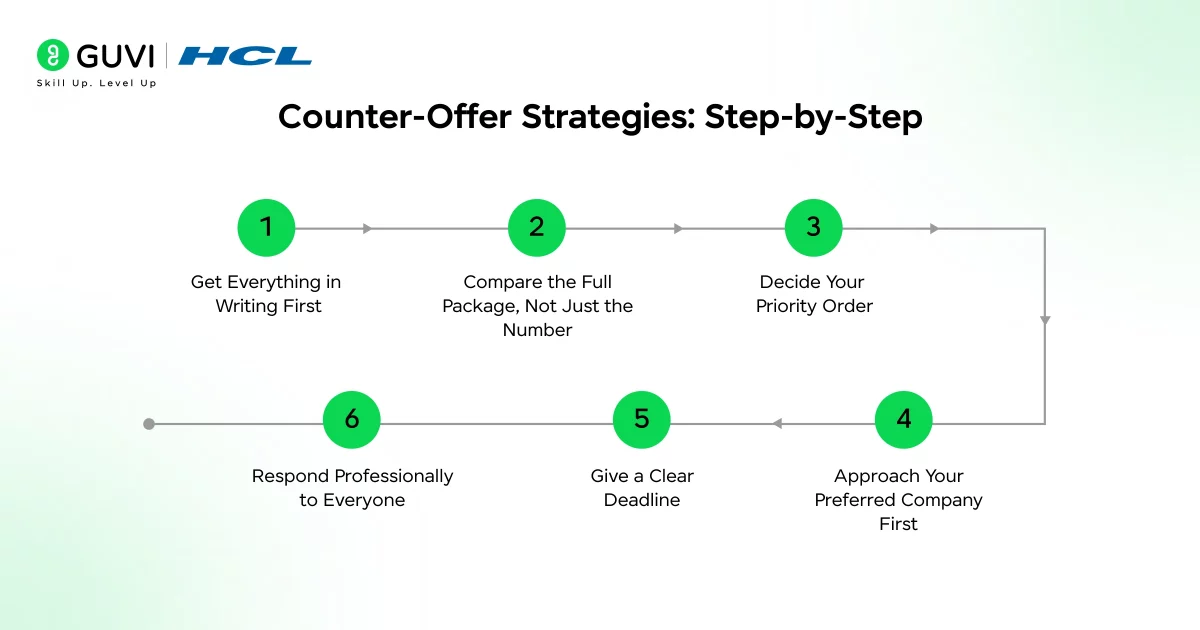
- Counter-Offer Strategies: Step-by-Step
- Step 1: Get Everything in Writing First
- Step 2: Compare the Full Package, Not Just the Number
- Step 3: Decide Your Priority Order
- Step 4: Approach Your Preferred Company First
- Step 5: Give a Clear Deadline
- Step 6: Respond Professionally to Everyone
- What You Can Negotiate Beyond Salary
- 💡 Did You Know?
- Sample Counter-Offer Email Structure
- "But What If They Pull the Offer?"
- Common Mistakes to Avoid
- Conclusion
- FAQs
- What are the best counter-offer strategies when you have multiple job offers?
- Should I tell a recruiter about my other job offers?
- How much can I realistically negotiate with multiple offers?
- What if the company refuses to negotiate at all?
- Is it unprofessional to negotiate after receiving an offer?
- How do I decline an offer politely after choosing another one?
TL;DR Summary
- Having multiple offers is leverage — but only if you use the right counter-offer strategies.
- Always negotiate professionally, never play offers against each other aggressively.
- Counter-offer strategies work best when you have a written competing offer, not a verbal one.
- Negotiate the full package — salary, joining date, remote work, designation — not just the base pay.
- Give recruiters a clear deadline and stay polite even if you decline.
Why Counter-Offer Strategies Matter More With Multiple Offers
When you have only one offer, your negotiating power is limited and the company knows you may have no other option. But when you have multiple offers, the dynamic shifts completely. Counter-offer strategies that mention a competing offer (truthfully) signal to the recruiter that you are in demand and that losing you has a real cost.
This does not mean you should be aggressive or play games. It means you can ask for more with confidence, because you genuinely have a choice. Recruiters expect candidates with multiple offers to negotiate , which is normal, expected, and rarely held against you if done professionally.
Also read – How to Improve Your Placement Strategy for this Upcoming Placement Season
Counter-Offer Strategies: Step-by-Step
Step 1: Get Everything in Writing First
Before you start any negotiation, make sure every offer you have is in writing — not just a verbal “we’d like to offer you ₹X”. Verbal offers can change. Written offers with a CTC breakdown are what you actually negotiate against.
Step 2: Compare the Full Package, Not Just the Number
The most effective counter-offer strategies start with a side-by-side comparison. Look beyond the headline CTC.
| Factor | Why It Matters |
| Base salary vs variable pay | A higher CTC with large bonuses may pay less guaranteed money |
| Joining date flexibility | Useful if you need time between jobs |
| Remote/hybrid policy | Affects your quality of life and commute costs |
| Growth and learning | Some roles offer faster skill growth even at lower pay |
| Designation | Impacts your next job search and LinkedIn profile |
Step 3: Decide Your Priority Order
Counter-offer strategies fail when candidates negotiate everything at once with no clear priority. Before you talk to any recruiter, rank what matters most to you — salary, role, location, or growth. This makes your questions sharper and easier for the recruiter to act on.
Step 4: Approach Your Preferred Company First
If you have a preferred company but their offer is lower, this is where counter-offer strategies become most useful. Reach out to your point of contact (recruiter or HR) and explain — politely and honestly — that you have received another offer and would like to discuss the possibility of matching or improving theirs.
You do not need to name the other company unless you are comfortable doing so. What matters is being specific about the number or benefit you are hoping to align.
Step 5: Give a Clear Deadline
Multiple offers usually mean multiple deadlines. Communicate yours honestly: “I have another offer with a deadline of [date] — could we discuss this before then?” Most recruiters will work with you.

Step 6: Respond Professionally to Everyone
Whichever offer you choose, reply to the others with gratitude. The tech industry is smaller than it feels, and recruiters remember how candidates handled rejection.
Do check out HCL GUVI’s Interview Preparation Course if you’re negotiating multiple job offers and want to confidently handle salary discussions, HR rounds, and final negotiations. The course helps you strengthen your communication, interview strategy, problem-solving, and overall job-readiness through structured learning, certifications, and practice platforms, making it easier to secure and evaluate the best offer for your career goals.
What You Can Negotiate Beyond Salary
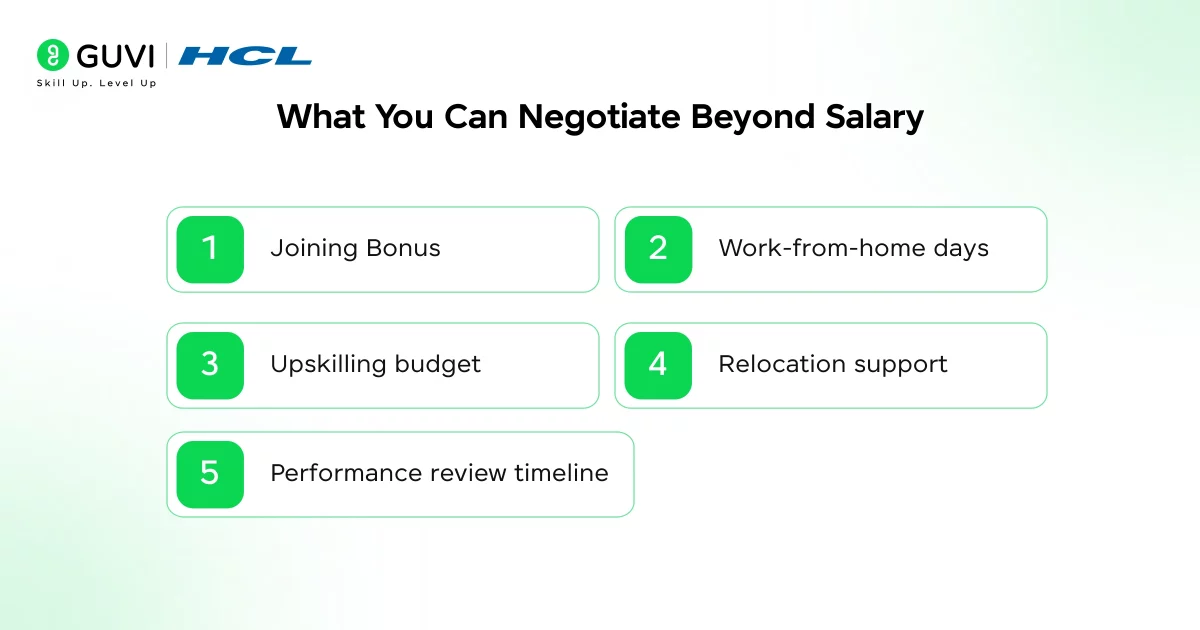
Strong counter-offer strategies do not stop at base pay. Here is what else is often negotiable:
- Joining bonus — a one-time payment to bridge the gap if your current offer is lower upfront
- Work-from-home days — even 1–2 days a week can be part of the discussion
- Upskilling budget — certifications or courses sponsored by the company
- Relocation support — if the role requires moving cities
- Performance review timeline — asking for a review at 6 months instead of 12 if your starting offer is lower
Explore: 5 Tips to Negotiate your salary for Full Stack Developers
💡 Did You Know?
- A Glassdoor employer survey found that 73% of companies expect candidates to negotiate their offer, and hiring managers typically set their initial number at the lower end of their approved range — leaving real room to move.
Sample Counter-Offer Email Structure
A good counter-offer email is short, polite, and specific. Here’s a real example you can adapt:
“Thank you so much for the offer — I’m genuinely excited about this role. I wanted to be upfront that I’ve received another offer with a higher base salary. This role is still my preferred choice, and I’d love to see if there’s flexibility to bring the compensation closer to ₹[X]. I’m happy to discuss the full package, including other benefits, if that helps.”
That’s it. Four sentences. It leads with enthusiasm, states the situation honestly, names a specific number, and stays open to discussion. Recruiters read dozens of these — clarity beats length every time.
“But What If They Pull the Offer?”
This is the question almost everyone asks before sending a counter, so let’s tackle it head-on.
- Offers are rarely withdrawn over a polite ask. A Glassdoor survey found 73% of employers expect candidates to negotiate — the initial number is usually the bottom of their budget, not the top.
- If a company does pull an offer over a reasonable counter, that’s useful information — it tells you how they treat people, before you’ve even joined.
- You won’t sound greedy. You’ll sound like someone who knows their market value, which is exactly who companies want to hire.
Common Mistakes to Avoid
- Bluffing about a competing offer. Never claim an offer you don’t have. If a recruiter asks for details and you can’t provide them, it damages your credibility — and can follow you if you apply there again.
- Negotiating too late. Once you’ve verbally accepted, going back looks unprofessional. Use these counter-offer strategies before saying yes, not after.
- Focusing only on the number. A slightly lower salary with remote flexibility or faster growth can be worth more long-term. Use the comparison table above to see the whole picture.
Conclusion
Having multiple job offers is a privilege — and counter-offer strategies are how you turn that privilege into the best possible outcome. Get everything in writing, compare the full package, know your priorities, and communicate honestly with every recruiter involved. Whether you end up negotiating a higher salary, better remote policy, or a faster growth path, the goal is the same: walk away feeling like you made an informed choice, not a rushed one.
FAQs
1. What are the best counter-offer strategies when you have multiple job offers?
The best counter-offer strategies include getting all offers in writing, comparing the full package (not just salary), deciding your priorities first, and approaching your preferred company honestly about the competing offer before giving a final answer.
2. Should I tell a recruiter about my other job offers?
Yes, if done professionally. Mentioning that you have another offer — without bluffing — is one of the most effective counter-offer strategies because it shows recruiters you are in demand and gives them a reason to improve their offer.
3. How much can I realistically negotiate with multiple offers?
It depends on the role and company, but candidates with multiple offers often see 10–20% improvements in salary or significant gains in non-salary benefits like remote work, joining bonuses, or designation.
4. What if the company refuses to negotiate at all?
Some companies have fixed salary bands and cannot move on the number. In that case, counter-offer strategies should shift to non-salary factors like joining date, remote flexibility, or a faster performance review cycle.
5. Is it unprofessional to negotiate after receiving an offer?
No. Negotiation is a normal and expected part of the hiring process. Most recruiters anticipate it. What matters is doing it before you accept, communicating clearly, and remaining respectful throughout.
6. How do I decline an offer politely after choosing another one?
Thank the recruiter for their time and the opportunity, briefly explain that you have decided to pursue another offer that better fits your current goals, and express interest in staying connected for future opportunities.
Success Stories

About the Author
Jebasta
I translate the language of data into stories that anyone can understand. As a writer with a data science background, I simplify analytics, AI, and decision-making so beginners and enthusiasts can confidently explore the world of data.
View all posts by Jebasta
Connect with me @














Did you enjoy this article?