TL;DR Summary
For most beginners and freshers in India, computer science is the better first choice. It builds the coding, problem-solving and systems skills that almost every tech role needs, including data science. Choose data science first only if you already enjoy statistics and want AI or machine learning roles.
- Choose Computer Science if: you want the widest range of entry-level roles, enjoy building software, or are unsure which tech path suits you.
- Choose Data Science if: you like finding patterns in data, are comfortable with maths and statistics, and are aiming for analytics, ML or AI roles.
- Best for beginners and freshers: Computer science, with data analytics as a bridge into data science.
- Best for AI/ML careers: Data science, built on computer science basics.
- Best for long-term growth: Computer science fundamentals plus a data science specialisation.
Why This Comparison Matters in 2026
Adecco India expects tech hiring to rise 12–15% in 2026, adding about 1.25 lakh roles, with demand for AI, data and cybersecurity talent up 51% (IANS, January 2026).
Software hiring is steady but crowded: GitHub’s Octoverse 2025 counted 21.9 million developers in India. AI and data skills carry a premium, yet employers still struggle to find job-ready talent, as this look at the AI/ML skills gap explains.
What are Computer Science and Data Science?
Computer science is the study of how computers work and how to build software for them. It covers programming, data structures and algorithms, databases, operating systems and system design. In careers, it mostly leads to software engineering, as this guide to software developer roles and responsibilities shows.
CS graduates build web and mobile apps, cloud platforms and the systems that run AI models. In this article, “computer science” means that core CS and software-development career path.
Advanced Data Science & Generative AI Program
Data Science vs Computer Science — Side-by-Side Comparison
| Criteria | Computer Science | Data Science | Winner |
|---|---|---|---|
| Learning difficulty | Moderate | Moderate to high | Computer Science |
| Time to job-ready | 4–8 months | 6–12 months | Computer Science |
| Programming load | Very high | Medium to high | Tie |
| Maths and statistics | Basic | Heavy | Computer Science (easier) |
| Entry-level routes | Developer, tester, support | Analyst, junior data scientist | Computer Science |
| Starting salary (India) | ₹3–8 LPA | ₹4–10 LPA | Data Science |
| Mid-level salary (3–5 yrs) | ₹10–20 LPA | ₹12–25 LPA | Data Science |
| Career options | Very broad | Focused | Computer Science |
| Freelancing | Easier to start | Harder to start | Computer Science |
| Future growth | Strong, AI-adapting | Strong, AI-driven | Tie |
| Best for | Builders | Analysts | Depends on goal |
Time-to-job-ready figures come from HCL GUVI’s role guides. Salary ranges are explained in the salary section below.
The Key Difference Between Data Science and Computer Science
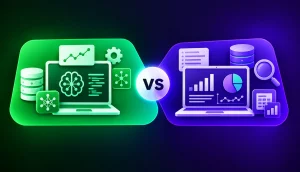
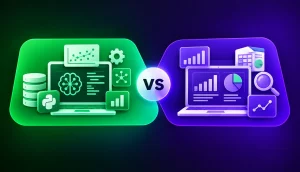
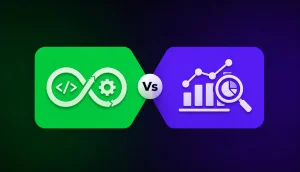
The biggest difference is simple: computer science focuses on building software and systems, while data science focuses on extracting predictions and insight from data.
- Purpose: CS builds the product. Data science tells you what the product should do next.
- Skills: CS leans on algorithms, databases and system design. Data science leans on statistics, machine learning and visualisation.
- Tools: CS uses Java, Python, JavaScript, Git and Docker. Data science uses Python, SQL, pandas, scikit-learn, Jupyter and Power BI. Python sits in both, so these Python developer skills help either way.
- Output: Code either works or it doesn’t. A model is judged by how good it is.
In practical terms: on a shopping app, a CS-trained developer builds the cart, payments and the page that displays recommendations. A data scientist builds the model that picks those recommendations and checks whether they raise sales. You need both.
Find Your Data Science Path
Answer 3 simple questions to find out whether a Data Science course matches your interests and career goals.
What interests you most about Data Science?
Choose what sounds most exciting to learn.
Which skill would you like to learn?
Think about the skills you want to develop.
What kind of project would you enjoy?
Imagine a practical project you could build.
Use-Case Comparisons
Data Science vs Computer Science for Freshers in India
Most companies hire freshers into developer roles on fundamentals and projects. Data science freshers more often start as analysts and move up; see this data science vs data analytics comparison for that route. CS simply has more doors.
- CS portfolio: one language, SQL, Git and 2–3 projects. Start by building DSA skills.
- DS portfolio: Python, SQL, statistics and 3–4 end-to-end case studies.
- Pay reality: company type matters more than field. Instahyre’s 2026 guide puts service-company freshers at ₹3.5–8 LPA and product-company freshers at ₹15–30 LPA.
Comparing job titles instead? See our data science vs software engineering comparison.
Data Science vs Computer Science for Working Professionals Switching Careers
If you come from operations, finance, marketing or reporting, you already hold domain knowledge, Excel and business context. Data science puts those to work, and you compete less with fresh CS graduates. The practical entry is analytics first. Expect an analyst-level start, as this guide on switching from operations to data science explains.
Data Science vs Computer Science for Freelancing
Web, app and automation projects are easy to scope and sell; freelance data work needs client data access and trust. HCL GUVI’s data scientist vs full-stack developer comparison also finds stronger freelancing options on the developer side.
Data Science vs Computer Science for AI and ML Careers
Modelling roles sit in data science, but production AI work needs strong software skills, so CS fundamentals still decide how far you go.
Advanced Data Science & Generative AI Program
Data Science vs Computer Science Salary in India (2026)
| Experience | Computer Science (Software Engineer) | Data Science (Data Scientist) |
|---|---|---|
| Fresher (0–1 year) | ₹3–8 LPA (avg ₹5 LPA) | ₹4–10 LPA (avg ₹6 LPA) |
| Junior (1–3 years) | ₹5–12 LPA (avg ₹8 LPA) | ₹7–15 LPA (avg ₹10 LPA) |
| Mid-Level (3–5 years) | ₹10–20 LPA (avg ₹15 LPA) | ₹12–25 LPA (avg ₹18 LPA) |
| Senior (5+ years) | ₹18–45 LPA* | ₹22–45 LPA |
Fresher to mid-level rows are from salaryinhand.in (updated June 2026), using the same experience bands for both roles. The senior software figure is from Futurense (August 2026) and spans services firms to product companies.
HCL GUVI’s own role guides, which use Glassdoor data, show lower ranges (₹4–8 LPA for data scientist freshers, ₹3–6 LPA for software developer freshers) but the same ordering. Treat these as ranges, not promises.
Find Your Data Science Path
Answer 3 simple questions to find out whether a Data Science course matches your interests and career goals.
What interests you most about Data Science?
Choose what sounds most exciting to learn.
Which skill would you like to learn?
Think about the skills you want to develop.
What kind of project would you enjoy?
Imagine a practical project you could build.
Which Has Better Long-Term Earning Potential?
Data science has the edge on average earnings. Computer science has the edge on breadth.
Data science pays more at mid-level in the data above, and specialisation widens the gap: Instahyre’s 2026 guide reports that moving into GenAI or LLM work can lift data science pay by 60–80%. Computer science offers a wider ladder, from senior engineer to architect or engineering manager, and Instahyre puts senior and staff engineers at product companies at ₹35–60 LPA.
Either way, specialisation beats job title: cloud, system design, MLOps and GenAI raise pay in both fields.
Recommendation — Here Is the Honest Answer
Choose Computer Science if:
- You are a fresher or student who wants the most entry-level options.
- You enjoy building apps, fixing bugs and working with code all day.
- You want flexibility to move into cloud, security, DevOps or AI later, or to freelance.
Choose Data Science if:
- You like statistics, experiments and finding patterns in data.
- You are targeting analytics, machine learning or AI roles.
- You come from a business or non-IT background with strong domain knowledge, and can accept an analyst-level start.
Should you learn both? Yes, in sequence. Spend your first 3–4 months on Python, SQL and basic algorithms, then specialise in data science. SQL is the bridge, so practise with these SQL interview questions. Non-IT professionals can skip heavy algorithms and go straight to Python, SQL and analytics.
Advanced Data Science & Generative AI Program
Conclusion
Computer science is the better choice if you are a beginner or fresher who wants more entry-level options, a shorter route to your first job and the freedom to change direction later. Data science is the better choice if you are drawn to statistics and AI, can handle a steeper start, and want the higher mid-career pay it tends to offer. Both paths are growing in 2026, so the real risk is not choosing wrong; it is delaying the start.
The right answer depends on your goal, skills and learning style. If you are still undecided, build computer science fundamentals first. They keep every door open, including data science.
Frequently Asked Questions
Which is better, data science or computer science?
Computer science is better as a first step for most freshers because it offers more entry-level roles and a shorter path to a first job. Data science is better for AI, machine learning or analytics roles, and the strongest profile combines both.
Which is easier for beginners?
Computer science is easier to start, and HCL GUVI’s role guides estimate 4–8 months to become job-ready for software development, against 6–12 months for data science, which adds statistics, machine learning and model evaluation on top of programming.
Which has more job opportunities in India?
Computer science has more varied openings across development, testing, cloud, security and support. Data science openings are growing quickly: Naukri data cited by Reuters showed AI-related postings rising 16% year on year in June while overall IT hiring fell 3%.
Which has a higher salary?
Data science pays slightly more in aggregated 2026 data, at ₹4–10 LPA for freshers against ₹3–8 LPA for software roles. Company type matters more than the field, so a product-company offer usually outweighs your choice of discipline, and skills matter more than titles.
Can I learn data science without a computer science degree?
Yes. You need Python, SQL, statistics and machine learning, plus real projects to show employers. Many non-IT learners from commerce, science and operations switch this way, often starting in analytics roles first, then moving into data science as skills deepen.
Is data science part of computer science?
Partly. Data science draws on computer science for programming and systems, but it also relies on statistics and domain knowledge. It is best seen as an interdisciplinary field built on a computing foundation rather than a pure subset of CS.