


Career Articles
How I Switched from Web Developer to ML Engineer (A Web Developer's Real Story)
PHP Developer Resume: Writing Guide & Key to Landing Your Dream Job
My Frontend Developer Interview at Google: What Really Happens Behind Closed Doors
Future of Electric Vehicle Course: Fast-Track Your EV Career


Get In Touch For Details! Request More Information

Career Networking: The Power Of Word Of Mouth
Dec 12, 2025 8 Min Read 745 Views
(Last Updated)
Career growth is not just about skills; it is also about people. In every industry, from tech to business, design to management, the biggest opportunities often come from conversations, referrals, and genuine connections. That is why career networking and the power of word of mouth play such an important role in shaping your professional journey.
For beginners who are entering the professional world, networking may look confusing or even scary. But in reality, it is one of the easiest skills to build, and it quietly supports your career in powerful ways. It helps you meet the right people, get noticed, learn from experts, and even access job openings that are never posted online.
In this blog, you will learn what career networking really means, why word of mouth is a powerful advantage, how networking can grow your career faster, simple methods to start networking as a beginner, and practical tips to build strong professional relationships. By the end, you will know exactly how to use career networking to open new opportunities, improve your confidence, and build a strong support system that stays with you throughout your career.
Quick Answer
Career networking means building real connections with people who can guide, support, or recommend you. It’s important because most opportunities come through referrals and word of mouth, not job portals. You can do it by talking to professionals, staying active on LinkedIn, joining events, helping others, and keeping in touch with people you meet.
Table of contents
- What Is Career Networking?
- Importance Of Career Networking
- Understanding Word Of Mouth In Career Growth
- Key Roles Of Word Of Mouth In Career Networking
- Enhances Your Professional Credibility
- Gives Access To Hidden Job Markets
- Builds Strong Industry Connections
- Strengthens Your Personal Branding
- Helps You Gain Career Mentorship
- Improves Your Learning Opportunities
- Increases Entrepreneurial And Project Opportunities
- Essential Techniques To Build Positive Word Of Mouth
- Participate In Professional Communities
- Stay Active On LinkedIn
- Build Genuine Relationships
- Maintain Professional Reputation
- Ask For Referrals Smartly
- Tools And Platforms To Boost Networking
- Real Career Outcomes Driven By Word Of Mouth Networking
- Challenges In Career Networking
- Future Trends In Career Networking
- Conclusion
- FAQs
- Can beginners benefit from career networking without experience?
- What is the easiest way to start networking?
- Does word of mouth matter more than a résumé?
- How can I maintain the relationships I build through networking?
- Is networking only useful when searching for a job?
What Is Career Networking?
Career networking is the process of building meaningful professional relationships that support your growth, learning, and opportunities over time. It goes beyond simply meeting people or exchanging business cards. It is about creating genuine connections based on trust, value, and shared goals.
At its core, career networking helps you stay informed about industry trends, discover hidden job opportunities, learn from experienced professionals, and position yourself in the right circles. Whether online or offline, strong networking ensures that people know who you are, what you’re good at, and how you contribute to your field.
Key Points Of Career Networking
- Building long-term professional relationships
- Sharing knowledge, support, and opportunities
- Staying updated with trends and industry insights
- Creating a positive reputation through consistent value
- Expanding your reach across roles, industries, and geography
Importance Of Career Networking
Building a strong career is not just about what you know: it’s also about who you know and how well they know you. Before companies post jobs online, they often look within their network for trusted people. This is why career networking gives you an advantage: it keeps you visible, creates trust, and helps opportunities come to you instead of you chasing them. Below are the importance of career networking;
- Better Visibility – Helps people in your industry know you, remember you, and consider you for opportunities.
- More Referrals – Increases the chances of someone recommending you for jobs or projects.
- Access to Hidden Jobs – Opens the door to opportunities that are never posted on job portals.
- Stronger Professional Support – Connects you with people who guide you, mentor you, and help solve problems.
- Credibility and Trust – Builds a positive reputation through real conversations and word of mouth.
- Faster Career Growth – Makes it easier to break into new roles, industries, or companies with the right connections.
Understanding Word Of Mouth In Career Growth

Before exploring the techniques and benefits of career networking, it’s important to understand how word of mouth shapes your career. Word of mouth happens when professionals talk positively about your skills, behaviour, and work ethic within their circles. These natural conversations often reach hiring managers and decision-makers much faster than formal job applications, making it one of the strongest tools in career networking.
Key Insights:
- Trusted Recommendations Matter – People believe personal referrals more than online job applications.
- Referrals Reduce Hiring Risk – Companies prefer recommended candidates because it saves time and builds confidence in the hiring process.
- Good Impressions Spread Quickly – When you consistently perform well, others naturally talk about your strengths, expanding your professional reach.
- Your Reputation Works For You – Word of mouth continues to support you even when you are not in the room.
- Boosts Long-Term Visibility – Positive conversations keep your name in professional circles, helping you stay visible for future opportunities.

Key Roles Of Word Of Mouth In Career Networking
Before looking at each role, it’s important to understand how word of mouth strengthens career networking. When people talk positively about your skills and behaviour, your name travels faster than your résumé. This creates early trust, opens hidden opportunities, and keeps you visible in professional circles. Here are the seven major ways it supports your career growth:
- Enhances Your Professional Credibility
- Gives Access To Hidden Job Markets
- Builds Strong Industry Connections
- Strengthens Your Personal Branding
- Helps You Gain Career Mentorship
- Improves Your Learning Opportunities
- Increases Entrepreneurial And Project Opportunities
1. Enhances Your Professional Credibility
A strong reputation often reaches decision-makers long before you do. When people talk about your reliability, behaviour, or work ethic, it builds instant trust and makes you a preferred choice for teams and projects. This silent support makes career networking more powerful and helps professionals form a positive impression of you without needing lengthy introductions.
Key Aspects:
- Makes you appear reliable and consistent
- Reduces hiring risk for recruiters
- Encourages peers to collaborate
- Builds long-term trust in your abilities
- Increases chances of internal referrals
Example:
A teammate mentions your excellent time management to their manager. Later, when a dependable person is needed, your name naturally comes up first.
2. Gives Access To Hidden Job Markets
Some of the best opportunities never reach job portals. They circulate quietly within teams and networks. When people in these circles speak well of you, they share these openings directly with you, even before they are officially announced. This gives you a competitive edge and helps you reach roles that others may never hear about.
Key Aspects:
- Offers early access to new roles
- Helps you avoid crowded job applications
- Improves interview chances through referrals
- Saves time compared to mass applying
- Helps companies hire trusted candidates
Example:
A friend at a consulting firm learns about an upcoming digital marketing role and informs you ahead of time, giving you a clear advantage.
3. Builds Strong Industry Connections
Professionals are more likely to stay connected with people they hear good things about. When your name is associated with dedication or a strong work ethic, others naturally want to engage with you. Over time, this creates deeper industry connections that bring consistent opportunities and learning.
Key Aspects:
- Builds long-term professional relationships
- Encourages experts to collaborate with you
- Keeps you updated with industry trends
- Helps you access panels, workshops, and events
- Creates a supportive professional network
Example:
Someone from a tech event remembers your interest in cloud computing and later connects you with an AWS engineer hosting a workshop.
4. Strengthens Your Personal Branding
A strong personal brand is often built not only through your online posts but also through what others say about you. When people highlight your strengths in conversations, it makes you stand out and builds a more memorable professional identity. This kind of recognition keeps you visible even in competitive fields.
Key Aspects:
- Improves visibility in professional spaces
- Makes your achievements easier to remember
- Encourages people to share your work
- Helps you shine in competitive industries
- Supports long-term career growth
Example:
Several colleagues talk about your great communication skills. A recruiter hears this and checks your profile for writing or training roles.
5. Helps You Gain Career Mentorship
Many mentors choose whom to guide based on what they hear about someone. When your consistency or effort is talked about positively, mentors feel confident investing their time in you. This opens the door to long-term guidance and professional support.
Key Aspects:
- Guides experienced professionals
- Helps you meet industry expectations
- Expands your expert connections
- Supports your long-term career plan
- Helps during confusing or challenging phases
Example:
A senior developer hears that you regularly work on JavaScript projects and decides to mentor you because they see genuine potential.
6. Improves Your Learning Opportunities
People who notice your dedication often invite you to learning-focused groups and discussions. These are spaces where real growth happens, through sharing ideas, solving problems, and exploring new trends. Being recommended for such groups enhances your skills faster.
Key Aspects:
- Gives access to private learning communities
- Keeps you updated with industry trends
- Encourages collaborative problem-solving
- Strengthens both soft and technical skills
- Connects you with ambitious learners
Example:
Someone from your AI study circle recommends that you join a private research discussion group because of your consistent contributions.
7. Increases Entrepreneurial And Project Opportunities
For freelancers and entrepreneurs, word of mouth acts like a silent marketing engine. When satisfied clients or colleagues speak about your work, more opportunities reach you without needing to advertise. This builds long-term trust and brings steady projects.
Key Aspects:
- Brings clients naturally
- Builds long-term trust
- Encourages repeat business
- Helps you collaborate with startups
- Expands your reach through referrals
Example:
A previous client refers you to a startup founder who needs UI/UX design support, giving you consistent freelance work.
Essential Techniques To Build Positive Word Of Mouth
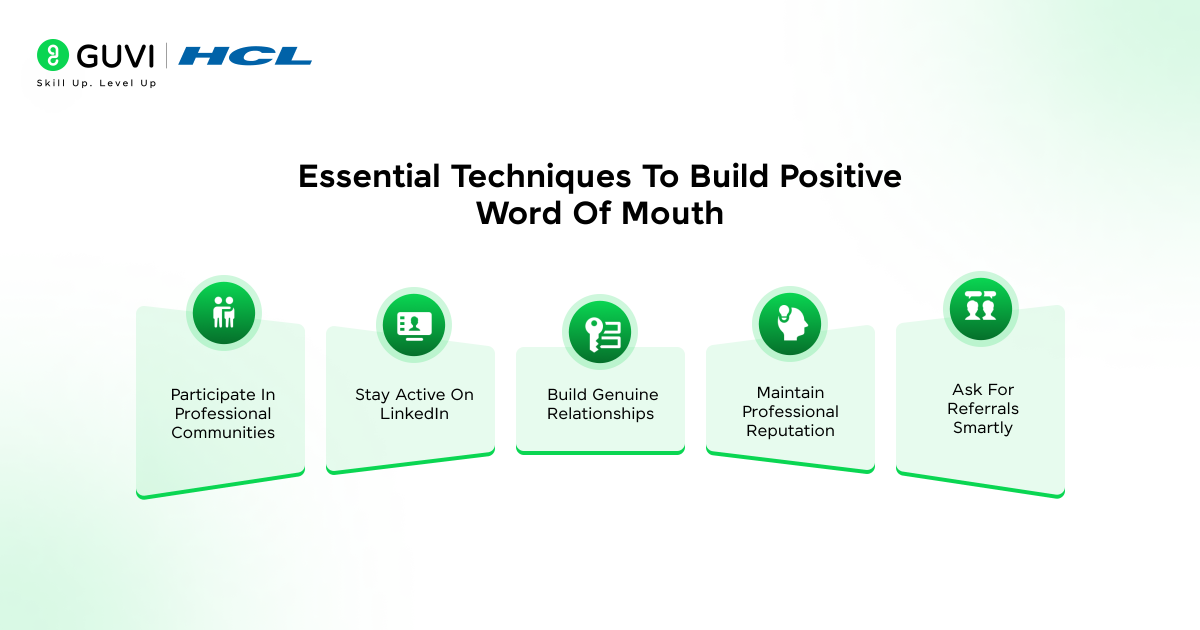
Before you start building a strong reputation in career networking, it’s important to understand the techniques that make professionals talk positively about you. These strategies help you stand out, earn trust, and attract opportunities even when you are not actively applying. Below is an overview of what we will explore:
- Participate in professional communities
- Stay active on LinkedIn
- Build genuine relationships
- Maintain professional reputation
- Ask for referrals smartly
To strengthen your professional presence and communicate more confidently during networking conversations, you can also explore structured learning options like the HCL GUVI Professional Development Course. It helps learners build essential workplace communication skills, refine their presentation style, and develop the kind of personal branding that makes networking more impactful. Adding these skills to your routine ensures that when you connect with new people, whether online or in person, you express your strengths clearly and leave a lasting, positive impression.
1. Participate In Professional Communities
When you show up consistently in professional communities, you naturally become part of conversations that shape word of mouth in career networking. These spaces let people observe your skills, behaviour, and willingness to help – all of which build a strong professional image.
How to do it:
- Join online forums, Slack groups, Discord channels, and industry meetups
- Share simple solutions whenever someone asks a question
- Participate in challenges, workshops, or knowledge-sharing sessions
- Support beginners by guiding them
- Add meaningful contributions without spamming
Tips and Tricks:
- Attend at least 2 events a month
- Introduce yourself clearly when joining a new group
- Keep your comments short, helpful, and respectful
- Avoid selling yourself; let your value speak naturally
Example:
You answer a beginner’s question in a data analytics community. A senior analyst notices your clarity and later recommends you for a small project because they trust your approach.
2. Stay Active On LinkedIn
Staying active on LinkedIn boosts your visibility, strengthens your personal brand, and keeps you relevant in professional circles, which is all essential for building strong word of mouth in career networking. When people regularly see your learning journey, insights, and interactions, you become memorable.
How to do it:
- Post simple updates about what you’re learning
- Comment on industry posts with genuine thoughts
- Share helpful content instead of only personal achievements
- Message professionals politely for discussions
- Maintain a complete and clean profile
Tips and Tricks:
- Post 3–4 times a week
- Use industry keywords in your posts
- Tag people only when necessary
- Keep your tone friendly, not formal or robotic
Example:
You share a LinkedIn post about completing a cloud computing course. A recruiter sees it through a mutual connection’s engagement and shortlists you for an internship.
3. Build Genuine Relationships
People talk positively about you when they feel a real connection — not when you treat networking like a transaction. Genuine relationships are the heart of career networking because they lead to authentic referrals, mentorship, collaboration, and long-term support.
How to do it:
- Ask about people’s work and interests
- Offer help without expecting anything in return
- Remember small details about conversations
- Appreciate others’ achievements
- Stay in touch regularly
Tips and Tricks:
- Network slowly instead of adding new people daily
- Keep voice notes or texts warm and respectful
- Don’t disappear after getting help
- Give value more than you take
Example:
You regularly check in with a senior designer you admire. Over time, they appreciate your sincerity and later refer you to their friend who needs a junior UI designer.
4. Maintain Professional Reputation
Your reputation is the strongest engine behind word-of-mouth marketing in your career. When people know you deliver quality work, communicate clearly, and stay reliable, they naturally recommend you — even without being asked.
How to do it:
- Meet deadlines consistently
- Clarify doubts early instead of last-minute
- Stay calm and cooperative during teamwork
- Own your mistakes and fix them quickly
- Maintain honesty in every project
Tips and Tricks:
- Keep a simple to-do system to avoid delays
- Send updates regularly so people trust your process
- Never blame colleagues publicly
- Say “I’ll check and get back” instead of giving unclear answers
Example:
Your project manager remembers how dependable you were during tight deadlines. Later, when another team searches for someone responsible, your name naturally comes up first.
5. Ask For Referrals Smartly
Referrals are a powerful part of word-of-mouth networking, but you must request them the right way. A smart referral request should feel respectful, clear, and easy for the other person to act on.
How to do it:
- Approach people who know your work well
- Explain what type of job or connection you’re looking for
- Provide your resume, portfolio, or LinkedIn link
- Make the request short and polite
- Thank them genuinely
Tips and Tricks:
- Ask during a positive moment (after completing a project, helping them, etc.)
- Never pressure anyone to refer you
- Follow up only once if they’re busy
- Update them when their referral helps
Example:
You politely ask a former colleague if they can refer you for an open front-end developer role. Because they trust your skills, they forward your resume to the hiring manager — giving you instant visibility.
Tools And Platforms To Boost Networking

Building a strong career network becomes easier when you use the right digital platforms. These tools help you connect with professionals, showcase your work, join discussions, and stay visible in your industry. Whether you’re a student, beginner, or working professional, these online spaces create opportunities for referrals, learning, collaborations, and long-term professional growth.
- LinkedIn Groups & Events – Join industry-specific discussions and attend virtual events to meet professionals and stay updated.
- Kaggle, GitHub, Behance – Showcase your projects and creative work to attract recruiters, collaborators, and mentors.
- Reddit Communities – Engage in threads related to your field, ask questions, and learn from global professionals.
- Stack Overflow Discussions – Solve coding problems, share solutions, and build credibility within tech communities.
- HCL GUVI Learner Community – Participate in challenges, coding discussions, and peer learning to strengthen your technical network.
- Networking Apps Like Lunchclub – Match with professionals based on your goals and interests for meaningful 1:1 conversations.
Real Career Outcomes Driven By Word Of Mouth Networking
Word of mouth plays a major role in real-life career networking because it influences decisions long before résumés or applications are reviewed. When professionals speak positively about your skills, discipline, or work ethic, it opens doors to opportunities that are often hidden, unlisted, or highly competitive. These real-world scenarios show how powerful word of mouth can be in shaping career growth, increasing visibility, and helping you stand out in crowded job markets.
- Securing Internships Through Senior Recommendations – Seniors who trust your abilities often refer you for internships before openings are announced.
- Getting Interview Calls Via Employee Referrals – Recruiters prioritise candidates who come recommended by reliable employees.
- Being Invited To Join Research Projects – Professors or experts extend invitations when they hear positive feedback about your interests and consistency.
- Receiving Freelance Work From Past Clients – Satisfied clients share your name within their network, giving you steady project opportunities.
- Earning Promotions Based On Peer Feedback – Managers consider team opinions and collaborative behaviour when selecting people for leadership roles.
Challenges In Career Networking
Career networking is powerful, but many beginners face emotional and practical obstacles that slow down their progress. These challenges are completely normal and often arise from uncertainty, fear, or lack of direction. Understanding them makes it easier to build confidence, improve communication, and develop stronger professional relationships that support long-term career growth.
- Fear of Approaching People – Many beginners hesitate to start conversations because they worry about being judged or ignored.
- Lack of Networking Confidence – Limited experience or self-doubt makes it difficult to speak about skills or achievements.
- Difficulty Maintaining Connections – People often struggle to stay in touch consistently, which weakens valuable relationships over time.
- Not Knowing Where To Start – Without the right platforms or guidance, networking can feel confusing and overwhelming.
- Feeling Awkward Asking For Referrals – Asking for help feels uncomfortable when you’re unsure how to phrase the request professionally.
Future Trends In Career Networking
Career networking is evolving rapidly as technology, digital platforms, and global work environments reshape how professionals connect and grow. These emerging trends will make networking more personalised, accessible, and efficient , giving individuals more ways to build visibility, gain referrals, and grow their reputation through modern word-of-mouth systems. Understanding these upcoming shifts helps you stay ahead and prepare for the future of professional growth.
- AI-Assisted Networking Tools – Smart platforms will recommend mentors, job matches, and connections based on your skills, interests, and career goals.
- Skill-Based Professional Matchmaking – Networking will move beyond job titles and focus on matching people through specific skills, projects, and learning paths.
- Virtual Global Networking Events – Digital meetups and conferences will allow you to connect with experts worldwide without geographical limitations.
- Personal Micro-Branding – Individual online presence, such as small case studies, micro-content, or learning updates, will become key to career visibility.
- Digital Mentorship Ecosystems – Structured online mentorship communities will help learners access guidance, feedback, and industry insights at scale.
Conclusion
Career networking works best when it grows from genuine relationships, consistent communication, and a reputation built through everyday actions. Word of mouth becomes powerful when people naturally speak about your skills, behaviour, and reliability, which often helps you reach opportunities you may never find online.
To take this forward, start by showing up in the right communities, contributing meaningfully, and staying active on platforms where professionals gather. Keep your interactions authentic, maintain your reputation through quality work, and stay connected with people who support your growth. Over time, these small, consistent steps create a strong network that opens doors, strengthens your visibility, and helps your career move in the direction you want.
FAQs
1. Can beginners benefit from career networking without experience?
Yes. Even without experience, career networking helps beginners gain visibility, learn industry expectations, and discover early opportunities through guidance and referrals.
2. What is the easiest way to start networking?
Begin by joining online communities, attending virtual events, engaging with professionals on LinkedIn, and connecting with seniors, mentors, or colleagues who share similar interests.
3. Does word of mouth matter more than a résumé?
Both are important, but positive word of mouth often reaches hiring managers faster and builds trust more effectively than a résumé alone.
4. How can I maintain the relationships I build through networking?
Stay in touch occasionally, appreciate others’ achievements, share useful resources, and keep your interactions authentic and respectful.
5. Is networking only useful when searching for a job?
No. Career networking supports freelancers, entrepreneurs, students, working professionals, and leaders by opening doors to collaborations, mentorship, projects, and long-term growth.
Success Stories

About the Author
Jebasta
I translate the language of data into stories that anyone can understand. As a writer with a data science background, I simplify analytics, AI, and decision-making so beginners and enthusiasts can confidently explore the world of data.
View all posts by Jebasta
Connect with me @
















Did you enjoy this article?