


Career Articles
Android Development Roadmap :10-Step Guide to Become an Android Developer
Network Engineer Roadmap: From Beginner to Expert
VLSI Roadmap: 11 Steps to Become a Successful VLSI Engineer
Azure Certification Roadmap 2026: 7 Best Certifications Beginners Must Know

Get In Touch For Details! Request More Information

How to Change Your Career from Marketing to Data Science?
Nov 29, 2025 5 Min Read 1034 Views
(Last Updated)
Have you ever wondered how to successfully make a marketing-to-data science career change? Transitioning from a marketing role to data science can feel challenging, but it is entirely achievable with the right approach. Marketing professionals already bring valuable skills such as analyzing customer behavior, interpreting campaign data, and making data-driven decisions, all of which are highly relevant in data science.
Making a marketing-to-data science career change opens doors to high-demand roles, better compensation, and opportunities to work at the intersection of business strategy and data analytics.In this blog, we will cover everything you need to know to make this transition effectively. You will learn about the key technical skills to acquire, ways to leverage your marketing experience, real-world project ideas, networking and mentorship strategies, and tips to prepare for data science jobs.
By the end of this article, you will have a clear roadmap to confidently make a marketing to data science career change, helping you step into a high-demand, data-driven career with confidence.
Table of contents
- Importance of a Marketing to Data Science Career Change
- Roadmap for a Marketing to Data Science Career Change
- Build a Strong Foundation in Data Science Fundamentals
- Apply Marketing Knowledge Through Data Analytics
- Master Machine Learning Concepts
- Develop Data Handling and Database Skills
- Work on Real-World Projects
- Leverage Your Marketing Experience
- Network and Seek Mentorship
- Upskill Through Courses
- Prepare for Data Science Jobs
- Skills and Tools to Master
- Roles and Salary Opportunities in Data Science for Marketing Professionals
- Data Analyst
- Marketing Analyst
- Business Analyst
- Data Scientist
- Customer Insights Analyst
- Digital Marketing Analyst with Data Focus
- Conclusion
- FAQs
- How long does it take to make a marketing-to-data science career change?
- Do I need a math background for a marketing to data science career change?
- Should I learn Python or R first?
- Can I work remotely after switching to data science?
- How can I leverage marketing experience in data science jobs?
Importance of a Marketing to Data Science Career Change
Making a transition from marketing to data science is more than a trend—it is a strategic career move that can open doors to new opportunities, higher pay, and professional growth. Marketing professionals already possess valuable skills like analyzing customer behavior, managing campaigns, and making data-driven decisions, which can be leveraged effectively in data science.
Key reasons why a marketing to data science career change is worthwhile include:
- High Demand for Analytics Professionals: Businesses increasingly rely on data to drive marketing strategies, product decisions, and customer engagement, creating a high demand for analytics professionals.
- Career Growth and Salary Potential: Data science roles offer significant career growth and higher salary potential compared to traditional marketing positions.
- Leverage Existing Marketing Skills: Marketing experience, such as campaign management, customer segmentation, and brand strategy, provides a unique advantage in understanding and interpreting data.
- Combining Skills for Strategic Impact: Combining marketing expertise with data analytics allows you to design strategies that are both data-driven and customer-centric.
Example: A marketer skilled in customer segmentation can use data science techniques to predict which customer segments are most likely to convert, improving campaign ROI.
Roadmap for a Marketing to Data Science Career Change
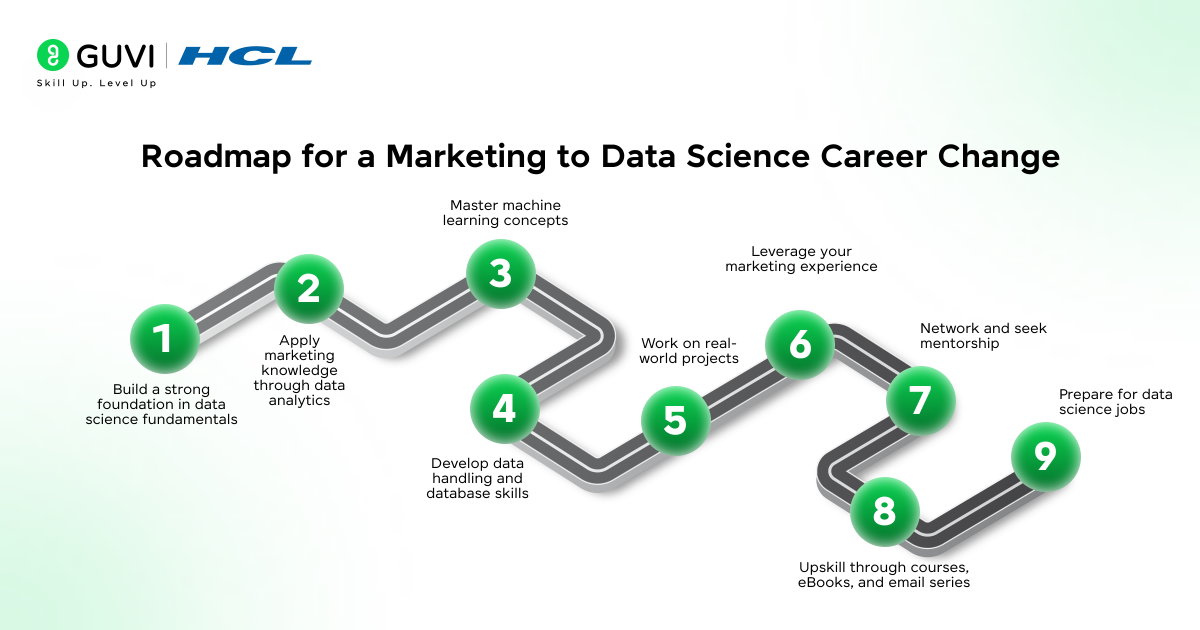
Transitioning from marketing to data science can feel overwhelming, but having a clear roadmap makes the process manageable. Below is a step-by-step guide to help you successfully make a marketing-to-data science career change. We will go through each of these steps in detail in the sections that follow, so you can confidently plan your career switch from marketing to data science.
- Build a strong foundation in data science fundamentals
- Apply marketing knowledge through data analytics
- Master machine learning concepts
- Develop data handling and database skills
- Work on real-world projects
- Leverage your marketing experience
- Network and seek mentorship
- Upskill through courses, eBooks, and email series
- Prepare for data science jobs
Curious how marketers successfully transition into data science? HCL Guvi’s 5-day free email series gives you a structured, step-by-step learning path with bite-sized lessons every day. You’ll learn Python, SQL, and data visualization while applying analytics techniques directly to marketing datasets. By the end of the series, you’ll be able to analyze campaigns, uncover insights, and make data-driven predictions.

1. Build a Strong Foundation in Data Science Fundamentals
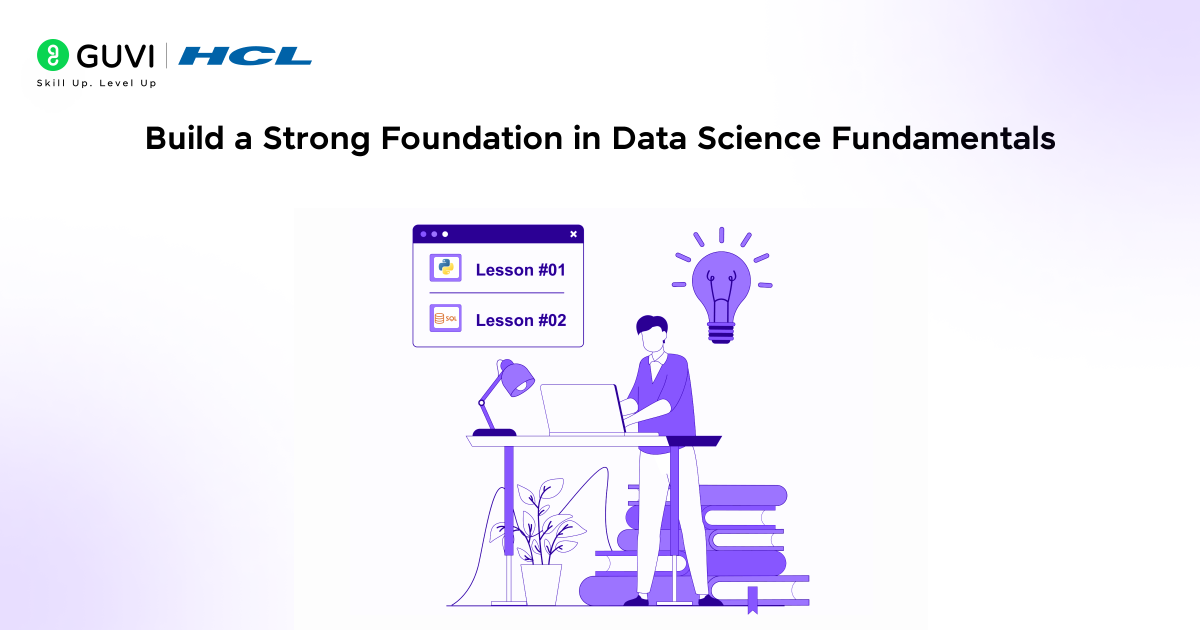
To make a successful marketing to data science career change, you need a strong foundation in the core concepts of data science. This ensures you understand how data works and how to analyze it effectively.
Skills To Learn:
- Learn Python or R programming for data analysis
- Study statistics and probability, including regression and correlation
- Learn data visualization using tools like Matplotlib, Seaborn, or ggplot2
- Understand basic machine learning concepts, such as supervised vs unsupervised learning
Example: Use Python to analyze past marketing campaigns and identify trends in customer engagement or conversion rates.
2. Apply Marketing Knowledge Through Data Analytics
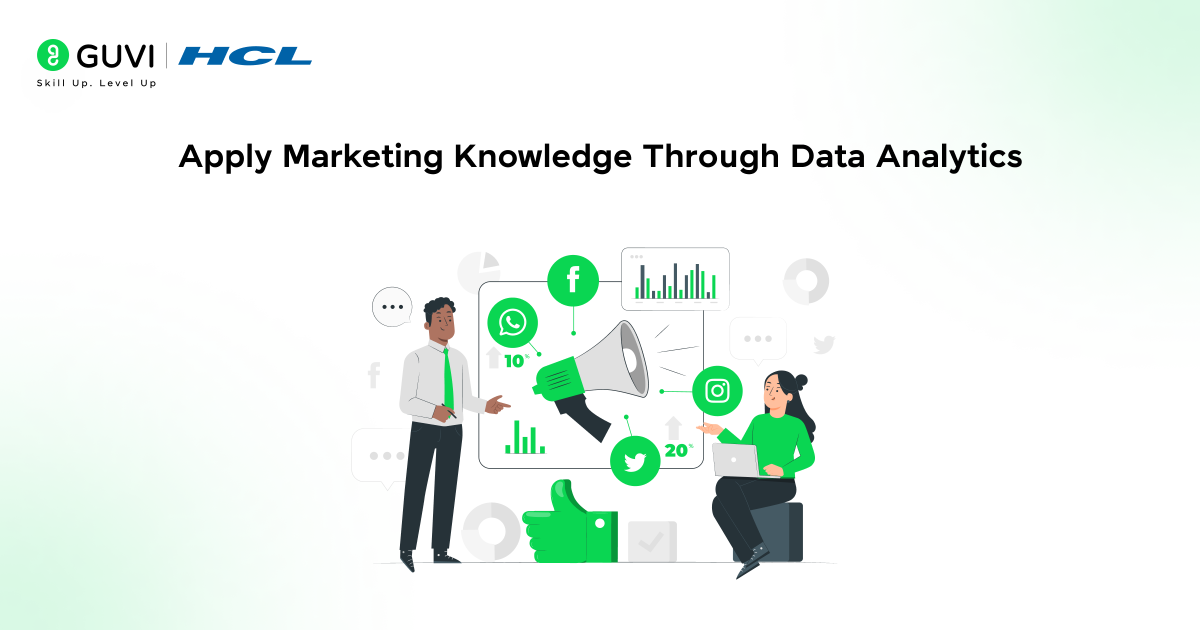
Your marketing experience is a valuable asset. This step involves applying your domain knowledge to data analysis to extract actionable insights.
Actions To Take:
- Perform customer segmentation based on behavior, demographics, or purchase patterns
- Apply predictive analytics to forecast campaign outcomes
- Conduct A/B testing to evaluate marketing strategies
- Analyze campaign performance metrics and KPIs
Example: Predict which email campaigns will have the highest engagement using historical performance data.
3. Master Machine Learning Concepts
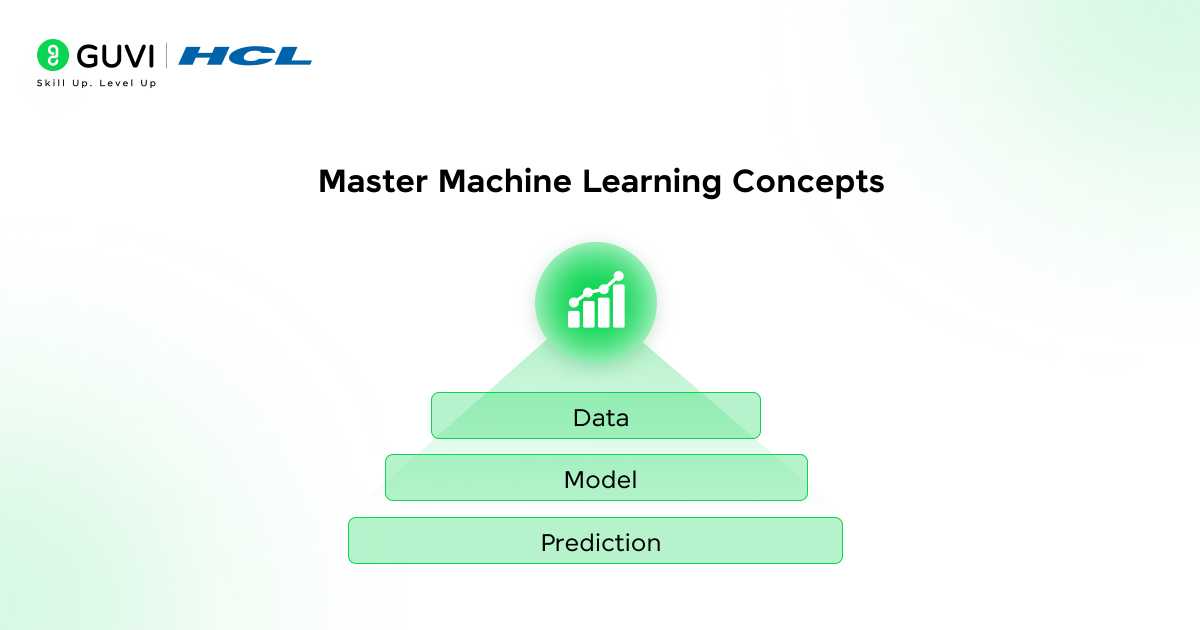
Machine learning helps turn raw data into actionable insights. This step is critical to leverage data effectively in marketing and business decisions.
Skills To Learn:
- Learn supervised learning techniques such as regression and classification
- Explore unsupervised learning, including clustering and anomaly detection
- Understand model evaluation metrics like accuracy, precision, recall, and F1 score
- Apply machine learning to marketing scenarios such as churn prediction
Example: Build a churn prediction model to identify customers at risk of leaving and plan retention strategies.
4. Develop Data Handling and Database Skills
Real-world data is often messy. Knowing how to handle, clean, and query data is essential for any marketing to data science career change.
Skills To Learn:
- Master SQL for extracting and manipulating data from databases
- Learn ETL processes to clean and structure data for analysis
- Get familiar with big data tools like Hadoop or Spark
- Perform data quality checks for missing values, outliers, and inconsistencies
Example: Use SQL to query customer purchase histories and identify repeat purchase patterns for targeted marketing.
5. Work on Real-World Projects
Hands-on experience is crucial to apply your learning and demonstrate your capabilities to potential employers.
Actions To Take:
- Work on marketing analytics projects analyzing campaigns or social media data
- Participate in Kaggle competitions to practice real-world challenges
- Build a portfolio documenting problem statements, analysis, and results
- Focus on showing measurable impact through your projects
Example: Predict product demand based on historical sales data to optimize marketing campaigns and inventory planning.
6. Leverage Your Marketing Experience
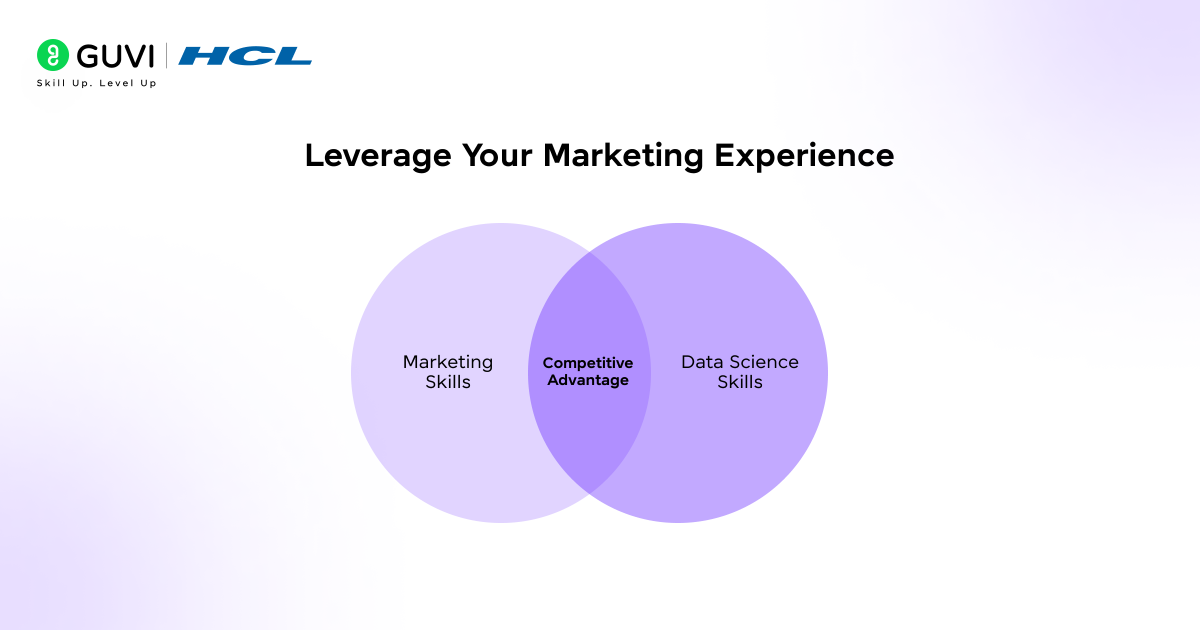
Your marketing background gives you a unique perspective that can enhance your data science work.
Actions To Take:
- Use domain expertise to interpret customer behavior and campaigns
- Develop storytelling skills to present data insights effectively
- Bridge communication between marketing, analytics, and business teams
- Highlight how your combined marketing and data skills create value
Example: Design a dashboard showing campaign ROI while predicting future customer behavior using machine learning.
7. Network and Seek Mentorship

Learning from others helps accelerate your marketing to a data science career change and guides you toward relevant opportunities.
Actions To Take:
- Join data science communities, forums, and LinkedIn groups
- Find mentors who have transitioned from marketing to data science
- Attend webinars, workshops, and industry events
Example: Mentorship can help you focus on the most relevant skills and avoid common pitfalls in your career transition.
8. Upskill Through Courses

Structured learning resources provide a roadmap and hands-on exercises to build your skills efficiently.
Skills To Learn :
- Take data science courses covering Python, SQL, machine learning, and marketing analytics
- Read eBooks with practical examples and exercises
- Apply concepts immediately through small projects or exercises
Example: Completing a 5-day marketing analytics email series can give actionable insights and mini-projects to practice your skills.
9. Prepare for Data Science Jobs
After acquiring skills and experience, it’s time to enter the job market and target roles that match your profile.
Skills To Learn / Actions To Take:
- Build a resume highlighting data projects, technical skills, and marketing experience
- Prepare for interviews covering SQL, Python/R, statistics, and case studies
- Target entry-level roles like data analyst, business analyst, or marketing analyst with an analytics focus
- Keep learning and updating skills to stay relevant
Example: Start with a marketing analyst role leveraging data insights before progressing fully into a data science position.
Skills and Tools to Master
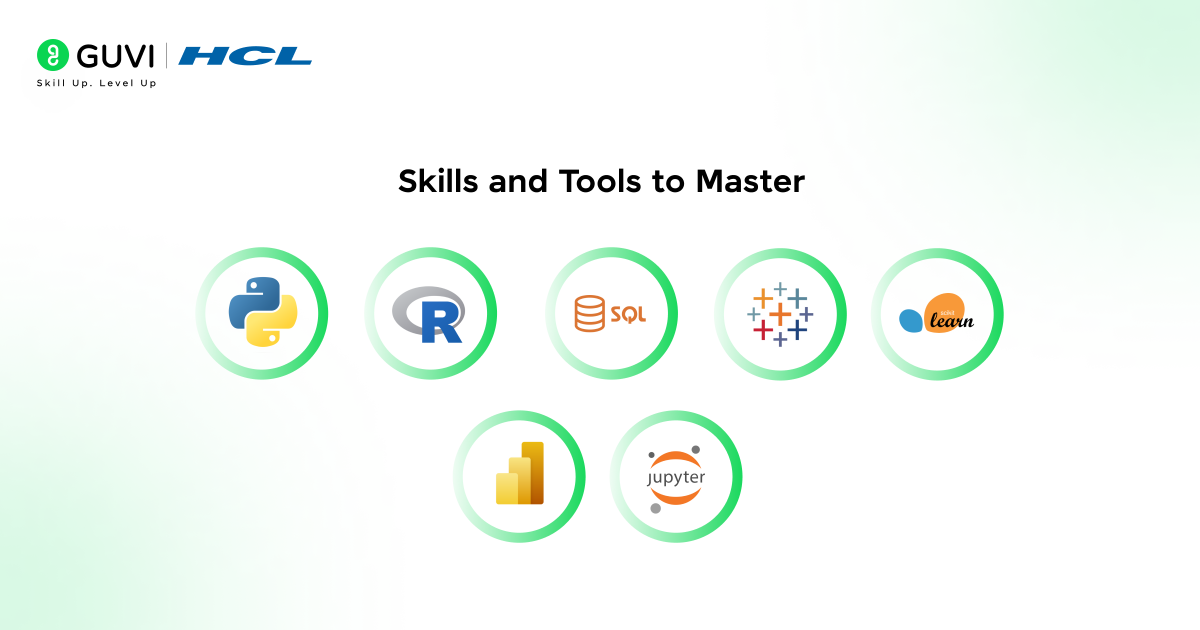
Successfully transitioning from marketing to data science requires mastering a combination of technical skills, analytical abilities, and marketing knowledge. Focusing on the right skills and tools will make your career change faster and more effectively.
Key Skills to Learn:
- Programming: Python or R for data analysis, visualization, and machine learning
- Statistics and Probability: Understanding distributions, correlation, regression, and hypothesis testing
- Data Handling: SQL for querying databases, ETL processes, and data cleaning techniques
- Machine Learning: Supervised and unsupervised learning, model evaluation, and predictive analytics
- Data Visualization: Tools like Matplotlib, Seaborn, Tableau, or Power BI to communicate insights
- Domain Expertise: Marketing knowledge, such as customer segmentation, campaign analysis, and ROI evaluation
- Storytelling with Data: Present insights in a clear and actionable way for stakeholders
Essential Tools to Master:
- Programming & Analysis: Python (NumPy, Pandas, Scikit-learn), R
- Databases & Big Data: SQL, Excel, Hadoop, Spark
- Visualization & Reporting: Tableau, Power BI, Matplotlib, Seaborn, ggplot2
- Collaboration & Project Management: GitHub, Jupyter Notebooks, Google Colab
Example: By mastering Python and SQL, a marketer can extract customer data, clean and analyze it, then use machine learning models to predict future campaign performance or customer behavior.
Roles and Salary Opportunities in Data Science for Marketing Professionals
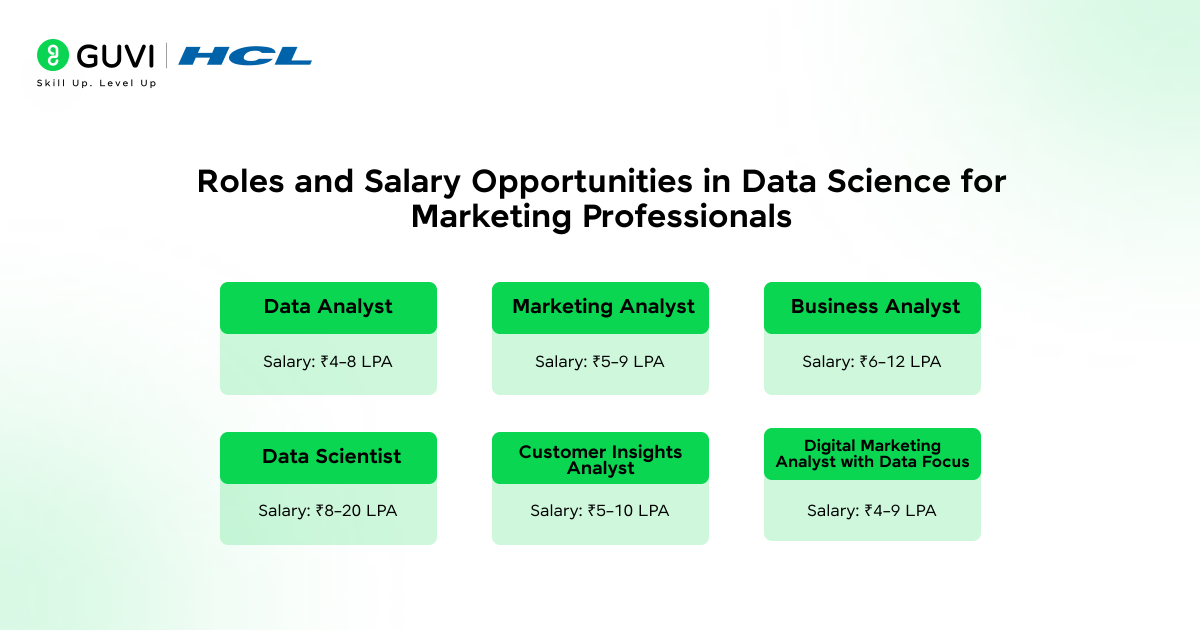
Transitioning from marketing to data science opens up multiple roles where you can combine your marketing expertise with data skills. Below are some key positions, along with their responsibilities and expected salaries.
HCL Guvi’s data science eBook gives you a step-by-step roadmap to transition successfully. You’ll learn essential skills like Python, SQL, data visualization, and machine learning, all while applying your marketing knowledge to real-world datasets. The eBook also includes practical exercises, case studies, and tips for building a portfolio that impresses employers. It’s designed to make your career switch structured, actionable, and achievable.
1. Data Analyst
- Role Description: Collects, processes, and analyzes data to provide actionable business insights. Works on reporting dashboards, campaign metrics, and data visualization.
- Salary: ₹4–8 LPA
- Salary Reference: Glassdoor
2. Marketing Analyst
- Role Description: Focuses on marketing data to measure campaign effectiveness, customer segmentation, and ROI. Helps design data-driven marketing strategies.
- Salary: ₹5–9 LPA
- Salary Reference: Indeed
3. Business Analyst
- Role Description: Bridges the gap between business needs and data solutions. Translates data insights into strategic recommendations for marketing and operations.
- Salary: ₹6–12 LPA
- Salary Reference: Glassdoor
4. Data Scientist
- Role Description: Develops predictive and prescriptive models, performs advanced analytics, and builds machine learning algorithms to support business decisions.
- Salary: ₹8–20 LPA
- Salary Reference: Glassdoor
5. Customer Insights Analyst
- Role Description: Analyzes customer data to understand behavior, preferences, and trends. Provides insights to improve marketing campaigns and customer engagement.
- Salary: ₹5–10 LPA
- Salary Reference: Indeed
6. Digital Marketing Analyst with Data Focus
- Role Description: Uses data science tools to optimize online marketing campaigns, track performance metrics, and predict customer behavior for digital channels.
- Salary: ₹4–9 LPA
- Salary Reference: Glassdoor
Conclusion
Making a marketing-to-data science career change is not just possible—it’s a smart and future-proof career move. Your experience in understanding customers, analyzing campaigns, and making data-backed decisions already gives you a strong foundation. By adding technical skills like Python, SQL, machine learning, and data visualization, you can position yourself for high-impact roles across analytics and data science.
The key is to approach the transition step-by-step: learn the fundamentals, practice with real datasets, build projects that showcase your skills, and stay connected with the data community. With consistency and the right guidance, you can confidently move into roles where your marketing knowledge becomes a powerful advantage.
If you’re looking for structured, mentor-led support to accelerate this transition, HCL Guvi’s Data Science Course offers hands-on training, industry projects, and placement assistance to help you bridge the gap efficiently and professionally.
FAQs
1. How long does it take to make a marketing-to-data science career change?
Typically, 6–12 months with consistent learning and project work.
2. Do I need a math background for a marketing to data science career change?
Basic statistics and probability are enough; advanced math can be learned gradually.
3. Should I learn Python or R first?
Python is versatile and beginner-friendly, while R is excellent for statistical analysis. Python is generally recommended.
4. Can I work remotely after switching to data science?
Yes. Many data science roles offer remote opportunities, especially in analytics, AI, and machine learning.
5. How can I leverage marketing experience in data science jobs?
Highlight projects analyzing campaigns, customer data, and insights. Your domain knowledge makes your profile stand out.
Success Stories

About the Author
Jebasta
I translate the language of data into stories that anyone can understand. As a writer with a data science background, I simplify analytics, AI, and decision-making so beginners and enthusiasts can confidently explore the world of data.
View all posts by Jebasta
Connect with me @

















Did you enjoy this article?