


Python Articles
Building a Neural Network Using PyTorch: Step-by-Step Guide for Beginners and Developers
How to Install Requirements.txt in Python: A Beginner's Step-by-Step Guide (2026)


Get In Touch For Details! Request More Information
Books vs Courses: Which Is Better for Learning Python from Scratch?
Mar 31, 2026 5 Min Read 618 Views
(Last Updated)
Should you start learning Python by turning pages or by watching code come alive on your screen? Many beginners struggle to decide between books and courses, even before writing their first line of Python. The choice matters because learning format directly influences how quickly concepts click, how confidently you practice, and how consistently you stay motivated while starting from scratch.
Continue through this blog to understand the strengths and limitations of books and courses. Learn how each approach supports beginners and decide which path aligns best with your learning style and goals.
Table of contents
- What Does “Learning Python From Scratch” Really Mean?
- Learning Python From Books
- How do Python Books Teach Concepts?
- Advantages of Learning Python From Books
- Limitations of Python Books for Beginners
- Learning Python Through Online Courses
- How Python Courses Are Structured?
- Advantages of Python Courses
- Limitations of Python Courses
- Which Is Better for Absolute Beginners?
- The Hybrid Approach: Books + Courses
- Books vs Courses: Comparison for Learning Python from Scratch
- Top Python Books to Learn Python (2026 Recommendations)
- Beginner-Friendly Books
- Intermediate & Practical Skill Books
- Advanced & Deep Mastery Books
- Top Python Courses for Beginners and Career Switchers
- Common Mistakes Beginners Make When Choosing Learning Resources
- Conclusion
- FAQs
- Can I learn Python effectively using only books?
- Do online courses replace the need for Python books?
- How long does it take to learn Python from scratch using courses?
- Is a hybrid approach better than choosing just one?
What Does “Learning Python From Scratch” Really Mean?
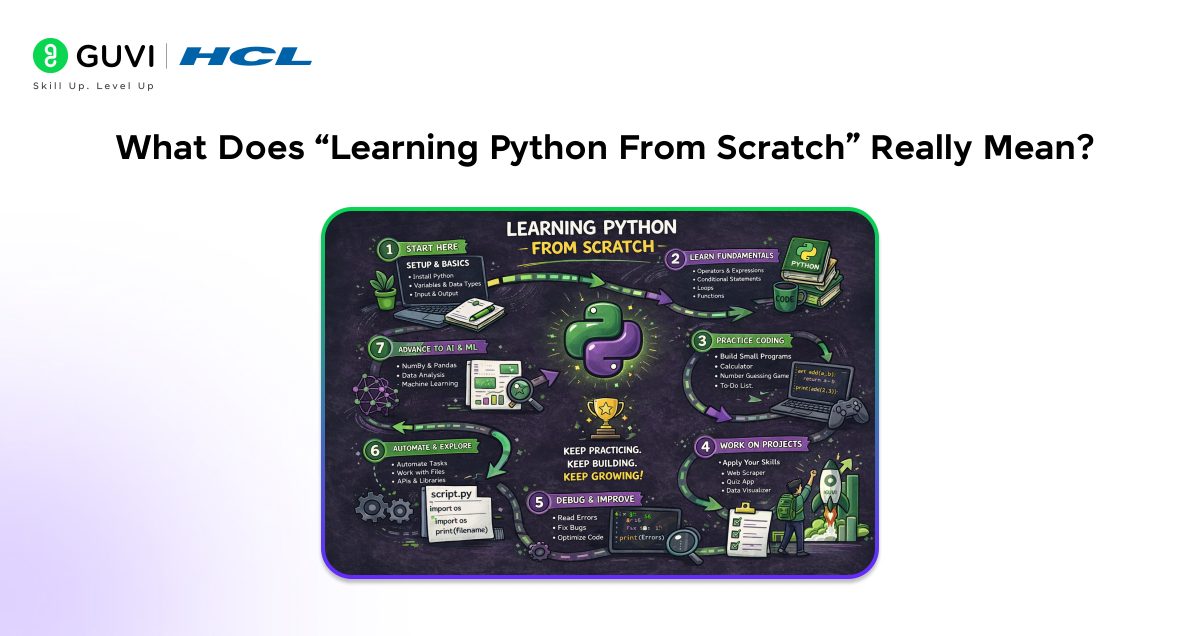
Learning Python from scratch means starting with no prior programming background and building a clear understanding of how code works, how problems are expressed logically, and how Python translates instructions into action. At this stage, learners are also expected to develop core skills like reading code, writing simple scripts, debugging syntax errors, and understanding program execution flow. Common challenges include adapting to logical thinking, maintaining consistency in practice, and bridging the gap between theoretical concepts and practical application.
Learning Python From Books
How do Python Books Teach Concepts?
- Foundational Language Mechanics: Books explain how Python interprets code, evaluates expressions, and manages variables, which builds a strong mental model of execution.
- Syntax Precision and Rules: Detailed coverage of indentation, scoping rules, and data structures for Python front-end and backend developers. Also, standard library behavior helps avoid common beginner mistakes.
- Progressive Complexity: Concepts evolve from simple scripts to functions, modules, and object-oriented principles in a predictable sequence.
- Language-Agnostic Thinking: Many books emphasize problem-solving logic over tooling, which improves long-term adaptability across languages.
Advantages of Learning Python From Books
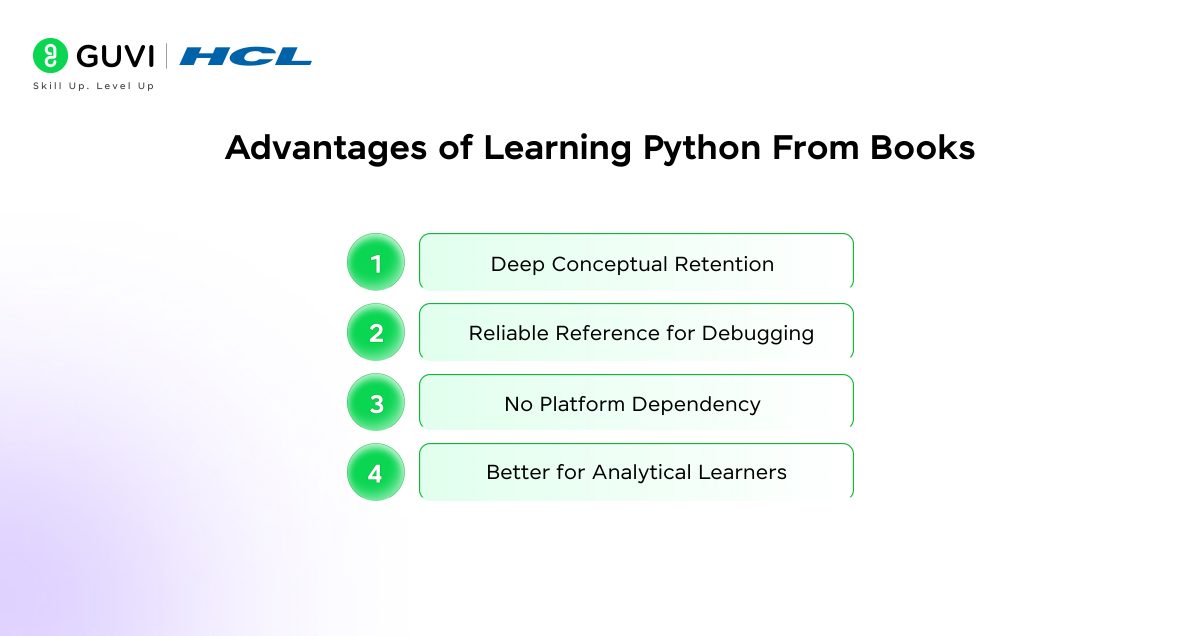
- Deep Conceptual Retention: Reading encourages slower, more deliberate understanding compared to fast-paced video content.
- Reliable Reference for Debugging: Books are useful when mastering Python for data science, revisiting syntax rules, edge cases, and built-in behavior during real projects.
- No Platform Dependency: Learning is unaffected by platform shutdowns, course expiry, or subscription changes.
- Better for Analytical Learners: Learners who prefer reasoning, diagrams, and written explanations benefit more from books.
Limitations of Python Books for Beginners
- Delayed Practical Confidence: Beginners may understand concepts but struggle to apply them without guided coding environments.
- Limited Exposure to Tooling: Books often underrepresent IDE usage, debuggers, and real-world workflows.
- Higher Drop-Off Risk: Lack of engagement mechanisms can reduce consistency for learners without strong self-discipline.
Learning Python Through Online Courses
How Python Courses Are Structured?
- Incremental Skill Building: Courses introduce concepts alongside immediate coding tasks, reinforcing learning through action.
- Environment Setup Guidance: Many courses guide learners through installing Python, using editors, and running scripts correctly.
- Python Project-Oriented Flow: Lessons often culminate in small projects that combine multiple concepts into working programs.
- Feedback-Oriented Design: Auto-graded exercises help learners identify mistakes quickly.

Advantages of Python Courses
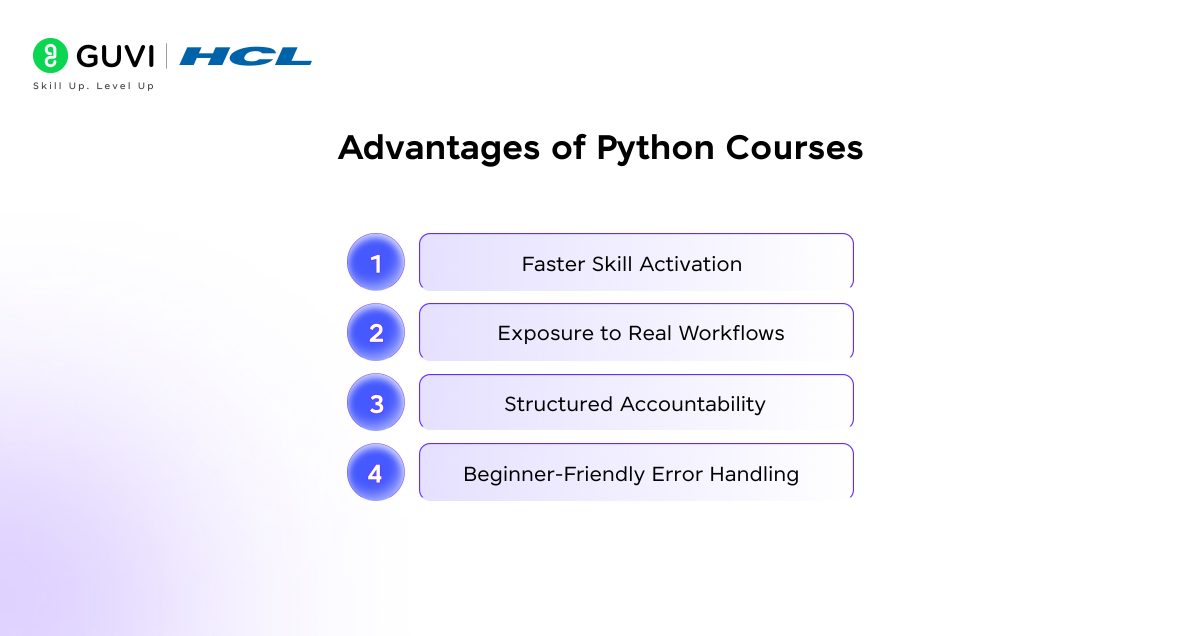
- Faster Skill Activation: Learners begin writing functional code early, which builds confidence quickly.
- Exposure to Real Workflows: Courses frequently include Python web development concepts and comprehensively cover topics such as debugging, testing, and basic version control practices.
- Structured Accountability: Defined lesson paths and progress indicators help maintain learning momentum.
- Beginner-Friendly Error Handling: Common errors are anticipated and explained, reducing frustration.
Limitations of Python Courses
- Surface-Level Understanding Risk: Fast progression can lead to gaps in conceptual depth if learners do not pause to reflect.
- Instructor Dependency: Learners may struggle independently if explanations are unclear or rushed.
- Content Obsolescence: Some courses lag behind Python version updates or best practices.
- Access and Cost Constraints: Subscription models or limited access periods reduce long-term learning value.
Still deciding how to start learning Python from scratch? Explore HCL GUVI’s Python Hub to understand core Python concepts, compare learning approaches, and build a strong foundation before choosing books, courses, or a hybrid path.
Which Is Better for Absolute Beginners?
Absolute beginners benefit most from learning paths that reduce friction, provide clarity, and sustain motivation. The ideal choice varies by background and learning preferences:
- Learners with no programming background: Courses offer clearer onboarding, visual explanations, and guided practice that reduce initial intimidation.
- Students vs working professionals: Students may benefit from books due to flexible pacing and academic depth. Working professionals often prefer courses that offer structured, time-efficient learning.
- Self-learners vs guided learners: Highly self-motivated learners can succeed with books. Learners who prefer accountability, feedback, and direction benefit more from courses.
The Hybrid Approach: Books + Courses
- Using books for fundamentals: Books provide clear explanations of core concepts such as data types, control flow, functions, and object-oriented principles, which form a strong theoretical base.
- Using courses for practice and projects: Courses translate theory into action through coding exercises, guided projects, and real-world scenarios that build confidence and applied skill with Python libraries and tools.
- How to combine both effectively: Study concepts from books first, then reinforce them immediately through course exercises. Use books as ongoing references while relying on courses for structured progression and feedback.
Books vs Courses: Comparison for Learning Python from Scratch
| Factor | Books | Courses |
| Learning approach | Theory-first, concept-driven | Practice-first, application-driven |
| Structure | Self-directed, flexible pacing | Guided, step-by-step progression |
| Concept depth | Strong, detailed explanations | Moderate, often simplified for speed |
| Hands-on practice | Limited, self-created exercises | Built-in exercises and projects |
| Coding confidence | Builds slowly over time | Builds quickly through practice |
| Debugging exposure | Conceptual, limited simulation | Practical, guided debugging |
| Motivation support | Requires high self-discipline | Structured milestones and feedback |
| Tooling exposure | Minimal IDE and workflow coverage | Covers IDEs, setup, and workflows |
| Real-world readiness | Requires self-designed projects | Includes job-oriented projects |
| Portfolio building | Not structured | Often included |
| Cost model | One-time, low cost | Free to premium, sometimes subscription |
| Long-term value | High reference value | May expire or become outdated |
| Accessibility | Offline, device-independent | Requires internet and platform access |
| Best suited for | Analytical, self-driven learners | Beginners needing guidance and pace |
Top Python Books to Learn Python (2026 Recommendations)
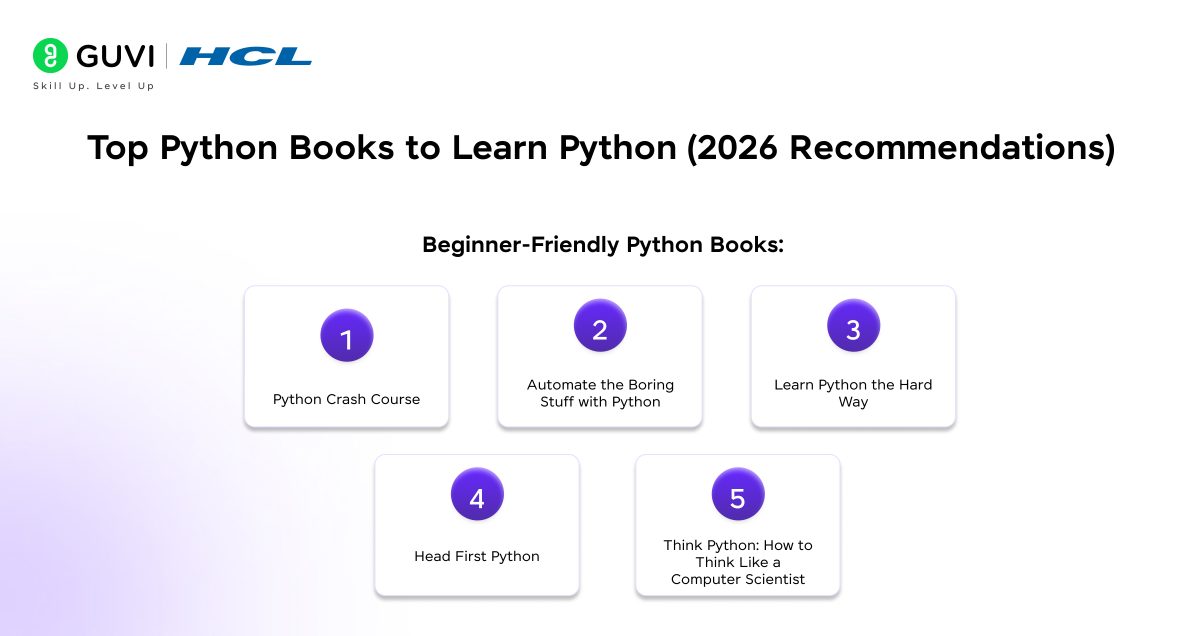
Here are some of the most widely recommended Python books for beginners through advanced developers, covering fundamentals, practical projects, and deeper language mastery:
Beginner-Friendly Books
- Python Crash Course by Eric Matthes: Hands-on introduction to Python with projects including games, data visualizations, and web apps; excellent first step for complete beginners.
- Automate the Boring Stuff with Python by Al Sweigart: Teaches Python through practical automation tasks such as file manipulation, web scraping, and spreadsheets, ideal for real-world learning.
- Learn Python the Hard Way by Zed Shaw: Exercise-based approach that reinforces Python basics through repetition and practice, suitable for learners who prefer structured drills.
- Head First Python by Paul Barry: Visual and engaging guide that simplifies concepts for learners who prefer an interactive and intuitive style.
- Think Python: How to Think Like a Computer Scientist by Allen B. Downey: A beginner-oriented book focused on building programming logic alongside Python syntax, often used in academic settings.
Intermediate & Practical Skill Books
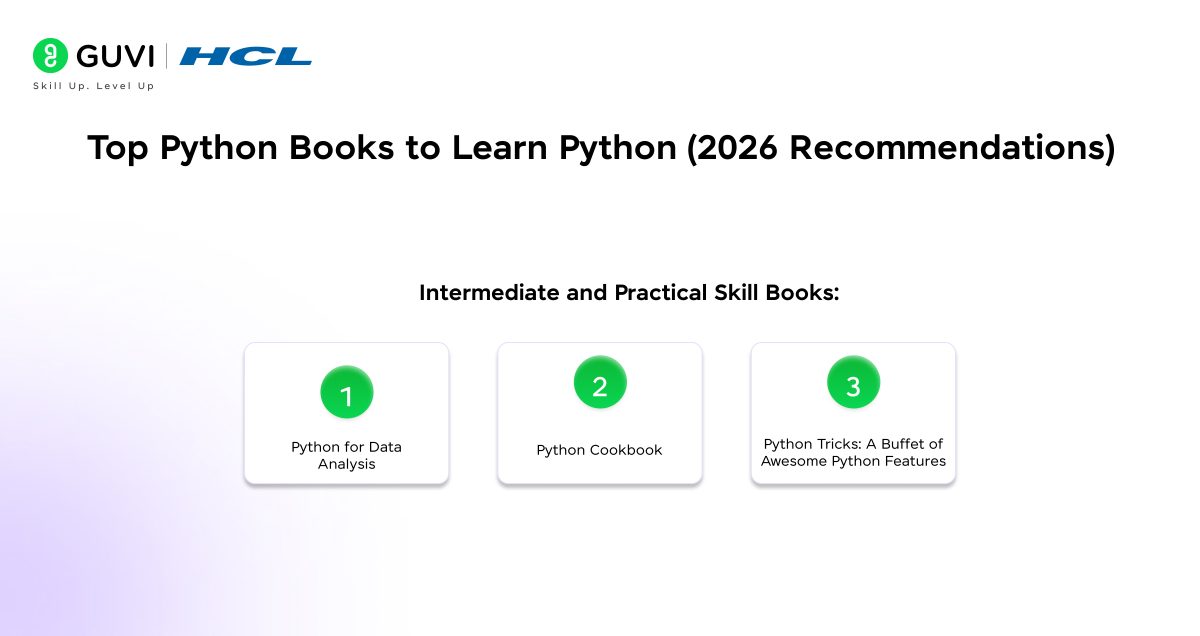
- Python for Data Analysis by Wes McKinney: Focuses on data manipulation using pandas and NumPy, suitable for learners targeting data analysis and data science roles.
- Python Cookbook by David Beazley and Brian K. Jones: A collection of practical recipes for solving real Python programming problems, best suited for intermediate developers.
- Python Tricks: A Buffet of Awesome Python Features by Dan Bader: Covers Pythonic patterns and idiomatic techniques for writing cleaner and more efficient code.
Advanced & Deep Mastery Books
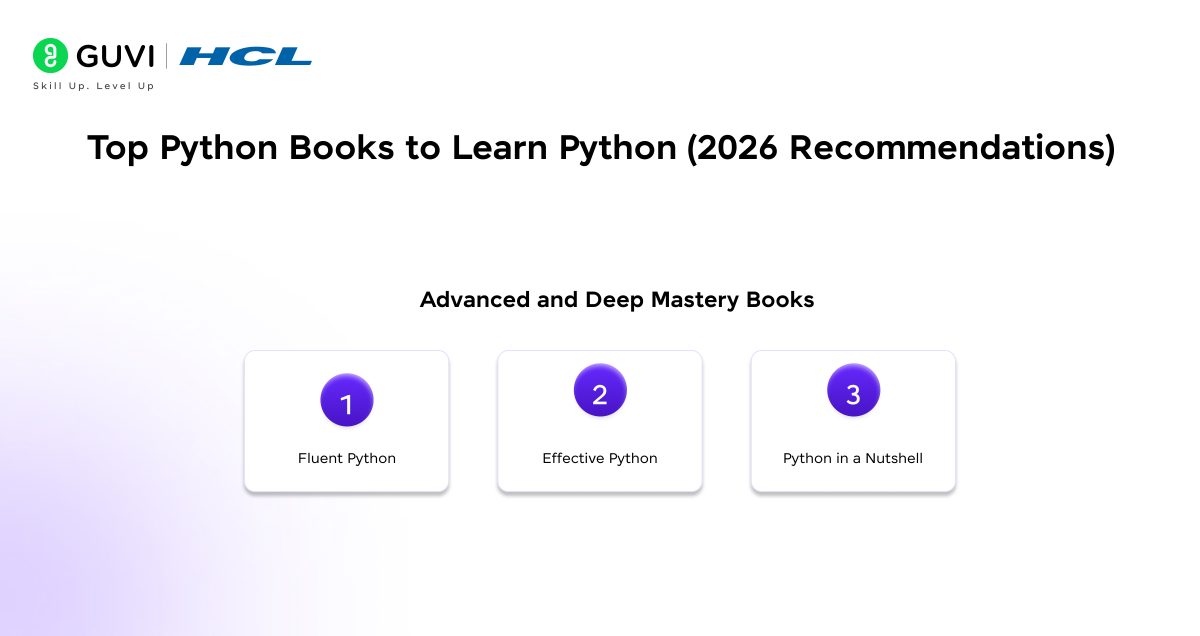
- Fluent Python by Luciano Ramalho: In-depth exploration of advanced Python features, idiomatic usage, and language internals for experienced programmers.
- Effective Python by Brett Slatkin: Presents best practices and proven techniques for writing maintainable, high-quality Python code.
- Python in a Nutshell by Alex Martelli: Comprehensive reference covering Python syntax, standard libraries, and core language concepts, ideal for advanced learners.
Tip: Beginners often benefit from starting with a project-oriented book and then progressing to intermediate and advanced titles to deepen understanding and expand real-world Python skills.
Top Python Courses for Beginners and Career Switchers
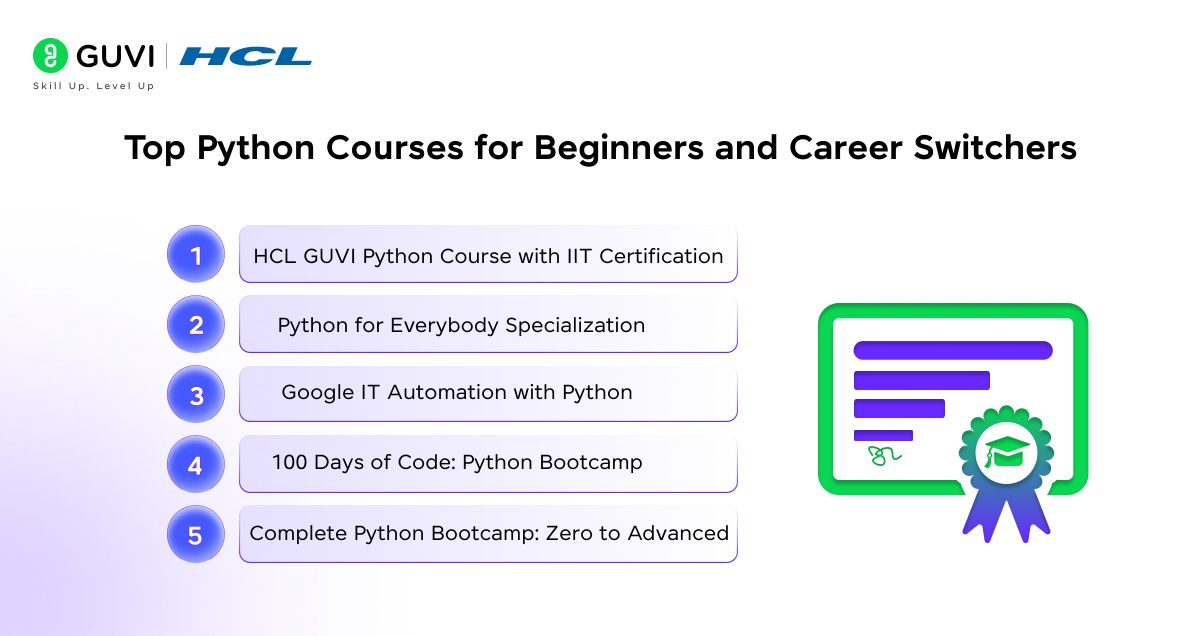
- HCL GUVI Python Course with IIT Certification
- Best Features: Industry-aligned Python curriculum designed with hands-on labs, real-world problem solving, and structured assessments. Completion includes an IIT-endorsed certification, which adds academic credibility.
- Learning Style: Guided, beginner-friendly, practice-heavy.
- What You Learn: Python fundamentals, control flow, data structures, functions, basic OOP, and applied problem solving.
- Best For: Absolute beginners, students, and professionals seeking structured learning with certification value.
- Typical Price Range: Typically offered as a paid certification program with flexible payment options.
Course Link: HCL GUVI Python Course with IIT Certification
- Python for Everybody Specialization (University-led Program)
- Best Features: Concept-first approach that explains Python using real-world analogies and gradual complexity. Strong emphasis on fundamentals before moving into data handling and automation.
- Learning Style: Theory + guided practice.
- What You Learn: Python basics, data structures, file handling, APIs, and introductory databases.
- Best For: Learners starting from zero who want academic clarity.
- Typical Price Range: Subscription-based model, usually ₹3,000-₹4,000 per month until completion.
Course Link: Python for Everybody Specialization (University-led Program)
- Google IT Automation with Python
- Best Features: Strong focus on automation, scripting, and real operational use cases rather than just syntax.
- Learning Style: Task-driven and scenario-based.
- What You Learn: Python scripting, automation workflows, debugging, version control, and basic system administration tasks.
- Best For: IT professionals and learners targeting automation-oriented roles.
- Typical Price Range: ₹4,000-₹5,000 per month under a subscription model.
Course Link: Google IT Automation with Python
- 100 Days of Code: Python Bootcamp
- Best Features: Project-centric learning with daily coding challenges that build habit and confidence.
- Learning Style: Practice-first, immersive.
- What You Learn: Python fundamentals, automation scripts, basic web apps, games, APIs, and small utilities.
- Best For: Self-motivated learners who learn by building.
- Typical Price Range: ₹500-₹2,000 during sales (one-time payment).
Course Link: 100 Days of Code: Python Bootcamp
- Complete Python Bootcamp: Zero to Advanced by Udemy
- Best Features: Broad coverage from beginner to intermediate concepts with strong explanations and exercises for Python developers.
- Learning Style: Balanced theory and practice.
- What You Learn: Python syntax, OOP, decorators, error handling, and small projects.
- Best For: Beginners who want a single, comprehensive course.
- Typical Price Range: ₹500-₹2,000 (one-time payment during discounts).
Course Link: Complete Python Bootcamp: Zero to Advanced
If you are leaning toward structured learning over self-study alone, HCL GUVI’s Python Zero to Hero course offers a guided path for beginners starting from scratch. Learn through 100 percent online and self-paced modules, get full lifetime access to all content, clear doubts through dedicated forum support, and practise coding hands-on using four gamified practice platforms that help convert concepts into real Python skills.
Common Mistakes Beginners Make When Choosing Learning Resources
- Choosing based on popularity alone: Highly rated resources may not match individual learning needs, pacing preferences, or background knowledge.
- Ignoring learning style compatibility: Visual learners may struggle with text-heavy books, while reflective learners may feel rushed by video-based courses.
- Skipping hands-on practice: Reading or watching content without coding regularly prevents skill development, regardless of whether books or courses are used.
Conclusion
Choosing between books and courses for learning Python from scratch depends on how you learn, practice, and stay motivated. Books build deep conceptual clarity and long-term understanding, while courses accelerate practical skills through guided practice and projects. For most beginners, a hybrid approach works best. Combining theory from books with hands-on learning from courses creates balanced and job-ready Python skills.
FAQs
1. Can I learn Python effectively using only books?
Yes, books can build strong conceptual foundations, but beginners often need additional hands-on practice to gain coding confidence.
2. Do online courses replace the need for Python books?
No, courses accelerate practice and projects, while books deepen understanding. Both serve different learning needs.
3. How long does it take to learn Python from scratch using courses?
With consistent practice, beginners can write basic Python programs within a few weeks using structured courses.
4. Is a hybrid approach better than choosing just one?
Yes, combining books for theory and courses for practice delivers balanced learning and better long-term retention.
Success Stories

About the Author
Vaishali
I'm a seasoned writer with four years of experience across technical, non-technical, and just about every genre or niche you can imagine. Adaptable and curious, I enjoy exploring new topics and making information engaging and easy to understand. Fueled by a steady stream of tea, I approach each project with creativity, reliability, and genuine enthusiasm for storytelling.
View all posts by Vaishali
Connect with me @







Did you enjoy this article?