


Career Articles
Financial Analyst to Data Scientist Salary: What Can You Expect in India?
Accountant vs Data Analyst Salary in India After Switching Careers - Best Guide
Finance Managers: Could Data Science Be Your Next Career Move?
Insurance Claims Executive to Data Analyst: Is It a Good Switch?

Get In Touch For Details! Request More Information
Top 9 DevOps Online Courses for Beginners in 2026
Sep 10, 2026 7 Min Read 27531 Views
(Last Updated)
Would you like to master DevOps and build a successful career? With the sheer amount of courses out there, finding the right course is a must as it can set you on the path to mastering automation, cloud computing, and CI/CD pipelines. With so many options available, it can be overwhelming to choose the best one.
That’s why I’ve curated a list of the top 9 DevOps online courses for beginners like you! These courses will not only equip you with essential DevOps skills but also provide hands-on experience to help you excel in this high-demand field. Let’s explore your learning options.
Table of contents
- TL;DR
- What is DevOps and Why is it a Great Career Choice?
- DevOps Online Courses at a Glance
- The Top 9 DevOps Online Courses for Beginners
- HCL GUVI's Advanced AI Cloud Computing & DevOps Course
- Introduction to DevOps by IBM (Coursera)
- Decoding DevOps - From Basics to Advanced Projects with AI ( Udemy)
- Continuous Delivery & DevOps by the University of Virginia (Coursera)
- AWS Certified DevOps Engineer – Professional (Coursera)
- Google Cloud DevOps Engineer Professional Certificate (Coursera)
- AZ-400: Development for Enterprise DevOps (Microsoft Learn)
- The DevOps Bootcamp (KodeKloud)
- Introduction to DevOps and Site Reliability Engineering (edX - Linux Foundation)
- How to Choose the Right DevOps Course?
- Concluding Thoughts…
- FAQs
- Can I learn DevOps as a beginner?
- Does DevOps require coding?
- What is CI CD in DevOps?
- Is Python must for DevOps?
- Is SQL needed for DevOps?
- Which DevOps course is best for beginners?
TL;DR
- DevOps combines development, operations, automation, cloud, and CI/CD practices.
- Beginners should start with Linux, Git, scripting, and core DevOps concepts.
- Good DevOps courses for beginners should include hands-on practice with commonly used tools.
- Course options range from foundational learning to cloud-specific and certification-focused training.
- The right course depends on your experience, career goals, preferred cloud platform, and learning format.
What is DevOps and Why is it a Great Career Choice?
DevOps (Development + Operations) is a software development methodology that integrates development (Dev) and IT operations (Ops) to improve collaboration, automation, and efficiency in the software delivery lifecycle. It focuses on continuous integration (CI), continuous delivery (CD), automation, and monitoring to ensure faster, more reliable software deployment. Let’s take a look at some of the reasons it can be the perfect choice for you:
- High Demand & Job Opportunities
- DevOps professionals are in high demand across industries like tech, finance, healthcare, and e-commerce.
- Companies seek DevOps engineers to enhance software deployment speed and reliability.
- Lucrative Salaries
- DevOps engineers earn competitive salaries, often exceeding traditional IT roles.
- In India, the average salary for a DevOps engineer is ₹8-15 LPA, while in the U.S., it ranges from $100,000 to $150,000 per year.
- Automation & Innovation
- DevOps promotes automation of infrastructure, testing, and deployment, reducing manual errors.
- Professionals work with cutting-edge tools like Kubernetes, Docker, Terraform, and CI/CD pipelines.
- Improved Collaboration & Fast-Paced Growth
- DevOps bridges the gap between developers, IT operations, and QA teams.
- Agile methodologies and real-time feedback loops accelerate innovation.
- Versatile Career Path
- Multiple career options: DevOps Engineer, Cloud Engineer, Site Reliability Engineer (SRE), Security Engineer, Release Manager.
- Specialization in cloud platforms (AWS, Azure, Google Cloud) enhances career prospects.
- Job Security & Industry Relevance
- With increasing cloud adoption, DevOps remains a critical skill.
- Organizations investing in DevOps practices ensure long-term job stability.
DevOps Online Courses at a Glance
Before exploring each course in detail, here’s a quick comparison to help you find the right option based on your current skill level and learning goals.
| Course | Best For | Level | Learning Format |
|---|---|---|---|
| HCL GUVI Advanced AI Cloud Computing & DevOps Programme | Comprehensive cloud and DevOps training | Beginner-friendly | Live online |
| IBM Introduction to DevOps | Learning DevOps fundamentals | Beginner | Self-paced |
| Decoding DevOps – From Basics to Advanced Projects with AI | Hands-on, tool-focused DevOps learning | Beginner to Advanced | Self-paced |
| Continuous Delivery & DevOps – University of Virginia | Understanding CI/CD and delivery practices | Beginner | Self-paced |
| AWS Certified DevOps Engineer – Professional Course | Building advanced AWS DevOps skills | Advanced | Self-paced |
| Google Cloud DevOps Engineer Professional Certificate | Learning DevOps and SRE on Google Cloud | Beginner | Self-paced |
| AZ-400: Development for Enterprise DevOps | Exploring Azure DevOps and Git workflows | Advanced* | Self-paced |
| The Complete DevOps Bootcamp – KodeKloud | Hands-on DevOps labs and tools | Beginner | Self-paced |
| Introduction to DevOps and SRE – edX/Linux Foundation | Building DevOps and SRE foundations | Beginner** | Self-paced |
*Microsoft officially classifies the AZ-400 learning path as Advanced, although it lists no formal prerequisites.
**The Linux Foundation classifies LFS162 as beginner-level, but recommends familiarity with Linux, networking, basic scripting, virtualization, and system administration.
The Top 9 DevOps Online Courses for Beginners
Now that we’ve understood what DevOps is and why it’s such a great career choice, let’s learn about the resources that will help you master DevOps and build a flourishing career in this field. These top 9 DevOps online courses have been ranked across various factors such as course content, certification, pricing and much more so that you can choose wisely.
1. HCL GUVI’s Advanced AI Cloud Computing & DevOps Course
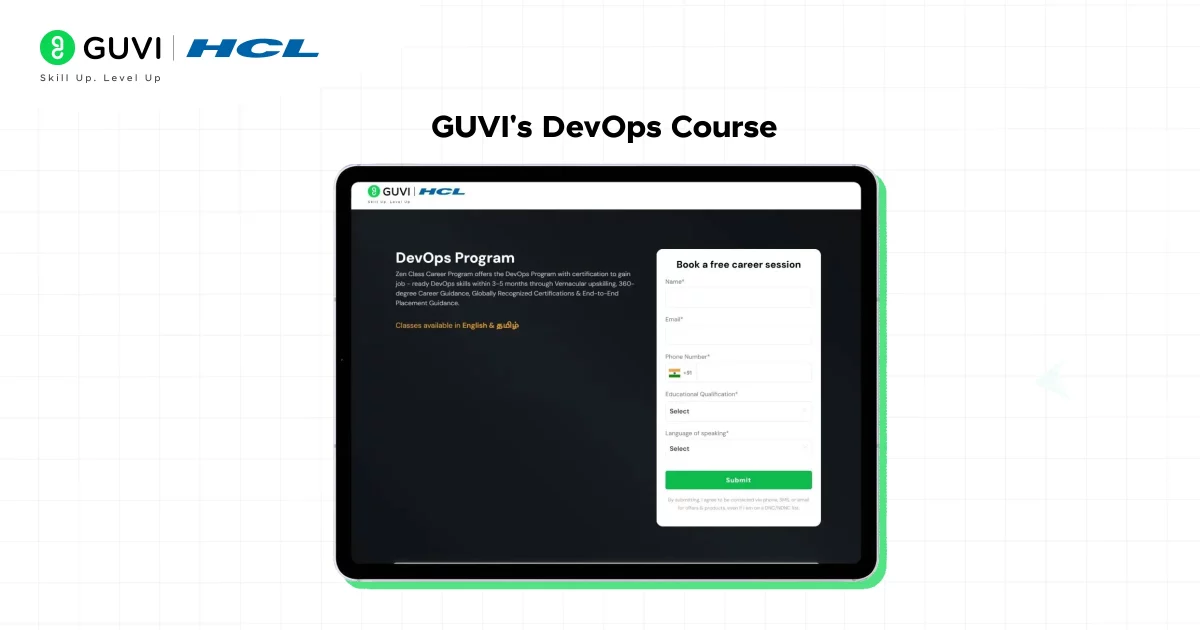
HCL GUVI’s Advanced AI Cloud Computing & DevOps Programme takes learners from foundational concepts to hands-on cloud and DevOps practices. The programme combines live learning, cloud labs, projects, and industry-standard tools to help beginners build practical skills for DevOps and cloud roles.
Certification: NSDC, HCL GUVI, and Microsoft Azure
Duration: 4 months on weekdays or 6 months on weekends
Prerequisites: No prior experience required
Pricing: ₹99,999 ( EMI options are available)
Learning Format: Live online sessions with hands-on labs and mentorship
Course Content:
- Topics Covered: Covers cloud and DevOps concepts using tools such as AWS, Docker, Kubernetes, Jenkins, Terraform, Prometheus, and Grafana.
- Hands-on Labs & Projects: Includes real-world DevOps projects where you build, deploy, and manage applications. Interactive coding exercises allow you to practice scripting and automation techniques, while cloud infrastructure simulations help solidify concepts.
- Certification Benefits: Learners receive certifications and credentials from NSDC, HCL GUVI, and Microsoft Azure after meeting the relevant programme requirements.
- Learning Outcomes: You will gain proficiency in automation, infrastructure management, cloud deployment, monitoring, and security best practices, making you job-ready for DevOps engineer roles.
Interactive Elements: 140+ hours of interactive sessions, mentor guidance, hands-on cloud labs, project feedback, mock interviews, and placement support.
Course Rating: 4.8/5
Course Link: Enroll Here
2. Introduction to DevOps by IBM (Coursera)
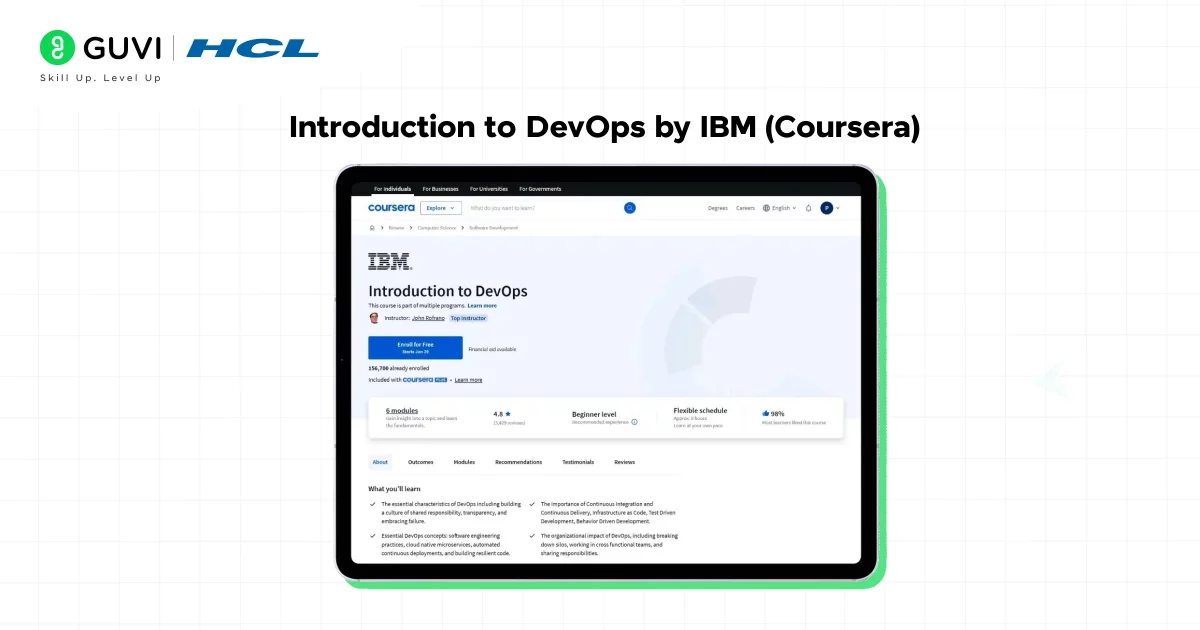
IBM’s Introduction to DevOps course on Coursera offers a beginner-friendly dive into the DevOps lifecycle, tools, and practices. You’ll explore key DevOps concepts and gain practical knowledge of continuous integration, delivery, and automated testing to streamline software deployment.
Certification: Yes, IBM-recognized
Duration: Self-paced
Prerequisites: No prior experience required
Pricing: Free enrollment available; certificate access may require payment
Course Content:
- Topics Covered: DevOps fundamentals and culture, Agile practices, cloud-native microservices, Infrastructure as Code, CI/CD, test-driven development, behavior-driven development, and DevOps metrics.
- Hands-on Labs & Projects: Includes practical exercises where students implement CI/CD pipelines, automate deployments, and manage cloud-based applications.
- Certification Benefits: Helps professionals establish a strong foundation in DevOps and is recognized by companies hiring for DevOps roles.
- Learning Outcomes: Understand DevOps fundamentals, streamline development workflows, and automate cloud deployments.
Interactive Elements: Hands-on labs, quizzes, peer interactions, and 20 guided assignments.
Course Rating: 4.8/5
Course Link: Enroll Here
3. Decoding DevOps – From Basics to Advanced Projects with AI ( Udemy)
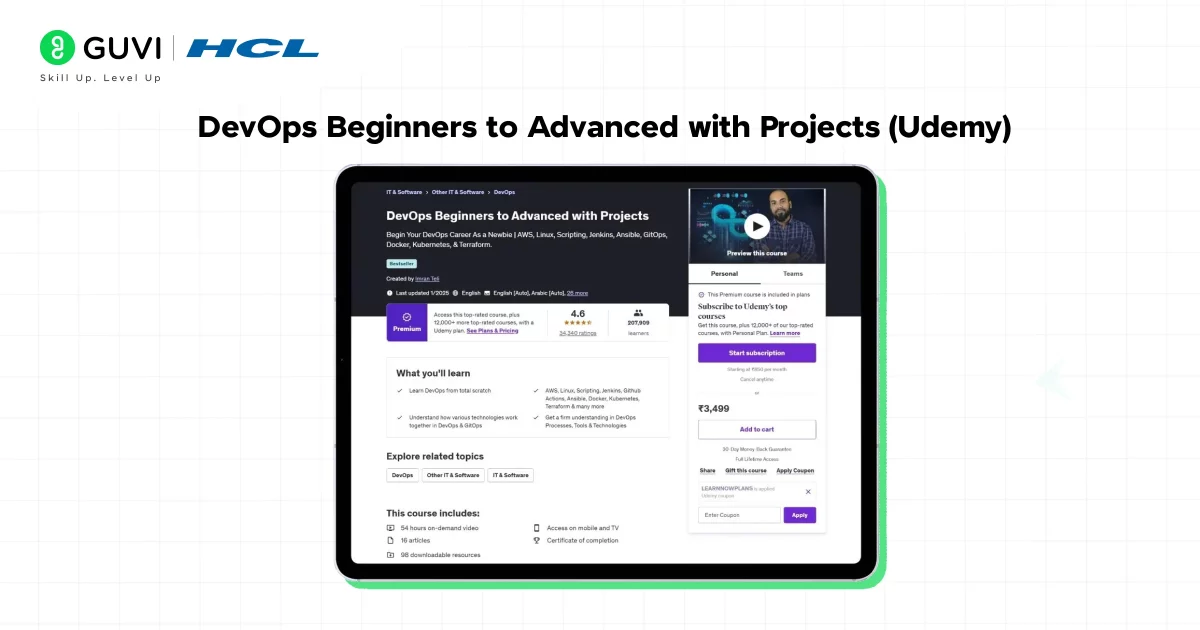
This Udemy course takes you from DevOps fundamentals to advanced cloud-native practices through hands-on projects. Along with core tools such as Git, Jenkins, Docker, Kubernetes, Terraform, and Ansible, the course also covers GitOps, observability, cloud platforms, and AI-assisted DevOps workflows.
Certification: Yes, Udemy certification
Duration: Around 64 hours, self-paced
Prerequisites: Basic computer knowledge
Pricing: Paid course; pricing varies with Udemy offers
Course Content:
- Topics Covered: Linux, Git, AWS, GCP, Jenkins, GitHub Actions, GitLab CI/CD, Docker, Kubernetes, Terraform, Ansible, Python automation, Prometheus, Grafana, GitOps, ArgoCD, and AI-assisted workflows.
- Hands-on Labs & Projects: Provides industry-grade projects where students build and deploy microservices, automate cloud infrastructure, and monitor applications.
- Certification Benefits: Recognized in the industry as proof of hands-on DevOps expertise.
- Learning Outcomes: Gain proficiency in automation, cloud infrastructure, and deployment pipelines.
Interactive Elements: Hands-on exercises, quizzes, downloadable resources, and real-world projects.
Course Rating: 4.6/5
Course Link: Enroll Here
4. Continuous Delivery & DevOps by the University of Virginia (Coursera)
This beginner-level course from the University of Virginia focuses on how DevOps and continuous delivery can improve software delivery. You’ll learn how to evaluate delivery pipelines, automate testing, understand operations, and help teams move towards continuous delivery.
Certification: Yes, Coursera certification
Duration: Around 8 hours, self-paced
Prerequisites: Beginner level; some familiarity with software development can be helpful
Pricing: Paid certificate access; eligible learners may have audit or financial aid options
Course Content:
- Topics Covered: DevOps fundamentals, delivery pipelines, automated testing, system operations, version control, CI/CD, continuous deployment, and infrastructure concepts.
- Hands-on Labs & Projects: Includes examples, testing demonstrations, assignments, and discussions around improving real delivery pipelines.
- Certification Benefits: Provides a shareable University of Virginia certificate upon successful completion.
- Learning Outcomes: Learn to assess delivery pipelines, understand testing and operations, and identify ways to improve continuous delivery practices.
Interactive Elements: Video lessons, 4 assignments, demonstrations, industry interviews, and discussion activities.
Course Rating: 4.6/5
Course Link: Enroll Here
5. AWS Certified DevOps Engineer – Professional (Coursera)
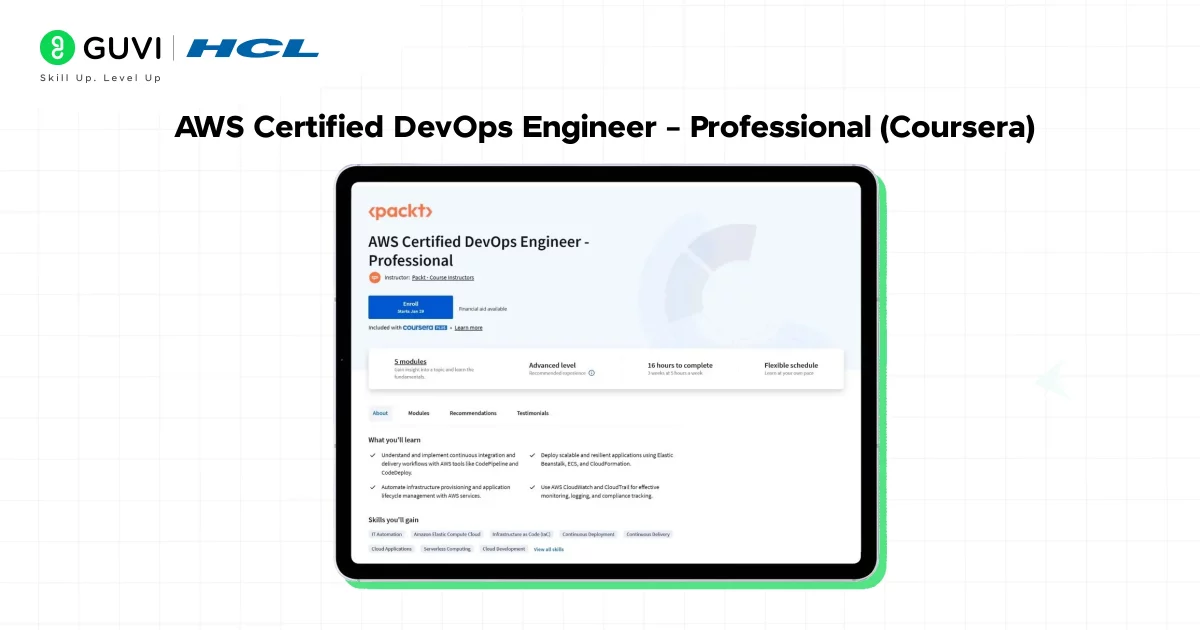
This advanced Packt course on Coursera focuses on implementing DevOps practices within AWS. It covers CI/CD, infrastructure automation, monitoring, security, and application deployment using AWS services. While useful for learners progressing towards AWS DevOps roles, it is better suited to those who already understand DevOps and AWS fundamentals.
Certification: Certificate of completion; supports AWS Certified DevOps Engineer – Professional exam preparation
Duration: Around 2 weeks at 10 hours per week, self-paced
Prerequisites: Cloud computing basics, AWS knowledge recommended
Pricing: Available through Coursera; pricing may vary
Course Content:
- Topics Covered: Focuses on AWS DevOps tools, including AWS CodePipeline, CodeDeploy, CloudFormation, Elastic Beanstalk, ECS, monitoring and logging, automation, security, and compliance.
- Hands-on Labs & Projects: Covers AWS-based CI/CD workflows, infrastructure provisioning, application lifecycle management, and scalable cloud deployments.
- Certification Benefits: Helps learners prepare for concepts covered in the AWS Certified DevOps Engineer – Professional certification.
- Learning Outcomes: You will master automation, security, monitoring, and deployment best practices for AWS, gaining hands-on expertise in cloud-native DevOps methodologies.
Interactive Elements: AWS hands-on labs, real-world case studies, skill assessments, and discussion forums.

Course Rating: 4.7/5
Course Link: Enroll Here
6. Google Cloud DevOps Engineer Professional Certificate (Coursera)
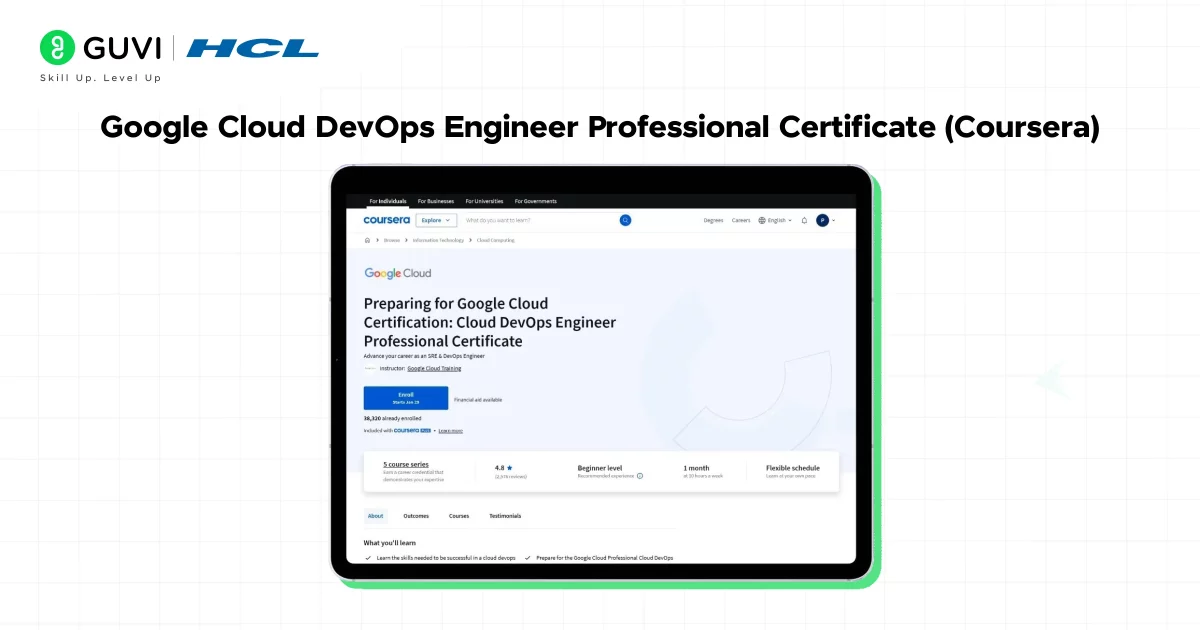
This Google Cloud Professional Certificate helps beginners build DevOps and Site Reliability Engineering (SRE) skills using Google Cloud. It combines cloud fundamentals with hands-on learning in infrastructure, monitoring, Kubernetes, CI/CD, and application reliability.
Certification: Yes, Google Cloud Professional Certificate
Duration: Around 4 weeks at 10 hours per week, self-paced
Prerequisites: Beginner level; Linux, command-line, and basic scripting knowledge can be helpful
Pricing: Available through Coursera; pricing may vary
Course Content:
- Topics Covered: Google Cloud infrastructure, SRE principles, CI/CD, Kubernetes, cloud architecture, monitoring, logging, incident management, and application reliability.
- Hands-on Labs & Projects: Includes Qwiklabs exercises where learners work with Google Cloud infrastructure, Kubernetes, monitoring, and software delivery workflows.
- Certification Benefits: Builds skills relevant to Google Cloud DevOps roles and supports preparation for the Professional Cloud DevOps Engineer certification exam.
- Learning Outcomes: Learn to build software delivery pipelines, deploy and monitor services, apply SRE principles, troubleshoot infrastructure, and improve application performance.
Interactive Elements: Hands-on Qwiklabs, video lessons, assessments, and practical Google Cloud exercises.
Course Rating: 4.7/5
Course Link: Enroll Here
7. AZ-400: Development for Enterprise DevOps (Microsoft Learn)
This Microsoft Learn path introduces DevOps practices within the Azure and GitHub ecosystem. It starts with DevOps fundamentals before covering source control, Agile planning, Git workflows, repositories, collaboration, and technical debt. It is a useful option for learners who want to explore Microsoft’s DevOps tools before moving towards more advanced Azure certifications.
Certification: No standalone certification; Microsoft Learn training path
Duration: Around 6 hours, self-paced
Prerequisites: None formally required
Pricing: Free
Course Content:
- Topics Covered: DevOps fundamentals, Azure DevOps, GitHub, Git, Azure Repos, Agile planning, branching strategies, pull requests, repositories, and technical debt.
- Practical Learning: Includes exercises and module assessments covering Git workflows, Azure Repos, collaboration, and DevOps practices.
- Learning Path Benefits: Provides free Microsoft learning resources and can serve as a stepping stone towards more advanced AZ-400 training.
- Learning Outcomes: Understand DevOps fundamentals, work with Git-based workflows, manage repositories, and explore collaboration using Azure DevOps and GitHub.
Interactive Elements: Learning modules, exercises, knowledge checks, and module assessments.
Level: Microsoft classifies the path as Advanced, although it lists no formal prerequisites.
Course Link: Enroll Here
8. The DevOps Bootcamp (KodeKloud)
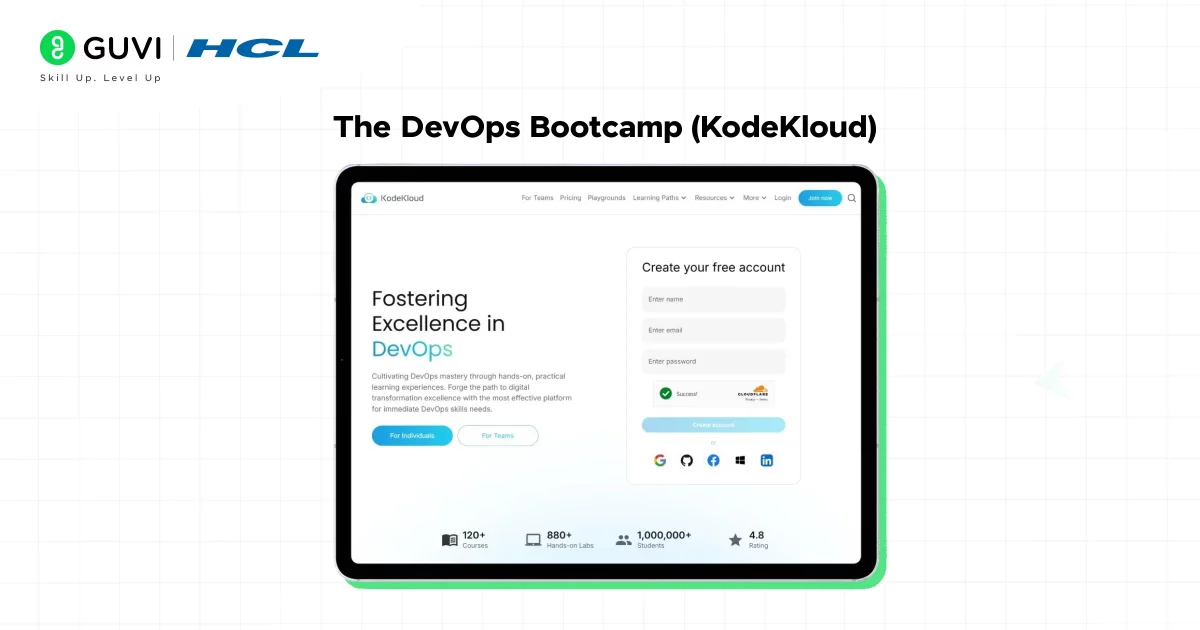
KodeKloud’s DevOps Bootcamp is designed for beginners to build real-world DevOps skills. Through hands-on labs and challenges, you’ll get to grips with automation, Kubernetes, Docker, Jenkins, and more, giving you practical experience to excel in DevOps roles.
Certification: Yes, industry-recognized
Duration: Self-paced with structured modules
Prerequisites: No mandatory prerequisites
Pricing: Available through KodeKloud; pricing may vary
Course Content:
- Topics Covered: Includes CI/CD pipelines, Jenkins, Docker, Kubernetes, Terraform, Ansible, and monitoring tools like Prometheus and Grafana.
- Hands-on Labs & Projects: Provides hands-on labs where you build and deploy applications, automate workflows, and configure monitoring tools to track system performance.
- Certification Benefits: Provides a course certificate while helping learners demonstrate practical exposure to commonly used DevOps tools.
- Learning Outcomes: By the end, you’ll build foundational DevOps knowledge, work with containers and orchestration, automate infrastructure, use version control, and understand CI/CD workflows.
Interactive Elements: 91 lessons/labs, hands-on cloud labs, knowledge tests, community support, and practical exercises.
Course Rating: 4.8/5
Course Link: Enroll Here
9. Introduction to DevOps and Site Reliability Engineering (edX – Linux Foundation)

In this course offered by the Linux Foundation on edX, you’ll explore both DevOps and Site Reliability Engineering (SRE) practices. Learn to apply automation, improve system reliability, and manage scalable applications, all while building a strong foundation in cloud-based infrastructure.
Certification: Yes, Linux Foundation-recognized
Duration: 10–12 hours, self-paced
Prerequisites: Familiarity with Linux, networking, basic scripting, virtualization, and system administration is recommended
Pricing: Free with certification available for a fee
Course Content:
- Topics Covered: Introduces DevOps culture, CI/CD pipelines, version control, automation, incident management, and cloud computing fundamentals.
- Hands-on Labs & Projects: Offers guided hands-on labs to implement CI/CD workflows, automate tasks, and monitor system health.
- Certification Benefits: Learners receive a digital badge after completing the course.
- Learning Outcomes: Learn to implement DevOps best practices and improve software reliability through automation.
Interactive Elements: Hands-on labs, knowledge assessments, discussion groups, and instructor-led content.
Course Rating: 4.6/5
Course Link: Enroll Here
How to Choose the Right DevOps Course?
With so many DevOps online courses available, the best choice depends on where you are starting and what you want to achieve. Consider these factors before enrolling:
- Your current skill level: If you are completely new, start with DevOps fundamentals before moving to advanced cloud or certification-focused training.
- Hands-on learning: Look for courses with labs, projects, and practical exercises that let you actually work with DevOps tools.
- Tools covered: A good course should introduce relevant tools such as Git, Docker, Kubernetes, Jenkins, Terraform, and cloud platforms.
- Cloud platform: If you want to specialize in AWS, Azure, or Google Cloud, choose training that aligns with that ecosystem.
- Certification goals: If certification matters to you, check whether the course provides a completion credential or prepares you for a separate industry certification exam.
- Learning format: Choose between self-paced and live DevOps training based on how much structure, mentorship, and flexibility you need.
The term “DevOps” traces its roots to a conference in Ghent, Belgium, in 2009. Patrick Debois organized the first DevOpsDays there, bringing developers and IT operations professionals into the same conversation. What began as a community event eventually helped popularize the name for an entire way of working.
Concluding Thoughts…
Now that we’ve gone through the top DevOps courses available online, it’s your turn to pick one that aligns with your goals and begin your learning journey. By enrolling in one of these programs, you’ll gain valuable expertise in automation, cloud technologies, CI/CD pipelines, and monitoring tools, positioning yourself for a successful career in DevOps.
I hope this list has aided your DevOps journey and if you have any doubts, reach out to us in the comments section below.
FAQs
1. Can I learn DevOps as a beginner?
Yes, DevOps can be learned by beginners, but a basic understanding of software development, version control, and system administration is recommended.
2. Does DevOps require coding?
Yes, DevOps involves coding to automate processes, scripts, and workflows, but it focuses more on system integration and deployment.
3. What is CI CD in DevOps?
CI/CD (Continuous Integration and Continuous Delivery) in DevOps is a set of practices to automate code integration, testing, and deployment to improve software development efficiency.
4. Is Python must for DevOps?
Python is not mandatory, but it’s a popular language in DevOps for writing automation scripts due to its simplicity and readability. Basically, you really should know Python to be a good DevOps engineer.
5. Is SQL needed for DevOps?
Basic knowledge of SQL is useful in DevOps for managing databases, querying logs, and handling deployment processes that involve databases.
6. Which DevOps course is best for beginners?
The best DevOps course for beginners is one that starts with core concepts and offers practical exposure to Linux, Git, CI/CD, cloud platforms, Docker, and other commonly used DevOps tools. Choose based on your current skills, preferred learning format, and whether you want general or cloud-specific DevOps training.
Success Stories












Did you enjoy this article?