


Artificial Intelligence and Machine Learning Articles
Is the HCL GUVI AI/ML Program Right for You? A Quick Self-Assessment
Inside the HCL GUVI AI/ML Curriculum: What You’ll Actually Build


Get In Touch For Details! Request More Information
Adversarial Search in AI: Minimax & Game Theory
Aug 27, 2026 6 Min Read 692 Views
(Last Updated)
Artificial Intelligence has evolved beyond just solving static problems. Today, many practical applications involve artificial intelligence agents performing tasks in situations where other intelligent agents are also working against them.
Adversarial search in AI pertains to the field where decision-making involves multiple agents working against each other. These tasks revolve around predicting how one’s opponents will act in a given situation and making moves based on such predictions.
From chess-playing programs to autonomously operating cars and trading programs for financial markets, adversarial search is applied to simulate foresight and provide optimal strategies from an artificial intelligence perspective.
Table of contents
- TL;DR
- How Adversarial Search Works in AI
- Core Foundation: Game Theory
- Key Algorithm: Minimax Algorithm
- Optimization: Alpha-Beta Pruning
- Components of Adversarial Search
- Role of Heuristics and Search Strategies
- Where It’s Used (Applications)
- Game Playing AI
- Multi-Agent Systems
- Competitive Environments
- Why It Matters (Real-World Value)
- Evolution Beyond Classical Methods
- Practical Insight: Simple Game Evaluation
- How This Topic Connects to Core AI Concepts
- Conclusion
- FAQs
- What is adversarial search in AI?
- What is the Minimax algorithm used for?
- Why is Alpha-Beta Pruning important?
- Where is adversarial search used in real life?
- What are heuristic functions in adversarial search?
- How does adversarial search differ from traditional search?
- What is the difference between an AI course and an AI & ML course?
- Why is SQL important for AI & ML professionals?
- What job roles can I apply for after completing an AI & ML course?
- How do I choose the best AI course for my career goals?
- What should I look for before enrolling in an AI & ML course?
- How should I evaluate AI & ML certifications before enrolling?
TL;DR
- Adversarial search in AI is a field of AI research where systems make decisions in a competitive environment with multiple agents acting against each other.
- It involves predicting the opponent’s actions and formulating counter-strategies.
- Key algorithms include the Minimax Algorithm and Alpha-Beta Pruning.
- Its applications include game-playing AI to multi-agent systems and strategic decision making.
- Heuristics and other optimization techniques allow it to be scaled for practical purposes.
- Modern AI integrates adversarial search with machine learning and neural networks for improved performance.
What is Adversarial Search in AI?
Adversarial search in AI is a decision-making approach where an agent chooses actions by considering possible responses from competing agents. It is commonly used in environments where outcomes depend on interaction, such as games and strategic simulations. The objective is to maximize the agent’s advantage while minimizing the opponent’s gain.
How Adversarial Search Works in AI
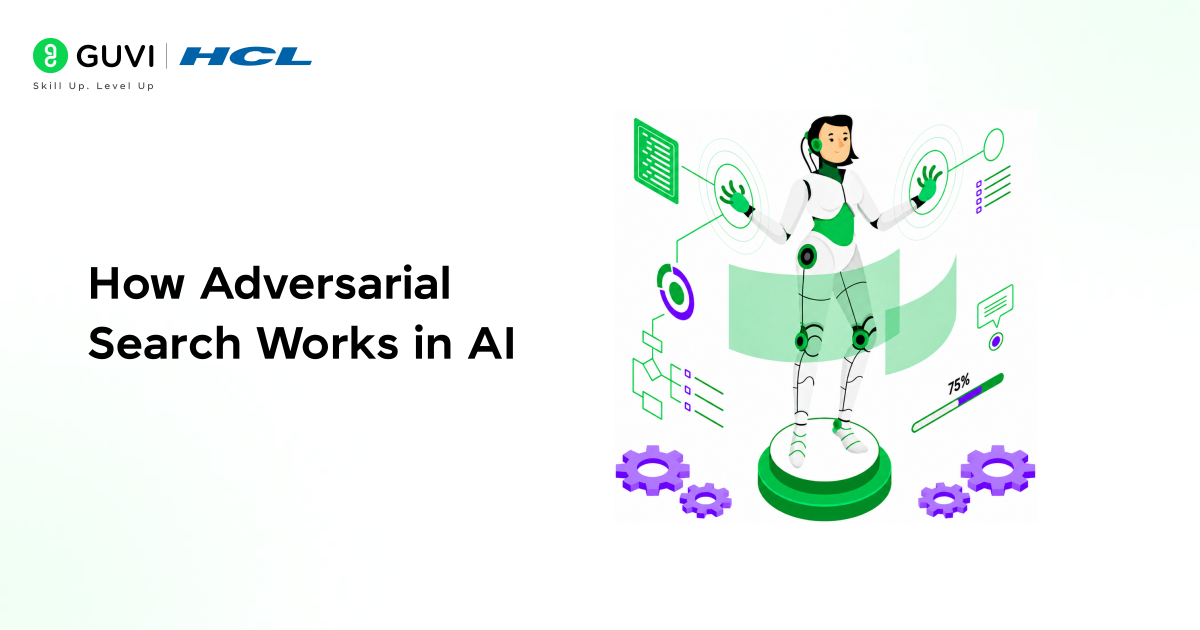
Adversarial search deals with agents operating in an environment where there is an opposing goal. This differs from traditional search problems, as the resulting outcome is not constant, but it varies depending on all players’ inputs.
As one move does not act in isolation, it initiates a series of reactions. The AI then has to not only consider its own possible outcomes, but also how the opposition will react to them.
This is usually represented by a game tree. All nodes represent a position within the game, whereas all branches represent possible moves. As there is an element of search to this, the further down the tree goes, the more future moves it is willing to consider.
Core Foundation: Game Theory
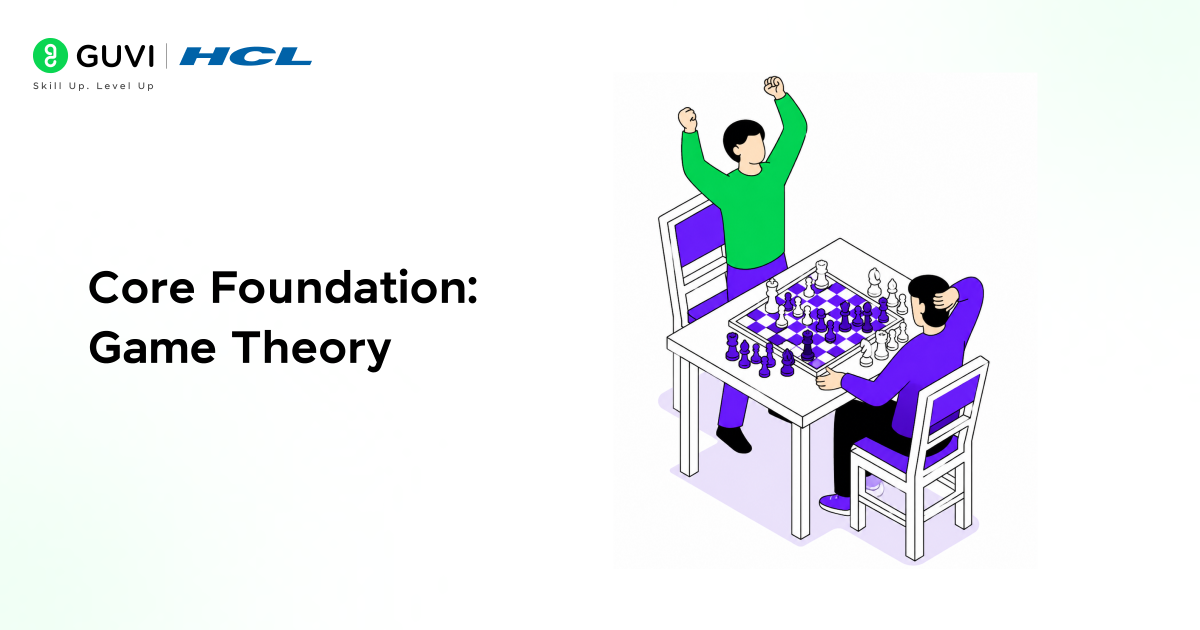
All adversarial search algorithms are based upon the foundations set out by Game Theory. This subject is concerned with predicting how an intelligent agent can operate to achieve maximum value depending upon another agent’s actions.
When translating this into AI, this can be considered to be forecasting an opponent’s actions and then trying to find the best route from that perspective. Instead of following explicit rule sets, this system actively attempts to figure out optimal solutions.
While other AI systems are proactive, this approach is responsive and makes systems predictive rather than following existing behaviors.
However, there is another crucial element: uncertainty. A system doesn’t know how its opponent is likely to play, so probability must be included within its considerations.
Key Algorithm: Minimax Algorithm
Minimax is the key algorithm essential for an adversarial search system. It relies on the premise that an opponent will also make an optimal move, trying to gain the maximum score for themselves.
The basic idea is straightforward. One player (the maximizer) is trying to make their score as high as possible, while the opponent (the minimizer) is trying to keep this value as low as possible. By taking all the future states of the game into consideration, the system can choose the best move.
This system works by calculating scores for recursive paths within the game tree, based on the outcomes of final states.
(Example) – Simple Python pseudocode:
def minimax(node, depth, maximizing):
if depth == 0 or node is a terminal node:
return value of node
if maximizing is True:
max value is −infinity
for each child node in node.children():
value = minimax(child, depth − 1, False)
max value is the max of the max value and the calculated value
return max value
else:
min value is +infinity
for each child node in node.children():
value = minimax(child, depth − 1, True)
min value is the min of the min value and the calculated value
return min value
This works well. However, it has a certain disadvantage as it must evaluate every possible position. As complexity increases, the number of potential states increases exponentially. Therefore, it is not the most time-efficient option.
Optimization: Alpha-Beta Pruning
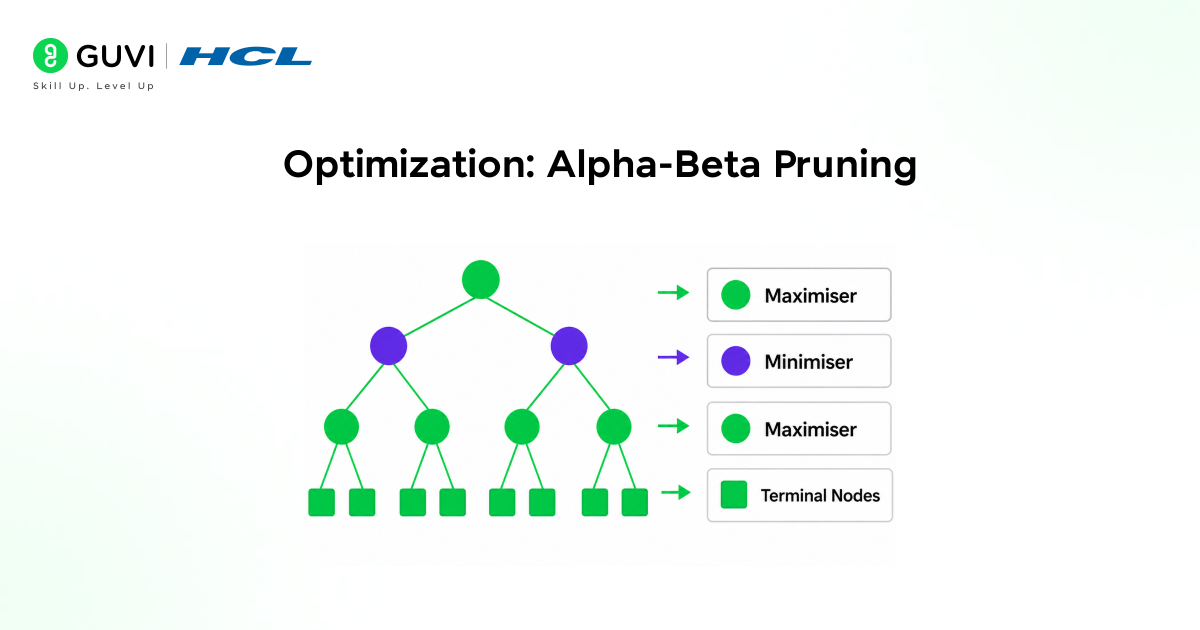
This system helps to improve the inefficiency of Minimax. By “pruning” unnecessary branches of the game tree, it does not have to assess every state.
The method consists of carrying two variables: alpha (the best possible value for the maximizer) and beta (the best possible value for the minimizer). If a value would improve the score, it continues down that branch of the game tree; otherwise, it abandons the path.
(Example snippet):
def alpha_beta(node, depth, alpha, beta, maximizing):
if depth == 0 or node is a terminal node:
return value of node
if maximizing is True:
for each child node in node.children():
alpha = max(alpha, alpha_beta(child, depth − 1, alpha, beta, False))
if beta <= alpha:
break
return alpha
else:
for each child node in node.children():
beta = min(beta, alpha_beta(child, depth − 1, alpha, beta, True))
if beta <= alpha:
break
return beta
This is significantly better, as it speeds up the process by removing unnecessary computational work. It allows the system to operate in real time.
Components of Adversarial Search
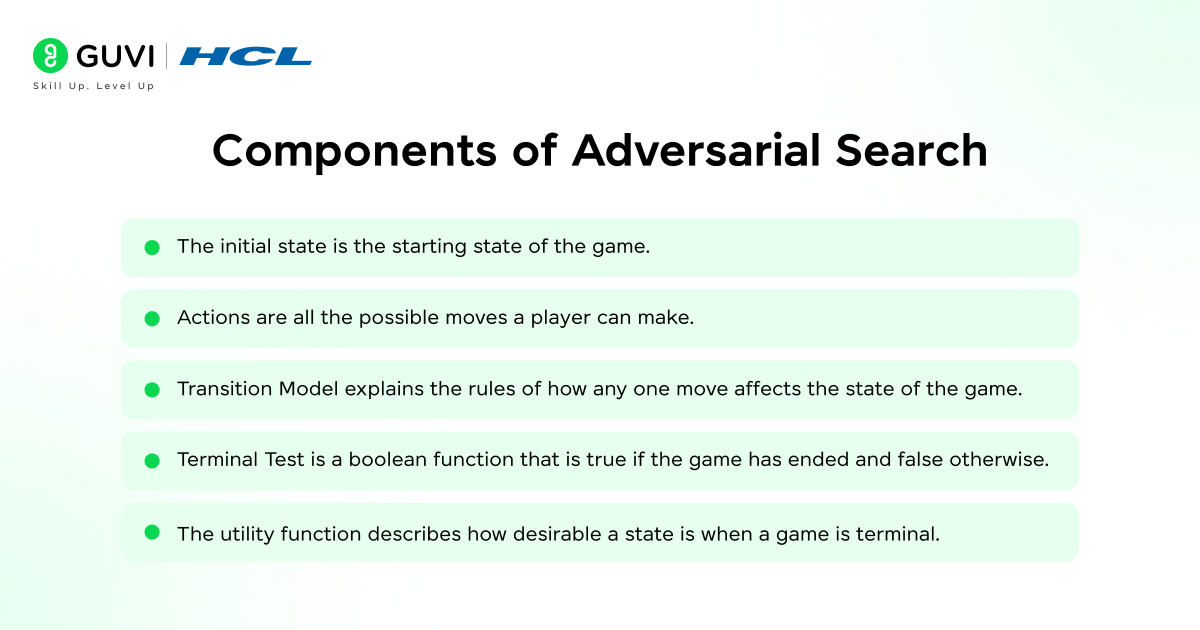
Every game consists of the following basic components:
- The initial state is the starting state of the game.
- Actions are all the possible moves a player can make.
- Transition Model explains the rules of how any one move affects the state of the game.
- Terminal Test is a boolean function that is true if the game has ended and false otherwise.
- The utility function describes how desirable a state is when a game is terminal.
Role of Heuristics and Search Strategies
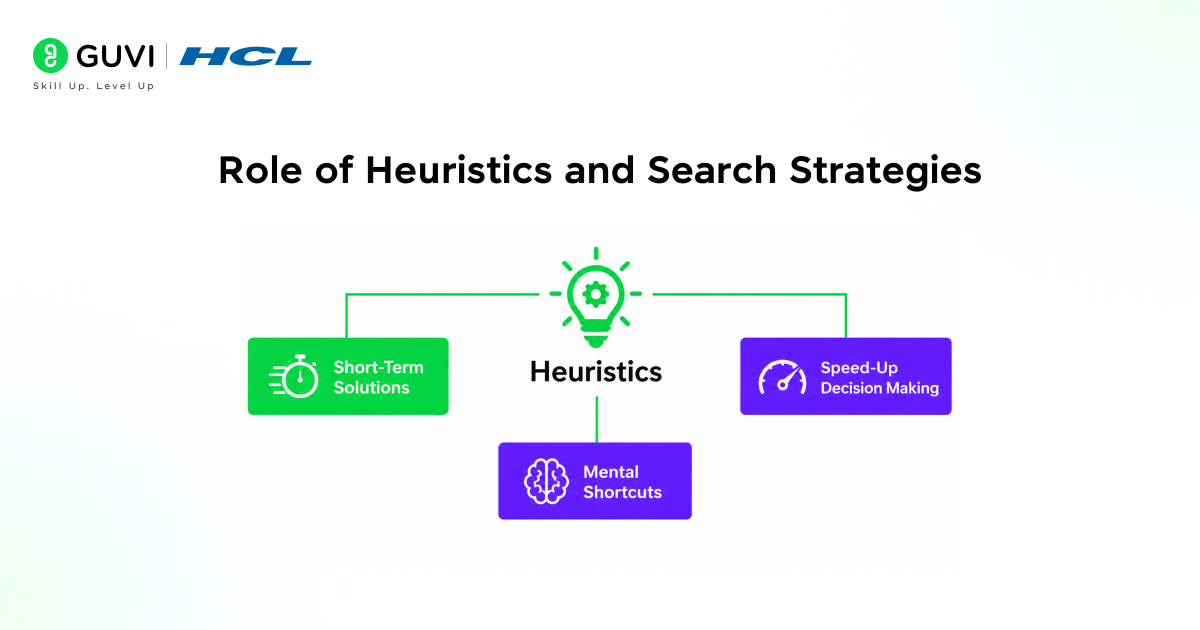
When you encounter a complex problem, you can’t explore every possible situation. That’s where heuristics become useful.
Heuristics evaluate the quality of a state without fully searching through the entire decision tree. They are essentially a shortcut.
The system does not determine every possible outcome but approximates results by finding patterns in the problem and drawing from past experiences.
Although the system might not be 100% accurate, it operates much faster. This trade-off is the key to making adversarial search practical.

Where It’s Used (Applications)
1. Game Playing AI
One of the most common applications for adversarial search is developing artificial intelligence systems capable of playing games. These systems can examine thousands or even millions of possible moves and determine optimal strategies.
Examples include:
Chess systems capable of defeating grandmasters.
Tic-tac-toe AI as an introductory concept.
AlphaGo is a system that defeated human champions by combining search techniques with deep learning.
2. Multi-Agent Systems
Another application of adversarial search occurs within multi-agent systems. This refers to multiple agents interacting within an environment, each with different objectives.
Examples include:
Self-driving cars negotiating traffic situations.
Real-time trading decisions between competing systems.
Simulation agents used in complex planning scenarios.
An AI system must adapt to the actions of others.
3. Competitive Environments
Adversarial search is not limited to games. Its applications extend across business and technology.
Examples include:
Security systems where attackers and defenders compete.
Online auction systems predict optimal bids.
Planning tools for competitive business environments.
Adversarial search is an integral decision-making process in these systems.
AlphaGo evaluated around 100,000 positions per second, far fewer than traditional brute-force systems like Deep Blue, but its true advantage came from combining search algorithms with powerful deep learning networks that could intelligently predict promising moves and evaluate board positions, allowing it to outperform systems that relied mainly on raw computational force and marking a major shift in modern AI decision-making.
Why It Matters (Real-World Value)
Adversarial search has transformed AI systems from reactive tools into strategic decision-makers.
It enables systems to consider future outcomes, operate effectively in uncertain environments, and make decisions based on long-term impact rather than immediate results.
This is why it is widely used in finance, security, logistics, and advanced planning simulations.
Evolution Beyond Classical Methods
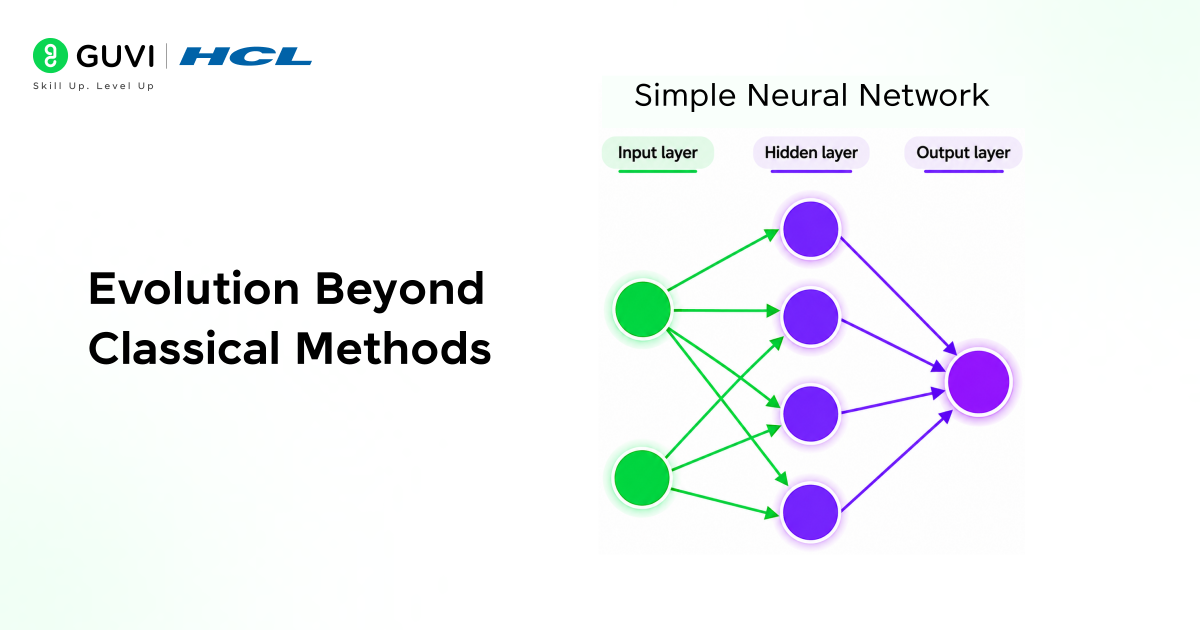
Traditional adversarial search algorithms have evolved beyond simple Minimax approaches. Modern systems integrate multiple techniques.
- Use machine learning for pattern recognition.
- Learn strategies through reinforcement learning.
- Use neural networks for evaluating complex states.
For example, AlphaGo combined adversarial search with learning techniques to achieve superhuman performance. Hybrid systems now outperform traditional rule-based approaches.
Practical Insight: Simple Game Evaluation
Below is a simple heuristic-based evaluation approach for a grid game:
center control
center = [row[len(board)//2] for row in board]
score += center.count(‘X’) * 3
horizontal patterns
for row in board
for i in range(len(row) – 3)
window = row[i:i+4]
if window.count(‘X’) == 3 and window.count(‘ ‘) == 1
score += 5
return score
These rule-based systems reduce computation while still producing effective decisions.
To gain a broader understanding of how strategic decision-making and search-based models are applied in modern AI systems, refer to the ebook Generative AI: The Next Intelligence Revolution.
How This Topic Connects to Core AI Concepts
Adversarial search in AI is connected to multiple core areas of artificial intelligence and enables intelligent decision-making through interaction.
It builds on Game Theory and uses algorithms such as the Minimax Algorithm and Alpha-Beta Pruning. These are applied in game-playing AI, multi-agent systems, and competitive environments that require rapid strategic decisions.
It relies on search strategies and heuristic evaluations to balance accuracy and efficiency.
To practically build intelligent systems that combine decision-making and search strategies, explore HCL GUVI’s AI & Machine Learning course. It covers real-world applications, AI algorithms, and modern intelligent system design.
Conclusion
Adversarial search is one of the most powerful concepts in artificial intelligence. It enables systems to operate intelligently in environments where outcomes depend on competition.
From simple games to complex real-world systems, it provides a structured way to make strategic decisions. Algorithms like Minimax and Alpha-Beta Pruning form the foundation, while modern techniques enhance performance.
As AI continues to evolve, adversarial search will remain central to building systems that are not just intelligent but strategic.
FAQs
1. What is adversarial search in AI?
Adversarial search is a technique where AI makes decisions by considering the possible actions of competing agents and selecting the best strategy accordingly.
2. What is the Minimax algorithm used for?
The Minimax algorithm is used to determine the optimal move in a competitive environment by maximizing the player’s gain while minimizing the opponent’s advantage.
3. Why is Alpha-Beta Pruning important?
Alpha-Beta Pruning improves efficiency by eliminating unnecessary branches in the search tree, reducing computation time without affecting results.
4. Where is adversarial search used in real life?
It is used in game-playing AI, cybersecurity systems, financial trading bots, and strategic planning tools.
5. What are heuristic functions in adversarial search?
Heuristic functions estimate the value of a game state without exploring the entire search space, enabling faster decision-making.
6. How does adversarial search differ from traditional search?
Traditional search solves fixed problems, while adversarial search deals with dynamic environments where outcomes depend on competing agents.
7. What is the difference between an AI course and an AI & ML course?
An AI course focuses on artificial intelligence concepts, while an AI & ML course includes machine learning, deep learning, NLP, computer vision, and practical model-building skills. If you’re looking for hands-on AI and ML training, explore the HCL GUVI AI & ML Programme.
8. Why is SQL important for AI & ML professionals?
SQL helps AI & ML professionals extract, clean, and analyze data from databases, making it essential for building accurate machine learning models. Most industry-focused AI & ML programmes include SQL as a core data skill.
9. What job roles can I apply for after completing an AI & ML course?
You can apply for roles such as AI Engineer, Machine Learning Engineer, Data Scientist, NLP Engineer, Computer Vision Engineer, and AI Developer. To prepare for these roles, consider a project-based AI & ML Programme with career support.
10. How do I choose the best AI course for my career goals?
Choose an AI course based on your career goals, curriculum, hands-on projects, mentor support, industry tools, and placement assistance. A structured AI & ML Programme can help you build practical skills and a strong portfolio.
11. What should I look for before enrolling in an AI & ML course?
Look for a structured curriculum, practical projects, experienced mentors, updated AI tools, certification value, and career support. Compare programmes carefully before enrolling in an AI & ML Programme.
12. How should I evaluate AI & ML certifications before enrolling?
Evaluate AI & ML certifications based on industry recognition, curriculum relevance, hands-on learning, project experience, and career outcomes. You can also compare what’s included in the HCL GUVI AI & ML Programme before making a decision.
Success Stories

About the Author
Vishalini Devarajan
An Aerospace Engineer turned content writer, I focus on making complex concepts easy to understand through well-structured, reader-friendly blogs. Whether it’s a technical topic or a non-technical one, I love creating content that is clear, engaging, and impactful.
View all posts by Vishalini Devarajan
Connect with me @












Did you enjoy this article?