


Career Articles
Accountant vs Data Analyst Salary in India After Switching Careers - Best Guide
Finance Managers: Could Data Science Be Your Next Career Move?
Insurance Claims Executive to Data Analyst: Is It a Good Switch?
Banking Executive (Loans, KYC) to Data Analyst: Skills and Career Path


Get In Touch For Details! Request More Information
The Need For Making An Effective Professional Career Plan
Jul 16, 2026 7 Min Read 2038 Views
(Last Updated)
Most people know what they don’t want in their careers, but very few clearly know what they do want. This confusion follows them through college, their first job, and sometimes even years into their professional life. They keep moving, but not necessarily in the direction that truly fits them.
Instead of drifting from one opportunity to another, it is far more powerful to decide the path you want to follow and prepare for it with intention. An effective professional career plan gives you that sense of control. It removes guesswork from your decisions and replaces it with clarity, awareness, and purpose. It shows you what skills to build, what roles to aim for, and how to move forward without feeling lost.
This blog explores why creating such a plan is important, how it supports long-term stability, and what steps you can take to build a career that feels right for you. If you want a future where your work aligns with your interests, strengths, and goals, understanding career planning is the first step.
Table of contents
- What Is an Effective Professional Career Plan?
- Why Do You Need an Effective Professional Career Plan?
- Provides Clear Direction
- Helps You Understand Yourself Better
- Makes Skill Development Easier
- Helps You Track Your Progress
- Improves Decision-Making
- Increases Job Satisfaction
- Makes You More Competitive
- Helps You Handle Career Challenges
- Key Elements of an Effective Professional Career Plan
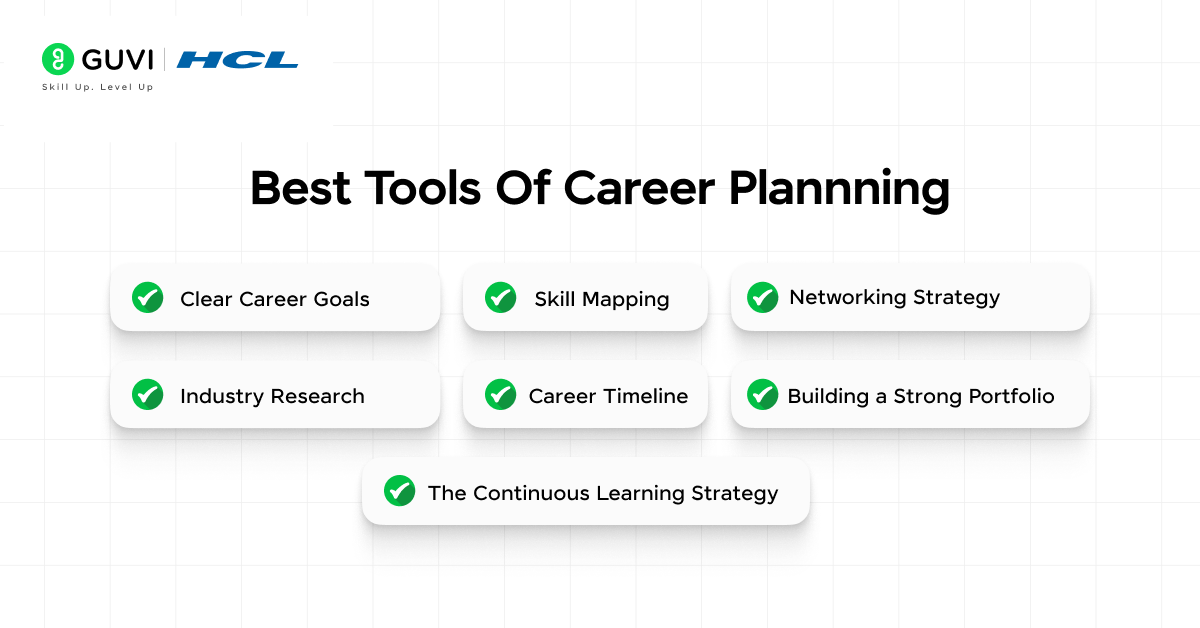
- Clear Career Goals
- Skill Mapping
- The Continuous Learning Strategy
- Career Timeline
- Industry Research
- Building a Strong Portfolio
- Networking Strategy
- Benefits of Having an Effective Professional Career Plan
- You Grow Faster Than Others
- You Build Confidence
- You Avoid Career Mistakes
- You Learn Smart, Not Hard
- You Become a Strong Candidate for Growth Roles
- How to Build Your Own Effective Professional Career Plan
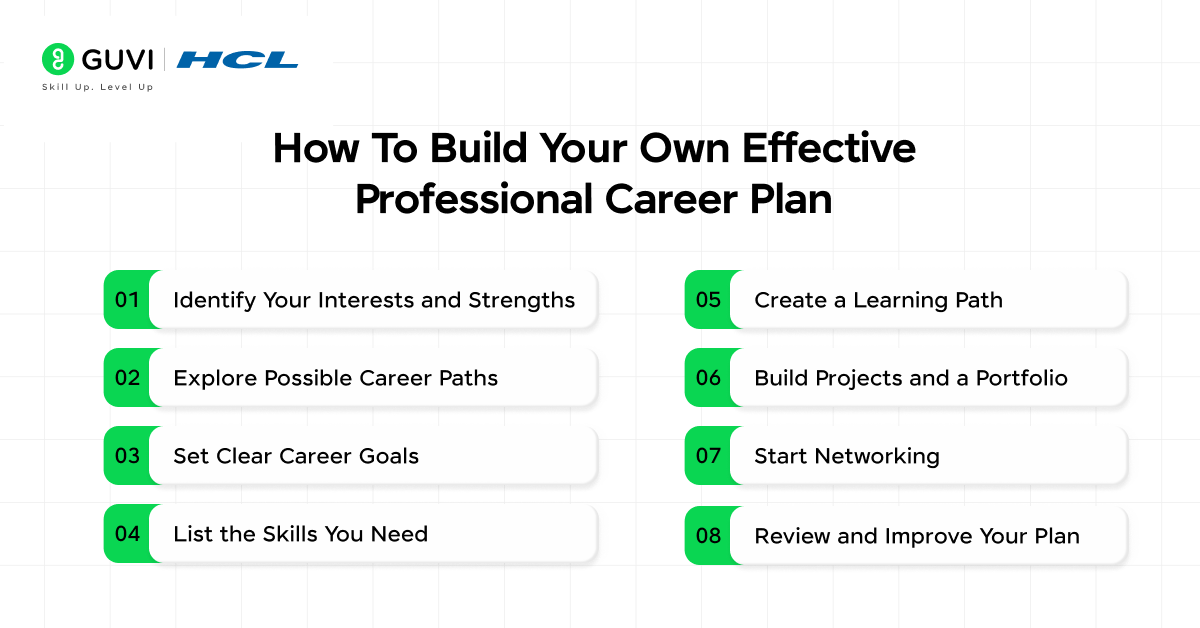
- Step 1: Identify Your Interests and Strengths
- Step 2: Explore Possible Career Paths
- Step 3: Set Clear Career Goals
- Step 4: List the Skills You Need
- Step 5: Create a Learning Path
- Step 6: Build Projects and a Portfolio
- Step 7: Start Networking
- Step 8: Review and Improve Your Plan
- Wrapping it Up:
- FAQs
- What is an effective professional career plan?
- What is the importance of career planning?
- How do I start planning my career?
- How often do I need to check on my career plan?
What Is an Effective Professional Career Plan?
An Effective Professional Career Plan is a step-by-step plan that indicates your career objectives and what you need to do to get them. It is not just a list of dreams. It is a feasible plan in which you determine:
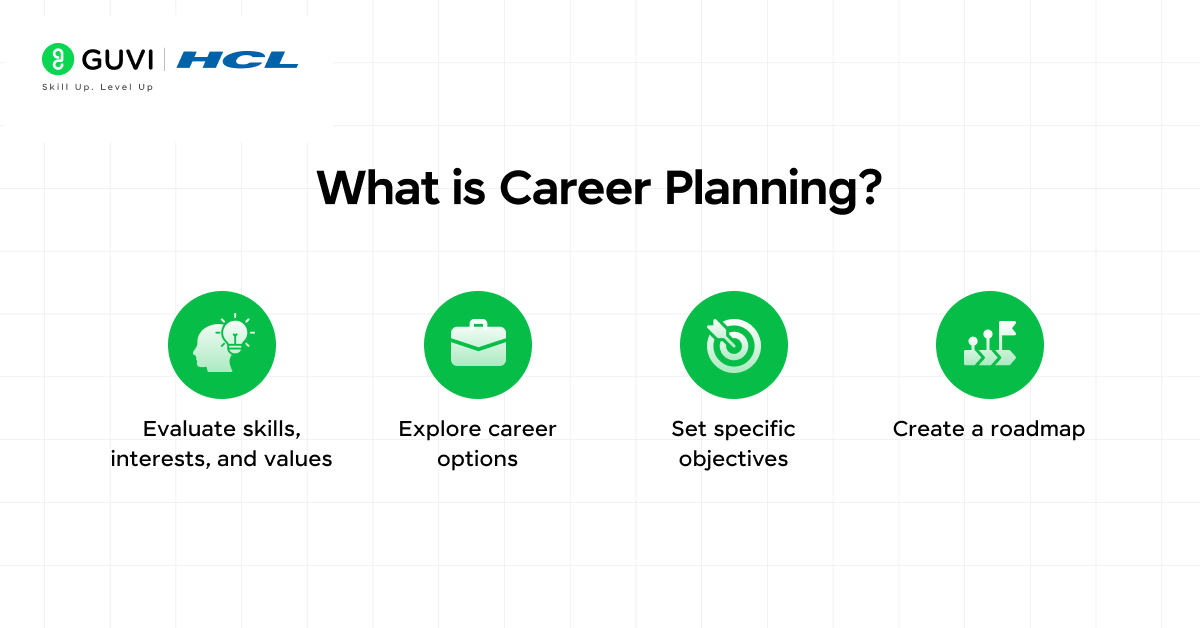
- What career path do you want
- What skills must you learn
- The way you will develop in the next several years.
- What are your strengths, and what opportunities are they?
This plan will put you on track and not waste time on random decisions. It also guarantees that you acquire the appropriate skills that are required in the industry.
A career plan is flexible. It can be transformed whenever you change your interests, goals or conditions of the market. But with something to begin with, you have a purpose and a ground.
Also read: Top Career Options in India
Why Do You Need an Effective Professional Career Plan?
The need for a career plan in your professional life has numerous reasons. The following are the most significant ones, explained as follows:
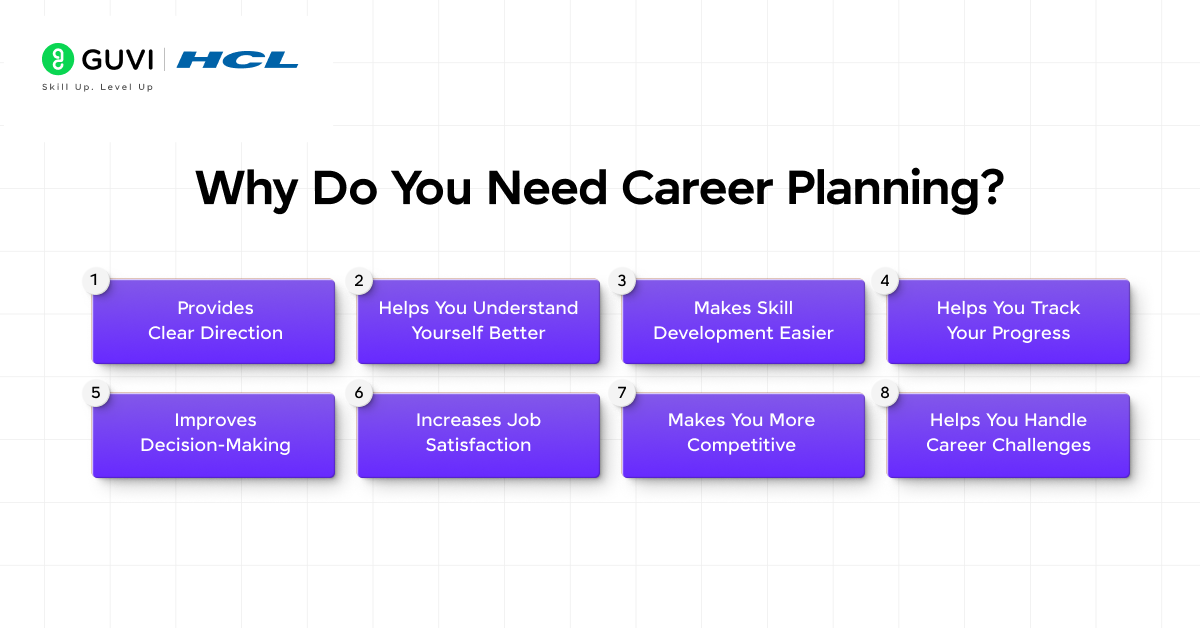
1. Provides Clear Direction
When individuals lack knowledge of what they desire, most of them become lost. A good career strategy provides you with visibility. It helps you in determining where you would like to be after 3 years, 5 years or even after 10 years.
If you know where to go, then it is all easy. Depending on your long-term objectives, you make the correct decision, occupation, or task. This saves time, and confusion is minimized.
2. Helps You Understand Yourself Better
Career planning makes you examine your career strengths, weaknesses, interests, and values. This is a compulsory step that is not followed by many.
You realize what type of work you are happy with. You also determine the skills you already possess and the ones that you need to improve. This self-knowledge can assist you in making decisions regarding which positions to take that you are good at and where you are content.
3. Makes Skill Development Easier
An unplanned life can result in the acquisition of random skills that do not help in your development as a career. The proper learning path is helpful in a step-by-step plan.
Indicatively, when you decide to become a software developer, you are aware that you have to study Python, JavaScript, Data Structures, and Git.
In case you intend to be a data analyst, you understand that you need to work on SQL, Excel, Power BI, and Python.
This is clear to you: learning skills that will actually have value in your career.
Also read: How to Get No-Experience Tech Jobs in India
4. Helps You Track Your Progress
With efficient career planning, a professional sets and adheres to, you will be able to track your progress in no time. You are aware of whether you are working in the right direction or going in the wrong direction.
You have to keep track to keep yourself motivated. It also displays the amount of effort that you still have to make to achieve the job position or career level that you desire.
5. Improves Decision-Making
A career plan lessens unwanted stress. You can just look at your plan and look at the options available when you have to make a decision between two options, such as changing your job, enrolling in a course or the choice of a project to work on.
This will help you not be confused and make intelligent choices that contribute to your development.
6. Increases Job Satisfaction
Individuals who follow a planned career path feel more satisfied at work. They take up their preferred positions and those that suit them best. They also feel more confident about having the right skills since they are certain of the same.
When your profession is in line with your ambitions, you have more pleasure in your career and grow quicker.
Also read: Now Become A Full Stack Developer In 90 Days!
7. Makes You More Competitive
The level of competition in the present-day job market is high. Firms seek individuals with technical competencies as well as individuals who understand their careers.
An effective professional career plan will keep you ahead of the pack. You need the correct skills in the first place. You know what is happening in the industry. You make a good portfolio or resume which is a clear indication of where you are heading.
Employers would want people who are long-term and clear.
8. Helps You Handle Career Challenges
There are good times and bad times in every profession. You can be rejected, find gaps in skills or you can encounter an unforeseen change in the industry. An effective career plan can make you relaxed and clear in such occasions.
You are not lost on how to modify your plan and proceed. This is an attitude that makes you steady.
Key Elements of an Effective Professional Career Plan
1. Clear Career Goals
Well-defined goals are like a map. They provide you guidance and do not allow you to sense being lost or unable to know what to do next.
To begin with, write down short-term and long-term objectives to have the idea of what you want to accomplish at the same time and in the future.
Short-term goals may include:
- Learning a specific skill
- Completing a certification
- Building a project
These targets make you keep on the move, concentrated, and always getting better.
- Long-term goals may include:
- Becoming a team lead
- Operating within a specific area.
- Starting your own company
These objectives assist you in thinking of the greater picture and strategizing on actions to take.
Also read: Hot Topics That You Need To Know In Full Stack Developer Syllabus | [UPDATED]
2. Skill Mapping
Skill mapping will help you to know your real position. It provides you with a clear overview of the strengths you have, the areas that need enhancement, and the capabilities that you need to have in the dream job.
Lack of skill mapping can also make you waste time studying things that are not beneficial to your career.
3. The Continuous Learning Strategy
Every field transforms rapidly due to new technologies. A good professional career plan should entail a learning plan that will enable you to keep abreast of things.
4. Career Timeline
A schedule will assist you in planning your objectives. You have an idea on where you want to be in 6 months, one year or three years.
Also read: Top 5 Tech Careers of the Future
5. Industry Research
Knowing your industry will give you a huge upper hand. You learn:
- What skills companies need
- What job roles are in demand
- What salary range to expect
- What are the growth prospects
Such knowledge can assist you in making realistic choices.
Kick-start your tech career with HCL GUVI’s Full Stack Development Class. Learn in-demand skills, build real projects, and get placement support to achieve your career goals.
6. Building a Strong Portfolio
Certificates are not the only important things that employers take into consideration. A portfolio shows:
- Projects
- Case studies
- Real-world solutions
- Your creativity
- Your technical knowledge
This would be a sure way of planning to get a job.
7. Networking Strategy
Networking assists you in meeting mentors, professionals, as well as potential employers. You can start with attending webinars, joining LinkedIn groups, and so on. This develops opportunities that otherwise might not be available.
Also read: Is Web Development a Good Career? 5 Reasons To Prove It Is!
- Nearly 83% of professionals say they grew faster after creating a structured career plan — proving that clarity accelerates progress.
- Individuals with clear career goals are 3× more likely to land job interviews and opportunities aligned with their ambitions.
- Planning your skills in advance can reduce career confusion by almost 50%, helping you make smarter learning and growth choices.
- A strong portfolio can increase your chances of getting hired by up to 70% — it’s your best tool to showcase skills beyond a résumé.
- Professionals who review their career plan every few months report significantly higher job satisfaction and confidence in their progress.
- Networking alone accounts for over 60% of new career opportunities, proving that meaningful connections can shape your professional future.
Benefits of Having an Effective Professional Career Plan
1. You Grow Faster Than Others
You can achieve this by having a set system that guides you to advance faster than those who work randomly.
How it helps you grow faster:
- You learn the right skills early, not randomly.
- You are task and project-oriented, concentrating on activities that are beneficial in your future.
- You do not get distracted by anything that can slow you down.
- You minimize unneeded career switching and bewilderment.

2. You Build Confidence
This is how confidence comes in when you are sure of what you are working towards and the reason.
The value of having a career plan in raising confidence:
- Your judgment is made more clear.
- You are ready to take interviews and assessments.
- You know your areas of growth and strengths.
- You no longer question yourself whether you are heading in the right direction.
When every action is scheduled, you do it intentionally. This will come across as more confident in work-related scenarios.
Also read: Web Developer vs Software Developer: Choosing the Right Career Path
3. You Avoid Career Mistakes
Without planning, it’s easy to take decisions that do not help your long-term growth.
Some of the most frequent errors made by unplanned people include:
- Majoring in the wrong profession or field.
- Taking unrelated courses (in terms of career objectives).
- Changing careers when it is too late through confusion.
- Losing chances due to a lack of preparedness.
How a career plan prevents these mistakes:
- It makes you make the right choice at an early age.
- It leads you to helpful courses and skills.
- It brings opportunities to the forefront of others.
- It reminds you of what you need to and should be.
Having a plan, you can make a decision and not to waste time on some unnecessary failures.
4. You Learn Smart, Not Hard
An outline would save you time on irrelevant abilities or subjects.
How do you learn smarter?
- You focus on skills that are necessary in your target job.
- You select courses and certifications, which bring actual value.
- You develop pertinent projects rather than arbitrary projects.
- It saves you the money that is spent on unnecessary training.
Your learning is efficient and effective since there is a reason why you learn.
Also read: As a Software Engineer, How Do I Shift My Career to DevOps?
5. You Become a Strong Candidate for Growth Roles
Companies look for people who show planning, clarity, and leadership qualities. A career plan naturally develops these traits.
Qualities employers love that a career plan builds:
- Clarity: You know what you want and where you’re heading.
- Skill Development: You consistently upgrade your abilities.
- Leadership: You plan and take ownership of your growth.
- Discipline: You follow timelines and stick to your goals.
Why this helps you grow faster at work:
- Managers trust you with big responsibilities.
- You stand out during promotions.
- You look more committed and focused than others
A structured approach shows employers that you are serious about your growth, making you a strong candidate for leadership roles.
How to Build Your Own Effective Professional Career Plan
Step 1: Identify Your Interests and Strengths
Ask yourself:
- What kind of work makes me happy?
- What skills come naturally to me?
- What do I want to achieve in the next few years?
- Write everything down for clarity.
These questions will make you realise your innate skills and the nature of job you are motivated to.
Note all the details down so that you would be able to contrast your interests with the career options that might be available. This is what will form the basis of your plan.
Also read: How to Become a Web Developer – Your Web Development Career Roadmap
Step 2: Explore Possible Career Paths
After identifying your strengths, pursue careers that fit your strengths. Do not take based on the trends but choose according to your long term interest and on fit.
What you can do:
- Read about various job descriptions in your profession.
- Find out what the day-to-day activities of these positions entail.
- Learn those skills needed at each position.
- Determine the role development.
This helps you understand which path matches your personality and future goals. It also prevents you from choosing a role that feels right today but does not match your long-term expectations.
Step 3: Set Clear Career Goals
Goal setting gives your career plan a strong direction. Your goals should guide you step-by-step instead of overwhelming you.
Divide your goals into:
- Short-term (6–12 months): Learn basics, finish certifications, build small projects
- Mid-term (1–3 years): Get internships, improve expertise, transition into stronger roles
- Long-term (3–7 years): Become a team lead, expert, or move into advanced positions
Make sure your goals are realistic, achievable, and measurable. This structure helps you stay motivated and track your progress.
Also read: Is Switching Careers From Non-Tech To Tech Challenging?
Step 4: List the Skills You Need
Each job position has a set of skills that it demands. These are the skills that you need to recognize at an early stage to be able to grow in the desired direction.
How to do it:
- Find out the job descriptions of your dream job.
- Name the mentioned skills, technical, and soft.
- Compare them with your competence.
- Make notes on what you should learn or work on
This difference becomes your learning target. Knowing what to learn saves you time and helps you focus on meaningful areas.
Step 5: Create a Learning Path
A learning path guides your progress step-by-step. It ensures you stay consistent instead of learning randomly.
Include in your learning path:
- What you will study (skills, tools, concepts)
- Where you will study (online platforms, GUVI courses, bootcamps)
- How long will it take (timeline for each skill or course)
Step 6: Build Projects and a Portfolio
Projects demonstrate your actual competencies. They test what you have studied and the way you can use it on the real world.
Why projects matter:
- They assist you in knowing how to apply practically.
- They strengthen your resume
- They give your learning something significant.
- They help employers believe in your abilities.
Keep your portfolio of all your best projects, and update it regularly. An effective portfolio enhances your probability of securing the interviews at a quicker rate.
Also read: 7 Best Tech Jobs for Career Switchers and How to Get Them!
Step 7: Start Networking
Networking connects you with people who can guide you, refer you, or open opportunities you never knew existed.
Ways to start networking:
- Follow professionals on LinkedIn
- Attend webinars or workshops
- Participate in hackathons, events, or discussions
- Reach out politely to people working in your dream role
Talking to people who are already in the field helps you avoid beginner mistakes. It also helps you understand industry expectations more clearly.
Step 8: Review and Improve Your Plan
Your career plan is not fixed forever. As you grow, learn, and gain new interests, your goals may change and that’s normal.
What to review every few months:
- Your progress
- Your updated skills
- New industry trends
- Your changed interests or goals
Make changes whenever needed. A flexible plan helps you grow steadily without feeling stuck or restricted.
Wrapping it Up:
We are finally wrapping up this blog, and I hope you found it helpful as to why an efficient professional career plan matters. Many individuals move from one job or skill to another without a clear path and that often creates a lot of confusion later on. With the points mentioned, I hope you now understand and have a clearer view of how you can plan the next career phase, what actions you can take, and approach this learning phase with confidence.
Career planning does not have to be complicated; it just requires some attention and consistency. Take your time, investigate your options, and then prepare a plan that is truly for you.
FAQs
1. What is an effective professional career plan?
Your career plan is a roadmap that directs you on how to articulate concrete goals, select an appropriate skill set, and take a systematic approach to advance your career.
2. What is the importance of career planning?
Fundamentally, it provides organization and direction, reduces confusion, and allows you to plan thoughtfully about education and job opportunities.
3. How do I start planning my career?
Begin with understanding your interests, capabilities/strength, and the ideal job for you in the future. Next,explore salaries and responsibilities for positions, and come up with a plan to build your skill set.
4. How often do I need to check on my career plan?
Typically, every 3–6 months, or when you have accomplished milestones or if something in the industry changes that affects your position.
Success Stories

About the Author
Vishalini Devarajan
An Aerospace Engineer turned content writer, I focus on making complex concepts easy to understand through well-structured, reader-friendly blogs. Whether it’s a technical topic or a non-technical one, I love creating content that is clear, engaging, and impactful.
View all posts by Vishalini Devarajan
Connect with me @













Did you enjoy this article?