


Data Science Articles
BPO Workforce Management Analyst to Data Analyst: What Skills Transfer?
CFA Charterholders: Are You Missing Out on Data Science Opportunities?
Data Analyst Jobs for BPO Experience in India
BPO Team Leader to Analytics Manager: Skills, Roadmap and Salary

Get In Touch For Details! Request More Information
Data Analyst or Data Scientist: Which Has Better Demand for Mid-Career BPO Professionals?
Oct 22, 2026 4 Min Read 38 Views
(Last Updated)
Working in a BPO role can help you develop valuable skills such as data handling, reporting, process management, customer communication, and problem-solving. If you are considering a career change, moving into data analytics or data science may be an opportunity to build on that experience while developing new technical skills.
However, choosing between a Data Analyst and a Data Scientist role can be confusing. Both careers involve working with data, but they differ in their day-to-day responsibilities, technical requirements, and learning paths.
For professionals moving from data entry, customer support, or other BPO roles, understanding these differences is important. You can use your existing experience as a starting point, learn relevant tools, and prepare for roles that match your current skills and long-term goals.
Table of contents
- TL;DR
- What Is the Difference Between a Data Analyst and a Data Scientist?
- Which Career Is More Suitable for Mid-Career BPO Professionals?
- What Skills Can You Transfer From a BPO or Data Entry Role?
- Data Accuracy and Validation
- Excel and Spreadsheet Handling
- Process Knowledge
- Communication and Problem-Solving
- What Skills Should You Learn for Each Career?
- How Can You Transition From Data Entry to Data Analytics?
- What Projects Can Help You Get Your First Data Role?
- What Career Opportunities Can You Explore?
- Conclusion
- FAQs
- Can a data entry operator become a Data Analyst?
- Is Data Analyst or Data Scientist better for BPO professionals?
- Do I need coding skills to become a Data Analyst?
- How long does it take to prepare for an entry-level Data Analyst role?
- Which projects should beginners build?
- Can I move from Data Analyst to Data Scientist later?
TL;DR
- Data Analysts interpret data, prepare reports, identify trends, and support business decisions.
- Data Scientists work with statistics, programming, and machine learning to solve more complex problems.
- BPO professionals with spreadsheet, reporting, and process knowledge may find Data Analyst roles a practical starting point.
- Excel, SQL, and Power BI are useful skills to learn for data analytics.
- Data science typically requires additional knowledge of Python, statistics, and machine learning.
- Your best career choice depends on your interests, current skills, and willingness to learn.
What Is the Difference Between a Data Analyst and a Data Scientist?
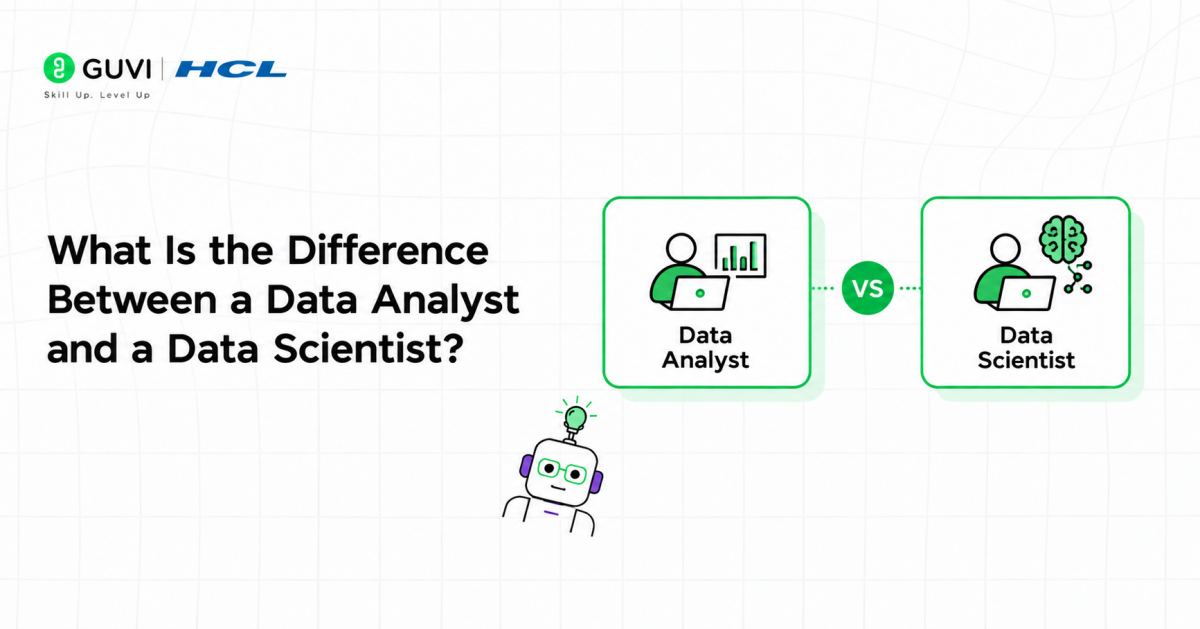
Although these roles overlap, they focus on different aspects of working with data.
Data Analyst: A Data Analyst examines existing data to understand what happened, identify trends, and explain business performance. Typical tasks include cleaning datasets, preparing reports, creating dashboards, and presenting findings to stakeholders.
Data Scientist: A Data Scientist uses statistical methods, programming, and machine learning to investigate complex problems, develop predictive models, and estimate possible future outcomes.
For example, a Data Analyst working with a BPO company might examine monthly call volumes and customer satisfaction scores. A Data Scientist might build a model to predict call demand or identify factors associated with customer churn.
Both roles require analytical thinking, but Data Scientist positions generally involve more advanced technical work.
Explore data-driven career opportunities by building the right technical skills for your next career move. HCL GUVI’s Data Science Course helps you develop practical knowledge of Python, statistics, data analysis, and machine learning through hands-on projects, preparing you to pursue roles in data analytics and data science.
Which Career Is More Suitable for Mid-Career BPO Professionals?
For many BPO professionals who are new to analytics, becoming a Data Analyst can be a more accessible first step. This is especially true if your current role involves spreadsheets, quality reports, operational metrics, customer feedback, or performance tracking.
You can build on familiar responsibilities while learning tools such as Excel, SQL, and Power BI.
Data science may be a suitable goal if you enjoy mathematics, programming, statistical analysis, and predictive modeling. However, the learning path is usually more demanding for someone without previous experience in these areas.
This does not mean that Data Analyst roles are easy to get or that Data Science is out of reach. Both careers require practical skills, and hiring requirements vary by employer. Your decision should depend on the work you want to do and the skills you are prepared to develop.
What Skills Can You Transfer From a BPO or Data Entry Role?
Your existing experience may provide a useful foundation for data-related work.
1. Data Accuracy and Validation
Data entry professionals often check records, identify missing information, and correct inconsistencies. These habits are relevant to data cleaning, where accuracy is essential before analysis begins.
2. Excel and Spreadsheet Handling
If you already use Excel to maintain records or prepare reports, you have a starting point for learning more advanced functions, pivot tables, lookup formulas, and data analysis techniques.
3. Process Knowledge
BPO professionals often understand workflows, service-level targets, customer issues, and operational performance. This knowledge can help you interpret data in a business context instead of looking at numbers without understanding their meaning.
4. Communication and Problem-Solving
Explaining an issue, identifying a recurring problem, or coordinating with another team can develop skills that are useful when presenting analytical findings.
These transferable skills are valuable, but they do not replace technical requirements. You will still need to demonstrate that you can analyze data independently.
What Skills Should You Learn for Each Career?
The tools you prioritize should match your target role.
For a Data Analyst role:
- Excel for organizing, cleaning, and summarizing information.
- SQL for retrieving and analyzing database records.
- Power BI or Tableau for building dashboards.
- Basic statistics for interpreting patterns and comparisons.
- Communication skills for explaining findings and recommendations.
For a Data Scientist role:
- Python or R for data manipulation and analysis.
- Statistics and probability for evaluating data and models.
- Machine learning concepts for building predictive models.
- Data preparation and visualization.
- Model evaluation and the ability to explain the limitations of predictions.
A practical approach is to start with Excel and SQL, then learn a visualization tool. You can explore Python and statistics more deeply as you progress toward advanced analytics or data science.
A data entry role can provide useful experience with data accuracy and validation, two important parts of data analysis. However, the key career shift is learning to move beyond recording information and start asking questions, identifying patterns, and explaining what the data reveals.

How Can You Transition From Data Entry to Data Analytics?
A structured learning plan can help you build skills without becoming overwhelmed.
Step 1: Strengthen Excel. Learn formulas, lookup functions, pivot tables, charts, and data cleaning.
Step 2: Learn SQL. Practice filtering, grouping, joining, and summarizing datasets.
Step 3: Build a dashboard. Use Power BI or Tableau to present business metrics in a clear and useful format.
Step 4: Complete practical projects. Analyze customer satisfaction, service performance, sales, or employee productivity using public or sample datasets.
Step 5: Prepare for interviews. Practice Excel tasks, SQL questions, basic statistics, and explaining the insights from your projects.
Step 6: Apply for relevant roles. Explore Junior Data Analyst, Reporting Analyst, MIS Analyst, Operations Analyst, and other positions that match your experience and skills.
If you later decide to pursue data science, add Python, more advanced statistics, and machine learning to your learning plan.
What Projects Can Help You Get Your First Data Role?
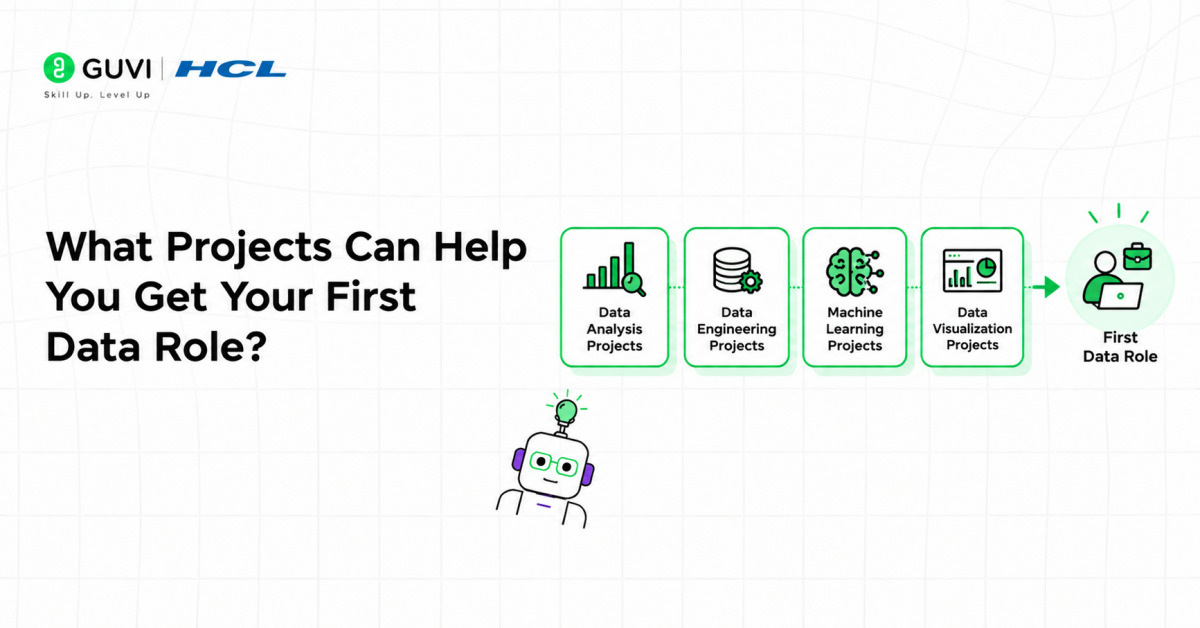
Projects help demonstrate your ability to use data tools and answer practical business questions.
1. Customer Support Performance Dashboard
Analyze ticket volumes, resolution times, and customer satisfaction scores. Use a dashboard to identify trends and recommend improvements.
2. Data Cleaning and Reporting Project
Take a sample dataset containing missing values, duplicate records, or inconsistent formats. Clean it, summarize the results, and explain how you improved data quality.
3. Business Performance Analysis
Use SQL and Power BI to analyze sales, monthly performance, or operational metrics. Present your findings with charts and actionable recommendations.
For each project, include the problem statement, tools used, analysis process, key findings, and recommendations. Use public or synthetic data rather than confidential information from your workplace.
What Career Opportunities Can You Explore?
Depending on your skills and experience, you can consider several roles:
- Junior Data Analyst: Analyzes data and prepares reports for business teams.
- MIS Analyst: Maintains reporting systems and monitors performance metrics.
- Reporting Analyst: Creates recurring reports and dashboards.
- Operations Analyst: Studies processes, productivity, and operational efficiency.
- Data Scientist: Develops statistical and machine learning models to solve complex problems.
Review job descriptions carefully because titles and responsibilities differ across companies. Some entry-level analyst roles require SQL and dashboard experience, while others may emphasize Excel and reporting.
Conclusion
Choosing between a Data Analyst and a Data Scientist career depends on your current skills, interests, and long-term ambitions. For mid-career BPO professionals, data analytics may offer a more direct transition because it builds on experience with reporting, records, operational metrics, and business processes.
Start by strengthening Excel, learning SQL, and creating practical projects. Once you gain confidence in analyzing data, you can decide whether to continue growing in analytics or develop the additional programming and statistical skills needed for data science.
A successful career change is not about learning every tool at once. It is about building relevant skills, demonstrating what you can do, and taking the next step toward a role that suits you.
FAQs
1. Can a data entry operator become a Data Analyst?
Yes. Data entry experience can help with data accuracy and validation. Learning Excel, SQL, visualization tools, and analytical thinking can help you prepare for Data Analyst roles.
2. Is Data Analyst or Data Scientist better for BPO professionals?
Data Analyst may be a more accessible starting point for professionals new to analytics. Data Scientist can be a suitable longer-term goal if you enjoy programming, statistics, and machine learning.
3. Do I need coding skills to become a Data Analyst?
Not every role requires extensive coding, but SQL is commonly useful, and some employers expect Python. Start with Excel and SQL, then check the requirements of your target jobs.
4. How long does it take to prepare for an entry-level Data Analyst role?
It varies based on your existing skills, study time, and project experience. Focus on demonstrating practical ability rather than relying on a fixed timeline.
5. Which projects should beginners build?
Start with a customer support dashboard, a data cleaning project, or a business performance analysis. Choose projects that demonstrate clear questions, accurate analysis, and useful conclusions.
6. Can I move from Data Analyst to Data Scientist later?
Yes. Data analytics experience can help you understand datasets and business problems. You will still need to develop stronger programming, statistical, and machine learning skills to qualify for many Data Scientist roles.
Success Stories

About the Author
HCL GUVI
This article was selected and published as part of the HCL GUVI AI Blogathon 2026, an initiative designed to encourage students, AI enthusiasts, and aspiring tech writers to simplify complex AI concepts through impactful technical content. The contest recognized high-quality, original, and insightful AI-focused blogs, with selected authors receiving publication opportunities on the HCL GUVI blog platform along with official author credits and recognition.
View all posts by HCL GUVI
Connect with me @








Did you enjoy this article?