


Artificial Intelligence and Machine Learning Articles
LLM Skills Everyone Should Know in 2026 - Best Guide
AI Content Marketing: How AI Reshapes Marketing in 2026 Best Guide
AI Career Opportunities in 2026: New Roles, Skills, and Roadmap


Get In Touch For Details! Request More Information

Claude’s Refusal Behavior: Why It Declines Certain Requests
Jul 15, 2026 4 Min Read 22 Views
(Last Updated)
Have you ever asked Claude a question and received a polite refusal instead of an answer? Whether you’re generating code, analyzing documents, brainstorming ideas, or conducting research, Claude may occasionally decline certain requests—even when they appear harmless at first glance.
These refusals aren’t random. They are the result of safety policies, model alignment, legal considerations, and risk assessment designed to prevent harmful or misleading outputs. Understanding why Claude refuses some prompts can help you write better prompts, avoid common pitfalls, and get more useful responses. In this article, you’ll learn how Claude’s refusal behavior works, the types of requests it commonly declines, and practical ways to improve your prompts without violating safety guidelines.
Understand why Claude declines certain prompts and how its safety guardrails work. Learn AI & ML with HCL GUVI’s Artificial Intelligence and Machine Learning course.
Table of contents
- TL;DR Summary Box
- What Is Claude's Refusal Behavior?
- Why Does Claude Decline Certain Requests?
- What Types of Requests Are Commonly Declined?
- How Does Context Affect Refusals?
- What Happens Instead of a Full Refusal?
- Common Categories of Refusal
- How to Write Better Prompts
- Common Prompting Mistakes
- Can You Reduce Unnecessary Refusals?
- Refusal Doesn't Always Mean "No"
- Comparison: Helpful Response vs Refusal
- Real-World Example
- Conclusion
- FAQs
- What is Claude's refusal behavior?
- Why does Claude refuse some prompts?
- Can I reduce unnecessary refusals?
- Does a refusal mean the topic is banned?
- Why does Claude sometimes provide partial answers?
- Is prompt engineering useful for avoiding misunderstandings?
- Do AI safety policies remain the same over time?
TL;DR Summary Box
- Claude refuses requests that conflict with its safety and usage policies.
- Common refusals involve harmful, illegal, deceptive, or privacy-sensitive requests.
- A refusal doesn’t necessarily mean the topic is prohibited—it may depend on how the request is framed.
- Clear, legitimate prompts are more likely to receive useful responses.
- Understanding AI safety boundaries improves prompt engineering and user experience.
What Is Claude’s Refusal Behavior?
Claude’s refusal behavior determines whether the model should answer, partially answer, or decline a request. It balances helpfulness with safety by evaluating whether responding could enable harm, violate privacy, or provide misleading information.
Instead of simply blocking topics, Claude assesses the intent and context of a request before generating a response.
Why Does Claude Decline Certain Requests?
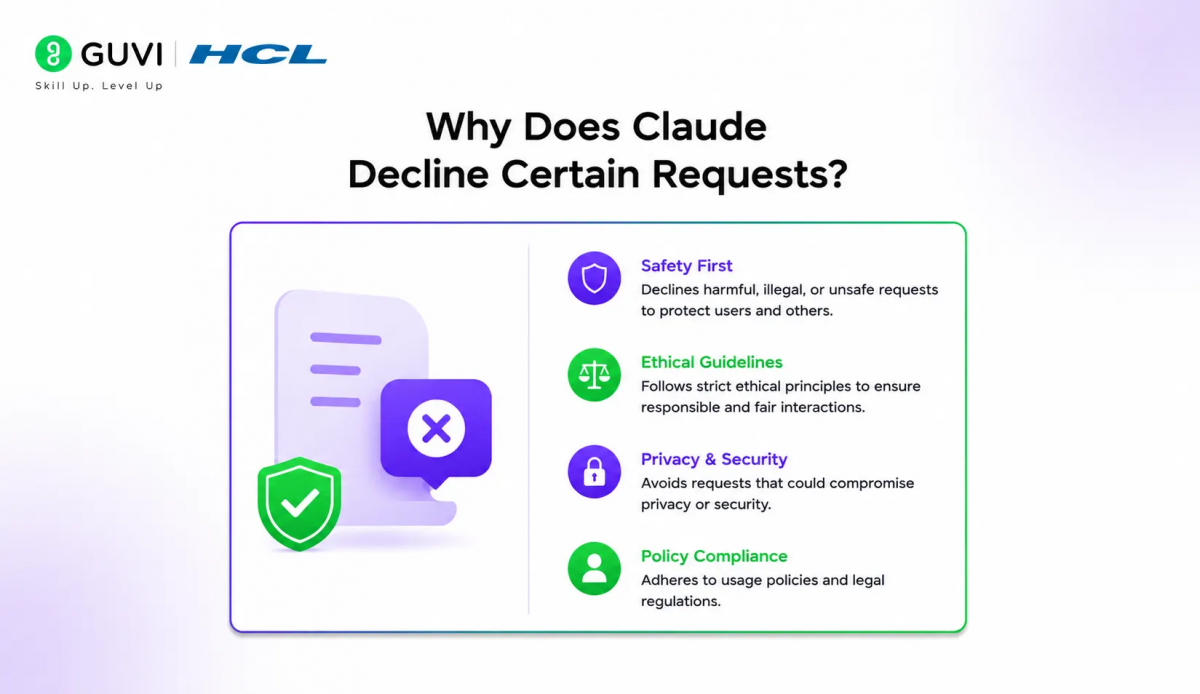
Claude is designed to assist users while reducing the risk of harmful outcomes. Some requests may be refused because providing a direct answer could facilitate misuse or produce unreliable guidance.
Common reasons include:
- Preventing harmful activities
- Protecting personal privacy
- Reducing misinformation
- Avoiding deceptive content
- Respecting legal and ethical boundaries
- Staying within the model’s capabilities
These safeguards aim to make interactions more trustworthy and responsible.
📊 Data Point
Modern AI assistants increasingly use context-aware safety systems that evaluate both the content of a request and the likely intent behind it, rather than relying only on keyword-based filtering.
What Types of Requests Are Commonly Declined?
While policies evolve over time, AI assistants commonly refuse or limit responses involving high-risk scenarios.
Examples include:
- Instructions that facilitate illegal activity
- Requests intended to cause harm
- Attempts to generate malicious software
- Efforts to bypass security systems without authorization
- Requests involving sensitive personal information
- Certain forms of deceptive or fraudulent content
The specific response depends on the request’s context and purpose.

How Does Context Affect Refusals?
Context plays a significant role in how AI systems evaluate prompts.
For example:
- A request to explain cybersecurity concepts for learning may receive a detailed educational response.
- A request that appears to enable unauthorized access or misuse may be declined or redirected.
This context-sensitive approach helps distinguish legitimate educational or defensive use cases from potentially harmful ones.
💡 Pro Tip
When asking about sensitive topics, explain your legitimate purpose. Providing context often leads to more accurate and useful responses.
What Happens Instead of a Full Refusal?
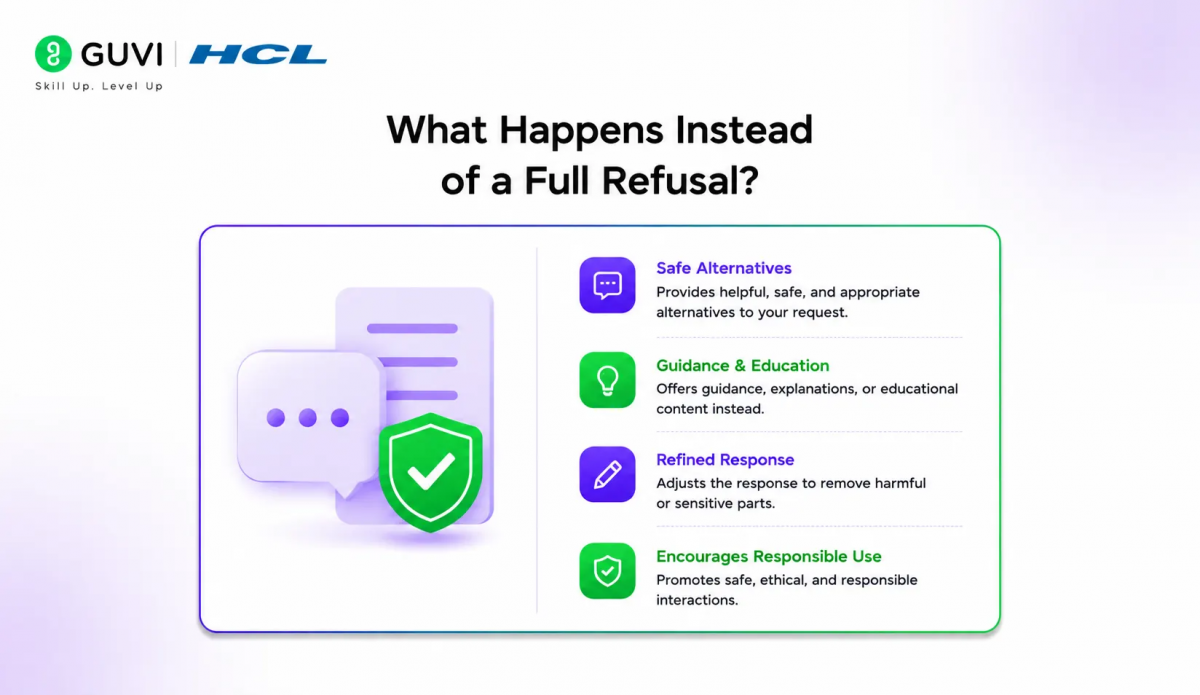
Claude doesn’t always respond with a complete refusal. Depending on the request, it may:
- Provide a safer alternative
- Offer high-level educational information
- Suggest defensive or preventive approaches
- Clarify limitations
- Ask follow-up questions
- Recommend authoritative resources
This allows users to continue learning while reducing potential risks.
Common Categories of Refusal
| Request Category | Typical Response |
| Educational explanations | Usually answered |
| Programming help | Usually answered |
| Creative writing | Usually answered |
| Harmful or illegal instructions | Declined or redirected |
| Privacy-sensitive requests | Limited or declined |
| Medical, legal, or financial guidance | Educational information with appropriate limitations |
| Requests beyond available knowledge | Clarification or acknowledgment of limitations |
How to Write Better Prompts
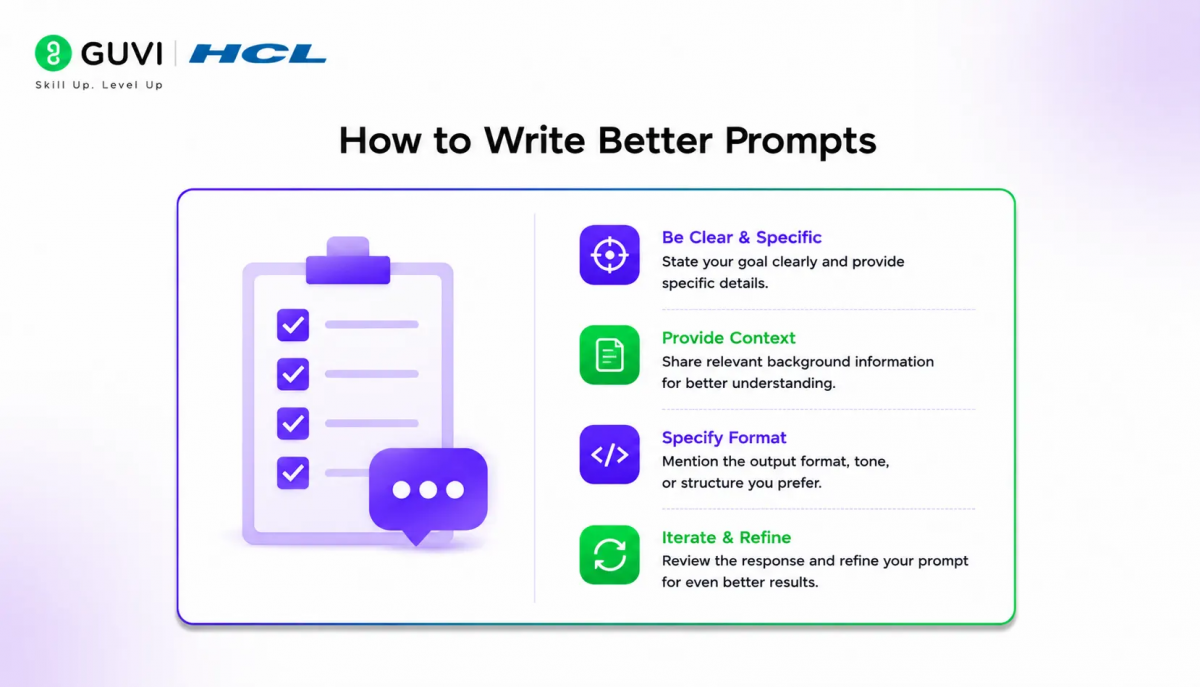
Well-structured prompts reduce ambiguity and improve response quality.
Instead of writing:
“How do I bypass a system?”
Try:
“Can you explain how authentication systems work and common defensive best practices?”
Better prompts should:
- Clearly state your goal.
- Provide relevant context.
- Specify the intended audience or use case.
- Focus on learning or legitimate problem-solving.
This helps the model understand your intent more accurately.
Common Prompting Mistakes
- Vague Requests
Unclear prompts may be interpreted differently than intended.
- Missing Context
Without context, the model may choose a more cautious response.
- Combining Multiple Questions
Long prompts covering unrelated topics can make it harder for the model to determine the primary objective.
- Requesting Impossible Tasks
AI assistants have limitations and may decline requests they cannot reliably complete.
⚠️ Warning
Avoid trying to “trick” an AI assistant into bypassing its safeguards. Instead, rephrase your request with a clear, legitimate objective.
Can You Reduce Unnecessary Refusals?
Yes. While no prompt guarantees a specific response, several practices improve the likelihood of receiving a helpful answer.
Consider:
- Explaining your intended use.
- Breaking complex questions into smaller parts.
- Asking for conceptual explanations before implementation details.
- Requesting examples within safe and legitimate contexts.
- Being specific about your requirements.
These approaches improve clarity for both the user and the model.
Refusal Doesn’t Always Mean “No”
A refusal is not necessarily a rejection of the topic itself. Often, it reflects concern about the specific framing or potential consequences of a request.
For example, an AI assistant may decline operational guidance that could enable misuse while still providing educational information about the underlying concept, relevant standards, or defensive practices.
Understanding this distinction helps users reformulate questions more effectively.
Comparison: Helpful Response vs Refusal
| Prompt Style | Likely Outcome |
| Educational explanation | Detailed answer |
| Programming tutorial | Detailed answer |
| Research summary | Detailed answer |
| Ambiguous high-risk request | Clarification or limited response |
| Clearly harmful instruction | Refusal or safe alternative |
| Defensive security guidance | Educational response |
Real-World Example
Imagine a developer learning about application security.
Their first prompt asks for instructions that could be interpreted as enabling unauthorized access, resulting in a refusal.
They then rephrase the request:
“I’m studying secure software development. Can you explain common authentication vulnerabilities and how developers can prevent them?”
The revised prompt provides clear educational context, allowing the assistant to explain security concepts, best practices, and defensive techniques without facilitating misuse.
This demonstrates how intent and framing can influence the quality and usefulness of AI responses.
Conclusion
Claude’s refusal behavior is an important part of how modern AI systems balance usefulness with responsibility. Rather than answering every request indiscriminately, the model evaluates context, intent, and potential risks before deciding how to respond.
For users, the most effective strategy isn’t trying to work around these safeguards—it’s learning how to ask clearer, more purposeful questions. By providing context, defining your objectives, and focusing on legitimate educational or professional use cases, you can consistently receive more helpful and relevant responses.
FAQs
What is Claude’s refusal behavior?
Claude’s refusal behavior refers to how the AI decides whether to answer, partially answer, or decline a request based on safety, privacy, and reliability considerations.
Why does Claude refuse some prompts?
Claude may refuse requests that could facilitate harm, violate privacy, enable illegal activities, or exceed the model’s ability to provide reliable information.
Can I reduce unnecessary refusals?
Yes. Providing clear context, explaining your purpose, and asking specific educational or professional questions often leads to more helpful responses.
Does a refusal mean the topic is banned?
Not necessarily. The response often depends on the wording, context, and intended use of the request rather than the topic alone.
Why does Claude sometimes provide partial answers?
In some situations, the model can safely explain concepts, offer defensive guidance, or suggest alternatives while avoiding potentially harmful details.
Is prompt engineering useful for avoiding misunderstandings?
Yes. Good prompt engineering improves clarity, helps communicate intent, and often results in more accurate and relevant responses.
Do AI safety policies remain the same over time?
No. AI systems and their safety approaches continue to evolve as developers improve model capabilities, reliability, and risk management.
Success Stories

About the Author
Vishalini Devarajan
An Aerospace Engineer turned content writer, I focus on making complex concepts easy to understand through well-structured, reader-friendly blogs. Whether it’s a technical topic or a non-technical one, I love creating content that is clear, engaging, and impactful.
View all posts by Vishalini Devarajan
Connect with me @













Did you enjoy this article?