


Artificial Intelligence and Machine Learning Articles
Claude for Code Documentation with JSDoc
How to Integrate Claude into a Next.js App with App Router


Get In Touch For Details! Request More Information

Using the bioRxiv and medRxiv Connector in Claude
Jun 05, 2026 5 Min Read 877 Views
(Last Updated)
Scientific research is no longer as slow as it used to be. Waiting months to see research through peer-reviewed journals is becoming outdated in fast-moving fields like biotechnology, health sciences, and AI in drug discovery.
This gap is where preprint servers like bioRxiv and medRxiv come in, allowing researchers to share findings early with immediate access to new discoveries and experimental insights.
However, this constant stream of preprint data creates challenges in access and interpretation. Searching platforms manually and extracting trends is time-consuming. Claude’s bioRxiv and medRxiv connector simplifies this by acting as a “live” interface to query and analyze preprints. In this article, we cover how it works and how to use it effectively.
TL;DR
- Claude’s bioRxiv and medRxiv connector lets you retrieve preprint research directly from these platforms, enabling real-time research queries, summarization, and analysis of pre-peer-reviewed papers.
- It goes beyond just a simple search to facilitate sophisticated analyses, track publication histories, and examine funding sources and usage trends, all within Claude.
- This connector is designed to help researchers, biotech professionals, students, and analysts gain an edge with early scientific intelligence.
- Given that this content is not pre-peer-reviewed, treat all discoveries with caution.
Table of contents
- What is the bioRxiv and medRxiv Connector?
- Understanding the bioRxiv and medRxiv Platforms
- How the Connector Works Inside Claude
- Core Capabilities and Tool Functions
- Step-by-Step Setup Guide
- Real-World Use Cases
- Advanced Applications in Research and Industry
- Best Practices for Use
- Common Mistakes to Watch Out For
- Limitations and Dangers
- Conclusion
- FAQs
- What is the main purpose of the bioRxiv connector in Claude?
- Are the papers retrieved through this connector peer-reviewed?
- Who should use this connector?
- Can this connector track published research?
- Is technical knowledge required to use this connector?
What is the bioRxiv and medRxiv Connector?
The bioRxiv and medRxiv connector is a feature integrated into Claude, giving users direct access to two of the most significant preprint servers in life sciences and healthcare.
Rather than relying solely on static training data, Claude can query both platforms dynamically. This enables Claude to retrieve the most recent publications, glean relevant findings, and communicate these in a clear, easily digestible format.
This connector is powerful because of more than simply the access it grants; it allows for interaction. You are not just downloading documents. You are asking questions, comparing research papers, recognizing trends, and condensing large pieces of research into usable information.
Understanding the bioRxiv and medRxiv Platforms
bioRxiv is focused on biology-related sciences, such as genetics, neuroscience, microbiology, and systems biology. medRxiv, by comparison, concentrates on topics related to health and medicine, including epidemiology, public health, and medical trials.
Both of these sites host hundreds of thousands of papers, and they continue to grow very quickly. Many researchers post work on these sites to get information out into the research community faster, as well as potentially gain recognition.
There is a distinction between these sites, however, that cannot be stressed enough: it is not peer-reviewed yet. Although both have preliminary screenings, a paper should never be interpreted as verified or established science.
The preprint ecosystem often provides a lead time of several months before formal publication, offering early access to emerging discoveries. Many high-impact studies first appear as preprints before being published in journals like Nature or Science. Tracking funding sources and publication outcomes also makes preprint data valuable for researchers, policymakers, and investment analysts.
How the Connector Works Inside Claude
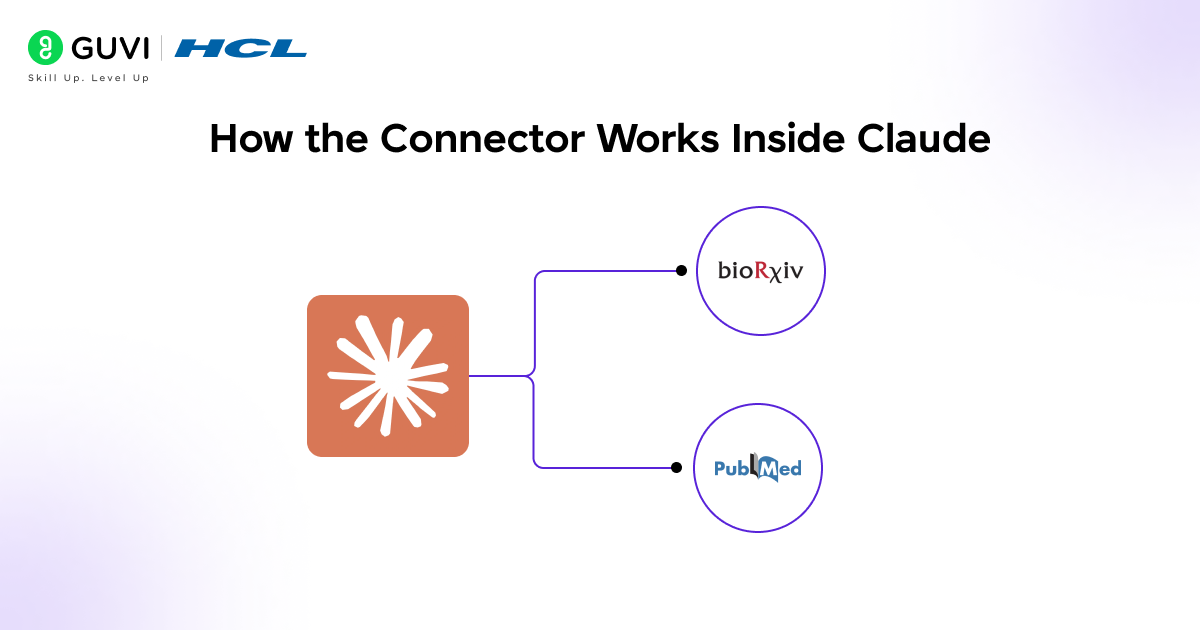
The Claude connector operates through an external integration layer that connects Claude with structured APIs and external data sources, enabling seamless interaction with real-time information systems.
When you present a research-related question to Claude, it will not just spit out information based on its training data. Rather, it sends a request to bioRxiv or medRxiv, pulls in data about the preprints, and then answers your question.
Multiple backend components, such as REST APIs and structured databases, are utilized for this, which store data on the preprints, such as abstracts, authors, funders, etc. This creates an interface that allows Claude to act as an intelligent interface to a live research database.

Core Capabilities and Tool Functions
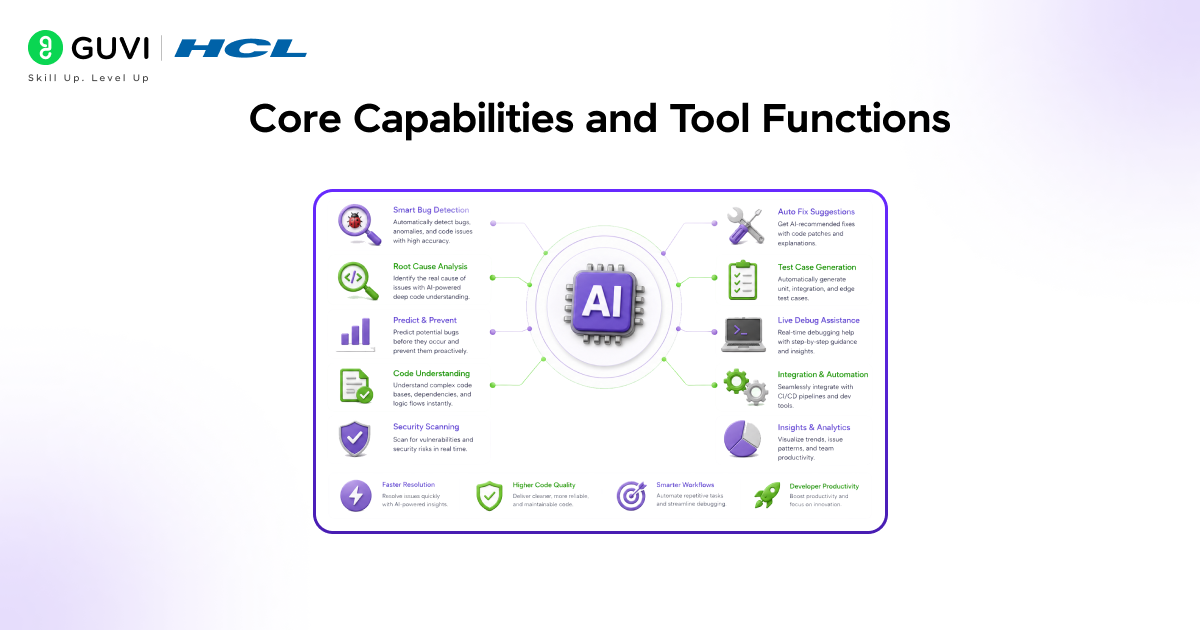
The power of this connector lies in the way it functions as a tool. Instead of just having a search function, the connector allows you to engage with research data on many deeper, more structured levels.
Through the search function, you can specifically pull preprints by category or date, enabling the tracing of a very recent or obscure line of research.
Retrieval tools bring detailed information about papers, such as abstracts, author data, funding, etc., directly to your response, eliminating the need to click through many links and scan pages of documents.
But beyond that, it allows analytical tasks: identifying what has moved from preprints to journal articles, finding differences in time between submission and acceptance.
Through a funder-based tool, you can also analyze a question to look at research attributed to a funder (e.g., National Institutes of Health or European Commission) and estimate the output associated with funding from certain institutions.
Finally, platform statistics also give access to trend information, such as how many new submissions there are and how popular specific preprint topics are.
This ability to fetch and process live data reflects how Claude supports real-time information access through web-based integrations.
Step-by-Step Setup Guide
The process of setting up the bioRxiv connector in Claude is easy and depends on the use case of Claude. For a personal user, simply turn on the connector in the settings. Go to the connectors section, look up bioRxiv, and turn it on.
With the connector turned on, Claude will start answering your research-related queries with real-time preprint data. For team or enterprise users, it is done by admins. The owners of the organizations add the connector at a team level, and all users in the team get access to it.
For Claude Code users, you can install it via a plugin command and then restart the environment so it works properly. Regardless of the way you are setting it up, the result is the same, and Claude gains access to real-time research data.
Real-World Use Cases

The most relevant and immediate use case of the bioRxiv connector is literature monitoring. It enables scientists to keep up to date with the field without having to wait for published articles in journals.
For instance, you can query Claude to fetch recent preprints on Alzheimer’s disease or CRISPR gene editing and receive a synthesized list of new information. Another potential use case is publication tracking, meaning that users can see which preprints are later published in high-impact journals and draw trends about scientific validity and research quality.
Organizations can perform funding analysis, meaning that they can study the impact of funding on research and identify which grants have led to high-impact publications. The connector can also be useful for journalists and science communicators to get an early heads-up on emerging research areas and check whether a discovery is still in the preprint stage.
Students and early-career researchers can use the connector to follow methodologies in their field and identify active research groups working on specific topics, strengthening their literature review.
This becomes especially relevant in research-heavy domains, where Claude is increasingly used to analyze and summarize scientific data in fields like life sciences.
Advanced Applications in Research and Industry

In the pharmaceutical or biotechnology industries, early awareness of ongoing research in specific areas can translate to a competitive advantage. A company could track activity around a particular drug target, look for emergent therapeutic trends, and identify potential partnership possibilities.
Meta-researchers or data analysts could use the connector to understand trends across the scientific ecosystem, from publication latency to interdisciplinary diffusion of research and the impact of funding bodies.
Another up-and-coming use case is the embedding of this connector into an AI workflow. Coupling this feature with other tools, one could potentially create a system that monitors new papers constantly, flags relevant research, and generates automated insights for decision-making. Here, the connector transforms from being just a feature to one component in an underlying data-driven system.
Best Practices for Use

Queries for this tool must be well-defined; a clear topic, time frame, and category will yield more specific results. Vague queries will be treated with a wider net.
Important insights gleaned from your query should be verified with another source where possible. Due to the preprint status, a single query should not influence important decisions but should act as a starting point for further investigation.
Use the tool for exploration rather than confirmation. It is intended to shed light on possibilities rather than serve as proof.
Layering multiple queries can add depth to the analysis. For example, one can query for new preprints and then filter them to determine what research has been published. Building this kind of structured approach to working with AI systems is explored further in this GenAI ebook.
Common Mistakes to Watch Out For
One of the most crucial errors to prevent is considering preprint content as proven science and disseminating findings. This risk is higher when the issue at hand is sensitive, such as healthcare.
Inputting extremely general queries renders the response generic or irrelevant to actual needs. Accuracy is extremely important when data is at stake.
Underestimating its analytical power and using it only as a simple lookup tool, failing to integrate it into any meaningful workflow.
Lastly, not checking sources and comparing information across different research degrades the strength of the results.
Limitations and Dangers
Though powerful, the connector is not without its downsides. One of the paramount dangers it poses is the lack of peer review, meaning it is possible for preprints to present inconclusive or incorrect results.
Another drawback is the dependency of search quality on the quality of the user’s query. With poor queries come poor information.
There is also a learning curve involved in using this tool efficiently, especially when exploring aspects like funding and publications, and it is important to be aware of its limits.
To effectively use tools like the bioRxiv and medRxiv connectors, understanding research data, query precision, and how AI interacts with real-world data is essential. Programs like the HCL GUVI’s Artificial Intelligence and Machine Learning Course can help you build these skills with hands-on experience in real data and AI-powered systems.
Conclusion
The Claude connector for bioRxiv and medRxiv represents a step change in research access and comprehension. Moving from searching scattered databases and interpreting papers individually to conversing with scientific knowledge through an integrated, intelligent interface is revolutionary.
This also fundamentally changes AI’s role from that of an information assistant to a partner in the research process.
While this increase in potential comes with great responsibility, grasping the characteristics of preprints, validating the findings, and employing the tool wisely are crucial to its successful exploitation.
When properly utilized, this connector could significantly speed up research cycles, enhance decision-making capabilities, and foster innovation across a range of industries.
FAQs
1. What is the main purpose of the bioRxiv connector in Claude?
It allows users to access, search, and analyze preprint research papers directly within Claude.
2. Are the papers retrieved through this connector peer-reviewed?
No, they are preprints and should be interpreted with caution.
3. Who should use this connector?
Researchers, students, healthcare professionals, biotech analysts, and anyone working with scientific data.
4. Can this connector track published research?
Yes, it can identify which preprints have been published in peer-reviewed journals.
5. Is technical knowledge required to use this connector?
Basic usage is simple, but advanced analysis benefits from understanding research workflows and structured queries.
Success Stories

About the Author
Vishalini Devarajan
An Aerospace Engineer turned content writer, I focus on making complex concepts easy to understand through well-structured, reader-friendly blogs. Whether it’s a technical topic or a non-technical one, I love creating content that is clear, engaging, and impactful.
View all posts by Vishalini Devarajan
Connect with me @











Did you enjoy this article?