


Full Stack Development Articles
Arrow Functions in JavaScript: A Complete Guide
What Is Currying in JavaScript?
Upskilling From Node.js to Python/FastAPI: Is It a Smart Move for Backend Developers

Get In Touch For Details! Request More Information

Why Become Full Stack Developer? Top 10 Reasons in 2025
Dec 08, 2025 5 Min Read 1885 Views
(Last Updated)
Full Stack Developers are gradually becoming the first choice for employers and companies due to their capability to handle both front-end and back-end tasks of the software products. Hiring full-stack developers can reduce overall development costs because there will be no need for multiple specialists at each stage of development.
Apart from these, there are several factors why full-stack developers are preferred over other technical positions, but that is not why we are here. In this blog, we will discuss the most vital reasons why one should become Full Stack Developer. So, let’s begin our discussion.
Table of contents
- Who Is a Full Stack Developer?
- Roles and Responsibilities of a Full Stack Developer
- Top 10 Reasons to Become Full Stack Developer in 2025
- The Evolving Tech Landscape in 2025
- High Demand and Job Opportunities
- Versatility Across Frontend and Backend
- Competitive Salary Packages
- Faster Career Growth
- Ability to Build End-to-End Projects
- Freedom to Work Remotely or Freelance
- Constant Learning and Skill Enhancement
- Contribution to Innovative Products
- Strong Community and Resources
- Future Scope of Full Stack Development
- Conclusion
- FAQs
- Is Full Stack Development a promising career in 2025?
- How long does it take to become a full-stack developer?
- What skills are required to become a full-stack developer?
Who Is a Full Stack Developer?
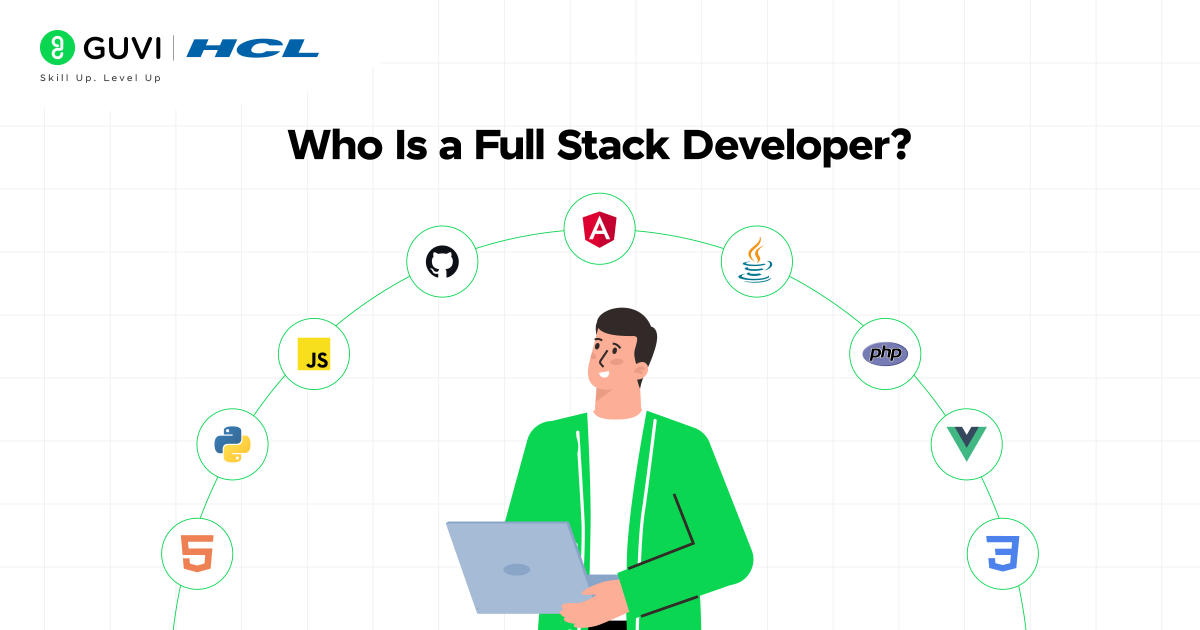
Before delving deep into the possible reasons, let’s have a brief overview of what a full-stack developer is.
A full-stack developer is a software professional whose primary responsibility is to design and develop websites or applications by writing and combining both the client-side and server-side logic. While developing projects, these professionals are responsible for handling the end-to-end development process, starting from designing the user interface (UI) layouts to managing the internal data flow and establishing the connection between the server and database.
A full-stack developer can act as a lone powerhouse by designing an entire application independently, which is why he/she become a top priority for popular tech startups and companies.
Also Read: How To Become a Full Stack Developer: A Beginner’s Guide
Roles and Responsibilities of a Full Stack Developer
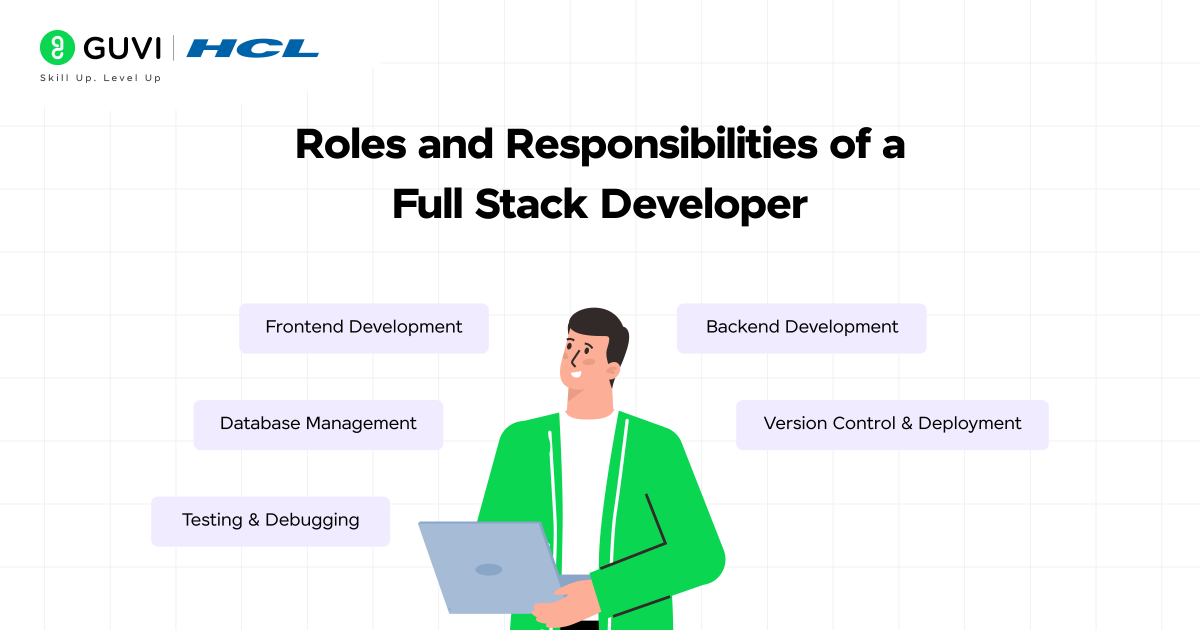
- Frontend Development: You will be involved in creating responsive, interactive, and user-friendly interfaces using HTML, CSS, and other JS frameworks and libraries like React, Angular, Vue, Material UI, Tailwind CSS, and many more.
- Backend Development: You will be required to manage and handle the server-side logic, APIs, and database system through tools like Node.js, Python, Java, or PHP.
- Database Management: In addition to working on front-end and back-end, you will be designing and optimizing databases such as MySQL, MongoDB, or PostgreSQL to ensure fast and secure data operations.
- Version Control & Deployment: Proficiency in using Git, GitHub, and cloud platforms like AWS, Azure, and GCP for enhancing team collaboration and deployment.
- Testing & Debugging: For developing high-quality software apps, testing and debugging are core aspects, which is why you will also be engaged in identifying and fixing errors.
Access free React materials and start building a strong foundation in web development: React eBook

Top 10 Reasons to Become Full Stack Developer in 2025
If anyone aspires to pursue a career in full-stack development in 2025, they have tremendous opportunities to work across multiple tools and technologies to build projects that create real-world impact.
Here are the top 10 reasons why becoming a full-stack developer can be both rewarding and future-proof:
1. The Evolving Tech Landscape in 2025
The pace at which the software industry is advancing is very rapid and dynamic. The latest and advanced tools, frameworks, and innovations are now directing the application development process. In the midst of this ever-evolving field, Full Stack Developers are now at the forefront of this change.
This career path demands constant learning and adapting to new trends. Due to its versatile nature, it allows professionals to gain experience across different business verticals, making them indispensable today.
2. High Demand and Job Opportunities

To foster better team management and save development costs and time, companies nowadays are relying heavily on full-stack developers, as they can handle every aspect of a project. From designing responsive layouts to writing backend logic, and from managing databases to deploying services on cloud-based platforms, full-stack developers are capable of performing end-to-end product development tasks.
Due to this wide set of skills, there will always be a high demand for this position, i.e., more job openings, better tech roles, and opportunities to work on challenging and innovative projects.
3. Versatility Across Frontend and Backend
Full Stack Developers are versatile tech geeks with the competency to solve both front-end and back-end challenges, such as cross-platform compatibility, responsive issues, navigational failures, scalability problems, or poor API integration.
The ability to solve diverse challenges makes them an ideal choice for employers. A full-stack developer not only works on improving the internal workflow of projects but also is flexible enough to fit into different roles and responsibilities.
4. Competitive Salary Packages
Full Stack Development is a challenging yet financially rewarding career across the world. In the Indian IT industry, a fresher can expect an entry-level salary range of around ₹6–8 lakh per year. With experience and knowledge, the salary level can rise to ₹20–25 lakh or more within 5–7 years.
To be more informative, in most IT companies, apart from the base pay, full-stack developers also receive performance bonuses, stock options, and promotions. As this position is in demand, salary increments are frequent compared to other tech domains.
5. Faster Career Growth
Stagnancy is not a feature that full-stack development promotes; it is, in fact, a rapidly driven career path, where developers gain hands-on knowledge on a complete spectrum of technologies such as React, Angular, Node.js, Python, and cloud platforms. From crafting social media platforms to developing e-commerce stores, designing fintech solutions to building enterprise software, full-stack developers quickly gain broad and insightful experience.
Entry-level techies can advance their careers to mid-level roles in 2-3 years, while senior or engineering manager roles are attainable in 6-7 years, providing quick growth prospects and higher responsibilities.
6. Ability to Build End-to-End Projects
The exposure full-stack developers gain by working on an entire project from the initial phase to the final product launch phase provides them with a unique edge. Choosing full-stack development will enable you to cover the whole spectrum of the software development process and anticipate challenges before they arise.
You will be able to check the intricacies of every component to ensure they are aligning perfectly with the business needs and requirements. This automation will significantly minimize dependencies, increase the pace of development cycles, and help you deliver cohesive, next-generation products.
7. Freedom to Work Remotely or Freelance
Full Stack Developers enjoy unmatched flexibility in their work mode. As a highly skilled full-stack developer, you can easily work on freelance projects or contribute to open-source. Besides this, many tech startups offer remote job opportunities to full-stack developers, giving candidates complete control over their schedules and how they work, eventually leading to a better work-life balance.
This freedom and independence of working remotely also opens up the door for collaborating with other developers and clients around the globe. With the rise of global tech platforms and remote collaboration tools, developers can take on high-value projects from anywhere.
8. Constant Learning and Skill Enhancement
For full-stack developers, it’s always a challenge to stay ahead of evolving trends, whether it’s learning a new programming language or understanding the latest frameworks or libraries. Most often, it requires a steep learning curve, but with a continuous growth mindset, you can uplift your technical expertise, creativity, analytical thinking, and adaptability.
As a full-stack developer, you will frequently explore new tools and technologies for delivering smart engineering solutions and optimizing the workflows of the organizations.
9. Contribution to Innovative Products
Converting real-world business and user issues to software solutions is one of the key characteristics of a full-stack developer. By integrating multiple technologies and tools, they can design a full-fledged software system with meaningful features and functionalities, which enhances the user experience (UX).
The contributions of full-stack developers often motivate other members within the company to explore bold concepts and stay ahead of competitors.
10. Strong Community and Resources
Full Stack Developers benefit from a vast and supportive global community, where the latest updates on best coding practices and optimization techniques are shared. In addition to this, insightful tutorials and doubt-resolving sessions are also conducted to guide other developers and beginners.
Being part of this network allows developers to share knowledge, solve complex problems together, and stay updated with the latest industry trends. This strong community support not only accelerates personal growth but also sparks innovation.
Future Scope of Full Stack Development
The future of Full Stack Development looks incredibly bright, especially as technology keeps advancing faster than ever. In 2025 and beyond, companies are focusing more on building scalable, secure, and AI-powered digital solutions — and Full Stack Developers are at the heart of this transformation. Their ability to handle both frontend and backend makes them invaluable for startups, enterprises, and even remote teams.
With the rise of cloud computing, automation, and modern frameworks like React, Node.js, and Django, the demand for versatile developers who can manage complete projects from start to finish will continue to grow. In short, Full Stack Development isn’t just a career choice anymore — it’s a long-term investment in a future filled with innovation, creativity, and endless opportunities.
Practical experience is what matters the most to land a job in top software companies. If you desire to work with the best tech minds in our country, you need to train yourself on a platform that offers more than theoretical knowledge. HCL GUVI excels in providing that mentorship along with active placement assistance. Enroll yourself in HCL GUVI’s IITM Pravartak Certified MERN Full Stack Development Course with AI Integration and transform your tech career into in-demand MERN skills.
The term Full Stack Developer was first popularized by Facebook’s engineering team in the early 2010s to describe developers capability of handling both client-side and server-side development. This skill set helped them build fast, scalable products like the Facebook News Feed and Messenger.
Conclusion
Full Stack Development is one of the most promising careers in today’s tech-driven world. With the ability to handle both frontend and backend, Full Stack Developers play a key role in building complete, innovative digital solutions. As technology advances rapidly in 2025, the demand for skilled developers continues to rise. If you enjoy learning, problem-solving, and creating impactful products, becoming a Full Stack Developer is an innovative and future-proof career choice.
FAQs
Is Full Stack Development a promising career in 2025?
Yes, it’s one of the most in-demand and high-paying careers, offering strong growth and job stability as businesses go digital.
How long does it take to become a full-stack developer?
It usually takes 6 months to 1 year to learn the required skills and start building real-world projects.
What skills are required to become a full-stack developer?
You need to know HTML, CSS, JavaScript, a backend language like Node.js or Python, and databases like MongoDB or MySQL.
Success Stories
























Did you enjoy this article?