


Data Science Articles
Financial Analyst to Data Analyst: Is It an Easy Career Switch?
Accounting to Data Analytics: Is It Time to Switch? A Step-by-Step Roadmap
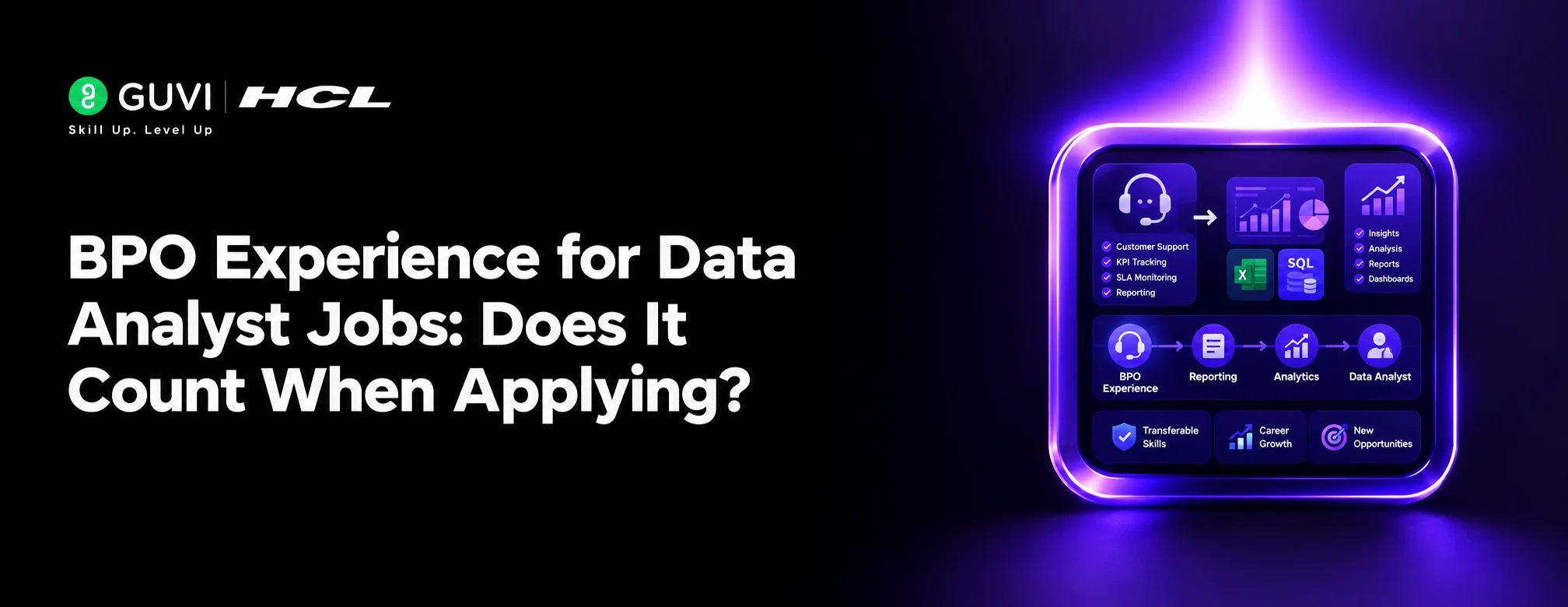
Customer Support to Data Analyst: Skills and Career Transition Roadmap You Need to Know


Get In Touch For Details! Request More Information

Who Is a Data-Driven CFO? What Finance Leaders Should Know Before Their Skills Become Outdated
Oct 23, 2026 4 Min Read 25 Views
(Last Updated)
What if the skills that helped you build a successful finance career aren’t enough to take you into the boardroom?
CFOs today are expected to look beyond financial reporting and budgeting. They need to anticipate risks, identify growth opportunities, and use data to guide business decisions. And with AI and automation changing how finance teams operate, these expectations are only growing.
For experienced finance professionals, becoming a data-driven CFO means combining financial expertise with analytics, technology awareness, and strategic leadership.
So, which skills should you develop now to stay relevant and prepare for bigger leadership responsibilities? Let’s find out!
Table of contents
- TL;DR
- Who Is a Data-Driven CFO, and How Is the Role Changing?
- Traditional CFO vs Data-Driven CFO
- What Data-Driven CFO Skills Should Finance Leaders Develop?
- Business Intelligence and Data Analytics
- Predictive Forecasting and Scenario Planning
- AI and Financial Automation
- Strategic Financial Decision-Making
- Data Governance and Risk Management
- Leadership and Executive Communication
- How Can Finance Professionals Prepare for a Data-Driven CFO Role?
- 1) Assess Your Existing Finance and Leadership Experience
- 2) Strengthen Your Data and Technology Understanding
- 3) Apply Analytics to Real Financial Decisions
- 4) Gain Cross-Functional and Strategic Exposure
- 5) Target Roles With Greater Strategic Responsibility
- What Could Hold Experienced Finance Professionals Back?
- Relying Too Much on Historical Reporting
- Leaving Technology Entirely to IT Teams
- Developing Technical Skills Without Leadership Experience
- Wrapping Up
- Frequently Asked Questions
- Is an MBA or CA qualification mandatory to become a data-driven CFO?
- Which data-driven CFO skills are most important for experienced finance professionals?
- Can a senior accountant eventually become a CFO?
- How does data-driven finance leadership differ from a Data Analyst's role?
- Is switching from finance to data analytics useful for aspiring CFOs?
TL;DR
- A data-driven CFO combines financial expertise with analytics, technology, and strategic leadership.
- Traditional finance skills remain essential, but data literacy and AI awareness are becoming increasingly valuable.
- Key data-driven CFO skills include predictive forecasting, business intelligence, risk management, and decision-making.
- Finance professionals don’t need to become expert programmers, but they should understand how to use data for better business decisions.
- Experience in FP&A, financial controls, and cross-functional leadership can help prepare you for senior finance roles.
Who Is a Data-Driven CFO, and How Is the Role Changing?
A data-driven CFO is a Chief Financial Officer who uses financial expertise, business data, and technology to guide strategic decisions. Along with managing financial performance, they help businesses anticipate risks, identify growth opportunities, and plan for the future.
But does this mean traditional CFO responsibilities are disappearing? Not at all. The role is expanding, with analytics playing a greater part in decision-making.
Traditional CFO vs Data-Driven CFO
| Traditional CFO Focus | Data-Driven CFO Focus |
| Financial reporting and historical performance | Forward-looking insights and business performance |
| Budgeting and cost control | Predictive forecasting and scenario planning |
| Periodic financial reviews | Real-time dashboards and performance monitoring |
| Financial compliance and risk management | Financial governance, data quality, and emerging risks |
| Managing financial operations | Supporting business strategy and growth decisions |
The key difference lies in how financial data is used. A data-driven CFO doesn’t just assess past performance but also uses insights to guide future decisions.
For experienced finance professionals, this means building on existing expertise with stronger analytics and strategic leadership skills.
What Data-Driven CFO Skills Should Finance Leaders Develop?
Let’s look at some of the essential data-driven CFO skills that finance leaders should develop to stay ahead.
1. Business Intelligence and Data Analytics
CFOs must interpret financial and operational data to track performance and identify trends. Tools like Power BI and Tableau help them monitor KPIs and make informed decisions.
2. Predictive Forecasting and Scenario Planning
Predictive analytics helps finance leaders anticipate cash-flow challenges, revenue fluctuations, and financial risks. Scenario planning also prepares businesses for changing market conditions.
3. AI and Financial Automation
AI can streamline reporting, reconciliations, and routine analysis. CFOs should understand where automation adds value and how to ensure its responsible use.
4. Strategic Financial Decision-Making
CFOs use financial insights to evaluate investments, improve profitability, allocate resources, and support long-term business growth.
5. Data Governance and Risk Management
Reliable decisions require accurate and secure data. Finance leaders must oversee data quality, compliance, privacy, and risks associated with AI adoption.
6. Leadership and Executive Communication
CFOs must translate complex financial insights into clear recommendations, communicate with stakeholders, and guide teams towards shared business goals.
Do CFOs need to become technical experts?
Not necessarily. Understanding analytics tools and interpreting their outputs matters more than personally writing Python code or SQL queries.
How Can Finance Professionals Prepare for a Data-Driven CFO Role?
Becoming a data-driven CFO requires financial expertise, analytical thinking, and leadership experience. Here’s how experienced finance professionals can start preparing.
1) Assess Your Existing Finance and Leadership Experience
Before learning anything new, identify your current strengths and the gaps that could limit your progression into senior leadership.
Evaluate your experience in:
- Financial management: FP&A, budgeting, reporting, and risk management
- Business strategy: Investment analysis, profitability, and resource allocation
- Leadership: Team management, stakeholder communication, and decision-making
- Skill gaps: Analytics, technology adoption, and cross-functional exposure
2) Strengthen Your Data and Technology Understanding
You don’t need advanced programming expertise, but understanding how analytics supports financial decisions is increasingly valuable.
Focus on:
- Business Intelligence: Power BI, Tableau, dashboards, and KPIs
- Financial Analytics: Predictive forecasting, scenario modelling, and trend analysis
- AI and Automation: Automated reporting, financial workflows, and AI-assisted insights
- Data Literacy: Data quality, interpretation, and analytical limitations
For finance professionals, developing analytical capabilities doesn’t mean abandoning their existing expertise. Even a senior accountant moving into data analytics can build on existing financial knowledge.
3) Apply Analytics to Real Financial Decisions
Practical experience matters more than simply knowing what analytics tools can do. Start applying these capabilities to financial problems within your organisation.
Work on areas such as:
- Cash-flow forecasting: Liquidity requirements and funding risks
- Profitability analysis: Product margins and business-unit performance
- Working capital: Receivables, payables, and inventory efficiency
- Financial planning: Budget variations and scenario-based forecasts
These are practical applications of data analytics for finance professionals, where financial knowledge helps turn business data into actionable insights.

4) Gain Cross-Functional and Strategic Exposure
A CFO’s responsibilities extend beyond the finance department. Look for opportunities to participate in decisions that affect the wider business.
Build experience through:
- Cross-functional collaboration: Operations, sales, and technology teams
- Strategic projects: Expansion planning, investments, and cost optimisation
- Executive reporting: Business recommendations backed by financial insights
- Leadership exposure: Team development and stakeholder management
This broader involvement helps develop the business perspective required for data-driven finance leadership.
5) Target Roles With Greater Strategic Responsibility
There isn’t one fixed career path to becoming a CFO. However, certain roles can help you gain the financial and leadership experience needed.
Potential career roles include:
- FP&A Manager: Forecasting, planning, and financial strategy
- Finance Business Partner: Cross-functional decisions and business performance
- Financial Controller: Financial governance, controls, and compliance
- Finance Transformation Manager: Analytics adoption and process automation
- Finance Director / Head of Finance: Financial strategy, organisational leadership, and executive responsibilities
Your progression will depend on your qualifications, industry experience, and leadership responsibilities. An already established data career in finance can support this journey, but reaching CFO level requires much broader business experience.
The world’s first electronic spreadsheet, VisiCalc, was released in 1979 and helped transform financial planning on personal computers. Today, AI and predictive analytics are bringing another major shift to how finance professionals analyse data and make decisions.
What Could Hold Experienced Finance Professionals Back?
Even with years of finance experience, certain habits can slow your progression towards strategic leadership. Here are three common challenges to watch out for.
1. Relying Too Much on Historical Reporting
Financial reports explain what has already happened, but CFOs must also anticipate what comes next. Focusing only on past performance can limit your strategic contribution.
Instead, focus on:
- Predictive forecasting and scenario planning
- Early identification of financial risks
- Forward-looking business recommendations
2. Leaving Technology Entirely to IT Teams
You don’t need to build every dashboard or automation yourself. However, relying entirely on technical teams can make it harder to evaluate analytical insights or identify opportunities for improvement.
Develop familiarity with:
- Business Intelligence dashboards and KPIs
- AI-assisted financial analysis
- Data quality and analytical limitations
3. Developing Technical Skills Without Leadership Experience
Learning analytics tools is useful, but CFO-level responsibilities demand much more. Technical knowledge alone cannot replace strategic judgement or executive leadership.
Prioritise experience in:
- Cross-functional business decisions
- Investment and financial strategy
- Stakeholder management and executive communication
Wrapping Up
The future of finance leadership will demand stronger analytical thinking, technological awareness, and strategic decision-making. For experienced professionals, developing these capabilities can be an important step towards becoming a data-driven CFO.
If you’re looking to strengthen your analytics expertise, HCL GUVI’s mentor-led Advanced Data Science and Generative AI Program offers expert mentorship, hands-on projects, and the opportunity to network with 1000+ hiring partners.
You’ve already invested years in building your finance career. Now is the time to build on that experience and prepare for bigger leadership opportunities!
Frequently Asked Questions
1. Is an MBA or CA qualification mandatory to become a data-driven CFO?
No. There is no universal qualification requirement. However, an MBA, CA, CPA, or similar credential can strengthen your prospects alongside substantial finance, strategic, and leadership experience.
2. Which data-driven CFO skills are most important for experienced finance professionals?
Predictive forecasting, business intelligence, AI awareness, risk management, and strategic decision-making are particularly valuable. Strong communication and leadership skills are equally important.
3. Can a senior accountant eventually become a CFO?
Yes. Senior accountants can progress towards CFO positions by gaining experience in financial planning, business strategy, team leadership, and executive decision-making. The progression typically takes several years.
4. How does data-driven finance leadership differ from a Data Analyst’s role?
A Data Analyst examines data and provides insights. A data-driven finance leader uses those insights to make strategic decisions, manage financial risks, and guide organizational performance.
5. Is switching from finance to data analytics useful for aspiring CFOs?
Yes. A move from finance to data analytics can strengthen your understanding of forecasting, business intelligence, and data-driven decisions. However, CFO-level progression also requires strategic and leadership experience.
Success Stories









Did you enjoy this article?