


Career Articles
How I Switched from Web Developer to ML Engineer (A Web Developer's Real Story)
PHP Developer Resume: Writing Guide & Key to Landing Your Dream Job
My Frontend Developer Interview at Google: What Really Happens Behind Closed Doors
Future of Electric Vehicle Course: Fast-Track Your EV Career


Get In Touch For Details! Request More Information
Crack the TCS IPA Exam: Top Questions and Exclusive Tips for Success!
Feb 11, 2026 9 Min Read 166218 Views
(Last Updated)
Preparing for the TCS IPA exam could be your gateway to earning up to INR 23 LPA at TCS India, based on your skills and experience. From 2025 onwards, this assessment has become mandatory for all new joiners at TCS, making it a critical step in your tech career journey. Importantly, scoring above 55% can earn you a joining bonus of Rs. 40,000, while exceeding 80% adds another Rs. 20,000 to your pocket!
What is the TCS IPA exam? It’s a comprehensive 120-minute assessment that evaluates your programming abilities, aptitude, reasoning, business acumen, and communication skills. The exam follows a specific pattern with multiple-choice questions and coding sections where you can choose between Python and Java programming languages.
In this guide, you’ll discover the most common TCS IPA exam questions that actually appear in the test, along with proven strategies to crack them. I’ve analyzed over 100+ TCS programming questions to help you prepare effectively. Whether you’re wondering about the exam pattern, searching for Java coding questions, or looking for Unix MCQ samples, this comprehensive resource has you covered. Let’s begin!
Table of contents
- What is the TCS IPA Exam?
- Understanding the TCS IPA Exam Pattern and Syllabus along with Exclusive Study Tips
- The Main Sections:
- The Sub-Sections:
- Top TCS IPA Questions and Answers
- MCQs(the answers are highlighted):
- The Coding Section:
- Problem Statement 2 (Complex One)
- Problem Statement 1 (Simple One)
- Problem Statement 2 (Complex One)
- Tips to Prepare for TCS IPA Exam
- Tips to Prepare and Score High in TCS IPA Exam
- Start early and follow a schedule
- Use TCS Xplore and HCL GUVI for practice
- Focus on weak areas using mock tests
- Practice time management
- Improve communication and business skills
- Concluding Thoughts...
What is the TCS IPA Exam?
The TCS IPA (iON Proctored Assessment) exam is an assessment test conducted in specialized iON centers that evaluates a candidate’s programming, aptitude, reasoning, business, and communication skills. The time limit is 120 minutes to solve questions worth 100 marks.
The TCS IPA exam is important for fresh graduates who wish to join TCS. It provides a platform for candidates to showcase their skills and knowledge.
Cracking the TCS IPA exam can open up many opportunities for a candidate in the IT industry. In 2025, it has now been made compulsory for all new joiners to take the IPA test.
Candidates scoring more than 55% in the assessment earn a joining bonus of Rs. 40,000. A score higher than 80% will get you an additional Rs. 20,000 bonus! You must also know TCS Explore and its benefits.
Understanding the TCS IPA Exam Pattern and Syllabus along with Exclusive Study Tips
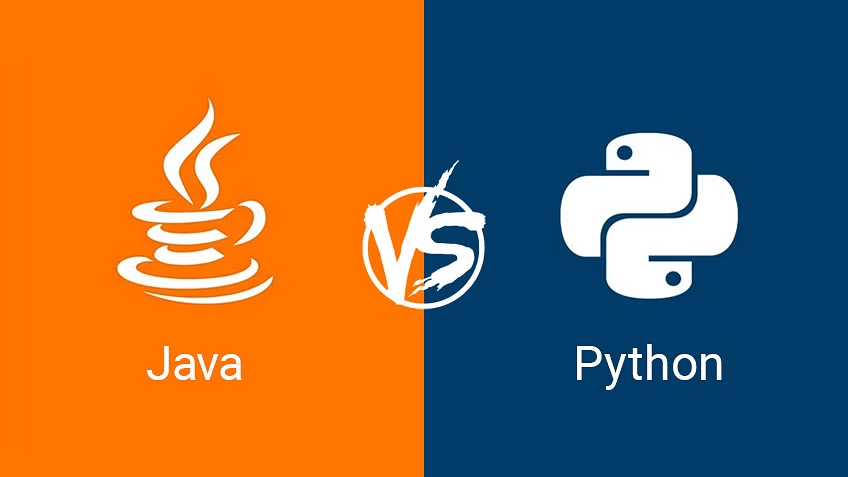
You can choose to attempt the IPA test in one of two major programming languages:
- Python
- Java
The Main Sections:
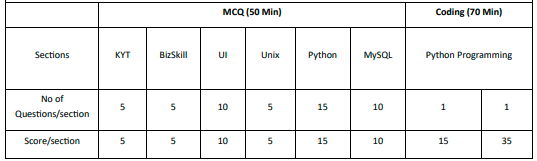
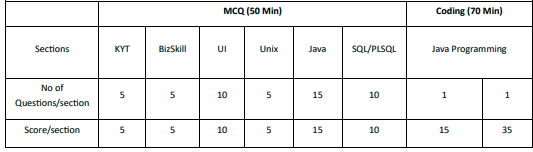
The test will be a mix of MCQs as well as coding questions from the programming language of your choice, and you will have 120 minutes to complete and submit your answers. So, we have two sections: a) MCQs, and b) Coding, the allotted time for which will be 50 mins and 70 mins respectively.
The MCQs section and the Coding section are each worth 50 marks, the exact Syllabus, Marks, and Time Segregation for which can be found in the tables below, distinguished by respective programming languages:
1. Python:
2. Java:

The Sub-Sections:
So, we basically have 6 sub-sections in the MCQ section and another 2 sub-sections in the Coding section, respectively. Let’s dive into what they stand for to gain a better understanding of the syllabus:
In the MCQ Sub-Section, we have:
- KYT: This stands for “Know Your TCS” and consists of 5 questions (1 mark each). As you can guess, you must know about Tata’s history/timeline, TCS awards, Tata companies, and their remarkable events, as well as achievements, to ace this section.
- BizSkill: This section tests your business skills and professional ethics. So, mostly situation-based questions with 5 questions (1 mark each). You can prepare for this section with the help of TCS Xplore as well as business webinar recordings that are posted on Xplore.
- UI: User Interface skills and knowledge that you must have been tested in this sub-section which consists of 10 questions (1 mark each). You must have a fair amount of knowledge surrounding HTML, CSS, and JavaScript scripts and know their basic syntax.
- Unix: You must know the basics of the Unix Operating System to attempt this sub-section successfully, it consists of 5 questions (1 mark each).
- Python/Java:
- Java ( in case you chose “Java” as your language of choice): Must be thorough with all the basic as well as advanced Java concepts to score well in this section, it consists of 15 questions (1 mark each).
- Python ( in case you chose “Python” as your language of choice): Revisit all major Python concepts such as data types, methods, and functions and hone your coding skills to score well in this sub-section, it consists of 15 questions (1 mark each).
- MySQL or SQL/PLSQL:
- MySQL( in case you chose “Python” as your language of choice): You must know how to frame and write efficient MySQL queries as well as manage the database with ease to score well in this section. It is worth 10 marks and consists of 10 questions.
- SQL/PLSQL ( in case you chose “Java” as your language of choice): Brush up on all the basic fundamental concepts on PLSQL and SQL to answer the questions asked in this sub-section which is worth 10 marks and consists of 10 questions.
Now, for the Coding Sub-Section:
- Simple Python or Java Coding Question(15 marks): Here, you will be asked to write a coding solution to an easy problem in the programming language you chose to attempt the test in. Practice string problems as well as programs based on them and get a good understanding of all string methods.
- Complex Python or Java Coding Question(35 marks): This will be a relatively difficult as well as longer coding problem that you must solve correctly. Learn classes, objects, and inheritance. Practice the questions listed in this blog as well as previously asked IPA coding questions posted in TCS Xplore.
NOTE: 4 test cases will be asked for each question. If all 4 test cases are correct, for these 2 questions alone you will score 50 marks.
We recommend thoroughly practicing either Java or Python with the help of an online course by HCL GUVI, to gain the necessary programming skills and confidence to pass the TCS IPA test with ease and gain the incentives as well as recognition you deserve.
Serious about cracking the TCS IPA exam?
Strengthen your programming foundations and problem-solving skills with structured learning paths, practice exercises, and expert-led courses on HCL GUVI Learn Hub.
Top TCS IPA Questions and Answers
Here we have for you a few examples of the important as well as previously asked TCS IPA Questions and Answers section-wise so that you can ace your test and bag the career of your dreams.
1.MCQs(the answers are highlighted):
A) KYT (Know Your TCS)
Question 1:
When was Tata Consultancy Services established?
a. 1978
b. 1968
c. 1988
d. 1958
Question 2:
Who is the current CEO & MD of TCS (as of 2025)?
a. Rajesh Gopinathan
b. K. Krithivasan
c. N. Chandrasekaran
d. Cyrus Mistry
Question 3:
TCS is a subsidiary of which group?
a. Reliance Group
b. Wipro Group
c. Tata Group
d. Mahindra Group
Question 4:
TCS headquarters is located in:
a. Chennai
b. Delhi
c. Mumbai
d. Bengaluru
Question 5:
Which of the following is TCS’s AI-powered software engineering platform?
a. Ignio
b. Infosphere
c. MasterCraft
d. Polaris
Question 6:
TCS is the first Indian IT company to cross:
a. $50 Billion Market Cap
b. $200 Billion Market Cap
c. $100 Billion Market Cap
d. $500 Billion Market Cap
Question 7:
Which of the following is NOT a TCS product/platform?
a. BaNCS
b. MasterCraft
c. ADD (Advanced Drug Development)
d. Workday
Question 8:
TCS’s “BaNCS” platform is widely used in which industry?
a. Healthcare
b. Banking and Finance
c. Manufacturing
d. Retail
Question 9:
Who was the founder of Tata Consultancy Services?
a. Ratan Tata
b. J. R. D. Tata
c. Jamsetji Tata
d. N. Chandrasekaran
Question 10:
TCS operates in how many countries (as of 2025)?
a. 30+
b. 40+
c. 50+
d. 60+
B) BizSkill:
Question 1:
What are the stages in the IBC approach?
a. Introduction, Body, Cohesion
b. Introduction, Body, Content
c. Introduction, Body, Conclusion
d. None
Question 2:
Providing training sessions to clients after delivering solutions is called:
a. Robotic Service
b. Value-added Service
c. Systematic Service
d. Keeping Commitments
Question 3:
Active listening is important in business communication because it:
a. Reduces workload
b. Builds trust and clarity
c. Replaces verbal communication
d. None
Question 4:
Which of these is an example of non-verbal communication?
a. E-mails
b. Phone Calls
c. Body Language
d. Reports
Question 5:
The “7 Cs of communication” include:
a. Creativity
b. Conciseness
c. Commitment
d. Calibration
Question 6:
In client meetings, if you don’t know the answer, the best approach is:
a. Stay silent
b. Bluff confidently
c. Acknowledge and follow up later
d. Change the topic
Question 7:
Escalation in business context refers to:
a. Expanding market
b. Reporting issues to higher authority
c. Delegation
d. Performance review
Question 8:
Which one is an example of value addition in IT services?
a. On-time delivery
b. Providing free maintenance support
c. Following deadlines only
d. Avoiding client feedback
Question 9:
Cross-cultural communication challenges arise due to:
a. Similar work styles
b. Language and cultural differences
c. Same time zones
d. Shared platforms
Question 10:
In formal e-mail writing, what should be avoided?
a. Subject line
b. Greeting
c. Abbreviations & Emojis
d. Closing remarks
C) UI (User Interface / HTML-CSS)
Question 1:
What is the correct syntax to set border colors?
a. border-line
b. border: solid DodgerBlue;
c. border: 2px solid DodgerBlue;
d. None
Question 2:
The <span> tag in HTML is used for:
a. Grouping block elements
b. Grouping inline elements for styling
c. Creating hyperlinks
d. Adding headings
Question 3:
Which CSS property is used to change text color?
a. font-style
b. color
c. background-color
d. text-align
Question 4:
In HTML5, which tag is semantic?
a. <div>
b. <article>
c. <span>
d. <br>
Question 5:
Which attribute is used in HTML to provide alternate text for an image?
a. title
b. src
c. alt
d. caption
Question 6:
Which CSS unit is relative to the parent element?
a. px
b. cm
c. em
d. in
Question 7:
Which CSS property makes text bold?
a. text-decoration
b. font-weight
c. text-style
d. emphasis
Question 8:
Which HTML element is used for the largest heading?
a. h6
b. h3
c. h1
d. title
Question 9:
Which property controls the stacking order of elements?
a. display
b. z-index
c. order
d. position
Question 10:
Which tag is used to create a dropdown list?
a. <input>
b. <list>
c. <select>
d. <dropdown>
D) Unix:
Question 1:
The command is used to find the count of only words in a file?
a. wc –words <filename>
b. wc -w <filename>
c. wc <filename>
d. None of the above
Question 2:
Which command is used to change the permission levels of a file or directory?
a. passwd
b. unset
c. return
d. chmod
Question 3:
Which command is used to display the present working directory?
a. dir
b. pwd
c. whereami
d. home
Question 4:
Which command is used to list all files, including hidden ones?
a. ls -l
b. ls -s
c. ls -a
d. ls -h
Question 5:
Which command is used to terminate a process by PID?
a. stop pid
b. kill -9 pid
c. exit pid
d. quit pid
Question 6:
Which command shows the first 10 lines of a file by default?
a. head filename
b. show filename
c. first filename
d. top filename
Question 7:
Which command is used to search for a pattern in a file?
a. find
b. awk
c. grep “pattern” filename
d. locate
Question 8:
Which symbol in Unix represents the home directory?
a. /
b. ~
c. #
d. $
Question 9:
Which command displays disk usage of files and directories?
a. df
b. du
c. ls -d
d. usage
Question 10:
Which command is used to compress files in Unix?
a. zip
b. tar
c. bzip2
d. gzip
E) Java and Python MCQs:
Question 1:
We cannot use WHERE clause with TRUNCATE.
a. False
b. True
c. Sometimes
d. Only in Oracle
Question 2:
Which operator gives the result if the condition(s) is not satisfied?
a. IN
b. NOT
c. OR
d. AND
Question 3:
Which of the following is not an OOP principle?
a. Abstraction
b. Encapsulation
c. Polymorphism
d. Compilation
Question 4:
Default value of int in Java is:
a. null
b. 0
c. garbage value
d. not defined
Question 5:
Which Java collection allows duplicate elements?
a. Set
b. Map
c. List
d. Enum
Question 6:
Which method is called automatically when an object is created?
a. finalize()
b. constructor
c. destructor
d. main()
Question 7:
Which keyword is used to inherit a class in Java?
a. implements
b. extends
c. super
d. inherits
Question 8:
Which package contains the Scanner class?
a. java.io
b. java.util
c. java.lang
d. java.text
Question 9:
Which access modifier makes members accessible everywhere?
a. private
b. protected
c. default
d. public
Question 10:
Which exception is thrown when dividing by zero in Java?
a. NullPointerException
b. IOException
c. ArithmeticException
d. RuntimeError
Question 11:
Identify the unordered collections in Python.
a. List
b. Tuple
c. Dictionary and Set
d. String
Question 12:
What is the output of the below code?
x = sum(range(7)) print(x)
a. 20
b. 21
c. 22
d. 23
Question 13:
Which of these is immutable in Python?
a. List
b. Tuple
c. Dictionary
d. Set
Question 14:
Which keyword is used to define a function in Python?
a. def
b. func
c. function
d. lambda
Question 15:
What is the output of len(set("MISSISSIPPI"))?
a. 3
b. 4
c. 5
d. 6
Question 16:
Which operator is used for floor division in Python?
a. /
b. //
c. %
d. **
Question 17:
Which module in Python is used for regular expressions?
a. string
b. regexpy
c. re
d. match
Question 18:
What will be the output of bool("") in Python?
a. True
b. False
c. None
d. Error
Question 19:
Which of the following is a valid Python variable name?
a. 2value
b. value@123
c. value_2
d. value-2
Question 20:
Which keyword is used to handle exceptions in Python?
a. catch
b. except
c. error
d. handle
F) MySQL and SQL/PLSQL:
Question 1:
Which of the following are valid constraints in MySQL?
a. UNIQUE, NOT NULL, and DEFAULT
b. UNIQUE, NOT NULL, and DISTINCT
c. DISTINCT and DEFAULT
d. DEFAULT, NOT NULL, and DISTINCT
Question 2:
Which SQL clause is used to filter rows?
a. GROUP BY
b. WHERE
c. HAVING
d. SELECT
Question 3:
Which function returns the current date in MySQL?
a. NOW()
b. SYSDATE()
c. CURDATE()
d. GETDATE()
Question 4:
Which SQL command removes a table from the database?
a. DELETE TABLE
b. DROP TABLE
c. REMOVE TABLE
d. ERASE TABLE
Question 5:
Which keyword is used to avoid duplicate rows in result sets?
a. UNIQUE
b. GROUP
c. LIMIT
d. DISTINCT
Question 6:
Which operator is used to combine multiple conditions in SQL?
a. +
b. ORONLY
c. AND / OR
d. MULTI
Question 7:
What is the default sorting order of ORDER BY clause?
a. DESC
b. ASC
c. RANDOM
d. NONE
Question 8:
Which SQL command is used to change an existing table structure?
a. MODIFY
b. ALTER TABLE
c. UPDATE TABLE
d. CHANGE
Question 9:
Which keyword is used to fetch records between two values?
a. RANGE
b. BETWEEN
c. WITHIN
d. LIMIT
Question 10:
Which command is used to permanently save changes in MySQL?
a. ROLLBACK
b. COMMIT
c. SAVEPOINT
d. STORE
Question 11:
Which is not a system-defined exception in PL/SQL?
a. INVALID_INPUT
b. CURSOR_ALREADY_OPEN
c. NO_DATA_FOUND
d. INVALID_CURSOR
Question 12:
Which symbol is used to start an exception handler in PL/SQL?
a. IF
b. EXCEPTION
c. WHEN
d. ELSE
Question 13:
Cursors in PL/SQL are used for:
a. Creating indexes
b. Row-by-row processing
c. Joining tables
d. Trigger execution
Question 14:
Which statement is mandatory in every PL/SQL block?
a. BEGIN
b. DECLARE
c. END
d. EXCEPTION
Question 15:
Which function returns the current database user?
a. CURRENTUSER()
b. GETUSER()
c. SESSION_USER()
d. USER
Question 16:
Which of the following is used for conditional execution in PL/SQL?
a. LOOP
b. IF-THEN-ELSE
c. EXIT
d. CONTINUE
Question 17:
Which type of trigger executes before an event occurs?
a. BEFORE Trigger
b. AFTER Trigger
c. DURING Trigger
d. PRE Trigger
Question 18:
Which keyword is used to exit a loop in PL/SQL?
a. STOP
b. EXIT
c. BREAK
d. LEAVE
Question 19:
Which of these is a composite data type in PL/SQL?
a. INTEGER
b. VARCHAR
c. RECORD
d. BOOLEAN
Question 20:
Which keyword is used to declare constants in PL/SQL?
a. FIXED
b. PERMANENT
c. CONSTANT
d. STATIC
2. The Coding Section:
a) Python
Problem Statement 1 (Simple One)
Write a Python program to count uppercase and lowercase letters in a given string. Ignore digits and spaces.
Sample Input / Output:
Input:
HellO WoRLD
Output:
Uppercase: 6
Lowercase: 4
Solution (Python):
# Count uppercase and lowercase letters in a string
def count_case(s):
    upper = 0
    lower = 0
    for ch in s:
        if 'A' <= ch <= 'Z':   # check uppercase
            upper += 1
        elif 'a' <= ch <= 'z': # check lowercase
            lower += 1
    return upper, lower

# Input
s = input().strip()
u, l = count_case(s)

# Output
print("Uppercase:", u)
print("Lowercase:", l)
Problem Statement 2 (Complex One)
You have a list of Product objects. Each product has: product_id (int), product_name (string), price (float), category (string).
- Read
nproducts from input. - Then read a category string
C. - Output the average price (rounded to 2 decimal places) of products belonging to category
C. - If no product matches, print
0.00.
Sample Input:
101 Phone 199.99 Electronics
102 Shirt 49.99 Apparel
103 Laptop 999.00 Electronics
Electronics
Sample Output:
599.50
Solution (Python):
class Product:
    def __init__(self, product_id, product_name, price, category):
        self.product_id = product_id
        self.product_name = product_name
        self.price = price
        self.category = category

# Read number of products
n = int(input().strip())
products = []

# Read products data
for _ in range(n):
    data = input().strip().split()
    product_id = int(data[0])
    product_name = data[1]
    price = float(data[2])
    category = data[3]
    products.append(Product(product_id, product_name, price, category))

# Read category to filter
C = input().strip()

# Compute average price
total = 0
count = 0
for p in products:
    if p.category == C:
        total += p.price
        count += 1

if count == 0:
    print("0.00")
else:
    avg = total / count
    print(f"{avg:.2f}")
b) Java
Problem Statement 1 (Simple One)
Read a numeric input as a string (no alphabets or special characters), reverse the number, and print it with message.
Example:
Input:
12345
Output:
Reverse of the number is 54321
Solution (Java):
import java.util.*;

public class ReverseNumber {
    public static void main(String[] args) {
        Scanner sc = new Scanner(System.in);
        String num = sc.nextLine();  // read number as string
        StringBuilder sb = new StringBuilder(num);
        String reversed = sb.reverse().toString();
        System.out.println("Reverse of the number is " + reversed);
    }
}
Problem Statement 2 (Complex One)
Create a class Student with attributes: studentId (int), name (String), marks (int).
- Read
nstudents’ data. - Then read an integer
threshold. - Write a static method
getTopScorers(Student[] arr, int threshold)that returns names of students whose marks ≥ threshold, in alphabetical order. - In main, read input, call method, print each selected student name in new line. If no student qualifies, print
"None".
Sample Input:
101 Rahul 85
102 Sneha 92
103 Aman 70
80
Sample Output:
Rahul
Sneha
Solution (Java):
import java.util.*;

class Student {
    int studentId;
    String name;
    int marks;

    Student(int studentId, String name, int marks) {
        this.studentId = studentId;
        this.name = name;
        this.marks = marks;
    }

    // static method to get top scorers
    public static List<String> getTopScorers(Student[] arr, int threshold) {
        List<String> result = new ArrayList<>();
        for (Student s : arr) {
            if (s.marks >= threshold) {
                result.add(s.name);
            }
        }
        Collections.sort(result); // alphabetical order
        return result;
    }
}

public class TopScorers {
    public static void main(String[] args) {
        Scanner sc = new Scanner(System.in);
        int n = Integer.parseInt(sc.nextLine().trim());
        Student[] students = new Student[n];

        for (int i = 0; i < n; i++) {
            String[] data = sc.nextLine().trim().split(" ");
            int id = Integer.parseInt(data[0]);
            String name = data[1];
            int marks = Integer.parseInt(data[2]);
            students[i] = new Student(id, name, marks);
        }

        int threshold = Integer.parseInt(sc.nextLine().trim());

        List<String> topScorers = Student.getTopScorers(students, threshold);

        if (topScorers.isEmpty()) {
            System.out.println("None");
        } else {
            for (String name : topScorers) {
                System.out.println(name);
            }
        }
    }
}
Do try to practice all these programs yourself and compare outputs with different programs as well as in both Java and Python to ace the TCS IPA Exam!
Serious about cracking the TCS IPA exam?
Strengthen your programming foundations and problem-solving skills with structured learning paths, practice exercises, and expert-led courses on HCL GUVI Learn Hub.
Tips to Prepare for TCS IPA Exam
Here are some tips to help you prepare for the TCS IPA exam:
Tips to Prepare and Score High in TCS IPA Exam
Mastering the tcs ipa requires strategic preparation and consistent effort. Here are proven techniques to help you achieve that coveted 80+ score.
1. Start early and follow a schedule
Initially, begin your preparation at least one month before the exam. Create a study plan based on sectional weightage to ensure comprehensive coverage. Many successful candidates started just 10 days before the exam but followed a structured approach. Allocate more time to programming sections which constitute 65% of the total marks.
2. Use TCS Xplore and HCL GUVI for practice
TCS Xplore provides invaluable resources, including “Java Learning Path 1,” “Xplore Hands On,” and “Know Your Organization”. Additionally, HCL GUVI offers courses like Data Science and AI/ML with industry experts as mentors to enhance your programming skills. These platforms contain numerous previous year questions that frequently reappear in actual exams.
3. Focus on weak areas using mock tests
Mock tests precisely identify your strengths and weaknesses while simulating exam pressure. Analyze your performance after each practice test to prioritize topics needing improvement. This targeted approach is more efficient than generalized studying.
4. Practice time management
During the exam, divide your time strategically—attempt coding questions first to secure 50 marks. For MCQs, prioritize questions based on difficulty and point value. Skip challenging questions temporarily rather than wasting precious minutes.
5. Improve communication and business skills
Beyond technical knowledge, business skills, and communication proficiency are vital components of the TCS IPA. Approximately 150 hours of English language practice is recommended for optimal performance. Regular reading and speaking practice significantly enhances these abilities.
Concluding Thoughts…
The TCS IPA exam stands as a crucial milestone for anyone aspiring to build a rewarding career at TCS India. After all, understanding the exam pattern gives you a significant advantage. The 120-minute assessment consists of MCQs worth 50 marks and coding questions worth another 50 marks. Furthermore, your choice between Java and Python affects both sections, so select the language you’re most comfortable with.
Most successful candidates agree that the coding section, particularly the 35-mark complex question, often determines your final score. Therefore, focusing your preparation on object-oriented programming concepts, string manipulation, and class implementations will yield the best results.
Begin your preparation with confidence, practice consistently, and approach the exam with a clear strategy. Soon enough, you’ll be celebrating not just a successful assessment but the beginning of a promising career at one of India’s largest IT companies. Good Luck!
Success Stories

About the Author
Jaishree Tomar
A recent CS Graduate with a quirk for writing and coding, a Data Science and Machine Learning enthusiast trying to pave my own way with tech. I have worked as a freelancer with a UK-based Digital Marketing firm writing various tech blogs, articles, and code snippets. Now, working as a Technical Writer at GUVI writing to my heart’s content!
View all posts by Jaishree Tomar
Connect with me @

Did you enjoy this article?
Comments














This article helped me in easy understanding of what IPA exactly is. Thank You to the team of GUVI
First of all tq so much for this very info and guidance. I wanted to know that what if someone scores even less than 55% or 80% in the ipa exam as mentioned in this article? And is the incentive just for the first month while joining? Please someone let me know.