


Career Articles
Top Highest-Paying EV Careers in 2026: Skills, Salaries & Jobs Hiring Right Now
How Do You Choose the Right Electric Vehicle Course & Certification in 2026? The Only Guide You Need
Android Development Roadmap :10-Step Guide to Become an Android Developer


Get In Touch For Details! Request More Information

Pros and Cons of Working in Project Management: Career Breakdown
Feb 17, 2026 4 Min Read 692 Views
(Last Updated)
Are you someone who loves planning, solving problems, and keeping teams organised? Do you enjoy leading people and keeping projects running smoothly?
If so, project management might be the perfect career for you. A good job also has hard things. You need to know the whole story. What is it really like to be a Project Manager?
But before you decide, it’s essential to understand the real pros and cons of working in project management.
Here in this blog, you will find an honest analysis of project management and what are the pros and cons of working in a project management career. And outlines the lucrative project management career ladder, showing salary increases from Coordinator to VP roles.
Table of contents
- Quick Answer
- Why Consider a Career in Project Management?
- What is the career path of a project manager?
- Project Coordinator
- Junior Project Manager / Assistant PM
- Project Manager
- Senior Project Manager
- Program Manager
- Director of Project Management / PMO Lead
- VP or Head of Projects
- The Pros of Working in Project Management
- Excellent Salary Potential
- No Two Days Are the Same
- You See Real, Tangible Results
- Strong Job Security and Career Mobility
- You Develop Highly Valuable Skills
- The Cons of Working in Project Management
- Managing People Can Be Stressful
- Constantly Learning New Tools and Technology
- Heavy Workloads and Long Hours
- You're Responsible for Everything
- Tight, Sometimes Unrealistic Deadlines
- A Quick Comparison
- Is Project Management the Right Career Path for You?
- Ask yourself these questions:
- How to Become a Successful Project Manager
- Wrapping Up
- Frequently Asked Questions
- Is PM a Hard Job?
- Can project Managers work remotely?
- What is the dark side of PM?
- What is the hardest thing a project manager does?
Quick Answer
The biggest advantages of being a project manager include strong salary potential, stable job demand, diverse work, and the opportunity to lead teams and deliver meaningful results.
The major drawbacks include high stress levels, heavy workloads, the need for constant learning, and the pressure of meeting tight deadlines.
Why Consider a Career in Project Management?
Project management is one of the fastest-growing fields globally. Organizations across every industry (from tech to healthcare to construction) need skilled project managers to deliver work on time and within budget.
But here’s the big question: Is project management the right job for you?
The best way to decide is to understand both sides of the role. You should know what you’ll love and what may be challenging. This breakdown will help you make the right choice for your career path.
Also Read: Difference between a technical project manager and a regular project manager
What is the career path of a project manager?
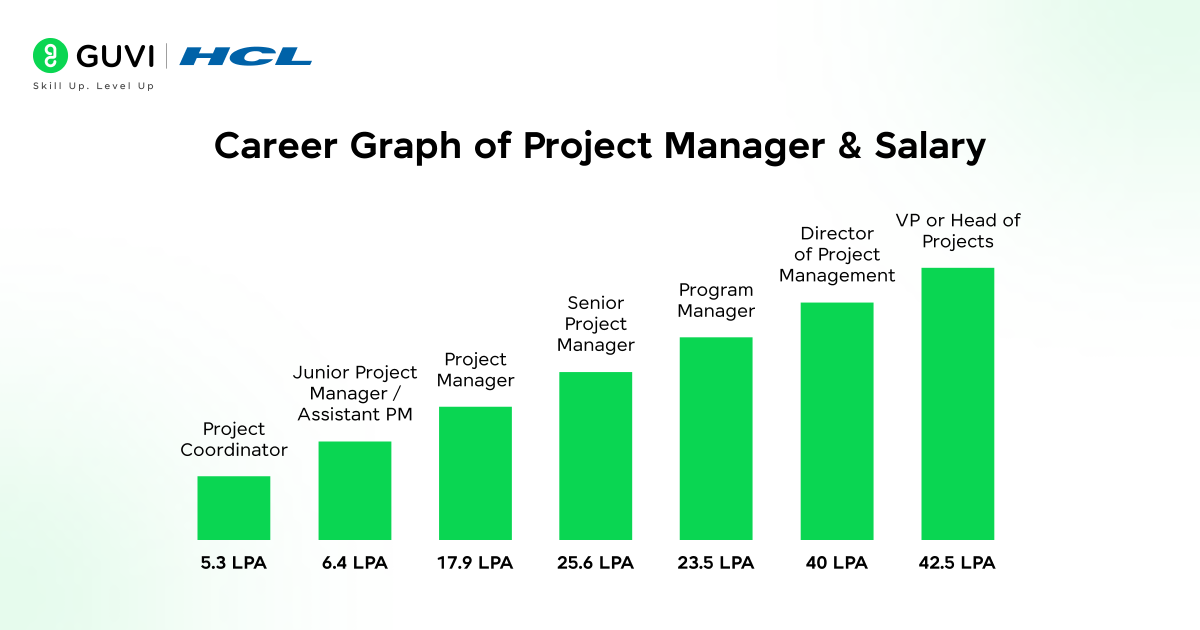
Did you know what a project manager’s career path looks like? Here are the exact career steps based on the PMI Salary Report.
Project Coordinator
Definition: A coordinator who supports the project manager and team by organizing tasks and keeping things on track.
Responsibilities: Scheduling meetings, organizing documents, tracking deadlines, and making sure everyone has the information they need.
Average Salary: 5.3 LPA
Source: Ambition Box
Junior Project Manager / Assistant PM
Definition: A manager who takes charge of small projects or parts of bigger projects with guidance from more experienced managers.
Responsibilities: Planning smaller projects, checking on progress, communicating with the team, and reporting updates to senior managers.
Average Salary: 6.4 LPA
Source: Ambition Box
Project Manager
Definition: The main leader of a project who is responsible for getting the whole project done successfully from beginning to end.
Responsibilities: Planning the project, managing the budget, keeping the team on schedule, solving problems, and making sure the project meets its goals.
Average Salary: 17.9 LPA
Source: Ambition Box
Senior Project Manager
Definition: An experienced manager who handles large projects or difficult projects that need extra skill and attention.
Responsibilities: Leading complex projects, making big decisions, managing budgets and teams, mentoring junior managers, and handling difficult situations.
Average Salary: 25.6 LPA
Source: Ambition Box

Program Manager
Definition: A leader who manages several connected projects that work together to achieve one big goal.
Responsibilities: Making sure all projects work well together, removing obstacles between projects, managing overall progress, and keeping everyone aligned.
Average Salary: 23.5 LPA
Source: Ambition Box
Director of Project Management / PMO Lead
Definition: A leader who manages the entire project management team and department within the company.
Responsibilities: Creating rules and systems for how projects should be run, training project managers, improving processes, and reporting to top leaders.
Average Salary: 40 LPA
VP or Head of Projects
Definition: A top executive who makes big decisions about the company’s project strategy and direction.
Responsibilities: Setting the overall project vision, making major business decisions, planning where to invest resources, and working with other executives to guide the company.
Average Salary: 42.5 LPA
Source: Ambition Box
Doesn’t the project management career path excite you? If you’re new to this field and want to start your journey as a project manager, HCL GUVI offers a beginner-friendly, self-paced course to help you get started.
The Pros of Working in Project Management
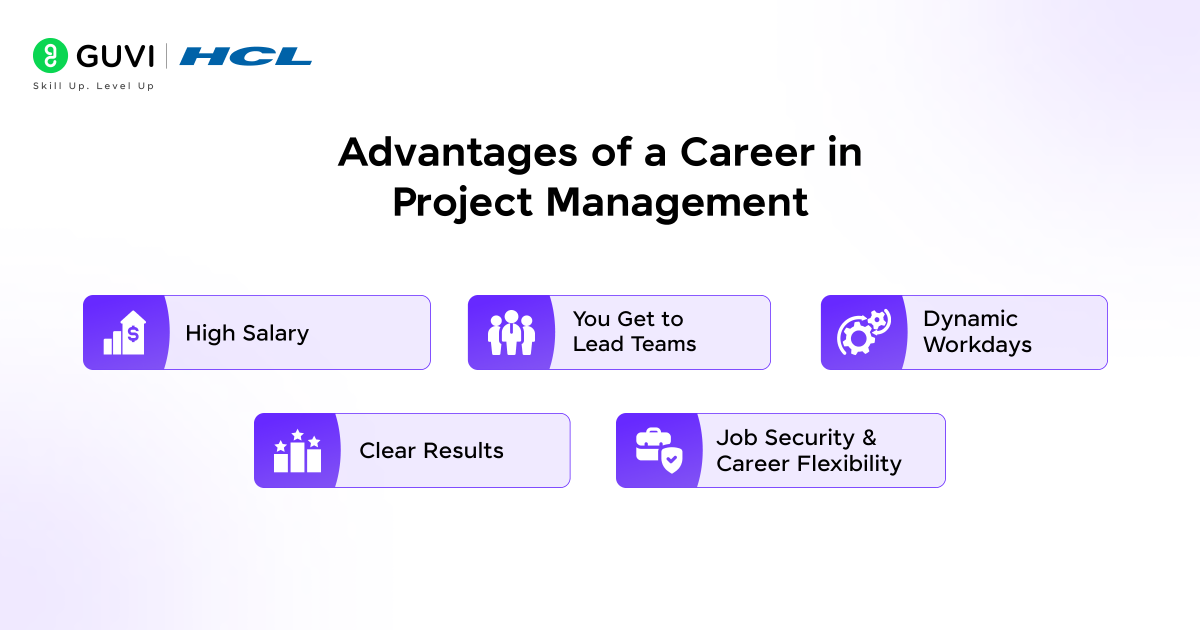
1. Excellent Salary Potential
Project managers are well-paid professionals. As you gain experience and certifications like PMP or PRINCE2, your earning potential increases significantly.
Many people choose project management for its strong compensation and career advancement opportunities.
NOTE: 33% of project managers with a PMP certification earn higher-than-average salaries worldwide.
2. You Get to Lead Teams
If you enjoy working with people, this is a major perk. You guide teams, solve problems together, and celebrate wins when a project succeeds. Being a project manager means you directly impact outcomes and help others perform at their best.
3. No Two Days Are the Same
You might spend one day presenting to stakeholders and the next helping your team troubleshoot challenges. The variety keeps the work exciting, dynamic, and full of learning opportunities.
4. You See Real, Tangible Results
One of the most rewarding parts of the job is being able to point at a final product and say, “I helped make that happen.”
Whether it’s launching a product, building a system, or organizing an event, you get to see the impact of your work.
5. Strong Job Security and Career Mobility
Project managers are in demand in nearly every industry. This includes technology, healthcare, government, education, construction, and marketing.
This means you have more job opportunities, the ability to switch industries, and stable long-term career growth.
The job also relies on human skills, so it cannot be easily replaced by AI.
“Project managers still provide an irreplaceably human combination of leadership, integration of specialists, and ethical behaviour.
– Arup, Future of Project Management Report
6. You Develop Highly Valuable Skills
Working in project management strengthens important skills. These include leadership, communication, problem-solving, organization, and time management. These skills are valuable everywhere, even outside project management.
Explore the HCL GUVI Agile and Project Management Course to build a strong foundation in project methods and Agile practices.
You will learn how Agile uses short cycles, customer teamwork, and flexible planning to help you manage projects effectively.
The Cons of Working in Project Management
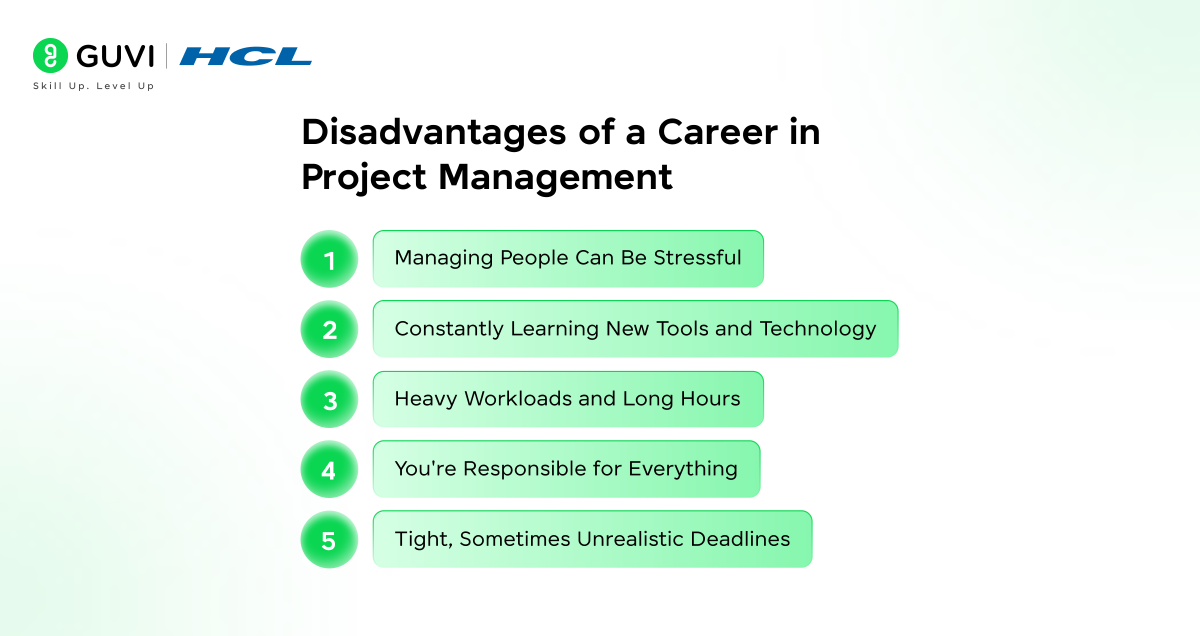
1. Managing People Can Be Stressful
According to LinkedIn, four in ten project managers feel stuck or burned out. This number may rise to nearly 50% as professionals face increasing pressure to meet deadlines. While leading teams is rewarding, it can also be one of the biggest challenges. You’ll deal with conflicts, difficult personalities, and tough decisions. You’ll also be accountable for your team’s performance. Not everyone finds this level of responsibility easy.
2. Constantly Learning New Tools and Technology
Project management evolves quickly. Studies show that there is a 64% skills gap in the industry. You’ll need to stay updated on new software, frameworks, and methodologies. Some people find this exciting, while others find it overwhelming.
3. Heavy Workloads and Long Hours
Deadlines, deliverables, and unexpected problems can mean long days. During crunch time, evenings and weekends may be required. Work-life balance can become difficult without strong boundaries.
4. You’re Responsible for Everything
When something goes wrong, the blame often lands on the project manager. This is true even if the issue wasn’t directly your fault. This level of responsibility can be emotionally draining.
5. Tight, Sometimes Unrealistic Deadlines
Stakeholders often expect fast turnaround with limited resources. Learning to manage expectations is critical. However, dealing with impossible deadlines can be one of the toughest parts of the job.
A Quick Comparison
| Pros | Cons |
| High Salary Growth | High stress and pressure |
| Leadership Opportunities | Managing conflicts and people |
| Dynamic Work Environment | Heavy workloads |
| Clear Results | Accountability when issues arise |
| Strong Job Security | Tight deadlines |
| Skill development | Continuous learning required |
Is Project Management the Right Career Path for You?
Ask yourself these questions:
Do I enjoy leading and working with people?
Am I comfortable with stress and high responsibility?
Can I stay calm when things become chaotic?
Do I enjoy learning new tools and processes?
Am I naturally organized and good at planning?
If you answered yes to most of these, project management could be an excellent fit.
If you answered yes to several, that’s useful insight. Then you’re already in.
How to Become a Successful Project Manager
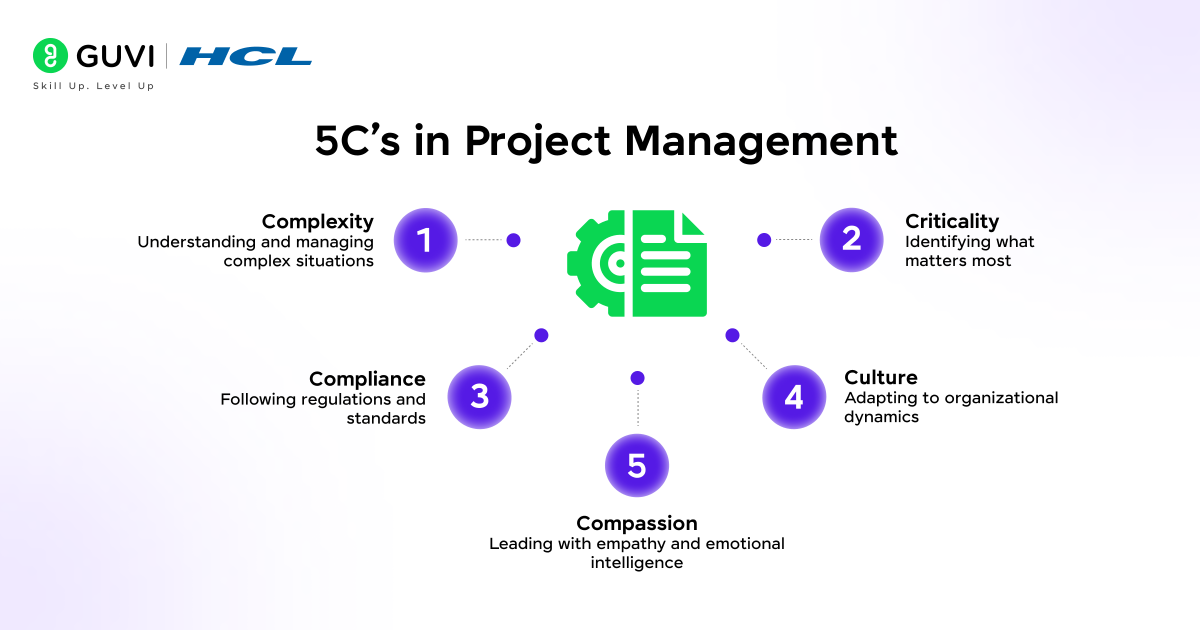
Great project managers often master the 5 C’s of Project Management:
- Complexity: Understanding and managing complex situations
- Criticality: Identifying what matters most
- Compliance: Following regulations and standards
- Culture: Adapting to organizational dynamics
- Compassion: Leading with empathy and emotional intelligence
These traits set apart good managers from exceptional ones.
Wrapping Up
Project management offers high growth, great pay, exciting work, and the chance to make a real impact. But it also comes with pressure, responsibility, stress, and ongoing challenges.
The key is knowing yourself. You need to decide whether the pros outweigh the cons for your personality and goals.
If you love leading teams, solving problems, and turning ideas into reality, project management might be your perfect career match.
So here’s the question to ask yourself: Is project management the right path for you? What skills do you already have that would help you succeed? What challenges do you think would be hardest for you to handle?
Frequently Asked Questions
Is PM a Hard Job?
Project management is challenging. But it is completely dependent on your personal strength.
2. Can project Managers work remotely?
Yes, project managers can work in a remote setup. All you need is the right tools and an adaptable mindset to thrive as a successful project manager.
3. What is the dark side of PM?
The “dark side” of project management is often high stress, constant pressure to meet deadlines, managing difficult stakeholders, and being responsible for outcomes without having full authority.
4. What is the hardest thing a project manager does?
Managing people is one of the most challenging aspects of project management. Handling stress, responsibility, and meeting deadlines within various constraints are key challenges that project managers face.
Success Stories

About the Author
Salini Balasubramaniam
A curious, information-savvy writer loves to turn deep insights into authentic and engaging content that connects. With experience in writing for brands and driving audience engagement, I believe that words can make a powerful difference.
View all posts by Salini Balasubramaniam
Connect with me @













Did you enjoy this article?