


Career Articles
How I Switched from Web Developer to ML Engineer (A Web Developer's Real Story)
PHP Developer Resume: Writing Guide & Key to Landing Your Dream Job
My Frontend Developer Interview at Google: What Really Happens Behind Closed Doors
Future of Electric Vehicle Course: Fast-Track Your EV Career


Get In Touch For Details! Request More Information

Are you curious about Business Intelligence (BI) but unsure how it can boost your career? Or have you tried learning BI tools but don’t know how they apply in real-world jobs? You’re not alone; many beginners face the same confusion.
In today’s business world, data is the new currency. Organizations rely on data-driven insights to stay competitive, improve performance, and predict future trends. That’s where BI comes in — it connects the dots between raw data and business strategy. With the right BI skills, professionals can uncover patterns, monitor KPIs, and provide actionable insights that directly influence growth and decision-making.
Business Intelligence Engineering is key to turning data into meaningful insights that help businesses make smarter decisions. From creating interactive dashboards to analyzing sales trends, BI Engineers play a crucial role in every industry. In this blog, we’ll explore the top BI engineering jobs, essential skills, must-know tools, real-world applications, challenges, and future trends — giving you a complete roadmap to start and grow a successful career in BI engineering.
Table of contents
- Importance of BI Engineering in Today’s Job Market
- Key Roles/Jobs Related to BI Engineering
- BI Developer
- BI Analyst
- Data Analyst (BI-focused)
- BI Architect
- Reporting Specialist
- Dashboard Engineer
- Data Modeler
- How to Build a Career in BI Engineering
- Essential Tools and Technologies
- Real-World Applications
- Future Trends
- Conclusion
- FAQs
- Is BI Engineering in demand in 2025?
- What are the best jobs in BI?
- Salary range for BI engineers?
- Which industries hire BI engineers most?
- Can I learn BI without coding experience?
Importance of BI Engineering in Today’s Job Market
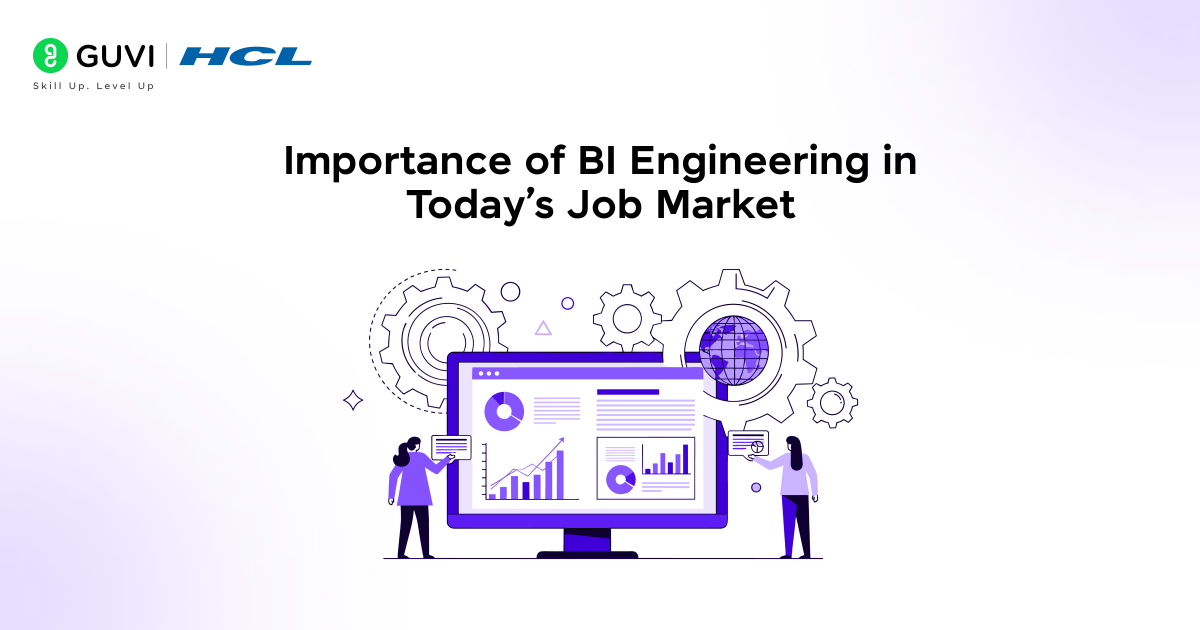
In today’s competitive business landscape, organizations rely heavily on data-driven insights to make smarter decisions. BI Engineers play a crucial role in analyzing and interpreting vast amounts of data, turning it into actionable intelligence that drives business strategy. Their work helps companies understand trends, optimize operations, and plan for the future, making BI engineering one of the most valuable and in-demand career paths in the analytics world.
Key Importance of BI Engineering:
- Informed Decision-Making: Helps businesses make smarter choices using dashboards and visualizations.
- Bridging Data and Strategy: Connects raw data to overall business objectives for better planning.
- Operational Efficiency: Streamlines processes across departments to save time and resources.
- Forecasting & Trend Analysis: Supports predicting future trends and making strategic plans.
- Career Growth: Provides an in-demand skill set with strong opportunities across industries.
Kickstart your BI career with HCL GUVI’s free 5-day email series. Learn BI fundamentals, SQL, Power BI & Tableau, ETL, and dashboards through practical lessons and examples. Ideal for aspiring BI Developers, Analysts, and Dashboard Engineers.
Key Roles/Jobs Related to BI Engineering
BI Engineering is more than just handling data; it’s about turning raw information into actionable insights that guide strategic business decisions. Professionals in this field help organizations analyze trends, optimize operations, and create impactful dashboards that drive results.
Below are the top BI engineering roles, along with their responsibilities, real-world examples, and salary insights. Here we’ll explore each role in detail, covering key responsibilities, essential skills, and salary ranges, giving you a complete understanding of the career opportunities in BI engineering.
- BI Developer
- BI Analyst
- Data Analyst (BI-focused)
- BI Architect
- Reporting Specialist
- Dashboard Engineer
- Data Modeler
1. BI Developer

Role Overview:
A BI Developer designs and implements business intelligence solutions. They work on creating dashboards, reports, and data pipelines to transform raw data into actionable insights.
Key Responsibilities:
- Developing and maintaining BI solutions and data pipelines
- Collaborating with stakeholders to gather requirements
- Integrating various data sources for analysis
- Ensuring data quality and consistency
Essential Skills and Knowledge:
- SQL, ETL, and database management
- BI tools like Power BI, Tableau, and QlikView
- Understanding data warehousing concepts
- Problem-solving and analytical skills
Salary Overview:
Fresher: ₹4–6 LPA | Mid-level: ₹8–12 LPA | Senior: ₹15–25 LPA
Reference: Indeed
Example:
A retail chain hires a BI Developer to create a dashboard integrating sales, inventory, and customer feedback data, enabling managers to optimize product offerings.

2. BI Analyst

Role Overview:
BI Analysts study business data and generate actionable insights to support decision-making. They translate complex datasets into easy-to-understand dashboards and reports.
Key Responsibilities:
- Analyzing KPIs and business metrics
- Creating visualizations and dashboards
- Collaborating with stakeholders to define reporting requirements
- Monitoring trends and recommending strategies
Essential Skills and Knowledge:
- Excel, SQL, and BI tools like Power BI/Tableau
- Analytical thinking and problem-solving
- Data visualization and reporting skills
- Business acumen for interpreting insights
Salary Overview:
Fresher: ₹3–5 LPA | Mid-level: ₹6–10 LPA | Senior: ₹12–18 LPA
Reference: Glassdoor
Example:
A telecom company hires a BI Analyst to track customer churn metrics. Using Power BI, the analyst builds dashboards that help management target retention strategies.
3. Data Analyst (BI-focused)

In-article Image 5: Visual showing data tables and analytics reports.
Role Overview:
A BI-focused Data Analyst collects, processes, and interprets business data to guide decisions. Unlike general Data Analysts, they focus specifically on business operations and KPIs.
Key Responsibilities:
- Data cleaning and preprocessing
- Statistical analysis and trend identification
- Reporting insights for business improvements
- Creating dashboards for internal teams
Essential Skills and Knowledge:
- R or Python for BI analytics
- SQL and Excel
- Dashboarding tools
- Business process understanding
Salary Overview:
Fresher: ₹3–5 LPA | Mid-level: ₹6–9 LPA | Senior: ₹10–15 LPA
Reference: Indeed
Example:
A bank hires a BI-focused Data Analyst to analyze loan processing times and optimize operations using R and Power BI dashboards.
4. BI Architect

Role Overview:
A BI Architect designs the entire BI framework for organizations, ensuring efficient data integration, storage, and visualization solutions.
Key Responsibilities:
- Designing scalable BI systems
- Defining data models and integration pipelines
- Choosing the right BI tools and technologies
- Maintaining data governance and security
Essential Skills and Knowledge:
- Data warehousing concepts
- ETL processes and BI platforms
- Cloud BI solutions like AWS or Azure
- Leadership and system design skills
Salary Overview:
Fresher: ₹8–10 LPA | Mid-level: ₹15–22 LPA | Senior: ₹25–40 LPA
Reference: Glassdoor
Example:
A retail company employs a BI Architect to redesign its reporting system, integrating sales, inventory, and customer data across stores for real-time insights.
5. Reporting Specialist

Role Overview:
A Reporting Specialist focuses on creating and automating reports that track business performance.
Key Responsibilities:
- Generating regular performance reports
- Automating report workflows
- Ensuring data accuracy and consistency
- Supporting decision-making with insights
Essential Skills and Knowledge:
- Excel, SQL, and reporting tools
- Automation with BI platforms
- Data accuracy validation
- Communication skills
Salary Overview:
Fresher: ₹3–5 LPA | Mid-level: ₹6–9 LPA | Senior: ₹10–15 LPA
Reference: Glassdoor
Example:
A logistics company hires a Reporting Specialist to automate daily delivery and inventory reports, saving hours of manual work.
6. Dashboard Engineer

Role Overview:
Dashboard Engineers build interactive dashboards for management and teams to monitor KPIs and business metrics in real-time.
Key Responsibilities:
- Designing and implementing dashboards
- Integrating data from multiple sources
- Maintaining and updating dashboards
- Providing visual analytics for decision-making
Essential Skills and Knowledge:
- Tableau, Power BI, QlikView
- Data visualization best practices
- SQL and database knowledge
- Analytical and design thinking
Salary Overview:
Fresher: ₹4–6 LPA | Mid-level: ₹7–11 LPA | Senior: ₹12–18 LPA
Reference: Glassdoor
Example:
A retail chain hires a Dashboard Engineer to track sales, inventory, and customer satisfaction in a single interactive dashboard.
7. Data Modeler

Role Overview:
Data Modelers design and optimize data structures that support BI reporting, analytics, and dashboards.
Key Responsibilities:
- Creating logical and physical data models
- Ensuring efficient data storage and retrieval
- Supporting BI developers and analysts
- Maintaining data consistency and integrity
Essential Skills and Knowledge:
- Data warehousing and database design
- SQL and ETL knowledge
- BI tools and modeling software
- Analytical problem-solving
Salary Overview:
Fresher: ₹5–7 LPA | Mid-level: ₹10–15 LPA | Senior: ₹18–28 LPA
Reference: Glassdoor
Example:
A fintech startup hires a Data Modeler to structure transaction and customer data efficiently for faster analytics and reporting.
How to Build a Career in BI Engineering
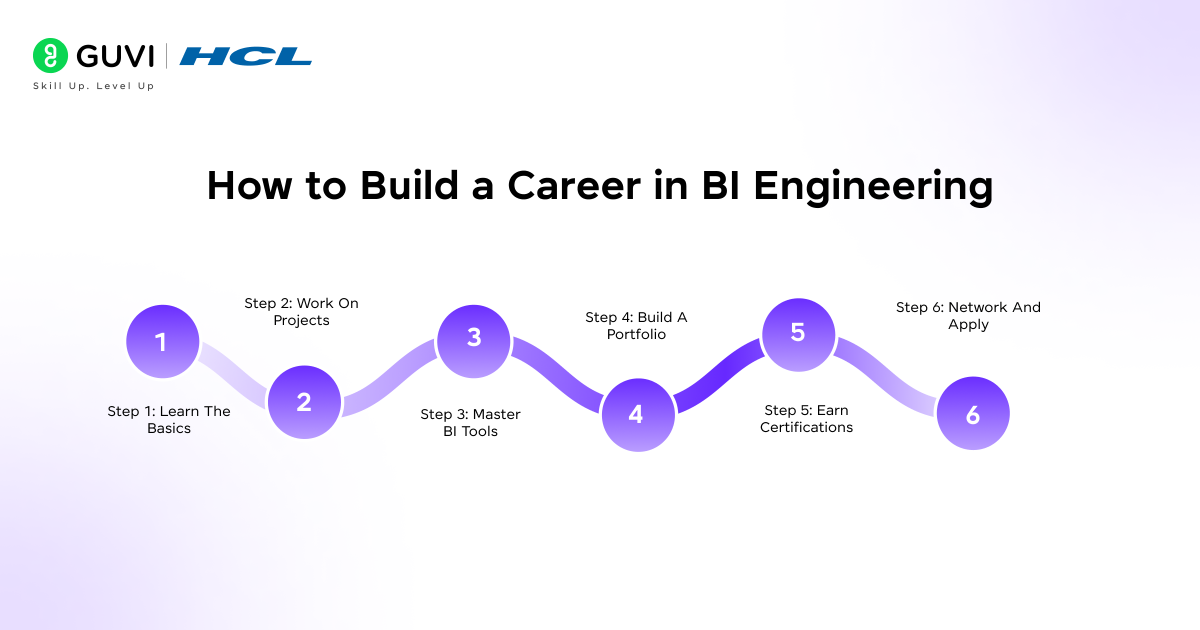
Building a successful career in BI Engineering requires a combination of technical skills, practical experience, and professional exposure. BI professionals are expected to analyze data, create meaningful reports, and support strategic decisions, which means hands-on practice and a strong understanding of tools and processes are essential. Following a structured roadmap can help beginners and aspiring professionals move from learning basics to landing a rewarding BI role.
Step 1: Learn the Basics – Gain a strong foundation in SQL, Excel, and core BI concepts to understand data handling, analysis, and reporting.
Step 2: Work on Projects – Apply your knowledge by creating power bi projects like dashboards and reports using real-world datasets, which helps develop practical problem-solving skills.
Step 3: Master BI Tools – Become proficient in Power BI, Tableau, QlikView, and ETL tools to design interactive dashboards and automate data workflows.
Step 4: Build a Portfolio – Showcase your dashboards, reports, and analytics projects on LinkedIn or GitHub to demonstrate your capabilities to potential employers.
Step 5: Earn Certifications – Validate your skills with recognized BI certifications, which enhance credibility and improve career prospects.
Step 6: Network and Apply – Join BI communities, attend webinars, and connect with professionals while applying for internships or full-time roles to gain real-world experience and opportunities.
Enhance your knowledge with HCL GUVI’s Data Science eBook covering data analysis, visualization, statistics, and BI tools like Tableau and Power BI, plus a capstone project for hands-on practice—perfect for preparing for BI roles like BI Analyst and Dashboard Engineer.
Essential Tools and Technologies
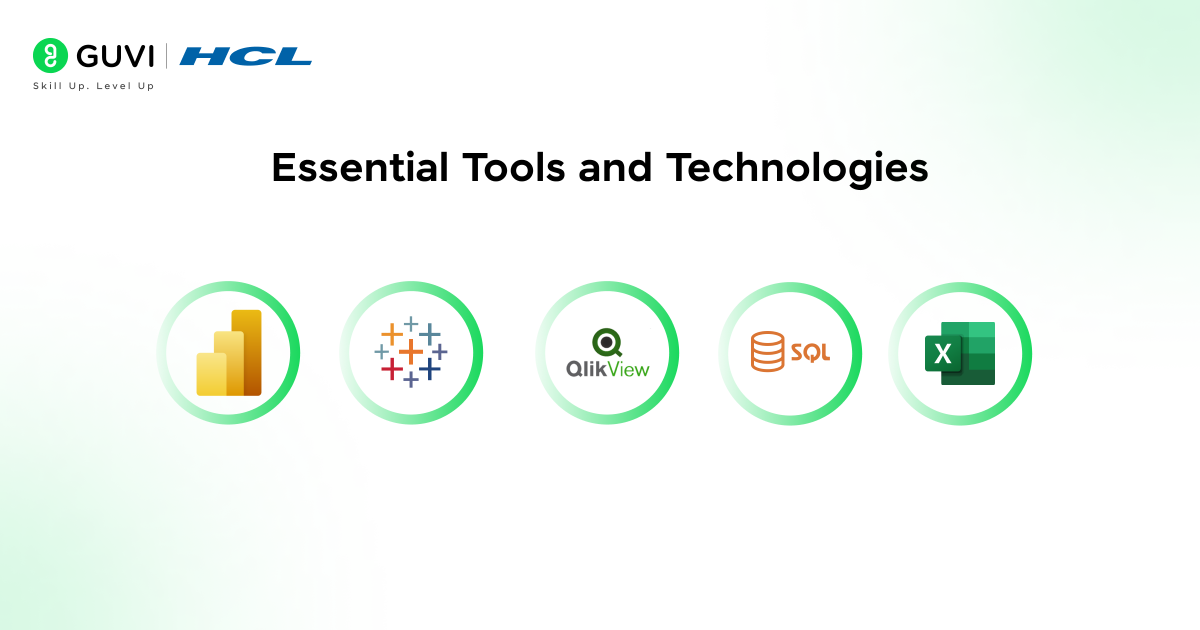
To excel in BI Engineering, mastering the right tools and technologies is crucial. These enable professionals to analyze data efficiently, create interactive dashboards, and support strategic decision-making across industries. Mastering the following technologies equips aspiring BI Engineers with the skills to handle complex datasets, automate workflows, and deliver actionable insights for business growth.
- Power BI / Tableau / QlikView: Tools for creating interactive dashboards and visualizations that convey insights effectively.
- SQL / ETL: Essential for extracting, transforming, and loading data from various sources into usable formats.
- Excel / Python / R: Used for data manipulation, cleaning, and analysis to uncover patterns and trends.
- Data Warehousing: Provides efficient storage, organization, and retrieval of large datasets for analysis and reporting.
Real-World Applications
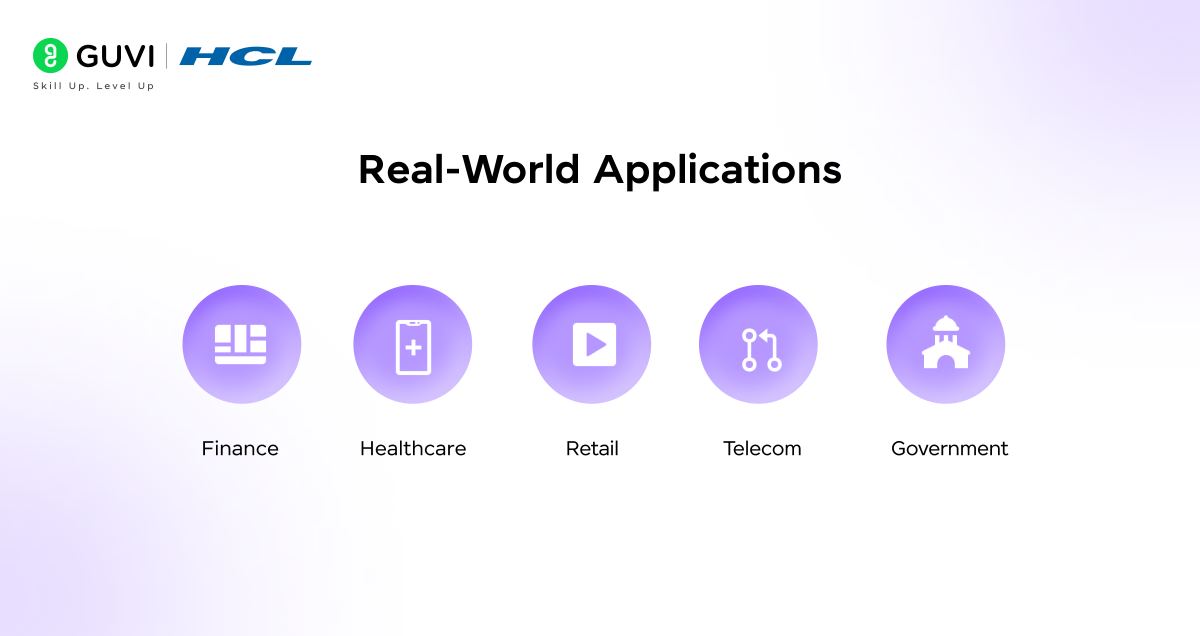
BI Engineering plays a crucial role in transforming raw data into actionable insights across multiple industries. Its applications include:
- Finance: Track KPIs, revenue, and investment metrics to support strategic financial decisions.
- Healthcare: Monitor patient outcomes and operational efficiency through interactive dashboards.
- Retail: Optimize inventory management and analyze sales performance for better profitability.
- Telecom: Identify patterns in customer churn and optimize service delivery.
- Government: Analyze census data and evaluate policies to support informed decision-making.
Future Trends
The future of Business Intelligence Engineering is evolving rapidly as organizations demand smarter, faster, and more intuitive data insights. Here are some emerging trends shaping the field:
- AI & ML in BI: Integration of artificial intelligence and machine learning enables predictive analytics, automated insights, and intelligent data recommendations.
- Cloud BI: Businesses are increasingly adopting cloud-based BI solutions like AWS and Azure for scalable, secure, and cost-effective data analytics.
- Real-Time Analytics: Companies now rely on instant data processing to monitor KPIs and operations in real time, improving agility and responsiveness.
- Data Storytelling: BI professionals are using visual narratives and interactive dashboards to make complex data insights easier to understand and act upon.
Professionals who stay updated with these trends in BI engineering and upskill continuously will remain at the forefront of the data-driven future.
Conclusion
BI Engineering opens the door to a dynamic career where data transforms into powerful business insights. From BI Developers and Analysts to Dashboard Engineers and Data Modelers, professionals in this field play a vital role in helping organizations make data-driven decisions.
In today’s fast-paced digital economy, every business strives to turn information into impact. Skilled BI professionals stand out by combining analytical thinking with technical expertise to uncover hidden trends, predict market behavior, and support smarter strategic decisions. Whether it’s optimizing sales performance, enhancing customer experience, or streamlining operations, BI engineers are at the center of every data-driven success story.
If you’re ready to advance your BI career, HCL GUVI’s Data Science Course equips you with essential skills like SQL, Power BI, Tableau, ETL, and dashboard creation through hands-on projects, giving you the practical experience to excel in Business Intelligence.
FAQs
1. Is BI Engineering in demand in 2025?
Yes, BI skills are crucial for businesses to extract actionable insights from data.
2. What are the best jobs in BI?
BI Developer, BI Analyst, Dashboard Engineer, Data Modeler, Reporting Specialist.
3. Salary range for BI engineers?
Entry-level: ₹3–6 LPA, experienced: ₹18–40 LPA depending on specialization.
4. Which industries hire BI engineers most?
Finance, healthcare, retail, telecom, and government.
5. Can I learn BI without coding experience?
Yes, basic Excel and BI tool knowledge is enough to start; advanced roles may require SQL or scripting skills.
Success Stories

About the Author
Jebasta
I translate the language of data into stories that anyone can understand. As a writer with a data science background, I simplify analytics, AI, and decision-making so beginners and enthusiasts can confidently explore the world of data.
View all posts by Jebasta
Connect with me @
















Did you enjoy this article?