


Career Articles
How I Switched from Web Developer to ML Engineer (A Web Developer's Real Story)
PHP Developer Resume: Writing Guide & Key to Landing Your Dream Job
My Frontend Developer Interview at Google: What Really Happens Behind Closed Doors
Future of Electric Vehicle Course: Fast-Track Your EV Career


Get In Touch For Details! Request More Information

Why Getting a Job After a Career Break Is So Difficult: A Complete Guide to Returning to Work
Feb 12, 2026 6 Min Read 1236 Views
(Last Updated)
Taking a break from work is more common than ever, but returning to the workforce can feel confusing and stressful. With fast-changing job roles, new technologies, and higher employer expectations, many people feel unsure about where to begin or how to rebuild confidence after a gap.
This blog simplifies the entire return-to-work journey for beginners. It covers common challenges, skill-building tips, job search strategies, interview preparation, and confidence-building methods. Whether you are a student, parent, caregiver, or professional restarting after months or years, this guide will help you re-enter the job market with clarity and direction.
Quick Answer
Returning to work after a career break can be challenging due to skill gaps, employer bias, and confidence issues. The key is to refresh skills, rebuild confidence, adopt smart job search strategies, and present your break positively. With preparation and persistence, you can successfully re-enter the workforce.
Table of contents
- Let’s Understand Career Breaks
- What Is a Career Break?
- Common Reasons - People Take Career Breaks
- Challenges People Face When Returning to Work
- Skill Gaps and Changing Industry Trends
- Employer Bias and Misconceptions
- Low Confidence After a Long Gap
- Difficulty Presenting the Break Positively
- Increased Competition in the Job Market
- How To Prepare Yourself Before Job Hunting
- Refresh and Update Your Skills
- Identify Strengths Gained During the Break
- Set Realistic Expectations
- Understand Current Hiring Trends
- Building Skills That Matter Today
- Learning In-Demand Technical Skills
- Developing Essential Soft Skills
- Taking Courses, Certifications, and Bootcamps
- Smart Job Search Strategies
- Updating Your Resume After a Break
- Creating a Strong LinkedIn Profile
- Using Networking and Referrals
- Applying Through Returnship Programs
- Tailoring Job Applications
- How To Ace Interviews After a Career Gap
- Explaining Your Career Break Confidently
- Highlighting Updated Skills
- Answering Skill-Based Questions
- Showcasing Projects, Courses, or Freelancing
- Conclusion
- FAQs
- How long is considered a career break?
- Is a career break a big disadvantage when applying for jobs?
- How do I explain a long gap in my resume?
- Can I switch careers after a break?
- What are the best courses to restart my career?
Let’s Understand Career Breaks
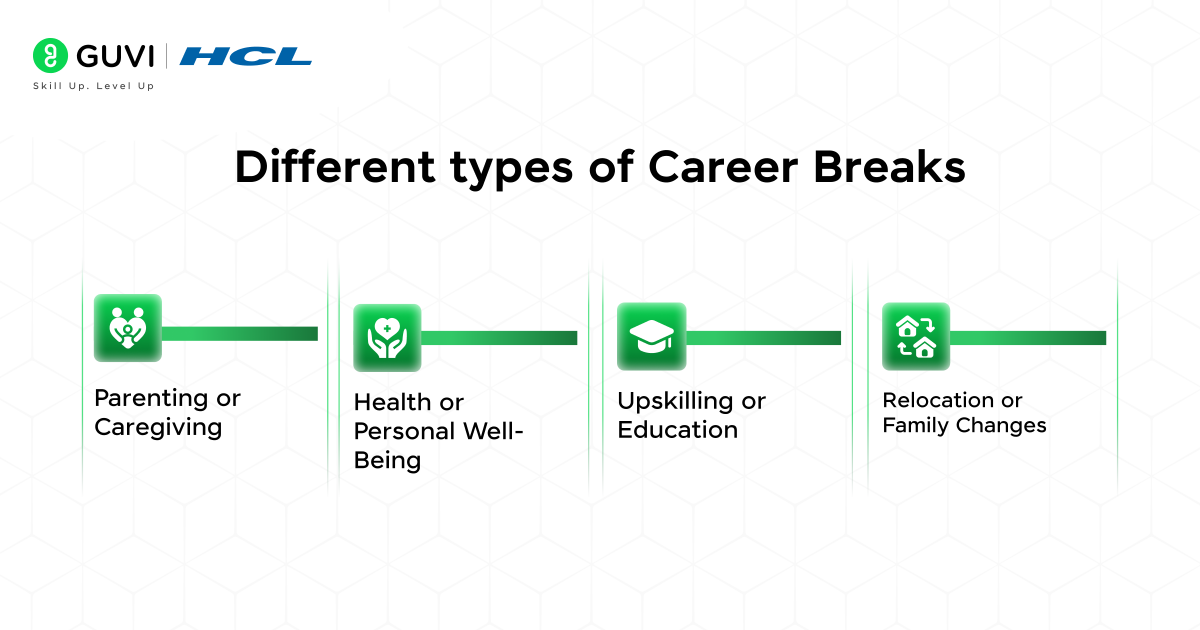
Taking a career break is common, and it can happen for a variety of personal or professional reasons. Every individual’s situation is unique, and a gap in your career does not reduce your skills or potential. Understanding what a career break is and why it happens helps you approach your return-to-work journey with confidence and clarity.
1. What Is a Career Break?
A career break is a planned or unplanned pause from full-time work. People take breaks for personal development, caregiving, education, or health reasons. The duration can range from a few months to several years, depending on individual circumstances. While it affects the continuity on your resume, it does not reduce your abilities or professional potential.
2. Common Reasons – People Take Career Breaks
People step away from work for many reasons, and each reason can bring new skills, perspectives, or personal growth. Here are some of the most common reasons:
- Parenting or Caregiving: Taking time off to care for children, elderly family members, or dependents.
- Health or Personal Well-Being: Addressing physical or mental health needs that require a pause from work.
- Upskilling or Education: Learning new skills, pursuing certifications, or furthering studies.
- Relocation or Family Changes: Moving to a new city, country, or managing family-related transitions.
- Burnout or Career Reflection: Stepping back to rest, recharge, or rethink career direction.
Challenges People Face When Returning to Work
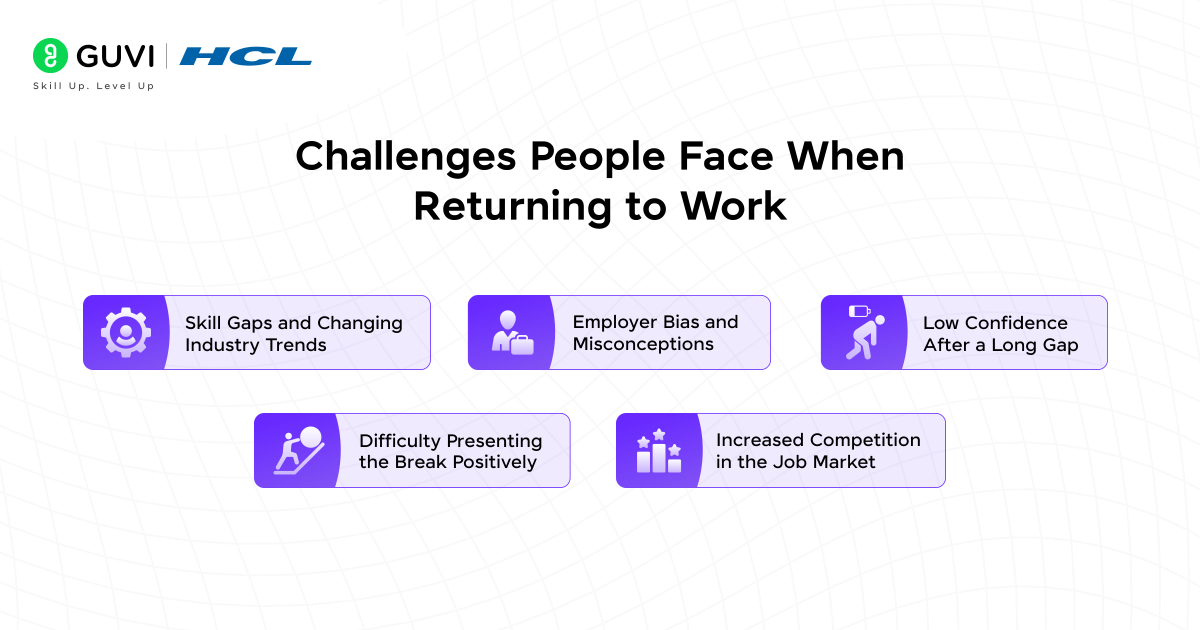
Many beginners assume that the career gap itself is the biggest obstacle, but the challenges of re-entering the workforce go deeper. Understanding these obstacles is the first step toward overcoming them. In this section, we will discuss five major challenges:
- Skill Gaps and Changing Industry Trends
- Employer Bias and Misconceptions
- Low Confidence After a Long Gap
- Difficulty Presenting the Break Positively
- Increased Competition in the Job Market
1. Skill Gaps and Changing Industry Trends
The job market evolves rapidly, and even a short break can leave gaps in your knowledge. Technology, tools, and best practices change constantly, making it essential to stay updated. Skills that were once in demand may now be outdated, and employers expect candidates to have current expertise.
- Rapid Technological Changes: Tools and software evolve quickly, requiring updated skills in areas like data science, AI, or cloud computing.
- Outdated Knowledge: Techniques and workflows you used before your break may no longer be relevant.
- Increased Skill Expectations: Employers now expect hands-on experience with modern tools and frameworks.

2. Employer Bias and Misconceptions
Many recruiters have preconceived notions about career-break candidates. Even if your skills are current, they may question your commitment or assume you are less adaptable. Understanding these biases helps you proactively address concerns during applications and interviews.
- Perceived Skill Obsolescence: Employers may assume your abilities are outdated.
- Commitment Concerns: Recruiters sometimes think break candidates are less dedicated.
- Industry Variations: Bias levels differ across sectors, with some being more open to returnees than others.
3. Low Confidence After a Long Gap
Time away from the workforce can impact your self-belief. Feeling disconnected from corporate culture, worrying about competing with active candidates, or doubting your abilities can make job searching more stressful. Rebuilding confidence is key to presenting yourself effectively.
- Feeling Disconnected: A long break may make you unsure about workplace norms.
- Comparison Pressure: Watching peers progress can cause self-doubt.
- Difficulty Showcasing Talent: Lack of recent experience can make it challenging to demonstrate skills clearly.
4. Difficulty Presenting the Break Positively
Explaining your career break in a positive way can be tricky. Many candidates struggle to highlight personal or professional growth during the gap. An unclear explanation or a poorly structured resume may reduce your chances of getting noticed.
- Unclear Narrative: Not knowing how to describe the break confidently.
- Missed Growth Opportunities: Difficulty emphasising learning or achievements during the gap.
- Resume Challenges: Unsure how to format your CV to showcase your potential effectively.
5. Increased Competition in the Job Market
The job market is highly competitive, and candidates returning from a break compete with both fresh graduates and continuously working professionals. In fields like software, design, analytics, or marketing, continuous learning is often required to stay relevant.
- High Applicant Volume: Many candidates apply for the same roles.
- Competing With Active Professionals: Professionals who never took a break may have more recent experience.
- Industry Expectations: Continuous learning and updated skills are expected in most modern workplaces.
How To Prepare Yourself Before Job Hunting
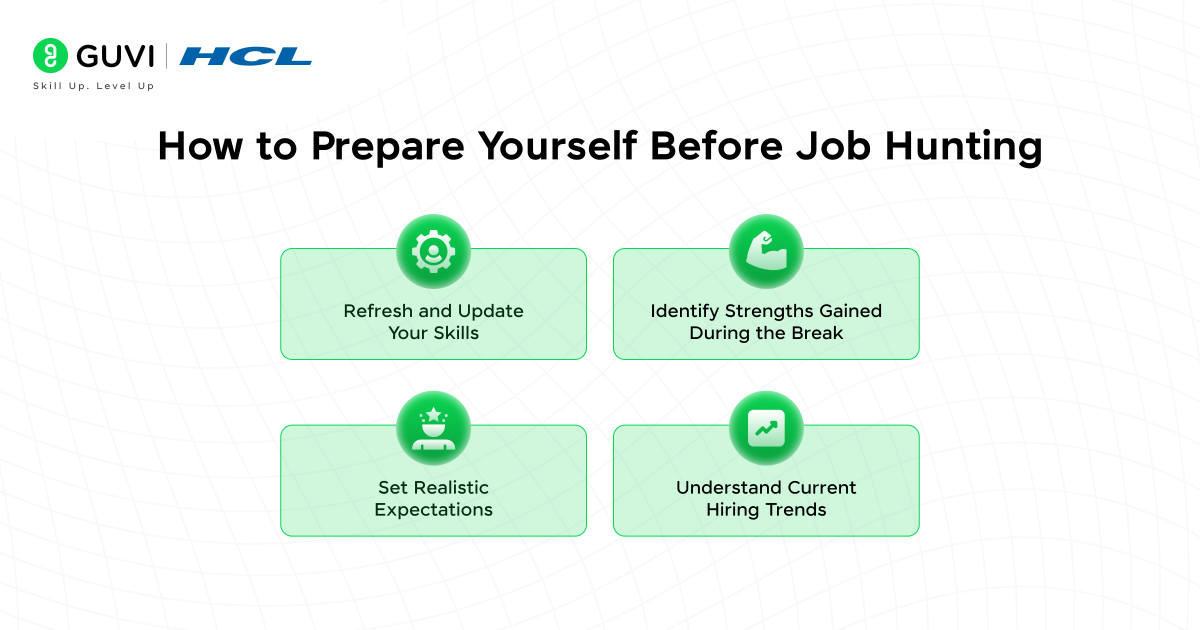
Preparation is the key to a smoother and more confident return to work. Taking time to refresh your skills, recognise your strengths, and understand the current job market can make your job search more effective. In this section, we will cover four important steps:
- Refresh and Update Your Skills
- Identify Strengths Gained During the Break
- Set Realistic Expectations
- Understand Current Hiring Trends
1. Refresh and Update Your Skills
Skills can become outdated quickly, especially in fast-evolving fields like technology, analytics, and digital marketing. Updating your knowledge ensures you stay competitive and confident when applying for roles.
- Online Courses and Certifications: Take structured courses to learn modern tools and concepts.
- Trending Topics: Explore areas like data analytics, cloud computing, and digital marketing to stay current.
- Hands-On Tools: Practice tools such as Python, SQL, Git, or Power BI to demonstrate practical expertise.
2. Identify Strengths Gained During the Break
Career breaks often provide opportunities to develop personal and professional strengths. Recognising these skills helps you present yourself positively to employers.
- Time Management: Learning to balance personal commitments and responsibilities.
- Adaptability: Navigating new situations and challenges effectively.
- Communication Skills: Caregiving, volunteering, or projects improve collaboration and expression.
- Practical Examples: Personal projects or freelancing work offer strong example points for resumes and interviews.
3. Set Realistic Expectations
Returning to work requires understanding your current position relative to the market. Setting achievable goals reduces stress and helps you plan effectively.
- Market Awareness: Research roles, salaries, and industry requirements to align expectations. Example – Power BI Developer
- Start Small: Consider internships, returnships, or project-based roles to rebuild experience.
- Flexibility: Be open to hybrid work, part-time, or freelance opportunities as stepping stones.
4. Understand Current Hiring Trends
The hiring process has evolved, and knowing what employers look for can give you an edge. Understanding trends helps tailor your approach and improves your chances of selection.
- Skill-Based Hiring: Employers prioritise candidates who demonstrate current practical skills.
- LinkedIn and Networking: Recruiters rely heavily on online profiles and professional networks.
- Portfolio and Projects: Employers prefer candidates who can showcase tangible features of their work.
Building Skills That Matter Today
Having the right skills can significantly improve your chances of landing a job after a career break. Industries evolve quickly, and understanding which skills are in demand helps you stay relevant and confident. This section highlights the most important skills beginners should focus on today.
- Learning In-Demand Technical Skills
- Developing Essential Soft Skills
- Taking Courses, Certifications, and Bootcamps
1. Learning In-Demand Technical Skills
Technical skills form the backbone of most modern roles. Updating these skills ensures that you can meet current job requirements and perform confidently in practical tasks.
- Programming Languages: Python, Java, and similar languages are widely used in software, analytics, and data roles.
- Data Tools: Power BI, Excel, and other analytics tools help interpret and visualise data effectively.
- Cloud Platforms: AWS, Azure, and other cloud services are essential for many IT and tech roles.
- Industry Resources: Blogs like machine learning articles provide practical knowledge and insights into trending technologies.
2. Developing Essential Soft Skills
While technical skills are important, employers also value strong soft skills that help you adapt and collaborate in modern workplaces.
- Communication Skills: Clear expression during interviews and teamwork.
- Adaptability: Adjusting easily to new environments, technologies, or workflows.
- Problem-Solving: Addressing real-world challenges efficiently.
- Leadership & Collaboration: Taking initiative and working effectively with teams, as highlighted in project management blogs.
3. Taking Courses, Certifications, and Bootcamps
Structured learning programs can accelerate skill development and make your profile job-ready.
- Short Courses: Quickly learn updated skills relevant to your target role.
- Career-Focused Programs: Teach practical key functions required in current jobs.
- Certifications and Bootcamps: Provide credibility and hands-on experience to demonstrate your capabilities. Example – IT Certifications
Smart Job Search Strategies
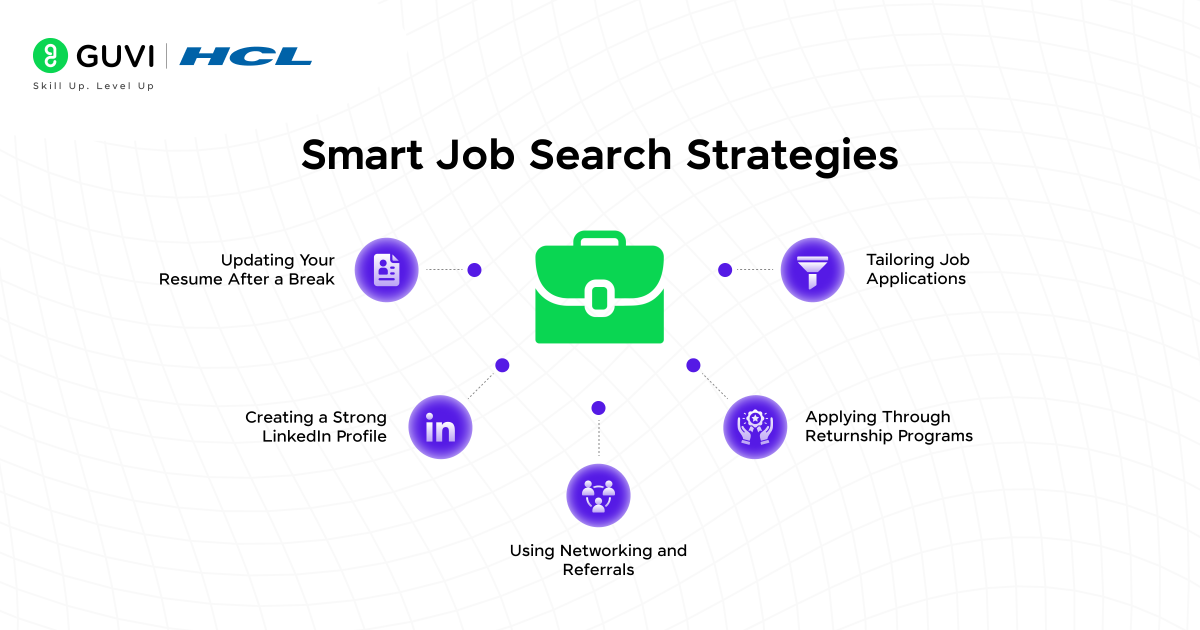
After preparing yourself, the next step is to search for jobs strategically. Random applications often waste time and reduce motivation, while a focused approach improves your chances of success. This section covers five effective strategies to make your job search more productive:
- Updating Your Resume After a Break
- Creating a Strong LinkedIn Profile
- Using Networking and Referrals
- Applying Through Returnship Programs
- Tailoring Job Applications
1. Updating Your Resume After a Break
Your resume should highlight skills, experience, and growth rather than the gap itself. A well-structured resume helps employers focus on your strengths.
- Skills-Focused: Emphasise updated skills, certifications, and practical experience.
- Project Highlights: Include personal, freelance, or course projects as example points.
- Active Language: Use action verbs and clear formatting for easy readability.
2. Creating a Strong LinkedIn Profile
A professional LinkedIn profile enhances your online presence and increases visibility to recruiters.
- Professional Photo & Headline: Make a strong first impression with a clear profile.
- Share Content: Post or engage with industry-related content to show your interest and knowledge.
- Keyword Optimisation: Include relevant skills and terms to improve profile discoverability.
3. Using Networking and Referrals
Building relationships can open doors to opportunities that are not publicly advertised.
- Reach Out to Contacts: Connect with former colleagues, mentors, and classmates.
- Join Professional Groups: Participate in webinars, communities, and discussion forums.
- Engage Actively: Comment on posts and share insights to stay visible in your network.
4. Applying Through Returnship Programs
Returnships are structured programs specifically designed for career-break candidates.
- Targeted Programs: Focus on candidates returning after a gap.
- Training & Mentorship: Offer guidance to refresh skills and adapt to workplace culture.
- Path to Full-Time: Many programs lead to permanent employment after successful completion.
5. Tailoring Job Applications
Customising each application increases your chances of standing out among other candidates.
- Resume Customisation: Highlight the most relevant skills and experiences for each role.
- Job Description Analysis: Understand what the employer is looking for before applying.
- Feature Emphasis: Showcase the features of your profile that align with the role’s requirements.
How To Ace Interviews After a Career Gap
Interviews are the final step before securing a job, and they can feel intimidating after a career break. Presenting your gap confidently while highlighting your updated skills and experiences can significantly improve your chances. This section provides practical strategies to help you excel in interviews.
- Explaining Your Career Break Confidently
- Highlighting Updated Skills
- Answering Skill-Based Questions
- Showcasing Projects, Courses, or Freelancing
1. Explaining Your Career Break Confidently
How you explain your career break can shape the interviewer’s perception. A short, honest explanation paired with what you learned during the break creates a positive impression.
- Be Honest: Give a clear and truthful reason for your break.
- Focus on Growth: Highlight skills, experiences, or personal development gained during the gap.
- Positive Attitude: Frame the break as a conscious choice that added value to your profile.
2. Highlighting Updated Skills
Demonstrating that your skills are current reassures employers about your readiness for the role.
- New Tools & Technologies: Mention software, programming languages, or tools learned recently.
- Practical Examples: Share example projects, freelance work, or personal initiatives.
- Certifications: Highlight completed certifications to show formal validation of your skills.
3. Answering Skill-Based Questions
Many interviews focus on how effectively you can apply your skills. Clear, structured answers demonstrate competence.
- Structured Responses: Use frameworks like STAR (Situation, Task, Action, Result) for clarity.
- Practice Common Questions: Prepare answers for frequently asked questions in your industry.
- Problem-Solving: Show your ability to analyse and solve real-world challenges.
4. Showcasing Projects, Courses, or Freelancing
Presenting tangible work helps employers see your practical abilities.
- Portfolio & GitHub Links: Share evidence of your hands-on projects.
- Hands-On Experience: Highlight tasks or achievements from personal or freelance projects.
- Course Achievements: Mention notable accomplishments from relevant courses or workshops.
Do check out HCL GUVI’s Interview Preparation Course, which is designed to help learners build the confidence and clarity needed to perform well in any interview. It covers essential skills such as communication techniques, resume refinement, common interview questions, body language, and mock interview practice. This course is suitable for beginners and professionals across all domains who want to strengthen their interview readiness and improve their chances of landing the right job opportunity.
Conclusion
Restarting your career after a break can feel challenging, but it is entirely possible with the right preparation and mindset. By understanding the challenges, updating your skills, and building confidence, you can approach the job market with clarity and purpose.
Consistency, focus, and a strategic approach to learning and job searching are key to making a successful return. Trust your abilities, leverage your experiences, and remember that a career break does not define your potential—your actions now shape the next chapter of your professional journey.
FAQs
1. How long is considered a career break?
A break of a few months to several years is considered a career break. There is no fixed rule.
2. Is a career break a big disadvantage when applying for jobs?
Not if you update your skills. Many companies welcome diverse experiences.
3. How do I explain a long gap in my resume?
Be honest, keep it short, and focus on the skills or growth during the break.
4. Can I switch careers after a break?
Yes, many learners transition through courses, projects, and updated skills.
5. What are the best courses to restart my career?
Choose courses in trending fields like data science, full-stack development, cloud computing, or cybersecurity based on your interests.
Success Stories

About the Author
Jebasta
I translate the language of data into stories that anyone can understand. As a writer with a data science background, I simplify analytics, AI, and decision-making so beginners and enthusiasts can confidently explore the world of data.
View all posts by Jebasta
Connect with me @









Did you enjoy this article?