


HTML Articles
HTMX vs. React: Do You Really Need a Heavy Framework for Your First Project?
Free HTML Course with Certificate
How to Add Background Image in HTML: A Simple Step-by-Step Guide!


Get In Touch For Details! Request More Information
If you’re thinking about becoming an HTML developer or you already code HTML for work, you probably have one big question: “Can I actually earn well as an HTML developer?” The answer is yes. HTML developers have solid job opportunities and can earn good paychecks.
The best part? There are real ways to earn even more. Whether you work for a company or work for yourself, you can build a high income with HTML skills.
Let’s explore what you need to know about HTML developer salaries and concrete steps you can take to increase your earnings.
Quick Answer:
The HTML Developer Salary in India for a Mid-Level (2–5 years) professional typically ranges from ₹5.5 LPA to ₹12 LPA. Senior roles (5+ years) can command ₹12 LPA to ₹25+ LPA.
Table of contents
- What Do HTML Developers Do?
- Why Do Companies Still Need HTML Developers?
- How Much Money Do HTML Developers Make?
- In India (2025–2026)
- Around the World
- Highest Paying Tech Companies for HTML Developers
- What Affects HTML Developer Salary?
- Your Skills
- Your Experience
- Type of Company
- Where You Live
- Your Portfolio
- Top 5 Skills to upskill
- Specialise in High-Demand Frameworks
- How to Earn More
- Step 1: Build an Amazing Portfolio
- Step 2: Learn More Skills
- Step 3: Get Certificates
- Step 4: Negotiate Your Pay
- Step 5: Do Freelance Projects
- Step 6: Stay in trend
- Career Path for HTML Developers
- Bottom Line
- Frequently Asked Questions
- Is HTML still needed in 2026?
- 2. Do you need a college degree to be an HTML developer?
- How long does it take to learn HTML?
- Is learning just HTML enough for a job?
- Are there remote HTML developer jobs?
What Do HTML Developers Do?
HTML developers build the basic structure of websites using a coding language called HTML. Think of HTML like the skeleton of a building; it holds everything together. These developers make sure websites look good on all devices (like phones and computers) and work properly.
Most HTML developers also learn CSS (which makes websites look pretty) and JavaScript (which makes websites interactive). This helps them get better jobs and make more money.
Why Do Companies Still Need HTML Developers?
The U.S Bureau of Labour Statistics predicts 23% growth in web developer jobs from 2021 to 2031, which is faster than average.
Even though there are new tools that don’t require coding, companies still need real developers who understand how to build websites the right way. There’s steady demand for people who can make websites that:
- They are easy for people to use
- Work well in Google searches
- Load fast
- Work on all computers and phones
How Much Money Do HTML Developers Make?
In India (2025–2026)
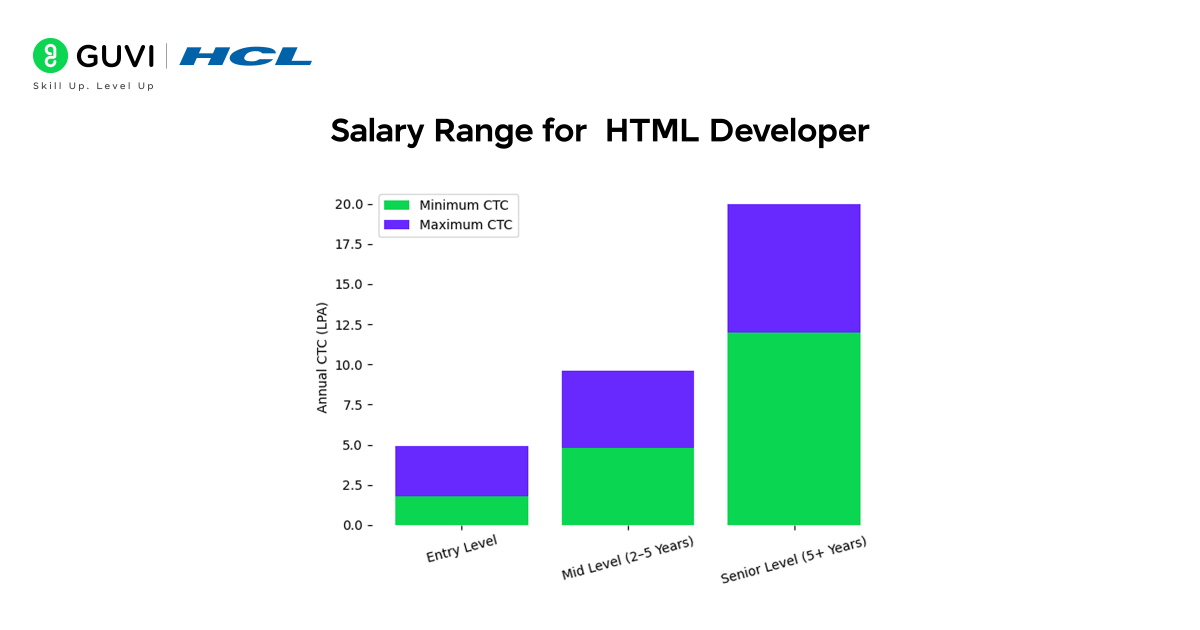
Beginners (0–2 years): ₹2–₹5.5 lakh per year
- Fresh graduates usually start at ₹2–₹4 lakh
- If you have a strong project portfolio: ₹3.5–₹6 lakh
Source: Ambitious Box
Mid-level (3–5 years): ₹4.5–₹7.5lakh per year
- Depends on your skills and company type
Source: Ambitious Box
Experienced (5+ years): ₹5.7–₹25lakh per year
- Senior positions and leadership roles
Source: Ambitious Box
Around the World
- USA: $50,000–$160,000 per year
- UK: £30,000–£65,000 per year
- Canada: CAD $55,000–$110,000 per year
- Europe: €35,000–€90,000 per year
- UAE/Middle East: AED 80,000–300,000 per year
Highest Paying Tech Companies for HTML Developers
| Company | Salary Range (INR) |
|---|---|
| Flipkart | ₹1 Lakh – ₹11.6 LPA |
| Zomato | ₹6 Lakh – ₹16 Lakh |
| Amazon | ₹4 Lakh – ₹20 Lakh |
| Accenture | ₹4.6 Lakh – ₹9.8 Lakh |
Source: Ambitious Box & Glassdoor

What Affects HTML Developer Salary?
Your Skills
- Basic HTML knowledge is the starting point
- Learning CSS makes you more valuable
- JavaScript is a big money booster — even basic JavaScript knowledge can increase your pay a lot
- Understanding accessibility (making websites work for people with disabilities) is important
Your Experience
- Beginners do simple tasks and learn
- Mid-level workers build reusable pieces and work with different systems
- Senior workers plan the whole website structure and teach others
Type of Company
- IT service companies: lower base pay but lots of variety
- Product companies: higher pay and benefits
- Startups: sometimes lower pay but stock options
- Freelance/agencies: varies a lot
Where You Live
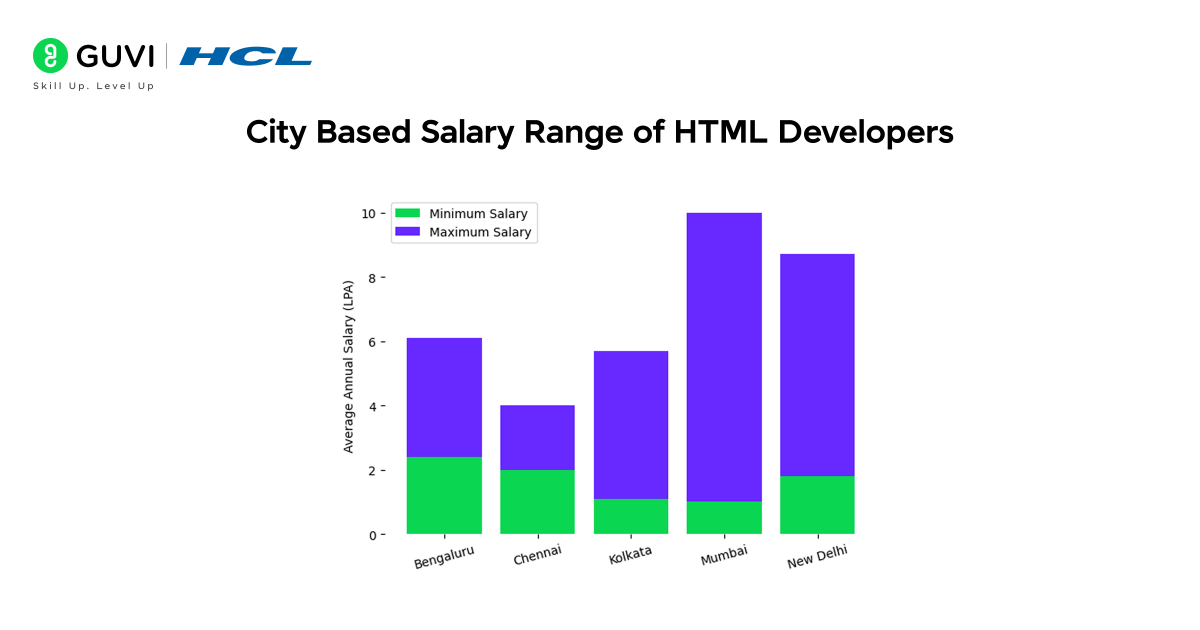
Big cities vs smaller cities: Developers in places like Bangalore, Mumbai, and Hyderabad earn 15–50% more money than those in smaller cities.
- Big cities in India pay more
- Some countries pay much more than others
- Working remotely can help if your company pays market rates
| City | Average Annual Salary |
| Bangalore | 2.4 to 6.1 LPA |
| Chennai | 2 to 4 LPA |
| Kolkata | 1.1 to 5.7 LPA |
| Mumbai | 1 L to 10 LPA |
| New Delhi | 1.8L to 8.7 LPA |
Your Portfolio
- Showing real websites you’ve built matters
- Showing results (like “I made this website 50% faster”) is powerful
- GitHub projects and case studies help
Top 5 Skills to upskill
- Advanced CSS + frameworks (like Tailwind or Bootstrap) — helps you build websites faster and better
- JavaScript basics — makes you a real front-end developer, not just someone who writes HTML
- Accessibility and SEO — companies need this for rules and getting found on Google
- Git and teamwork skills — let you work with other developers
- WordPress, Webflow, or other platforms — useful for freelance work and agencies
Specialise in High-Demand Frameworks
HTML developers who specialise in popular frameworks earn significantly more. Consider deep-diving into:
- React: React developers earn approximately 15–25% more than vanilla HTML developers. The framework dominates the job market and commands premium salaries.
- Vue.js or Angular: These frameworks also offer strong earning potential, particularly in corporate environments.
- Static site generators: Expertise with Gatsby, Next.js, or Hugo appeals to modern companies seeking performance-optimised solutions.
Move Into Full-Stack Development
HTML developers who expand into backend technologies can earn significantly more. Consider learning:
- Node.js with Express: JavaScript on the backend makes it an easy transition
- Python with Django or Flask: Popular and beginner-friendly backend frameworks
- Databases: Understanding SQL and NoSQL databases is crucial
Full-stack developers typically earn 30–50% more than frontend-only developers because they can build complete applications independently.
Get started as a web developer and gain the employable skills companies look for with our Full Stack Developer Program with AI Integration Course. The best way to begin is with online courses. HCL GUVI offers a professional, certified course in full-stack development with placement assistance. Learn key skills and build your portfolio.
How to Earn More
Step 1: Build an Amazing Portfolio
- Show real websites you’ve made
- Prove what you did (like “made this website load 20% faster”)
- Put links on GitHub and your personal website
Step 2: Learn More Skills
- Learn CSS really well
- Learn JavaScript basics
- Learn responsive design (making sites work on all screen sizes)
- Learn one CSS framework (Tailwind or Bootstrap)
Do you aspire to learn HTML, CSS, Javascript, and build a strong portfolio? Enrol HCL GUVI’s HTML Developer Course
Step 3: Get Certificates
- Real certificates with actual projects are best
- They prove you know what you’re doing
- But your portfolio is more important than certificates
Pursue Certifications and Advanced Credentials
While experience matters most, relevant certifications can boost your credibility:
- AWS Certified Developer: Cloud expertise is increasingly valuable
- Google Developer Certification: Enhances your credibility and SEO knowledge
- Advanced CSS or accessibility certifications: Specialized credentials often justify higher rates
Step 4: Negotiate Your Pay
- Use numbers when asking for more money
- Show how you helped (traffic, speed, conversions)
- Be specific about what you did
Step 5: Do Freelance Projects
- Side projects give you more examples for your portfolio
- You can charge more as you get better
- Client testimonials help a lot
Step 6: Stay in trend
- Learn new web technologies
- Keep learning about making websites faster
- Learn about accessibility updates
- Study mobile-first design
Career Path for HTML Developers
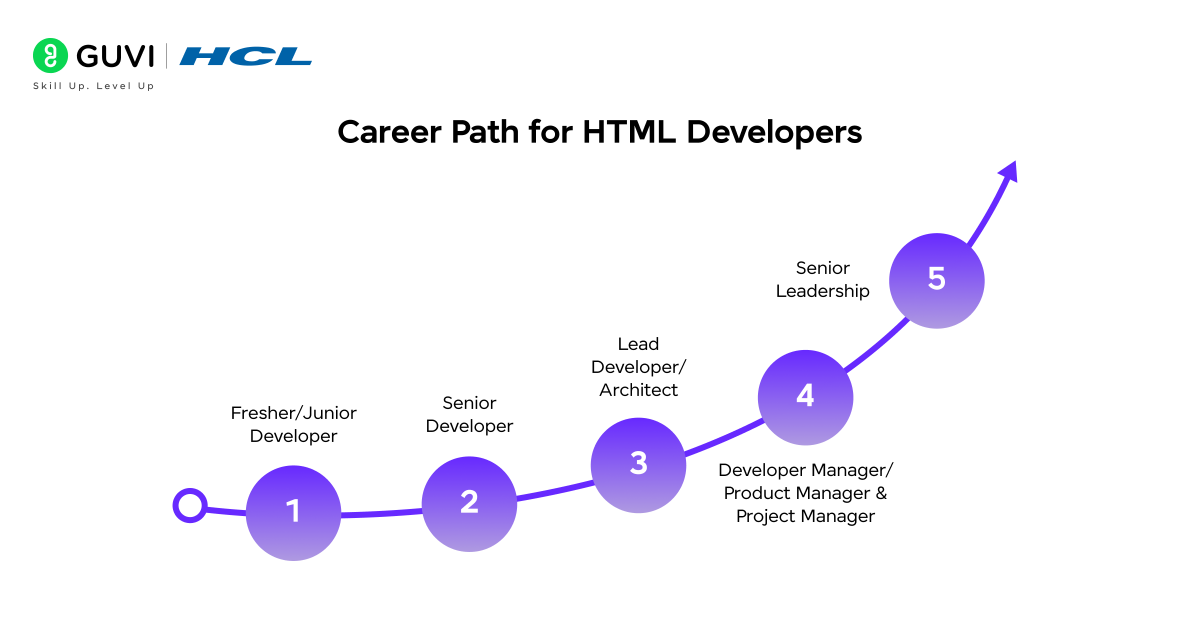
- Junior HTML Developer — writes basic code, does simple tasks
- Front-End Developer — adds JavaScript and makes things interactive
- UI Developer — focuses on how websites look and work
- Web Designer — emphasises visual design
- Webflow/No-Code Developer — uses special tools to build websites without coding
Full-Stack Developer — learns backend coding for even more opportunities
Bottom Line
HTML is the absolute foundation of the web, and a career in web development is robust and high-paying. Your earning potential is directly proportional to how much you expand your skills beyond the basics.
To achieve top-tier salary, you need to combine: Clean HTML structure + CSS mastery + JavaScript functionality + demonstrable project results.
Frequently Asked Questions
1. Is HTML still needed in 2026?
Absolutely. HTML is the foundation of all websites. There’s steady demand for developers who know HTML plus CSS, JavaScript, and accessibility.
2. Do you need a college degree to be an HTML developer?
No! Employers care most about your portfolio and skills. If you can show good projects and results, you can get hired.
3. How long does it take to learn HTML?
Basic HTML takes a few days to weeks. To be job-ready (HTML + CSS + responsive design + good portfolio), plan for 3–6 months of practice.
4. Is learning just HTML enough for a job?
Some entry-level jobs yes, but better jobs and higher pay come when you add CSS, JavaScript, and build a strong portfolio.
5. Are there remote HTML developer jobs?
Yes, many companies hire remote developers. Pay depends on the company. Developers with special skills (speed optimization, accessibility, JavaScript) get the best remote jobs.
Success Stories

About the Author
Salini Balasubramaniam
A curious, information-savvy writer loves to turn deep insights into authentic and engaging content that connects. With experience in writing for brands and driving audience engagement, I believe that words can make a powerful difference.
View all posts by Salini Balasubramaniam
Connect with me @











Did you enjoy this article?