


Full Stack Development Articles
Claude for Architecture and Engineering Documentation
Freelancing as a Python Developer: Getting Your First Client

Get In Touch For Details! Request More Information
Stop Chasing Frameworks: Why CS Fundamentals Are Your Best Safety Net
Sep 19, 2026 6 Min Read 1160 Views
(Last Updated)
Have you ever felt pressure to constantly learn the “next big framework” just to stay relevant in tech? One month it’s a new JavaScript framework, the next month a new backend tool, and soon your existing skills start feeling outdated.
CS fundamentals are the core, unchanging principles behind how software and computers actually work, data structures, algorithms, operating systems, networks, databases, and system design. Frameworks aren’t permanent, but the logic behind computing is.
This blog explains why chasing frameworks is risky, why CS fundamentals are your strongest safety net in an ever-changing tech industry, and exactly how to build them, regardless of your current tech stack.
Table of contents
- TL;DR Summary
- Frameworks vs CS Fundamentals: Quick Comparison
- The Growing Obsession With Frameworks: Why Developers Feel Forced to Chase Them
- The Hidden Risk of Framework-First Learning
- What Are CS Fundamentals?
- Why CS Fundamentals Never Become Outdated
- Data Structures: The Core of Efficient Software
- Algorithms: Learning How to Think, Not Just Code
- Interview and Industry Relevance
- Operating Systems: Understanding the System Layer
- Computer Networks: How Applications Communicate
- Databases: Storing Data the Right Way
- Object-Oriented Programming: Writing Maintainable Code
- System Design: Applying Fundamentals at Scale
- How to Learn Computer Science Fundamentals: A Practical Roadmap for Any Tech Stack
- Phase 1: Build a Strong Foundation
- Phase 2: Core CS Fundamentals
- Phase 3: Apply Fundamentals to Your Tech Stack
- What to Focus On While Learning
- What to Avoid While Learning
- Common Mistakes When Building CS Fundamentals
- How Companies Actually Test CS Fundamentals in Interviews
- Wrapping It Up
- FAQs
- What are computer science fundamentals?
- Are computer science fundamentals more important than frameworks?
- Can I learn computer science fundamentals without a CS degree?
- How long does it take to learn computer science fundamentals?
TL;DR Summary
- What it is: the core, framework-independent principles behind software, data structures, algorithms, OS, networks, databases, and system design
- Why it matters: frameworks change every year, but the logic behind computing stays stable for decades
- The real risk of skipping them: you can build things that work, but you’ll struggle to debug, optimize, or switch tech stacks when it counts
- How to build them: a structured, 3-phase path that works regardless of which tech stack you’re using
- The honest trade-off: frameworks get you hired faster short-term; fundamentals keep you employable long-term
Frameworks vs CS Fundamentals: Quick Comparison
| Factor | Frameworks | CS Fundamentals |
|---|---|---|
| Shelf life | Months to a few years before the next trend | Decades, largely unchanged |
| What it teaches | How to use a specific tool | How computing actually works underneath |
| Debugging complex issues | Limited, hides what’s happening internally | Strong, you understand the root cause |
| Switching tech stacks | Requires relearning from scratch | Transfers directly across languages and tools |
| Interview relevance | Company and role-specific | Tested almost universally in technical interviews |
| Best treated as | A tool you apply on top of fundamentals | The foundation everything else is built on |
Frameworks and fundamentals aren’t actually competing with each other, the healthiest approach uses both, fundamentals as the base, frameworks as the tools you apply on top of it.
The Growing Obsession With Frameworks: Why Developers Feel Forced to Chase Them
The tech ecosystem moves fast. New tools launch every year, and job postings usually emphasize specific frameworks rather than core skills. This creates a real fear of being shut out of opportunities for not knowing the latest trendy tool.
Common reasons developers chase frameworks include:
- Rapid changes in technology
- Framework-heavy job descriptions
- Trends and tutorials on social media
- Pressure to show “the latest skills”
- Short-term hiring demands
While learning frameworks is genuinely important, relying on them alone creates fragile career growth.
The Hidden Risk of Framework-First Learning
Frameworks are built to simplify development, but they hide complexity underneath. When developers learn only frameworks without understanding what’s happening behind the scenes, they struggle the moment something goes wrong.
This leads to:
- Inability to debug complicated problems
- Inefficient performance management
- Weak system design decisions
- Difficulty switching tech stacks
This is exactly where CS fundamentals become genuinely important.
What Are CS Fundamentals?
CS fundamentals are the internal working principles behind software systems. These concepts form the foundation of any application, regardless of the language or framework used.
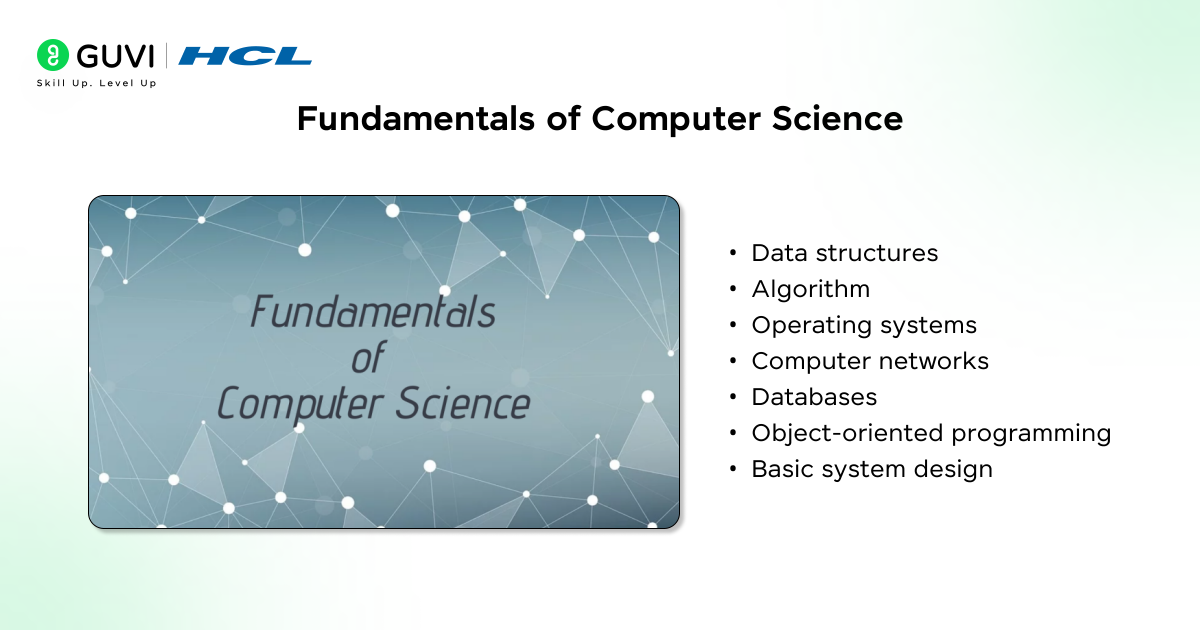
Key areas of CS fundamentals include:
- Data structures
- Algorithms
- Operating systems
- Computer networks
- Databases
- Object-oriented programming
- Basic system design
Even as technologies change, these fundamentals stay applicable.
Why CS Fundamentals Never Become Outdated
Programming languages and frameworks are tools built to solve problems effectively. The logic behind computing itself, though, doesn’t change nearly as fast.
For example:
- Sorting algorithms existed before modern programming languages.
- Memory management existed before cloud platforms.
- Networking concepts existed before web frameworks.
This is exactly why CS fundamentals remain relevant for decades, while individual tools come and go.
Data Structures: The Core of Efficient Software
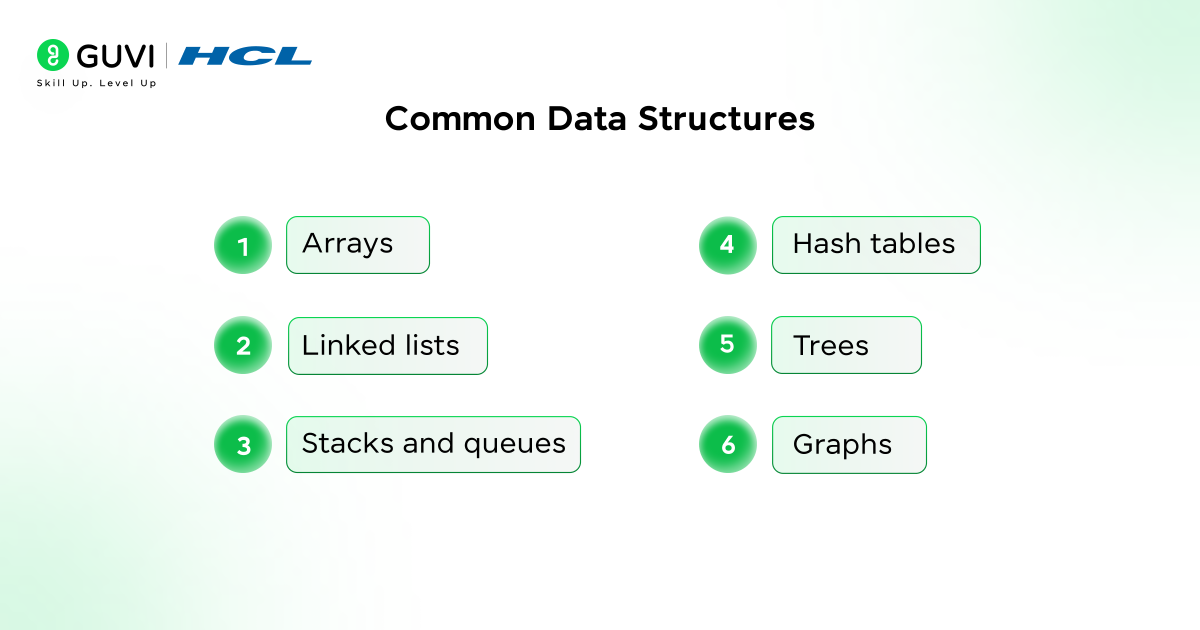
Data structures determine how data is stored, accessed, and processed. Choosing the right one can improve an application’s performance by a significant margin.
Common data structures include:
- Arrays
- Linked lists
- Stacks and queues
- Hash tables
- Trees
- Graphs
Understanding these is a core part of CS fundamentals, and directly translates into writing efficient, scalable applications.
Algorithms: Learning How to Think, Not Just Code
Algorithms teach structured problem-solving. Instead of writing random code, you learn how to break problems into smaller steps and select the most effective solution.
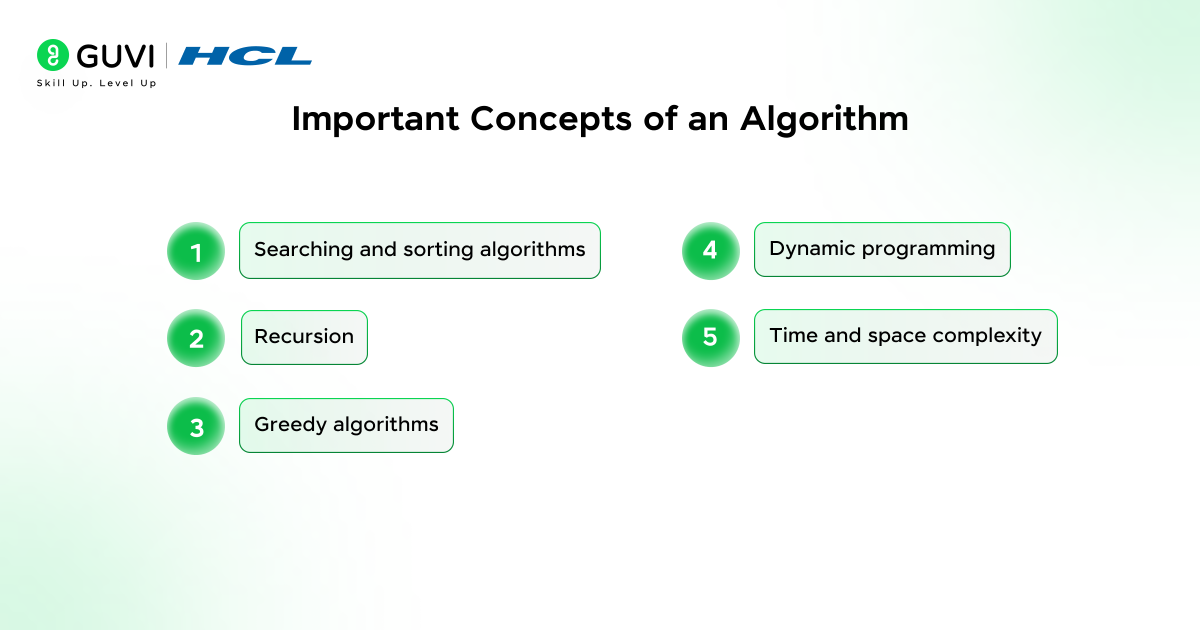
Important algorithmic concepts include:
- Searching and sorting algorithms
- Recursion
- Greedy algorithms
- Dynamic programming
- Time and space complexity
Strong algorithmic thinking is one of the biggest practical benefits of building CS fundamentals.
Interview and Industry Relevance
Technical interviews focus heavily on algorithms because they test logical thinking rather than tool familiarity. In real-world applications, efficient algorithms reduce costs, improve speed, and enhance user experience.
Operating Systems: Understanding the System Layer
Every application runs on top of an operating system, and it’s genuinely difficult to diagnose performance problems without understanding how the OS actually behaves.
The prominent concepts here include:
- Processes and threads
- Memory allocation
- CPU scheduling
- Deadlocks and synchronization
- File systems
These operating system concepts are core CS fundamentals that help developers build stable, efficient software.
Computer Networks: How Applications Communicate
Most modern applications depend on network communication. Without a basic understanding of networking, problems like latency, downtime, and data loss become genuinely hard to diagnose.
The key networking concepts are:
- TCP/IP model: defines how data is transmitted across networks in layers.
- HTTP and HTTPS: handle communication between clients and servers on the web.
- DNS resolution: translates domain names into IP addresses.
- Client-server architecture: separates request handling and data processing responsibilities.
These CS fundamentals let developers build reliable, scalable systems.
Databases: Storing Data the Right Way
Frameworks often hide database complexity, but poor database design causes serious problems once a system scales.
Basic database concepts to know:
- Normalization
- Indexing
- Transactions
- ACID properties
- SQL and NoSQL differences
Knowing these CS fundamentals directly prevents data inconsistency and performance bottlenecks down the line.
Object-Oriented Programming: Writing Maintainable Code
Object-oriented programming teaches how to structure code for long-term maintenance.
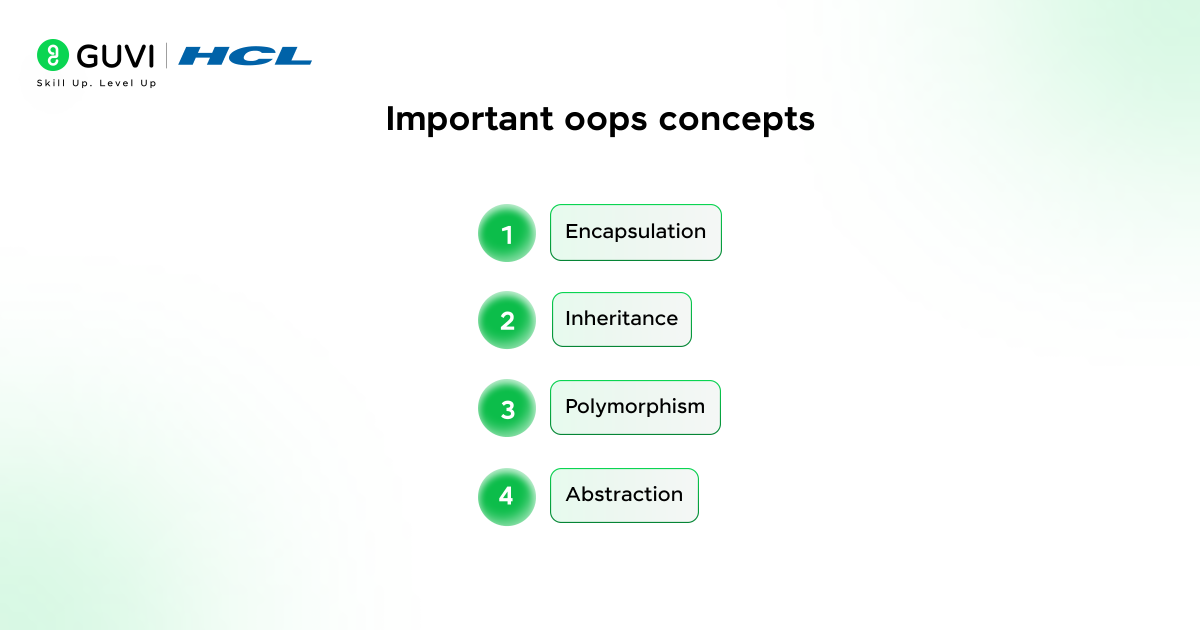
Key OOP principles include:
- Encapsulation
- Inheritance
- Polymorphism
- Abstraction
OOP is a critical part of CS fundamentals, since most modern software architectures are built directly on these principles.
System Design: Applying Fundamentals at Scale
System design combines all the CS fundamentals covered so far into solving real problems, focusing specifically on how components interact under heavy load.
System design involves:
- Scalability planning: ensures systems can handle growth in users and data.
- Data flow design: defines how data moves through different components.
- Fault tolerance: keeps systems running even when parts fail.
- Load handling: manages high traffic without performance degradation.
Senior engineering roles depend heavily on system-level understanding rather than framework knowledge alone.
Also read: Do You Need a Computer Science Degree for Full Stack Development Career?
How to Learn Computer Science Fundamentals: A Practical Roadmap for Any Tech Stack
There’s no strict academic curriculum you have to follow to build CS fundamentals. What matters more is learning the right concepts in the right sequence and applying them consistently, regardless of your tech stack.
Phase 1: Build a Strong Foundation
This stage focuses on how programming and logic work at a fundamental level.
1. Learn One Programming Language Properly
Pick a single language and stick with it early on. Python, Java, and C++ are all solid choices. The goal isn’t speed, it’s clarity.
Focus on:
- Variables, data types, and operators
- Conditional loops and statements
- Functions and modular code
- Recursion and straightforward problem-solving
- Object-Oriented Programming concepts like classes, objects, inheritance, and abstraction
Real proficiency in one language makes it significantly easier to pick up others later, and strengthens your grasp of CS fundamentals overall.
Also read: 15 Highest-Paying IT Skills in 2026: Boost Your Tech Career
2. Understand Data Structures and Algorithms (DSA)

DSA sits at the core of CS fundamentals. It teaches you to store information efficiently and reason through problems logically.
Start with:
- Linked lists, strings, and arrays
- Stacks and queues
- Hash tables and sets
- Binary search trees and trees
- Graph basics
Then move on to algorithms like:
- Sorting and searching algorithms
- Recursion-based solutions
- Basic greedy approaches
- Introduction to dynamic programming
- Graph traversal methods
Consistent problem-solving builds far stronger thinking skills than memorizing solutions.
Also read: From Hobbyist Programmer To Software Engineer
3. Learn the Mathematics Behind Computing
You don’t need advanced math right away, but a few concepts genuinely strengthen your CS fundamentals.
Focus on:
- Discrete mathematics (logic, sets, relations)
- Basic statistics and probability
- Thinking about algorithms mathematically
You can add more advanced math, like linear algebra, later if you move into AI or data-heavy work.
Phase 2: Core CS Fundamentals
Once the basics are solid, this phase is about understanding how systems themselves actually operate.
4. Operating Systems (OS)
Operating systems explain how software interacts with hardware, knowledge that directly helps with debugging and performance optimization.
Key topics:
- Processes and threads
- CPU scheduling
- Memory management
- Deadlocks and synchronization
- File systems
5. Computer Networks
Networking fundamentals help you understand how applications actually communicate with each other.
Learn about:
- How the internet works
- TCP/IP and HTTP/HTTPS
- DNS and routing basics
- Client-server architecture
- Common network delays and failure patterns
6. Databases and Data Storage
Nearly every application involves a database, and it’s worth understanding them beyond the most basic queries.
Focus on:
- SQL and relational databases
- NoSQL database concepts
- Database normalization
- Indexing and performance optimization
- Transactions and consistency
Database expertise is one of the basic pillars of CS fundamentals, and it shows up constantly once systems reach real scale.
7. Basics of System Design
System design ties everything you’ve learned so far into solutions for real-world problems.
Learn:
- The structure of large systems
- Load balancing and caching concepts
- Basic data flow and scalability
- Failure management and fault tolerance
Also read: Subjects to Choose in Class 11th for Software Engineering
Phase 3: Apply Fundamentals to Your Tech Stack
This phase makes sure CS fundamentals aren’t just theoretical, they actually show up in your daily work.
Applying Fundamentals to Web Development
- Use data structures for efficient data handling
- Apply algorithms for search, filtering, and optimization
- Use database fundamentals to write faster queries
- Apply networking knowledge to improve API performance
Frameworks become genuinely easier once your fundamentals are strong.
Applying Fundamentals to Mobile Development
- Use algorithms to optimize battery and memory usage
- Apply OS concepts to manage app lifecycle
- Improve performance through efficient data handling
Applying Fundamentals to AI / ML
- Use mathematical foundations to understand models
- Apply graph and optimization concepts
- Understand data pipelines and system constraints
Strong CS fundamentals directly improve model efficiency and scalability.
Also read: Full Stack Developer vs Software Engineer: Must-Know Insights
What to Focus On While Learning
Focus on:
- Core concepts over tools
- Problem-solving over rote learning
- Genuinely understanding what works, not just copying it
- Clean, efficient software development practices
What to Avoid While Learning
Avoid:
- Chasing every new framework
- Trying to learn too many tools simultaneously
- Copy-pasting code without understanding it
- Treating certifications as a proxy for real progress
- Prioritizing speed over actual depth
Common Mistakes When Building CS Fundamentals
A handful of recurring mistakes slow people down even when they’re genuinely trying to build strong fundamentals.
- Studying passively instead of practicing. Reading about data structures isn’t the same as implementing them. Actually writing and running the code is what makes the concepts stick.
- Trying to learn everything at once. Jumping between DSA, OS, networking, and system design simultaneously without depth in any of them leaves you with surface-level knowledge across the board.
- Skipping the “why” behind concepts. Memorizing that quicksort is O(n log n) without understanding why leaves you unable to reason about new, unfamiliar problems.
- Never applying fundamentals to real projects. Fundamentals learned in isolation fade quickly. Deliberately using them inside actual projects is what makes them permanent.
- Comparing progress to framework-focused peers. Fundamentals take longer to show visible results than learning a trendy framework, that’s normal, not a sign you’re behind.
How Companies Actually Test CS Fundamentals in Interviews
Understanding how this shows up in real interviews makes the abstract argument for fundamentals concrete.
- Data structures and algorithms rounds. Nearly every technical interview at a product-based company includes at least one DSA round, testing how you break down and solve unfamiliar problems live.
- System design rounds. For roles beyond entry-level, expect questions on designing scalable systems, directly testing your grasp of databases, networking, and architecture together.
- CS fundamentals rounds (OS, networks, DBMS). Many companies run a dedicated round on operating systems, networking, or database concepts, especially for backend-heavy roles.
- Behavioral questions about past debugging. Interviewers often ask you to walk through a hard bug you solved, this genuinely tests whether you understand systems deeply enough to diagnose problems, not just use frameworks correctly.
Frameworks rarely come up directly in these rounds. What gets tested is almost always the fundamentals sitting underneath them.
Now, take your next real step into mastering DSA with HCL GUVI’s hands-on AI Software Development course, co-created with IIT-M Pravartak. Learn by doing, get guided by mentors, and build the confidence to crack interviews like a pro.
Wrapping It Up
CS fundamentals aren’t something you finish studying once and then never revisit.
You need to keep practicing them inside real projects to build a genuinely strong foundation. Concepts like data structures, algorithms, databases, operating systems, and system design need continuous practice to truly understand how software works in real-world scenarios.
Frameworks will keep changing every year, that’s simply the nature of the industry. CS fundamentals are what let you adapt to that change instead of being repeatedly caught off guard by it.
FAQs
1. What are computer science fundamentals?
Computer Science fundamentals include Data Structures, Algorithms, Operating Systems, Databases, and Networking, which are part of how software and systems operate.
2. Are computer science fundamentals more important than frameworks?
Yes, Computer Science Principles are significantly more useful than Frameworks. Frameworks evolve and change frequently, whereas Principles stay the same regardless of what new technology is introduced.
3. Can I learn computer science fundamentals without a CS degree?
Anyone can learn computer science fundamentals with or without having a CS degree.
4. How long does it take to learn computer science fundamentals?
It totally depends on the individual and how consistent they are, it might take 6 months for some and 12 months for some.
Success Stories

About the Author
Jebasta
I translate the language of data into stories that anyone can understand. As a writer with a data science background, I simplify analytics, AI, and decision-making so beginners and enthusiasts can confidently explore the world of data.
View all posts by Jebasta
Connect with me @


























Did you enjoy this article?