


Career Articles
Accountant vs Data Analyst Salary in India After Switching Careers - Best Guide
Finance Managers: Could Data Science Be Your Next Career Move?
Insurance Claims Executive to Data Analyst: Is It a Good Switch?
Banking Executive (Loans, KYC) to Data Analyst: Skills and Career Path


Get In Touch For Details! Request More Information
In today’s data-driven world, businesses generate massive amounts of information every second. While data scientists play a crucial role in analyzing and interpreting this data, the real impact comes from professionals who lead teams, align analytics with business goals, and guide projects from insight to action. These professionals are called Data Scientist Managers.
A Data Scientist Manager is not just a technical expert—they are leaders who combine analytical skills with strategic thinking. They oversee data science teams, mentor data scientists, ensure that models and analyses meet business objectives, and communicate insights to stakeholders.If you are already working with data and want to take the next step in your career, becoming a Data Scientist Manager can open doors to leadership roles, higher salaries, and the chance to make a tangible impact on business strategy.
This blog will walk you through who a Data Scientist Manager is, why the role is important, the skills and tools you need, a step-by-step career roadmap, salary expectations, challenges, and future trends. By the end, you will have a clear understanding of how to plan your journey toward becoming a successful Data Scientist Manager.
Table of contents
- Who Is A Data Scientist Manager
- Importance Of A Data Scientist Manager
- Key Roles And Responsibilities
- Team Mentor
- Project Planner
- Model Overseer
- Stakeholder Collaborator
- Strategic Planner
- Career Roadmap
- Step 1: Master Programming and Statistical Foundations
- Step 2: Build Practical Projects and a Portfolio
- Step 3: Gain Hands-On Professional Experience
- Step 4: Develop Leadership and Team Management Skills
- Step 5: Gain Domain Expertise
- Step 6: Transition Into a Data Scientist Manager Role
- Step 7: Continue Learning and Upskilling as a Manager
- Salary Expectations
- Skills Required
- Tools For Data Scientist Managers
- Future Trends
- Conclusion
- FAQs
- Do I need a Ph.D. to become a Data Scientist Manager?
- How much experience is required?
- Can non-technical professionals become Data Scientist Managers?
- What is the difference between a Lead and a Manager?
- What industries offer the highest salaries for Data Scientist Managers?
Who Is A Data Scientist Manager
A Data Scientist Manager is a professional who bridges the gap between technical data teams and business decision-makers. Unlike a regular data scientist who focuses primarily on building models and analyzing datasets, a Data Scientist Manager ensures that data projects align with organizational goals, deliver actionable insights, and are executed efficiently.
Key Features :
- Team Leader: Guides and mentors data scientists and analysts to achieve project goals.
- Problem Translator: Converts complex business challenges into clear, data-driven solutions.
- Project Monitor: Monitors the development, testing, and deployment of predictive models.
- Stakeholder Communicator: Explains insights and recommendations clearly to business leaders.
- Ensures Ethical Data Practices: Ensures all data analysis follows ethical and accurate standards.
Example: Imagine a retail company aiming to reduce customer churn. A Data Scientist Manager would guide the team in building predictive models, interpret the results for the marketing team, and recommend actions to retain high-value customers.
Importance Of A Data Scientist Manager
Data Scientist Managers play a crucial role in ensuring that analytics translates into real business value. Their leadership ensures teams work efficiently and projects align with company objectives.
Key Features :
- Business Alignment: Ensures that data initiatives support organizational goals and strategies.
- Decision Support: Provides insights that directly influence strategic business decisions.
- Team Productivity: Improves efficiency by mentoring and guiding the data science team.
- Innovation Facilitation: Encourages the use of advanced analytics and AI to drive innovation.
- Risk Management: Oversees models to ensure accuracy, reliability, and ethical compliance.
Example: In an e-commerce company, a Data Scientist Manager ensures the recommendation engine increases sales while protecting customer data privacy and fairness.
If you want to deepen your understanding of data science concepts, HCL Guvi’s free Data Science eBook offers a structured guide covering data analysis, machine learning, big data, and real-world applications, which is ideal for beginners aiming to build a solid foundation and understand how data science drives modern businesses.
Key Roles And Responsibilities
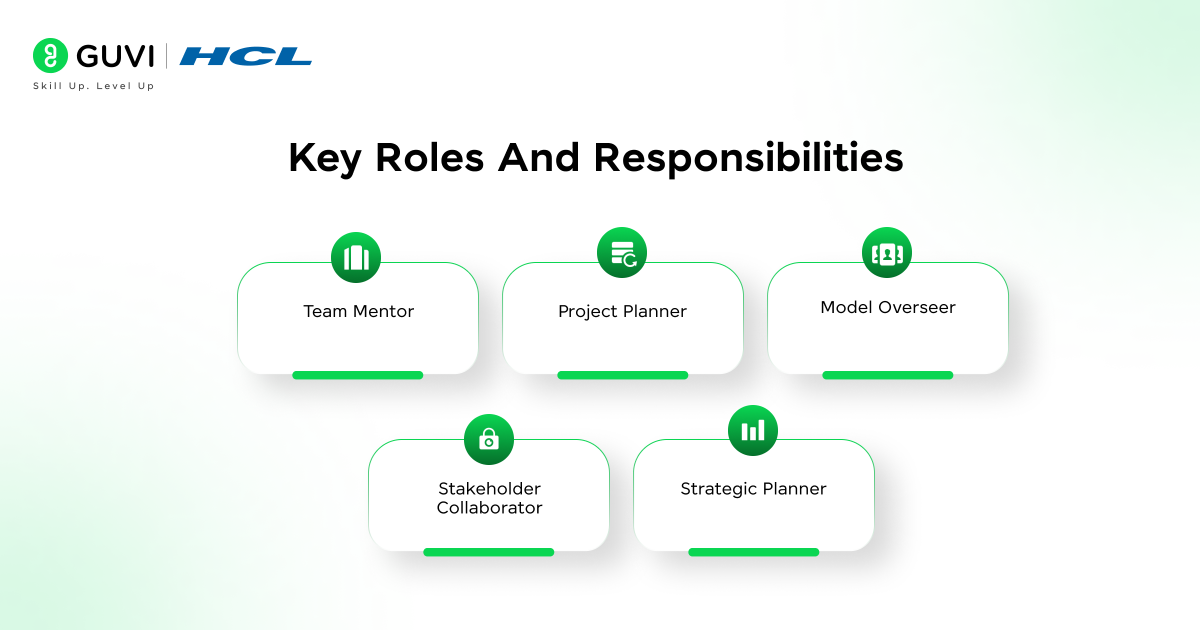
A Data Scientist Manager takes on multiple roles that combine leadership, technical expertise, and strategic thinking. These roles ensure that data science projects deliver actionable insights, teams remain productive, and business goals are met. In this section, we’ll explore the five main roles of a Data Scientist Manager, where each role highlights how managers drive business impact and lead their teams effectively.
- Team Mentor
- Project Planner
- Model Overseer
- Stakeholder Collaborator
- Strategic Planner
1. Team Mentor
A Data Scientist Manager guides and supports data scientists and analysts to develop both technical and analytical skills. They provide coaching, feedback, and training, helping team members solve complex problems while improving coding, modeling, and data interpretation abilities. By mentoring their team, managers ensure consistent quality and professional growth.
Example: A manager works closely with junior data scientists to improve the accuracy of a customer segmentation model, helping them understand why certain algorithms perform better and how to interpret results effectively.
2. Project Planner
Data Scientist Managers are responsible for planning and overseeing multiple projects. This includes allocating resources, defining timelines, setting milestones, and monitoring progress. Effective project planning ensures that data science initiatives are completed on time and meet business objectives.
Example: A manager coordinating a sales forecasting project ensures deadlines are met while balancing team workloads, adjusting priorities as needed, and communicating progress to stakeholders.
3. Model Overseer
Managers review, validate, and approve predictive and prescriptive models developed by their team. They ensure the models are accurate, reliable, interpretable, and aligned with business goals. This oversight guarantees that analytics outputs are actionable and trustworthy.
Example: A manager supervising a fraud detection model checks its predictions, validates performance metrics, and ensures the results are understandable for the risk management team.
4. Stakeholder Collaborator
A Data Scientist Manager acts as a bridge between technical teams and non-technical business stakeholders. They communicate insights, explain complex analytics in simple terms, and ensure recommendations can be applied to drive business decisions.
Example: During a customer churn project, the manager presents model findings to the marketing team, explaining which segments are at risk and suggesting targeted retention strategies.
5. Strategic Planner
Data Scientist Managers define long-term data strategies to support business growth and innovation. They identify opportunities for leveraging data, select the right tools, and set a roadmap for analytics initiatives to maximize organizational impact.
Example: A manager develops a strategy for integrating predictive maintenance models across manufacturing operations, helping the company reduce equipment downtime and costs.
Career Roadmap
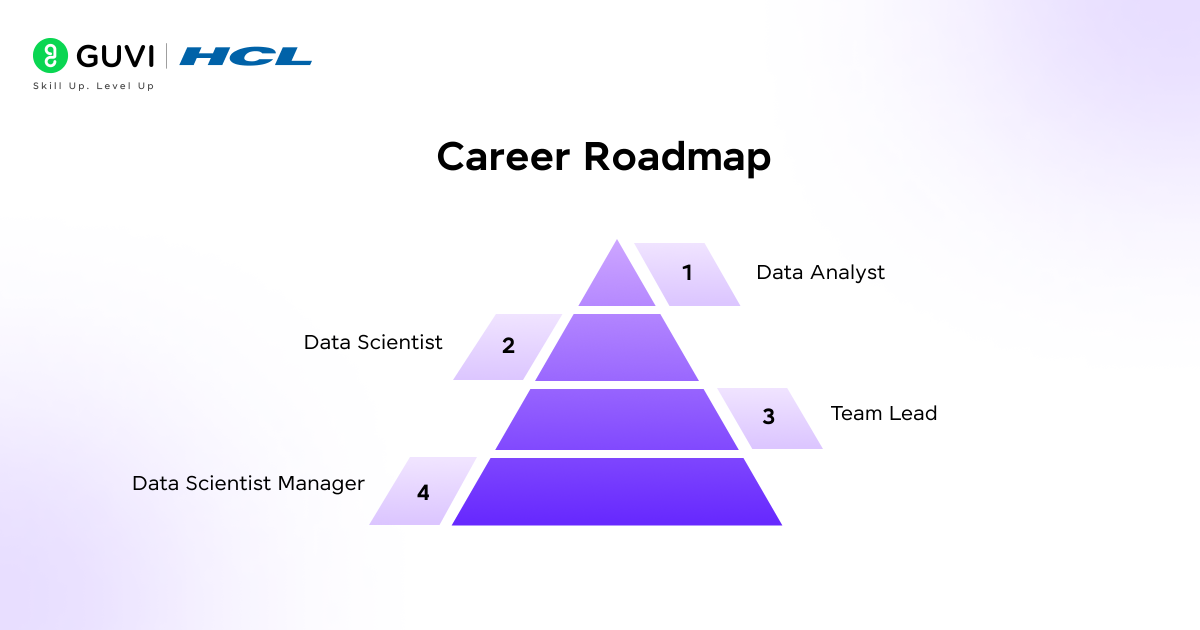
Becoming a Data Scientist Manager requires a combination of technical skills, practical experience, and leadership development. Here’s a step-by-step roadmap you can follow to achieve this role:
Step 1: Master Programming and Statistical Foundations
Start by learning Python, R, SQL, and basic statistics to handle and analyze data effectively.
Why it matters:
Data is often large, messy, and complex. Programming languages help clean, manipulate, and analyze it, while statistics allow you to interpret patterns, measure trends, and make data-driven decisions.
What to focus on:
- Python: pandas, NumPy, Matplotlib/Seaborn, scikit-learn.
- R: ggplot2, caret, dplyr.
- SQL: Query databases, join tables, and extract meaningful insights.
- Statistics & Probability: Regression, hypothesis testing, distributions, correlation.
Step 2: Build Practical Projects and a Portfolio
Work on real-world projects to apply your skills and showcase your capabilities.
Why it matters:
Projects demonstrate applied knowledge and problem-solving ability to employers.
What to focus on:
- Predictive models (churn, sales forecasting).
- Dashboards and visualizations.
- Data cleaning, transformation, and exploratory analysis.
- Portfolio documentation.
Step 3: Gain Hands-On Professional Experience
Start as a Data Analyst or Junior Data Scientist to apply skills in a real business environment.
Why it matters:
Professional experience helps you understand business workflows, data pipelines, and team collaboration.
What to focus on:
- Participating in end-to-end analytics projects.
- Communicating insights to non-technical stakeholders.
- Understanding domain-specific datasets and KPIs.
Step 4: Develop Leadership and Team Management Skills
Take responsibility for mentoring, project coordination, and guiding junior team members.
Why it matters:
Leadership experience is critical to move into managerial roles where you lead teams and oversee projects.
What to focus on:
- Mentoring junior analysts or data scientists.
- Coordinating small analytics projects.
- Improving communication, delegation, and conflict resolution skills.

Step 5: Gain Domain Expertise
Focus on a specific industry such as finance, healthcare, or e-commerce to provide actionable business insights.
Why it matters:
Domain knowledge allows you to interpret data correctly, make informed recommendations, and understand business impact.
What to focus on:
- Learning industry-specific datasets and regulations.
- Applying analytics to solve domain-specific problems.
- Understanding business KPIs and metrics.
Step 6: Transition Into a Data Scientist Manager Role
Move into a managerial role where you lead teams, oversee analytics projects, and align initiatives with business objectives.
Why it matters:
At this stage, your role shifts from executing tasks to driving strategy, mentoring, and delivering business impact through data.
What to focus on:
- Overseeing multiple analytics projects.
- Mentoring and developing your team.
- Ensuring actionable insights and alignment with business goals.
- Communicating findings effectively to executives and stakeholders.
Step 7: Continue Learning and Upskilling as a Manager
Even as a manager, continually update your technical, leadership, and strategic skills.
Why it matters:
Data science is evolving rapidly; staying current ensures effective team guidance and informed strategic decisions.
What to focus on:
- Advanced AI/ML and MLOps techniques.
- Cloud platforms and emerging analytics tools.
- Leadership and strategic management courses.
- Industry-specific trends and innovations.
Example:
A professional may start as a data analyst, complete hands-on projects, mentor juniors as a senior data scientist, and step into a Data Scientist Manager role. Along the way, they gain both technical mastery and leadership experience, enabling them to drive meaningful business impact.
Salary Expectations
The salary of a Data Scientist Manager depends on several factors, including experience, industry, company size, and location. As you gain experience and take on more responsibilities, your compensation typically increases significantly. In this section, we will discuss each of these factors in detail and provide insights into what you can expect at different stages of your career.
- Entry Level: Typically starts around ₹15–20 LPA in India.
- Mid-Level: With 5–8 years of experience, salaries range between ₹25–35 LPA.
- Senior Level: Experienced managers can earn ₹35–45 LPA or more.
- Industry Variation: Finance, healthcare, and tech often offer higher packages.
- Global Perspective: International salaries can be significantly higher, reflecting market demand and responsibilities.
Reference – Glassdoor
Example: A Data Scientist Manager in a fintech company may earn a higher package due to handling critical financial models impacting millions of users.
Skills Required
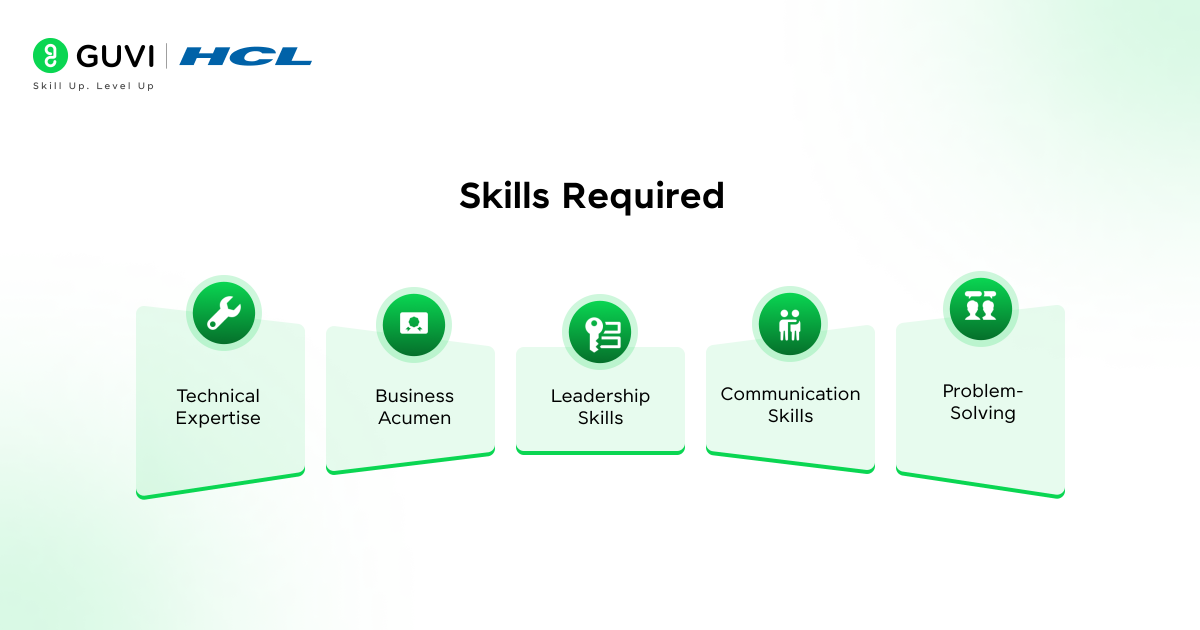
Becoming a successful Data Scientist Manager requires a combination of technical expertise, analytical abilities, and leadership skills. You need to not only understand data science tools and techniques but also guide teams, manage projects, and communicate insights effectively to business stakeholders. In this section, we will explore the essential skills that make a Data Scientist Manager effective and impactful.
Key skills :
- Technical Expertise: Python, R, SQL, machine learning, AI models, and data visualization.
- Business Acumen: Understanding business strategy and translating analytics into actionable insights.
- Leadership Skills: Mentoring, team management, decision-making, and conflict resolution.
- Communication Skills: Ability to present complex data findings to non-technical stakeholders.
- Problem-Solving: Quickly identify issues and implement effective data-driven solutions.
Join our 5-day free Data Science Email Series to get daily insights, hands-on exercises, and expert tips on data handling, visualization, and predictive modeling. Each email helps you learn practical data science skills step by step, making complex topics easy to grasp for beginners.
Tools For Data Scientist Managers
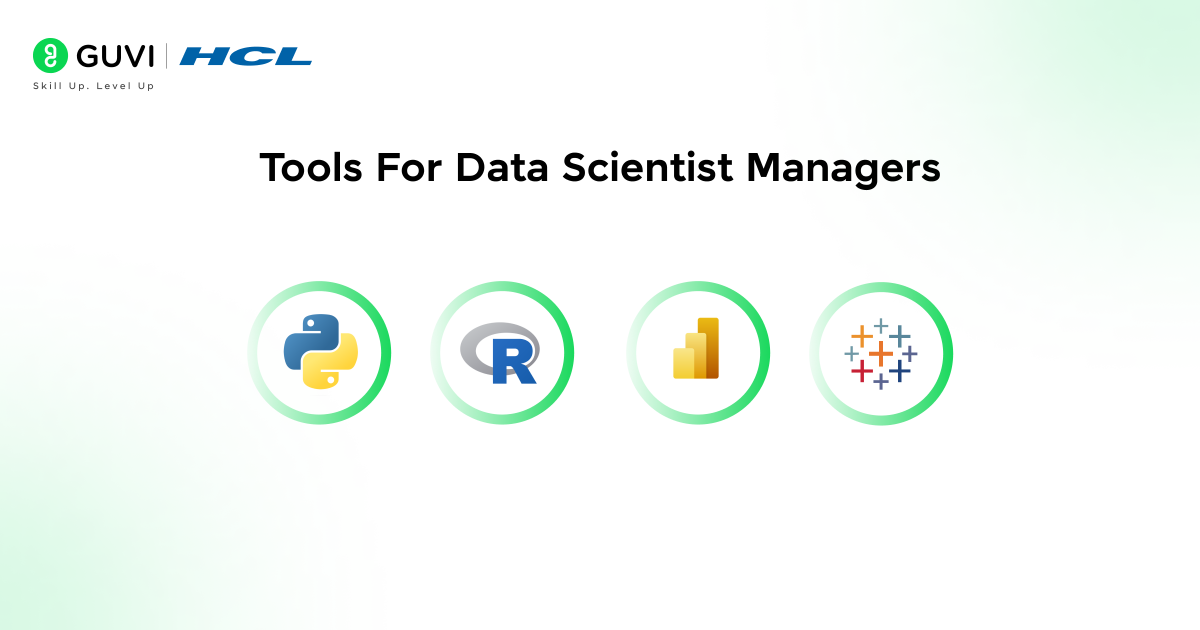
A Data Scientist Manager relies on a variety of tools to manage teams, oversee projects, and ensure models are accurate and actionable. These tools help streamline workflows, monitor progress, and enable collaboration between technical teams and business stakeholders. In this section, we will discuss the key tools that are essential for effective management and analytics leadership.
Key Tools :
- Data Platforms: AWS, Azure, or Google Cloud for data storage and processing.
- Visualization Tools: Tableau, Power BI for sharing insights.
- Project Management: Jira, Trello to track tasks and progress.
- Model Monitoring: MLflow, Airflow for pipelines and deployments.
- Collaboration Tools: Slack, Confluence for team communication and documentation.
Future Trends
The role of a Data Scientist Manager is continuously evolving due to advancements in AI, automation, and industry-specific analytics. As organizations increasingly rely on data-driven decision-making, managers are expected to stay ahead of emerging technologies, guide their teams through innovation, and align analytics strategies with business growth. In this section, we will explore the key trends shaping the future of this role.
Key Future Trends:
- AI-Driven Decision Making: Leveraging predictive and prescriptive analytics for strategic choices.
- Automation: Using AutoML and MLOps to streamline workflows.
- Domain Specialization: Focus on finance, healthcare, retail, or manufacturing analytics.
- Ethical AI Practices: Increased emphasis on fairness, transparency, and accountability.
- Strategic Leadership: Shifting focus from technical tasks to guiding teams and strategy.
Conclusion
Becoming a Data Scientist Manager is a significant career step, where your focus shifts from performing individual tasks to leading teams, managing projects, and shaping data-driven strategies. In this role, you will mentor talent, oversee analytics initiatives, and ensure that data science efforts are aligned with business goals.
In addition to technical expertise, a successful Data Scientist Manager must cultivate strong communication, strategic thinking, and problem-solving skills. Balancing team management with project oversight while staying updated on emerging trends in AI and analytics is key to driving meaningful business impact.
Do check out HCL Guvi’s Zen Class Data Science Course that equips you to become a Data Scientist Manager by teaching Python, R, statistics, machine learning, and data visualization. It also covers big data tools, NLP, and includes a capstone project to apply your skills to real-world problems, preparing you to lead data-driven teams effectively.
FAQs
1. Do I need a Ph.D. to become a Data Scientist Manager?
No, practical experience and leadership skills are often more important than advanced degrees.
2. How much experience is required?
Typically 5–8 years in data-focused roles before moving into management.
3. Can non-technical professionals become Data Scientist Managers?
Yes, with upskilling in data science, AI, and business strategy.
4. What is the difference between a Lead and a Manager?
A Lead focuses on project execution, while a Manager oversees strategy, team development, and business alignment.
5. What industries offer the highest salaries for Data Scientist Managers?
Finance, healthcare, tech, and e-commerce often provide the most competitive packages.
Success Stories

About the Author
Jebasta
I translate the language of data into stories that anyone can understand. As a writer with a data science background, I simplify analytics, AI, and decision-making so beginners and enthusiasts can confidently explore the world of data.
View all posts by Jebasta
Connect with me @














Did you enjoy this article?