


Data Structure Articles
Sliding Window Technique: Explained with Examples
Two Pointer Technique: Problems and Applications


Get In Touch For Details! Request More Information
The Only Data Structures and Algorithms Books You’ll Need in 2026 [Expert Picks]
Mar 16, 2026 5 Min Read 7395 Views
(Last Updated)
Are you searching for the best books for data structures and algorithms to elevate your programming skills? While programming languages come and go, the core of programming—algorithms and data structures—remains unchanged.
That’s why investing in quality learning resources is essential for your career growth. The right data structure and algorithms book can transform your approach to problem-solving.
In this guide, we’ll explore the eight best data structures and algorithms books that experts recommend for 2026
Doesn’t matter if you’re preparing for FAANG interviews with their 100+ DSA questions or simply building a stronger foundation in computer science, these carefully selected resources will help you master the concepts that form the backbone of efficient programming. Let’s begin!
Table of contents
- Why Data Structures and Algorithms Still Matter in 2026
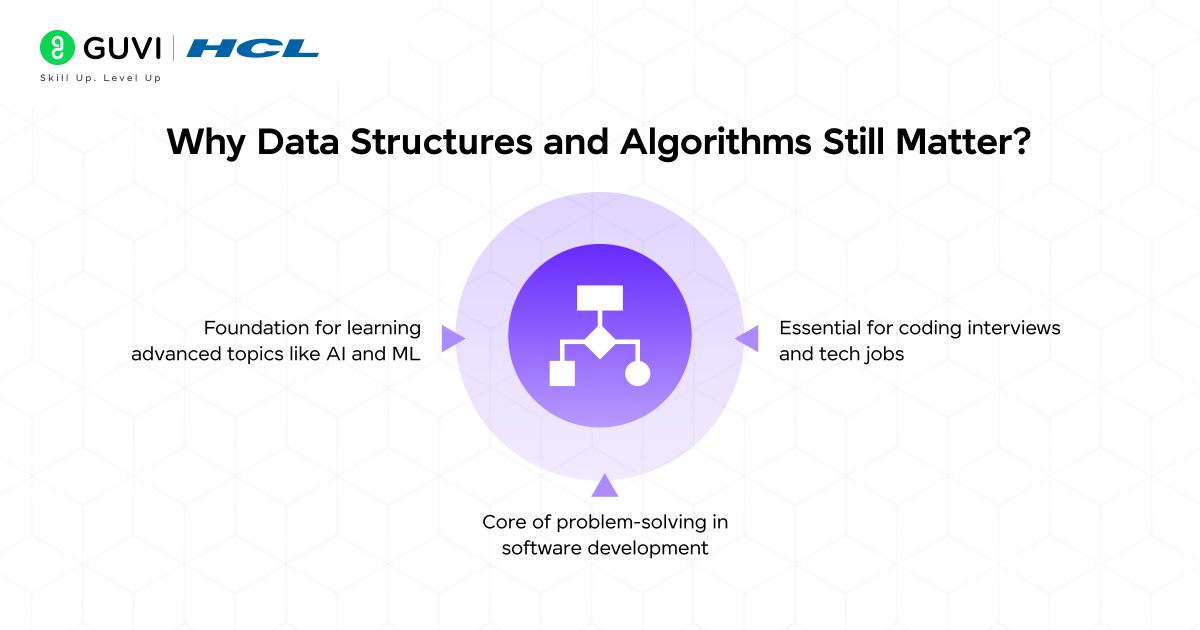
- Core of problem-solving in software development
- Essential for coding interviews and tech jobs
- Foundation for learning advanced topics like AI and ML
- Top 8 Data Structures and Algorithms Books You Should Read
- Grokking Algorithms by Aditya Bhargava
- Introduction to Algorithms (CLRS)
- Algorithms by Robert Sedgewick & Kevin Wayne
- The Algorithm Design Manual by Steven Skiena
- Data Structures and Algorithms Made Easy by Narasimha Karumanchi
- Coding Interview Patterns by Alex Xu
- Algorithms Unlocked by Thomas Cormen
- A Common-Sense Guide to DSA by Jay Wengrow
- Bonus Resources to Pair with These DSA Books
- Online courses (HCL GUVI, Udemy, Coursera)
- Coding platforms (LeetCode, HackerRank)
- YouTube channels and visual explainers
- Concluding Thoughts…
- FAQs
- Q1. Which programming language is best for learning data structures and algorithms in 2026?
- Q2. What is considered the "Bible" of algorithm books?
- Q3. Which book is recommended for beginners in data structures and algorithms?
- Q4. Is it possible to learn the basics of data structures and algorithms in one month?
- Q5. How important are data structures and algorithms for software development in 2026?
Why Data Structures and Algorithms Still Matter in 2026
In today’s rapidly evolving tech landscape, many developers question whether traditional computer science concepts remain relevant. The answer is clear: Data Structures and Algorithms (DSA) continue to be fundamental pillars of software engineering in 2026, perhaps more so than ever before.
1. Core of problem-solving in software development
At its essence, software development is about solving problems. Data structures and algorithms serve as the building blocks that provide developers with essential tools to organize and manipulate data efficiently. When you’re sorting information, searching for specific data, or managing complex datasets, a solid understanding of DSA is crucial for writing efficient and scalable code.
One of the key benefits of mastering DSA is the development of analytical thinking. This knowledge helps you:
- Break down complex problems into smaller, manageable components
- Identify patterns and similarities across different challenges
- Devise optimal solutions using appropriate data structures
- Strengthen coding proficiency through practice and experimentation
2. Essential for coding interviews and tech jobs
Despite powerful programming frameworks and modern tools, major tech companies continue to emphasize DSA skills in their hiring processes. According to a survey by HackerEarth, 85% of developers believe strong DSA skills are crucial for career advancement.
Tech giants like Google, Amazon, and Microsoft use DSA-focused questions to evaluate candidates for several reasons:
- They simulate real-world scenarios and challenges
- They reveal how candidates think under pressure
- They demonstrate problem-solving approaches
- They show coding efficiency and optimization skills
3. Foundation for learning advanced topics like AI and ML
As technologies evolve, data structures and algorithms remain the bedrock on which advanced fields like artificial intelligence and machine learning are built. DSA concepts are crucial for anyone working with these technologies for several reasons.
First, data structures form the backbone of any AI/ML system, enabling programs to store, manage, and retrieve data quickly. They’re like the skeleton of an application—without them, software would be slow, inefficient, and difficult to manage.
Machine learning applications rely heavily on DSA:
- High-performance numerical libraries like NumPy use arrays for the rapid processing of numerical data required for training models
- Decision trees (a type of tree data structure) are widely used for classification and regression tasks
- Optimization techniques such as gradient descent require data structures like priority queues and hash tables
- Data parallelism techniques use distributed arrays and matrices to speed up training across multiple processors
Top 8 Data Structures and Algorithms Books You Should Read
Finding the perfect learning resource can make all the difference in your journey to master data structures and algorithms. From beginner-friendly guides to comprehensive references, here are the eight most valuable DSA books that experts recommend for 2026.
1. Grokking Algorithms by Aditya Bhargava
Grokking Algorithms stands out as one of the most approachable books for beginners looking to understand algorithms. The book takes a visual approach with approximately 400 illustrations that help visualize complex concepts.
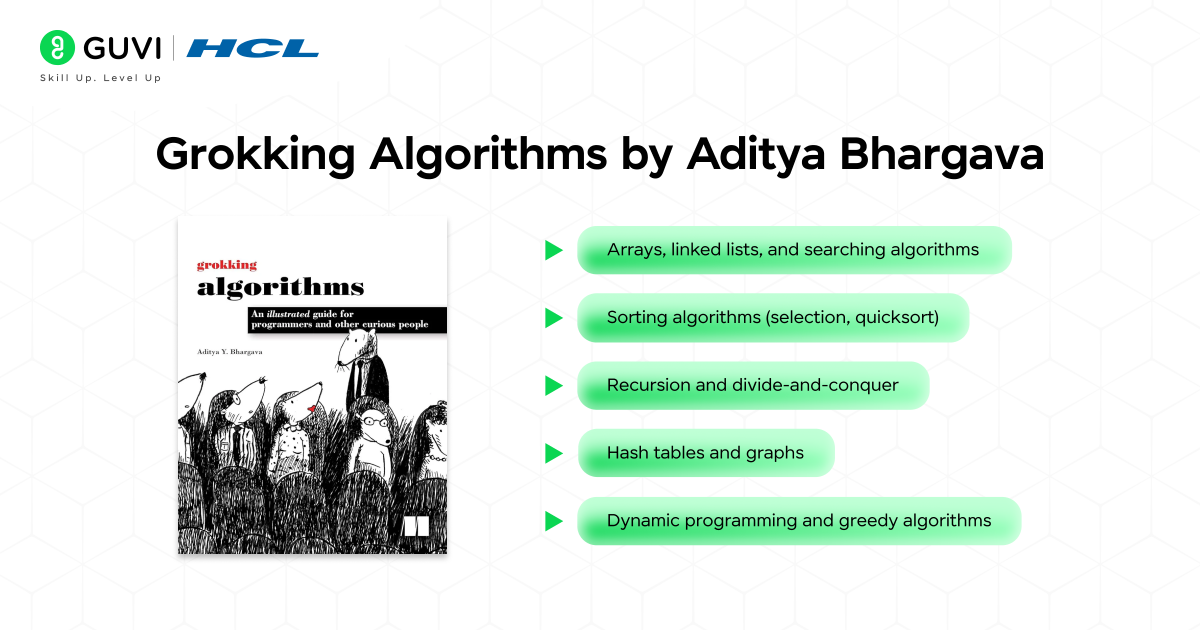
Key concepts you’ll learn:
- Arrays, linked lists, and searching algorithms
- Sorting algorithms (selection, quicksort)
- Recursion and divide-and-conquer
- Hash tables and graphs
- Dynamic programming and greedy algorithms
Cost: ₹2,500-3,000 for paperback
Average time to read: 2-3 weeks (reading a few hours weekly)
Rating: 4.6/5 on Goodreads
2. Introduction to Algorithms (CLRS)
Often called the “Bible of Algorithms,” this comprehensive book by Cormen, Leiserson, Rivest, and Stein (CLRS) has sold over a million copies as of 2022. The fourth edition includes 140 new exercises and 22 new problems compared to previous versions.
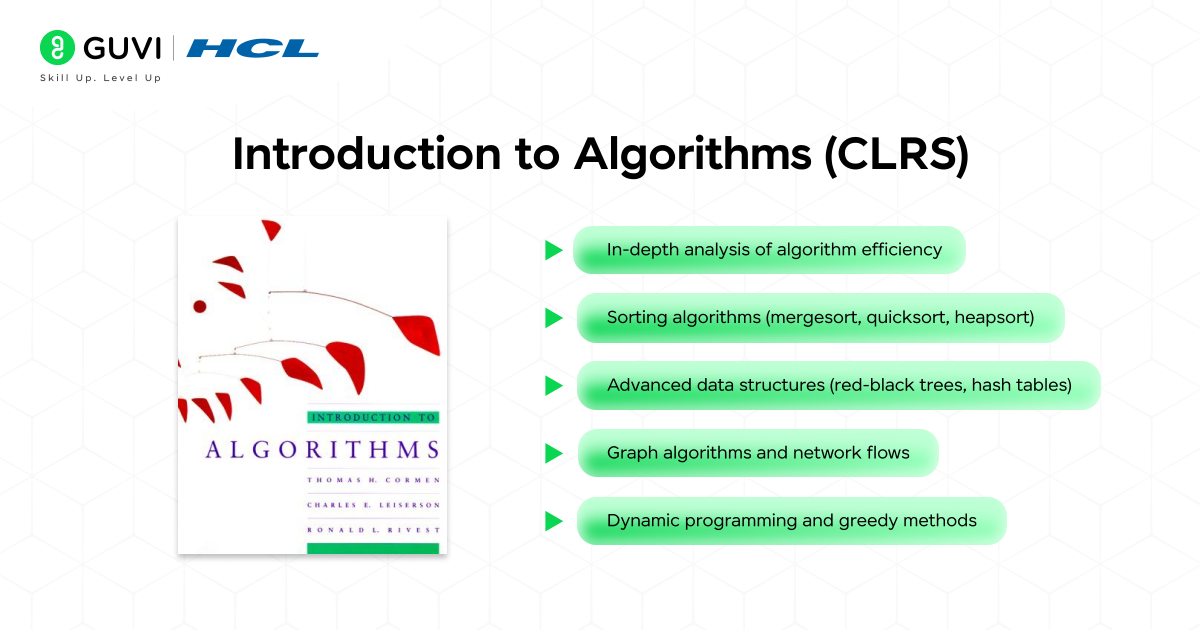
Key concepts you’ll learn:
- In-depth analysis of algorithm efficiency
- Sorting algorithms (mergesort, quicksort, heapsort)
- Advanced data structures (red-black trees, hash tables)
- Graph algorithms and network flows
- Dynamic programming and greedy methods
The book presents algorithms in pseudocode rather than a specific programming language, making it accessible regardless of your coding background.
Cost: ₹6,000-7,000 for hardcover
Average time to read: 6-12 months (with thorough study)
Rating: 4.5/5 on multiple platforms
3. Algorithms by Robert Sedgewick & Kevin Wayne
This Java-focused book is especially popular among university courses. It’s praised for its clear explanations and practical approach to algorithm implementation.

Key concepts you’ll learn:
- Fundamental data types and abstractions
- Sorting algorithms with implementation details
- Searching methods and symbol tables
- Graph processing algorithms
- String processing and data compression
The book includes a companion website with lectures, code samples, and exercises, making it excellent for self-study.
Cost: ₹4,500-5,000 for hardcover
Average time to read: 3-4 months
Rating: 4.4/5 on most platforms
4. The Algorithm Design Manual by Steven Skiena
Now in its third edition, Skiena’s book takes a more practical, applied approach to algorithm design. It’s divided into two parts: Practical Algorithm Design and the Hitchhiker’s Guide to Algorithms.
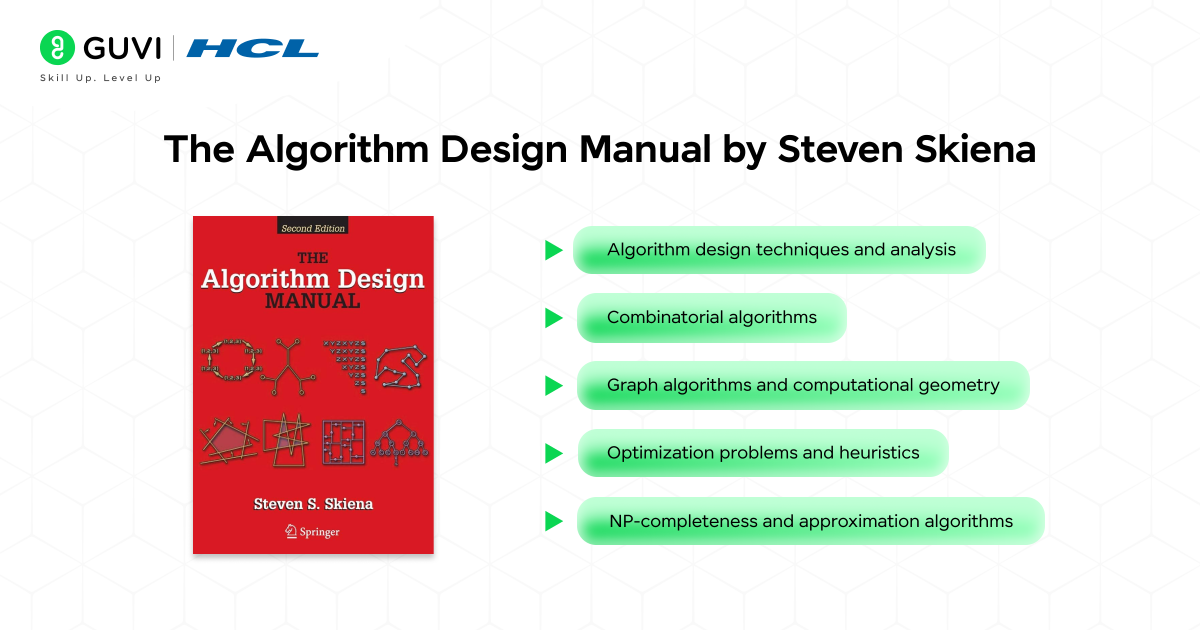
Key concepts you’ll learn:
- Algorithm design techniques and analysis
- Combinatorial algorithms
- Graph algorithms and computational geometry
- Optimization problems and heuristics
- NP-completeness and approximation algorithms
Cost: ₹5,000-5,500
Average time to read: 4-6 months
Rating: 4.7/5 on Amazon
5. Data Structures and Algorithms Made Easy by Narasimha Karumanchi
This book is particularly popular for interview preparation, offering multiple solutions for each problem. Written in C/C++, it serves as an excellent guide for both students and professionals.
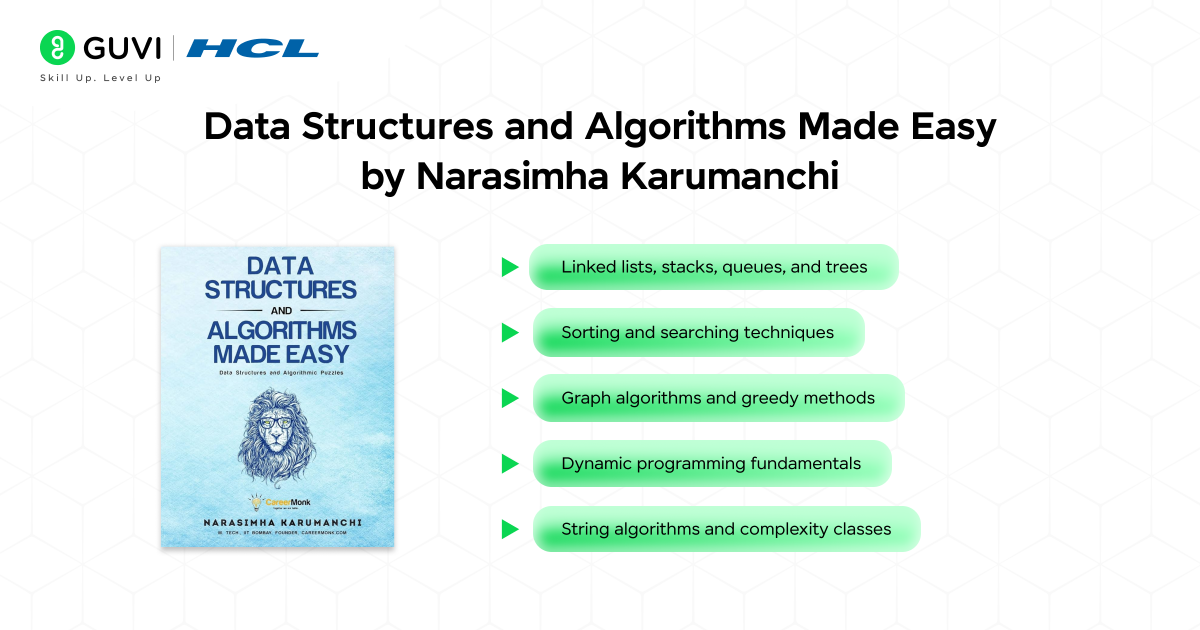
Key concepts you’ll learn:
- Linked lists, stacks, queues, and trees
- Sorting and searching techniques
- Graph algorithms and greedy methods
- Dynamic programming fundamentals
- String algorithms and complexity classes
Cost: ₹3,000-3,500
Average time to read: 2-3 months
Rating: 8.5/10 according to review sites
6. Coding Interview Patterns by Alex Xu
Published by the creator of ByteByteGo, this newer book focuses on pattern recognition for solving coding interview problems. It includes 101 real coding interview problems with detailed solutions.
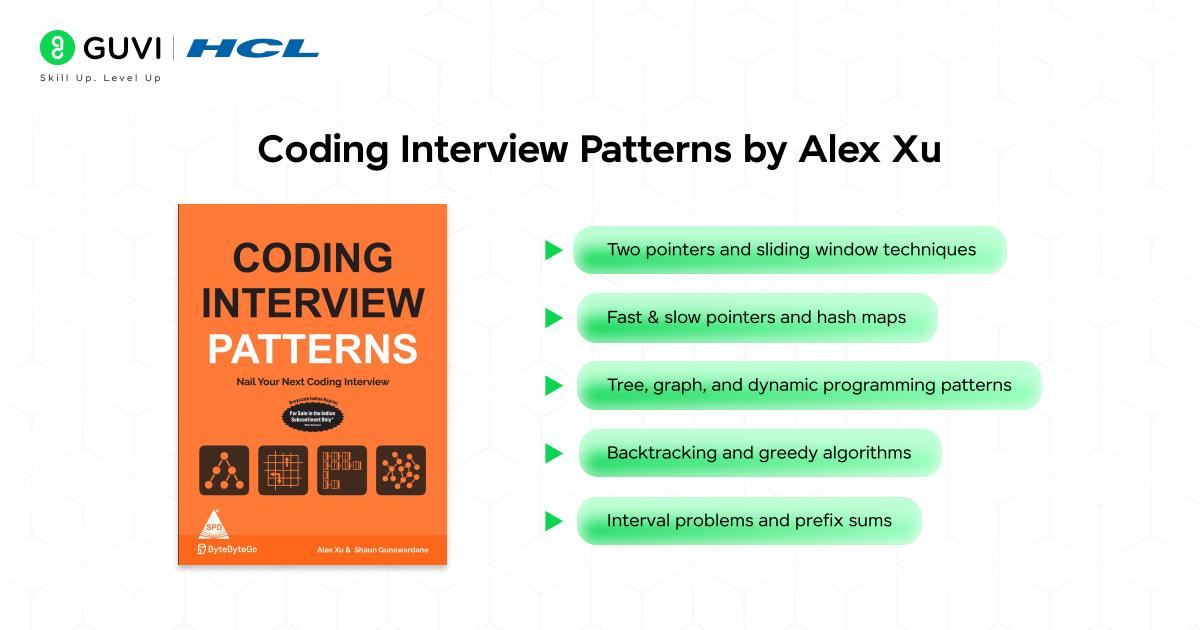
Key concepts you’ll learn:
- Two pointers and sliding window techniques
- Fast & slow pointers and hash maps
- Tree, graph, and dynamic programming patterns
- Backtracking and greedy algorithms
- Interval problems and prefix sums
Cost: ₹2,800-3,200
Average time to read: 1-2 months
Rating: 4.6/5 stars (157 ratings on Amazon)
7. Algorithms Unlocked by Thomas Cormen
Written by one of the CLRS authors, this more approachable book explains algorithms with limited mathematics. It’s significantly shorter than Introduction to Algorithms and focused on general explanations.

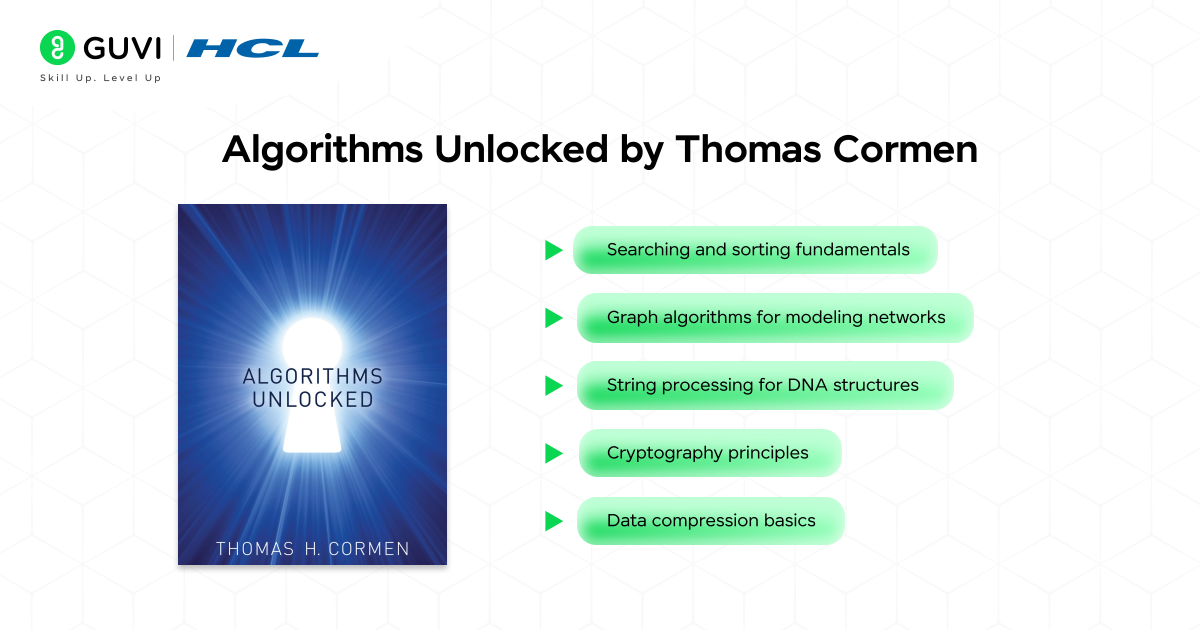
Key concepts you’ll learn:
- Searching and sorting fundamentals
- Graph algorithms for modeling networks
- String processing for DNA structures
- Cryptography principles
- Data compression basics
Cost: ₹2,500-2,800
Average time to read: 3-4 weeks
Rating: 4.3/5 on Goodreads
8. A Common-Sense Guide to DSA by Jay Wengrow
This beginner-friendly book offers a refreshingly clear approach to data structures and algorithms. The second edition covers all essential topics with detailed step-by-step explanations.

Key concepts you’ll learn:
- Big-O notation fundamentals
- Arrays, hashes, and linked lists
- Stacks, queues, and recursion
- Trees, heaps, and tries
- Graph algorithms and time/space constraints
Cost: ₹3,200-3,500
Average time to read: 1-2 months
Rating: 4.7/5 based on multiple review sites
Each of these books offers unique perspectives and teaching approaches for mastering data structures and algorithms. Your choice depends on your current skill level, learning style, and specific goals—whether you’re preparing for interviews or building fundamental computer science knowledge.
Before diving into the books, here are a few interesting facts about data structures and algorithms that might surprise you:
The First Sorting Algorithm Was Created in 1945: The concept of sorting data efficiently began with merge sort, invented by John von Neumann. It remains one of the foundational algorithms taught even today.
Big-O Notation Dates Back to 1894: Although popularized in computer science much later, the Big-O notation was originally introduced by German mathematician Paul Bachmann in 1894 to describe growth rates of functions.
Google’s Search Engine Relies on Graph Algorithms: Google’s PageRank algorithm—one of the cornerstones of its early success—is based on graph theory, treating web pages as nodes and hyperlinks as edges to rank search results.
These fun facts remind us that while programming languages evolve, the core principles of data structures and algorithms have been shaping computing for decades—and continue to power the digital world today.
Bonus Resources to Pair with These DSA Books
To maximize your learning from the best data structures and algorithms books, supplementary resources can provide interactive experiences and visual demonstrations. These complementary materials help reinforce concepts through different learning approaches.

1. Online courses (HCL GUVI, Udemy, Coursera)
Structured online courses offer guided learning paths that complement your book studies.
- HCL GUVI’s DSA for Programmers Course provides a hands-on, beginner-friendly approach to mastering Data Structures and Algorithms through real-world coding challenges and interactive problem-solving in multiple programming languages. Also, their e-books are really popular and a great learning source.
- Coursera’s Data Structures and Algorithms Specialization by the University of California, San Diego provides comprehensive coverage of core concepts with practical coding exercises. This platform hosts numerous highly-rated DSA courses, including offerings from Stanford University and Princeton University.
- For a more practical approach, Udemy features “Mastering Data Structures & Algorithms using C and C++” with an impressive 4.6/5 rating from over 57,000 reviews. Another popular option is “Python Data Structures & Algorithms + LEETCODE Exercises,” which incorporates animated examples for deeper understanding.
2. Coding platforms (LeetCode, HackerRank)
Practical implementation is crucial for mastering algorithms. LeetCode offers over 3,950 coding challenges categorized by difficulty level. The platform provides detailed explanations and optimal solutions, making it ideal for interview preparation.
- Moreover, LeetCode features company-specific question sets that closely mimic actual interview questions from Google, Amazon, and Facebook.
- HackerRank provides well-organized DSA tracks with progressively challenging problems. Its interface offers visual feedback on performance and includes certification opportunities that can enhance your resume.
3. YouTube channels and visual explainers
Visual demonstrations can clarify complex algorithmic concepts:
- freeCodeCamp.org: Offers extensive, full-length DSA courses with project-based learning
- Abdul Bari: Renowned for detailed theoretical explanations using whiteboard illustrations
- TakeUforward: Provides comprehensive playlists covering all aspects of DSA with exceptional teaching quality
- NeetCode: Specializes in breaking down complex LeetCode problems with visual explanations before coding
Educational platforms like Khan Academy and MIT OpenCourseWare also offer free visual tutorials that complement traditional learning methods.
By combining these resources with the best books for data structures and algorithms, you’ll develop both theoretical knowledge and practical implementation skills—essential for excelling in technical interviews and real-world programming challenges.
Concluding Thoughts…
Mastering data structures and algorithms remains essential for programmers at all levels, regardless of technological advancements. Throughout this guide, we’ve explored eight exceptional DSA books that cater to different learning styles and experience levels.
Therefore, choose one or two books from this list that match your learning style and budget, supplement them with free online resources, and practice consistently. Your DSA knowledge will become a powerful asset as you navigate technical interviews and tackle challenging programming problems in the years ahead. Good Luck!
FAQs
Q1. Which programming language is best for learning data structures and algorithms in 2026?
While Python, Java, and C++ remain popular choices, the best language for learning DSA depends on your background and goals. Focus on mastering the concepts, as they can be applied across languages.
Q2. What is considered the “Bible” of algorithm books?
“Introduction to Algorithms” by Cormen, Leiserson, Rivest, and Stein (often called CLRS) is widely regarded as the definitive text on algorithms, earning it the nickname “The Bible of Algorithms.”
Q3. Which book is recommended for beginners in data structures and algorithms?
“Grokking Algorithms” by Aditya Bhargava is highly recommended for beginners. It offers a visual approach with about 400 illustrations, making complex concepts more accessible.
Q4. Is it possible to learn the basics of data structures and algorithms in one month?
While you can build a foundation in a month with focused study, mastering DSA is an ongoing process. Consistent practice and application are key to developing proficiency over time.
Q5. How important are data structures and algorithms for software development in 2026?
DSA remain crucial in 2026 as they form the core of problem-solving in software development, are essential for coding interviews, and provide the foundation for advanced topics like AI and machine learning.
Success Stories

About the Author
Jaishree Tomar
A recent CS Graduate with a quirk for writing and coding, a Data Science and Machine Learning enthusiast trying to pave my own way with tech. I have worked as a freelancer with a UK-based Digital Marketing firm writing various tech blogs, articles, and code snippets. Now, working as a Technical Writer at GUVI writing to my heart’s content!
View all posts by Jaishree Tomar
Connect with me @








Did you enjoy this article?