


Artificial Intelligence and Machine Learning Articles
Finance Manager to Data Analytics: Career Growth, Salary and Seniority
How to Evaluate LLM Outputs in Production Deployments
AI/ML Skills Gap 2026: Why Companies Can't Find Job-Ready Talent
20 AI/ML Interview Questions Recruiters Can Use Without a Tech Background - Best Guide
Get In Touch For Details! Request More Information
AI in Project Management: The Future of Managing Projects
Sep 08, 2026 6 Min Read 2315 Views
(Last Updated)
Have you ever wondered how project managers handle countless moving parts, deadlines, budgets, resources, and unexpected risks, without losing track? Traditionally, it took endless spreadsheets, constant updates, and a lot of human effort to keep projects on course.
But with the rise of artificial intelligence, this process is changing. AI in project management is making it possible to plan smarter, predict risks earlier, and automate tedious tasks. The big question now is not whether AI will influence project management, but how you can utilize it to make your projects more successful.
That is what we are going to see in this article, an in-depth look into how AI is transforming the way we manage projects and how efficiently it can handle all the tasks. So, without further ado, let us get started!
Table of contents
- What is AI in Project Management?
- Benefits of AI in Project Management
- Applications of AI in Project Management
- AI in Project Planning and Scheduling
- AI in Resource Allocation and Management
- AI in Risk Management
- AI in Project Monitoring and Reporting
- AI in Project Communication and Collaboration
- AI Tools and Software for Project Management
- Challenges and Considerations
- Future of AI in Project Management
- Conclusion
- FAQs
- What is AI in project management?
- How does AI help project managers?
- What are the benefits of AI in project management?
- What are some AI project management tools?
- What is the future of AI in project management?
- What should I look for before enrolling in an AI & ML course?
What is AI in Project Management?
Artificial Intelligence (AI) is rapidly changing the field of project management. More than just a buzzword, AI in project management refers to using intelligent software and algorithms to assist in planning, executing, and monitoring projects.
This doesn’t mean managing AI projects specifically, but rather using AI tools to manage all kinds of projects more effectively. Business leaders across industries are already embracing AI to support project management tasks, and the trend is only growing.
AI in project management involves software “assistants” that can handle tasks previously done by humans – either automating those tasks entirely or working alongside you as smart helpers. These AI tools excel at processing vast amounts of project data, identifying patterns, and providing data-driven insights far faster than a person could.
The goal is not to replace the project manager; rather, it’s to augment your capabilities. By offloading the drudge work to AI (think of tedious scheduling or endless status reports), you are freed up to focus on strategic decisions, creative problem-solving, and leadership tasks that truly require a human touch.
Benefits of AI in Project Management
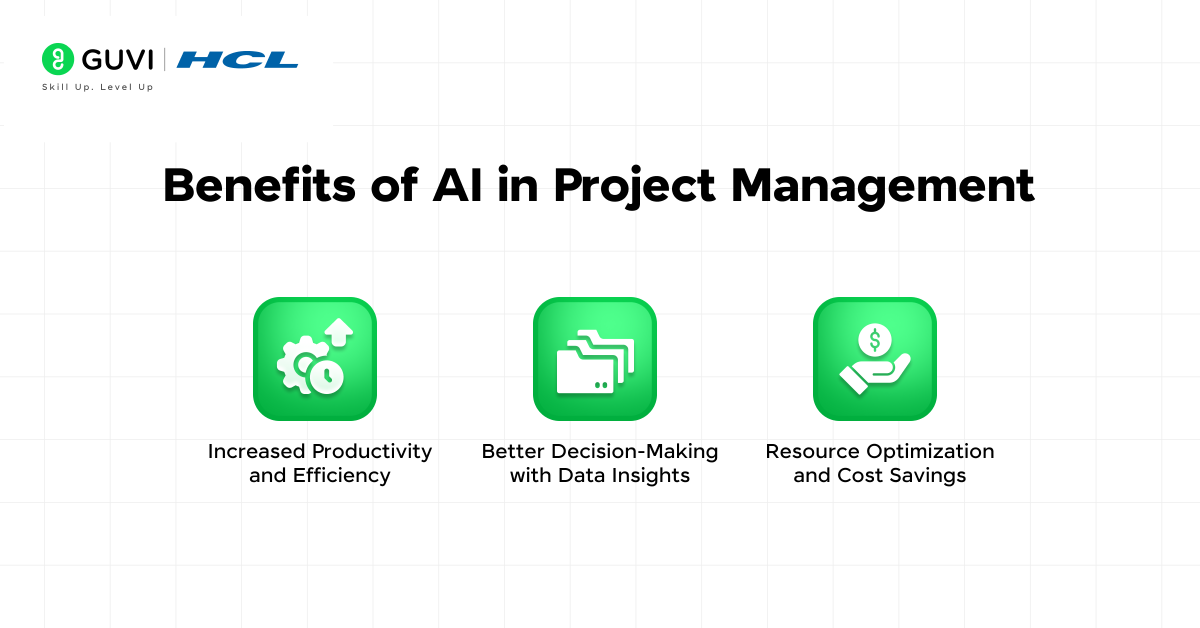
Why are companies investing in AI for project managers and their teams? Implementing AI in project management brings a range of benefits that improve project outcomes and make work easier for everyone involved. Here are some of the top advantages:
- Increased Productivity and Efficiency: AI can automate time-consuming, repetitive tasks like data entry, report generation, or schedule updates. This boosts productivity by freeing project managers and team members from busywork to focus on high-value activities.
- Better Decision-Making with Data Insights: AI systems can analyze large datasets and provide predictive analytics that help in decision-making. Machine learning algorithms can forecast project outcomes, identify trends, flag potential risks, and even predict resource needs.
- Resource Optimization and Cost Savings: Optimizing the use of people, time, and budget is a core part of project management, and AI is very effective here. AI tools can intelligently allocate resources by matching tasks with the best-suited team members based on their skills and availability.
These benefits show why artificial intelligence project management is generating so much buzz. From saving time and money to enabling smarter decisions and smoother teamwork, AI tools address many classic project pain points.
Applications of AI in Project Management
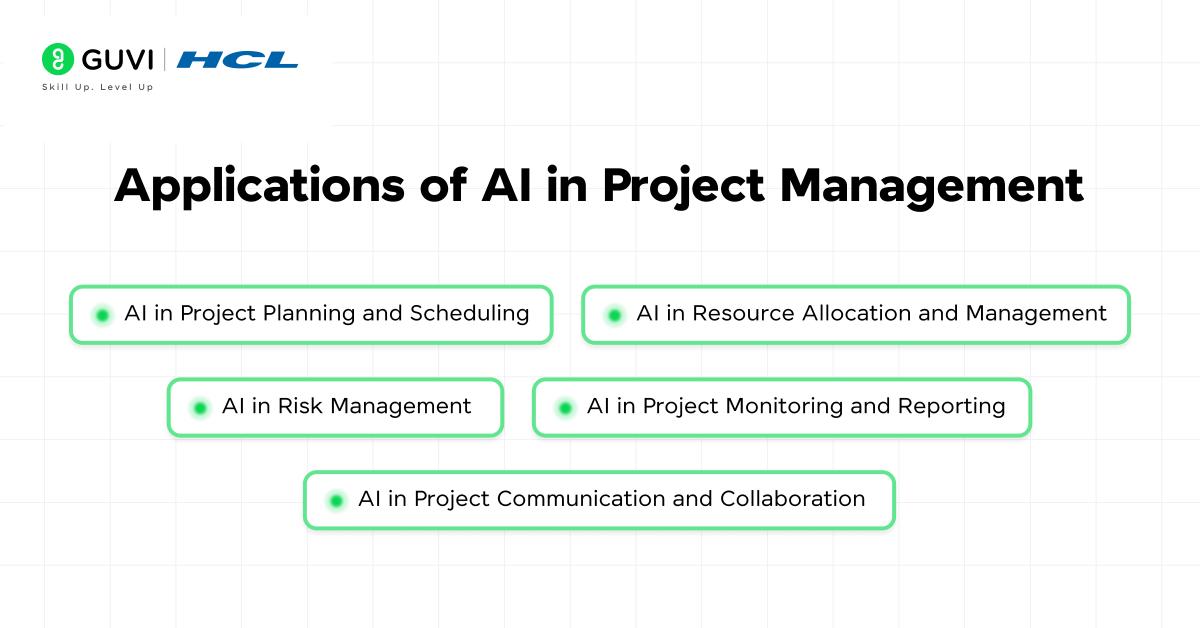
AI is influencing nearly every phase of the project lifecycle. Here are some key project management areas and tasks where AI is being applied:
1. AI in Project Planning and Scheduling
Planning a project involves defining tasks, timelines, and dependencies – a complex puzzle that AI is well-suited to solve. AI project planning tools can automatically generate and adjust project schedules. Using historical project data and constraints (like team availability or task durations), AI algorithms create optimized timelines that a human planner might overlook.
Tools that use AI to build and adjust project plans and timelines:
- Forecast – AI-powered resource forecasting and project scheduling.
- Epicflow – Dynamic scheduling and predictive planning for multiple projects.
- Asana (AI features) – Smart suggestions for task prioritization and planning.
2. AI in Resource Allocation and Management
Allocating resources, whether human, financial, or material, is another balancing act where AI assists. Traditional resource allocation often relies on managers’ intuition and experience, but AI brings data-driven precision. AI in resource allocation uses algorithms to match tasks with the best available resources by analyzing skills, workload, and past performance.
Tools that optimize team assignments, workloads, and capacity planning:
- Resource Guru – AI-based resource scheduling and availability tracking.
- Mosaic – AI resource management with skills mapping and workload balancing.
- Hub Planner – Forecasts resource needs and prevents overbooking.
3. AI in Risk Management
Every project comes with risks, from schedule delays to cost overruns or technical failures. AI is becoming an invaluable tool in project risk management by making risk identification and analysis more proactive.
AI-driven risk management software can continuously scan project data, performance metrics, and even external factors (like market trends or weather reports for a construction project) to detect early warning signs of risk.
Tools that predict, analyze, and mitigate risks using AI:
- RiskWatch – AI-powered project risk assessment and compliance monitoring.
- Protecht.ai – Continuous AI-based risk identification and reporting.
- Oracle Primavera Risk Analysis – AI-enhanced risk simulation and scheduling.
4. AI in Project Monitoring and Reporting
Monitoring progress and reporting status is a huge part of a project manager’s job – and one that AI is streamlining. AI project monitoring tools automatically collect and analyze project data in real time, giving you up-to-date insights without manual tracking.
Instead of manually updating spreadsheets, imagine a dashboard that shows live project health metrics and flags anomalies for you. AI can track task completion rates, budget spend, and team performance, and immediately highlight anything that’s off-track.
Tools that track progress, budgets, and performance in real time:
- Monday.com (AI WorkOS) – Automated dashboards and anomaly detection.
- Jira Align with AI plug-ins – Real-time reporting and predictive analytics.
- Zoho Projects (with Zia AI) – AI-powered reporting and recommendations.
5. AI in Project Communication and Collaboration
Successful projects depend on good communication – keeping everyone aligned and informed. Here, AI serves as a helpful facilitator. AI-driven project management tools can act like virtual project assistants that keep communication flowing smoothly.
Tools that enhance communication, automate reminders, and summarize discussions:
- Slack with AI bots (e.g., Standuply, Troopr) – Automated updates and Q&A.
- Microsoft Teams with Copilot – AI meeting summaries and action tracking.
- Otter.ai – Real-time meeting transcription and smart summaries.
AI Tools and Software for Project Management
With the growing popularity of AI in project management, there’s been a surge in AI project management tools and software solutions. Many traditional project management software suites are now adding AI-driven features, and new tools built around AI are emerging. Here are a few notable examples of how AI is embedded in project management tools:
- Task and Workflow Automation Tools: Popular project management platforms like Asana and Monday.com have integrated AI features to automate routine workflows. These AI enhancements can, for example, automatically assign tasks, update task statuses, or adjust schedules based on project rules and past data.
- AI-Powered Communication Assistants: Tools like Slack and Microsoft Teams now support AI bots or plugins that help with meeting scheduling, note-taking, and answering project queries. For example, you might use an AI bot to automatically record action items from a team meeting in Teams, or to remind everyone in a Slack channel about an upcoming deadline.
- Intelligent Risk Management and Analytics Tools: There are AI-driven tools focused on project risk analysis and analytics, for instance, software like RiskWatch or Predict!. These applications use AI to analyze project data and external information to predict risks, as described in our risk section. They often include dashboards that update risk status in real time and can even prioritize risks by severity using AI.
- AI-Enhanced Project Management Software: A new generation of dedicated AI project management software is also coming up. These are platforms built from the ground up with AI in mind. For example, tools like Forecast or Epicflow use AI to do end-to-end project portfolio management, optimizing schedules across multiple projects, forecasting resources, and learning from project outcomes to make the next plans better.
With so many AI tools available, choosing the right one depends on your team’s needs. The key is to look for tools that integrate well with your existing workflows.
AI’s Top Benefits According to Project Professionals: When surveyed, project professionals cited task automation as the #1 benefit of using AI tools (33% of respondents), followed by more effective resource allocation (32%) and more accurate project metrics (27%). In other words, eliminating tedious tasks and optimizing resources are seen as AI’s biggest perks in projects.

Challenges and Considerations
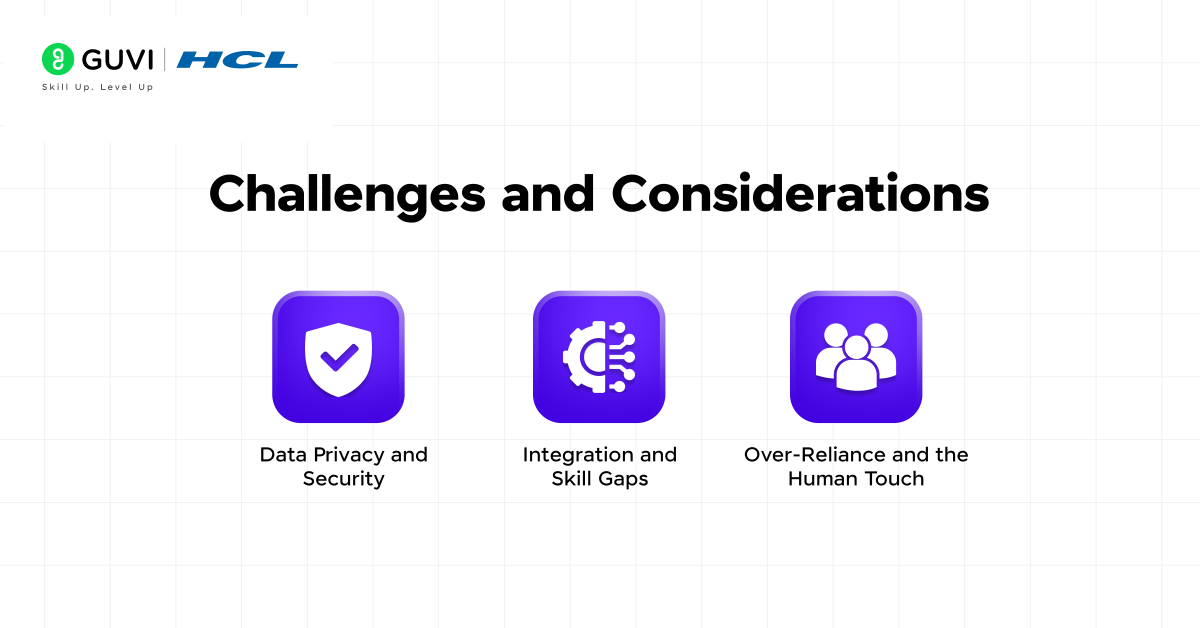
With all the excitement around AI, it’s important to acknowledge that adopting AI in project management comes with its own challenges and considerations. If you’re looking to implement AI tools in your projects, keep the following in mind:
- Data Privacy and Security: AI systems often rely on large amounts of data, some of which could be sensitive project or company data. One of the biggest hurdles to AI adoption today is ensuring data privacy and security. Project managers need to be cautious about what information is fed into AI tools and ensure compliance with data protection regulations.
- Integration and Skill Gaps: Introducing AI into project workflows isn’t as simple as flipping a switch. New AI tools have to integrate with existing project management software and processes, which can require effort and technical know-how. There may also be a learning curve for your team.
- Over-Reliance and the Human Touch: AI is powerful, but it’s not infallible. Algorithms can make mistakes – for example, an AI might misinterpret data or carry forward a bias present in historical information. Therefore, it’s risky to blindly follow AI recommendations. Human oversight remains crucial.
By being aware of these challenges, you can plan for a smoother AI adoption. Start with clear objectives, address data and integration issues early, and keep your team involved and informed to reduce resistance to change.
Future of AI in Project Management
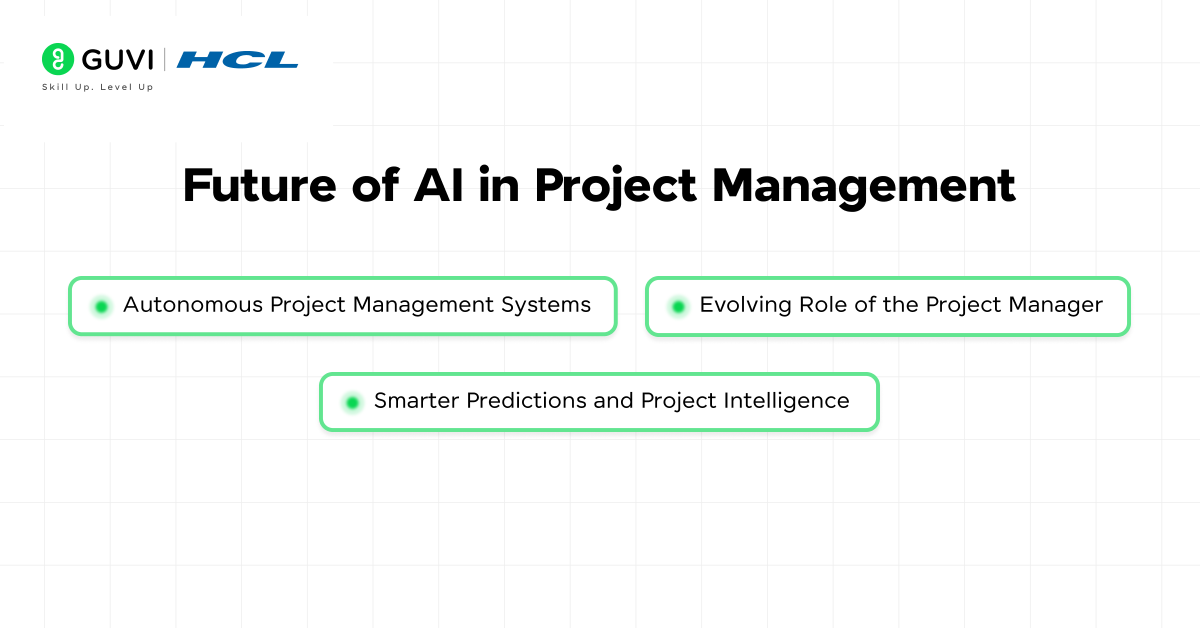
Looking ahead, the influence of AI on project management is only expected to grow. We’re likely to see current capabilities advance and entirely new possibilities emerge as technology evolves:
- Smarter Predictions and Project Intelligence: Future AI systems will have even more accurate predictive analytics. This means project managers could get highly reliable forecasts of project outcomes, risk likelihoods, and the impact of changes.
- Autonomous Project Management Systems: As AI tech becomes more sophisticated, we can imagine partially or fully autonomous project management for certain types of projects. These would be AI systems that can handle routine project tasks with minimal human input – things like updating schedules, reporting status, coordinating minor work – essentially an autopilot for project execution.
- Evolving Role of the Project Manager: Far from making project managers obsolete, the rise of AI is likely to elevate the project manager’s role. With AI handling the administrative and analytical heavy lifting, project managers can become more like project strategists and leaders.
In summary, the future of AI in project management looks bright and exciting. Projects will run more smoothly with AI predicting hurdles and optimizing plans. Teams will have virtual assistants taking care of grunt work and providing insights at their fingertips.
If you’re serious about mastering artificial intelligence and want to apply it in real-world scenarios, don’t miss the chance to enroll in HCL GUVI’s Intel & IITM Pravartak Certified Artificial Intelligence & Machine Learning course. Endorsed with Intel certification, this course adds a globally recognized credential to your resume, a powerful edge that sets you apart in the competitive AI job market.
Conclusion
In conclusion, AI project management is no longer a futuristic idea; it is already here, reshaping how teams plan, monitor, and deliver projects. From smarter scheduling to predictive risk management, AI gives you the tools to make decisions faster and with greater confidence.
Yet, the role of the project manager remains vital, as leadership, creativity, and stakeholder communication still depend on human judgment. The key is to see AI not as a replacement but as a powerful partner.
If you start embracing AI-driven tools now, you’ll be better prepared for the future, where project managers who understand and apply AI will set themselves apart.
FAQs
1. What is AI in project management?
AI in project management refers to the use of artificial intelligence technologies—such as machine learning, natural language processing, and automation—to support the management of projects. It does not mean managing AI-related projects specifically, but rather applying AI to improve everyday project management tasks.
2. How does AI help project managers?
AI helps project managers by taking on time-consuming and repetitive responsibilities that often slow down progress. For example, instead of manually updating schedules or generating reports, AI tools can automate those processes.
3. What are the benefits of AI in project management?
The benefits of AI in project management are both practical and strategic. On a practical level, AI saves time and reduces errors by automating routine tasks. On a strategic level, it enables data-driven decision-making by analyzing large amounts of project data and highlighting patterns or risks that may not be obvious to humans.
4. What are some AI project management tools?
There are several AI project management tools available today, ranging from well-known platforms to specialized software. Popular platforms like Asana, Monday.com, and Jira have integrated AI features that assist with scheduling, task automation, and workflow optimization.
5. What is the future of AI in project management?
The future of AI in project management looks set to bring even smarter predictions, real-time recommendations, and partially autonomous systems that can handle routine tasks with minimal human input. While AI will likely manage scheduling, monitoring, and reporting more independently, the role of human project managers will remain vital.
6. What should I look for before enrolling in an AI & ML course?
Look for a structured curriculum, practical projects, experienced mentors, updated AI tools, certification value, and career support. Compare programmes carefully before enrolling in an AI & ML Programme.
Success Stories

About the Author
Lukesh S
A professional content writer who has experience in freelancing and now working as a Technical Content Writer at HCL GUVI having sound knowledge in Blog Writing and Creative Writing!
View all posts by Lukesh S
Connect with me @











Did you enjoy this article?