


Career Articles
Capgemini Exceller Technical Assessment 2026: AI + Technical - Best Guide
Cognizant GenC Elevate Exam Pattern & Syllabus for Freshers 2026 - Best Guide
Capgemini Exceller Placement Papers and Solutions 2026 - Best Guide
How to Pass the Accenture Recruitment Process 2026/27: The Complete Guide


Get In Touch For Details! Request More Information
From Campus to Career: Top Tech Skills for Students to Get Hired
Oct 03, 2025 5 Min Read 3079 Views
(Last Updated)
Picture this: you’re juggling lectures, assignments, last-minute group calls, maybe even prepping for exams, and in the middle of all that, there’s this lingering question: Am I actually building the right skills for a real tech job?
A lot of students think a degree alone will do the heavy lifting. But when it’s time to apply for roles, many find out the gap between what they’ve studied and what the job market expects is wider than it seemed. That’s why it’s important to start building tech skills for students that go beyond classroom theory and actually match what employers look for in real-world roles.
What matters most isn’t how early you start, but how intentionally you build. With a little focus and the right resources, you can begin developing some job-ready tech skills while still in college, turning your academic years into a solid launchpad for your career.
Table of contents
- What Employers Really Look For
- Hard Skills that Count
- Soft Skills that Seal the Deal
- Building Tech Skills While in College
- Learn Programming in College the Smart Way
- Upskilling Through Certifications
- Internships in Tech
- Strengthening Your Personal Advantage
- Soft Tech Skills For Students
- Balance Between Tech and Human Skills
- Your Student-to-Professional Toolkit
- Planning Your College-to-Career Journey
- Keep it Flexible
- Frequently Asked Questions
- How can I figure out which tech career path suits me best while still in college?
- What are some underrated tools or platforms that help with student tech upskilling?
- How can I start building connections in tech if I don’t have access to industry mentors?
- Is it necessary to publish my work publicly if I’m not confident about it yet?
- What are some quick ways to test if I’m really improving my tech skills over time?
What Employers Really Look For
Before you start brushing up on tools or signing up for courses, it helps to understand what recruiters actually look for when hiring fresh graduates from a tech background.
Hard Skills that Count
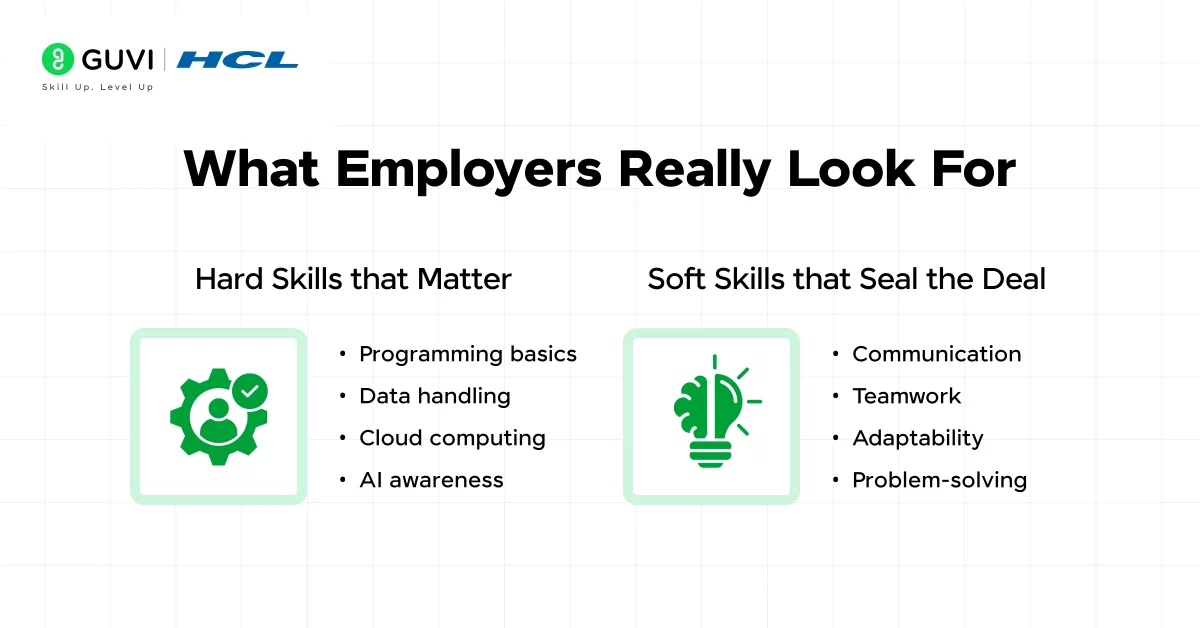
Employers expect more than just a degree, as they want proof that you can apply what you’ve learned. Tech skills for students, like basic programming, version control, cloud platforms, or even introductory AI, if picked up strongly enough, can make a big difference. You don’t have to master everything, but showing that you’ve explored real tools and built something practical gives you a noticeable edge.
Soft Skills that Seal the Deal
While technical skills get your foot in the door, it’s often your ability to communicate, collaborate, and adapt that helps you grow in your career in tech after college. Employers want people who can explain their ideas clearly, work well in teams, and handle shifting priorities with ease. If you’ve ever led a group project, responded well to feedback, or taught yourself something new outside the syllabus, you’re already building the kind of mindset companies appreciate.
Building Tech Skills While in College
You don’t need to wait for your final semester to start thinking about skills. College is actually the perfect time to explore, practice, and build real-world abilities, without the pressure of already being in the job market.
Learn Programming in College the Smart Way
Learning to code in class is one thing, but applying it outside the classroom is what really sharpens your skills. Take on small side projects, participate in coding challenges, or contribute to open-source communities. Joining student coding bootcamps can also give you a fast-paced, hands-on learning experience that mimics real tech work. It’s less about mastering everything and more about building confidence through doing.
Upskilling Through Certifications
Short-term certifications are a great way to show initiative and add credibility to your resume. Platforms run by global tech leaders offer free or low-cost learning paths that help you pick up in-demand tools and concepts. When such tech certifications for students align with areas like cloud, AI, or cybersecurity, they give your profile a boost that stands out in hiring pipelines.
Here are some popular tech certifications that’ll help you learn programming in college while gaining some essential job-ready tech skills:
| Area | Certification | Provider | Skills Gained |
| Cloud Computing | AWS Cloud Practitioner Essentials | Amazon Web Services | Cloud fundamentals, architecture, security |
| AI & Machine Learning | Microsoft Azure AI Fundamentals | Microsoft Learn | ML basics, Azure AI tools, real-world use cases |
| Cybersecurity | IBM Cybersecurity Analyst Learning Plan | IBM SkillsBuild | Threat analysis, network security, compliance |
| Frontend Web Dev | Meta HTML/CSS in Depth | Meta for Developers | HTML5, CSS3, responsive web design |
| Data Analytics | Google Cloud Data Analyst Learning Path | Google Cloud Skills | BigQuery, data wrangling, dashboard creation |
If you’re ready to take a more structured approach to learning, HCL GUVI’s Zen Class programs are worth exploring. The Full Stack Development Course with AI Tools equips you with hands-on web development skills, while the Data Science Course covers everything from Python and SQL to AI and machine learning. These courses are backed by the prestigious IIT-M Pravartak certification and include placement support which makes them perfect for students who want to confidently make a college to career transition.
Internships in Tech
There’s no substitute for real-world exposure. Internships allow you to apply what you’ve learned in a professional setting, work on live projects, and understand how teams operate. Even if it’s a short stint or a virtual internship, it helps build experience and confidence. These roles often lay the foundation for your first full-time offer, especially if you’re aiming to build a career in tech after college.
Strengthening Your Personal Advantage
While technical knowledge is essential, what often makes a candidate stand out is how they work with others, handle challenges, and grow through experience. These qualities aren’t taught in textbooks, but you can build them naturally during your college years.
Soft Tech Skills For Students
While most students focus on technical skills, your everyday college experiences are already shaping qualities that matter just as much in the workplace. You might not label them as “skills” yet, but employers definitely notice them.
- Teamwork: Group projects, hackathons, and club activities teach you how to work with different personalities and keep things moving toward a shared goal.
- Resilience: Facing a failed project or handling last-minute changes builds mental strength, which is something you’ll need often in a tech career.
- Curiosity: Asking questions, experimenting with new tools, or even learning from YouTube tutorials shows initiative.
- Leadership: If you’ve led a campus event, mentored a peer, or organized a coding session, you’re already exercising people skills that many overlook.
Balance Between Tech and Human Skills
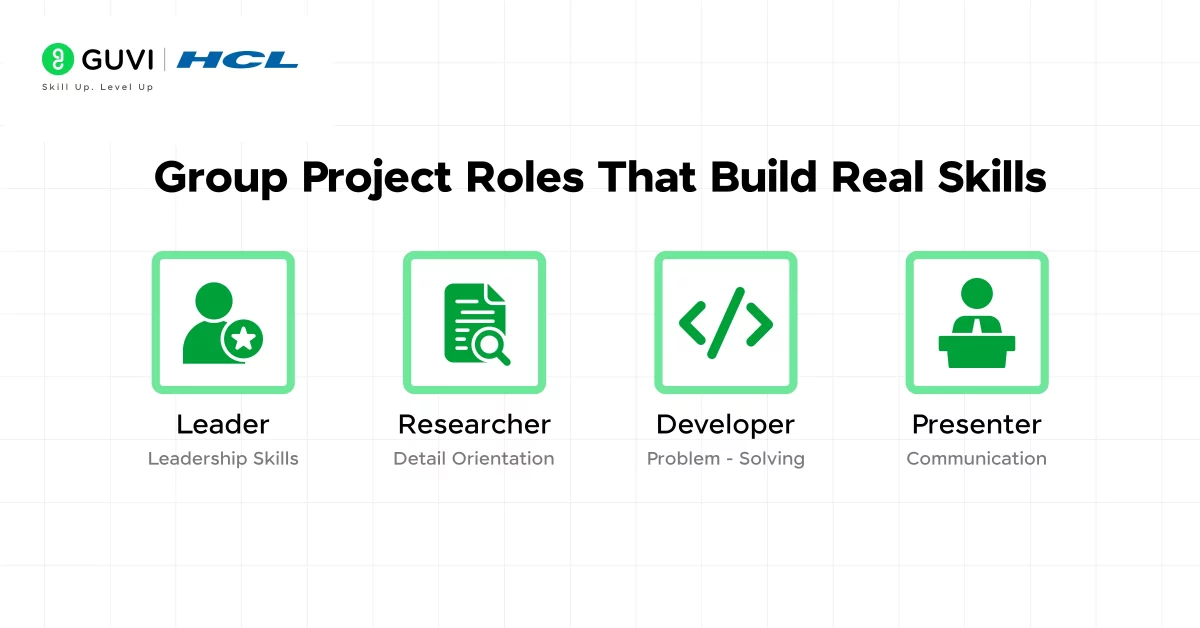
In most tech jobs, strong coding skills alone don’t guarantee success. Employers also pay attention to how well you communicate ideas, work with different teams, and handle unexpected changes. When you learn programming in college, it’s just as important to build habits like clear writing, active listening, and time management. Such solid tech skills for students, when combined with interpersonal awareness, can help one fit into real-world environments more easily and make for smoother collaboration right from the start.
Your Student-to-Professional Toolkit
Turning your college years into a launchpad for your career doesn’t mean overhauling your entire schedule. With a few focused efforts, you can start building a strong professional presence while you’re still in class. The right mix of practical experience, digital proof of your work, and smart outreach can help you turn your skills into real opportunities. They can set you up for a confident transition from college to a flying career start.

✔️ Build a simple, honest portfolio
It doesn’t have to be fancy. Just pick 2–3 projects that show what you’ve learned and what you can build. These could be class assignments, personal experiments, or even group projects- basically anything that reflects real effort and problem-solving. Platforms like GitHub or Notion work great for this.
✔️ Highlight outcomes, not just effort
When you write your resume or LinkedIn summary, focus on what you actually achieved. Did your project speed something up, or solve a problem? Did it get implemented by your club or any team? Recruiters appreciate clear, result-focused descriptions over vague technical jargon.
✔️ Get your LinkedIn and resume in sync
Make sure your digital and physical profiles tell the same story. Include certifications, internships, and relevant projects. Use keywords from roles you’re aiming for, and always add a personal touch—a short summary about what drives you goes a long way.
✔️ Make networking feel natural
Start small. Join a campus tech club, attend a workshop, or follow professionals on LinkedIn whose work you admire. You don’t need to “pitch” yourself. Simply showing genuine interest and staying connected is enough to start building relationships that matter.
✔️ Use college events as real-world practice
Hackathons, seminars, guest lectures, and even classroom presentations are great for developing confidence and visibility. These moments might seem casual, but they help you sharpen communication, time management, and collaboration—all are necessary tech skills for students.
Planning Your College-to-Career Journey
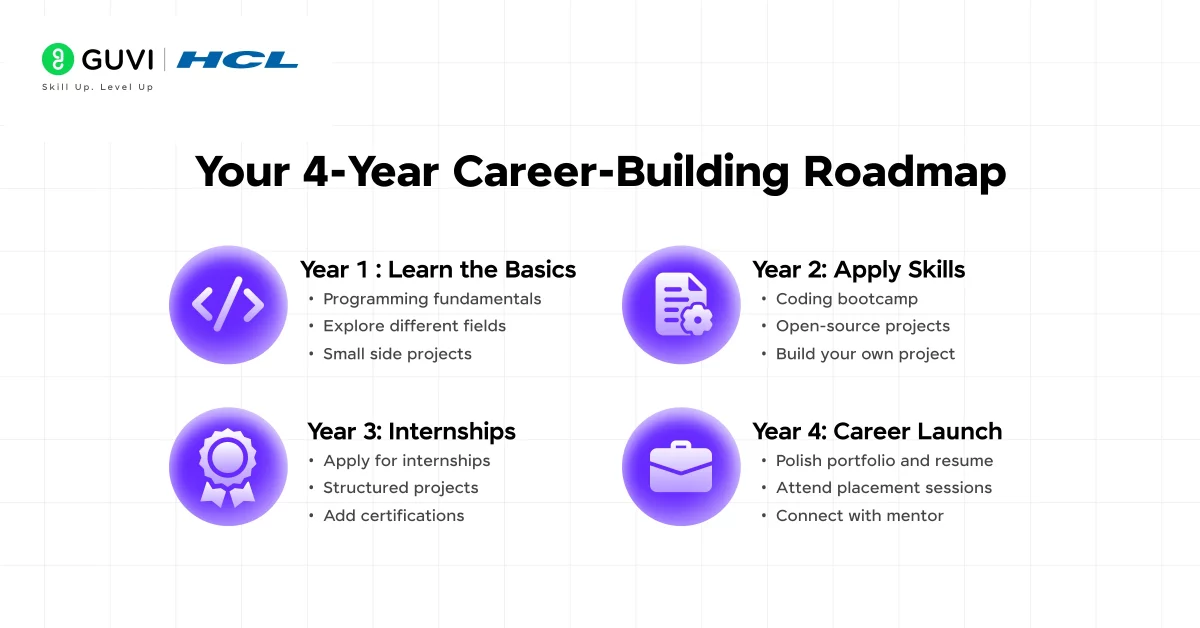
You don’t need a step-by-step blueprint to land your first tech job, but having a loose plan can help you make the most of your time in college. Instead of waiting until the last semester to get serious, try to grow steadily year by year. A little structure combined with flexibility is often the best way to stay consistent without burning out.
The following graphic can help you figure out what each college year can look like in your tech journey.
Keep it Flexible
While a structured path can be helpful, your interests might shift, and that’s completely okay. Maybe you start with web development and discover a passion for data, or maybe your internship opens up a new direction you hadn’t considered. The idea is to check in with yourself each semester, reflect on what’s working, and make small adjustments along the way. Staying open to change while still building steadily is what keeps your journey sustainable.
Wrapping Up
College gives you a window to grow. It gives you the space to explore, experiment, and gradually prepare for the world of work. It gives you the space to build bit by bit, be curious, and make smart use of the opportunities around you. From group projects and internships to certifications and casual coding side quests, there are plenty of ways to shape your future while you’re still studying.
However, what really makes a difference is consistency. The tech skills for students we discussed in this blog can really help those who start early, take initiative, and actively work on them. They’ll surely find themselves better equipped, and not just to land interviews, but to truly grow in the roles they step into.
If you’re looking to explore structured learning paths to develop some top-notch job-ready tech skills, HCL GUVI offers a variety of career-aligned paid courses in domains like full stack development, data science, AI, and much more. So stay curious, and keep learning!
Frequently Asked Questions
How can I figure out which tech career path suits me best while still in college?
You can start by exploring a few different areas. Try building a small website, analyzing a dataset, or automating a task with Python. These low-pressure experiments give you real exposure. As you engage with different types of work, you’ll naturally start leaning toward fields like web development, data science, or cybersecurity. Don’t rush the decision; instead, use your college years to experiment and reflect.
What are some underrated tools or platforms that help with student tech upskilling?
Beyond the usual learning sites, tools like Notion (for project planning), GitHub (for version control), Replit (for in-browser coding), and Figma (for UI mockups) are great additions. Participating in online communities like Dev.to or Hashnode can also help you keep informed and engaged with the broader tech ecosystem.
How can I start building connections in tech if I don’t have access to industry mentors?
Start with who you do have access to, be it seniors, professors, or peers who’ve done internships or completed bootcamps. Share your work regularly on platforms like LinkedIn and GitHub. Participate in hackathons and online forums. Over time, these small interactions can lead to some meaningful professional connections.
Is it necessary to publish my work publicly if I’m not confident about it yet?
No, but it helps. Sharing projects on GitHub or LinkedIn, even if they’re not perfect, shows recruiters your growth mindset. You don’t need polished, portfolio-ready work every time. Just explain what you tried, what worked, and what you learned. That honesty stands out more than waiting for “perfect” projects.
What are some quick ways to test if I’m really improving my tech skills over time?
Try redoing a project you built a few months ago and see how differently you approach it. You can also join timed coding contests, attempt mock interviews, or complete challenges on platforms like HackerRank and LeetCode. Improvement shows in cleaner code, faster problem-solving, and increased confidence in unfamiliar tools.
Success Stories

Did you enjoy this article?
Comments











Nice