


Web Development Articles
How to Use Firebase Firestore for Real-Time Data in Web Apps
Web Designing Roadmap 2026: Best Guide to Become a Successful Web Designer

Get In Touch For Details! Request More Information

The Real Timeline to Learn Web Development in 2026 (Beginner’s Guide)
Sep 19, 2026 5 Min Read 17155 Views
(Last Updated)
Web development can take anywhere from a few weeks to a year or more, depending on how you learn and what you want to achieve. If you’re just getting familiar with HTML, CSS, and JavaScript, you can cover the basics in around 6–8 weeks. But learning on your own, especially without a fixed path, can take 8–14 months.
The good news is that you don’t need to spend a year before you can build something useful. A structured part-time course may take 4–6 months, while full-time learning can get you through the main skills in 3–4 months. If your goal is to actually get hired, though, give yourself around 6–12 months to learn, build projects, and create a portfolio.
Table of contents
- TL;DR Summary
- How Long Does It Take to Learn Web Development? Timeline by Learning Path
- Factors Affecting Learning Time
- Prior Experience
- Learning Resources
- Dedication
- Complexity of Projects
- Chosen Specialization
- Web Development Learning Phases and Time Estimates
- Phase 1: Fundamentals
- Phase 2: Intermediate
- Phase 3: Advanced
- Web Development Specialization and Continuous Learning
- Specialization in Front-End, Back-End, or Full-Stack
- Continuous Learning in Web Development
- Learning Resources for Web Development
- Online Courses
- Coding Bootcamps
- Tutorials
- Books
- Practice Projects
- Importance of Hands-On Coding and Real-World Projects
- Personal Experience and Pace
- Strong Foundation
- Long-Term Benefits
- Problem-Solving
- Tips for Efficient Learning
- Set Clear Goals
- Consistent Practice
- Seek Help from Communities
- Embrace Real Projects
- Learn by Doing
- Stay Curious
- Stay Up-to-Date
- Break Down Big Concepts
- Practice Problem-Solving
- Reflect and Revise
- Web Developer Salaries in India (2026): What Your Learning Timeline Could Lead To
- Conclusion
- FAQs
- How quickly can I learn web development?
- Is 40 too old to become a web developer?
- Is web dev a stressful job?
- Can I learn web development without any coding background?
- Do I need a degree to become a web developer?
TL;DR Summary
- This blog helps you understand what actually affects learning time in web development, comparing timelines by learning path so you can set realistic expectations instead of guessing.
- It gives a clear idea of how learning is structured in phases, helping you see how beginners gradually move from basics to advanced topics.
- You get a simple overview of different specialization paths, helping you understand how front-end, back-end, or full-stack choices can shape your learning journey.
- It also breaks down web developer salaries in India, connecting each learning stage to real career levels and pay ranges.
- It highlights the importance of practice, consistency, and problem-solving, helping you focus on how real progress is actually made over time.
How Long Does It Take to Learn Web Development? Timeline by Learning Path
Not everyone learns web development the same way, so here’s how the timeline actually shifts depending on the path you choose.
| Learning Path | Typical Timeline | Reason Behind Timeline | Best For |
|---|---|---|---|
| Self-Taught (Free Resources) | 8-14 months | No structured order, so time goes into figuring out what to learn next and fixing mistakes alone | Highly disciplined learners with flexible time and no fixed deadline |
| Online Course/Bootcamp (Part-Time) | 4-6 months | Structured curriculum speeds things up, but limited daily hours slow overall progress | Working professionals or students learning alongside other commitments |
| Online Course/Bootcamp (Full-Time) | 3-4 months | Full daily focus plus structured guidance removes most guesswork and wasted time | Learners who can dedicate 6-8 hours daily with no other major commitments |
| Learning Just the Basics (HTML, CSS, JS) | 6-8 weeks | Covers only core syntax and structure, without frameworks or real project complexity | Beginners who want quick exposure before committing to a full path |
| Becoming Job-Ready (Full Stack, Portfolio-Ready) | 6-12 months | Involves frontend, backend, databases, deployment, and building real projects, not just learning syntax | Anyone aiming to actually get hired, not just learn casually |
Factors Affecting Learning Time

The time it takes to learn web development isn’t set in stone. It can vary from person to person due to a few important factors:
1. Prior Experience
If you’ve worked with coding or design before, you might catch on faster. If not, don’t worry; you can still learn at your own pace.
2. Learning Resources
The materials you use to learn, like online courses and tutorials, play a big role. Good resources can make your learning journey smoother.
3. Dedication
Like anything else, the more time you put in, the quicker you’ll learn. Consistent practice and effort speed up your progress.
4. Complexity of Projects
Starting with simpler projects and gradually moving to more complex ones helps you build skills step by step.
5. Chosen Specialization
Deciding whether you’ll focus on what’s visible on websites (front-end), what’s happening behind the scenes (back-end), or both (full-stack) can impact how long it takes to become proficient.
Everyone’s timeline will differ. Some might learn faster with more time, while others might take longer with limited time. Remember, the key is to stay patient and persistent on your learning journey.
If you want to get a Web Development Course bundle and learn that in a self-paced manner, try HCL GUVI’s self-paced Web Development Course Bundle.
Web Development Learning Phases and Time Estimates

Learning web development happens in distinct phases, each building upon the last. Here’s an overview of these phases and an estimate of how long they might take:
Phase 1: Fundamentals
Importance: This phase covers the basics – understanding HTML for content, CSS for styling, and basic JavaScript for interactivity. It’s crucial because these are the foundation of web development.
Time Estimate: Typically, this phase takes about 2-3 months. You’ll grasp the core concepts that form the basis of any website.
Phase 2: Intermediate
Diving Deeper: In this phase, you’ll delve further into JavaScript, explore libraries and frameworks (like React or Angular) that make development faster, and learn about APIs and connecting to databases.
Time Estimate: The intermediate phase usually spans around 4-6 months. You’ll gain the ability to create more complex and interactive websites.
Phase 3: Advanced
Advanced Topics: Here, you’ll tackle advanced topics like server-side scripting (using languages like Node.js or Python), working with databases (both SQL and NoSQL), and understanding security measures.
Time Estimate: The advanced phase demands around 6-9 months. During this time, you’ll refine your skills and handle more intricate projects.
Remember, these time frames are approximate. Your learning speed, practice consistency, and the complexity of the topics can influence how long each phase takes. Embrace the journey and keep learning!
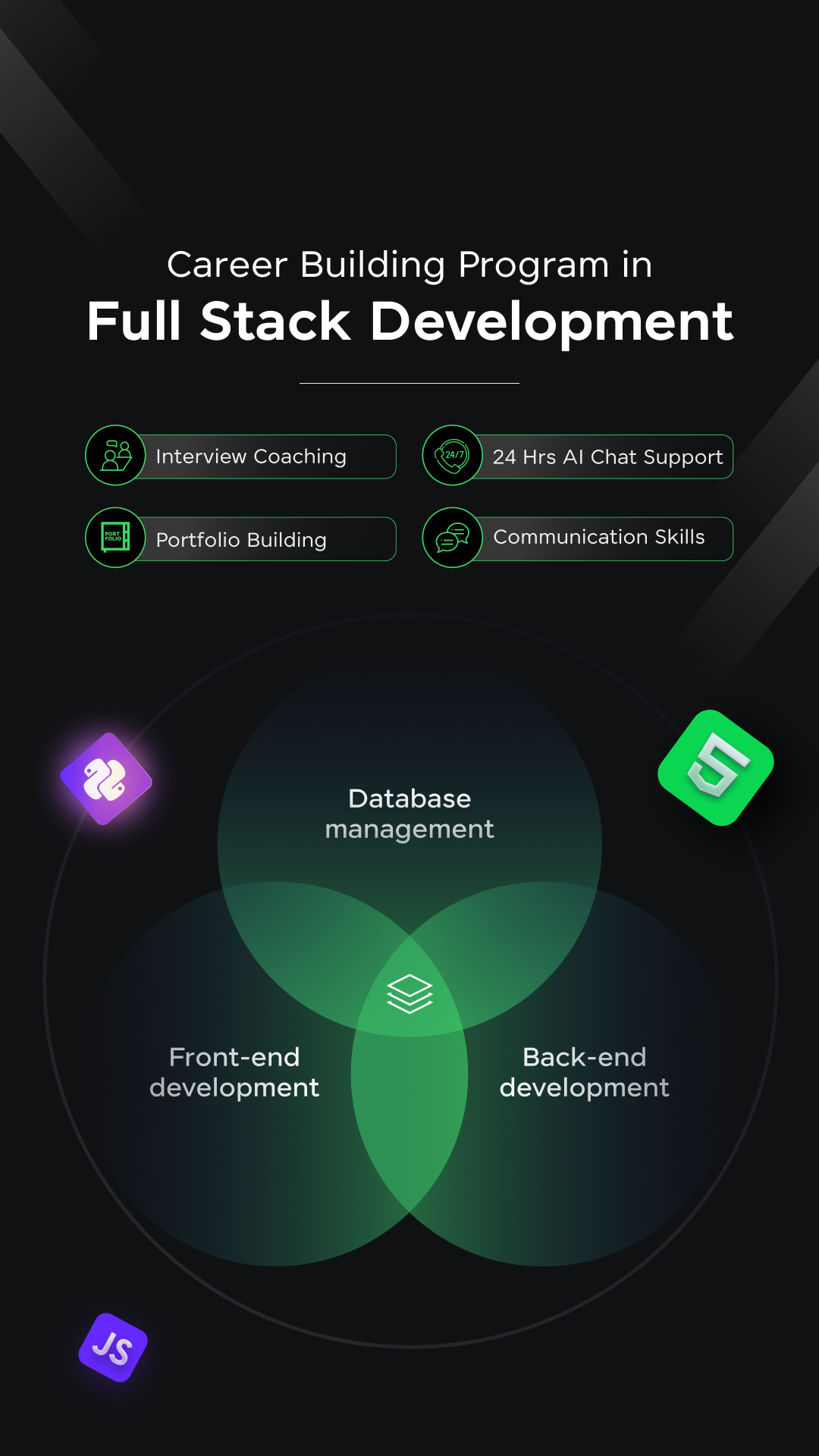
Kickstart your Full Stack Development journey by enrolling in HCL GUVI’s certified Full Stack Development Career Program with placement assistance, where you will master the MERN stack (MongoDB, Express.js, React, Node.js) and build interesting real-life projects. Our team of experts crafted this program to help you upskill and secure placements.
Web Development Specialization and Continuous Learning
As you become more comfortable with web development, you might want to specialize in a specific area. Here’s a glimpse of what that means and why learning is an ongoing journey:
Specialization in Front-End, Back-End, or Full-Stack
Front-End Development: If you love making websites look amazing and interactive, front-end development might be your calling. You’ll focus on creating the visual elements users see and interact with.
Back-End Development: If you’re interested in making sure everything behind the scenes runs smoothly, back-end development is your arena. You’ll work on databases, and servers, and make sure data flows correctly.
Full-Stack Development: The full-stack developers are like all-around champions. They handle both front-end and back-end, giving them a complete understanding of how a website functions.
Continuous Learning in Web Development
The world of web development is like a tech rollercoaster – always moving and evolving. Here’s why the learning journey never really stops:
New Technologies: A new tool, language, or framework is always emerging. Staying updated helps you remain competitive and relevant.
Industry Trends: Websites today are different from those five years ago. Learning the latest trends ensures your skills align with what the industry demands.
Improving Skills: Even after becoming a pro, there’s always room to enhance your skills. Learning about new techniques and best practices keeps you at the top of your game.
So, while you might complete your initial learning phases, remember that the journey doesn’t end there. It’s a constant cycle of adapting, improving, and exploring new horizons. Whether you’re specializing or staying versatile, learning never stops in the dynamic world of web development.

Learning Resources for Web Development
When it comes to learning web development, a world of resources is at your fingertips. Here’s a range of options to consider, each offering a unique way to learn and grow:
1. Online Courses
- Coursera
- Udemy
- Khan Academy
2. Coding Bootcamps
- Codecademy
- Le Wagon
- freeCodeCamp
3. Tutorials
- W3Schools
- MDN Web Docs
- YouTube – The Net Ninja
4. Books
- “HTML and CSS: Design and Build Websites” by Jon Duckett
- “JavaScript: The Good Parts” by Douglas Crockford
5. Practice Projects
- Start small with a personal portfolio site.
- Create a simple to-do list app.
Importance of Hands-On Coding and Real-World Projects
Learning web development is more than theory – it’s about doing. Hands-on coding and building real projects offer a multitude of benefits:
Applied Learning: Practical experience reinforces your understanding of coding concepts.
Problem Solving: Real projects present real challenges, helping you develop strong problem-solving skills.
Portfolio Building: Completed projects showcase your abilities to potential employers or clients.
Confidence Boost: Each project you finish boosts your confidence and skills.
So, whether you’re a coding newbie or on your way to becoming a pro, these resources, along with hands-on coding, will guide you toward becoming a skilled web developer.
Personal Experience and Pace
Learning web development isn’t a one-size-fits-all journey. Everyone has their own pace, and that’s absolutely okay. Some might zoom ahead while others take it slower – both paths are valid.
Encouragement to Understand Concepts Deeply:
In web development, it’s not about racing to the finish line; it’s about understanding the landscape deeply. Here’s why:
Strong Foundation
Rushing through can leave gaps in your knowledge. A solid understanding of the basics is essential.
Long-Term Benefits
A deep grasp of concepts allows you to adapt and learn new things more easily as technology evolves.
Problem-Solving
Truly understanding concepts equips you to tackle challenges creatively, even the ones you’ve never encountered before.
So, if you find yourself moving slower than others, don’t fret. The goal isn’t to finish first; it’s to build a strong skill set that lasts. Remember, it’s about the journey, not just the destination. As you tackle each concept, take time to fully understand it. Quality learning beats speedy learning any day.
Tips for Efficient Learning
When it comes to learning web development, a few strategies can help you make the most of your time and efforts. Here are some tips to consider:
1. Set Clear Goals
Define what you want to achieve in web development – whether it’s building your own website, freelancing, or landing a job. Clear goals keep you focused and motivated.
2. Consistent Practice
Regular practice is key. Dedicate a specific amount of time each day or week to coding and experimenting with what you’ve learned. Consistency builds momentum.
3. Seek Help from Communities
Online communities like Stack Overflow, Reddit, and GitHub are full of developers ready to help. Don’t hesitate to ask questions or share your challenges.
4. Embrace Real Projects
Apply what you learn to real projects. Whether it’s a personal website, a blog, or a small app, hands-on projects solidify your skills.
5. Learn by Doing
Don’t just read or watch – code along. Building things yourself reinforces your understanding and memory.
6. Stay Curious
Web development is dynamic. Stay curious and explore new languages, frameworks, and tools. Learning never stops.
7. Stay Up-to-Date
Follow industry blogs, websites, and social media accounts to stay informed about the latest trends and technologies.
8. Break Down Big Concepts
If something seems overwhelming, break it into smaller parts. Tackle one piece at a time to make learning more manageable.
9. Practice Problem-Solving
Web development involves a lot of problem-solving. Challenge yourself with coding puzzles and exercises to sharpen your skills.
10. Reflect and Revise
Regularly look back on your progress. Celebrate your successes and identify areas for improvement. Adjust your learning plan accordingly.
Remember, there’s no rush. Everyone learns at their own pace. By implementing these tips, you’ll create a productive and enjoyable learning journey in web development.
Web Developer Salaries in India (2026): What Your Learning Timeline Could Lead To
Once you’ve picked a learning path and put in the months of work, here’s what that time investment could realistically lead to in India.
| Learning Stage | Career Level | Typical Timeline to Reach This Stage | Typical Salary Range |
|---|---|---|---|
| Just completed basics/bootcamp | Junior Web Developer | 3-6 months | ₹3,05,000 – ₹5,61,726 |
| Full stack skills built, real projects done | Full Stack Web Developer | 8-14 months | ₹3,80,000 – ₹10,00,000 |
| Years of real, hands-on experience | Senior Web Developer | 3-5 years post-learning | ₹4,08,500 – ₹9,23,750 |
Conclusion
Learning web development is a journey where every line of code, every bug you fix, and every project you build takes you one step closer to your goal. It may feel challenging at times, but consistency and curiosity will keep you moving forward. So keep practicing, keep exploring, and most importantly, enjoy the process—your path to becoming a web developer has already begun.
FAQs
1. How quickly can I learn web development?
With focused, full-time effort, basics like HTML, CSS, and JavaScript can be picked up in about 2-3 months, but becoming genuinely job-ready usually takes 6-12 months.
2. Is 40 too old to become a web developer?
Not at all. Web development doesn’t require a specific age or degree, companies care about your skills and portfolio, not your age.
3. Is web dev a stressful job?
It can be, especially with tight deadlines or debugging pressure, but it’s manageable and often less stressful than jobs with constant client-facing demands.
4. Can I learn web development without any coding background?
Yes, most beginners start with zero experience. HTML and CSS are beginner-friendly, and JavaScript logic becomes easier with consistent practice.
5. Do I need a degree to become a web developer?
No. A large number of working developers are self-taught or bootcamp-trained, employers usually prioritize your project portfolio over your degree.
Success Stories

Did you enjoy this article?
Comments


























The topic it covered was good, it's helpful to read , not only it encourages but gives the suitable way in which our approach should be