


Career Articles
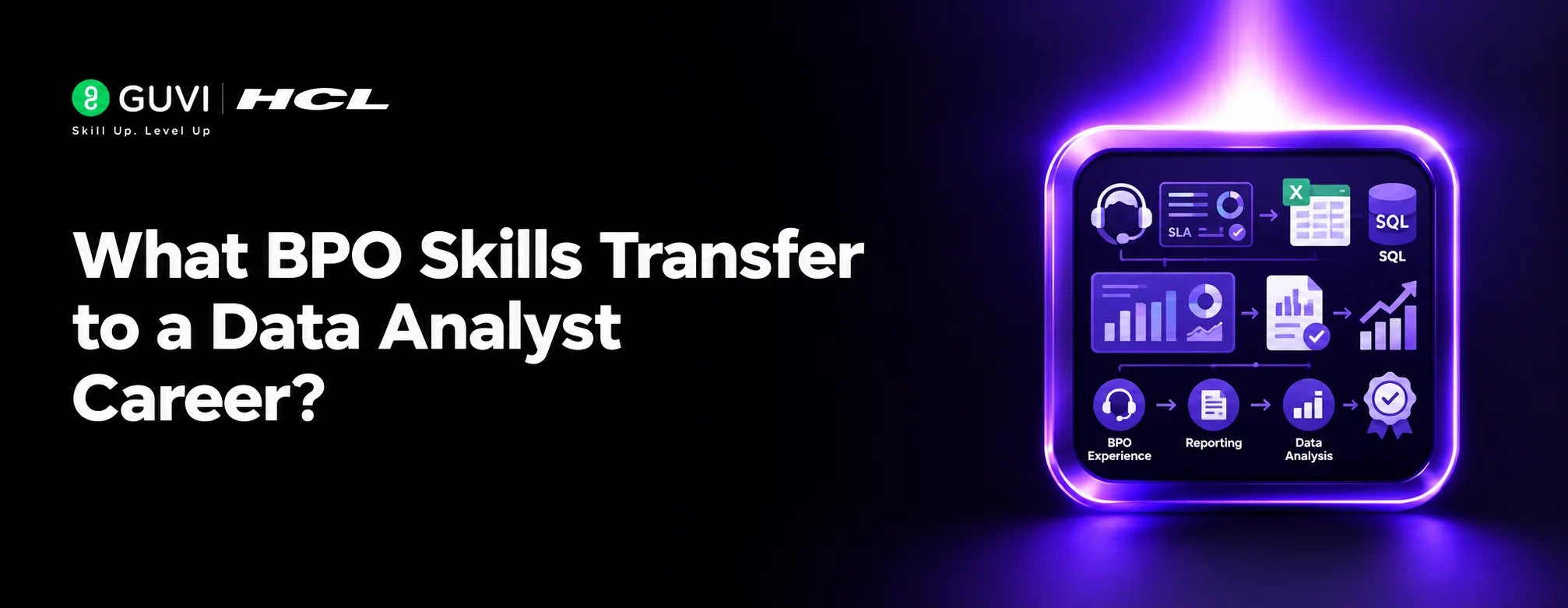
What BPO Skills for Data Analytics Transfer to a Data Analyst Career? - Best Guide
Which Data Roles Suit a BPO Team Lead With People-Management Experience?
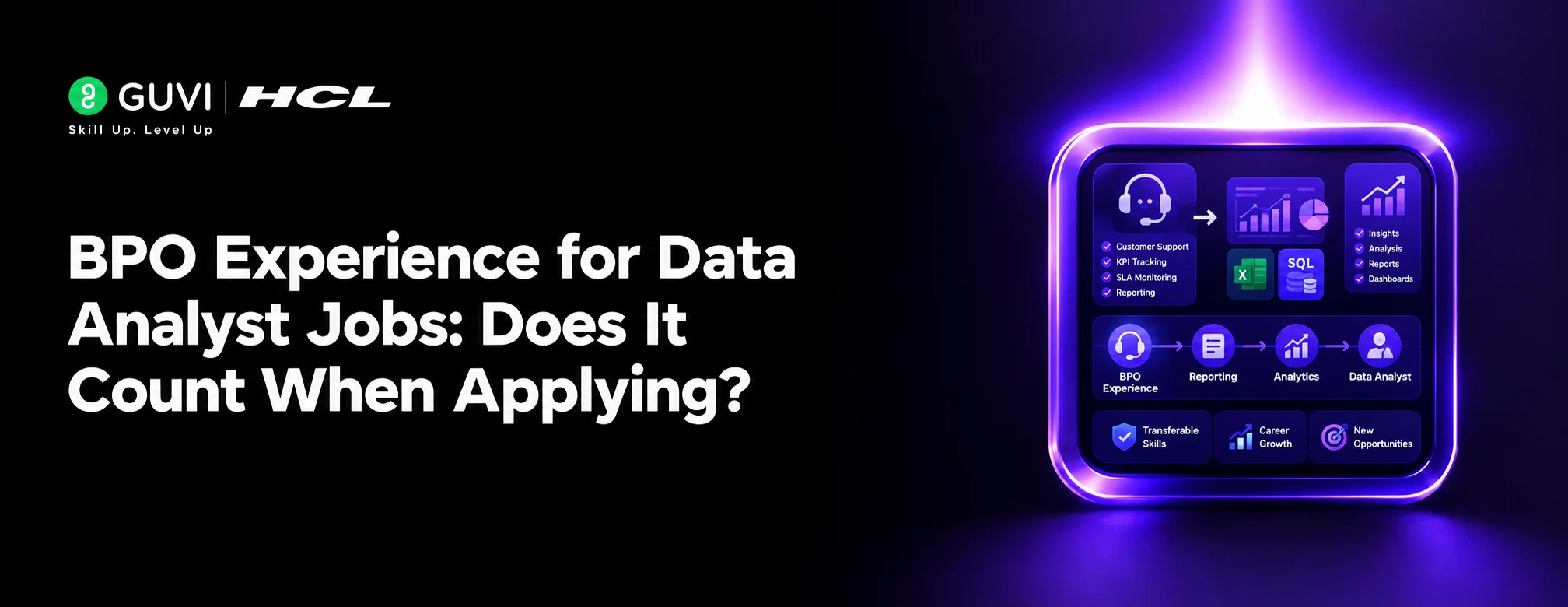
BPO Experience for Data Analyst Jobs Does It Count When Applying? - Best Guide
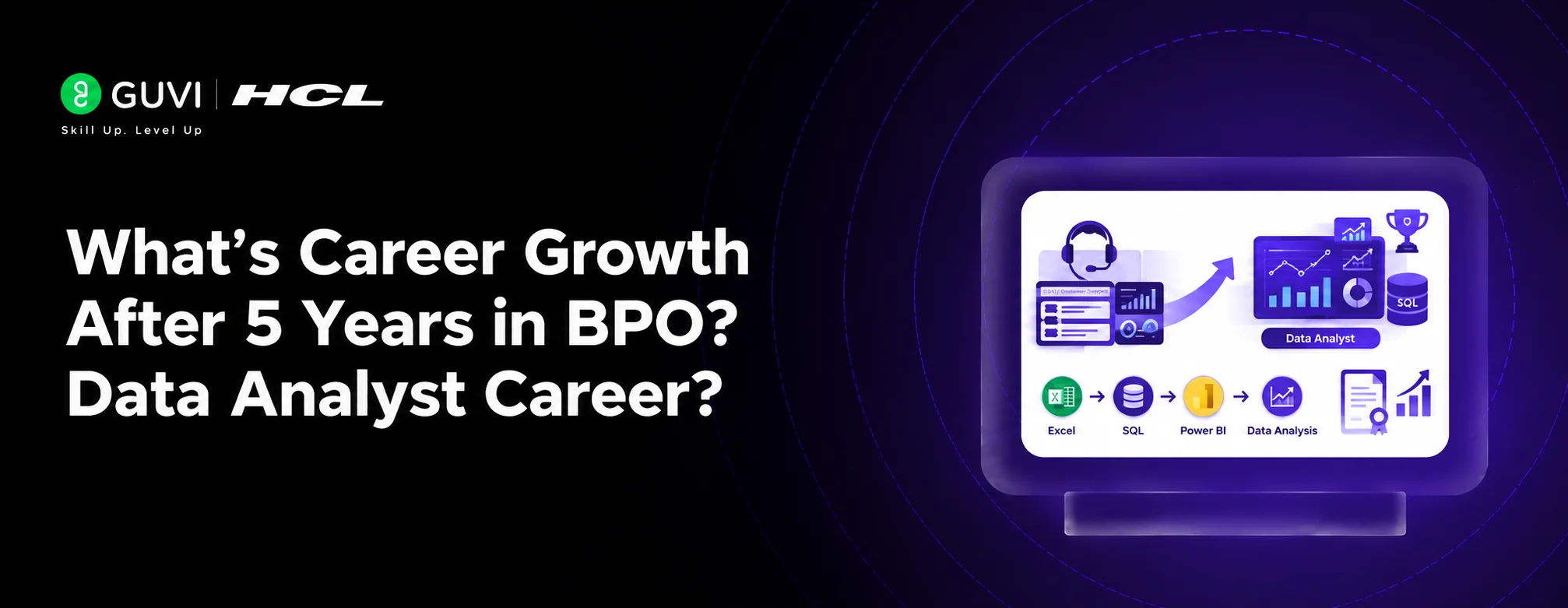
What's Career Growth After 5 Years in BPO? Are You Missing Out on a Data Analyst Career?


Get In Touch For Details! Request More Information

Finance Career Growth After 5+ Years: Should You Add Data Skills?
Oct 09, 2026 4 Min Read 25 Views
(Last Updated)
Another month-end closing. Another round of reports, reconciliations, and deadlines. By now, you probably know the routine all too well. But have you ever wondered what comes next for your career?
If you’ve spent five or more years in finance, you may be handling bigger responsibilities without seeing much improvement in your salary or job role. Finance career growth can sometimes feel slow, especially when you’re doing similar work year after year and aren’t sure which opportunities to explore next.
However, here’s something interesting to consider. You already work with financial data, reports, and business numbers. Learning tools like SQL and Power BI could help you put that experience to use in a field like Data Analytics and open up opportunities beyond traditional finance.
The question is, could adding data skills be the career move you’ve been looking for?
Table of contents
- TL;DR
- Is Your Finance Career Growing or Just Getting Busier?
- Can Data Analytics Help You Grow Beyond Traditional Finance Roles?
- What Career Opportunities Can Finance Professionals Explore With Data Skills?
- How Can You Move From Finance to Data Analytics Without Starting Over?
- Step 1: Start with the basics
- Step 2 : Learn a visualisation tool
- Step 3 : Practise with finance-related projects
- Step 4 : Apply your skills at work
- Step 5 : Prepare for analytics-focused roles
- What Mistakes Should Finance Professionals Avoid When Switching to Data Analytics?
- Applying only for entry-level roles
- Learning too many tools at once
- Building unrelated projects
- Ignoring salary and seniority
- What Could a Finance-to-Analytics Career Transition Look Like in Practice?
- Accountant → Financial Data Analyst
- Finance Executive → Finance Business Analyst
- Wrapping Up
- Frequently Asked Questions
- Will a career change to Data Analytics after 5+ years in finance mean taking a salary cut?
- Do finance professionals need a technical degree to enter Data Analytics?
- Is Python compulsory for finance professionals moving into Data Analytics?
- Can a Chartered Accountant (CA) move into Data Analytics?
- What are some analytics-focused jobs after accounting?
TL;DR
- Finance career growth after 5+ years may require more than traditional accounting and reporting skills.
- Career options include FP&A, financial analytics, risk analytics, and business intelligence.
- Your existing finance experience gives you an advantage when moving into data-focused roles.
- Learning SQL, Power BI, advanced Excel, and basic statistics can help you explore new opportunities.
- You don’t necessarily need to start over. The right data skills can help you build on your existing experience and plan your next career move.
Is Your Finance Career Growing or Just Getting Busier?
Being busy doesn’t always mean you’re progressing. You could be handling more reports, bigger budgets, and tighter deadlines, but still feel like your career hasn’t moved much.
Here are a few signs worth paying attention to:
- Your work feels repetitive: You’re handling the same reports, reconciliations, and routine tasks with little opportunity to learn something new.
- Salary growth has slowed: Your experience has increased, but your compensation hasn’t kept pace.
- Promotions feel out of reach: You’re taking on more responsibilities, but opportunities to move into senior or specialised roles seem limited.
- Your skills haven’t changed much: You’re comfortable with traditional finance tools, but haven’t had much exposure to analytics, automation, or newer technologies.
Of course, this doesn’t mean you need to leave finance. You may simply need to expand what you can do within the field.
Can Data Analytics Help You Grow Beyond Traditional Finance Roles?
Yes, especially if you enjoy working with numbers and understanding what they mean for a business.
Data Analytics builds on your existing finance knowledge and can help you take on more analytical responsibilities.
According to a Market Research Future report on India’s financial analytics market, the industry is projected to reach USD 1.35 billion by 2035, growing at 10.81% annually between 2025 and 2035.
Here’s where these skills can come in handy:
- Financial forecasting: Predict revenue, expenses, and future trends.
- Budget analysis: Identify overspending and opportunities to reduce costs.
- Risk assessment: Spot unusual patterns and potential financial risks.
- Fraud detection: Analyse transactions to identify suspicious activity.
- Business decisions: Turn financial reports into useful insights.
What Career Opportunities Can Finance Professionals Explore With Data Skills?
If you have 5+ years of experience in finance, adding data skills could help you explore roles that combine financial knowledge with analytics.
Here are some career options worth considering:
| Career Role | What You’ll Work On |
| Financial Data Analyst | Analyse financial data, identify trends, and create reports using SQL, Excel, and Power BI. |
| FP&A Analyst | Work on budgeting, financial forecasting, and business performance analysis. |
| Finance Business Analyst | Understand business requirements, improve financial processes, and recommend solutions. |
| Risk Analyst | Analyse financial risks, assess exposure, and support risk management decisions. |
| Business Intelligence (BI) Analyst | Build dashboards, track financial KPIs, and turn business data into useful insights. |
You can also explore the usual responsibilities of a Data Analyst to understand how these roles compare with your current work.
Note: Some of these roles, particularly FP&A and risk analysis, already exist within traditional finance. Data skills can help you qualify for more analytics-focused responsibilities within them.
The word “dashboard” originally referred to a wooden board on horse-drawn carriages that protected passengers from mud kicked up by horses. Today, digital dashboards help finance professionals track budgets, revenue, and business performance, thankfully without the mud!
How Can You Move From Finance to Data Analytics Without Starting Over?
You already have the finance experience. Now it’s about adding the right technical skills to explore analytics-focused roles.

Here’s how you can get started:
Step 1: Start with the basics
- Strengthen your Excel skills
- Learn SQL for working with databases
- Understand basic statistics
Step 2 : Learn a visualisation tool
- Get comfortable with Power BI or Tableau
- Understand how data visualisation works.
- Start by creating simple dashboards using financial data
Step 3 : Practise with finance-related projects
Build a budget tracker, expense analysis dashboard, or revenue forecasting report. These data analytics project ideas can help you apply what you’ve learned.
Step 4 : Apply your skills at work
Look for opportunities to automate reports, analyse spending patterns, or improve existing dashboards in your current role.
Step 5 : Prepare for analytics-focused roles
Build a small portfolio, update your resume, and understand the skills employers expect. A structured data analyst career roadmap can help you plan your next steps.
You can begin this process alongside your current job and gradually assess which opportunities best match your experience.
What Mistakes Should Finance Professionals Avoid When Switching to Data Analytics?
A career change after a few years requires some planning. Here are some common mistakes you should avoid while planning a career change:
Applying only for entry-level roles
Target positions where your existing finance experience adds value instead of automatically applying for fresher-level jobs.
Learning too many tools at once
Focus on the skills required for your target role rather than trying to master everything.
Building unrelated projects
Choose finance-based projects that demonstrate both your analytical skills and industry knowledge.
Ignoring salary and seniority
Research job requirements, compensation, and growth opportunities before making a move.
What Could a Finance-to-Analytics Career Transition Look Like in Practice?
Let’s look at two examples of how experienced finance professionals could use data skills to explore new roles.
1. Accountant → Financial Data Analyst
An accountant with 6 years of experience in financial reporting learns SQL and Power BI. They build dashboards to analyse expenses, revenue trends, and financial performance, helping them prepare for financial analytics roles.
2. Finance Executive → Finance Business Analyst
A finance executive with 5+ years of experience in budgeting and reporting develops skills in data analysis and business intelligence. They begin identifying process inefficiencies and translating financial data into business recommendations.
Wrapping Up
Finance career growth after 5+ years can take several directions. With your existing experience and the right data skills, you can explore analytics-focused roles, take on greater responsibilities, and find new opportunities within the finance industry.
If you’re considering upskilling, HCL GUVI’s Advanced Data Science and Generative AI Program offers mentor-led training, practical projects, and placement support. You can also begin with the self-paced Data Science and Analytics course to build your fundamentals.
Your next career move doesn’t have to be a drastic one. It just needs to make sense for your experience and long-term goals.
Frequently Asked Questions
1. Will a career change to Data Analytics after 5+ years in finance mean taking a salary cut?
Not necessarily. Your salary depends on the role, company, technical skills, and relevance of your finance experience. Finance-focused analytics roles may help you retain some of your existing seniority.
2. Do finance professionals need a technical degree to enter Data Analytics?
No. A finance, commerce, or accounting degree can be relevant for analytics roles. Employers also value practical skills, business knowledge, and project experience.
3. Is Python compulsory for finance professionals moving into Data Analytics?
Not always. Many financial analytics roles primarily use Excel, SQL, and Power BI. Python is particularly useful for automation, advanced analysis, and predictive modelling.
4. Can a Chartered Accountant (CA) move into Data Analytics?
Yes. Among the finance career options available to CAs are financial analytics, risk analytics, and fraud detection. Their expertise in financial reporting, auditing, and compliance can be an advantage.
5. What are some analytics-focused jobs after accounting?
Financial Data Analyst, FP&A Analyst, Risk Analyst, and Finance Business Analyst are some options. These roles are available across banking, insurance, consulting, fintech, and corporate finance departments.
Success Stories









Did you enjoy this article?