


Artificial Intelligence and Machine Learning Articles
AI/ML Skills Gap 2026: Why Companies Can't Find Job-Ready Talent
20 AI/ML Interview Questions Recruiters Can Use Without a Tech Background - Best Guide
How Industry-Backed AI/ML Bootcamps Are Changing the AI/ML Hiring Pipeline - Best Guide 2026
From IT Support to AI Engineer: A Realistic Career Switch Guide 2026


Get In Touch For Details! Request More Information

Using Claude to Build a FAQ Knowledge Base from Scratch
Aug 06, 2026 3 Min Read 247 Views
(Last Updated)
Claude can build a FAQ knowledge base from scratch and speed up the work of creating a knowledge base, especially when you are starting with scattered information. Instead of writing every FAQ manually, you can use Claude to cluster topics, draft answers, and format them into a consistent library.
Table of contents
- TL;DR Summary
- What Claude Can Do to Build a FAQ Knowledge Base from Scratch
- Best Inputs
- Best Outputs to Get Claude to Build a FAQ Knowledge Base from Scratch
- How To Build It
- Simple Workflow
- Recommended Structure
- Quality Control
- Comparison Table
- Common Mistakes
- Real-World Example
- What To Do Next
- Conclusion
- FAQs
- What should I feed Claude first?
- Can Claude generate FAQs from scratch?
- How do I keep answers consistent?
- How often should I update the knowledge base?
- Is Claude enough by itself?
TL;DR Summary
- Claude can generate FAQ articles from docs, tickets, and expert notes.
- It is best used with structured inputs and a fixed FAQ template.
- Real support language improves the quality of the knowledge base.
- Review is still important to catch errors and remove duplicates.
- A knowledge base should be updated regularly as products and policies change.
| Direct Answer Box: Claude is a strong tool for building a FAQ knowledge base because it can turn support tickets, documentation, and subject-matter knowledge into organized questions and answers. It works best when you give it real source material, clear categories, and a consistent format for each entry. |
What Claude Can Do to Build a FAQ Knowledge Base from Scratch
Claude is useful for turning messy input into a structured FAQ system. That includes extracting common questions from support material, grouping similar issues, and drafting concise answers that are easier for customers to scan.
1. Best Inputs
Claude works best when you give it:
- Support tickets.
- Product documentation.
- Help articles.
- Internal notes.
- Subject-matter expert answers.
These sources help the FAQ reflect real customer language instead of generic wording.
2. Best Outputs to Get Claude to Build a FAQ Knowledge Base from Scratch
Claude can help produce:
- FAQ questions.
- Short answers.
- Category labels.
- Related-article links.
- Draft knowledge base articles.
That makes it easier to build both a simple FAQ page and a larger help center later.
How To Build It
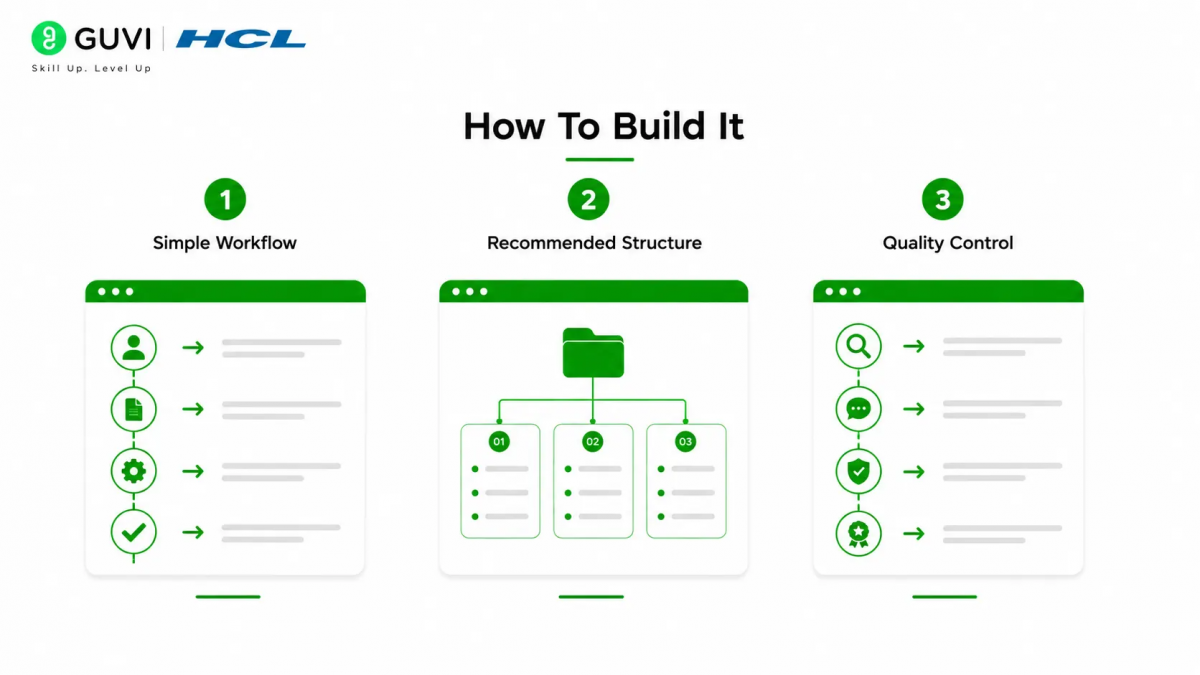
The best approach is to start with source material, then ask Claude to organize it into themes. From there, you can refine the answers and standardize the writing style across the whole knowledge base.
1. Simple Workflow
- Collect support tickets, docs, and expert notes.
- Ask Claude to identify repeated questions and themes.
- Have Claude draft FAQ entries in a fixed format.
- Review duplicates, vague answers, and gaps.
- Publish the approved set and update it regularly.
2. Recommended Structure
A good FAQ entry usually includes:
- A clear question.
- A direct answer.
- Optional next steps or links.
- Consistent tone and wording.
This keeps the knowledge base easy to scan and easier to maintain over time.
3. Quality Control
Claude can do a lot of the drafting work, but it should not be the final reviewer. Human review is important for accuracy, policy compliance, and removing answers that sound right but are not fully correct.
Look for:
- Duplicate questions.
- Conflicting answers.
- Outdated policy details.
- Missing edge cases.
- Overly long responses.
A polished FAQ should be short, accurate, and easy for customers to use.

Comparison Table
| Task | Claude’s Role | Human Role |
| Question discovery | Finds repeated themes in docs and tickets | Decide which questions matter most |
| Drafting answers | Writes first-pass FAQ answers | Verifies accuracy and tone |
| Structuring content | Groups content into categories | Approve navigation and priorities |
| Scaling the KB | Produces many entries quickly | Keep content updated |
| Maintenance | Helps rewrite stale content | Own change control and review |
Claude can help convert actual customer support language into FAQ entries, which often makes the knowledge base feel more useful than one written from scratch. It also helps spot gaps where customers keep asking the same question but no article exists yet.
Common Mistakes
The biggest mistake is using Claude without enough source material. If the model only gets a vague topic, it will produce generic FAQs that may not solve real customer problems.
Avoid:
- Writing FAQs without ticket or doc evidence.
- Using inconsistent answer formats.
- Letting duplicate questions pile up.
- Publishing without review.
- Failing to refresh outdated articles.
Build a FAQ knowledge base from scratch with Claude and turn scattered info into clear answers fast.
Learn AI & Machine Learning with HCL GUVI’s artificial intelligence and machine learning course.
Real-World Example
A customer service team could feed Claude a month of recurring tickets about billing, returns, and account access. Claude can then draft grouped FAQ entries for each topic, which the team can review and publish as a searchable help center.
What To Do Next
Start with one support category and collect the most common questions. Then ask Claude to draft a clean FAQ set, review it for accuracy, and expand from there into a full knowledge base.
Conclusion
Claude is a practical way to build a FAQ knowledge base from scratch because it can organize source material, draft consistent answers, and help scale content quickly. The strongest results come from combining Claude’s speed with human review and regular updates.
FAQs
1. What should I feed Claude first?
Start with support tickets, product docs, internal notes, and expert answers.
2. Can Claude generate FAQs from scratch?
Yes, but it works best when it has real source material to draw from.
3. How do I keep answers consistent?
Use a fixed template for every FAQ entry and review tone before publishing.
4. How often should I update the knowledge base?
Update it regularly as products, policies, and customer questions change.
5. Is Claude enough by itself?
No, Claude should draft and organize the content, but humans should verify accuracy and completeness.
Success Stories

About the Author
HCL GUVI
This article was selected and published as part of the HCL GUVI AI Blogathon 2026, an initiative designed to encourage students, AI enthusiasts, and aspiring tech writers to simplify complex AI concepts through impactful technical content. The contest recognized high-quality, original, and insightful AI-focused blogs, with selected authors receiving publication opportunities on the HCL GUVI blog platform along with official author credits and recognition.
View all posts by HCL GUVI
Connect with me @













Did you enjoy this article?