


Artificial Intelligence and Machine Learning Articles
AI/ML Skills Gap 2026: Why Companies Can't Find Job-Ready Talent
20 AI/ML Interview Questions Recruiters Can Use Without a Tech Background - Best Guide
How Industry-Backed AI/ML Bootcamps Are Changing the AI/ML Hiring Pipeline - Best Guide 2026
From IT Support to AI Engineer: A Realistic Career Switch Guide 2026


Get In Touch For Details! Request More Information
Claude for Supply Chain: Summarizing Reports and RFPs
Aug 17, 2026 4 Min Read 345 Views
(Last Updated)
Supply chain teams operate under constant document pressure, evaluating vendor proposals, reviewing supplier performance reports, and responding to RFPs across multiple simultaneous procurement cycles. Claude for supply chain removes the reading and extraction bottleneck from these workflows, letting analysts focus on decisions rather than document processing. Whether you are comparing three vendor bids or summarizing a 40-page logistics audit, Claude compresses hours of reading into minutes of structured output.
Table of contents
- Quick TL;DR
- What Supply Chain Tasks Claude Handles Best
- Summarizing RFPs with Claude
- Comparing Vendor Proposals Side by Side
- Extracting Key Terms from Supplier Contracts
- Summarizing Supplier Performance Reports
- Building an RFP Response Outline with Claude
- Conclusion
- FAQs
- What is Claude used for in supply chain?
- Can Claude access live supply chain systems or ERP data?
- How accurate is Claude at extracting contract terms?
- Can Claude compare multiple vendor proposals at once?
- Is Claude suitable for regulated procurement environments?
- How long should documents be for Claude to summarize effectively?
Quick TL;DR
Claude for supply chain helps procurement managers, logistics analysts, and operations teams summarize lengthy supplier reports, RFPs, and vendor proposals faster by extracting key terms, risks, deliverables, and pricing structures from dense documents in minutes. Instead of spending hours reading through 50-page RFP responses or quarterly supplier performance reports, teams paste the document content into Claude and receive a structured summary covering everything that matters for a decision.
What Supply Chain Tasks Claude Handles Best
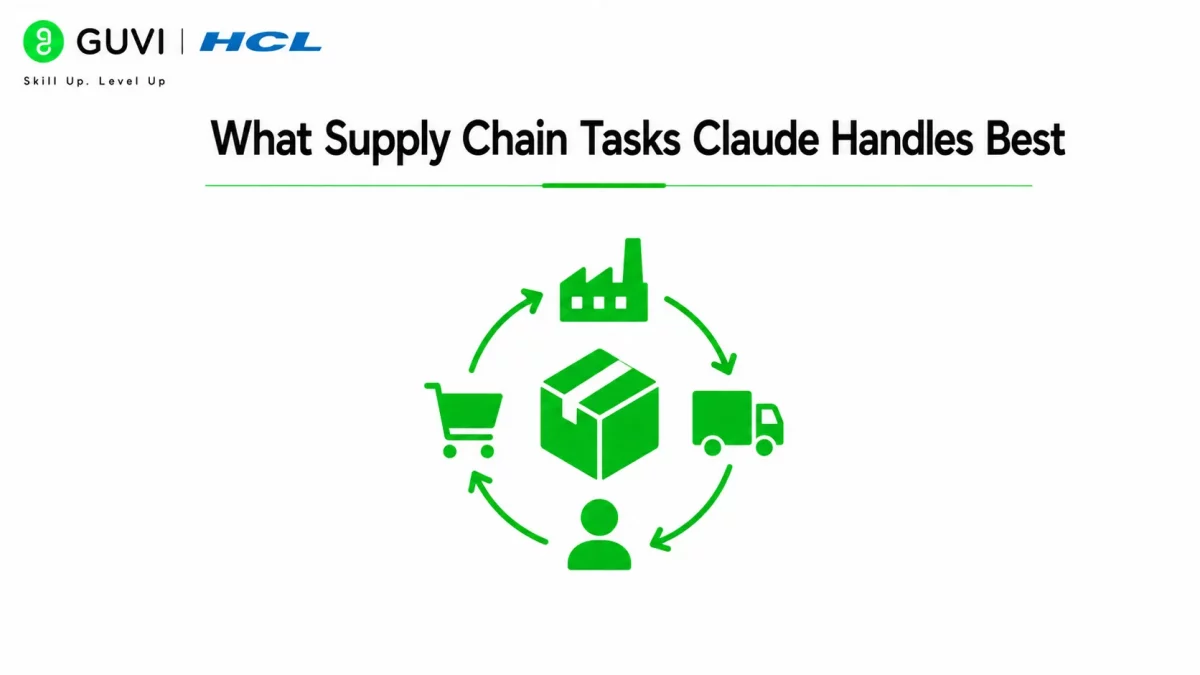
Claude adds the most value in supply chain workflows where the bottleneck is reading and synthesizing dense, text-heavy documents rather than accessing live operational data.
| Task | What Claude Does |
| RFP summarization | Extracts scope, deliverables, deadlines, evaluation criteria, and compliance requirements |
| Vendor proposal comparison | Structures multiple bids side by side for direct comparison |
| Supplier performance reports | Pulls KPIs, SLA breaches, trends, and risk flags from dense reports |
| Contract clause extraction | Identifies payment terms, penalties, liability caps, and renewal conditions |
| Logistics audit summarization | Condenses findings, non-conformances, and corrective actions |
| Risk assessment documents | Surfaces key risk categories, likelihood ratings, and mitigation recommendations |
Claude works best when you bring the document content and Claude provides the analytical and summarization layer. It cannot access live ERP systems, supplier portals, or internal procurement databases independently.
Read More: How to Build AI Apps with Claude and Share Them Easily
Summarizing RFPs with Claude
RFPs are among the most time-consuming documents in supply chain because they combine legal language, technical specifications, compliance requirements, and evaluation criteria across dozens of pages that every bidding team must fully understand before responding.
Paste the full RFP text into Claude with this prompt:

You are a procurement analyst. Summarize this RFP and extract:

1. Issuing organization and project overview (2–3 sentences)

2. Scope of work (bullet list of key deliverables)

3. Submission deadline and key dates

4. Evaluation criteria and weightings

5. Mandatory compliance or certification requirements

6. Contract duration and renewal terms

7. Budget range or pricing structure requested

8. Top 3 risks or unusual requirements a bidder should flag

RFP content:

[paste RFP here]
This structured output replaces the first two hours of an RFP review with a five-minute summary that your team can use to decide whether to bid, assign the right people, and begin the response framework immediately.
Want to build the analytical skills to turn supply chain data and vendor intelligence into strategic procurement decisions? Explore HCL GUVI’s Business Analytics Course, designed to help you develop the data-driven thinking modern operations and procurement roles demand.
Comparing Vendor Proposals Side by Side
Evaluating multiple vendor bids fairly and consistently is one of the highest-stakes tasks in procurement. Without a structured comparison framework, evaluators unconsciously weight the proposals they read first or most recently rather than the most relevant criteria.
Paste two to four vendor proposals into Claude labeled clearly:

You are a procurement manager evaluating vendor proposals.

Compare the following [number] proposals across these dimensions:

1. Proposed solution and approach (how each vendor plans to deliver)

2. Pricing structure and total cost of ownership

3. Delivery timeline and key milestones

4. Relevant experience and references cited

5. Risk factors or gaps in each proposal

6. Compliance with RFP mandatory requirements

7. Strongest differentiator for each vendor

8. Recommended shortlist with one-sentence rationale for each

Vendor A: [paste]

Vendor B: [paste]

Vendor C: [paste]
The shortlist rationale at the end of this prompt is particularly useful for documenting the decision rationale required by most procurement governance frameworks.
Extracting Key Terms from Supplier Contracts
Contract review is one of the most time-consuming tasks in procurement operations, particularly when onboarding multiple new suppliers simultaneously or reviewing renewals across a large vendor portfolio.
Review this supplier contract and extract:

1. Payment terms and invoicing schedule

2. Delivery SLAs and penalty clauses for non-performance

3. Liability cap and indemnification terms

4. Termination conditions and notice periods

5. Intellectual property and data ownership clauses

6. Price escalation or revision mechanisms

7. Renewal and renegotiation terms

8. Any non-standard or high-risk clauses that require legal review

Contract content:

[paste contract here]
Always have your legal team review Claude’s contract extraction output before acting on it. Claude identifies the relevant clauses accurately but final interpretation of contractual obligations requires qualified legal judgment.
Procurement teams using structured vendor comparison frameworks report significantly fewer post-award disputes than those relying on informal evaluation, according to the Chartered Institute of Procurement and Supply. Consistent evaluation criteria across all bids reduces both unconscious bias and governance risk in supplier selection.

Summarizing Supplier Performance Reports
Quarterly supplier performance reports often run 30 to 50 pages combining scorecard data, narrative commentary, incident logs, and corrective action plans. Claude can condense these into executive-ready summaries in minutes.
Summarize this supplier performance report for an operations director audience.

Extract:

1. Overall performance rating and trend vs prior period

2. KPIs that met target, with brief context

3. KPIs that missed target, with root cause if stated

4. SLA breaches and their business impact

5. Open corrective actions and their status

6. Key risks flagged for the next quarter

7. Recommended actions for the procurement team

Keep the summary under 400 words. Flag anything requiring urgent attention.

Report content:

[paste report here]

The 400-word constraint forces Claude to prioritize the most critical information rather than producing a long summary that still requires significant reading time.The average enterprise RFP response takes 20 to 40 hours of staff time to complete, with document reading and structure planning consuming the largest share before any writing begins. Teams using structured summarization tools at the start of the bid cycle consistently reduce total response time while improving quality.
Building an RFP Response Outline with Claude
Beyond reading and summarizing incoming documents, Claude can help supply chain teams draft the structure of outgoing RFP responses more efficiently.
You are helping a logistics company respond to this RFP.

Based on the RFP requirements below, create a response outline that:

1. Maps each RFP evaluation criterion to a dedicated response section

2. Suggests the key content and evidence each section should include

3. Flags any requirements where our response will need to address a gap

4. Recommends the order of sections for maximum evaluator impact

5. Identifies which sections should be prioritized given the evaluation weightings

RFP summary or full text:

[paste here]

Our company context (optional):

[paste relevant capabilities, certifications, past project summaries]
This outline becomes the working document your bid team uses to assign sections, gather evidence, and track completion across the response cycle.
Conclusion
Claude for supply chain removes the document processing bottleneck that slows down procurement cycles, vendor evaluations, and supplier performance reviews across operations teams.
The time saved on document extraction compounds across every procurement cycle, and the structured output formats make it easier to document decisions, maintain audit trails, and brief stakeholders consistently.
FAQs
What is Claude used for in supply chain?
Summarizing RFPs, comparing vendor proposals, extracting contract terms, and condensing supplier performance reports into structured, decision-ready output.
Can Claude access live supply chain systems or ERP data?
No. Claude analyzes document content you paste into it. It cannot connect to ERP systems, supplier portals, or live procurement databases independently.
How accurate is Claude at extracting contract terms?
Claude identifies and extracts relevant clauses accurately from the content provided, but final contractual interpretation should always involve qualified legal review before acting on the output.
Can Claude compare multiple vendor proposals at once?
Yes. Paste two to four labeled vendor proposals and Claude structures a side-by-side comparison across pricing, approach, timeline, experience, and compliance with RFP requirements.
Is Claude suitable for regulated procurement environments?
Claude can assist with document summarization and analysis in regulated environments, but outputs should be reviewed by qualified personnel and treated as a structured first draft rather than a final compliance determination.
How long should documents be for Claude to summarize effectively?
Claude handles documents of significant length in a single session. For very long documents above 100 pages, split into logical sections and summarize each separately before combining the outputs
Success Stories

About the Author
Vishalini Devarajan
An Aerospace Engineer turned content writer, I focus on making complex concepts easy to understand through well-structured, reader-friendly blogs. Whether it’s a technical topic or a non-technical one, I love creating content that is clear, engaging, and impactful.
View all posts by Vishalini Devarajan
Connect with me @












Did you enjoy this article?