


Career Articles
Accountant vs Data Analyst Salary in India After Switching Careers - Best Guide
Finance Managers: Could Data Science Be Your Next Career Move?
Insurance Claims Executive to Data Analyst: Is It a Good Switch?
Banking Executive (Loans, KYC) to Data Analyst: Skills and Career Path


Get In Touch For Details! Request More Information
How to Build Your Personal Brand as a Developer (2026 Guide)
Aug 24, 2026 4 Min Read 840 Views
(Last Updated)
Two developers with identical skills can have wildly different careers. One sends out 200 job applications and hears nothing back. The other gets a DM from a recruiter who has been following their work for months. The difference is rarely talent. It is visibility. Learning to build your personal brand as a developer is one of the highest-leverage things you can do for your career in 2026, and it has nothing to do with being an influencer. This guide shows you how to build your personal brand as a developer step by step, even if you have zero followers and feel like you have nothing interesting to say yet.
Table of contents
- TL;DR Summary
- Why Developers Need a Personal Brand in 2026
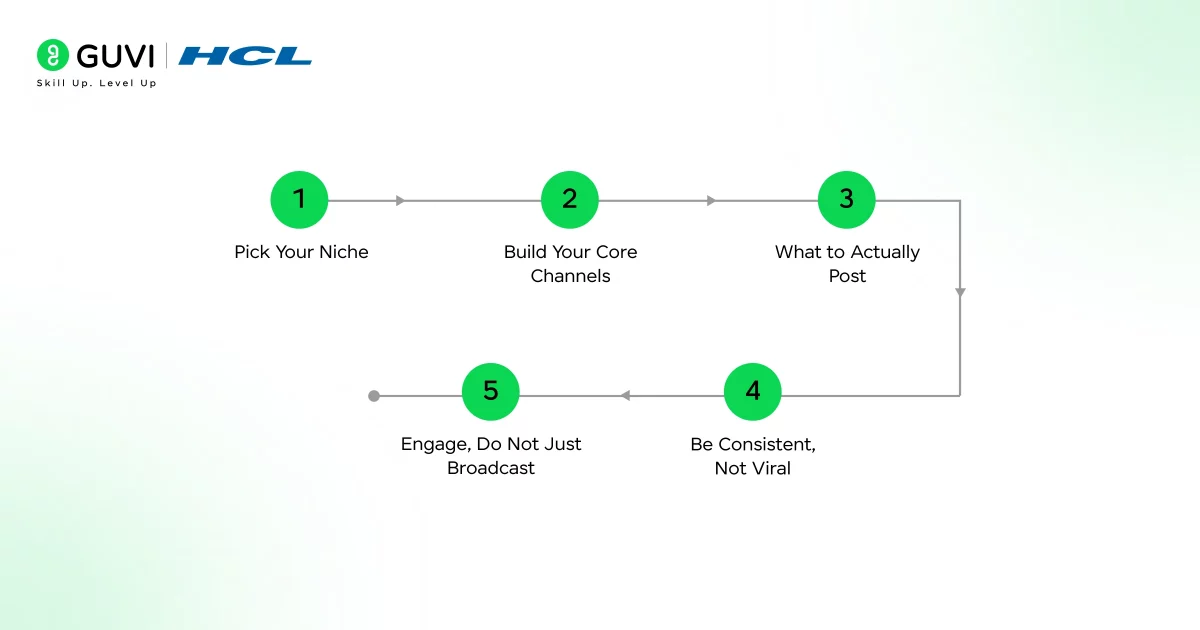
- Step 1: Pick Your Niche
- Step 2: Build Your Core Channels
- Step 3: What to Actually Post
- Step 4: Be Consistent, Not Viral
- Step 5: Engage, Do Not Just Broadcast
- 💡 Did You Know?
- Common Mistakes to Avoid
- Conclusion
- FAQs
- Why should developers build a personal brand in 2026?
- Which platform is best to build your personal brand as a developer?
- What should I post if I feel like a beginner with nothing to share?
- How often should I post to build my personal brand as a developer?
- Does building a personal brand actually help with getting hired?
TL;DR Summary
- To build your personal brand as a developer, you need consistent visibility, not just strong code.
- The core channels in 2026: GitHub, LinkedIn, X (Twitter), a personal blog, and one platform you post on consistently.
- Share what you are learning and building, not just finished, polished work.
- A strong personal brand leads to inbound job offers, freelance clients, speaking invites, and faster career growth.
- Consistency over six months matters more than going viral once.
Why Developers Need a Personal Brand in 2026
Recruiters and hiring managers increasingly search for candidates before candidates search for jobs. A developer who has consistently shared their work online has already done half the interview before the call even happens. This is exactly why so many developers are choosing to build their personal brand as a developer early in their career rather than waiting.
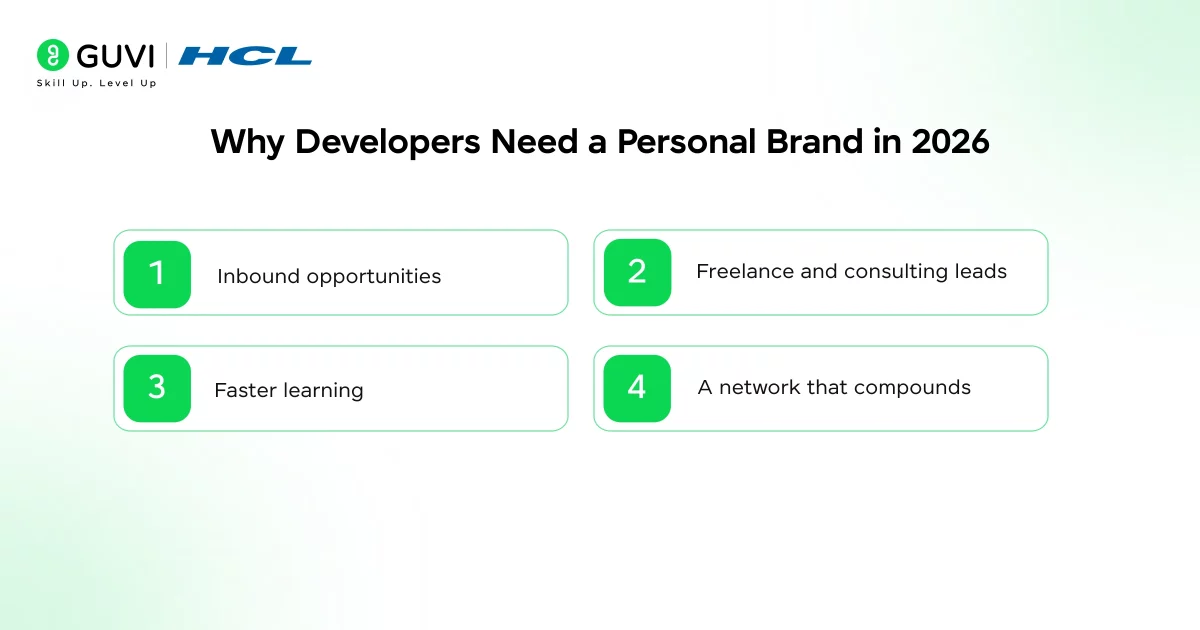
Beyond hiring, when you build your personal brand as a developer, you open doors that applications alone cannot:
- Inbound opportunities. Companies and clients reach out to you instead of the other way around.
- Freelance and consulting leads. A visible portfolio of public work builds trust faster than any pitch.
- Faster learning. Explaining what you build forces you to understand it more deeply.
- A network that compounds. Every post, comment, and project adds to a public record of your growth.
Step 1: Pick Your Niche
You cannot build your personal brand as a developer by being vaguely “good at coding.” Specificity is what makes people remember you.
Pick a lane that combines what you are skilled at and what you enjoy talking about. Examples:
- “I help developers understand system design through simple diagrams”
- “I document my journey learning AI engineering as a self-taught developer”
- “I build and break down open source projects for beginners”
- “I share practical DevOps tips from real production incidents”
Your niche can evolve. But starting with a clear angle, instead of generic “coding content,” is what makes your early posts land with the right audience.
Step 2: Build Your Core Channels
You do not need to be everywhere to build your personal brand as a developer. Pick two or three channels and go deep rather than spreading yourself across six platforms half-heartedly.
| Channel | Why It Matters | What to Post |
| GitHub | Your technical proof of work | Real projects, clean READMEs, consistent commits |
| Where recruiters and hiring managers look | Project breakdowns, lessons learned, career updates | |
| X (Twitter) | Fast-moving developer community | Quick tips, threads, building in public updates |
| Personal blog | Owned platform, strongest for SEO and depth | Tutorials, deep dives, technical decisions explained |
Start with GitHub and one social platform. Add a blog once you have enough to say that a single post or tweet cannot capture.
Step 3: What to Actually Post
This is where most beginners freeze. “I have nothing interesting to share” is the most common reason people delay building their personal brand as a developer, and it is almost never true.
You do not need a breakthrough to post. You need a process. Share:
- A bug you fixed and what you learned debugging it
- A new tool or library you tried, with your honest take
- A project you built, even a small one, with the problem it solves
- A concept you finally understood, explained simply for others learning it too
- A mistake you made and what you would do differently
The “build in public” approach, sharing your process rather than only the finished result, consistently performs better than polished announcements because it is relatable and shows real thinking, not just outcomes.
Step 4: Be Consistent, Not Viral
Most developers quit trying to build their personal brand as a developer after two or three posts get little engagement. That is normal. Almost everyone’s first dozen posts go mostly unnoticed.
What actually works is showing up consistently over months, not chasing one viral moment. Posting once a week for six months beats posting daily for two weeks and quitting. The algorithm rewards consistency, and more importantly, so does human memory. People start to recognise your name after seeing it repeatedly in their feed over time, not after one big post.
Set a realistic cadence you can sustain: one LinkedIn post a week, one GitHub commit most days, one blog post a month. Small and steady compounds.

Step 5: Engage, Do Not Just Broadcast
To genuinely build your personal brand as a developer, treat it as a two-way conversation, not a one-way broadcast. The developers who grow fastest spend as much time commenting thoughtfully on other people’s posts as they do writing their own.
- Comment on posts in your niche with a genuine perspective, not just “great post!”
- Reply to questions in developer communities like Dev.to, Reddit, or Discord servers
- Share other people’s work when it genuinely helps your audience
- Reach out to people doing interesting work and ask real questions
Engagement builds relationships, and relationships are what actually convert into job referrals, collaboration invites, and opportunities, far more reliably than follower count alone.
A personal brand is only as strong as the skills behind it. If you want real projects and depth worth talking about, HCL GUVI’s Full Stack Development Course and AI Software Development Course are both IITM Pravartak certified and give you the kind of hands-on project experience that makes for genuinely interesting content to share.
💡 Did You Know?
- A LinkedIn study found that professionals who post consistently are 3 times more likely to be contacted by recruiters than those with a complete profile but no activity. Regularly sharing projects, achievements, and industry insights helps professionals build visibility and strengthen their personal brand. For developers in 2026, a strong GitHub profile combined with consistent LinkedIn activity is one of the most effective ways to attract inbound recruiter outreach.
Common Mistakes to Avoid
- Waiting until you feel like an expert to start posting. The developers who build a personal brand early benefit from documenting the entire journey, including the beginner phase. Waiting for expertise means waiting years and losing the relatability that makes content connect in the first place.
- Posting inconsistently and then giving up. Three posts over three months will not build anything. A consistent, modest cadence over six to twelve months will. Treat this like compound interest, not a sprint.
- Copying someone else’s voice instead of finding your own. Trying to sound like a popular tech influencer instead of writing the way you actually think and talk makes your content feel hollow. Authenticity is what people actually connect with and remember.
Conclusion
Learning to build your personal brand as a developer is not about chasing followers or becoming an influencer. It is about being visible enough, consistently enough, that opportunities start finding you instead of the other way around. Pick a niche, choose two channels, share your real process instead of only polished wins, and show up consistently for months, not days. The compounding effect on your career, from inbound job offers to freelance leads to a stronger professional network, is real and it starts with a single honest post.
FAQs
1. Why should developers build a personal brand in 2026?
When you build your personal brand as a developer, you create inbound opportunities including job offers, freelance clients, and collaboration invites. Recruiters increasingly search for candidates online before they ever see a resume, making visibility a real career advantage.
2. Which platform is best to build your personal brand as a developer?
GitHub for technical proof of work and LinkedIn for recruiter visibility are the strongest starting points. X (Twitter) works well for fast developer community engagement. Pick two channels and go deep rather than spreading thin across many platforms.
3. What should I post if I feel like a beginner with nothing to share?
Beginners have some of the most relatable content available: bugs fixed, concepts finally understood, and projects built while learning. Documenting your honest process as you build your personal brand as a developer connects more than polished, expert-level content.
4. How often should I post to build my personal brand as a developer?
Consistency matters more than frequency. One thoughtful LinkedIn post a week sustained over six months will build more brand recognition than daily posting for two weeks followed by silence.
5. Does building a personal brand actually help with getting hired?
Yes. Developers who consistently share work and engage with their community are significantly more likely to receive inbound recruiter outreach. A strong GitHub combined with regular professional activity often does more for hiring outcomes than a polished resume alone.
Success Stories

About the Author
Jebasta
I translate the language of data into stories that anyone can understand. As a writer with a data science background, I simplify analytics, AI, and decision-making so beginners and enthusiasts can confidently explore the world of data.
View all posts by Jebasta
Connect with me @










Did you enjoy this article?