


Artificial Intelligence and Machine Learning Articles
Claude for Code Documentation with JSDoc
How to Integrate Claude into a Next.js App with App Router


Get In Touch For Details! Request More Information

Claude for Life Sciences: A Beginner’s Research Guide
Jun 16, 2026 5 Min Read 1271 Views
(Last Updated)
In recent years, life sciences have increasingly become more data driven, with more data coming in the form of large datasets, medical records, and increasing amounts of scientific papers being published all the time. This means it is getting harder to process large datasets, find necessary literature, and generate new insights from this data as traditional tools cannot keep up.
Claude is beginning to be seen more as a specific life sciences based assistant and is designed to simplify research by helping speed up data analysis, summarizing scientific literature, and access to scientific knowledge to help alleviate time spent on laborious research.
In this article, you will learn how to get started with Claude for life sciences, including the main use cases, how to set it up, and best practices for real life research applications.
TL;DR
- Claude for life sciences is a specialist AI assistant that can help with research workflow to analyse data and summarise scientific literature.
- This tool can help life scientists with literature review, clinical data analysis, and the early stages of research.
- Setting up Claude requires good data input and precise prompting.
- The assistant can handle massive datasets and access scientific literature, making it ideal for modern life sciences research environments.
- Users need to employ clear data, prompt, and ensure validation of the outputs.
Table of contents
- What is Claude for Life Sciences
- Why Claude Matters in Modern Research
- Key Use Cases of Claude in Life Sciences
- Literature Review and Summarization
- Clinical and Research Data Analysis
- Drug Discovery and Early-Stage Research
- How to Get Started with Claude
- Accessing Claude
- Setting Up Your First Task
- Preparing Life Sciences Data for Claude
- Prompt Engineering for Optimal Research Performance
- Effective Prompting for Research
- Research Prompt Examples
- Using Claude in the Life Sciences
- What Works Well
- What to Avoid
- Conclusion
- FAQs
- Can Claude be used for life sciences research?
- Do I need coding skills to use Claude?
- How accurate are the results generated by Claude?
- Can Claude analyze clinical or experimental data?
- Is Claude suitable for beginners in life sciences?
- What is the most important factor when using Claude effectively?
What is Claude for Life Sciences
Claude for life sciences refers to using Claude as an AI assistant to assist in scientific research and data-intensive tasks in the areas of life sciences, biotechnology, and medicine. This application can process both structured data and unstructured data such as research papers, which is useful in areas with complex data.
Life sciences workflow tasks such as the examination of research papers, the organization of research data, and the detection of trends consume a lot of researchers’ time, and Claude can help simplify these tasks by reviewing articles and research papers, extracting key information, and providing it in a manageable format that can be employed to achieve analysis and decision-making.
For example, research scientists might use Claude to correlate various research results or to analyze clinical datasets in order to discover trends and anomalies, hence reducing the amount of human input required and enabling researchers to concentrate on cognitive research-related tasks and actual outcomes.
These capabilities are supported by machine learning, which allows Claude to continuously improve its ability to analyze structured and unstructured scientific data.
Why Claude Matters in Modern Research
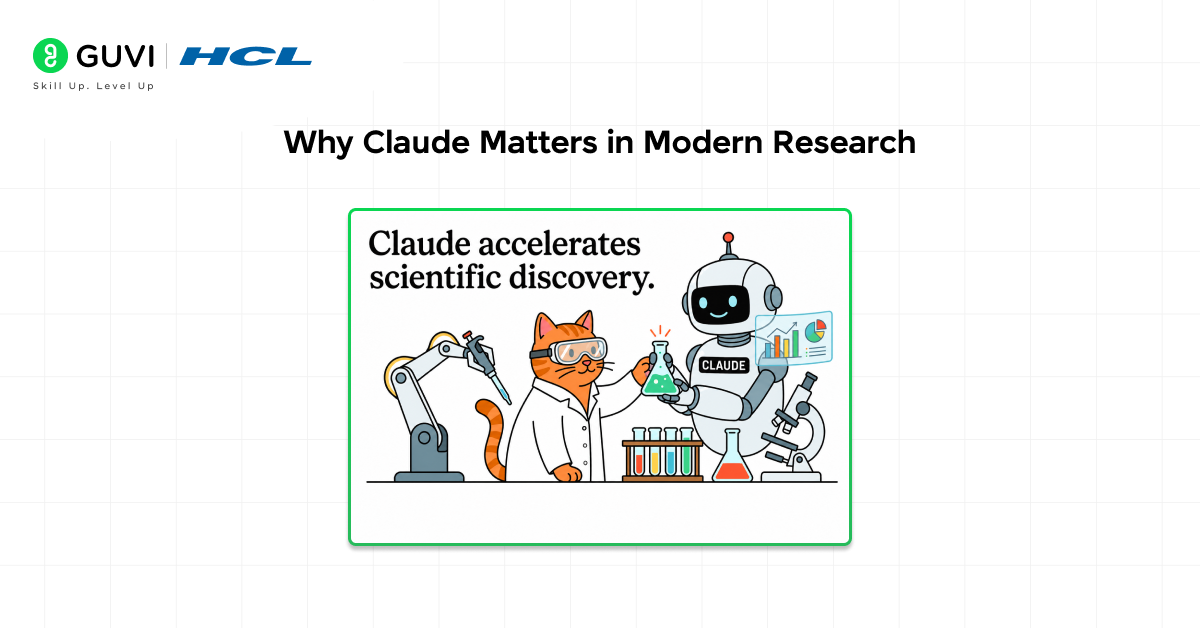
Modern life sciences research tends to be complex, increasingly dominated by a growing amount of data from clinical trials, experiments in the laboratory, and scientific publications. However, the effort required to perform analyses on these research data, as well as other information collected, may cause delays in the entire research workflow and create a lag between actual data collection and information retrieval for decision-making.
Claude’s relevance lies in the streamlining of these processes, involving automation of time-consuming tasks such as those involved in data analysis, literature review, and organization of information. These functions help to eliminate manual, tedious work, enabling researchers to move at an efficient pace from collection to action.
In the field of life sciences research, with researchers under constant pressure for faster discoveries and better outcomes, the application of tools such as Claude has a positive impact on decision-making processes through enhanced consistency and productivity of the analytical procedures involved and is an invaluable asset in present-day research environments.
Key Use Cases of Claude in Life Sciences
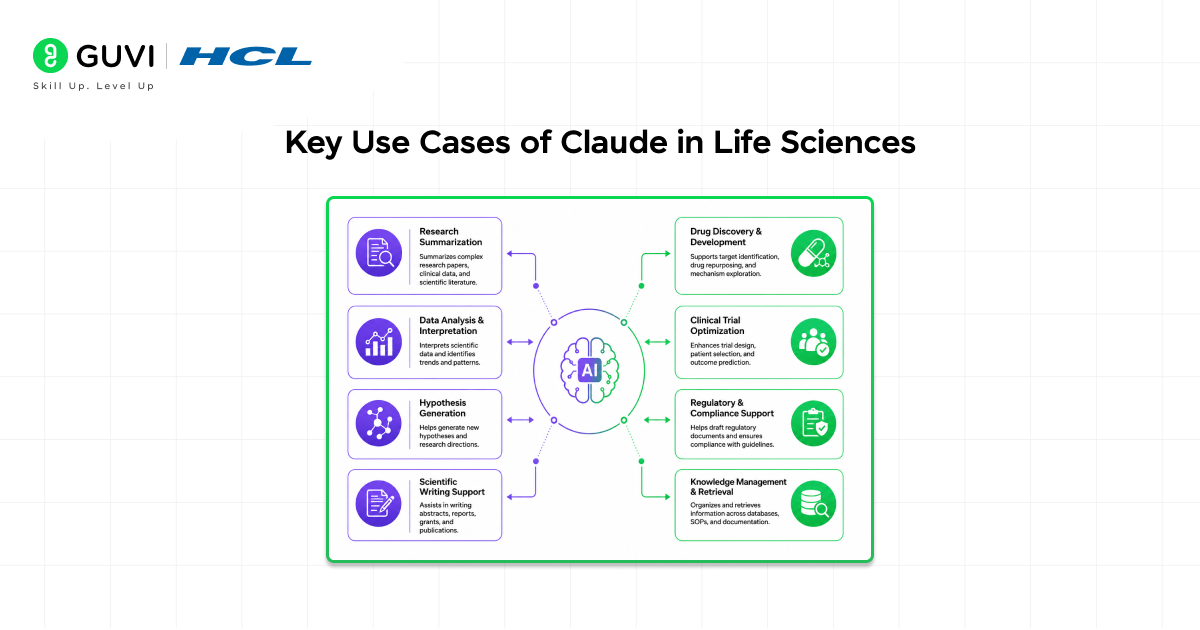
Claude can be used across different areas in life sciences research and helps simplify complex, data-heavy tasks throughout the research process.

Literature Review and Summarization
A huge part of research involves reading a variety of papers with very dense information that takes time to fully read through. Claude summarizes some of the main conclusions from the papers as well as important findings, which makes comparing papers much easier and faster.
A researcher could then input numerous papers and tell Claude to retrieve similarities or differences in conclusions among them, which can greatly shorten reading time without losing an understanding of the findings in those articles.
This process is made possible through natural language processing (NLP), which helps Claude understand, interpret, and summarize complex research papers efficiently.
Clinical and Research Data Analysis
Analyzing sets of data, including records of patients or outcomes of research experiments, is very commonly performed within life sciences. Claude can help in making sense of patterns within a large dataset by summarizing patterns and inconsistencies within structured datasets.
This can save time because these datasets can be quite large, and reading through and comparing each entry by hand is not an effective or efficient option.
These tasks are closely related to data science, where large datasets are analyzed to uncover patterns, trends, and actionable insights in research environments.
Drug Discovery and Early-Stage Research
This type of early-stage research uses a number of varied findings to generate hypotheses about possible drug targets or biological relationships. Claude is useful here because it can compile information, summarize findings, and assist with exploring a hypothesis that the researcher has.
A researcher could provide compound data and ask Claude to search for relationships to a specific marker, and it will produce information that is quickly analyzable by a researcher to make further discoveries or corrections.
How to Get Started with Claude
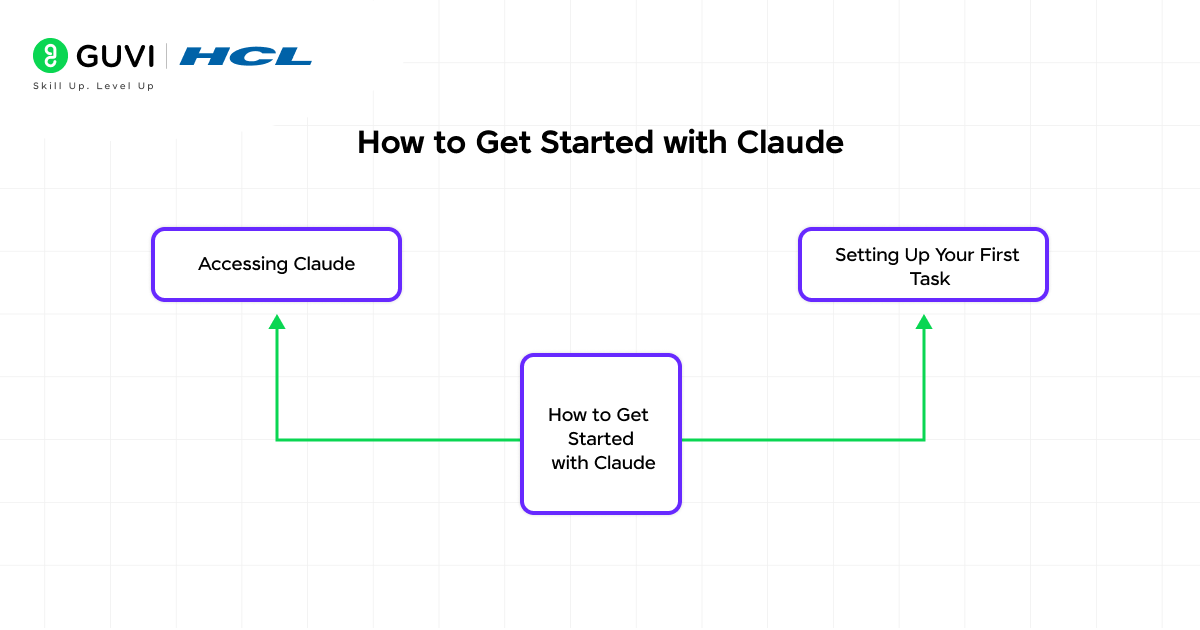
Getting started using Claude for research does not have to be overly complicated, but clear and precise instructions are required when inputting the type of data information. Using it as a research tool rather than treating it as a generic chat assistant.
Accessing Claude
Claude can be accessed through its web interface, where users can interact by entering prompts or uploading relevant data. Researchers can begin by pasting research papers, clinical notes, or structured datasets, depending on the task.
For example, a user can paste a section of a research paper and ask:
“Summarize the key findings and highlight any limitations in this study.”
Setting Up Your First Task
Once access is set up, the next step is to define a clear and specific task. This could include summarizing research, analyzing datasets, or identifying patterns in experimental results.
For instance, you might provide a dataset and ask:
“Analyze this clinical dataset and identify any trends or anomalies in patient outcomes.”
Starting with simple and focused prompts helps produce more accurate results and builds a better understanding of how Claude can support research workflows.
Preparing Life Sciences Data for Claude
The quality of results generated by Claude depends heavily on how well the data is prepared before input. In life sciences, datasets often come from multiple sources, which can lead to inconsistencies, missing values, or unclear structures that affect analysis.
To improve accuracy, data should be organized in a clean and consistent format, where each variable is clearly labeled, and each record is structured properly. For example, a clinical dataset should have defined columns such as patient ID, condition, treatment, and outcome.
It is also important to remove unnecessary noise, such as duplicate entries or incomplete records, before using the data. Well-prepared data allows Claude to generate more reliable insights and reduces the chances of misleading or incorrect outputs during analysis.
This highlights the importance of data preprocessing, where raw data is cleaned, structured, and prepared to ensure accurate and reliable analysis.
Prompt Engineering for Optimal Research Performance
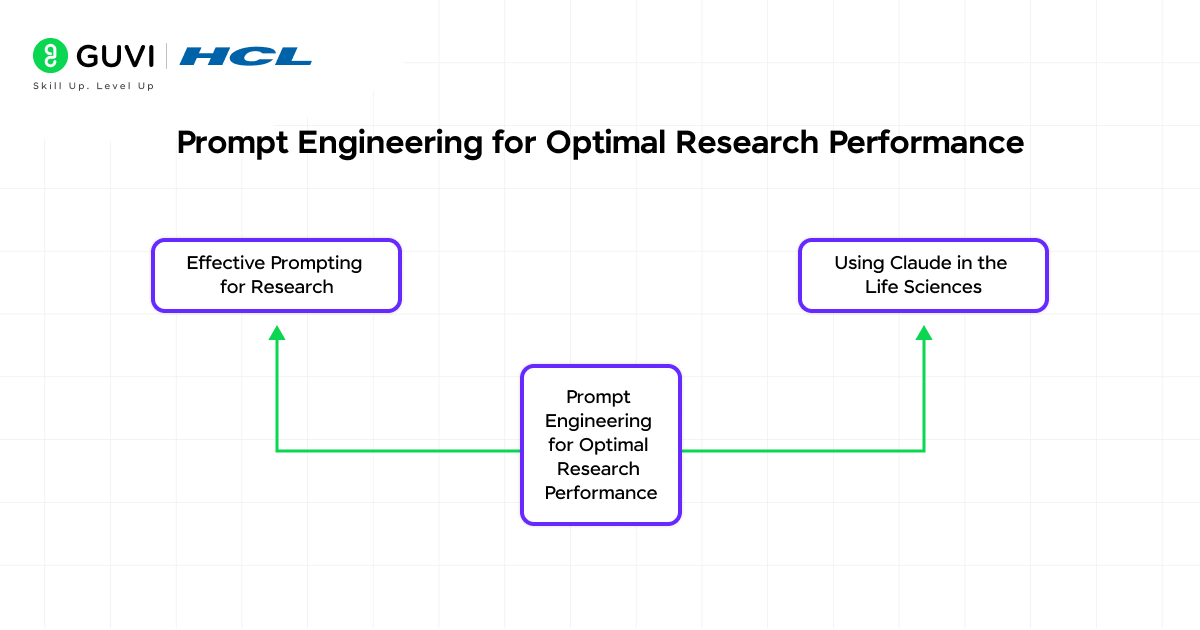
The effectiveness of Claude’s research relies not only on the data but also on clear communication of the research objectives. For research within the life sciences field, vagueness can often result in a very general and unfinished answer. Clearly articulating exactly what Claude should accomplish.
Effective Prompting for Research
The structure of an effective prompt should always account for the task, context, and anticipated output. Asking broad questions like “analyze this” will often give a poor and unhelpful output when a very specific task is required.
For example:
“Highlight the trends in this patient group” rather than just “analyze this data.”
Research Prompt Examples
Using this structured format, it is possible to obtain much more targeted responses when using Claude for research purposes.
- “Summarize these clinical research papers.”
- “What patterns are identifiable in this sample of drug-resistant bacteria?”
- “Compare these two research datasets and tell me what are the discrepancies.”
If you’re curious to go deeper into how prompts actually work, this AI ebook can be a helpful read.
Using Claude in the Life Sciences
Research use in life sciences is driven by structured input with a carefully examined output. While it certainly provides researchers with efficiency, there is always a human verification process.
What Works Well
- Structured and organized inputs
- Focused and specific inputs
- Examining outputs before putting them to use
These points ensure that the outputs are applicable to the task at hand.
Researchers spend nearly 60% of their time reviewing literature and organizing data rather than conducting experiments. Tools like Claude help reduce this burden by summarizing research papers and extracting key insights instantly.
What to Avoid
- Trust outputs without confirmation
- Provide disorganized or inconsistent input
- Input unclear or broad instructions
By following these points, researchers can get the best output from Claude as a tool to aid in the research process.
To build practical skills in AI for life sciences research, especially in areas like data analysis, literature review, and prompt engineering, programs such as Artificial Intelligence and Machine Learning course by HCL GUVI in collaboration with IIT Madras Pravarta can help bridge the gap between theoretical understanding and real-world application.
Conclusion
Claude can offer real utility and leverage for those working in life sciences, acting as an indispensable assistant that helps life scientists organize massive datasets, summarize scientific articles, and handle routine laboratory tasks. The capacity to process both structured and unstructured data gives it utility across a wide range of research workflows.
However, like all technology, its utility is determined by how researchers apply it, whether in terms of preparing a clean dataset and crafting clear and focused questions or interpreting and validating its responses. When employed judiciously, Claude doesn’t replace the scientist’s expertise, but rather enhance it by offloading manual, repetitive tasks, thereby enabling increased efficiency and faster analyses.
Working with small, clearly defined use-cases will enable life scientists to intuitively work their way towards more consistent insights, reduced research time, and data-driven decision-making in their respective professional lives.
FAQs
1. Can Claude be used for life sciences research?
Yes, Claude can support life sciences research by helping with tasks such as literature summarization, data analysis, and identifying patterns in research datasets.
2. Do I need coding skills to use Claude?
No, Claude can be used through simple prompts without requiring coding knowledge, making it accessible for researchers from non-technical backgrounds.
3. How accurate are the results generated by Claude?
Claude can provide useful insights, but its accuracy depends on the quality of input data and prompts. Outputs should always be reviewed and validated before use.
4. Can Claude analyze clinical or experimental data?
Yes, Claude can assist in analyzing structured datasets, identifying trends, and highlighting inconsistencies in clinical or experimental data.
5. Is Claude suitable for beginners in life sciences?
Yes, beginners can start with simple tasks like summarizing research papers or organizing data, and gradually move to more advanced use cases.
6. What is the most important factor when using Claude effectively?
The most important factor is providing clear prompts and well-structured data, along with validating outputs to ensure reliability.
Success Stories

About the Author
Vishalini Devarajan
An Aerospace Engineer turned content writer, I focus on making complex concepts easy to understand through well-structured, reader-friendly blogs. Whether it’s a technical topic or a non-technical one, I love creating content that is clear, engaging, and impactful.
View all posts by Vishalini Devarajan
Connect with me @












Did you enjoy this article?