


Artificial Intelligence and Machine Learning Articles
Finance Manager to Data Analytics: Career Growth, Salary and Seniority
How to Evaluate LLM Outputs in Production Deployments
AI/ML Skills Gap 2026: Why Companies Can't Find Job-Ready Talent
20 AI/ML Interview Questions Recruiters Can Use Without a Tech Background - Best Guide


Get In Touch For Details! Request More Information

Perplexity Computer Review: Is This the Future of AI or Just Hype?
May 06, 2026 4 Min Read 1131 Views
(Last Updated)
AI tools are advancing rapidly, yet most stick to the same formula: you ask a question, and they give an answer. This approach is functional but leaves a gap between acquiring information and completing tasks.
Enter Perplexity Computer. Unlike others, it moves beyond simply providing answers; it aims to help complete tasks. It transitions from research to execution, acting more like a collaborator than a mere responder.
Yet the key question remains: Does it fulfill its promises, or is it just another AI tool with more hype than substance? In this article, you’ll discover what Perplexity Computer excels at, where it misses the mark, and whether it’s worth considering for future use.
TLDR:
- Perplexity Computer is not just another AI search tool. It actually performs tasks, which changes how most AI tools are used today.
- Instead of relying on one model, it combines multiple systems to handle research, coding, and automation more effectively.
- One of its strongest points is handling multi step workflows. It can move from research to execution without constant input.
- It also stands out by combining real time web research with task execution in one place, which many tools still struggle with.
- That said, the cost is high, which may not suit beginners. It is still evolving, and limited transparency can make it less reliable for complex tasks.
Table of contents
- What is Perplexity Computer?
- How It Is Different from Traditional AI Tools
- How Perplexity Computer Works?
- Multi-Model System
- Task Execution Approach
- Workflow Breakdown
- Common Mistakes When Using Perplexity Computer
- Key Features of Perplexity Computer
- What Perplexity Computer Gets Right
- Where Perplexity Computer Falls Short
- Real World Use Cases
- Is Perplexity Computer Worth It
- Future of AI Agents and Where Perplexity Fits
- Conclusion
- FAQs
- What is the Perplexity Computer used for?
- How is Perplexity Computer different from traditional AI tools?
- Is Perplexity Computer suitable for beginners?
- Can Perplexity Computer replace other AI tools?
- Is Perplexity Computer reliable for complex tasks?
What is Perplexity Computer?
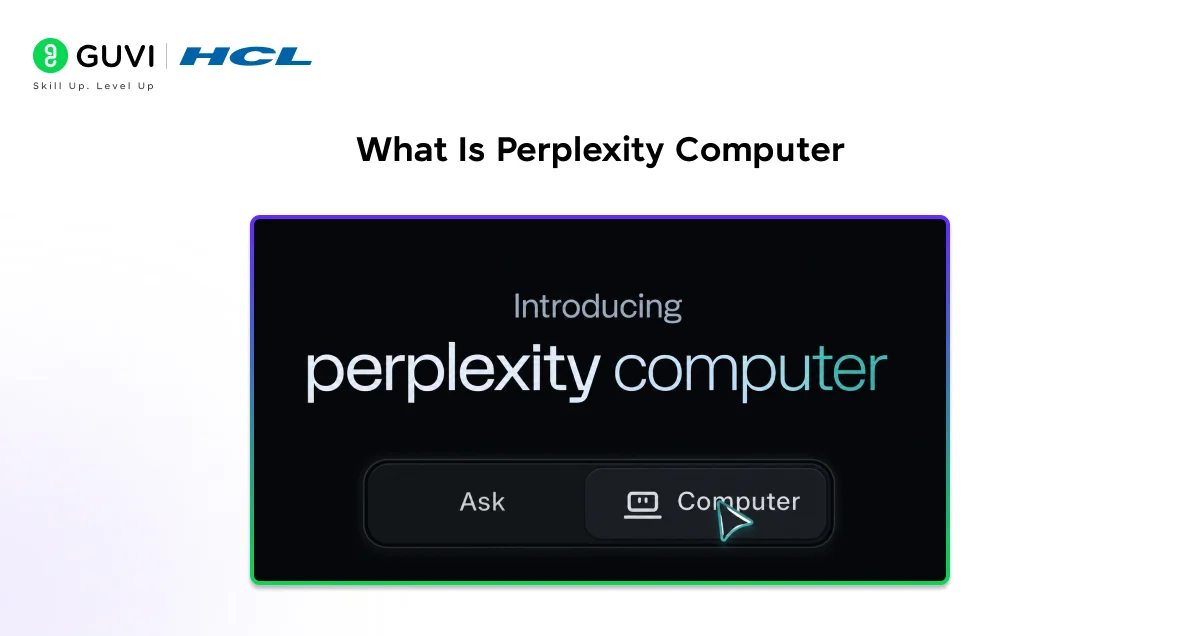
Perplexity Computer isn’t your typical AI. It doesn’t just give you answers. This system builds on platforms like Perplexity AI by combining research, reasoning, and execution into one seamless process.
When given a goal, it breaks it down step by step, producing outputs like reports or code along the way. Unlike most AI assistants, it aims to manage complex tasks with less back-and-forth interaction.
This makes it feel more like a working system rather than just another assistant.
If you want to explore how AI systems, automation, and agent-based tools are evolving, you can also check out this Generative AI ebook to build a stronger understanding of modern AI workflows.
How It Is Different from Traditional AI Tools
Traditional AI tools usually need constant input from users, slowing down tasks that have several steps. Perplexity Computer tackles this issue by combining research and execution into a single process.
It tries to complete workflows in one go. Rather than relying on a single system, it uses multiple AI models. This approach boosts performance but at the cost of some control and transparency.
Modern AI systems are shifting toward agent-based execution. Tools are now capable of completing tasks, not just answering questions. This change is likely to transform the way developers and businesses engage with AI tools.
How Perplexity Computer Works?
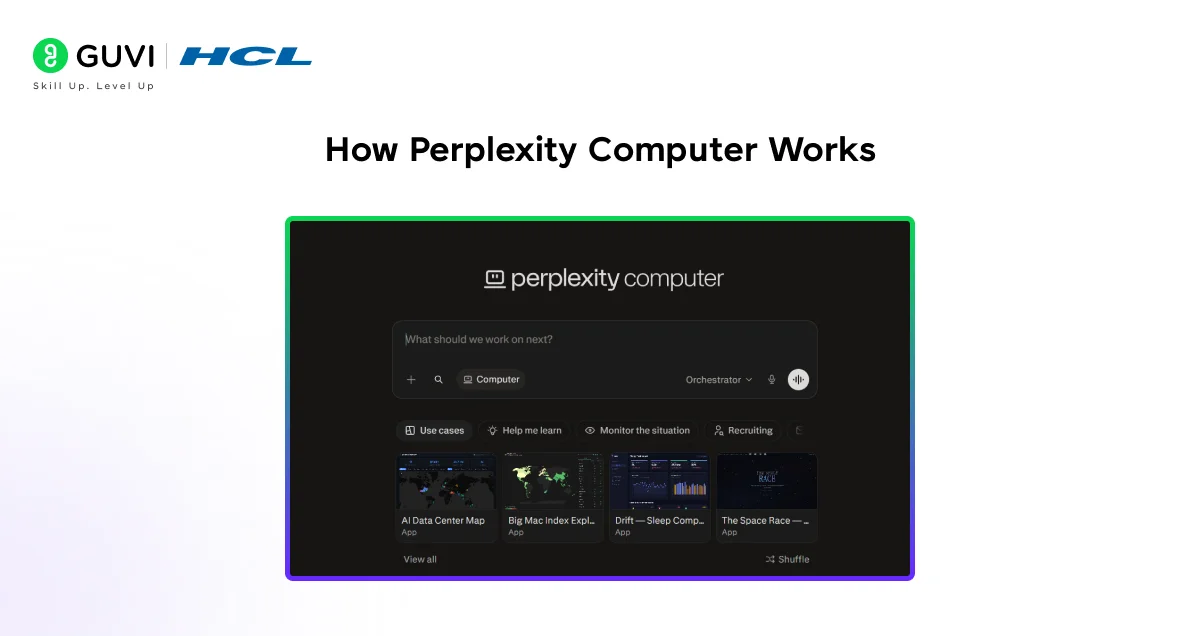
Perplexity Computer operates by utilizing a variety of AI models for distinct tasks. Rather than depending on one system, it chooses the best model suited to each specific task. It accepts a goal as input and divides it into smaller, manageable steps.
These steps undergo research, reasoning, and execution processes to produce a comprehensive output. Although this approach minimizes manual work, the results still need validation. The outcome can differ based on how complex the task is and the availability of data.
In practice, it usually manages workflows such as:
- gathering information from diverse sources
- processing and summarizing data
- producing outputs like reports or code
Multi-Model System
The Perplexity Computer leverages multiple AI models instead of just one, allowing it to tackle tasks like research, coding, and analysis more effectively.
It assigns each model to the tasks they excel at, which boosts the overall quality of its outputs. This ability makes it perform better with diverse tasks.
Task Execution Approach
Rather than handling tasks step by step, it aims to complete them in a single flow, collecting data, processing it, and delivering results in one go.
While this speeds up complex workflows, it may compromise transparency as users might not see how each internal step is executed.
Workflow Breakdown
When executing tasks, Perplexity Computer uses a structured flow. It starts by grasping the objective, then divides the task into smaller parts before executing them individually.
This process typically involves research, processing data, and generating output. Different models or systems handle each phase based on what’s needed. While this approach reduces manual labor, success depends on clear goals and high-quality inputs.
Common Mistakes When Using Perplexity Computer
One common mistake is giving vague or incomplete instructions. Since the system depends on understanding the goal, unclear inputs often lead to weak or inconsistent results.
Another issue is trusting the output without verification. While it can execute tasks, the results are not always fully accurate, especially for complex or data heavy workflows.
Many users also expect it to replace all tools completely. In reality, it works best alongside other tools, not as a full replacement for every task.
Key Features of Perplexity Computer
Perplexity Computer introduces features that focus on execution rather than just responses. It is designed to handle complete workflows instead of isolated tasks.
Some of the key features include:
- Multi-model integration for handling different types of tasks: This allows better performance across research, coding, and analysis.
- Real-time web research with source-backed outputs: Ensures information is current and more reliable.
- Ability to automate multi-step workflows: Reduces manual effort and improves productivity.
- Generation of structured outputs like reports and code: Makes it useful for practical tasks that improve productivity.
These features make it more suitable for complex tasks, especially where research and execution need to happen together.

What Perplexity Computer Gets Right
Perplexity Computer stands out by moving beyond just answering questions. It doesn’t stop at providing information; instead, it goes a step further by completing tasks, which is much more useful in real-world scenarios. When you need both research and actual output, this system really shines.
By using real-time data alongside task execution, it eliminates the hassle of juggling multiple tools. This means users don’t have to bounce between different platforms for researching, writing, and doing tasks anymore, making everything flow more smoothly.
Where Perplexity Computer Falls Short
Another aspect is its clever use of a multi-model system. Different models handle different jobs, so mixed workflows are managed effectively without any hiccups. Research, coding, and analysis are more efficient with this tool than with single model solutions.
However, the Perplexity Computer has its drawbacks. The price tag is steep compared to many AI tools out there. This can be a barrier for newcomers or those who are just dabbling in the field. Then there’s the learning curve; it simplifies execution but still demands some prior knowledge of AI tools and workflows to really get the hang of it.
Real World Use Cases
Another issue is the lack of control and transparency. Tasks happen in the background, so users often can’t see the decision-making process or how each step unfolds. Plus, it’s not always reliable across all tasks.
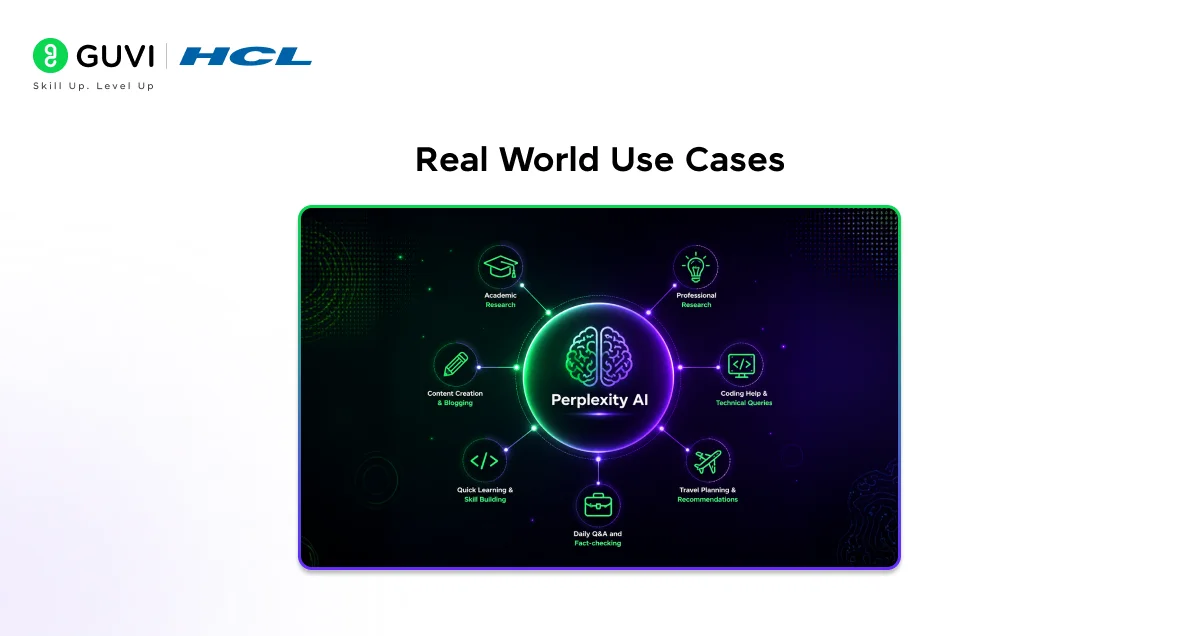
Computers shine when they can combine finding information and taking action. They make our lives easier by doing several steps at once. Imagine wanting a report on a specific topic: computers can gather the info, sort it out, and give back a neat report without jumping between different programs.
In everyday scenarios, they are commonly used for:
- coding tasks and generating snippets
- understanding complex logic
- market research
- summarizing large amounts of information
Is Perplexity Computer Worth It
Thinking about the Perplexity Computer: Here’s the answer. If you often juggle complex tasks that blend research and action, it’s pretty handy. You’ll zip through your work without constantly hopping between tools, all in one place.
But for beginners or occasional users, it might not be ideal. It’s pricey, and if you prefer full control over your workflow, its limitations may be frustrating. It works best as a productivity tool for specific use cases rather than a complete AI replacement.
Future of AI Agents and Where Perplexity Fits
Automation is becoming increasingly important. The progression of AI tools is moving from simple assistance to systems capable of handling tasks independently. This shift is influencing workflow design across industries.
Perplexity Computer reflects this transformation by focusing on task execution and automation. While still evolving, it offers an early look at how AI agents may function in the future, with more autonomous systems reducing the need for manual effort.
If you are exploring AI tools and automation workflows, understanding how systems like Perplexity Computer work can significantly improve your productivity and efficiency. As you progress, exploring structured learning paths like HCL GUVI’s IIT Pravartak Generative AI Course can help you understand how these technologies are applied in real-world scenarios.
Conclusion
Perplexity Computer marks a change from AI tools that simply answer questions to those that strive to complete tasks. It works well for workflows involving research, processing, and generating outputs.
However, it comes with some drawbacks. Issues like cost, control, and reliability still need improvement, especially in critical or complex situations.
As AI systems evolve, tools like this are starting to show where things are heading. Learning how to use them effectively could give you an edge as automation becomes more common.
FAQs
1. What is the Perplexity Computer used for?
Perplexity Computer is used to automate multi-step tasks such as research, content generation, and basic coding. It combines information gathering and execution in a single workflow.
2. How is Perplexity Computer different from traditional AI tools?
Traditional AI tools focus on answering questions, while Perplexity Computer focuses on completing tasks. It attempts to handle research, processing, and output generation in one flow.
3. Is Perplexity Computer suitable for beginners?
It can be used by beginners, but it may not be the most practical option due to its cost and workflow complexity. Simpler AI tools are often easier to start with.
4. Can Perplexity Computer replace other AI tools?
No, it cannot fully replace all AI tools. It works best as part of a workflow and may still require other tools for specialized or high-precision tasks.
5. Is Perplexity Computer reliable for complex tasks?
It can handle complex workflows, but results may vary. For critical tasks, users should always review and verify the output.
Success Stories

About the Author
Lukesh S
A professional content writer who has experience in freelancing and now working as a Technical Content Writer at HCL GUVI having sound knowledge in Blog Writing and Creative Writing!
View all posts by Lukesh S
Connect with me @








Did you enjoy this article?