


Artificial Intelligence and Machine Learning Articles
How to Evaluate LLM Outputs in Production Deployments
AI/ML Skills Gap 2026: Why Companies Can't Find Job-Ready Talent
20 AI/ML Interview Questions Recruiters Can Use Without a Tech Background - Best Guide
How Industry-Backed AI/ML Bootcamps Are Changing the AI/ML Hiring Pipeline - Best Guide 2026


Get In Touch For Details! Request More Information
Identify Phishing Scams Generated from AI
Apr 28, 2026 3 Min Read 942 Views
(Last Updated)
Artificial Intelligence is transforming the digital world, making things faster and easier for humans. However, Artificial Intelligence has also caused a rise in sophisticated cyber scams.
Phishing scams have become smarter, tailored, and difficult to find because they are created using AI. People are being fooled by phishing scams because they look very real and genuine.
In this article, you will learn what AI-generated phishing scams are, how they work, and how to identify the signs to avoid being a victim of this kind of cybercrime. By the time you finish reading this article, you will be aware of the simple steps you can take to avoid being a victim of this kind of cybercrime.
Quick Answer:
AI-generated phishing is a form of cyber scam where attackers use AI tools to generate very authentic emails, messages, calls, and videos from trusted sources. The main aim of this cyber scam is to trick victims into revealing sensitive information.
Unlike other forms of phishing scams, AI-generated phishing is more personalized and can be created very quickly. However, to remain safe from this cyber scam, one should always verify the sender and never share sensitive information.
Table of contents
- What is AI-Generated Phishing?
- How AI is Used in Phishing?
- How to Spot AI Phishing Scams?
- Simple Ways to Stay Protected
- Final thoughts
- FAQs
- What is AI-generated phishing?
- How is AI phishing different from traditional phishing?
- How can you identify AI-generated phishing scams?
- Can AI phishing scams use voice and video?
- How can you protect yourself from AI phishing attacks?
What is AI-Generated Phishing?
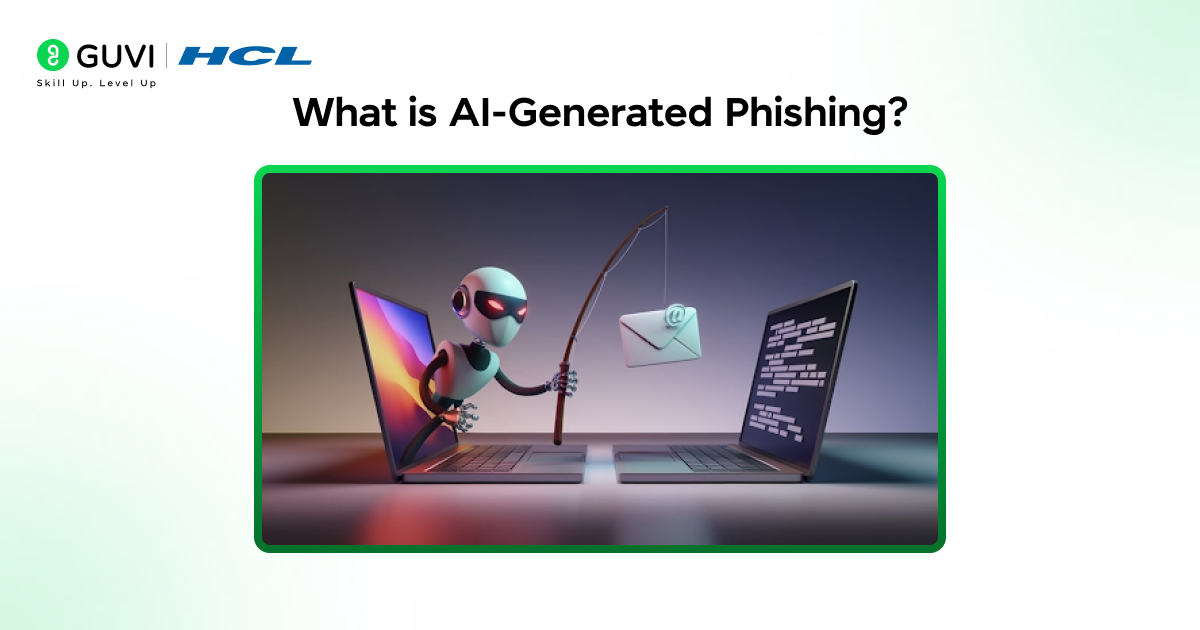
Phishing is when a scammer pretends to be someone trustworthy such as your bank, your boss, or a government agency to trick you into sharing passwords, money, or personal information.AI generated phishing takes this a step further.
Criminals now use tools like large language models (LLMs) to write convincing messages at scale, clone voices for fake phone calls, and even create deepfake videos. What once took a skilled scammer hours can now be done in seconds, with messages that are personalized, grammatically correct, and feel very real.
AI phishing scams can analyze your online behavior and craft messages that are tailored just for you.They can mimic your writing style, tone, and even your activities. Another interesting thing is that scammers can use AI to mimic voices based on a few seconds of audio. This means that you could get a phone call that sounds just like your boss or a family member, and that is very difficult to avoid.
How AI is Used in Phishing?
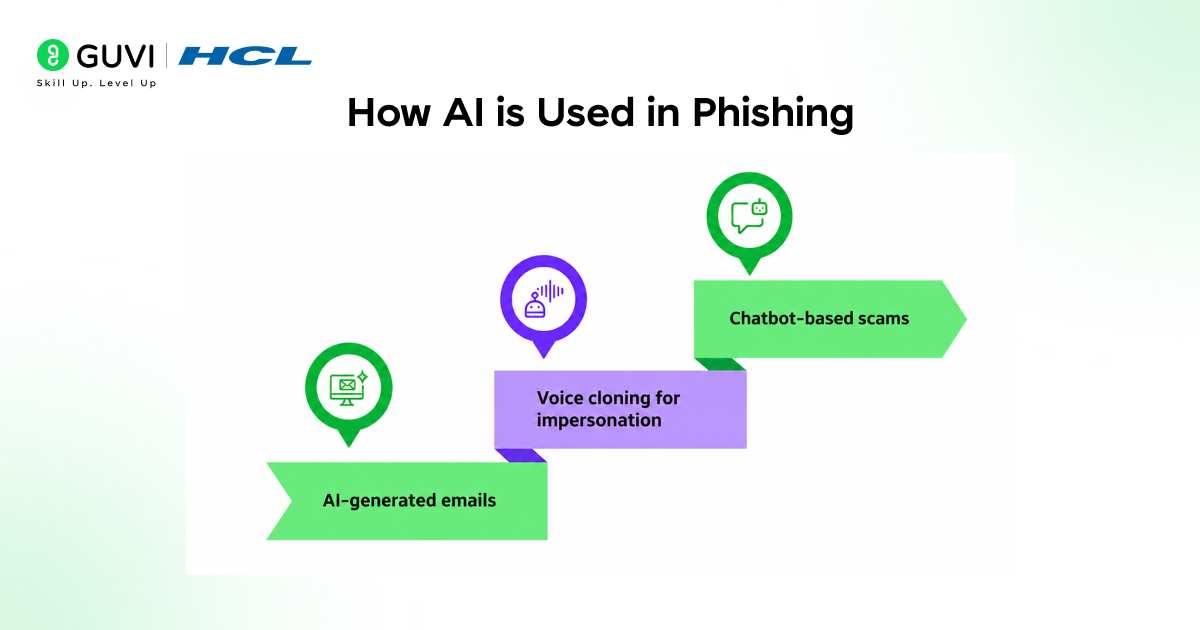
AI enables scammers to produce content efficiently and on a large scale. For instance, they may send thousands of tailored emails in a matter of minutes. AI also enables scammers to study data obtained from social media to create more believable content that is relevant to their target.
Sometimes, scammers employ chatbots that interact with their targets in real-time to answer their queries before stealing their data.
- Personalization Using Data
AI uses information obtained from social media, websites, and public profiles to send messages based on your interests, profession, or activities. This makes the message believable and authentic.
- AI-Powered Conversations
Scammers sometimes use chatbots, which are powered by AI, to communicate directly with victims. The chatbots ask and answer questions and engage victims in a conversation.
- Voice Cloning and Deepfakes
Scammers use AI to clone voices or make deepfake videos. This enables them to act as a person you trust or a person of authority.
How to Spot AI Phishing Scams?
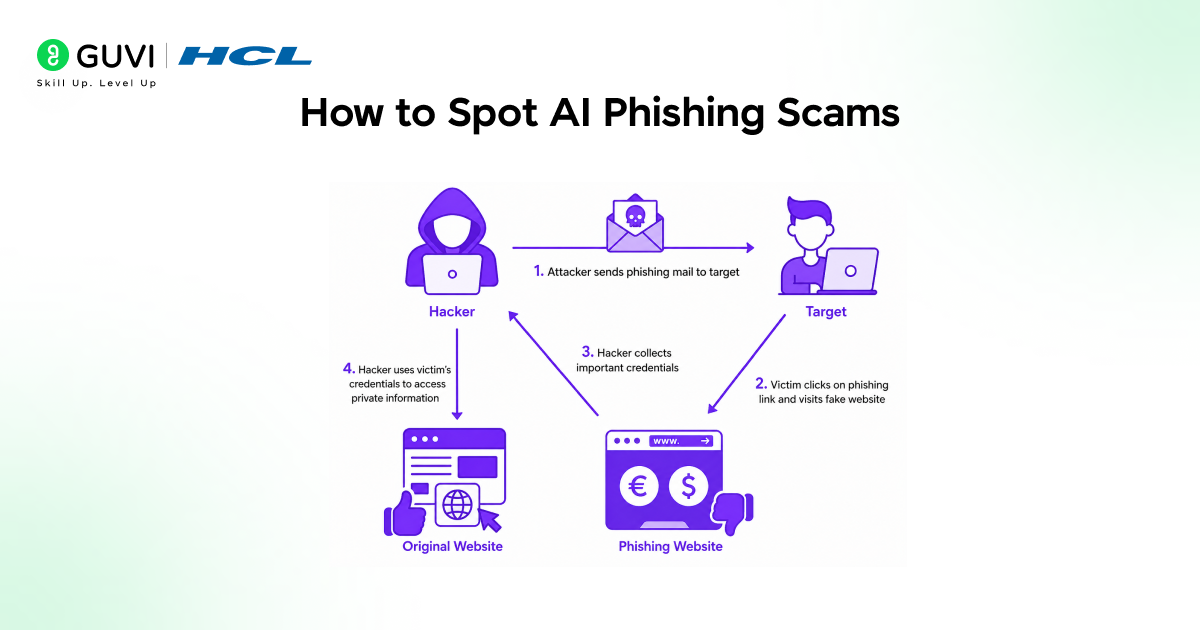
Even though these scams are advanced, there are still some warning signs you can notice if you look carefully:
1. Requests for Sensitive Information
You should be careful if someone asks for passwords, one-time passwords, or bank information. Genuine organizations will not ask for this information through emails or messages. It is always better to verify before sharing information.
2. Suspicious Links
These links may look similar to genuine sites but may have slight variations in the name or domain. It is always better to verify the link before clicking on it.
3. Unexpected Messages
If you receive emails, calls, or documents that you did not expect, it is a cause for concern. Even if it is from a person you know, it is better to verify before acting on the information.

4. Too Perfect Language
Messages from AI may look perfect with correct grammar and tone. However, at times, the tone may look slightly unnatural.
Simple Ways to Stay Protected
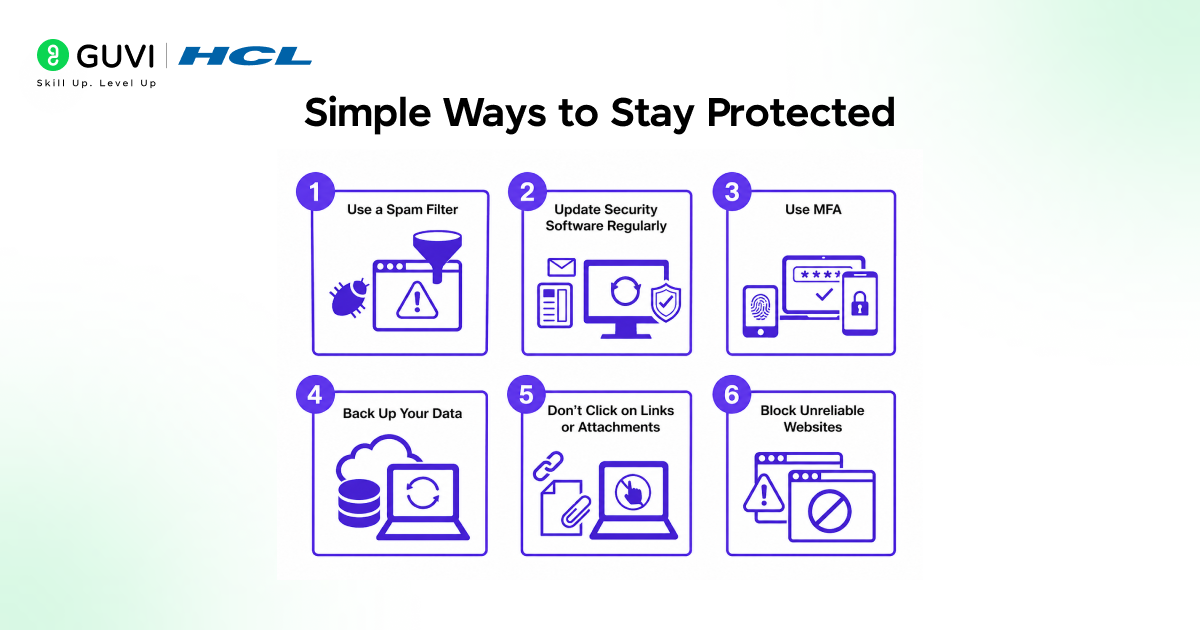
To ensure that you don’t fall victim to AI phishing scams, you need to follow the guidelines given below:
- Verify Before You Trust
Always make sure that you check the email address of the person who has sent you an email, even if the email appears to be legitimate. If you are not sure, you should try to contact the person through proper means.
- Avoid Unknown Links
It is highly recommended that you don’t click on any unknown links sent by unknown sources, even if they are legitimate. It is always best that you hover over the link and check where the link is taking you.
- Use Strong Security
Always make sure that your accounts are enabled with two-factor authentication, which will provide you with an additional layer of security even if your account credentials are compromised.
- Keep Software Updated
Always keep your apps, browser, and devices updated, as this will ensure that you don’t fall victim of any new threats and vulnerabilities.
- Be Aware and Stay Alert
Always be aware and stay alert while receiving any messages or calls, and make sure that you don’t fall victim of any phishing scams.
Read More: How Is Cyber Security Important To Our Lives?
If you’re serious about understanding how AI works in real-world scenarios like phishing scams, HCL GUVI’s Intel & IITM Pravartak Certified Artificial Intelligence and Machine Learning Course is exactly where you need to be. This live online programme is taught directly by Intel engineers and industry experts. You also get the opportunity to attend 1:1 doubt sessions with top SMEs, work on 20+ industry-grade projects including a capstone project, learn in your preferred language, and receive placement assistance through 1000+ hiring partners.
Final thoughts
Phishing scams that are artificially created by AI are becoming very sophisticated and difficult to detect. They look very real, feel very personal, and could trick anyone if they are not careful.
However, if you are careful and aware, you could save yourself from phishing scams. A little caution and awareness could make a huge difference for you.
FAQs
1. What is AI-generated phishing?
AI-generated phishing is a cyber attack where scammers use AI to generate emails, messages, calls, and videos. They use this to trick victims into revealing their passwords and other sensitive information.
2. How is AI phishing different from traditional phishing?
AI phishing is more advanced than traditional phishing. This is because it is more personalized and grammatically correct. Unlike traditional phishing, AI phishing can mimic writing style, voice, and behavior.
3. How can you identify AI-generated phishing scams?
Sends urgent messages asking for information, messages asking for sensitive information, suspicious links, unexpected messages, and messages that seem a bit odd even though they are grammatically correct.
4. Can AI phishing scams use voice and video?
Yes, scammers can use AI to mimic voices and create videos. This enables them to pretend to be someone you trust.
5. How can you protect yourself from AI phishing attacks?
You can protect yourself from AI phishing attacks by verifying the sender’s identity, avoiding suspicious links, using strong passwords, and being careful while handling emails, messages, and calls.
Success Stories

About the Author
Lukesh S
A professional content writer who has experience in freelancing and now working as a Technical Content Writer at HCL GUVI having sound knowledge in Blog Writing and Creative Writing!
View all posts by Lukesh S
Connect with me @










Did you enjoy this article?