


Software Development Articles
My Google SDE Interview Experience: From Rejection to Selection [2026 Success Story]
Apple Interview Experience for Software Developers: What to Expect
Decoding Differences between Network OS and Distributed OS
Operating System Examples: Top OS Types, Features, and Uses Explained


Get In Touch For Details! Request More Information

Software Development Methodologies: What You Need to Know
Oct 19, 2025 4 Min Read 1098 Views
(Last Updated)
There are numerous instances where the development team struggles to meet the deadlines or fails to meet the client’s expectations of an ideal software product. And in the majority of these cases, the primary reason was sticking to an inefficient software development methodology.
In the IT field, organizations that prioritize incorporating the proper software development methodologies are the ones that distinguish themselves from the rest of the competition in the market. In this blog, we will work together to understand what software development methodologies are and their distinct types.
Table of contents
- Understanding Software Development Methodologies
- The Best Software Development Methodologies in the IT Industry
- Which Software Development Methodology Should a Developer Use?
- Conclusion
- FAQs
- Which software development methodology is extensively implemented by most software companies?
- Can a company use more than one methodology?
- What are the main differences between Agile and Waterfall?
Understanding Software Development Methodologies
Software development methodologies are specific processes that are followed by developers and technical teams for creating high-quality software projects. Starting from project ideation and requirement gathering, through design and implementation, and ultimately leading to deployment and maintenance, each engineering stage is meticulously managed, ensuring the result perfectly aligns with business objectives and needs.
But why are there so many various kinds of software development methodologies existing?
The simple reason for this question is that every software project has its own set of custom goals, timelines, and specifications, and accordingly, they rely on those methodologies that enhance efficiency, curtail the project risks, and at the same time are cost-effective.
As we know, there are multiple software development methodologies in today’s rapidly evolving technological landscape. But in this blog, we will limit our discussion to only those engineering methodologies that are widely adopted by top tech companies and organizations around the world.
The Best Software Development Methodologies in the IT Industry
The following are the most widely implemented methodologies for having precise project scope, timelines, and intricate documentation.
- Agile Development Methodology
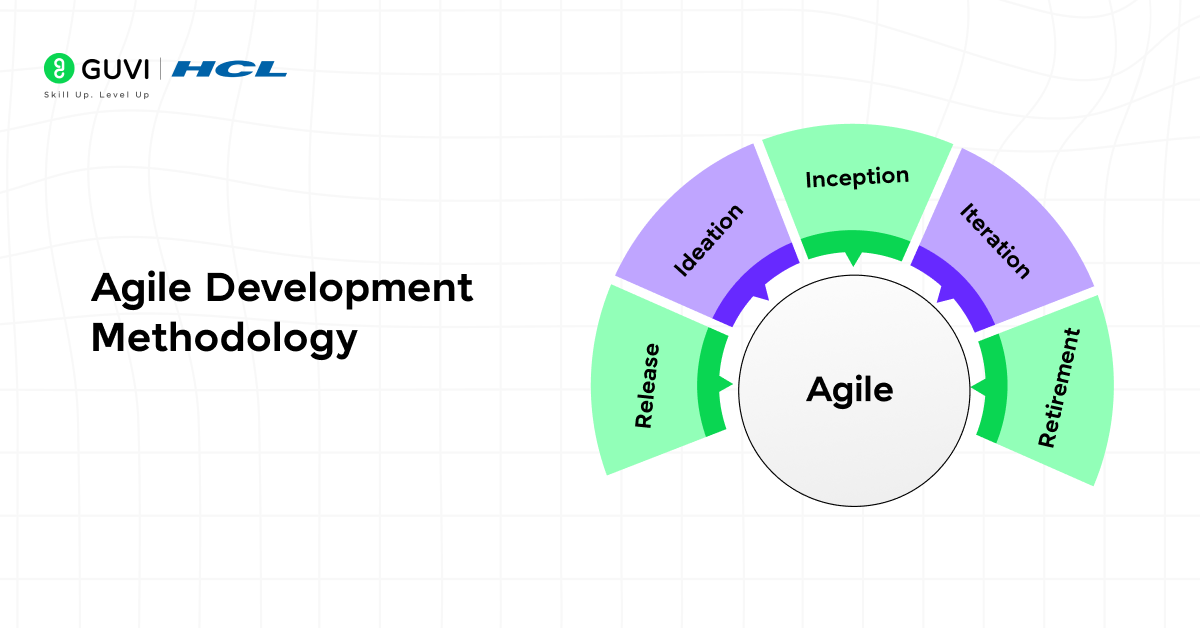
Agile methodology is the process that focuses on designing and developing highly functional and advanced software products through flexible approaches. In this approach, collaboration between cross-functional teams is encouraged, frequent monitoring of each development stage is done, and a transparent product building process is performed for communicating feedback and suggestions to make the desired software changes.
Benefits
- It helps developers and testers significantly reduce unnecessary and repetitive tasks.
- Uplifts the efficiency and productivity level of the teams, thereby resulting in great collaboration and a rapid development procedure.
Drawbacks
- As this methodology involves frequent internal and external team communication, a high level of discipline and project management is a must.
- Though agile methodology is meant for fast software development, an increasing number of changes can delay the project delivery timeline.
- Scrum Methodology
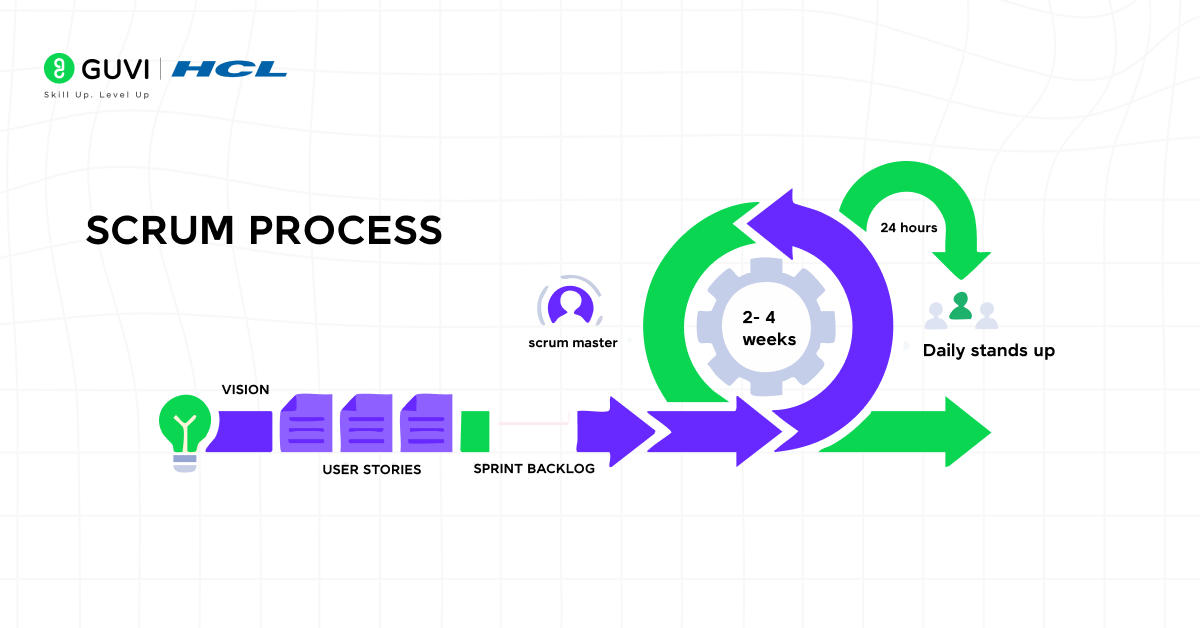
In simpler terms, we can define Scrum as a subset of agile development methodology. In this approach, the entire software project is segmented into distinct chunks, known as sprints. These sprints have a certain length, typically 2-4 weeks, and that varies in accordance with the complexity of functions, the number of resources required, and modifications. Here, software developers ensure the optimization by completing individual parts of the overall project during a single sprint. And after finishing each sprint, feedback is shared on areas of improvement, and then we move on to the next sprint.
Benefits
- Tracing and fixing potential bugs and errors becomes easier in this methodology as the development team works on each project component at a time.
- Regular code & functional reviews, and the flexibility to make changes, contribute to high-performing software applications and platforms.
Drawbacks
- Proficient tech professionals are required to execute this methodology; a lack of competency in managing projects through this approach can be complex and challenging.
- This methodology is not suitable for a large development team as it can lead to redundant tasks and inefficiency.
- Waterfall
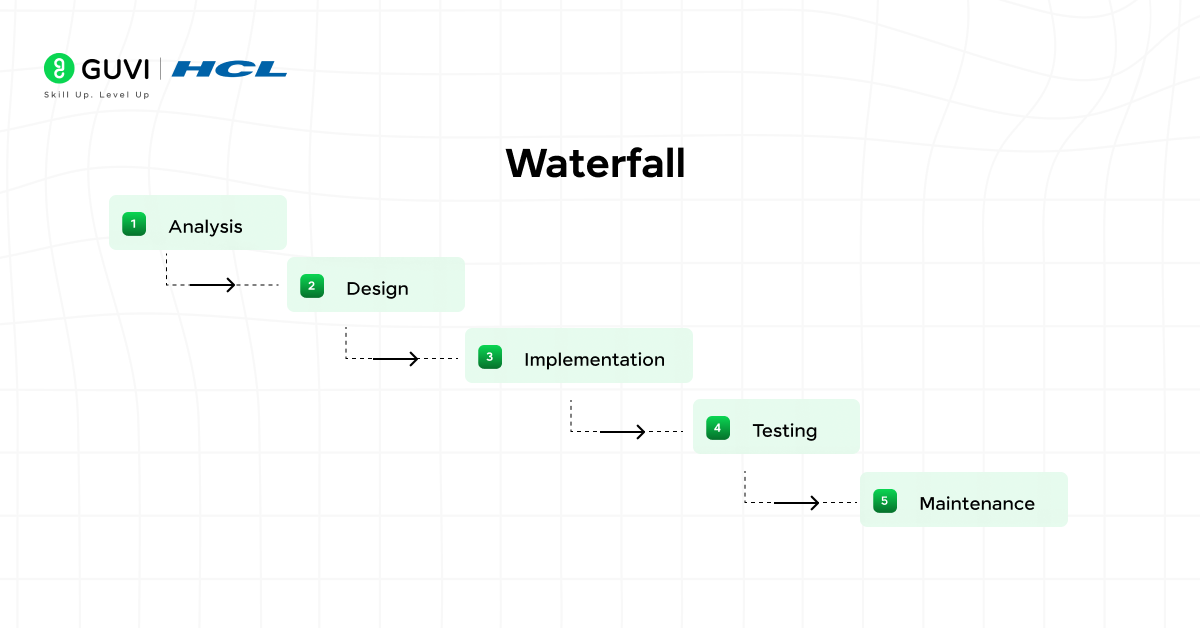
Waterfall methodology is a synchronous or sequential approach where each stage needs to be completed before the next one begins. Without the completion of the current product development step, you can’t proceed to the next one. This linear approach is best suited for projects where budget constraints and project delivery timeline are of utmost importance.
Benefits
- We can clearly estimate the overall development cost of software projects, as the project scope and exact requirements are defined upfront.
- The waterfall method follows the software development life cycle ( SDLC ) process, as a result of which, project planning, design, implementation, testing, product deployment, and maintenance become significantly simplified.
Drawbacks
- This synchronous approach of developing end-to-end software products often leads to exceeding deadlines.
- The Waterfall methodology is not suitable for projects that require frequent modifications and updates.
- Lean Software Development
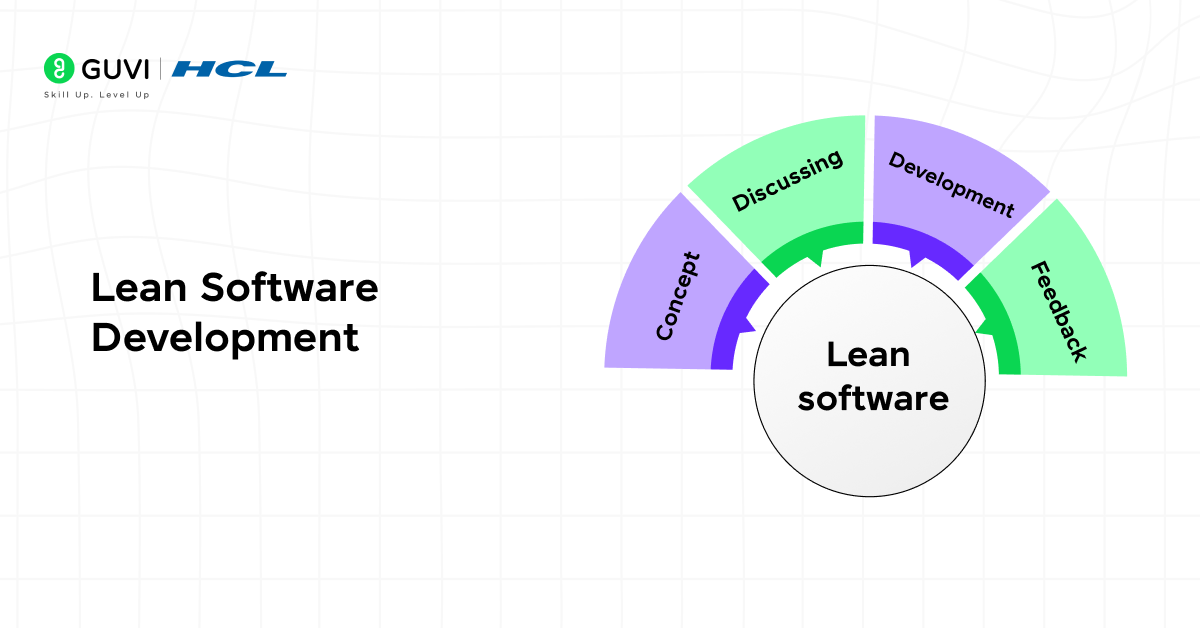
If you have to pick any methodology that represents efficiency, then it would be the Lean software development methodology. This approach is incorporated to eliminate all the unnecessary tasks that slow down the development process. Here, developers gather all the relevant details of the project and analyze the requirements of the end users. Once that is done, they prioritize the assignments and pick up the most optimal resources for project execution.
Benefits
- User experience and customer satisfaction can easily be achieved through this methodology.
- It is the ideal choice for MVP ( minimum viable product ) development, as it allows the software developers to test their ideas in real-time and accumulate honest user reviews, which helps them to optimize the product quality.
Drawbacks
- As developers focus more on a fast development cycle and efficiency, it can be a reason for diverting away from future needs and prospects.
- Technical specifications are very minimal in this particular approach, due to which the collaboration with cross-functional teams becomes challenging.
- Rapid Application Development
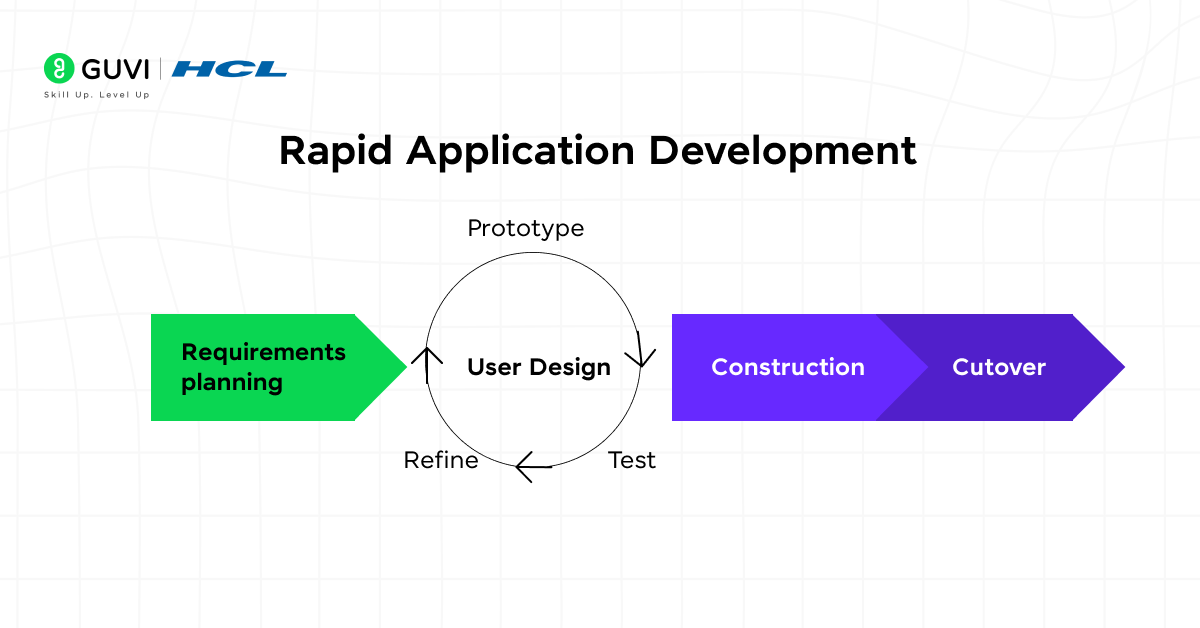
Rapid application development ( RAD ) methodology’s focal point is to deliver next-generation, fully functional software products based on iterative development. The primary purpose of its adoption is to engage with end users and receive their valuable feedback to implement the preferred changes. Here, teams from distinct tech domains can work together in parallel and integrate their respective project modules to assess the final product for deployment.
Benefits
- In software projects where modularization is possible, this methodology can be effective, as it enables building, testing, and updating the applications simultaneously, rather than depending on a complete unified system.
- Rapid project development helps gain an edge over competitors by enabling early product launches.
Drawbacks
- Sometimes emphasis is given to the rate of development, in consequence of which the probability of running into errors increases considerably.
- Due to frequent scope modifications and a regular feedback cycle, it turns into something very complex to manage.
- DevOps Methodology
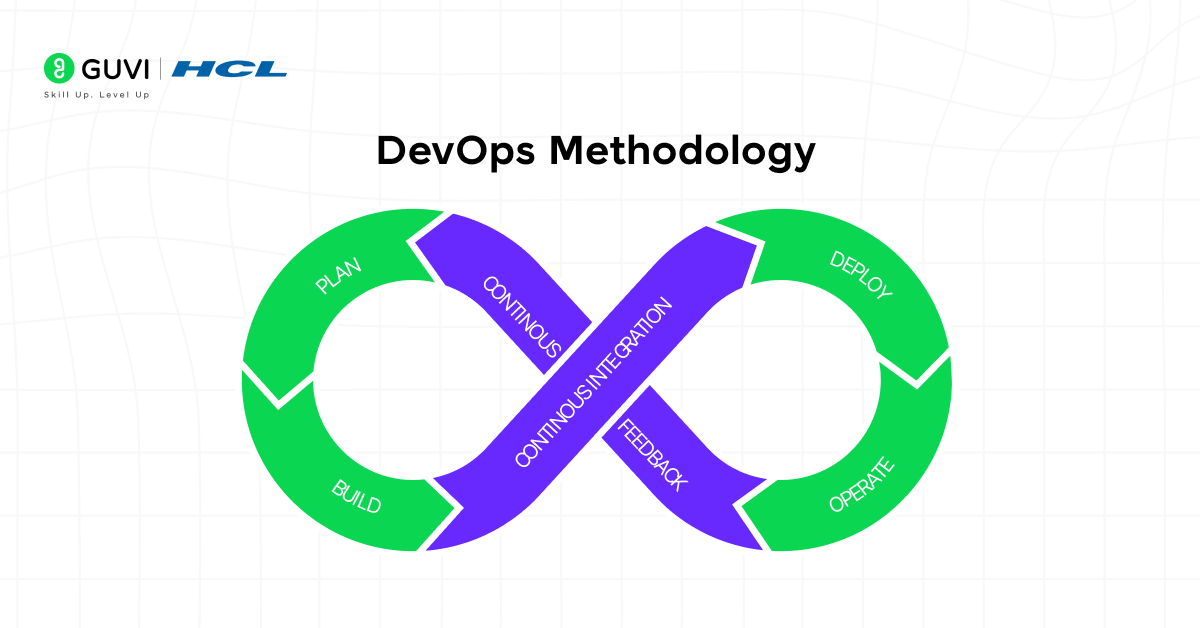
DevOps methodology emphasizes continuous collaboration between development and operations teams to accelerate the software delivery lifecycle. Its central purpose is to integrate coding, testing, deployment, and monitoring into a streamlined process that promotes efficiency, automation, and rapid releases. By combining cultural practices, automation tools, and ongoing feedback, DevOps ensures the smooth delivery of high-quality applications.
Benefits
- Enhances collaboration between cross-functional teams by removing silos.
- Automation and continuous integration/continuous delivery (CI/CD) pipelines reduce manual errors and speed up deployment.
- Constant monitoring and feedback enable faster resolution of issues and improved system reliability.
Drawbacks
- Demands cultural shifts and close alignment between teams, which may be difficult for traditional organizations.
- Implementation often requires investment in advanced tools and skilled professionals.

Which Software Development Methodology Should a Developer Use?
There is no concrete answer to this question. In fact, the correct option a developer should choose for building projects depends on several factors such as the team size that is being deployed, project goals and objectives, requirements of features and functionalities, as well as the kind of resource allocation needed.
For example, the software projects that require fixed and sequential planning, the Waterfall method is best suited for them. While Agile and Scrum are the models best suited for projects that demand much more flexibility, where constant feedback and modifications are involved. Lean software development is beneficial when the core focus is on minimizing unnecessary work and delivering specifications that add value.
Rapid Application Development (RAD) is ideal when the project timeline is extremely short and requires a fast development process. On the other hand, DevOps becomes the perfect choice for those software projects and applications that require a sustainable and continuous integration, testing, and deployment, as it is full-scale collaboration between development and operations. So that’s why a precise answer to this question is impossible, as it is a very subjective matter associated with the developer’s competency and his/her mindset.
Whether you are a tech geek or just a beginner aspiring to make a career in software development, we have got you covered. Upskill yourself and get certified with HCL GUVI’s AI Software Development Course. Enroll in a program that not only adds value but also makes you capable of landing top tech or software roles.
Conclusion
After exploring Software Development Methodologies, our journey highlights the importance of selecting a well-structured approach to build and design software, which satisfies both developers and the target audience.
To create software projects that are tailored to custom business requirements and to minimize the entire development budget, while adhering to the best software development life cycle ( SDLC ) processes, relying on a suitable methodology is essential.
FAQs
Which software development methodology is extensively implemented by most software companies?
Agile and Scrum are the most widely adopted software development methodologies, and the reason behind their broad adoption is that they enable flexibility, quick product delivery, and promote continuous feedback.
Can a company use more than one methodology?
Yes, many companies adopt hybrid approaches, combining Agile, DevOps, and Lean practices for better results.
What are the main differences between Agile and Waterfall?
Waterfall is a linear, step-by-step model, while Agile is iterative, focusing on small cycles with continuous feedback.
Success Stories
















Did you enjoy this article?