


Human Resource Articles
AI in HR and Recruitment: Resume Screening and Bias Risks
HR Roles and Responsibilities: 15 Key Duties Explained


Get In Touch For Details! Request More Information
Continuous Learning in Tech Hiring: Why It Matters in 2026
Jul 08, 2026 7 Min Read 7032 Views
(Last Updated)
Table of contents
- TL;DR
- What Is Continuous Learning in Tech Hiring?
- Why Continuous Learning Matters More Than Ever in 2026
- How Continuous Learning Impacts Tech Hiring: 10 Key Roles
- Bridging the Tech Skill Gap
- Attracting High-Quality Tech Talent
- Keeping Up With Technological Advances
- Demonstrating Commitment and Growth Mindset
- Enhancing Productivity of Existing Employees
- Reducing Employee Attrition and Increasing Retention
- Ensuring Industry Standards and Compliance
- Building a Thriving Learning Culture
- Staying Competitive as an Organisation
- Future-Proofing Your Hiring Strategy
- Continuously Learning vs Not Upskilling: What Employers Actually See
- Real-World Example: How L&D Transforms Tech Teams
- How to Build a Continuous Learning Programme That Impacts Hiring
- Step 1: Identify Your Skill Gaps
- Step 2: Choose the Right Training Format
- Step 3: Partner With a Structured Training Provider
- Step 4: Measure Learning Outcomes
- Step 5: Make Learning a Hiring Signal
- What Continuous Learning Looks Like for Tech Job Seekers in 2026
- Common Mistakes Around Continuous Learning in Tech Hiring
- Treating Certifications as a Substitute for Applied Skills
- Learning in Isolation, Not in Public
- Upskilling in the Wrong Direction
- Organisations Confusing One-Time Training With a Learning Culture
- Ignoring Soft Skills in a Technical Learning Plan
- Build a Future-Ready Workforce With Continuous Learning
- Conclusion
- Frequently Asked Questions
- What is continuous learning in tech hiring?
- Why is continuous learning important in 2026?
- How does continuous learning help job seekers?
- Why do companies value continuous learning?
- Can continuous learning improve career growth?
- Can continuous learning improve career growth?
- How can candidates show continuous learning?
- Does continuous learning reduce employee attrition?
- What skills should tech professionals keep learning?
- Is continuous learning only for freshers?
- How can beginners start continuous learning?
- What is learning agility in tech hiring?
- How does continuous learning help businesses?
- Are certifications important for tech jobs?
TL;DR
- Continuous learning in tech hiring means consistently upgrading skills, certifications, and knowledge to stay relevant in a fast-changing industry.
- In 2026, skills will evolve faster than ever, making learning agility a key factor for both job seekers and employers.
- For candidates, continuous learning improves employability by showcasing current skills, hands-on projects, certifications, and a growth mindset.
- For companies, investing in upskilling helps bridge skill gaps, attract top talent, improve productivity, and reduce employee attrition.
- A strong learning culture gives organisations a competitive advantage by helping teams adapt to AI, cloud, automation, and emerging technologies.
- Employers increasingly value candidates who demonstrate recent learning through portfolios, certifications, hackathons, and real-world projects.
- Building a continuous learning habit requires structured courses, practical projects, industry certifications, and regular skill updates.
- Companies that embed learning into hiring and workplace culture create future-ready teams and reduce dependence on external hiring.
- Continuous learning is no longer optional; it is a long-term strategy for career growth and business success.
The tech industry has entered an era where change is constant and yesterday’s skills can quickly lose their relevance. As AI, automation, and new technologies redefine job roles, the ability to continuously learn has become one of the most valuable skills a professional can have.
In modern tech hiring, companies are no longer looking only for candidates with existing expertise; they are searching for people who can adapt, evolve, and keep learning. Similarly, organisations that invest in continuous learning build stronger teams, reduce skill gaps, and stay competitive.
This blog explores how continuous learning is transforming tech hiring, why it matters for professionals and employers, and how it is shaping the future of the technology workforce.
What Is Continuous Learning in Tech Hiring?
Continuous learning in tech hiring is the ongoing process of acquiring new skills, certifications, and knowledge that keeps professionals hire-ready and keeps organisations competitive.
It goes beyond attending a one-time course. It is a habit, a systematic approach to staying current with the tools, frameworks, and methodologies that define modern tech work.
For employers, continuous learning is a recruitment signal and a retention lever. For job seekers, it is the most reliable way to stand out when dozens of candidates have similar degrees and experience
Explore: The impact of Remote Work in Hiring Tech Professionals.

Why Continuous Learning Matters More Than Ever in 2026
The tech talent market is changing faster than most hiring processes can keep up with.
AI and automation are replacing routine technical tasks, raising the baseline of what “skilled” means. Generative AI tools like GitHub Copilot, ChatGPT, and Google Gemini are now baseline expectations in many developer roles, not bonuses.
Cloud-native, DevOps, and MLOps skill stacks evolve every 12–18 months. The result is a persistent and widening gap between what universities teach and what employers actually need on Day 1.
Employers have responded by shifting what they screen for. Technical skills are still necessary, but learning agility, the demonstrated ability and habit of picking up new skills quickly, has become equally important in hiring decisions.
So whether you are a fresher entering the job market or an HR leader building a tech team, continuous learning is no longer optional. It is the foundation.
How Continuous Learning Impacts Tech Hiring: 10 Key Roles
1. Bridging the Tech Skill Gap
The most immediate pain point in tech hiring today is the skill gap. Recruiters regularly see candidates who have the right degree but lack proficiency in the tools that are actually in production use.
Continuous learning addresses this directly. Candidates who upskill through certifications, structured bootcamps, or online courses match job descriptions more accurately, which reduces time-to-hire and improves quality-of-hire.
For employers, certifications and course completions are reliable indicators of current skill level. For candidates, even one relevant course per quarter signals proactivity.
2. Attracting High-Quality Tech Talent
The best engineers, data scientists, and developers are selective about where they work. They evaluate potential employers not just on salary but on growth opportunities.
A LinkedIn Workplace Learning Report found that 94% of employees say they would stay longer at a company that invested in their career development. Organisations that make learning visible, through sponsored certifications, access to training platforms, and dedicated learning time, attract stronger applicants from the start.
In a market where top candidates have multiple offers, a company’s learning culture is a genuine competitive advantage.
3. Keeping Up With Technological Advances
Technology does not wait for hiring cycles to catch up. From the rise of large language models in 2023 to agentic AI adoption in 2026, the pace of change is relentless.
Continuous learning ensures that candidates arrive with knowledge of tools in production use today, not just what they studied in college. It also means existing employees do not become liabilities when tech stacks evolve, and organisations avoid the expensive cycle of external hiring every time a new technology becomes mainstream.
4. Demonstrating Commitment and Growth Mindset
When a candidate lists recent certifications, active projects, or bootcamp completions on their resume, they communicate more than skills. They demonstrate initiative, discipline, and a growth mindset.
Tech hiring managers increasingly prioritise this. A candidate with a slightly lower current skill level but a clear learning habit will often outperform someone more experienced who has stopped growing.
Here is what signals learning commitment to recruiters:
| Signal | What It Tells Recruiters |
| Certification completed within 12 months | Actively upskilling |
| GitHub activity or portfolio projects | Applied, hands-on learning |
| Bootcamp or structured course completion | Structured self-development |
| Hackathon participation | Collaborative, competitive learning |
| Technical blog posts or articles | Deep understanding + communication |
5. Enhancing Productivity of Existing Employees
Continuous learning is not only a pre-hire filter. It is a post-hire performance lever.
Employees who receive regular training solve problems faster, adapt to new tools without needing hand-holding, and bring innovative approaches back from external learning into internal workflows.
For tech companies, the cost of upskilling an existing employee is significantly lower than recruiting, onboarding, and ramping up a new hire. Training is not an expense, it is a cost-avoidance strategy.
6. Reducing Employee Attrition and Increasing Retention
Tech sector turnover is among the highest and most expensive of any industry. Replacing a mid-level software engineer can cost between 50% and 200% of their annual salary when you account for recruitment, onboarding, and lost productivity.
LinkedIn’s Workplace Learning Report consistently identifies access to learning and development as the top driver of long-term employee retention. Organisations with structured upskilling programmes report significantly lower voluntary attrition.
The equation is simple: employees who grow, stay.
7. Ensuring Industry Standards and Compliance
In regulated tech environments, fintech, healthtech, cloud infrastructure, and certifications are often mandatory, not optional. Credentials like AWS Certified Solutions Architect, Google Cloud Professional, and Certified Kubernetes Administrator (CKA) are prerequisites for certain roles.
Continuous learning ensures candidates and employees maintain and renew these credentials. This keeps teams compliant, reduces organisational risk, and signals credibility to clients and partners.
8. Building a Thriving Learning Culture
Companies that embed learning into their culture, not just their HR budget, experience compounding benefits over time.
A genuine learning culture looks like this: knowledge-sharing is encouraged and rewarded. Managers actively protect time for upskilling. Skills learned externally are applied and shared internally. Failure is treated as a learning event.
When candidates evaluate job offers, a visible learning culture ranks as highly as compensation. It becomes a recruitment marketing asset in itself.
9. Staying Competitive as an Organisation
The organisations that dominate their sectors in 2026 are not necessarily those with the biggest hiring budgets. They are those with the most agile, continuously learning workforces.
If your competitor’s engineering team is deploying the latest AI tools while yours is still catching up, that productivity gap compounds over months. Continuous learning is how forward-looking companies both close and create competitive gaps.
10. Future-Proofing Your Hiring Strategy
The skills you hire for today may not be the skills your business needs in 18 months. Organisations that build continuous learning into their hiring criteria, not just skills assessments, are better positioned to adapt.
In practice, this means screening for learning agility, asking candidates what they have picked up in the last six months, and treating a track record of self-development as a first-class hiring signal.
Read: 7 Unique Ways Companies Are Attracting Tech Talent in 2026
Continuously Learning vs Not Upskilling: What Employers Actually See
| Factor | Continuously Learning Candidate | Candidate Not Upskilling |
| Resume currency | Current tools, recent frameworks | May list outdated technologies |
| Interview performance | Answers with current, applied context | May be unfamiliar with recent changes |
| On-the-job ramp time | Faster to adapt and contribute | Slower to catch up |
| Problem-solving approach | Draws on recent learning and new methods | Relies on older approaches |
| Long-term team value | Grows with the company and its stack | Risks stagnation |
| Retention likelihood | Higher, feels invested in and challenged | Lower, may leave for growth elsewhere |
| Certification/credentials | Up-to-date, verifiable | Potentially expired or absent |

Real-World Example: How L&D Transforms Tech Teams
Consider a mid-sized Indian fintech company with a 40-person engineering team. In 2023, they faced two problems: a high attrition rate among junior developers and an inability to hire mid-level cloud engineers fast enough.

Instead of continuing to recruit externally, they partnered with a structured training provider. Junior developers were enrolled in a six-month cloud and DevOps programme. Within a year, 12 of those engineers had earned AWS certifications and were promoted internally to roles the company had previously struggled to fill.
Attrition in that cohort dropped to near zero. Time-to-fill for cloud roles dropped from an average of 11 weeks to under 3 weeks, because the talent was already inside the organisation.
This is the compounding effect of embedding continuous learning into a hiring and retention strategy. External recruitment solves an immediate problem. Internal upskilling solves the problem permanently.
How to Build a Continuous Learning Programme That Impacts Hiring
If you are an HR leader, L&D manager, or startup founder, here is a practical five-step framework.
Step 1: Identify Your Skill Gaps
Run a skills audit across your tech teams. Map current competencies against what your product roadmap requires over the next 12–24 months. This is your learning investment priority list.
Step 2: Choose the Right Training Format
Different roles and learning goals need different formats:
- Self-paced online courses – ideal for foundational skills and certification prep.
- Instructor-led bootcamps – better for complex topics that need real-time feedback.
- Peer learning and internal workshops – effective for knowledge transfer within teams.
- Hackathons and project-based learning – best for applied, collaborative skill building.
Step 3: Partner With a Structured Training Provider
Generic content does not produce measurable results. Work with specialised platforms that align curriculum with real industry job requirements, provide verifiable credentials, and offer completion tracking.
Step 4: Measure Learning Outcomes
Track these metrics to measure the impact of your L&D investment:
- Skill assessment scores before and after training.
- Time-to-productivity for new hires with pre-employment training.
- Retention rates of employees enrolled in L&D programmes vs those not enrolled.
- Internal promotion rates correlated with learning participation.
Step 5: Make Learning a Hiring Signal
Update your job descriptions, interview frameworks, and onboarding checklists to reward continuous learning explicitly. Ask candidates: “What have you learned or built in the last six months?” Make it a standard screening question, not an afterthought.
What Continuous Learning Looks Like for Tech Job Seekers in 2026
If you are a student, fresher, or working professional trying to accelerate your tech career, continuous learning is your fastest route to better opportunities.
But here is what most people get wrong: they treat learning as an event, not a habit. A course you did two years ago does not signal continuous learning. Consistent, documented, recent learning does.
Here is what a real continuous learning habit looks like in 2026:
- Completing one structured course per quarter is aligned with your target role.
- Earning at least one industry-recognised certification per year.
- Maintaining a GitHub portfolio with real projects that demonstrate applied skills.
- Following tech communities, reading industry blogs, and experimenting with new tools weekly.
- Documenting your learning publicly – LinkedIn posts, GitHub README files, or a personal blog, so recruiters can see your growth, not just your credentials.
Common Mistakes Around Continuous Learning in Tech Hiring
1. Treating Certifications as a Substitute for Applied Skills
Many candidates collect certifications without building anything with what they have learned. Recruiters can see through this quickly during technical screens.
Fix: Pair every certification with a portfolio project that demonstrates the skill in a real context.
2. Learning in Isolation, Not in Public
Completing courses privately without documenting your progress means recruiters have no evidence of your learning habit.
Fix: Publish project write-ups on GitHub, share learning updates on LinkedIn, and contribute to open-source repositories, even small contributions count.
3. Upskilling in the Wrong Direction
Many freshers chase trending topics without aligning their learning to the roles they are actually applying for. Learning Web3 when you are applying for data analyst roles signals poor self-awareness.
Fix: Research the top skills listed in 20–30 job descriptions for your target role before choosing what to learn next.
4. Organisations Confusing One-Time Training With a Learning Culture
Many companies run an annual training day and call it an L&D programme. This does not retain talent or build a competitive advantage. Fix: Build learning into the operational calendar, monthly workshops, quarterly certification goals, and dedicated learning hours each week.
5. Ignoring Soft Skills in a Technical Learning Plan
Tech hiring in 2026 increasingly screens for communication, collaboration, and problem framing alongside technical ability. Many upskilling programmes skip this entirely.
Fix: Include structured soft skills training, presentation, documentation, and cross-functional communication, alongside technical courses.
Build a Future-Ready Workforce With Continuous Learning
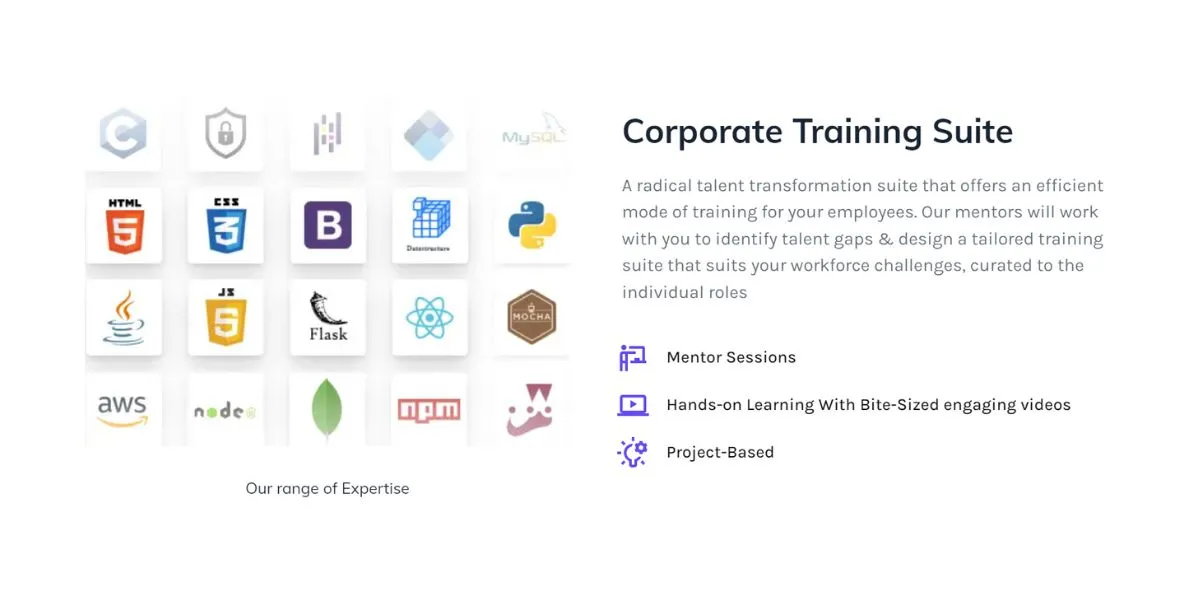
Looking to create a skilled, adaptable, and future-ready workforce for your organisation? Partner with HCL GUVI for Corporates to implement impactful learning programmes designed around your business goals.
Empower your teams with customised technical training and soft skills development programmes that close skill gaps, improve productivity, and help your organisation stay ahead in a rapidly evolving technology landscape.
Conclusion
Continuous learning in tech hiring is not a soft benefit; it is a core competitive strategy. For job seekers, a visible, consistent learning habit is the fastest way to stand out in a market where skills expire faster than they ever have before. For employers, investing in upskilling reduces recruitment costs, improves retention, and builds teams that can adapt to whatever the next technology cycle brings.
The companies and candidates who treat learning as a permanent habit, not a one-time event, are the ones who will lead in 2026 and beyond. Start with one course, one certification, or one project this month. That first step is the beginning of a compounding advantage.
Frequently Asked Questions
1. What is continuous learning in tech hiring?
Continuous learning means regularly upgrading skills, knowledge, and certifications to stay relevant in the tech industry.
2. Why is continuous learning important in 2026?
It helps professionals stay updated as technologies like AI, cloud, and automation evolve rapidly.
3. How does continuous learning help job seekers?
It improves employability by showcasing updated skills, projects, certifications, and adaptability.
4. Why do companies value continuous learning?
It helps companies hire adaptable talent, reduce skill gaps, and build future-ready teams.
5. Can continuous learning improve career growth?
1. What is continuous learning in tech hiring?
Continuous learning means regularly upgrading skills, knowledge, and certifications to stay relevant in the tech industry.
2. Why is continuous learning important in 2026?
It helps professionals stay updated as technologies like AI, cloud, and automation evolve rapidly.
3. How does continuous learning help job seekers?
It improves employability by showcasing updated skills, projects, certifications, and adaptability.
4. Why do companies value continuous learning?
It helps companies hire adaptable talent, reduce skill gaps, and build future-ready teams.
5. Can continuous learning improve career growth?
Yes. It helps professionals qualify for better roles, promotions, and new career opportunities.
6. How can candidates show continuous learning?
Through certifications, portfolio projects, GitHub contributions, hackathons, and recent training.
7. Does continuous learning reduce employee attrition?
Yes. Employees who get growth opportunities are more likely to stay with an organisation.
8. What skills should tech professionals keep learning?
AI, cloud computing, cybersecurity, data skills, programming, DevOps, and communication skills.
9. Is continuous learning only for freshers?
No. Both freshers and experienced professionals need continuous upskilling.
10. How can beginners start continuous learning?
Start with role-based courses, build projects, practice regularly, and keep updating skills.
11. What is learning agility in tech hiring?
Learning agility is the ability to quickly learn, adapt, and apply new skills.
12. How does continuous learning help businesses?
It improves productivity, innovation, and employee performance.
13. Are certifications important for tech jobs?
Yes. Certifications validate skills and show commitment to growth.
Success Stories

About the Author
Salini Balasubramaniam
A curious, information-savvy writer loves to turn deep insights into authentic and engaging content that connects. With experience in writing for brands and driving audience engagement, I believe that words can make a powerful difference.
View all posts by Salini Balasubramaniam
Connect with me @









Did you enjoy this article?