


Full Stack Development Articles
Claude for Architecture and Engineering Documentation
Freelancing as a Python Developer: Getting Your First Client


Get In Touch For Details! Request More Information
Open Source Contribution Guide
Jul 29, 2026 4 Min Read 437 Views
(Last Updated)
Many Indian college students want practical coding experience beyond academic projects and assignments, but are unsure how to start contributing to real software used by thousands of people. Open source contribution offers exactly that, letting students work on live codebases, collaborate with developers worldwide, and build a public portfolio of verified work.
Table of contents
- TL;DR Summary
- Why Should Indian College Students Contribute to Open Source?
- What You Need Before Starting
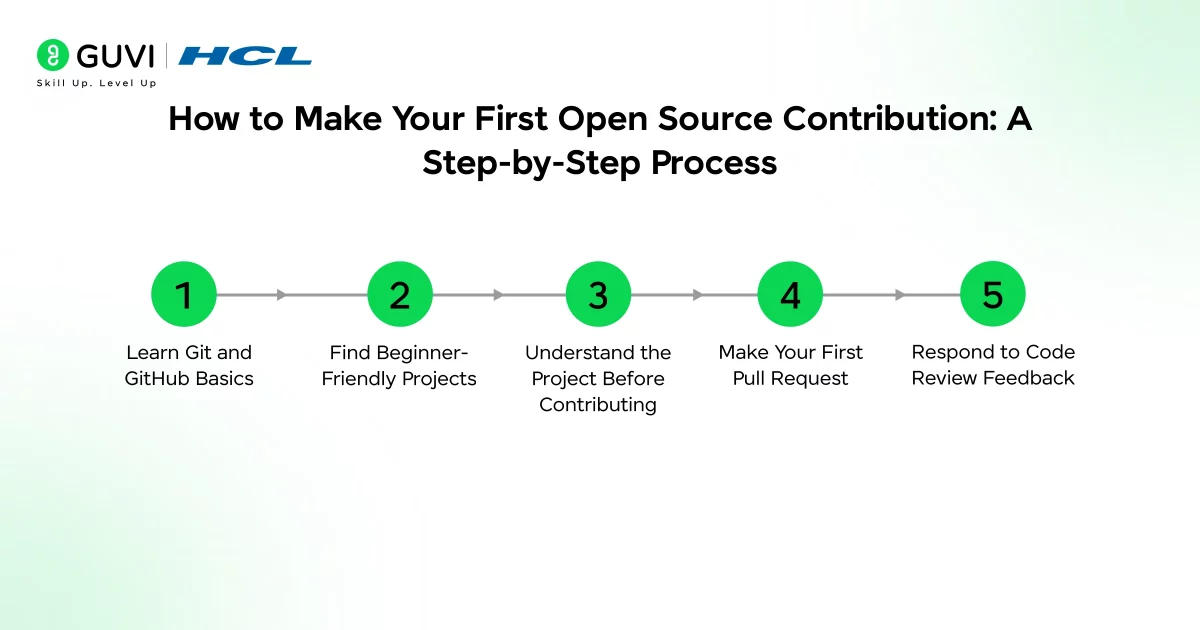
- How to Make Your First Open Source Contribution: A Step-by-Step Process
- Step 1: Learn Git and GitHub Basics
- Step 2: Find Beginner-Friendly Projects
- Step 3: Understand the Project Before Contributing
- Step 4: Make Your First Pull Request
- Step 5: Respond to Code Review Feedback
- Best Open Source Programs for Indian Students
- Common Mistakes Students Make in Open Source Contribution
- Conclusion
- FAQ
- How do I start contributing to open source as a college student?
- What is the easiest way to find beginner-friendly open source projects?
- Is open source contribution useful for placements in India?
- What is Hacktoberfest and how can students participate?
- Do I need advanced coding skills to contribute to open source?
- What is Google Summer of Code and is it open to Indian students?
- What should I do if my first pull request gets rejected or needs changes?
- How long does it usually take to get a first pull request merged?
TL;DR Summary
- Open source contribution guide covers how to find beginner-friendly projects, set up Git and GitHub, make your first pull request, and build a contribution history that strengthens your resume.
- Open-source contribution is one of the most effective ways for students to gain real-world coding experience, work with global codebases, and stand out in placements and internship applications.
Want to build strong development skills alongside your open source journey through structured courses and projects? Explore HCL GUVI’s Full Stack Development Course, designed to help students build practical, portfolio-ready skills.
Why Should Indian College Students Contribute to Open Source?
Open source contribution offers benefits that academic coursework alone rarely provides.
- Real-world code exposure: Working with large, production-grade codebases instead of small classroom assignments
- Resume differentiation: A public GitHub history with merged pull requests stands out in placement applications
- Networking: Direct interaction with experienced developers and maintainers across the globe
- Skill validation: Getting code reviewed and accepted by maintainers is concrete proof of your abilities
- Programs with rewards: Initiatives like Google Summer of Code and Hacktoberfest offer stipends, certificates, and swag for contributions
Many Indian students who later joined top tech companies point to early open source contributions as a turning point in their learning and confidence.
Read More: 12 Best Real-life Projects for Developers and Computer Science Students
What You Need Before Starting
Before making your first contribution, set up these basics.
- A GitHub account, created for free at github.com
- Git installed on your system for version control
- Basic familiarity with at least one programming language relevant to projects you want to contribute to
- A code editor like VS Code with Git integration
No advanced experience is required. Many beginner-friendly projects are specifically designed for first-time contributors.
Want to build strong development skills alongside your open source journey through structured courses and projects? Explore HCL GUVI’s Full Stack Development Course, designed to help students build practical, portfolio-ready skills.
How to Make Your First Open Source Contribution: A Step-by-Step Process
Step 1: Learn Git and GitHub Basics
Before contributing to any project, you need working knowledge of Git commands and the GitHub workflow.
Essential Git commands every contributor should know:
git clone [repository-url]     Copy a repository to your local machine

git branch [branch-name]       Create a new branch for your changes

git checkout [branch-name]     Switch to a specific branch

git add [file-name]            Stage changes for commit

git commit -m "message"        Save staged changes with a description

git push origin [branch-name]  Upload your branch to GitHub
Practice these commands on a personal repository before attempting your first real contribution, so the workflow feels familiar when you are working on someone else’s project.
Step 2: Find Beginner-Friendly Projects
Look for projects and issues specifically labeled for newcomers rather than jumping into complex, unfamiliar codebases.
Platforms to find beginner-friendly issues:
- goodfirstissue.dev: Aggregates issues labeled “good first issue” across thousands of repositories
- GitHub’s “good first issue” label: Search directly on GitHub using this label filter
- up-for-grabs.net: Lists projects actively seeking new contributors
- Hacktoberfest repositories: Every October, thousands of projects open beginner-friendly issues specifically for this event
Start with documentation fixes, typo corrections, or small bug fixes before attempting feature additions. These low-risk contributions help you understand a project’s contribution process without significant pressure.
Hacktoberfest, one of the world’s most popular beginner-friendly open-source events, was launched by DigitalOcean in 2013. Since then, it has grown into a global event that attracts hundreds of thousands of participants every October. To make open source more accessible, maintainers often label beginner-friendly issues with tags such as “good first issue” or “Hacktoberfest”, helping first-time contributors gain practical experience while making meaningful contributions to real-world projects.
Step 3: Understand the Project Before Contributing
Jumping straight into code without context is the most common reason beginner pull requests get rejected.
Before writing any code:
- Read the project’s README file completely
- Check for a CONTRIBUTING.md file, which outlines the exact contribution process
- Look at recently merged pull requests to understand the expected code style
- Join the project’s Discord, Slack, or discussion forum if one exists
This research phase often takes longer than the actual code change, but it significantly increases the chance your contribution gets accepted.
Step 4: Make Your First Pull Request
The standard open source contribution workflow follows these steps:
- Fork the repository to create your own copy on GitHub
- Clone your fork to your local machine using git clone
- Create a new branch for your specific change
- Make your code change and test it locally
- Commit your change with a clear, descriptive message
- Push your branch to your forked repository
- Open a pull request from your branch to the original project’s main branch
- Respond to maintainer feedback and update your PR if requested
A clear pull request description significantly improves your chances of approval:
Title: Fix typo in installation instructions
Description:
This PR fixes a typo in the README installation section where

"pip install" was misspelled as "pip instal". Tested locally by following the corrected instructions.
Step 5: Respond to Code Review Feedback
Maintainers often request changes before merging a pull request. This is a normal, expected part of the process, not a rejection of your contribution.
- Read feedback carefully and ask clarifying questions if something is unclear
- Make requested changes promptly and push updates to the same branch
- Thank maintainers for their time, since most are volunteers reviewing contributions outside their main job
- Avoid getting discouraged if your first PR requires multiple rounds of changes, this is standard practice even for experienced contributors
Best Open Source Programs for Indian Students
| Program | What It Offers | Best For |
| Google Summer of Code (GSoC) | Stipend, mentorship, real project ownership | Students with some coding experience |
| Hacktoberfest | Digital rewards, beginner-friendly issues | Complete beginners |
| MLH Fellowship | Paid open source fellowship with mentorship | Students wanting structured guidance |
| Outreachy | Paid internships focused on diversity in tech | Underrepresented groups in tech |
| LFX Mentorship | Mentored contributions to Linux Foundation projects | Students interested in infrastructure/cloud |
GSoC and Hacktoberfest are the most commonly pursued by Indian college students due to their accessibility and structured beginner pathways.
India consistently ranks among the top three countries globally for GitHub contributors, according to GitHub’s annual Octoverse report. Indian students and developers have participated in Google Summer of Code (GSoC) since its inaugural program in 2005, and they regularly rank among the world’s most active contributors during Hacktoberfest. This strong open-source culture has helped Indian developers build globally recognized portfolios, collaborate on real-world software, and contribute to projects used by millions of people worldwide.
Common Mistakes Students Make in Open Source Contribution
1. Attempting large features as a first contribution: Jumping into a complex feature request without understanding the codebase often leads to abandoned or rejected pull requests. Start with small, well-scoped issues to build familiarity first.
2. Not reading CONTRIBUTING.md before submitting code: Every project has its own conventions for commit messages, code style, and testing requirements. Skipping this file leads to avoidable rejections for not following stated guidelines.
3. Submitting pull requests without testing locally: Pushing untested code wastes maintainer review time and damages your credibility as a contributor. Always run the project’s test suite locally before opening a PR.
4. Spamming low-effort PRs during Hacktoberfest for rewards: Submitting meaningless changes purely to hit a contribution count has led many projects to explicitly ban low-quality Hacktoberfest PRs. Focus on genuinely useful contributions instead.
5. Giving up after the first PR gets requested changes: Treating review feedback as rejection rather than a normal step in the process causes many students to abandon promising contributions.
Conclusion
Open source contribution gives Indian college students a practical, visible way to build real coding experience, develop a public portfolio, and connect with the global developer community well before graduation.
Starting small with documentation fixes or beginner-labeled issues, understanding each project’s contribution process, and persisting through review feedback are the habits that separate consistent contributors from one-time participants.
FAQ
How do I start contributing to open source as a college student?
Create a GitHub account, learn basic Git commands, find a project with “good first issue” labels, and start with small fixes like documentation or typo corrections.
What is the easiest way to find beginner-friendly open source projects?
Use goodfirstissue.dev or search GitHub directly using the “good first issue” label filter to find issues specifically suited for first-time contributors.
Is open source contribution useful for placements in India?
Yes. A public GitHub history with merged pull requests demonstrates real coding ability and initiative, which many recruiters and interviewers view favorably during technical screening.
What is Hacktoberfest and how can students participate?
Hacktoberfest is an annual open source event every October where thousands of projects open beginner-friendly issues. Students who make qualifying pull requests can earn digital rewards and recognition.
Do I need advanced coding skills to contribute to open source?
No. Many beginner-friendly issues involve documentation fixes, small bug fixes, or minor improvements that do not require advanced programming knowledge.
What is Google Summer of Code and is it open to Indian students?
GSoC is a global program offering stipends and mentorship for students contributing to open source projects over a summer period. Indian students are eligible and have participated since the program’s first year.
What should I do if my first pull request gets rejected or needs changes?
Read the feedback carefully, make the requested changes, and resubmit. Requested changes are a normal part of the review process, not a final rejection.
How long does it usually take to get a first pull request merged?
This varies by project, but small, well-scoped contributions like documentation fixes are often reviewed and merged within a few days to two weeks.
Success Stories

About the Author
Vishalini Devarajan
An Aerospace Engineer turned content writer, I focus on making complex concepts easy to understand through well-structured, reader-friendly blogs. Whether it’s a technical topic or a non-technical one, I love creating content that is clear, engaging, and impactful.
View all posts by Vishalini Devarajan
Connect with me @

















Did you enjoy this article?