


Career Articles
Capgemini Exceller Technical Assessment 2026: AI + Technical - Best Guide
Cognizant GenC Elevate Exam Pattern & Syllabus for Freshers 2026 - Best Guide
Capgemini Exceller Placement Papers and Solutions 2026 - Best Guide
How to Pass the Accenture Recruitment Process 2026/27: The Complete Guide


Get In Touch For Details! Request More Information
Java Developer Salary in India 2026: Fresher to Senior with City Breakdown
Jul 17, 2026 8 Min Read 20249 Views
(Last Updated)
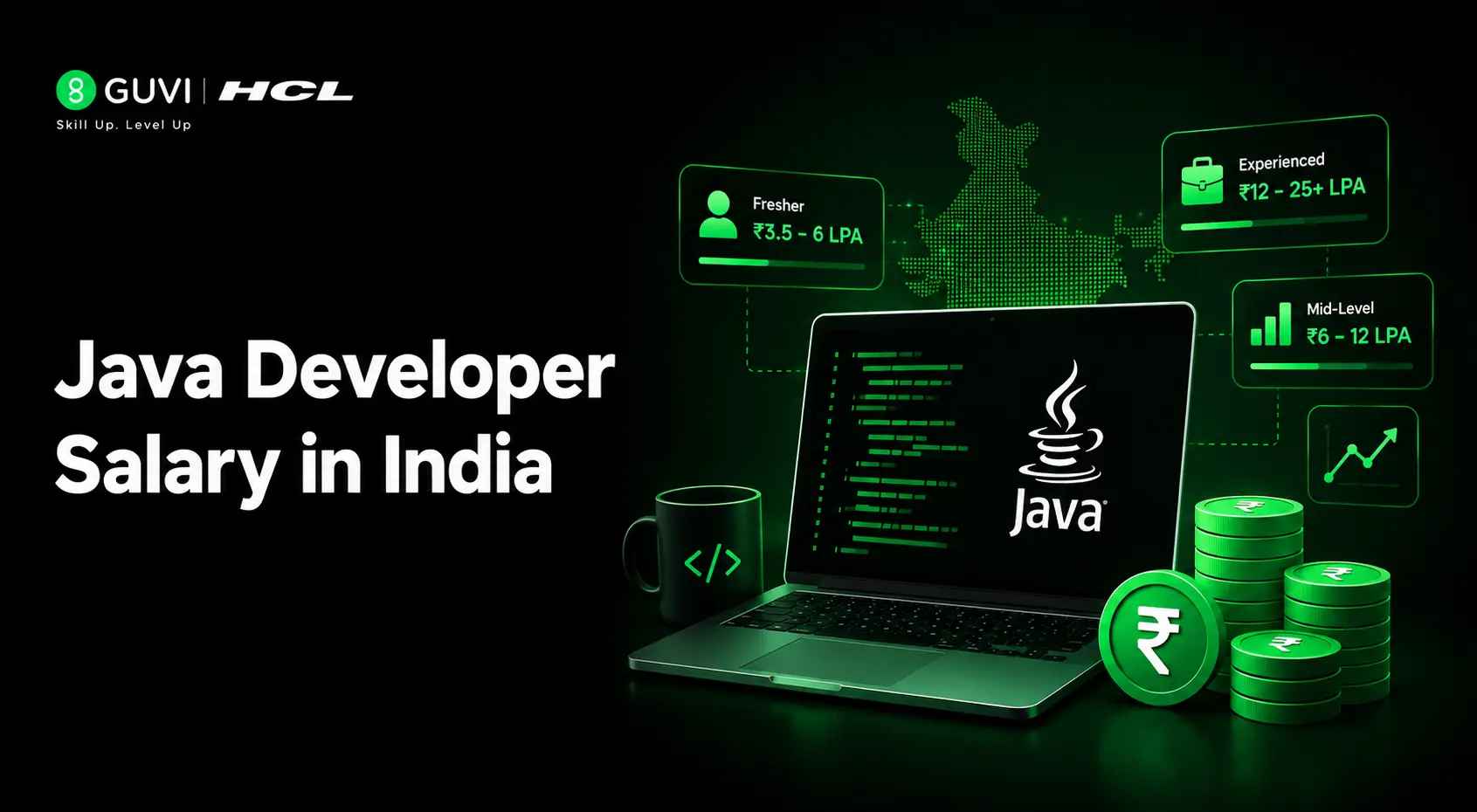
The average Java Developer Salary in India is approximately ₹8-16 LPA overall, ranging from ₹3.5-7 LPA for freshers to ₹25-45+ LPA for senior developers and architects.
Understanding Java Developer Salary trends starts with understanding why Java itself isn’t just relevant in 2026, it is essential. Consistently ranking among the top three programming languages worldwide, Java continues to be the backbone of software development across industries.
More than 90% of Fortune 500 companies still depend on Java to build, run, and maintain their core systems, proving its unmatched stability and long-term value.
This is exactly why Java Developer Salary figures keep climbing. The demand for Java developers is only growing. Between 2024 and 2026, the global market is expected to open up around 18.7 million Java-related job opportunities. In India, especially, Java remains one of the most sought-after skills in tech recruitment.
Table of contents
- TL;DR
- Roles and Responsibilities of a Java Developer
- Top Companies Hiring Java Developers in 2026
- Factors Affecting Java Developer Salary
- Career Scope of a Java Developer in 2026
- Career Progression: From Entry to Expert
- Specializations Shaping the Java Developer Role
- Global and Remote Career Opportunities
- Transition and Diversification Paths
- Java Developer Salary Comparison Based on Experience
- Java Developer Salary by City and Experience
- Salary Comparison Based on Company Type
- Java Developer Salary at TCS, Infosys vs Startups — Huge Gap
- Spring Boot Java Developer vs Core Java Developer Salary Difference
- Salary Comparison Based on Cities
- Java Developer Salary Internationally: US, Canada, UK, Germany
- 💡 Did You Know?
- Wrapping Up
- FAQs
- What is the expected salary for a Java developer in India in 2026?
- What is expected from a 5-year experienced Java developer?
- What is the Java developer salary in 2026 for freshers?
- Is there a future for Java developers?
- Is Java growing or dying?
- Is Java in demand in 2026?
TL;DR
- The average Java Developer Salary in India is ₹8-16 LPA overall, with freshers at ₹3.5-7 LPA and senior developers/architects crossing ₹25-45+ LPA.
- Bangalore and Hyderabad pay the highest across every experience band, with Pune and Mumbai close behind.
- Product companies and startups pay significantly more than TCS, Infosys, and other IT service giants for the same Java Developer title.
- Spring Boot skills can push your Java Developer Salary 20-40% higher than a Core Java-only profile at the same experience level.
- Internationally, US Java developers average $119,136, well above India’s domestic pay even after cost-of-living adjustments.
Java is a smart, future-ready choice if you’re looking to enter or advance in software development, and the Java Developer Salary data below shows why. But what kind of Java Developer salary can you expect in 2026? What factors influence how much you earn?
In this blog, we are breaking down everything you need to know – from roles and responsibilities to salary comparisons by experience level, company type, city, and even international markets.
Roles and Responsibilities of a Java Developer
Understanding the role itself helps explain the Java Developer Salary figures ahead. Java developers play a critical role in the software lifecycle, from designing system architecture to deploying and maintaining scalable applications.
While the core skill is Java programming, the responsibilities stretch far beyond just writing code. Here’s what a typical Java developer is expected to handle:
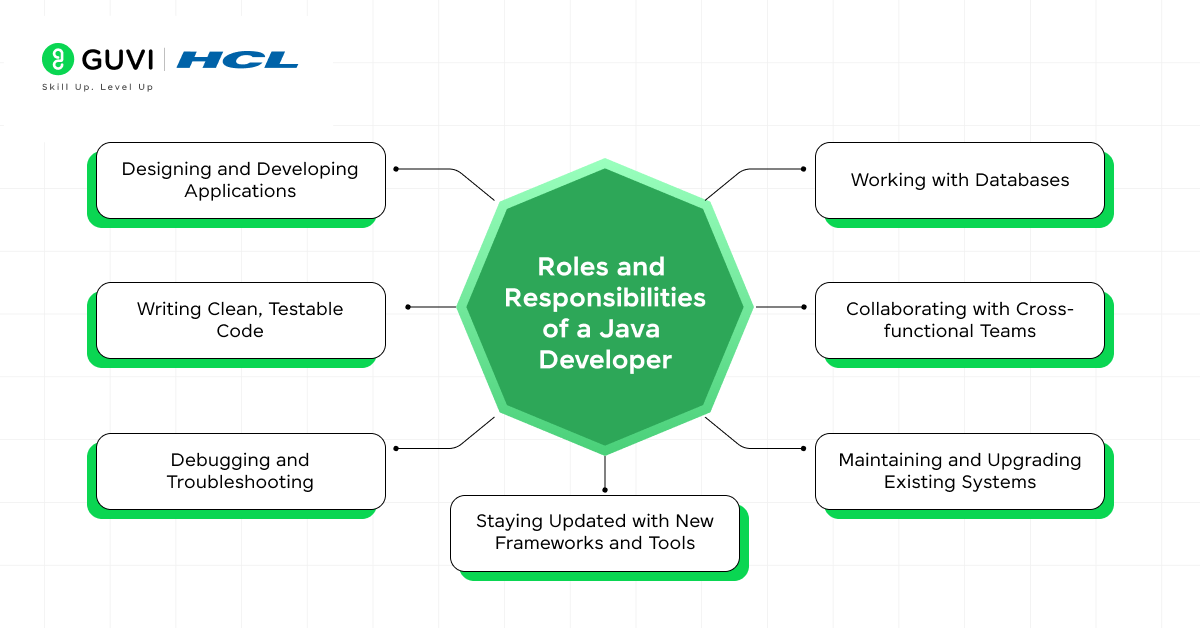
1. Designing and Developing Applications
Java developers are responsible for building robust, scalable, and high-performance applications. This includes both frontend (using JSP or JavaFX) and backend systems (using Spring Boot, Hibernate, etc.).
Example: Developing microservices for an e-commerce backend that can handle millions of users.
2. Writing Clean, Testable Code
A good Java developer writes code that is efficient, modular, and easy to test. Familiarity with design patterns, unit testing frameworks (like JUnit), and SOLID principles is crucial.
3. Debugging and Troubleshooting
Identifying bugs, analyzing logs, and fixing production issues are part of the day-to-day. Developers must be quick at identifying root causes and deploying fixes with minimal downtime.
4. Working with Databases
Java developers frequently interact with relational (MySQL, PostgreSQL) and non-relational (MongoDB) databases. Writing optimized queries, performing joins, and understanding database normalization are key tasks.
5. Collaborating with Cross-functional Teams
Collaboration with UI/UX designers, DevOps engineers, and QA testers is essential for building effective applications. Most Java development teams follow Agile methodologies such as Scrum or Kanban to streamline this process.
6. Maintaining and Upgrading Existing Systems
Many Java developers work on legacy systems that require modernization. Refactoring code, updating dependencies, and improving performance are ongoing responsibilities.
7. Staying Updated with New Frameworks and Tools
The Java ecosystem evolves constantly. A strong developer stays ahead by learning new tools like Spring Boot 3, Jakarta EE, or integrating AI into backend logic.
Top Companies Hiring Java Developers in 2026
The demand for Java developers remains high across sectors, and several top-tier companies are actively recruiting in large numbers this year. According to Naukri, here are some of the key employers leading the charge:
- Oracle
Oracle, a global leader in enterprise software and cloud solutions, currently has around 498 openings for Java developers. The company offers opportunities to work on high-scale backend systems, cloud services, and enterprise applications. - Bajaj Finance
One of India’s most trusted non-banking financial companies, Bajaj Finance, is hiring 60 Java developers to build secure, customer-facing financial applications and strengthen its digital infrastructure. - CGI
With 68 active Java developer positions, CGI, a multinational IT and business consulting firm, is looking for professionals skilled in Java to support global clients across banking, telecom, and government sectors. - PwC Service Delivery Center
Part of the PwC global network, this division supports key consulting and technology initiatives. It currently has 347 Java developer openings, making it one of the largest active recruiters in the space. - Qualcomm
Qualcomm, known for innovation in semiconductors and wireless tech, is hiring 80 Java developers to support its cloud tools, IoT systems, and automation platforms. - KPMG
This Big Four firm has 128 openings for Java developers to contribute to its digital transformation initiatives in audit, advisory, and risk compliance services. - JPMorgan Chase Bank
With 138 Java openings, JPMorgan Chase is recruiting engineers to work on its robust financial systems, real-time transaction processing tools, and risk analytics platforms. - Zensar Technologies
Zensar, a technology services and consulting company focused on digital transformation, currently has 70 Java developer vacancies. The roles include full-stack development, cloud migration, and enterprise app modernization. - Tech Mahindra
As a major IT and consulting player, Tech Mahindra is hiring for 80 Java roles to strengthen its telecom, healthcare, and banking solutions, especially in AI-powered and scalable cloud applications. - Capgemini
Capgemini, a global leader in consulting and digital transformation, has 243 openings for Java developers. These roles span across domains like banking, automotive, and public sector solutions.
If you’re looking to enhance your career prospects as a Java developer, mastering full-stack development is a game-changer. With HCL GUVI’s Java Full Stack Development Course, you’ll gain hands-on experience in both front-end and back-end technologies, making you a highly sought-after candidate in the competitive job market. The course covers key Java technologies, including Spring Boot, Hibernate, and RESTful services, along with essential front-end tools like HTML, CSS, and JavaScript. This comprehensive skill set is critical for roles in full-stack development, cloud computing, and DevOps, all of which are expected to see significant growth in 2026.
Factors Affecting Java Developer Salary
| Factor | Details |
|---|---|
| Experience Level | Entry-Level (0–2 yrs): ₹3–5 LPA · Mid-Level (2–7 yrs): ₹6–10 LPA · Senior (7+ yrs): ₹10–30+ LPA |
| Location | Tier 1 Cities (e.g., Bengaluru, Mumbai): 9–23% higher than the national average · Tier 2 Cities: Lower salaries, but reduced cost of living |
| Company Type | Product-Based: Higher packages (₹12–30+ LPA) · Service-Based: Typically ₹3–10 LPA |
| Educational Background | Top Institutes (IITs, NITs): Often secure higher salaries · Other Institutions: Salary varies with profile strength |
| Skill Set | In-demand skills: Core Java, Spring Boot, Microservices, Docker, Kafka · Modern tool expertise boosts offers |
| Certifications & Projects | OCJP and other certifications add value · Strong academic or freelance projects make a difference |
| Interview & Negotiation | High interview performance = higher offer · Negotiation skills + soft skills matter |
Career Scope of a Java Developer in 2026
Career scope is one of the biggest levers on long-term Java Developer Salary growth. Java remains the backbone of modern software development, with widespread usage across enterprise systems, mobile applications, and cloud platforms.
In 2026, Java developers in India have a promising and evolving career path shaped by both traditional demand and emerging technological trends.
Career Progression: From Entry to Expert
1. Entry-Level Developer (0–2 years)
You begin by mastering core Java, object-oriented programming, and foundational frameworks like Spring and Hibernate. Tasks include writing clean code, debugging, and assisting in development under senior supervision.
2. Mid-Level Developer (2–5 years)
At this stage, developers gain ownership of modules and work independently on back-end systems, microservices, and integrations. You’re expected to optimize performance, collaborate across teams, and begin contributing to architectural decisions.
3. Senior Developer (5–8 years)
This role involves leading feature development, mentoring junior team members, conducting code reviews, and ensuring best practices across the team. A strong grasp of design patterns, distributed systems, and deployment strategies is critical.
4. Technical Lead or Architect (8+ years)
You move into high-level planning, architecture design, and strategic decisions. The focus shifts from code to system design, scalability, and aligning technology with business goals. Leadership and decision-making skills become just as important as technical expertise.
Specializations Shaping the Java Developer Role
Microservices Architecture
With enterprise applications breaking into microservices, Java developers who understand how to build independently deployable services are in high demand. This model allows faster development cycles and better scalability.
Cloud-Native Development
Java’s integration with AWS, Azure, and Google Cloud means developers must adapt to building, deploying, and managing Java apps in cloud environments. Skills in containerization and orchestration (Docker, Kubernetes) are valuable.
DevOps and CI/CD
Java developers increasingly work within DevOps pipelines, using tools like Jenkins, GitHub Actions, or GitLab CI to automate builds, tests, and deployments. Understanding DevOps workflows enhances efficiency and cross-functional collaboration.
Full-Stack Java Development
With proficiency in both backend (Java, Spring Boot) and frontend (React, Angular, or Vue), full-stack Java developers enjoy greater versatility and are often favored in lean teams or startups.
Android App Development
Java remains a primary language for Android. Developers with experience in Android SDK, UI frameworks, and app optimization can find strong opportunities in mobile-first companies.
Global and Remote Career Opportunities
Remote work has opened up the global job market. Skilled Java developers in India can now work with companies across Europe, the US, and Southeast Asia, often earning globally competitive salaries. Freelancing and contract-based opportunities have also grown, allowing developers to work across industries without geographical constraints.
Transition and Diversification Paths
Java developers are not restricted to coding roles. With experience, many transition into:
- Full-Stack Developer: Expanding into frontend frameworks and APIs
- Solution Architect: Designing large-scale, maintainable solutions
- Product Engineer or Manager: Merging business insight with technical execution
- Technical Consultant: Advising clients on implementation strategies and optimizations
Java Developer Salary Comparison Based on Experience
Experience remains the single biggest driver of Java Developer Salary growth. Your career growth as a Java developer directly correlates with your experience level. As you gain more hands-on experience and take on more responsibilities, your salary increases.
| Experience Level | Average Annual Salary (INR) | Salary Range (INR) | Key Skills Expected |
|---|---|---|---|
| Fresher (0-1 year) | ₹3.6 LPA – ₹4.6 LPA | ₹2 LPA – ₹6.8 LPA | Core Java, SQL, Git, Spring Core |
| Junior (1-3 years) | ₹4.8 LPA – ₹6.5 LPA | ₹3 LPA – ₹8.2 LPA | Spring Boot, Hibernate, REST APIs |
| Mid-Level (3-5 years) | ₹7.5 LPA – ₹11.8 LPA | ₹5 LPA – ₹16.5 LPA | Microservices, AWS, Jenkins, NoSQL |
| Senior (5-9 years) | ₹12 LPA – ₹20 LPA | ₹10 LPA – ₹28 LPA | Spring Cloud, Kafka, DevOps, Architecture |
| Lead (10+ years) | ₹18 LPA – ₹42 LPA | ₹15 LPA – ₹49 LPA | Scalable Systems, Security, Team Leadership |

Java Developer Salary by City and Experience
Beyond the national averages above, here’s how the Java Developer Salary actually breaks down once you factor in both city and experience level together, which tells a much sharper story than a single national number.
| Experience | Bangalore | Hyderabad | Pune | Mumbai | Remote (Global Employers) |
|---|---|---|---|---|---|
| Entry-Level (0-2 yrs) | ₹4-8 LPA | ₹3.5-7 LPA | ₹3.5-7 LPA | ₹4-7 LPA | ₹5-8 LPA |
| Mid-Level (3-7 yrs) | ₹10-20 LPA | ₹9-18 LPA | ₹9-17 LPA | ₹10-18 LPA | ₹15-25 LPA |
| Senior (8+ yrs) | ₹25-45 LPA | ₹22-40 LPA | ₹20-38 LPA | ₹22-40 LPA | ₹30-55+ LPA |
Bangalore and Hyderabad lead the Java Developer Salary market at every experience tier, largely due to the concentration of product companies, GCCs, and fintech firms running Java and Spring at scale.
Pune remains a surprisingly strong Java market thanks to its history as an enterprise-IT hub, while Mumbai commands a premium specifically for fintech and capital-markets Java roles.
Salary Comparison Based on Company Type
The type of company you choose to work for can dramatically impact your Java Developer Salary. Product-based companies, especially in tech hubs like Bengaluru, tend to offer higher salaries due to their complex and cutting-edge products. On the other hand, IT services companies often provide stable but lower salaries, with significant opportunities for career growth.
| Company Type | Average Salary (INR) | Salary Range (INR) | Top Employers |
|---|---|---|---|
| IT Services (e.g., TCS, Infosys) | ₹4.5 LPA – ₹9 LPA | ₹3 LPA – ₹12 LPA | TCS, Wipro, HCL |
| Product-Based (e.g., Oracle, IBM) | ₹6 LPA – ₹15 LPA | ₹4.5 LPA – ₹20 LPA | Oracle, IBM, Adobe |
| Startups | ₹5 LPA – ₹12 LPA | ₹3.5 LPA – ₹18 LPA | Flipkart, Swiggy |
| Consulting (e.g., Accenture, Deloitte) | ₹5.5 LPA – ₹14 LPA | ₹4 LPA – ₹18 LPA | Accenture, Deloitte |
| FinTech (e.g., Paytm, Razorpay) | ₹7 LPA – ₹18 LPA | ₹5 LPA – ₹25 LPA | Paytm, Razorpay |
Java Developer Salary at TCS, Infosys vs Startups — Huge Gap
The table above hints at it, but the Java Developer Salary gap between IT services giants and startups/product companies is worth calling out directly, since it’s one of the biggest career-defining decisions a Java developer makes.
| Factor | TCS / Infosys (IT Services) | Startups / Product Companies |
|---|---|---|
| Fresher Java Developer Salary | ₹3.5-5 LPA | ₹5-8 LPA (higher with Spring Boot + REST API skills) |
| Mid-level (3-5 yrs) | ₹6-9 LPA | ₹10-18 LPA |
| Senior (8+ yrs) | ₹12-18 LPA | ₹25-45+ LPA |
| Pay structure | Fixed bands, predictable hikes | Higher cash + ESOPs, more variable |
| Career growth speed | Slower, seniority-based | Faster, merit and ownership-based |
| Risk | Low, stable employer | Higher, but with faster upside |
The Java Developer Salary gap widens sharply with experience: a senior Java developer can earn 2-3x more at a startup or product company than at a comparable IT services role.
TCS and Infosys remain excellent starting points for freshers precisely because they hire in bulk and offer structured training. But developers who stay purely on the IT-services track for 8+ years often leave significant salary growth on the table compared to peers who moved to product companies mid-career.
Spring Boot Java Developer vs Core Java Developer Salary Difference
Not all “Java Developer” job titles pay the same, and the Java Developer Salary difference here is bigger than most people expect. Spring Boot specifically carries a measurable premium over generalist Core Java skills, and the gap is wide enough to matter for anyone planning their next certification or project.
| Factor | Core Java Developer | Spring Boot Java Developer |
|---|---|---|
| Fresher salary | ₹3.5-5 LPA | ₹6-15 LPA |
| Mid-level (3-5 yrs) | ₹6-10 LPA | ₹10-20 LPA |
| Senior (8+ yrs) | ₹15-25 LPA | ₹28-45+ LPA |
| Core skills tested | OOPs, collections, multithreading, JVM basics | Everything in Core Java, plus REST APIs, Spring Security, microservices, Spring Cloud |
| Typical premium over Core Java | Baseline | 20-40% higher at the same experience level |
Spring Boot has become the default framework for enterprise Java development in India, which is exactly why it commands this premium. It’s no longer an optional “extra” skill but the framework most product companies and modern IT teams actually build on.
A developer who knows Core Java alone increasingly competes for a shrinking pool of legacy-maintenance roles, while Spring Boot proficiency opens up the fastest-growing segment of the market: microservices and cloud-native backend roles.
Salary Comparison Based on Cities
The city you work in has a significant impact on your Java Developer Salary. Tech hubs like Bengaluru and Hyderabad offer the highest salaries due to their demand for developers and the concentration of major tech companies. Cities like Pune and Chennai, while offering competitive salaries, can be more cost-effective to live in, giving you better savings opportunities.
| City | Average Salary (INR) | Salary Range (INR) |
|---|---|---|
| Bengaluru | ₹6.5 LPA – ₹12 LPA | ₹4.5 LPA – ₹18 LPA |
| Hyderabad | ₹6 LPA – ₹11 LPA | ₹4 LPA – ₹16 LPA |
| Pune | ₹5.5 LPA – ₹10 LPA | ₹4 LPA – ₹14 LPA |
| Mumbai | ₹6 LPA – ₹11.5 LPA | ₹4.2 LPA – ₹17 LPA |
| Chennai | ₹5 LPA – ₹9.5 LPA | ₹3.5 LPA – ₹13 LPA |
Java Developer Salary Internationally: US, Canada, UK, Germany
If you’re considering a remote role for a foreign employer or relocation, here’s how the Java Developer Salary compares across four popular international destinations:
| Country | Average Salary | Typical Range |
|---|---|---|
| United States | $119,136/yr (~₹99 L) | $92,922-$153,643 (25th-75th percentile) |
| Canada | $56,000-$192,000/yr (~₹47-160 L) | Mid-level to senior range |
| United Kingdom | $46,774/yr (~₹39 L) | Java-specific average |
| Germany | $66,000-$120,000/yr (~₹55-100 L) | Mid-level to senior range |
The US clearly leads on raw Java Developer Salary numbers, though Canada’s upper range for senior Java engineers is competitive once you account for strong-performing individual contributors.
The UK’s Java-specific average trails other major economies partly because the broader UK tech salary scale runs lower than the US, even for senior roles. Germany sits in the middle, with mid-level and senior Java roles paying well above India’s domestic market.
If you’re looking to enhance your career prospects as a Java developer, mastering full-stack development is a game-changer. With HCL GUVI’s Java Full Stack Development Course, you’ll gain hands-on experience in both front-end and back-end technologies, making you a highly sought-after candidate in the competitive job market. The course covers key Java technologies, including Spring Boot, Hibernate, and RESTful services, along with essential front-end tools like HTML, CSS, and JavaScript. This comprehensive skill set is critical for roles in full-stack development, cloud computing, and DevOps, all of which are expected to see significant growth in 2026.
💡 Did You Know?
- Java has been around since 1995, making it nearly 30 years old, yet it still powers over 90% of Fortune 500 companies’ core systems, which is a major reason why Java Developer Salary trends have remained strong despite the rise of newer languages.
- India produces more Java developers than any other country, but GCCs from companies like Microsoft, Amazon, and Walmart have increased demand for experienced Java professionals, contributing to steady growth in Java Developer Salary.
- The “Java is dying” narrative has existed for over a decade, yet Java continues to remain relevant, with global Java-related job openings projected to reach 18.7 million between 2024 and 2026.
Wrapping Up
In conclusion, the demand for Java developers in 2026 remains strong, and so does Java Developer Salary growth, offering significant career opportunities. By focusing on developing the right skills, understanding the factors that influence salary, and crafting a well-structured resume, you can position yourself for success in this competitive field.
Advancing your career, and your Java Developer Salary along with it, requires continuous learning and staying updated on the latest trends and technologies. With dedication and the right strategy, you can secure a rewarding position and thrive in the dynamic world of Java development.
FAQs
1. What is the expected salary for a Java developer in India in 2026?
Java developers in India can expect an average annual salary ranging from ₹6 LPA to ₹12 LPA, depending on experience, skills, and location.
2. What is expected from a 5-year experienced Java developer?
A 5-year experienced Java developer is expected to have proficiency in advanced Java frameworks, microservices, cloud technologies, and demonstrate leadership skills in project management and team collaboration.
3. What is the Java developer salary in 2026 for freshers?
Freshers in Java development can expect a starting salary ranging from ₹3 LPA to ₹5 LPA, with potential for growth based on skill acquisition and performance.
4. Is there a future for Java developers?
Yes, Java remains a foundational language in enterprise applications, ensuring a strong demand for developers proficient in Java for the foreseeable future.
5. Is Java growing or dying?
Java continues to grow, especially in sectors like enterprise software, banking, and cloud computing, maintaining its relevance and demand in the tech industry.
6. Is Java in demand in 2026?
Yes, Java is in high demand in 2026, driven by its widespread use in building scalable, secure, and reliable applications across various industries
Success Stories

About the Author
Jebasta
I translate the language of data into stories that anyone can understand. As a writer with a data science background, I simplify analytics, AI, and decision-making so beginners and enthusiasts can confidently explore the world of data.
View all posts by Jebasta
Connect with me @











Did you enjoy this article?