


Artificial Intelligence and Machine Learning Articles
Finance Manager to Data Analytics: Career Growth, Salary and Seniority
How to Evaluate LLM Outputs in Production Deployments
AI/ML Skills Gap 2026: Why Companies Can't Find Job-Ready Talent
20 AI/ML Interview Questions Recruiters Can Use Without a Tech Background - Best Guide


Get In Touch For Details! Request More Information

How Replit is Protecting You From the ‘Shai-Hulud’ Worm
Jun 05, 2026 5 Min Read 565 Views
(Last Updated)
Picture this. You are working on your passion project, a web app you have been building for months. You take a coffee break, come back to your desk, and suddenly your code looks different. Functions are gone, strange files appear, and errors flood your console.
You refresh the page thinking it is just a glitch. It gets worse. Directories vanish, your authentication system corrupts, and your database scrambles. Your heart races as you realize something is seriously wrong.
In this guide, we will explore what the Shai-Hulud worm is and how it threatens coding platforms, how Replit’s multi-layered security system protects your projects from these attacks, and what steps you can take to add extra protection to your code even if you have never thought about security before.
Table of contents
- Quick TL;DR Summary
- What Is the Shai-Hulud Worm?
- How Coding Platform Worms Actually Work
- How Replit's Security Architecture Works
- The Shai-Hulud Attack: What Actually Happened
- Day 1: Detection
- Day 1: Immediate Response
- Day 2: Platform-Wide Scan
- Day 3: Patches and Hardening
- Day 7: All Clear
- Specific Protection Features Replit Deployed
- What You Should Do to Stay Protected
- The Future of Security on Replit
- Common Myths About Coding Platform Security
- Conclusion
- FAQs
- Can the Shai-Hulud worm still infect my Replit projects today?
- How do I know if my Repl was ever infected?
- Does Replit's security slow down my code?
- What should I do if I think I found a security vulnerability in Replit?
- Are free Replit accounts as secure as paid ones?
Quick TL;DR Summary
- This guide explains what the Shai-Hulud worm is and why it became one of the biggest security threats to online coding platforms.
- You will learn exactly how Replit’s security system works to protect your code from worms, viruses, and malicious attacks.
- The guide covers the specific technologies Replit uses, including container isolation, real-time monitoring, and automated threat detection.
- Real-world examples show you how Replit stopped the Shai-Hulud worm and similar threats before they could damage user projects.
- Practical tips help you understand what you should do to add extra layers of protection to your own Replit projects.
- You will also learn about the broader security landscape for cloud-based coding environments and what the future holds.
What Is Replit Security Worm Protection?
Replit security worm protection is a comprehensive defense system that monitors, isolates, and neutralizes threats in real time to keep your coding environment safe from malicious attacks such as the Shai-Hulud worm.
What Is the Shai-Hulud Worm?
The Shai-Hulud worm is a type of malicious software designed to attack cloud-based development environments. Unlike traditional viruses that target your local computer, this worm exploits platforms where thousands of users share computing resources.
Think of it like this: traditional malware is like a burglar breaking into one house, while Shai-Hulud is like a burglar moving through walls between apartments in a massive building.
The worm works by exploiting vulnerabilities in how coding platforms handle user isolation. It spreads through shared libraries, copied code snippets, or project templates. Once it infects one project, it jumps to others, corrupting files, stealing code, and using infected accounts to launch further attacks.
How Coding Platform Worms Actually Work
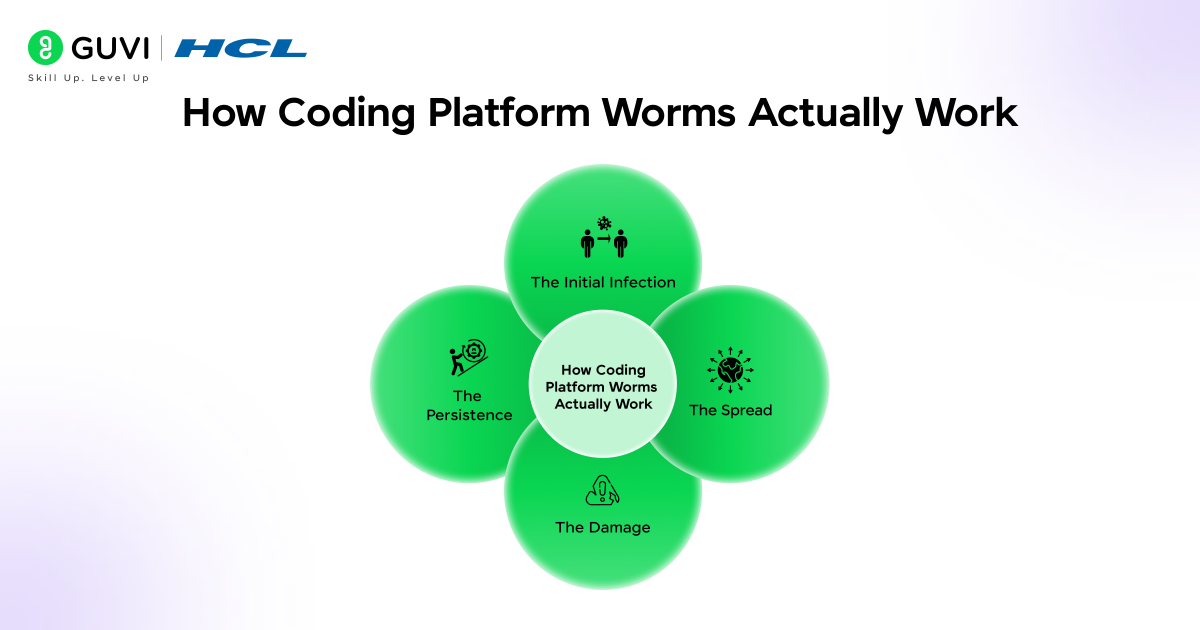
To understand how Replit protects you, you need to understand how these worms operate. Let us break down the typical attack pattern.
- The Initial Infection
The worm usually gets into a platform through several methods: a developer unknowingly imports infected code, someone copies a code snippet from a compromised source, a malicious user uploads infected project templates, or an unpatched dependency contains a hidden vulnerability.
- The Spread
Once inside, the worm does not just sit still. It actively tries to spread by scanning for other projects, looking for shared resources or collaborative access, injecting itself into commonly used functions, and monitoring network traffic to find targets.
- The Damage
Shai-Hulud corrupts source code files, steals sensitive information like API keys or passwords, uses infected accounts to launch attacks, and deletes projects or fills storage to cause denial of service.
- The Persistence
It creates backup copies in hidden files, modifies system configurations to restart automatically, and uses encryption to hide. By the time you notice something is wrong, the worm has already dug in deep.
Read More: How Is Cyber Security Important To Our Lives?
How Replit’s Security Architecture Works
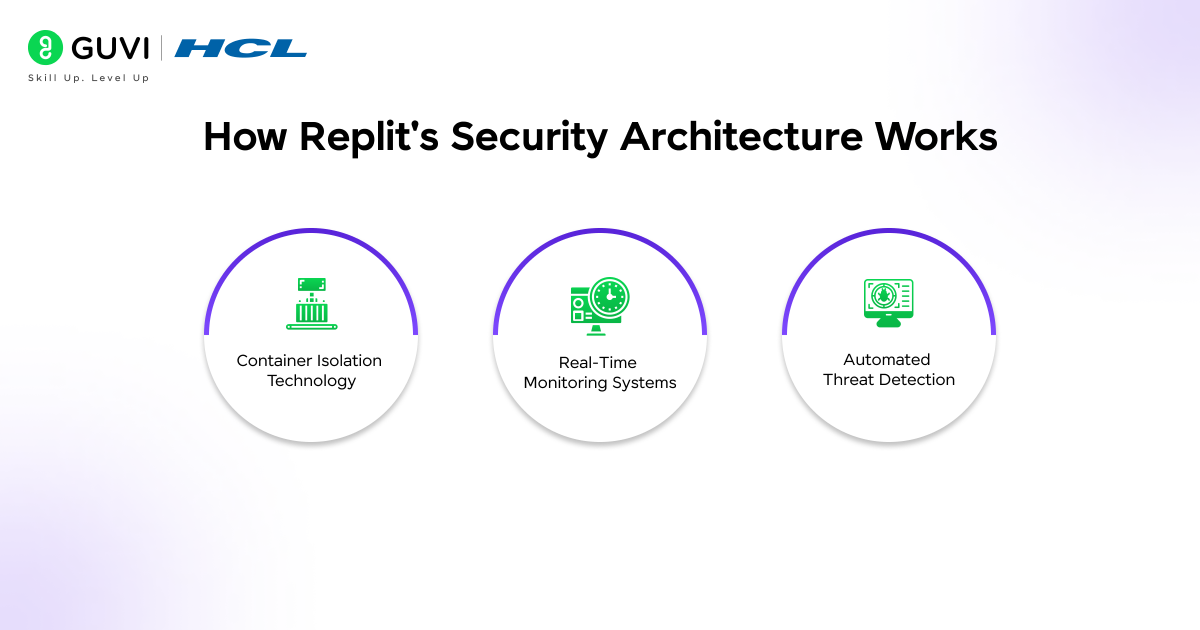
Replit built its security system with one core principle: isolation. Every project runs in its own protected container, so even if one container gets infected, the worm cannot jump to others.
- Container Isolation Technology
Replit uses containerization technology similar to Docker with additional security hardening. Each Repl runs in a separate environment with its own file system, isolated network connections, limited system permissions, and resource quotas. Even if Shai-Hulud infects one project, it cannot see other projects, access shared resources, or spread.
- Real-Time Monitoring Systems
Replit actively watches for suspicious behavior. Automated monitors track unusual file access patterns, abnormal network activity, spikes in resource usage, and changes to critical system files. When detected, systems can quarantine a Repl, alert security teams, or roll back changes.
- Automated Threat Detection
Replit uses machine learning models trained on code patterns to spot malicious behavior. These models identify worm signatures, detect obfuscated code, flag spreading behavior, and recognize data exfiltration attempts. Behavioral analysis catches even new threats.
The Shai-Hulud Attack: What Actually Happened
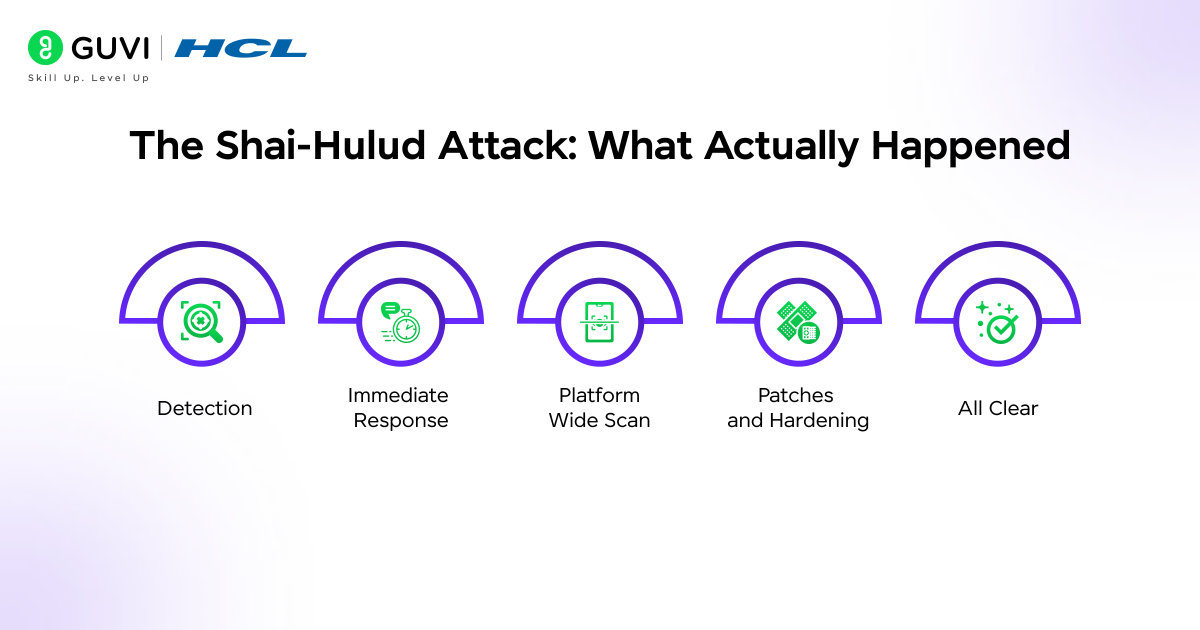
Let us walk through what happened when Shai-Hulud first appeared and how Replit responded.
Day 1: Detection
Security researchers outside Replit first identified the worm on a different platform. Within hours, Replit’s security team analyzed the threat and checked their systems. Their monitoring had already flagged three suspicious Repls showing early signs of the worm’s behavior pattern.
Day 1: Immediate Response
Replit’s automated systems kicked in instantly. The suspicious Repls were quarantined, preventing them from executing code or communicating with other projects. Users received notifications explaining what happened, and the security team deployed updates to detect Shai-Hulud’s unique signatures.
Day 2: Platform-Wide Scan
Replit ran a complete scan of every active Repl on the platform, checking millions of projects for infection. They found 47 additional infected Repls, quarantined them immediately, and gave users tools to clean their projects or restore from backups.
Day 3: Patches and Hardening
Even though existing defenses worked, the team pushed additional security updates. They patched vulnerabilities in shared libraries, tightened container isolation rules, and added new monitoring capabilities designed to catch worm-like behavior.
Day 7: All Clear
One week after initial detection, Replit declared the threat contained. No Shai-Hulud infections had successfully spread between projects, no user data was stolen, and the worm was stopped cold.
Specific Protection Features Replit Deployed
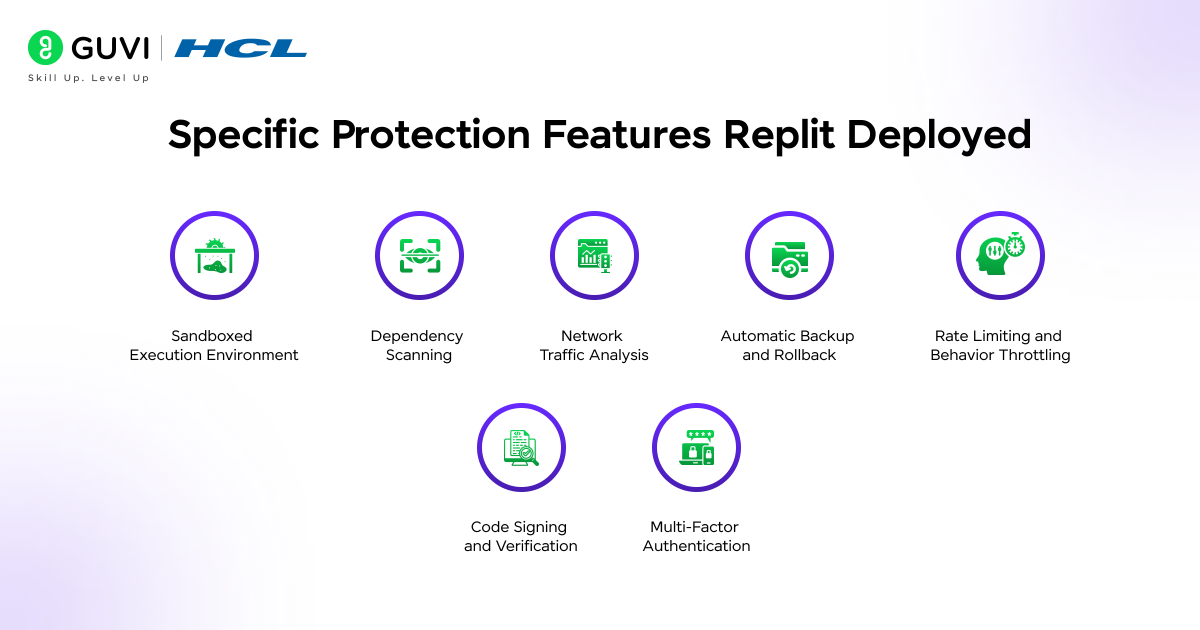
Let us look at the specific security features that made this possible.
- Sandboxed Execution Environment
Every line of code you run on Replit executes inside a sandbox with strict rules. Code cannot access the underlying server, read files from other users, or communicate with unauthorized networks. If Shai-Hulud tries to break out, the sandbox silently blocks it and logs the attempt for security review.
- Dependency Scanning
When you import external libraries or packages, Replit automatically scans them for known vulnerabilities before the code runs. If a package is flagged as dangerous, you get a warning. This catches compromised npm packages or Python libraries before they can execute.

- Network Traffic Analysis
Replit monitors all network traffic going in and out of Repls. They watch for connections to malicious servers, unusual data transfer patterns, or suspicious communication attempts between projects. This blocks worms trying to spread through network connections.
- Automatic Backup and Rollback
Replit automatically creates snapshots of your projects at regular intervals. If your Repl gets infected, you can roll back to a clean version from before the attack without losing your work.
- Rate Limiting and Behavior Throttling
Worms spread by executing lots of operations very quickly. Replit’s systems detect this abnormal activity and throttle it. If your Repl suddenly starts making hundreds of file system operations per second, the system slows it down and alerts security teams.
- Code Signing and Verification
Replit implements code signing for templates and shared projects. This means you can verify that code came from a trusted source and has not been tampered with. It is like a seal of authenticity that worms cannot fake.
- Multi-Factor Authentication
Replit strongly encourages multi-factor authentication to prevent attackers from compromising accounts to spread malware manually.
Replit’s security infrastructure processes over 10 million security events per day. While most are harmless, AI-driven systems identify the small fraction that represent real threats.
This allows human security experts to focus on the most critical risks, improving both efficiency and protection.
What You Should Do to Stay Protected
- Be Careful With External Code
- Review Permissions Carefully
- Keep Dependencies Updated
- Use Environment Variables for Secrets
- Enable Two-Factor Authentication
- Monitor Your Repls for Strange Behavior
- Participate in the Community
- Create regular backups
The Future of Security on Replit
Replit is not standing still. Their security roadmap includes several exciting developments.
- Advanced AI Threat Detection
Replit is building machine learning models that predict threats before they happen. These systems analyze code patterns and user behavior to catch attacks in their earliest stages, potentially identifying malicious code even before it exhibits any harmful behavior.
- Blockchain-Based Code Verification
Replit is exploring blockchain technology to create unforgeable records of code provenance, making it nearly impossible for attackers to distribute infected templates while pretending they came from trusted sources.
- User-Controlled Security Levels
Future versions might let you choose your security level. Maximum security means ultra-isolated mode with strict monitoring. Need more flexibility? You can adjust restrictions based on your risk tolerance.
- Collaborative Threat Intelligence
Replit is partnering with other platforms to share threat intelligence in real-time. When a worm appears anywhere, all platforms get notified immediately, creating a collective defense network.
- Zero-Trust Architecture
Replit is moving toward a zero-trust model where every action, file access, and network connection must be verified and authorized, making it exponentially harder for worms to operate.
Replit’s security team includes former hackers who now work on the defensive side, bringing deep insight into how real attacks happen.
This attacker mindset helps build stronger defenses — a real-world example of “it takes a thief to catch a thief”.
Common Myths About Coding Platform Security
- Cloud Platforms Are Always Less Secure Than Local Development
- Open Source Code Is Automatically Safe
- If Antivirus Does Not Catch It, It Is Safe
- Small Projects Are Not Worth Attacking
- Security Is Only About Technology
If you want to learn more on how Replit is protecting you from the ‘Shai-Hulud’ worm, do not miss the chance to enroll in HCL GUVI’s Intel & IITM Pravartak Certified Artificial Intelligence & Machine Learning course. Endorsed with Intel certification, this course adds a globally recognized credential to your resume, a powerful edge that sets you apart in the competitive AI job market.
Conclusion
The Shai-Hulud worm was built to wreak havoc on cloud coding platforms, but Replit stopped it cold. Container isolation prevented it from jumping between projects. Real-time monitoring caught suspicious behavior instantly. Automated systems quarantined threats before they could cause damage.
Good security is not about reacting after an attack. It is about building defenses that expect attacks and stop them automatically.
When you code on Replit, professional security teams protect the infrastructure 24/7. But security works best as a partnership. Replit builds the fortress, you lock your doors. Follow best practices, stay cautious with external code, and keep your account secure.
FAQs
1. Can the Shai-Hulud worm still infect my Replit projects today?
No. Replit’s security systems were updated to specifically detect and block Shai-Hulud and its variants. The original worm and all known mutations are automatically quarantined before they can cause damage. However, new threats always emerge, which is why Replit maintains constant monitoring.
2. How do I know if my Repl was ever infected?
Replit automatically scans all projects and notifies users if any threats are detected. If you never received a notification, your projects were clean. You can also check your Repl’s logs for suspicious activity or contact Replit support to request a security review.
3. Does Replit’s security slow down my code?
The security layers add minimal overhead. Container isolation and monitoring happen at the infrastructure level and do not significantly impact your code’s performance. Most users notice no difference in execution speed.
4. What should I do if I think I found a security vulnerability in Replit?
Replit has a responsible disclosure program. You can report potential vulnerabilities through their security page. Do not post details publicly, as that could help attackers exploit the issue before it is fixed.
5. Are free Replit accounts as secure as paid ones?
Yes. All Replit accounts receive the same core security protections, including container isolation, threat detection, and monitoring. Paid accounts may have additional features like longer backup retention, but the fundamental security architecture is identical across all account types.
Success Stories

About the Author
Vishalini Devarajan
An Aerospace Engineer turned content writer, I focus on making complex concepts easy to understand through well-structured, reader-friendly blogs. Whether it’s a technical topic or a non-technical one, I love creating content that is clear, engaging, and impactful.
View all posts by Vishalini Devarajan
Connect with me @












Did you enjoy this article?