


Software Development Articles
My Google SDE Interview Experience: From Rejection to Selection [2026 Success Story]
Apple Interview Experience for Software Developers: What to Expect
Decoding Differences between Network OS and Distributed OS
Operating System Examples: Top OS Types, Features, and Uses Explained


Get In Touch For Details! Request More Information
The First Stage in Software Development Life Cycle: Requirement Gathering & Analysis
Oct 25, 2025 4 Min Read 1831 Views
(Last Updated)
Consider a scenario where you are in charge of constructing a city from scratch. In this particular case, let’s say you started this project by directly getting involved in the building process, and that too without any proper and logical planning. And after imagining this situation, it’s very obvious that the whole city’s existence will always be in threat as it is not meticulously organized and planned.
Similarly, designing and developing an entire software infrastructure for any company or organization requires a sequential execution plan. This is where the first stage in software development life cycle (SDLC) process comes into the picture. SDLC is a structured procedure that is followed by the developers and technical team to create high-quality software systems and applications. In this methodology, there are several stages through which a business requirement passes, and the entry point (requirement gathering and analysis) through which it passes is the most vital stage, as it is a decisive factor that ensures the smooth flow of information further.
Table of contents
- What is The Software Development Life Cycle (SDLC) Process?
- What is Requirement Gathering, Analysis, and Project Planning?
- Components of Requirement Gathering and Analysis
- Importance of The Initial Stage in the SDLC Process
- Conclusion
- FAQs
- Which phase of the software development life cycle is the first?
- What makes the SDLC's first step crucial?
- What are the requirements stage deliverables?
- Is a thorough requirement analysis necessary for a software project to succeed?
What is The Software Development Life Cycle (SDLC) Process?
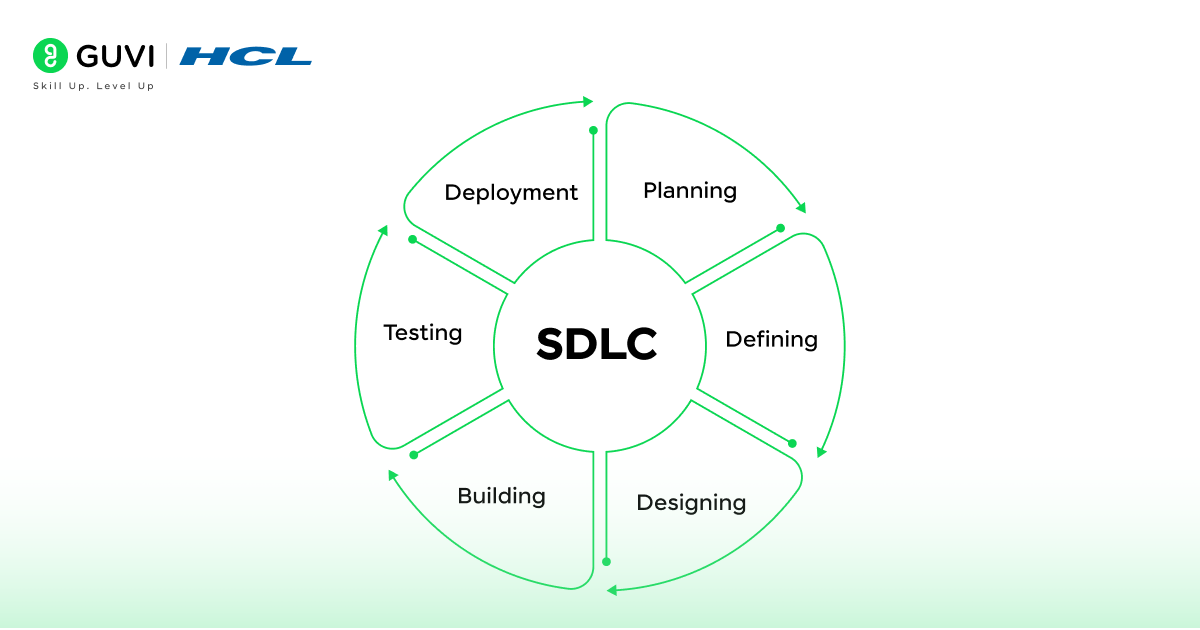
The SDLC process represents the orderly flow of converting a project idea into a desired software product. In this process, there are various phases: requirement gathering & analysis, project planning & architecture design, development, testing & quality assurance (QA), deployment & final launch, and future maintenance and upgradation. The ultimate objective for adopting this process is to achieve top-notch build quality, development efficiency, and productivity.
But in this blog, our principal focus will be on the first stage in software development life cycle process, which is Requirement gathering and Analysis. So without any further ado, let’s understand this specific phase.
What is Requirement Gathering, Analysis, and Project Planning?
Requirement gathering and analysis is the initial stage of the SDLC exercise, where the involved team acts as an interpreting unit. This unit is responsible for accumulating business requirements and needs, and processing them further to define the project scope, along with setting up the development goals. This is also the stage for deciding the resource allocations.
Once the business requirements are defined clearly, the very next process is to execute the project planning, where task segmentation is done, timeframes are estimated, and resources are allocated optimally. Following this structured planning ensures an uninterrupted project workflow with minimum risks involved. In addition to these, priorities are also set for avoiding redundant processes. In essence, accompanying requirement gathering and analysis, project planning also acts as the backbone of the SDLC, transforming project ideations and requirements into actionable strategies.
Components of Requirement Gathering and Analysis
This stage sets the foundation for the entire project because it defines what needs to be built and why. And these are the following vital components of this initial stage of SDLC:
- Project Planning
The project development starts with a defined execution strategy, which involves discussion of needs and technical details. The development team and engineering managers, along with the stakeholders, then determine the software projects’ scope, objectives, and desired outcomes during this specific phase.
Project planning defines deadlines, resources, roles, and milestones to guide the team. This prevents delays and assures project alignment. Risk factors and dependencies are also analyzed at this stage to help the team foresee problems and develop practical solutions.
- Understanding Stakeholder Inputs
The development team and engineering managers are engaged in comprehending the client’s needs by closely collaborating with them. They try to analyze and identify the business-specific problems that the software is going to solve.
In addition to this, the technical team also conducts activities like market surveys, competitor analysis, use case inspection, and many more. And the purpose behind these intensive activities is to understand the current market trend, user demand & behavior, prioritize requirements, and mitigate potential business risks.
- Requirement Documentation
Once all the requirements and details are gathered, a software requirement specification (SRS) is created. SRS is a document that serves as a blueprint or roadmap for developers, testers, and designers to carry forward the software building procedure.
In this documentation, all the features and functionalities are listed that will be required to streamline the internal workflow of any entity. Apart from the technical aspects, non-technical specifications such as performance, scalability, security, and user-friendliness are also taken into consideration.
- Feasibility Study
After producing a descriptive documentation, the whole team then evaluates the document to ensure the feasibility of that particular development flow.
This feasibility study is done to check three facets of a project:
- Technical Aspect: Can the desired software product be built with the existing technical resources?
- Financial Aspect: Is the particular software project financially viable or cost-effective?
- Operational Aspect: Will it be an effective digital solution for solving real-world issues?
- Requirement Prioritization
In the majority of cases, the number of requirements from the clients is very high. So in this kind of situation, the development team decides to prioritize the business inputs or requirements based on the complexity of the features, project timeline, frequency of use (How often the end users utilize that feature or functionality), and budget impact.
For example, the priority of requirements when dealing with an Ed-Tech company could be integrating “must-have” features such as a student login portal, an assignment submission module, a courses dashboard, etc. Whereas, the least priority features could be leaderboards, social media integration, or any kind of gamified experience that can distract a student’s focus.
- Validation and Approval
- After completing all these steps and obtaining team validation, the requirements are shared with the stakeholders. The stakeholders then review and approve the requirements.
- Upon completion of the approval process, the design and development team is deployed to build the system architecture, user interface (UI) design patterns, and a well-defined module plan.

Importance of The Initial Stage in the SDLC Process
- Minimizes Development Revisions: With the help of the software requirement specifications (SRS) document, the requirements become clearer, which in turn simplifies the future development process, and the technical team saves up its productive hours without getting involved in unnecessary modifications or code rework.
- Risk Mitigation: During the first stage of SDLC, the analysis stage is completed, as a result of which both developers and stakeholders have a clear understanding of technical, financial, and operational risks involved. Having this perspective enables the programmers and testers to avoid planning a strategy before the project execution starts.
- Enhances Collaboration: The central focus of this SDLC phase is to maintain team collaboration, as well as provide transparency to the stakeholders to ensure their alignment with the development process. This stage also contributes to minimizing microcommunication or any kind of conflicts between the technical and non-technical teams.
- Set Project Scope: Setting project scope is like putting boundaries. So, the initial stage of the SDLC procedure helps in defining the optimum technology stack or tools that will be implemented, and what features and functionalities will be included in the applications. Having a definite project scope leads to superior product delivery and ditches inessential changes.
- Ensures Market Relevance: As the development team has the necessary details and requirements, it becomes easier for it to assess the current technological demands and trends. And in accordance with those parameters, the team can test if the estimated project objectives match the market expectations or not.
Most large-scale software projects (approximately 70%) fail to meet deadlines and are delayed due to a lack of effective requirement gathering and analysis. Here’s a fact: according to the Standish Group CHAOS Report, only 16.2% of software projects are completed within the decided timeframe and budget.
If you have a desire to make a career in software development but are unsure where to start? Join HCL GUVI’s advanced and comprehensive AI Software Development Course to gain a globally recognized certification and become job-ready for top product-based companies. Enroll in a hands-on program where you learn by building real-world projects.
Conclusion
In conclusion, we can state that requirement gathering and analysis is one of the most vital phases of the whole SDLC process. From processing business objectives, vision, and requirements to syncing the technical and non-technical sides of the project, this stage involves all the crucial sub-processes according to which an ideal and practical implementation plan is drafted.
FAQs
Which phase of the software development life cycle is the first?
The first phase is to gather and analyze requirements, during which project goals, functional requirements, and user expectations are clearly articulated and written down.
What makes the SDLC’s first step crucial?
It creates a clear plan for the project, ensures that developers and stakeholders are on the same track, and reduces the likelihood of making potentially expensive errors.
What are the requirements stage deliverables?
A prioritized list of functional and non-functional requirements, use case diagrams, and a Software Requirement Specification (SRS) document are among the main deliverables.
Is a thorough requirement analysis necessary for a software project to succeed?
Even though it’s not frequent, success without a thorough requirement analysis usually depends on luck or small-scale projects. If you skip this phase, you will almost always have to revise work that costs a lot of money and doesn’t always turn out the same way for medium- to large-scale projects.
Success Stories













Did you enjoy this article?