


Career Articles
How to Create a Professional Resume Using ChatGPT
How I Switched from Web Developer to ML Engineer (A Web Developer's Real Story)
PHP Developer Resume: Writing Guide & Key to Landing Your Dream Job
My Frontend Developer Interview at Google: What Really Happens Behind Closed Doors

Get In Touch For Details! Request More Information
How Do You Choose the Right Electric Vehicle Course & Certification in 2026? The Only Guide You Need
Mar 11, 2026 4 Min Read 909 Views
(Last Updated)
Most people think learning about electric vehicles means only understanding batteries and motors.
That’s not how the EV industry works today.
Electric vehicle companies look for candidates who understand the complete EV ecosystem. This includes power electronics and battery management systems. It also includes vehicle integration, safety standards, and real-world testing.
The problem? Many learners enroll in random EV courses without knowing whether the certification actually helps with jobs.
For students and freshers, an Electric Vehicle Course & Certification improves internship and placement readiness. For working professionals, an Electric Vehicle Course & Certification supports career transition into EV powertrain, battery engineering, testing, and validation roles.
This guide shares a practical breakdown of how to choose the right Electric Vehicle Course & Certification. This is especially helpful if you are a student, fresher, or an engineer planning to enter the EV domain. No hype. Only what actually matters.
Quick Answer
Choosing the right Electric Vehicle Course & Certification on three things: a job-relevant syllabus (EV systems, batteries, BMS, motors, power electronics and charging), hands-on projects using real tools, and a credible certification provider.
Table of contents
- What is an Electric Vehicle Course & Certification?
- What EV Recruiters Look For in an Electric Vehicle Course & Certification
- What Recruiters Look For
- Electric Vehicle Course & Certification Selection Tips That Actually Make a Difference
- Course Syllabus: Check What You Will Actually Learn
- Hands-On Projects and Tools Matter
- Certification Recognition and Industry Value
- Trainer Background and Industry Experience
- Duration and Learning Flexibility
- Placement Support and Career Guidance
- Course Fees vs Real Value
- Top Electric Vehicle Course & Certification Providers in 2026
- India-Specific Recommendations
- Electric Vehicle Course & Certification for Freshers
- Electric Vehicle Course & Certification for Job Seekers
- Electric Vehicle Course & Certification for Students
- Practical Learning Matters More Than You Think
- Common Mistakes While Choosing an EV Course
- Quick Electric Vehicle Course & Certification Checklist
- Conclusion
- Frequently Asked Questions
- What is an Electric Vehicle Course & Certification?
- Who should take an Electric Vehicle Course & Certification?
- Is an Electric Vehicle Course & Certification useful for freshers?
- What topics should a good Electric Vehicle Course & Certification cover?
- Do companies really value Electric Vehicle certifications while hiring?
- Can I switch my career to EV using an Electric Vehicle Course & Certification?
- How long does an Electric Vehicle Course & Certification usually take?
- Are online Electric Vehicle Course & Certification programs reliable?
- What should I check before enrolling in an Electric Vehicle Course & Certification?
- What job roles can I target after completing an Electric Vehicle Course & Certification?
What is an Electric Vehicle Course & Certification?
An electric vehicle course is a structured training program. It teaches the fundamentals and practical concepts of EV technology. This includes batteries, motors, power electronics, charging systems, and vehicle integration.
A good Electric Vehicle Course & Certification validates your skills. It shows employers that you are trained in industry-relevant EV technologies.
This approach works especially well for students, fresh graduates, and mechanical or electrical engineers shifting into the EV industry.
What EV Recruiters Look For in an Electric Vehicle Course & Certification
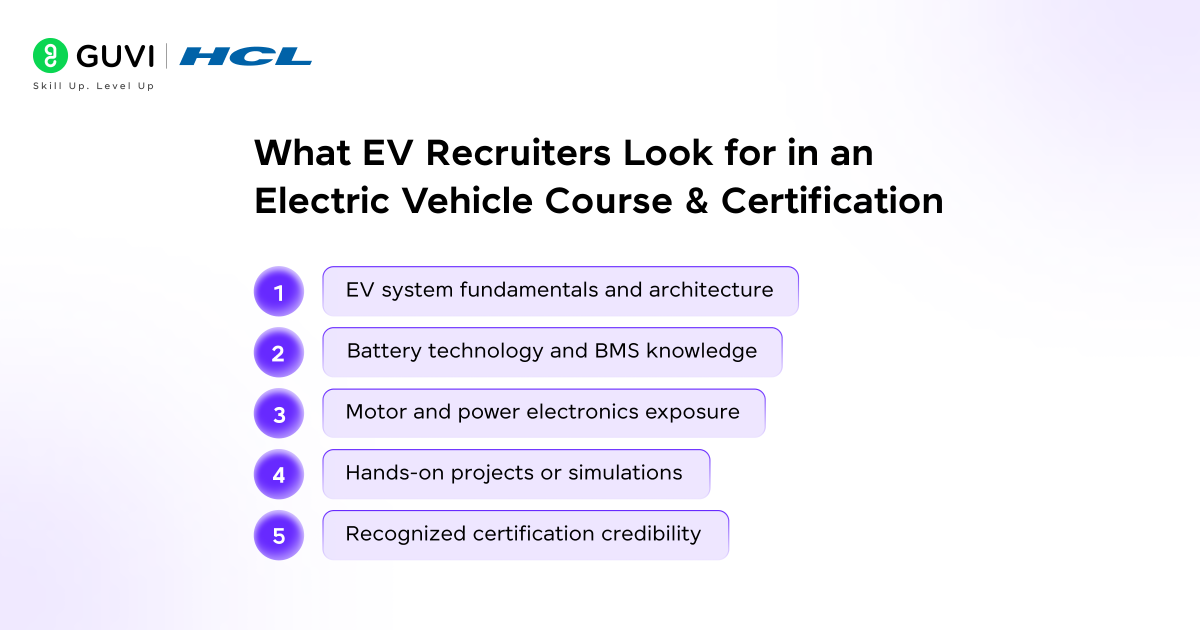
Hiring managers and technical recruiters do not shortlist candidates only based on course names. They look for practical relevance and skill alignment.
What Recruiters Look For
- EV system fundamentals and architecture
- Battery technology and BMS knowledge
- Motor and power electronics exposure
- Hands-on projects or simulations
- Recognized certification credibility
Candidates whose Electric Vehicle Course & Certification clearly cover these areas are more likely to be shortlisted for entry-level and junior EV roles.
Electric Vehicle Course & Certification Selection Tips That Actually Make a Difference
Let’s break this down section by section.
1. Course Syllabus: Check What You Will Actually Learn
Avoid enrolling in courses that only cover theory.
A strong Electric Vehicle Course & Certification should include:
- EV architecture and subsystems
- Battery packs and BMS design basics
- Electric motors and controllers
- Power electronics and converters
- Charging infrastructure and standards
2. Hands-On Projects and Tools Matter
Practical exposure is critical in the EV domain.
Look for courses that include:
- MATLAB / Simulink models
- Battery performance analysis
- Drive cycle simulations
- Real-world EV case studies
Projects are often more valuable than the certificate itself.
3. Certification Recognition and Industry Value
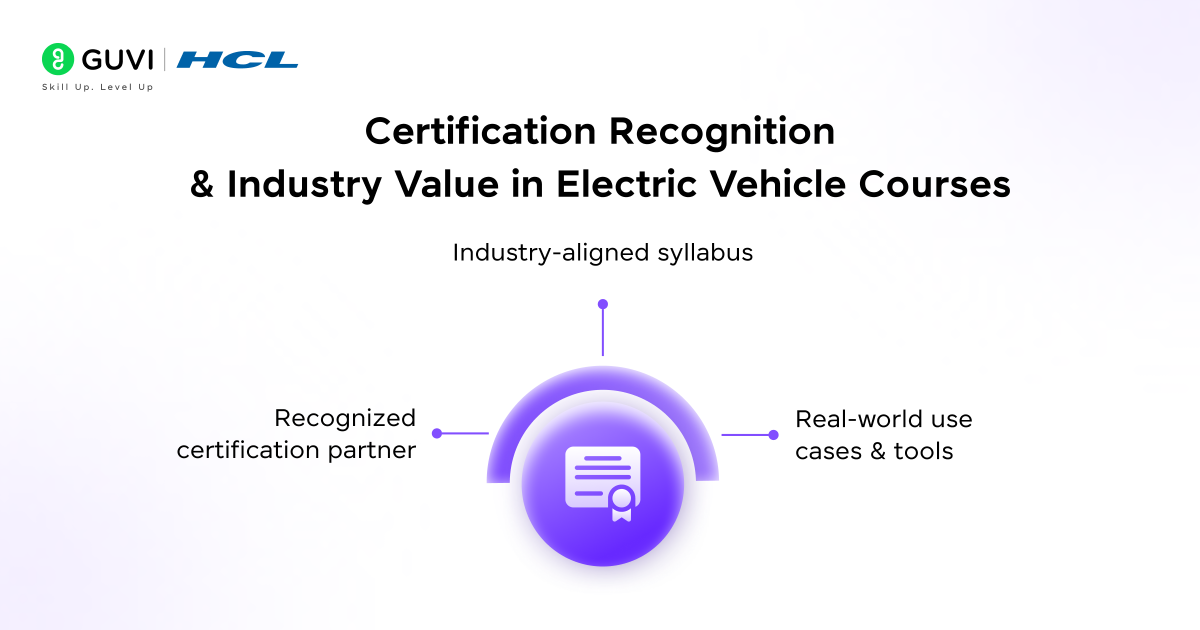
Not all certifications carry the same weight.
Check whether:
- The course is aligned with industry requirements
- The certificate is issued by a recognized institution or training partner
- The course mentions industry use-cases and tools
A credible Electric Vehicle Course & Certification adds trust to your profile.

4. Trainer Background and Industry Experience
Courses taught by professionals who have worked on EV programs provide more realistic learning.
Instructor experience helps you understand:
- Real EV project challenges
- Industry expectations
- Practical design limitations
5. Duration and Learning Flexibility
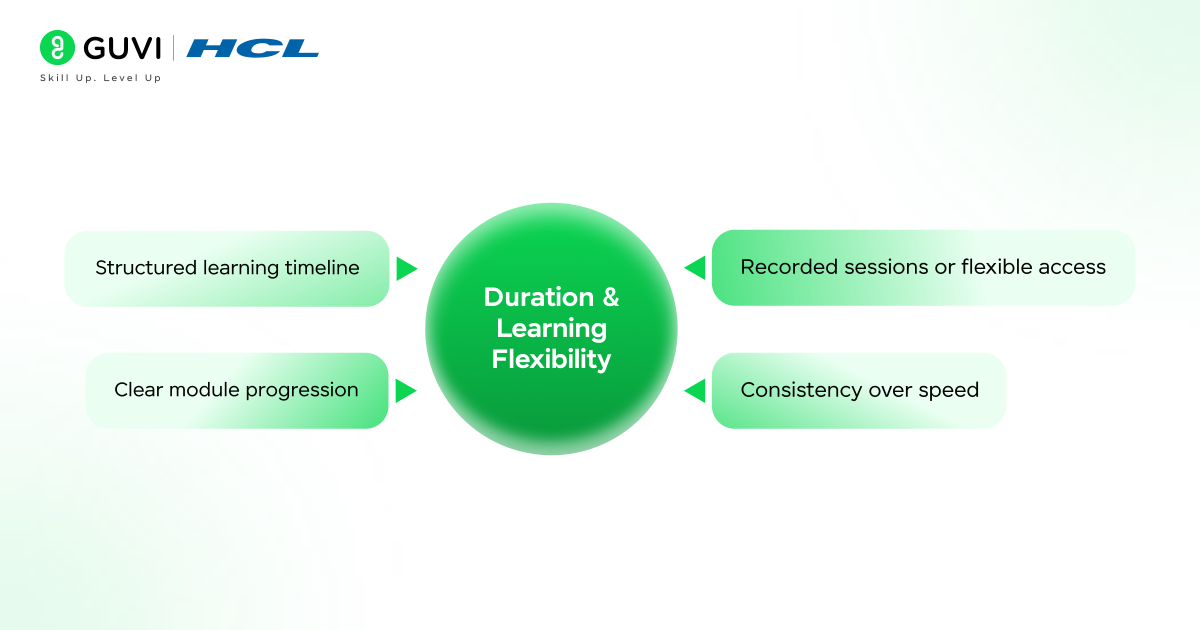
Short crash courses rarely build strong EV fundamentals.
Choose a course that offers:
- Structured learning timeline
- Recorded sessions or flexible access
- Clear module progression
Consistency matters more than speed.
6. Placement Support and Career Guidance
Some EV courses include career assistance such as:
- Resume and profile support
- Mock interviews
- Industry connections
While placement is never guaranteed, guidance helps freshers navigate the EV job market better.
7. Course Fees vs Real Value
Do not judge an Electric Vehicle Course & Certification only by price.
Instead, compare:
- Depth of syllabus
- Tools and projects offered
- Certification credibility
- Career support
Value matters more than cost.
Several top electric vehicle (EV) courses and certifications stand out for their hands-on training, industry partnerships, and relevance in 2026. These programs cater to engineers, technicians, and professionals transitioning into the EV sector.
Top Electric Vehicle Course & Certification Providers in 2026
DIYguru eMobility Academy leads with comprehensive courses in EV technician skills, powertrain design, battery management systems (BMS), and charging infrastructure; durations range from 3-12 months online/offline, backed by AICTE, NITI Aayog, IIT tie-ups, and placements at Hyundai, Tata, and Bosch.
SAE International’s Hybrid and Electric Vehicle Engineering Academy offers advanced modules on powertrains, vehicle dynamics, and integration over 6-12 months online, ideal for experienced engineers.
George Brown College’s 32-week EV Technician Program blends theory and practical diagnostics with real components.
India-Specific Recommendations
Tata Technologies provides short online certifications (4-6 weeks) in EV essentials, battery pack design, and energy storage, with strong OEM connections for upskilling without work disruption.
Intellipaat’s EV Design Course with IIT Roorkee certification focuses on designing, simulating, and testing EV systems, certified by IHub and ASDC.
IIT Kanpur’s 1-month EV Technology course (₹7,988) and L&T EduTech’s 3-month advanced EV specialization (₹30,000-₹70,000).
Looking to enter the EV industry? Enroll in IIT Delhi in collaboration with HCL GUVI. Learn the Advanced Electric Vehicle Technology Course and build industry-ready skills in batteries, BMS, powertrains, and EV charging.
| Provider | Duration | Mode | Key Focus Areas | Certifications/Partnerships | Fees |
| DIYguru | 3-12 months | Online/Offline | Technician, BMS, Powertrain | AICTE, IIT, NITI Aayog | Not Specified |
| Tata Technologies | 4-6 weeks | Online | Battery Design, Charging | Tata Technologies, OEMs | Not specified |
| IIT Delhi EV Program | 6 Months | Online | EV systems, power electronics, BMS, chargers, and policies | IIT Delhi | ₹1,25,000 + GST |
| IIT Roorkee (Intellipaat) | Varies | Online | Design, Simulation, Testing | IIT, IHub, ASDC | Not specified |
| IIT Kanpur | 1 month | Online | EV Technology & Powertrain | IIT Kanpur | ₹7,988 |
| SAE International | 6-12 months | Online | Powertrains, Dynamics | SAE International | Not specified |
Electric Vehicle Course & Certification for Freshers
If you are a fresher, do not try to learn everything at once.
Focus on:
- Core EV fundamentals
- Battery and motor basics
- One practical project
A focused Electric Vehicle Course & Certification builds a strong foundation for your first EV role.
Electric Vehicle Course & Certification for Job Seekers
If you are switching from mechanical, electrical, or electronics backgrounds:
- Choose courses aligned with your current skills
- Highlight transferable engineering knowledge
- Focus on applied EV projects
Your certification should support your career transition clearly.
Electric Vehicle Course & Certification for Students
Students should start early with structured EV learning.
Adding EV projects, simulations, and certification during college improves internship and placement opportunities later.
You do not need the most advanced certification at the beginning. You just need a relevant and practical one.
Practical Learning Matters More Than You Think
Watching recorded lessons alone is not enough.
You should actively:
- Build small EV simulations
- Analyze battery and motor data
- Work on mini-projects
Practical learning strengthens your understanding and interview readiness.
Common Mistakes While Choosing an EV Course
- Selecting courses only based on ads
- Ignoring practical projects
- Choosing certificates with no industry relevance
- Skipping fundamentals and jumping into advanced topics
Simple, structured learning usually produces better outcomes.
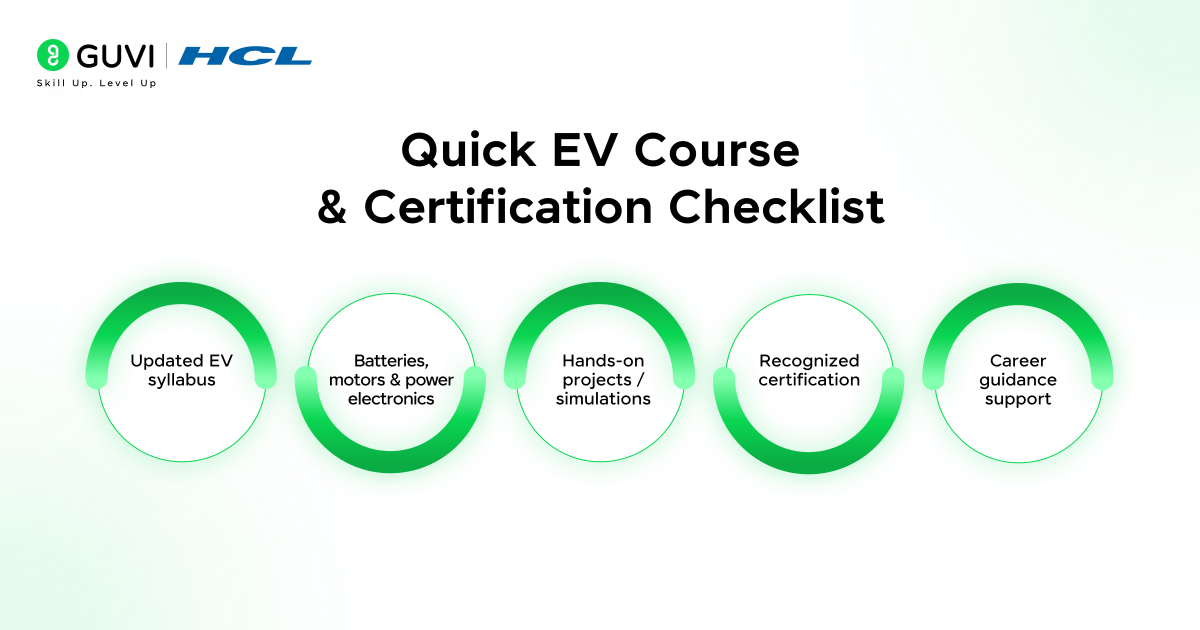
Quick Electric Vehicle Course & Certification Checklist
A good Electric Vehicle Course & Certification should include:
- Updated EV syllabus
- Battery, motor, and power electronics coverage
- Hands-on projects or simulations
- Recognized certification
- Career guidance support
If your course matches these points, you are on the right path.
Conclusion
An Electric Vehicle Course & Certification is not just a learning badge. It is a career enabler. By choosing the right Electric Vehicle Course & Certification, you improve your chances of building job-ready EV skills. You also improve your chances of clearing technical interviews and entering the fast-growing electric mobility industry. Clarity, practical learning, and relevance are what make EV certifications valuable.
Start learning EV technology the right way and build your future in electric mobility.
Frequently Asked Questions
1. What is an Electric Vehicle Course & Certification?
An Electric Vehicle Course & Certification is a structured training program that teaches EV fundamentals and applied skills such as batteries, motors, power electronics, BMS, charging systems, and vehicle integration, and provides a certificate to validate your learning for employers.
2. Who should take an Electric Vehicle Course & Certification?
An Electric Vehicle Course & Certification is suitable for students, freshers, and working professionals from Mechanical, Automobile, Electrical, and Electronics backgrounds who want to build or switch their career into the EV industry.
3. Is an Electric Vehicle Course & Certification useful for freshers?
Yes. For freshers, an Electric Vehicle Course & Certification helps build strong EV fundamentals, hands-on exposure, and project experience, which improves chances of getting shortlisted for entry-level EV roles.
4. What topics should a good Electric Vehicle Course & Certification cover?
A good Electric Vehicle Course & Certification should cover EV architecture, battery technology, BMS, electric motors, power electronics, charging infrastructure, safety standards, and basic vehicle integration.
5. Do companies really value Electric Vehicle certifications while hiring?
Yes. Companies value Electric Vehicle Course & Certification when it demonstrates practical learning, hands-on projects, and industry-relevant tools rather than only theoretical knowledge or certificate names.
6. Can I switch my career to EV using an Electric Vehicle Course & Certification?
Yes. Professionals from mechanical, electrical, or electronics backgrounds can use an Electric Vehicle Course & Certification to bridge skill gaps and demonstrate readiness for EV roles such as EV design, testing, validation, and powertrain engineering.
7. How long does an Electric Vehicle Course & Certification usually take?
The duration of an Electric Vehicle Course & Certification typically ranges from 1 month to 6 months or more, depending on the depth of syllabus, practical projects, and learning format.
8. Are online Electric Vehicle Course & Certification programs reliable?
Yes. Online Electric Vehicle Course & Certification programs are reliable if they include hands-on projects, simulation tools, real-world case studies, and credible certification partners.
9. What should I check before enrolling in an Electric Vehicle Course & Certification?
Before enrolling, check the syllabus coverage, hands-on projects, instructor industry experience, certification credibility, tool exposure, and whether career guidance or placement support is offered.
10. What job roles can I target after completing an Electric Vehicle Course & Certification?
After completing an Electric Vehicle Course & Certification, you can target roles such as EV design engineer, battery engineer, BMS engineer, powertrain engineer, EV testing and validation engineer, and charging infrastructure engineer.
Success Stories

About the Author
Salini Balasubramaniam
A curious, information-savvy writer loves to turn deep insights into authentic and engaging content that connects. With experience in writing for brands and driving audience engagement, I believe that words can make a powerful difference.
View all posts by Salini Balasubramaniam
Connect with me @
















Did you enjoy this article?