


Digital Marketing Articles
8 Best Career Change Options for Content Writers
Free Online Content Writing Courses with Certificates


Get In Touch For Details! Request More Information

CPM in Digital Marketing: Calculation, Costs & Strategies in 2025
Dec 16, 2025 6 Min Read 2243 Views
(Last Updated)
Digital marketing has revolutionized how brands connect with their audience. Every campaign, flyer, and creative aspect is built on numbers that serve as a guide to understanding performance and spend. Of the available metrics, CPM in Digital Marketing is one of the most important measurements. This will tell business how much they are paying to serve their ad to a thousand people. This straightforward number can impact budgets, targeting and overall results.
In 2025, online advertisement is becoming even more competitive. Brands are looking for maximum visibility, but are also looking to control their costs. That’s the reason CPM is more important than ever. Understand what CPM is, how to define and calculate it, and how reduce it equals better ad campaigns that are smarter, cheaper and more effective.
Quick Answer
The CPM or cost per thousand impressions, is the cost for an advertiser to display their advertising message one time to every 1,000 impressions. CPM is important because, in 2025, it will be a measurement of how visible an ad was, and determine if it will continue to receive views after being displayed. The average CPM rates of the four major ad platforms will help an advertiser understand what other advertisers are paying to reach similar audiences. CPM’s main factors of impact will be: targeting, placement, competition, seasonality, creative quality, and bidding strategy.
Table of contents
- What is CPM in Digital marketing?
- Why CPM Matters in 2025?
- How to Calculate CPM in Digital Marketing
- CPM Formula
- What Is a Good CPM in 2025
- Factors That Influence CPM in Digital Marketing
- Audience Targeting
- Ad Placement
- Industry Competition
- Seasonality
- Ad Quality and Relevance
- Bidding Strategy
- CPM vs CPC vs CPA: What’s the Difference?
- Which is better?
- Benefits of CPM in Digital Marketing
- Ideal for Increasing Reach
- Predictable Budgeting
- Greater Regulation of Visibility
- Perfect in Recollection and Understanding
- Works Well with Video Ads
- Challenges of Using CPM in Digital Marketing
- First Impression is no Assurance of Interaction
- Probability of Irrelevant Impression
- Creative Dependency
- No Insight Into User Actions
- Wrapping it up:
- What is CPM in digital marketing?
- How do you calculate CPM?
- Does a high CPM always mean bad?
- What platform has the lowest CPM?
What is CPM in Digital marketing?
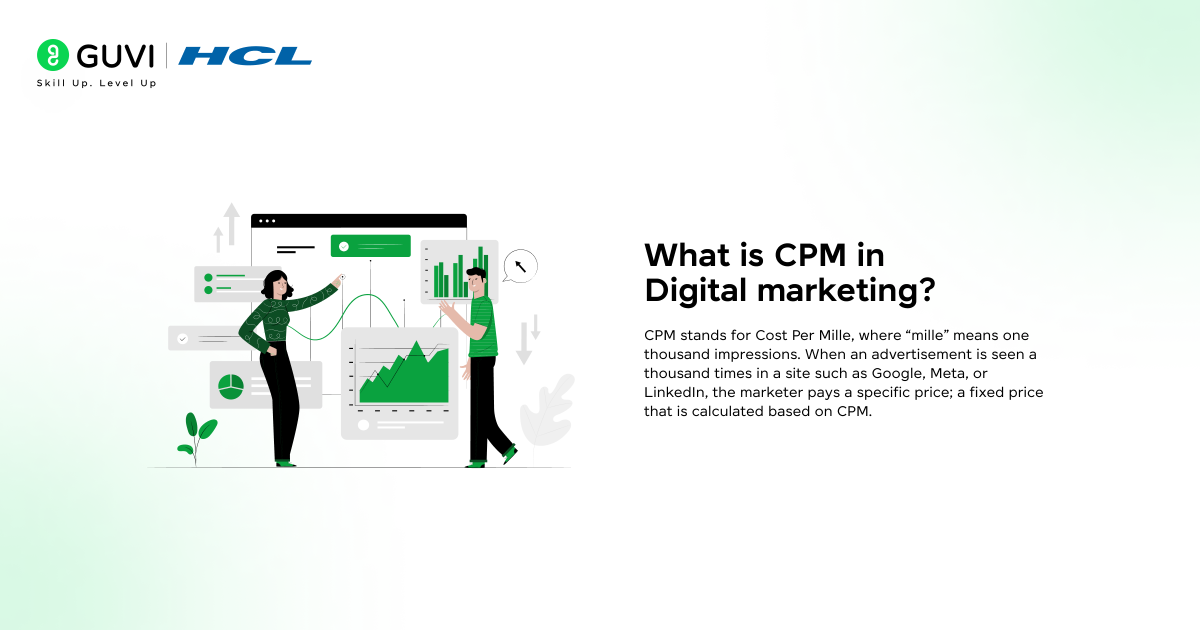
CPM stands for Cost Per Mille, where “mille” means one thousand impressions. When an advertisement is seen a thousand times in a site such as Google, Meta, or LinkedIn, the marketer pays a specific price; a fixed price that is calculated based on CPM.
To put it simply:
- CPM will inform you of how much it will cost you to display your advertisement 1000 times.
- It is not a metric that quantifies clicks, conversions and engagement.
- It measures visibility.
For example, if a brand wants to create awareness about a new product, it does not need clicks right away. Its aim might just be to appear in front of as many people as possible. For such goals, CPM in digital marketing becomes the key metric.
Particularly, it is relevant to:
- Brand awareness campaigns
- Top-of-the-funnel marketing
- Video ads
- Display ads
- Programmatic advertising
A high CPM implies that you are paying a lot to reach individuals. The low CPM will imply that you will receive good visibility at an adequate price.
Also read: What is Digital Marketing? Everything You Need to Know
Why CPM Matters in 2025?
The Internet has become a fast growing mode of advertising. It is smarter in algorithms, more advanced in targeting and more competitive. All of this affects ad prices. Due to this, CPM in 2025 is not only a cost measure- it is an understanding:
- Competitiveness in your industry.
- The effectiveness of your targeting.
- Relevancy of your advertisements to your readers.
- Your ad creative is good or not.
- The level of your campaign strategy and strategy versus your objective.
There is an increase in the amount that brands are spending on ads due to the increasing time that people spend online. CPM is not something to ignore especially when you want your advertisement to be delivered to the right people at an affordable price.
Also read: How to Learn Digital Marketing in 2025?
How to Calculate CPM in Digital Marketing
The formula for calculating CPM is simple and never changes, no matter which platform you use.
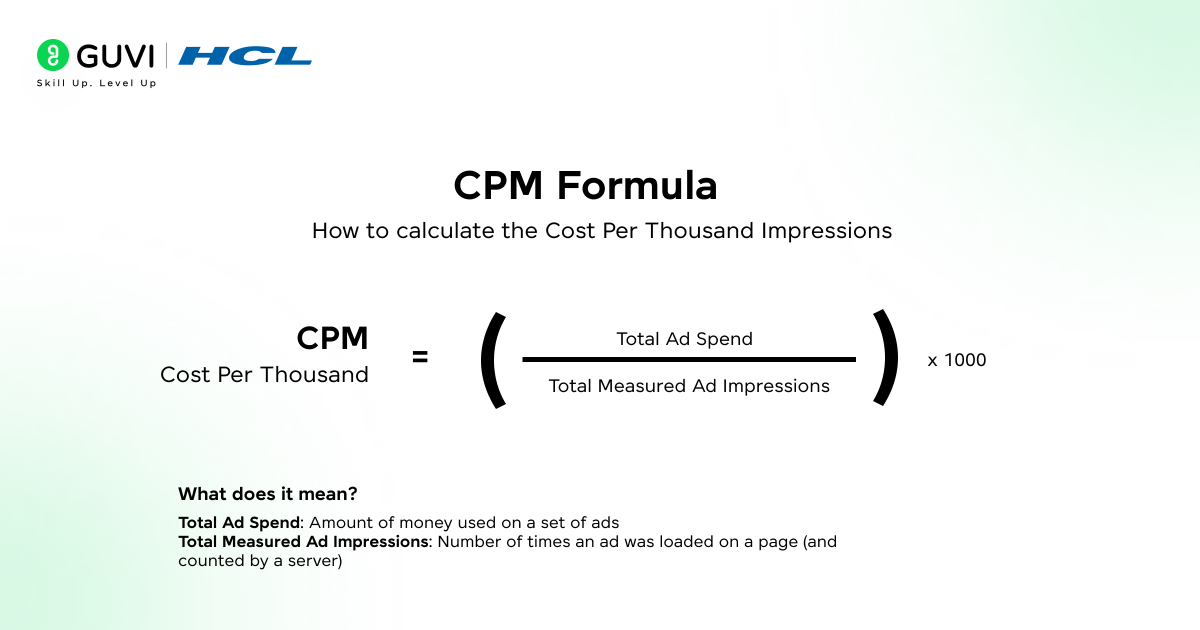

CPM Formula

This formula helps marketers measure how efficiently they are spending their money.
What Is a Good CPM in 2025
A “good” CPM depends on the platform, industry, and audience. But here are the average CPM ranges in 2025:
| Platform | Average CPM Range (2025) |
| Facebook / Instagram | ₹70 – ₹300 |
| Google Display Network | ₹50 – ₹200 |
| YouTube Ads | ₹100 – ₹400 |
| LinkedIn Ads | ₹300 – ₹800 |
| Programmatic Ads | ₹60 – ₹350 |
Also Explore: Top Digital Marketing Trends for 2025
Factors That Influence CPM in Digital Marketing
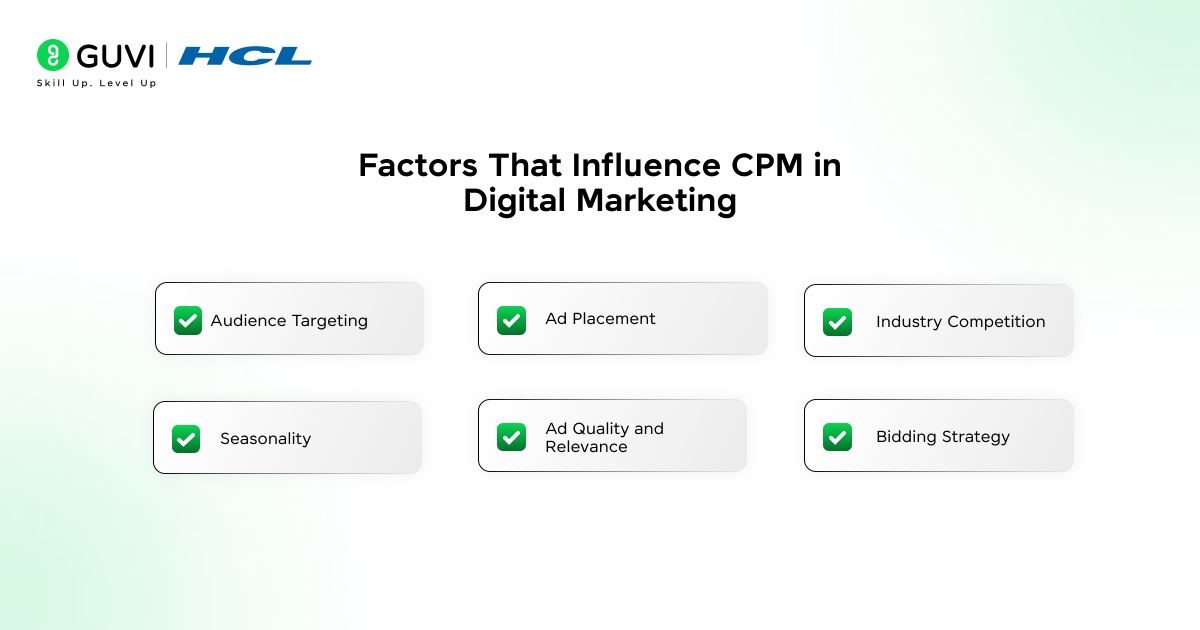
CPM is never fixed. It varies depending on numerous factors and knowing about them could make you manage your advertisement expenses. In 2025, platforms make decisions based on sophisticated algorithms, real-time bidding and audience signals to determine what your impressions will cost. The key elements that impact CPM in digital marketing are listed below and how each one of them impacts your budget.
1. Audience Targeting
One of the largest influences on CPM is the audience that you select. T The more specific your target group is, the harder it becomes for platforms to find matching users. This enhances competition and hence CPM increases.
- Niche audience → High CPM
These are very specific audiences that are small. Sample: Indian women between 25 and 30 years old who have lately made a search query on luxury skincare.
- Broad audience → Low CPM
Wider groups provide more freedom of delivering ads to reduce the costs. Example: “All adults aged 18–45.”
Detailed targeting is more expensive on platforms since more information and effort are required to find each user. Moreover, most of the advertisers tend to pursue the same narrow market, bidding higher and CPM.
Must Know 10 Important Things to Consider Before Joining Digital Marketing Course
2. Ad Placement
The placement of your ad has a direct impact on the level of visibility costs. The varying placements are associated with varying values and competition.
- Video-first formats are popular and provide a high level of engagement, which explains the increased CPM of Instagram Reels.
- YouTube in-stream advertisements are more expensive than display advertisements as the customers actively watch such videos.
- Text advertisements are cheaper than LinkedIn Sponsored Content because it is placed at the premium spot and has a professional audience.
There are those placements that will be more apt to users and interaction hence demand. CPM goes up when the advertisers are more than the placement would allow.
Also read: Digital Marketing Best Practices for 2025
3. Industry Competition
Impressions do not cost all industries the same. Certain industries will naturally have more advertisers and therefore result in increased CPM. Being highly competitive and high-value customers, the competition and high-value bidding is aggressive in these industries.
The industries with greater CPM are:
- Finance
- Real Estate
- Technology
- Online Education
- Insurance
- E-commerce
In a situation where there are numerous advertisers with the same target simultaneously, platforms increase the price due to the space constraints.
Also read: Top AI Tools for Digital Marketing: Boost Engagement and Sales
4. Seasonality
CPM changes throughout the year since the activity of the user and the competition of the advertisement differ in the different seasons. Platforms during high seasons also have high bidding and this increases CPM.
You will experience increased CPM in:
- Seasons (Diwali, Christmas, Eid, Pongal).
- End of the year sales (Black Friday, the Cyber Monday)
- Big shopping events (Big Billion Days, Amazon Great Indian Festival)
- Vacations (New Year, summer holidays).
In such periods, brands are willing to spend more on creating sales and the CPM is driven up in the high demand. On the other hand, quieter months often have lower CPM and better ad opportunities.
- CPM for video ads is often 40–60% higher than image ads because video content gets more engagement.
- Festival seasons can increase CPM by up to 3× due to heavy advertiser competition.
- Programmatic advertising now delivers over 80% of all display impressions worldwide.
- A strong relevance score can reduce your CPM by 20–50%, depending on the platform.
5. Ad Quality and Relevance
How well you advertise is directly connected to the amount you will pay. Such sites as Meta, Google and YouTube, consider each advertisement by the relevance to the audience. When users are positive with your ad, the relevance score goes up.
High-quality ads help you:
- Get more visibility
- Lower your CPM
- Improve engagement
Low-quality creatives or ads with weak messaging reduce relevance. When people skip or ignore your ad, platforms charge more to deliver impressions because they see it as less valuable.
Check out: Best Digital Marketing Courses [Free + Paid]
6. Bidding Strategy
Another important consideration in digital marketing in terms of CPM is your bidding approach. Bidding tells the platform of your top priority impressions, clicks or conversions.
- The Brand Reach or Awareness objectives can have fewer CPMs since the platform is only concerned with providing impressions.
- Goals that are conversion focused tend to cost more CPM since algorithm on each platform attempts to identify users with the greatest probability of action, necessitating additional effort and competition.
When your campaign objective does not align with your bidding strategy, you may find yourself spending more money without achieving results of significance. The appropriate selection of goal contributes to the management of CPM and enhances productivity.
Also read: 16 Types of Digital Marketing: Best Mediums For 2025
CPM vs CPC vs CPA: What’s the Difference?
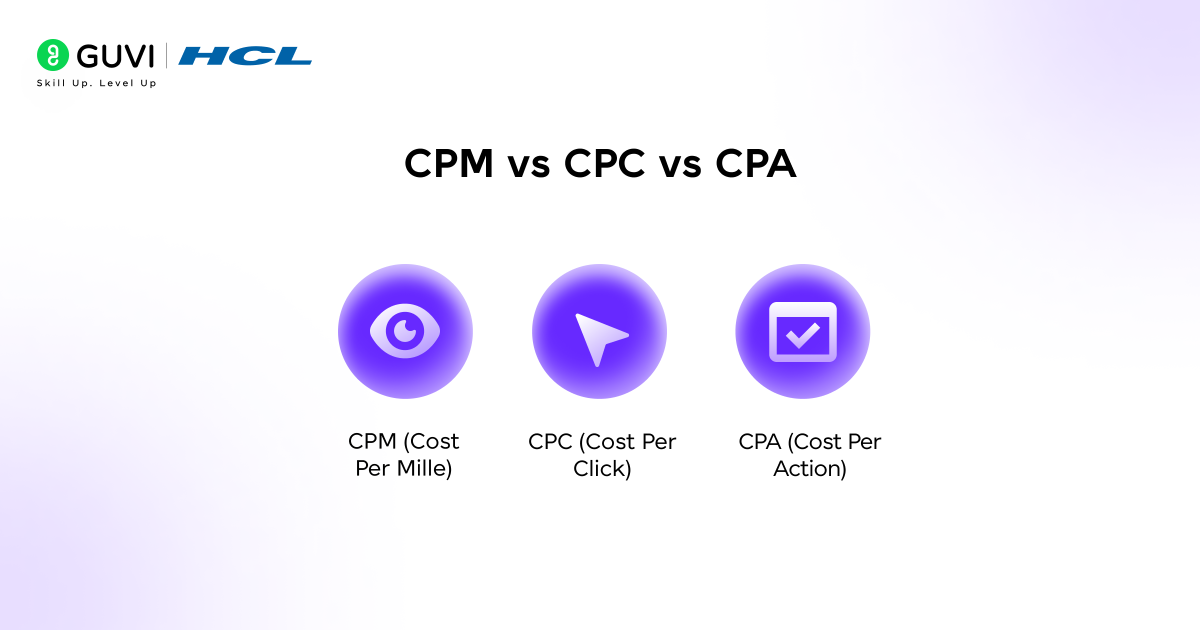
| Metric | What You Pay For | Best Used For | Example Objective |
| CPM (Cost Per Mille) | Impressions (every 1000 views) | Brand awareness, visibility, reach | Showing your ad to as many people as possible |
| CPC (Cost Per Click) | Each click on your ad | Traffic, engagement | Driving visitors to your website or landing page |
| CPA (Cost Per Action) | Conversions like signup, purchase, or form submission | Lead generation, sales | Getting users to buy, register, or complete a specific action |
Which is better?
There is no one superior option. The correct metric depends on your campaign objective.
For example:
- If you want to brand awareness → Choose CPM
- If you want to traffic your website → Choose CPC
- If an objective is for leads or purchases → Choose CPA
By 2025, most marketers will use some combination of all three based on their staging of their marketing funnel.
Benefits of CPM in Digital Marketing
here are numerous benefits of utilizing CPM particularly in brand expansion. The following are some of the reasons why businesses use this metric:
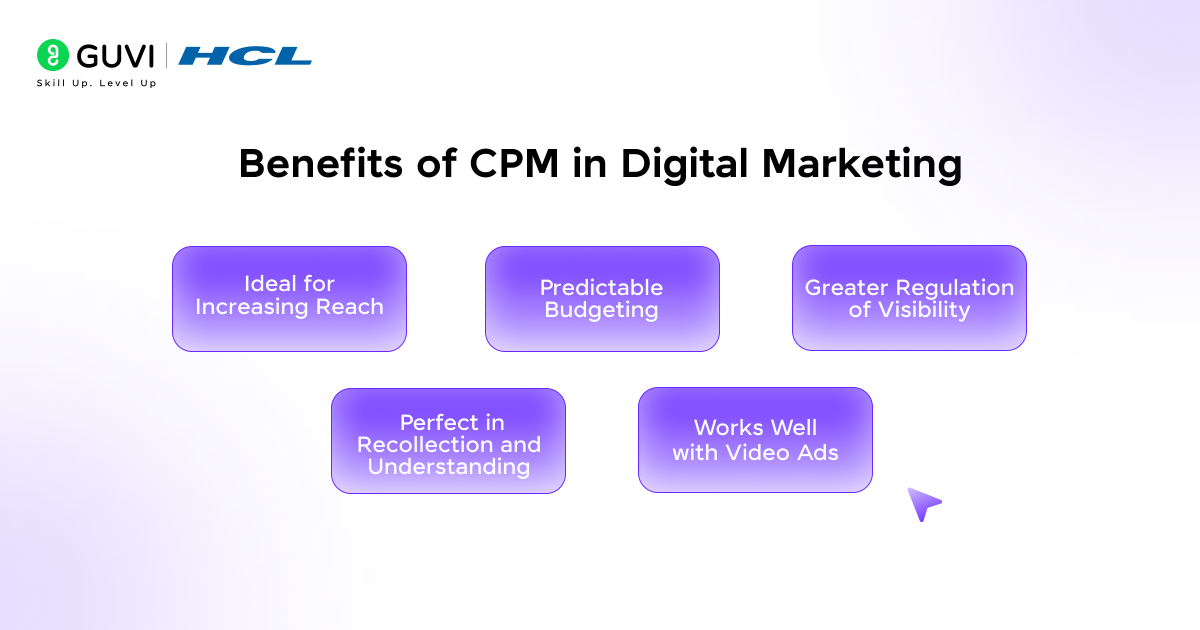
1. Ideal for Increasing Reach
CPM campaigns are ideal in case your aim is to be noticed by a great number of people. They are used to display your advertisements to thousands of individuals at regulated expense.
2. Predictable Budgeting
CPM makes budgeting easier. You may determine in advance:
- What impressions you will have ingrained
- How expensive each impressions set will be
This reduces guesswork.
3. Greater Regulation of Visibility
CPM campaigns make you visible even when you are competing with others. You are able to regulate frequency and make people watch your ads enough, so that they can remember.
4. Perfect in Recollection and Understanding
CPM assists in creating awareness in case you are launching a new brand, a product or entering a new market.
5. Works Well with Video Ads
CPM bidding is generally better with video ads on YouTube and Meta. It is economical and conveys a powerful message.
Also read: Career Opportunities in Digital Marketing | Digital Marketing Career
Challenges of Using CPM in Digital Marketing
Although CPM has a lot of advantages, it has its share of challenges that you need to know.
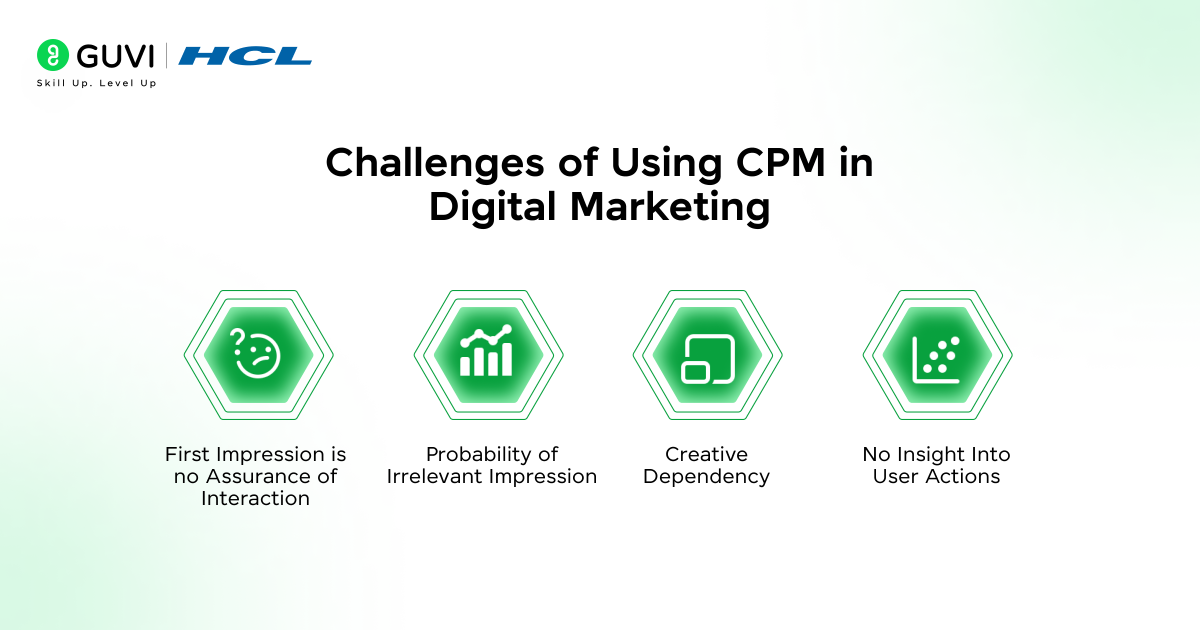
1. First Impression is no Assurance of Interaction
The exposure of an advertisement does not imply that the individual will either make a click or a conversion. CPM is not able to quantify interest at all- it is merely quantifying visibility.
2. Probability of Irrelevant Impression
With improper targeting, you will end up with the wrong impressions. This leads to wasted money.
3. Creative Dependency
CPM campaigns rely greatly on your ad creative. A poor creative can decrease the visibility or escalate the price.
4. No Insight Into User Actions
CPM does not follow the activities that take place after viewing the advertisement. That you require other measures of that.
If you’re ready to build strong digital marketing skills and understand metrics like CPM, CPC, CPA, and more, then HCL GUVI’s Digital Marketing Course is the perfect place to begin. Learn hands-on tools such as ChatGPT, WordPress, Meta Business Suite, Google Analytics, YouTube Analytics, Google Ads Manager, and essential SEO platforms.
You’ll also master email marketing, content creation, social media marketing, and advanced digital advertising strategies to grow confidently in the industry.
Start your learning journey today and become a job-ready digital marketer!
Wrapping it up:
CPM, which stands for Cost Per Mille, is perhaps the simplest but still powerful metric for understanding the cost of visibility in Digital Marketing. It allows brands to understand how much they spend to reach people, feel confident planning their budgets, and compare results across platforms. In the year 2025, CPM will remain relevant because online competitors are increasing and visibility for your brand matters more than ever.
By understanding how CPM works, how to calculate it and how to lower it, your organization will be able to make smarter decisions and achieve stronger results. Regardless of if you are running display ads, video ads or programmatic, CPM will allow you to easily track how effective each and every rupee spent is producing results.
1. What is CPM in digital marketing?
CPM, which means Cost Per Mille, is the amount you will pay for every 1000 ad impressions.
2. How do you calculate CPM?
CPM = (Total Ad Spend / Total Impressions) x 1000
3. Does a high CPM always mean bad?
A high CPM is not always bad. It depends on the industry, the target audience and the campaign objective.
4. What platform has the lowest CPM?
Typically the Google Display Network and programmatic will have the lowest CPM of the various platforms.
Success Stories

About the Author
Vishalini Devarajan
An Aerospace Engineer turned content writer, I focus on making complex concepts easy to understand through well-structured, reader-friendly blogs. Whether it’s a technical topic or a non-technical one, I love creating content that is clear, engaging, and impactful.
View all posts by Vishalini Devarajan
Connect with me @












Did you enjoy this article?