


Software Development Articles
System Engineer Roles and Responsibilities: 12 Proven Duties for Growth
SAP Consultant Roles and Responsibilities: 12 Proven Duties for Growth and Success
Network Engineer Roles and Responsibilities: 12 Essential Duties for Success
How to Avoid Burnout as a Software Developer: 7 Practical Strategies


Get In Touch For Details! Request More Information
Functions of Operating System: A Beginner’s Guide
Jul 08, 2026 4 Min Read 4437 Views
(Last Updated)
Functions of operating system refer to the essential tasks an operating system performs to manage a computer and its resources. These functions allow the system to run applications, manage memory, handle files, control hardware devices, and provide a secure environment for users.
Every operating system, including Windows, macOS, Linux, Android, and iOS, performs these core functions to ensure the device works efficiently. Understanding these functions will help you learn how an operating system works and why it is essential to every computer.
Table of contents
- Quick Overview
- What is an Operating System and Why It Matters
- 6 Core Functions of Operating System Explained
- 1) Process Management
- 2) Memory Management
- 3) File System Management
- 4) Device Management
- 5) Security and Protection
- 6) User Interface
- Tabular Overview of the Functions of Operating System
- Which Function of an Operating System Is Most Important for Security?
- How Do Operating System Functions Differ in Mobile vs Desktop OS?
- Conclusion
- FAQs
- Can an operating system work without all six core functions?
- Do all operating systems perform the same functions?
- Which function affects computer performance the most?
- Why are device drivers important?
- Can the functions of operating system improve battery life?
- Why is it important to learn the functions of operating system?
Quick Overview
The six core functions of operating system are:
- Process Management – Manages running processes and CPU time.
- Memory Management – Allocates and protects system memory (RAM).
- File System Management – Organizes, stores, and retrieves files.
- Device Management – Controls communication between hardware and software.
- Security and Protection – Safeguards data and controls system access.
- User Interface – Allows users to interact with the operating system.
What is an Operating System and Why It Matters
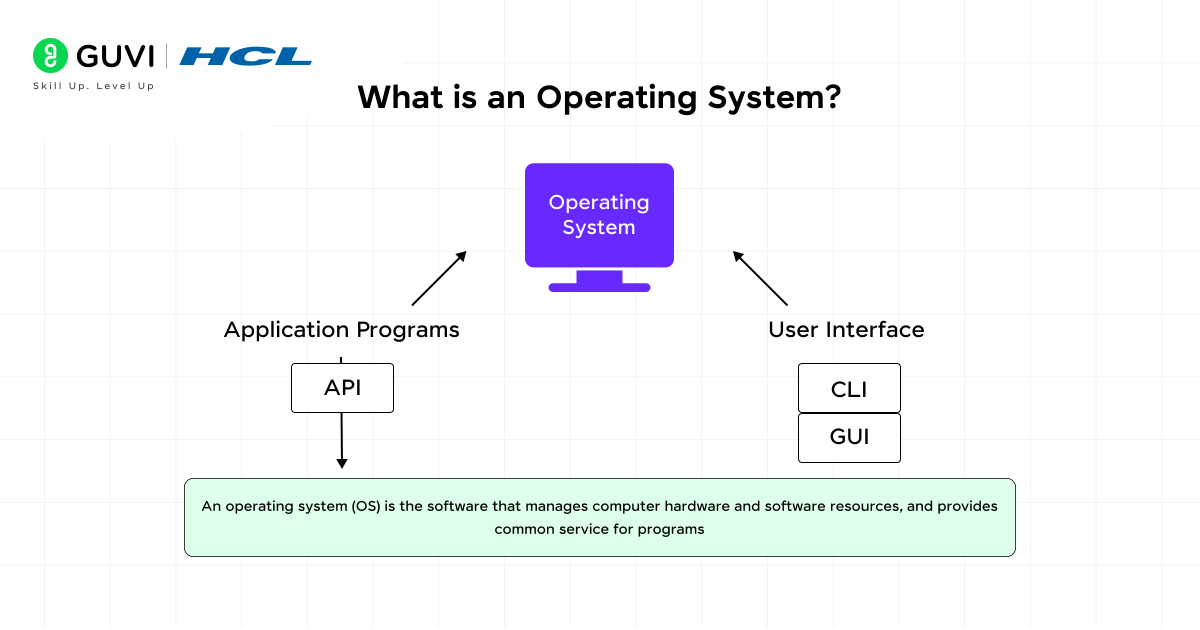
An operating system (OS) is the main system software that manages a computer’s hardware and software. It acts as a bridge between the user, applications, and the hardware, ensuring everything works together smoothly. Whenever you open an app, save a file, or connect a device, the operating system coordinates these tasks in the background. Some popular operating systems include Windows, macOS, Linux, Android, and iOS.
An operating system is essential because without it, a computer cannot function effectively. It manages important resources such as the CPU, memory, storage, and input/output devices, allowing multiple programs to run efficiently and securely. It also provides an easy way for users to interact with the computer through a graphical interface or command-line interface, making everyday tasks simple and reliable.
Unlock the fundamentals of computing and master how an operating system orchestrates hardware, memory, processes and I/O in HCL GUVI’s Professional Certificate in AI Software Development Course — a 9-month, 300+ hour program with real projects and top industry mentors.
6 Core Functions of Operating System Explained
The functions of operating system are responsible for managing the computer’s hardware, software, and resources. Each function performs a specific task that helps the system run smoothly, securely, and efficiently.
Below are the six core functions explained in a simple and practical way:
1) Process Management
Process management controls all the programs running on a computer. Every time you open an application, the operating system creates a process for it. This function ensures that multiple processes can run together without interfering with one another and that each gets a fair share of the CPU.
It does this through CPU scheduling, which decides which process should run next. The operating system also creates, pauses, resumes, and terminates processes when needed. To avoid conflicts, it uses process synchronization and inter-process communication (IPC) so processes can safely coordinate and exchange data.
2) Memory Management
Memory management is responsible for organizing and controlling the computer’s RAM. Every running program needs memory, and this function ensures that each process receives the required space without affecting the memory used by other programs.
To achieve this, the operating system allocates memory when a program starts and releases it when the program ends. It also uses virtual memory to run applications that require more memory than the available RAM and applies memory protection to keep each process isolated and secure. This makes it one of the most important functions of operating system.

3) File System Management
Think of file system management as the computer’s filing system. It organizes all files and folders so users and applications can easily store, find, and manage data instead of dealing with raw storage blocks.
The operating system performs operations like creating, reading, writing, renaming, and deleting files. It also manages directories, assigns storage space, enforces file permissions, and uses caching to improve file access speed and overall performance.
4) Device Management
Every hardware device connected to a computer is managed by the device management system. Whether it is a keyboard, printer, monitor, or storage drive, this function ensures that the hardware communicates correctly with the operating system and applications.
The operating system uses device drivers to communicate with hardware and handles all input/output (I/O) requests. It also manages device sharing and improves efficiency through techniques such as buffering, caching, and spooling, enabling multiple programs to use hardware resources without conflicts.
5) Security and Protection
The purpose of security and protection is to keep the computer and its data safe from unauthorized access and harmful activities. It protects files, applications, and system resources while ensuring that only authorized users can use them.
This is achieved through authentication, which verifies a user’s identity, and authorization, which controls what each user can access. The operating system also enforces access permissions, isolates processes, and helps defend the system against malware and unauthorized actions. These features make security one of the essential functions of operating system.
6) User Interface
The user interface (UI) is the part of the operating system that users interact with directly. It provides a simple way to access programs, manage files, and perform tasks through a GUI, CLI, or other input methods such as touch.
Whenever a user gives a command, the operating system interprets it and sends the appropriate instructions to the hardware. After processing the request, it displays the result on the screen, making interaction with the computer simple and efficient. Together with the other functions of operating system, it creates a smooth user experience.
Operating systems have a fascinating history and play a much bigger role than most people realize:
The First OS Was Born in the 1950s: The earliest operating systems appeared in the 1950s to manage mainframe computers, automating tasks that once required manual setup for every program.
Linux Runs the Internet: Nearly 96% of the world’s top 1 million servers use Linux-based operating systems, making it the invisible backbone of the web.
These facts remind us that operating systems are not just tools we interact with—they’re the hidden engines powering nearly every digital experience.
Tabular Overview of the Functions of Operating System
The table below provides a quick overview of the six core functions of operating system along with their roles, real-world examples, and why each function is important:
| Function | What OS Does | Real Example | What Happens Without It? |
|---|---|---|---|
| Process Management | Manages running programs and allocates CPU time. | Running Chrome, Spotify, and Word simultaneously. | Programs would clash, freeze, or crash the system. |
| Memory Management | Allocates and tracks RAM for every process. | Giving each application its own memory space. | Frequent crashes, slow performance, and memory conflicts. |
| File System Management | Organizes, stores, and retrieves files and folders. | Saving and opening a document from the Documents folder. | Files would be disorganized and difficult to locate. |
| Device Management | Controls communication between software and hardware devices. | Printing a document using a printer driver. | Hardware devices would not function properly. |
| Security and Protection | Protects data and controls user access. | Logging in with a password and restricting file permissions. | Anyone could access or modify your files and system. |
| User Interface | Provides a way for users to interact with the computer. | Clicking icons in Windows or typing commands in Terminal. | Users would struggle to operate the computer efficiently. |
Which Function of an Operating System Is Most Important for Security?
No single function can secure an operating system on its own. Instead, multiple functions work together to protect users, applications, and data. However, among all the functions of operating system, Security and Protection is the primary security function because it controls who can access the system and what actions they are allowed to perform.
It protects the operating system by:
- Verifying user identity through authentication.
- Enforcing authorization to control access to resources.
- Applying file and resource permissions.
- Working with memory management to isolate processes.
- Working with process management to prevent process interference.
- Helping defend against malware and unauthorized access.
Although Security and Protection is the first line of defense, it cannot work alone. Features like memory protection, process isolation, and file permissions also play a vital role. Together, these functions of operating system create a secure and reliable computing environment.
How Do Operating System Functions Differ in Mobile vs Desktop OS?
Although the core functions of operating system are the same, their implementation differs between mobile and desktop operating systems. The table below highlights the key differences.
| OS Function | Mobile OS (Android/iOS) | Desktop OS (Windows/macOS/Linux) |
|---|---|---|
| Process Management | Limits background apps to save battery. | Supports heavy multitasking. |
| Memory Management | Optimized for limited RAM. | Uses larger RAM for demanding tasks. |
| File System Management | Limited file access for users and apps. | Full access to files and folders. |
| Device Management | Focuses on built-in hardware. | Supports many internal and external devices. |
| Security and Protection | Strict app sandboxing and permissions. | More flexible access with advanced security controls. |
| User Interface | Touch-based interface. | Keyboard and mouse-based interface. |
Conclusion
Understanding the functions of operating system is the first step toward learning how a computer actually works. Although these functions run in the background, they play a vital role in keeping your device efficient, secure, and easy to use every day.
With these core functions covered, you now have a solid foundation for understanding how an operating system manages your computer and its resources. This knowledge will also make it easier to explore more advanced operating system concepts in the future.
FAQs
1. Can an operating system work without all six core functions?
No. Every core function is essential for managing hardware, software, and system resources efficiently.
2. Do all operating systems perform the same functions?
The core functions of operating system are the same, but their implementation differs across Windows, macOS, Linux, Android, and iOS.
3. Which function affects computer performance the most?
Process Management and Memory Management have the biggest impact because they control CPU and RAM usage.
4. Why are device drivers important?
They allow the operating system to communicate with hardware like printers, keyboards, and graphics cards.
5. Can the functions of operating system improve battery life?
Efficient process and memory management reduce unnecessary resource usage, helping improve battery life.
6. Why is it important to learn the functions of operating system?
Understanding the functions of operating system helps you use computers more effectively and builds a strong foundation for advanced computing concepts.
Success Stories








Did you enjoy this article?