


Mechanical CAD Articles
Who Is a Mechanical CAD Designer? A Complete Beginner's Guide
How to Prepare for Mechanical Engineering Technical Interview Questions: A Practical Guide
CAD Designer Resume Examples & Tips to Land Your Dream Job
CAD Designer Career in India: Salary, Job Roles & Growth Path

Get In Touch For Details! Request More Information
Mechanical Engineering Career Roadmap 2026: Step-by-Step Guide for Students & Freshers
Aug 21, 2026 8 Min Read 18291 Views
(Last Updated)
In this age and time, where computer science and engineering are reigning all over, it is easy to forget about subjects that don’t involve computers.
But that doesn’t mean that the subjects are less important, in fact, they play a vital role in every industry, and one of those subjects is mechanical engineering. Many don’t know where to start and are clueless about the mechanical engineering career roadmap.
To ease that burden and to encourage your interest in the field of mechanical engineering, this blog put forth a mechanical engineering career roadmap that can help you understand the process of becoming a successful mechanical engineer. So, without any delay, let’s get started.
Quick Answer
A mechanical engineering career roadmap is a step-by-step path that helps students and freshers build the education, technical skills, practical experience and specialization needed to enter mechanical engineering roles.
To become job-ready and build long-term career growth in 2026, focus on:
- Build strong fundamentals in mechanics, thermodynamics, fluid mechanics and machine design.
- Learn CAD and simulation tools used across design and manufacturing.
- Complete internships and practical engineering projects before graduation.
- Choose a specialization such as EVs, robotics, aerospace, manufacturing, simulation or renewable energy.
- Build a portfolio that demonstrates CAD models, analysis work, prototypes and measurable project outcomes.
Table of contents
- What is the Mechanical Engineering Career Roadmap?
- Mechanical Engineering Career Roadmap at a Glance
- Why Mechanical Engineering in 2026?
- Exploring the Mechanical Engineering Career Roadmap
- Building a Strong Educational Foundation
- Foundational Knowledge and Skills
- Internships and Co-op Programs
- Networking and Involvement
- Job Search and Early Career
- Optional Steps
- Complete Mechanical Engineering Career Roadmap in India 2026
- Key Skills Every Mechanical Engineer Needs in 2026
- Mechanical Engineering Tools and Versions in 2026
- Job Roles for Mechanical Engineers in 2026
- Mechanical Engineer Salary in India 2026
- Top Courses for Mechanical Engineers in 2026
- Top Recruiters for Mechanical Engineers in India (2026)
- Conclusion
- FAQs
- What is the best career path for a mechanical engineer in 2026?
- Which skills are most important for mechanical engineers in 2026?
- Is mechanical engineering a good career in India in 2026?
- How can a fresher get a mechanical engineering job in India?
What is the Mechanical Engineering Career Roadmap?

A mechanical engineering career roadmap is a strategic and structured plan that outlines the path that you have to take in your professional journey to achieve your career goals.
It’s a visual representation of the steps, milestones, and actions needed to progress and succeed in the field of mechanical engineering.
A mechanical engineering career roadmap provides clarity and direction, helping you to make informed decisions about your education, skill development, job choices, and advancement opportunities.
Mechanical Engineering Career Roadmap at a Glance
The mechanical engineering career roadmap becomes easier to follow when it is divided into clear learning and career stages.
| Career Stage | Main Focus | Skills and Tools to Build | Expected Outcome |
|---|---|---|---|
| Foundation | Engineering fundamentals | Mathematics, mechanics, thermodynamics, materials science | Strong technical foundation |
| Skill Development | Design and analysis | AutoCAD, SolidWorks, CATIA, Creo, ANSYS | Ability to design and analyse mechanical systems |
| Practical Experience | Real-world engineering | Internships, workshops, projects, manufacturing exposure | Industry-ready practical experience |
| Specialization | Choose a career direction | EVs, robotics, aerospace, HVAC, manufacturing, simulation | Specialized technical profile |
| Job Preparation | Build employability | Resume, portfolio, interviews, networking | Entry-level mechanical engineering role |
| Career Growth | Deepen expertise | Advanced tools, certifications, M.Tech/MS, leadership | Senior, specialist or management roles |
Why Mechanical Engineering in 2026?
Mechanical engineering is not shrinking. It is evolving alongside electric mobility, automation, renewable energy and advanced manufacturing. Several industries are creating new opportunities for engineers with both strong mechanical fundamentals and modern technical skills.
Electric Vehicles (EVs): India recorded 2.66 million EV sales in FY26, up from 2.05 million in FY25. The Indian EV market was valued at US$3.71 billion in 2025 and is projected to reach US$191.04 billion by 2034. This growth is increasing demand for skills in EV powertrain design, battery thermal management, chassis engineering and manufacturing.
Renewable Energy: Growth in solar, wind and hydrogen projects is creating opportunities for mechanical engineers in turbine design, thermal systems, structural components and fluid-handling infrastructure.
Industry 4.0 and Smart Manufacturing: Modern factories increasingly rely on automation, robotics, CNC machining and connected production systems. Mechanical engineers who understand these technologies can contribute to process optimisation, equipment design and advanced manufacturing.
Aerospace and Defence: India’s expanding aerospace and defence ecosystem continues to create opportunities across structural design, propulsion, manufacturing, testing and mechanical systems engineering.
Robotics and Automation: Industrial robots, collaborative robots and automated warehouse systems require mechanical expertise in structural design, kinematics, motion systems and system integration.
The broader employment outlook also remains positive. The U.S. Bureau of Labor Statistics projects 9% growth in mechanical engineering employment from 2024 to 2034, with around 18,100 openings each year during the decade. These trends show how mechanical engineering is expanding beyond traditional roles into EVs, robotics, automation, clean energy and advanced manufacturing.
Exploring the Mechanical Engineering Career Roadmap
Remember one thing before starting out, this mechanical engineering career roadmap is just a guide for you to understand what and all things that need to be in your mind when you pursue it.
This is not the only way for you to become a mechanical engineer. By saying this, let us get started and buckle up to explore the mechanical engineering career roadmap.
1. Building a Strong Educational Foundation
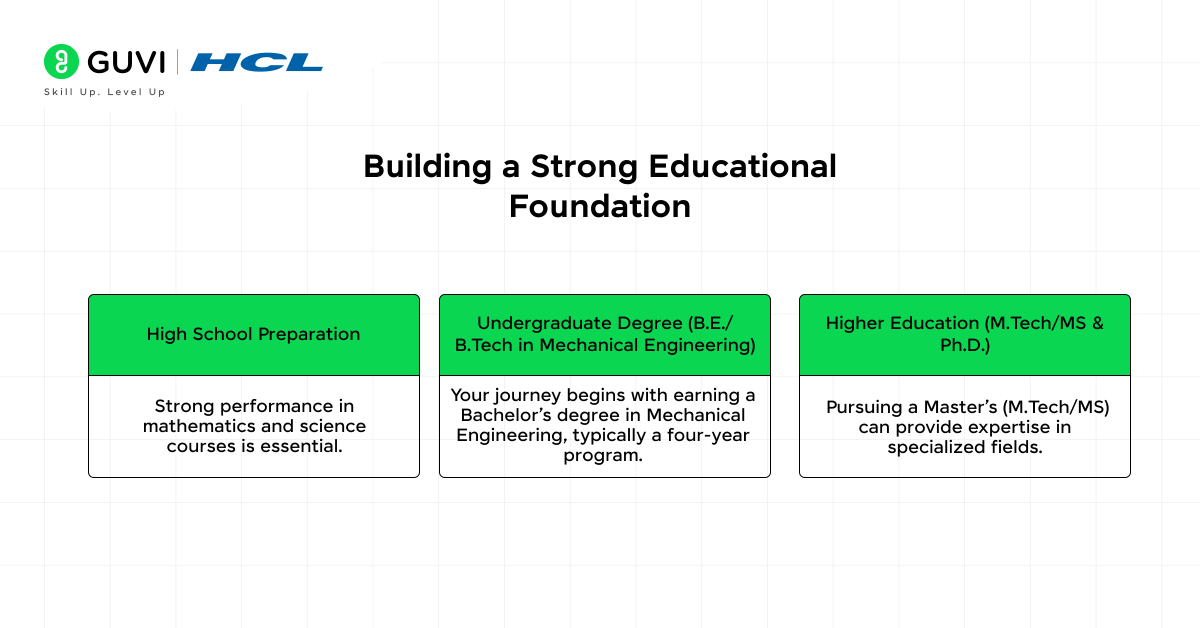
The education mentioned here refers to the process of acquiring the necessary academic foundation and qualifications to enter and excel in the field of mechanical engineering.
Let us understand the preparations, that need to go through:
a) High School Preparation:
Strong performance in mathematics and science courses is essential. Focus on subjects like calculus, algebra, geometry, and physics. These subjects form the basis for understanding complex engineering concepts.
b) Undergraduate Degree (B.E./B.Tech in Mechanical Engineering)
Your journey begins with earning a Bachelor’s degree in Mechanical Engineering, typically a four-year program that covers:
| Core Subject | What It Covers |
|---|---|
| Thermodynamics | Heat transfer, energy systems, engine cycles |
| Fluid Mechanics | Fluid behaviour, piping systems, aerodynamics |
| Strength of Materials | Stress, strain, structural integrity |
| Machine Design | Mechanical components, gears, bearings, shafts |
| Manufacturing Processes | Casting, welding, CNC, additive manufacturing |
| CAD/CAM | Design software, computer-aided manufacturing |
| Dynamics and Kinematics | Motion analysis, mechanisms, vibration |
c) Higher Education (M.Tech/MS & Ph.D.)
While a bachelor’s degree is sufficient for many jobs, pursuing a Master’s (M.Tech/MS) can provide expertise in specialized fields like:
- Robotics & Automation
- Aerospace Engineering
- Energy & Sustainability
- Advanced Manufacturing Technologies
For those inclined toward research or academia, a Ph.D. in Mechanical Engineering can open doors to innovation and leadership in R&D.
2. Foundational Knowledge and Skills

Skills and knowledge development in the field of mechanical engineering is a crucial aspect of preparing for a successful career in the field. As a mechanical engineer, you’ll need a diverse set of technical and soft skills, as well as a deep understanding of engineering principles.
Here’s a breakdown of the skills and knowledge you should focus on developing:
a) Mathematical and Analytical Skills:
Build a strong foundation in advanced math, including calculus, differential equations, and linear algebra. These skills are crucial for analyzing complex engineering problems.
- Calculus and Differential Equations: Profound knowledge of calculus and differential equations to model and analyze mechanical systems.
- Linear Algebra: Understanding of linear algebra for solving complex equations and transformations.
- Statistics: Ability to apply statistical methods for data analysis and quality control in engineering projects.
b) Physics and Engineering Principles:
Deepen your understanding of physics concepts related to mechanics, heat transfer, and fluid dynamics.
- Mechanics: In-depth understanding of classical mechanics, including kinematics, dynamics, and statics.
- Thermodynamics: Knowledge of heat transfer, energy conversion, and thermodynamic cycles.
- Fluid Mechanics: Understanding of fluid behavior, fluid dynamics, and fluid properties.
- Materials Science: Familiarity with materials properties, selection, and behavior under different conditions.
c) Technical Skills:
Learn to use engineering software, including Computer-Aided Design (CAD) tools for designing and modeling, as well as simulation software for testing and analyzing mechanical systems.
- Computer-Aided Design (CAD): Proficiency in using CAD software to create detailed designs of mechanical components and systems.
- Simulation and Analysis Tools: Ability to use software for simulating and analyzing the behavior of mechanical systems under various conditions.
- Programming: Basic programming skills in languages like Python or MATLAB can be useful for automating tasks and conducting data analysis.
3. Internships and Co-op Programs
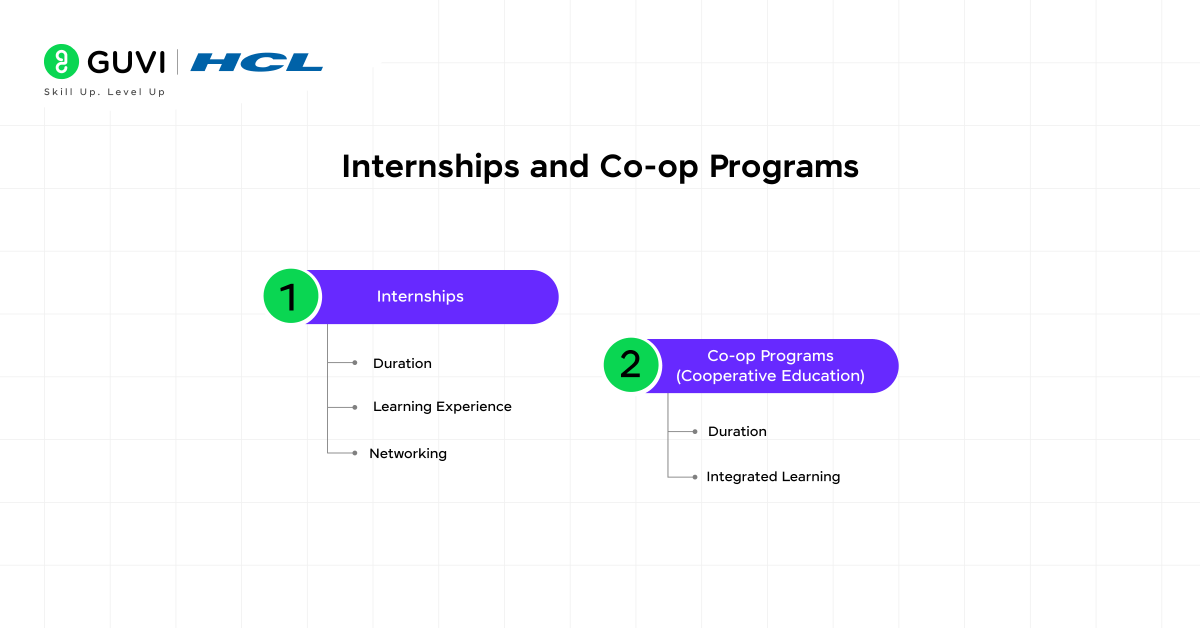
Internships and co-op programs are invaluable opportunities for you to gain real-world experience and bridge the gap between academic learning and practical application.
Here’s a closer look at internships and co-op programs:
a) Internships:
- Duration: Internships typically last for a few months, often during summer breaks, but can also be part-time during the academic year.
- Learning Experience: Interns gain insights into the daily operations of an engineering team, work culture, and industry practices. They also interact with professionals in the field, learning from their expertise.
- Networking: Internships allow you to build a professional network, which can be helpful for future job opportunities and career advice.
b) Co-op Programs (Cooperative Education)
- Duration: Co-op programs are more structured and can last several months to a year or more. They usually alternate between academic semesters and work terms.
- Integrated Learning: Co-op programs provide a deeper integration of academic learning with practical experience. Students apply what they learn in the classroom directly to their work assignments.
4. Networking and Involvement
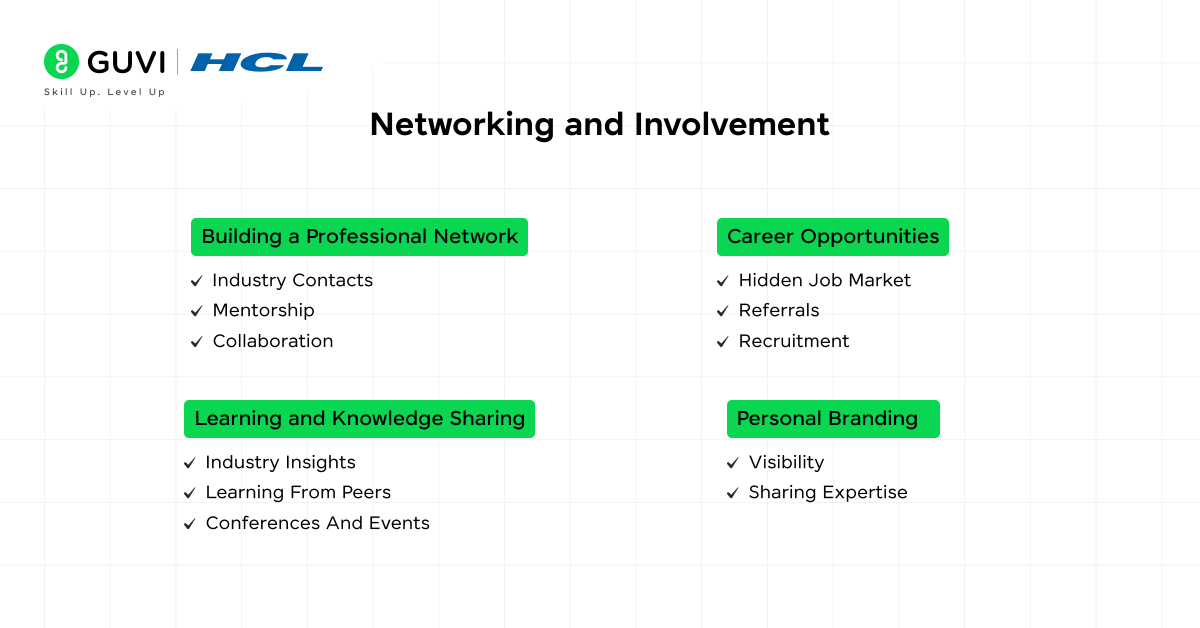
Networking and involvement within the mechanical engineering field are essential for building meaningful connections, staying updated on industry trends, and opening doors to new opportunities.
Engaging with professionals, attending events, and participating in engineering communities can greatly enhance your career prospects. Here’s a closer look at the importance of networking and involvement:
a) Building a Professional Network:
- Industry Contacts: Networking allows you to connect with professionals who can provide insights, advice, and potential job leads.
- Mentorship: Building relationships with experienced engineers can offer guidance and mentorship as you navigate your career.
- Collaboration: Networking can lead to collaboration on projects, research, or initiatives that expand your skills and knowledge.
b) Learning and Knowledge Sharing:
- Industry Insights: Engaging with others in your field helps you stay informed about the latest industry developments, technological advancements, and best practices.
- Learning from Peers: Sharing experiences and challenges with fellow engineers can provide new perspectives and solutions to common problems.
- Conferences and Events: Attending workshops, seminars, and conferences exposes you to cutting-edge research, innovations, and thought leadership.
c) Career Opportunities:
- Hidden Job Market: Many job openings are never publicly advertised; networking can help you tap into this hidden job market.
- Referrals: Recommendations from professionals you’ve connected with can increase your chances of being considered for job positions.
- Recruitment: Companies often prefer hiring candidates with referrals from their trusted network.
d) Personal Branding:
- Visibility: Active participation in networking events and discussions can increase your visibility within the engineering community.
- Sharing Expertise: Presenting at events or contributing to discussions allows you to showcase your knowledge and establish yourself as an industry expert.
5. Job Search and Early Career

Job search involves finding and securing your first job, applying your academic knowledge to practical projects, and building a strong foundation for your future career growth.
Here’s a guide to navigating the job search and early career phase as a mechanical engineer:
a) Resume and Portfolio Preparation:
- Craft a well-structured resume that highlights your education, relevant coursework, projects, internships, technical skills, and any awards or honors.
- Create an online portfolio or personal website showcasing your projects, design work, and any other engineering-related accomplishments.
b) Job Search Strategies:
- Online Job Boards: Use platforms like LinkedIn, Indeed, Glassdoor, and specialized engineering job boards to search for job openings.
- Company Websites: Visit the careers sections of engineering firms, manufacturing companies, and technology companies you’re interested in.
- Career Fairs: Attend job fairs, both on-campus and industry-specific, to connect with potential employers and learn about job opportunities.
- Networking: Leverage your professional network to learn about hidden job openings and gain insights into different companies.
c) Application Process:
- Tailor your resume and cover letter for each job application to highlight how your skills match the job requirements.
- Highlight relevant experiences and projects that showcase your technical skills, problem-solving abilities, and teamwork.

6. Optional Steps
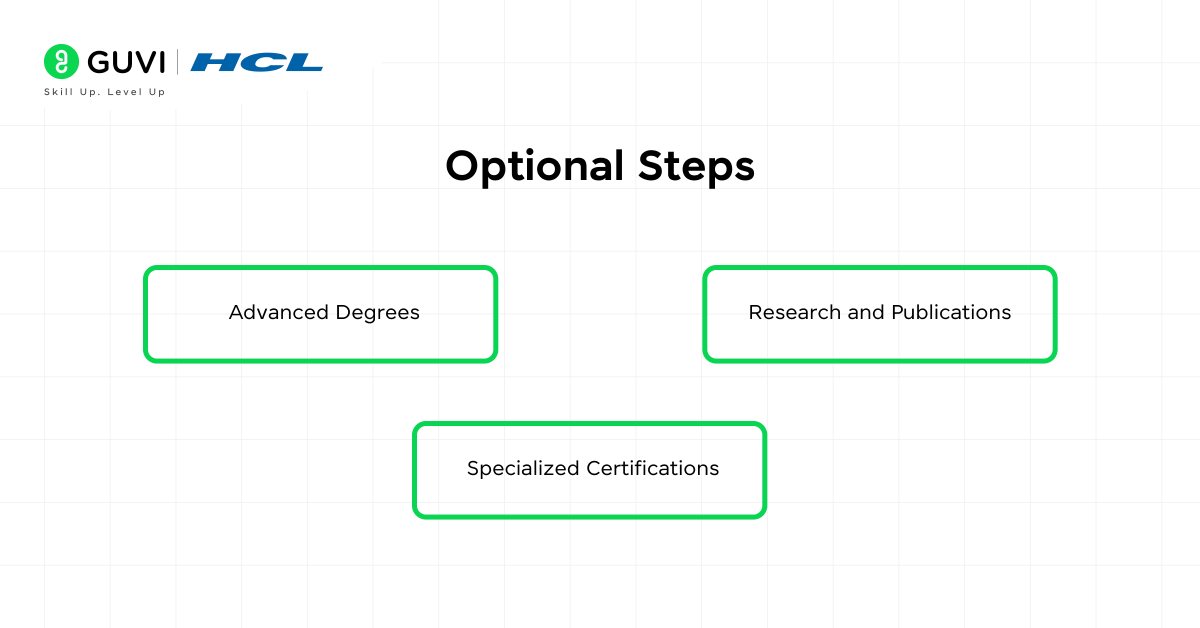
Optional steps in the mechanical engineering career roadmap refer to the additional choices you can make to enhance your skills, knowledge, and opportunities in your career beyond the core education and job requirements.
These steps can help you specialize in certain areas, stand out in a competitive job market, and further your professional growth. Here are some optional steps to consider:
a) Advanced Degrees:
- Pursuing a master’s or Ph.D. degree in mechanical engineering or a related field can provide specialized knowledge, research opportunities, and a deeper understanding of advanced concepts.
- Advanced degrees are particularly valuable if you’re interested in academia, research, or specialized engineering roles.
b) Specialized Certifications:
- Depending on your career path, consider obtaining certifications that demonstrate your expertise in specific areas. For example, certifications in CAD software, project management, or specialized engineering fields can boost your credentials.
- Certifications related to specific industries, such as aerospace, automotive, or energy, can make you more competitive in those sectors.
c) Research and Publications:
- Engage in research projects related to your interests in mechanical engineering. Publishing research papers in conferences or journals can enhance your reputation and contribute to the field’s knowledge base.
Whether you’re just starting or looking to advance your career, strategic planning, skill development, and professional networking are key to long-term success.
If you want to learn about the CAD tools required for mechanical engineering, consider enrolling in HCL GUVI’s CAD for Mechanical Engineers Course where you will master technologies including AutoCAD, Solidworks, CATIA, Ansys, GD & T, etc, and build interesting real-life mechanical projects and industry-grade certificate.
Complete Mechanical Engineering Career Roadmap in India 2026
A complete mechanical engineering career roadmap in India should combine academic learning with practical skills and industry exposure. Students can follow this progression:
Year 1: Build Fundamentals
- Strengthen mathematics and physics.
- Understand engineering mechanics and basic manufacturing.
- Learn technical drawing and engineering graphics.
Year 2: Start Building Technical Skills
- Learn AutoCAD and one major 3D CAD platform.
- Strengthen thermodynamics, fluid mechanics and material science.
- Complete small design and manufacturing projects.
Year 3: Choose a Specialization
- Explore EV engineering, robotics, product design, aerospace, HVAC, simulation or manufacturing.
- Learn tools relevant to the selected specialization.
- Complete at least one industry internship.
- Start building a mechanical engineering portfolio.
Final Year: Become Job-Ready
- Build an industry-relevant final-year project.
- Strengthen CAD, GD&T, FEA or CFD skills based on the target role.
- Prepare an ATS-friendly resume.
- Practice technical and mechanical engineering interview questions.
- Apply through campus placements, company career pages and professional networks.
Early Career: Build Expertise
- Develop deeper expertise in one technical domain.
- Take ownership of real engineering projects.
- Learn industry standards and documentation.
- Add certifications or pursue M.Tech/MS when they support the chosen career path.
Key Skills Every Mechanical Engineer Needs in 2026
| Skill Category | Specific Skills |
|---|---|
| Core Technical | Thermodynamics, Fluid Mechanics, Strength of Materials, Machine Design |
| CAD/Design | AutoCAD, SolidWorks, CATIA, CREO, NX |
| Simulation | ANSYS (FEA/CFD), MATLAB, COMSOL |
| Manufacturing | GD&T, CNC Programming, Lean Manufacturing, Six Sigma |
| Emerging Tech | Python, EV systems, Additive Manufacturing, Industrial IoT |
| Soft Skills | Technical communication, project management, cross-functional collaboration |
| Certifications | Six Sigma Green/Black Belt, PMP, CAD certifications, ASME certifications |
Mechanical Engineering Tools and Versions in 2026
Students do not need to master every engineering platform. They should select tools based on the roles and industries they want to enter.
| Tool | Current/Verified 2026 Release | Primary Use |
| AutoCAD Mechanical | AutoCAD Mechanical 2026 | 2D mechanical drafting and documentation |
| SolidWorks | SOLIDWORKS 2026 | 3D modelling, assemblies and product design |
| CATIA | CATIA R2026x | Automotive and aerospace design |
| Creo | Creo 12 | Parametric modelling, simulation and manufacturing |
| ANSYS | Ansys 2026 R1 | FEA, structural analysis and simulation |
| Siemens NX | NX 2606 | CAD, CAM and advanced manufacturing |
| MATLAB | R2026a | Engineering calculations, modelling and data analysis |
| COMSOL Multiphysics | 6.4 | Multiphysics modelling and simulation |
Job Roles for Mechanical Engineers in 2026
Here are the most common and in-demand career paths for mechanical engineering graduates:
| Job Role | Industries | Key Responsibilities |
|---|---|---|
| Design Engineer | Automotive, Aerospace, Consumer Products | CAD modelling, design reviews, prototyping |
| Manufacturing Engineer | FMCG, Automotive, Electronics | Process design, tooling, production optimisation |
| Quality Engineer | All manufacturing sectors | QA/QC, inspection, compliance, Six Sigma |
| Robotics Engineer | Automation, Warehousing, Defence | Robot design, kinematics, system integration |
| Thermal/HVAC Engineer | Energy, Construction, Aerospace | Heat exchanger design, HVAC systems, thermodynamic analysis |
| Aerospace Engineer | ISRO, HAL, Defence, Aviation | Structural design, propulsion, aerodynamics |
| Simulation Engineer | Automotive, Aerospace, Energy | FEA/CFD analysis, digital twin modelling |
| Product Design Engineer | Consumer Electronics, Medical Devices | End-to-end product development, DfM |
| Project/Site Engineer | Construction, Infrastructure, Oil & Gas | On-site execution, coordination, scheduling |
| R&D Engineer | Tech companies, Research institutes | Prototyping, innovation, publications |
Mechanical Engineer Salary in India 2026
Salary in mechanical engineering is strongly experience-driven. Here is an up-to-date breakdown based on 2026 data:
| Experience Level | Annual Salary (INR) | Source |
|---|---|---|
| Fresher (0–1 year) | ₹3 LPA – ₹6 LPA | The Business Scroll, 2026 |
| Mid-Level (2–5 years) | ₹6 LPA – ₹12 LPA | Jaro Education, 2026 |
| Senior (6–10 years) | ₹12 LPA – ₹20 LPA | Jaro Education, 2026 |
| Specialist/Lead (10+ years) | ₹20 LPA – ₹40 LPA+ | Jaro Education, 2026 |
Salary by Role (2026):
| Job Role | Average Annual Salary (INR) | Source |
|---|---|---|
| Design Engineer | ₹4 LPA – ₹10 LPA | Glassdoor India |
| Manufacturing Engineer | ₹4 LPA – ₹9 LPA | Glassdoor India |
| Robotics Engineer | ₹6 LPA – ₹18 LPA | Glassdoor India |
| Aerospace Engineer | ₹6 LPA – ₹20 LPA | NIT Blog, 2026 |
| HVAC/Thermal Engineer | ₹4 LPA – ₹12 LPA | Glassdoor India |
| Simulation/FEA Engineer | ₹5 LPA – ₹15 LPA | Glassdoor India |
| Senior/Lead Engineer | ₹15 LPA – ₹35 LPA | Jaro Education, 2026 |
City-wise Average Salary for Mechanical Engineers (2026):
| City | Average Salary |
|---|---|
| Bangalore | ₹5 LPA – ₹12 LPA |
| Pune | ₹4.5 LPA – ₹11 LPA |
| Chennai | ₹3.5 LPA – ₹9 LPA |
| Hyderabad | ₹4 LPA – ₹10 LPA |
| Delhi/NCR | ₹4 LPA – ₹11 LPA |
| Mumbai | ₹4.5 LPA – ₹12 LPA |
Top Courses for Mechanical Engineers in 2026
The right course can significantly accelerate your skill development and career progression. Here are the most relevant options:
| Course | Platform | What You Learn | Best For |
|---|---|---|---|
| CAD for Mechanical Engineers (AutoCAD, SolidWorks, CATIA, ANSYS) | HCL GUVI Zen Class | AutoCAD, SolidWorks, CATIA, ANSYS, GD&T + live projects | Freshers and working professionals wanting job-ready CAD skills |
| AutoCAD for Mechanical Engineers | HCL GUVI | 2D drafting, mechanical drawing standards | Beginners starting with technical drawing |
| SolidWorks | HCL GUVI | 3D part and assembly design, simulation basics | Design engineers and product developers |
| CATIA for Beginners | HCL GUVI | Surface modelling, aerospace/automotive design workflows | Engineers targeting auto or aerospace roles |
| Six Sigma Green Belt | Multiple platforms | Quality management, process optimisation, DMAIC | Manufacturing and quality engineers |
| Project Management Professional (PMP) | PMI | Project planning, execution, stakeholder management | Engineers moving into project leadership |
| ANSYS FEA/CFD | Coursera, ANSYS Learning Hub | Finite element analysis, computational fluid dynamics | Simulation and R&D engineers |
HCL GUVI’s CAD for Mechanical Engineers course is specifically built for mechanical engineering graduates and covers AutoCAD, SolidWorks, CATIA, ANSYS, and GD&T with real industry projects and placement assistance.
Top Recruiters for Mechanical Engineers in India (2026)
| Sector | Top Companies |
|---|---|
| Automotive | Tata Motors, Mahindra, Maruti Suzuki, Hero MotoCorp, Bajaj Auto, Hyundai India |
| Aerospace and Defence | ISRO, HAL, DRDO, BEL, Boeing India, Airbus India |
| Manufacturing | L&T, Bharat Forge, Thermax, Cummins India, Godrej |
| Energy | NTPC, ONGC, Siemens Energy, Tata Power, Adani Green |
| Consulting and EPC | TATA Consultancy Engineering, Jacobs, Fluor, Worley |
| Robotics and Automation | ABB India, FANUC India, Honeywell, Rockwell Automation |
| MNCs and Product Companies | GE, Bosch, 3M, Caterpillar, Cummins, Dassault Systèmes |
Conclusion
As we conclude this exploration of the mechanical engineering career roadmap, it becomes clear that mechanical engineering requires a strategic blend of foundational knowledge, skills, and a thorough understanding of basic education.
A career in mechanical engineering offers endless opportunities for growth and innovation. By focusing on education, hands-on experience, technical expertise, and continuous learning, you can establish yourself as a leading engineer in your field.
FAQs
What is the best career path for a mechanical engineer in 2026?
The best career path depends on a candidate’s interests and technical strengths. Design and product development suit professionals who enjoy CAD and prototyping. Manufacturing suits those interested in production systems and process improvement. Robotics and automation combine mechanical design with controls. EV engineering offers opportunities in thermal systems, chassis design and electric mobility.
Freshers should first choose a target role. They can then develop the tools and projects required for that specific career path.
Which skills are most important for mechanical engineers in 2026?
Mechanical engineers need a combination of engineering fundamentals and modern technical skills. Important skills include:
1. CAD and 3D modelling
2. GD&T and engineering drawings
3. FEA and CFD
4. Manufacturing processes
5. Thermodynamics and fluid mechanics
6. CNC and automation fundamentals
7. EV and battery-system fundamentals
8. MATLAB or basic Python
9. Technical communication
10. Problem-solving and project management
Is mechanical engineering a good career in India in 2026?
Yes. Mechanical engineering remains relevant because it supports automotive, manufacturing, aerospace, defence, energy, infrastructure, robotics and industrial automation.
Growth in EVs is creating additional opportunities. India recorded 2.66 million EV sales during FY26 while EV sales grew 29.67% year over year. Mechanical engineers with skills in modern design, simulation, automation and electric mobility can position themselves for these expanding sectors.
How can a fresher get a mechanical engineering job in India?
Freshers should focus on showing employers what they can build or solve rather than relying only on their degree.
Start with one target role such as mechanical design, manufacturing, quality or simulation. Learn the tools commonly required for that role. Complete two to four practical projects and document the design process, calculations, software used and final outcome.
Internships can strengthen the profile further. Freshers should also tailor their resume for each role and prepare for interviews covering engineering fundamentals, projects and commonly used industry tools.
Success Stories

About the Author
Vaishali
I'm a seasoned writer with four years of experience across technical, non-technical, and just about every genre or niche you can imagine. Adaptable and curious, I enjoy exploring new topics and making information engaging and easy to understand. Fueled by a steady stream of tea, I approach each project with creativity, reliability, and genuine enthusiasm for storytelling.
View all posts by Vaishali
Connect with me @









Did you enjoy this article?