


Artificial Intelligence and Machine Learning Articles
AI/ML Skills Gap 2026: Why Companies Can't Find Job-Ready Talent
20 AI/ML Interview Questions Recruiters Can Use Without a Tech Background - Best Guide
How Industry-Backed AI/ML Bootcamps Are Changing the AI/ML Hiring Pipeline - Best Guide 2026
From IT Support to AI Engineer: A Realistic Career Switch Guide 2026


Get In Touch For Details! Request More Information
AI SDK for OpenAI and LLM Integration
Aug 18, 2026 4 Min Read 651 Views
(Last Updated)
Modern AI applications are no longer limited to a simple prompt and response model. We now expect real-time streaming of outputs, integration with multiple AI providers, tool execution, and structured output or dynamic UI rendering.
These new demands have created a gap between the low-level model APIs and fully featured production-ready AI applications. We need a clean abstraction that makes modern AI integration simpler and more scalable. The Vercel AI SDK is a popular tool for building modern AI applications with JavaScript and TypeScript that fits exactly that need.
This guide explains how AI SDKs help simplify LLM integration and build scalable AI applications.
Table of contents
- TLDR
- Why AI SDKs became a necessity in modern AI applications
- Modern applications are becoming AI native
- Architecture of a modern AI SDK system
- Core capabilities of AI SDK frameworks
- A closer look at the Vercel AI SDK
- How streaming works in practice
- Generative UI and dynamic interfaces
- Multi-provider approach in AI development
- Structured outputs and system reliability
- AI agents and tool-based execution
- Practical AI Study Assistant
- Code snippet
- Challenges with AI SDKs
- Best Practices
- Future of AI SDKs
- Importance of AI SDK skills
- Conclusion
- FAQs
- What problems does an AI SDK solve?
- How does the Vercel AI SDK help developers?
- What is streaming in AI applications?
- Can AI SDKs work with multiple AI providers?
- What are structured outputs in AI systems?
- Are AI SDKs enough to build production AI systems?
TLDR
- AI SDK frameworks simplify integrating with large language models into modern AI applications by abstracting low-level API interaction.
- The Vercel AI SDK provides a unified interface for handling streams, integrating with multiple AI providers, and producing structured AI outputs.
- The AI SDK handles low-level complexities such as token streaming, chat state management, and tool execution for you.
- Modern AI applications use AI SDKs to display real-time interfaces and dynamic user experiences.
- Generative UI and AI Agents are changing how users interact with applications.
- The Vercel AI SDK is provider agnostic, allowing switching between OpenAI, Anthropic, Gemini, and other LLMs without changing application logic.
What is an AI SDK?
An AI SDK (Software Development Kit) is a development framework that provides tools and abstractions for integrating large language models into applications. It simplifies low-level tasks such as API communication, request handling, response streaming, and model integration. Instead of directly working with raw LLM APIs, developers use AI SDKs to build chat applications, AI agents, structured outputs, and real-time AI interfaces with significantly less code and faster development workflows.
Why AI SDKs became a necessity in modern AI applications
Early AI applications used simple prompt response flows. This worked for basic use cases but fails in modern systems requiring streaming, memory, multi-turn reasoning, tool execution, and dynamic UI updates.
Without AI SDKs, managing these features results in fragmented, hard-to-maintain codebases, and in real applications, they span streaming, LLM workflows, and system design for production use cases. You can refer to the ebook for more details.
Modern applications are becoming AI native
Applications are no longer just tools with AI features added on top. They are becoming AI native systems where intelligence is part of the core architecture.
This requires systems that support continuous real-time interaction instead of single request-response flows. AI SDKs enable this transition through reusable workflow patterns.
Architecture of a modern AI SDK system
Modern AI SDKs are built with modular layers:
- Model layer handles LLM communication
- The streaming layer manages real-time output delivery
- The tool layer connects external APIs and functions
- UI layer renders dynamic responses
- State layer manages conversation history
This separation improves scalability and maintainability.
Core capabilities of AI SDK frameworks
- Streaming responses improve perceived speed and user experience.
- Multi-provider integration allows switching between AI models easily.
- Structured outputs enforce clean, usable response formats.
- Tool execution enables AI to interact with external systems.
- Chat state management automatically maintains context and memory.
A closer look at the Vercel AI SDK
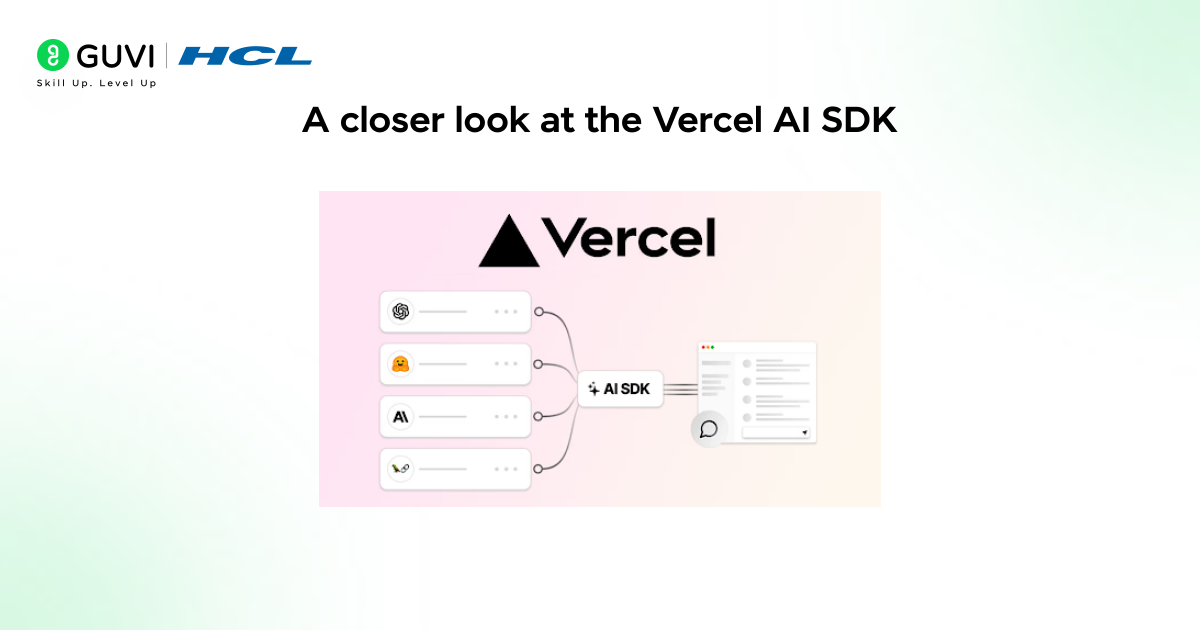
The Vercel AI SDK is designed for modern web applications using React and server-side frameworks.
It provides a unified API across multiple AI providers while maintaining consistent behavior.
A key advantage is the separation of AI logic from UI logic, making scaling and provider switching easier.
Server-side streaming improves production performance.
How streaming works in practice
Streaming delivers output in real-time increments instead of waiting for full completion.
import { streamText } from ‘ai.’
import { openai } from ‘@ai-sdk/openai’
const response = streamText({
model: openai(‘gpt-4o-mini’),
prompt: ‘Explain how neural networks learn’
})
for await (const chunk of response.textStream) {
process.stdout.write(chunk)
}
This removes manual buffering and parsing complexity.
You can learn more about working with OpenAI models and how they are structured in real applications in this guide.
Generative UI and dynamic interfaces
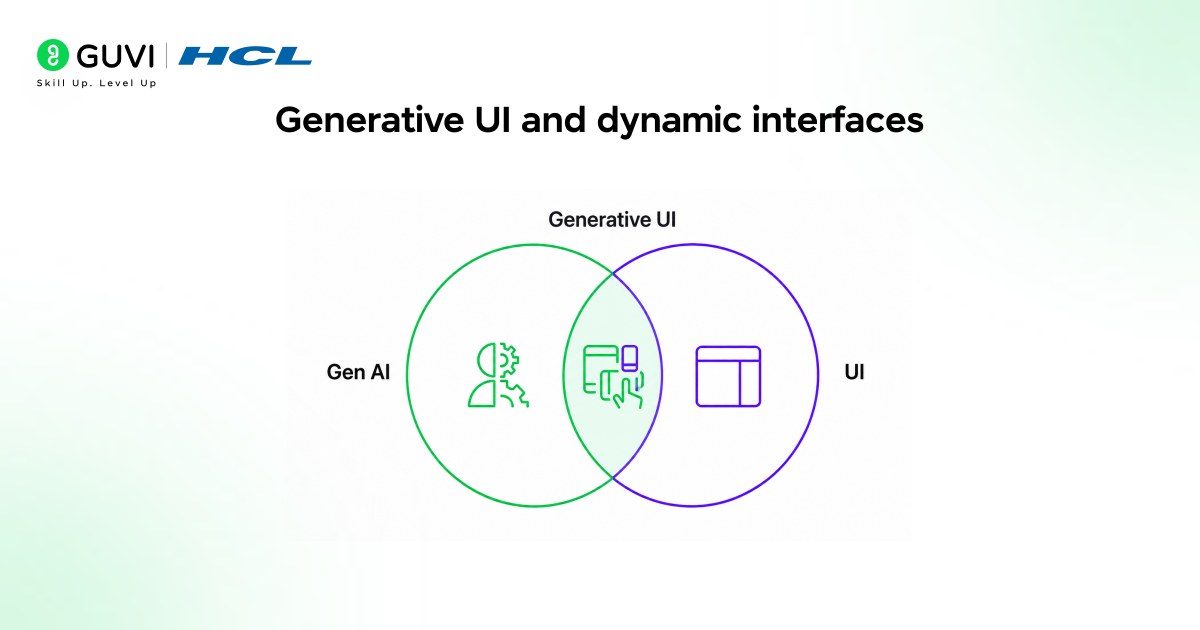
Generative UI allows AI to dynamically create interface components based on user intent.
For example, a travel assistant can generate flights, hotels, maps, and booking components in real time.
This transforms applications into dynamic interactive systems instead of static interfaces.
Multi-provider approach in AI development
Using a single AI provider introduces risks like vendor lock-in and pricing changes.
AI SDKs solve this through multi-provider support:
- Cost optimization
- Performance balancing
- High availability
- Faster model adoption
- Reduced dependency
Structured outputs and system reliability
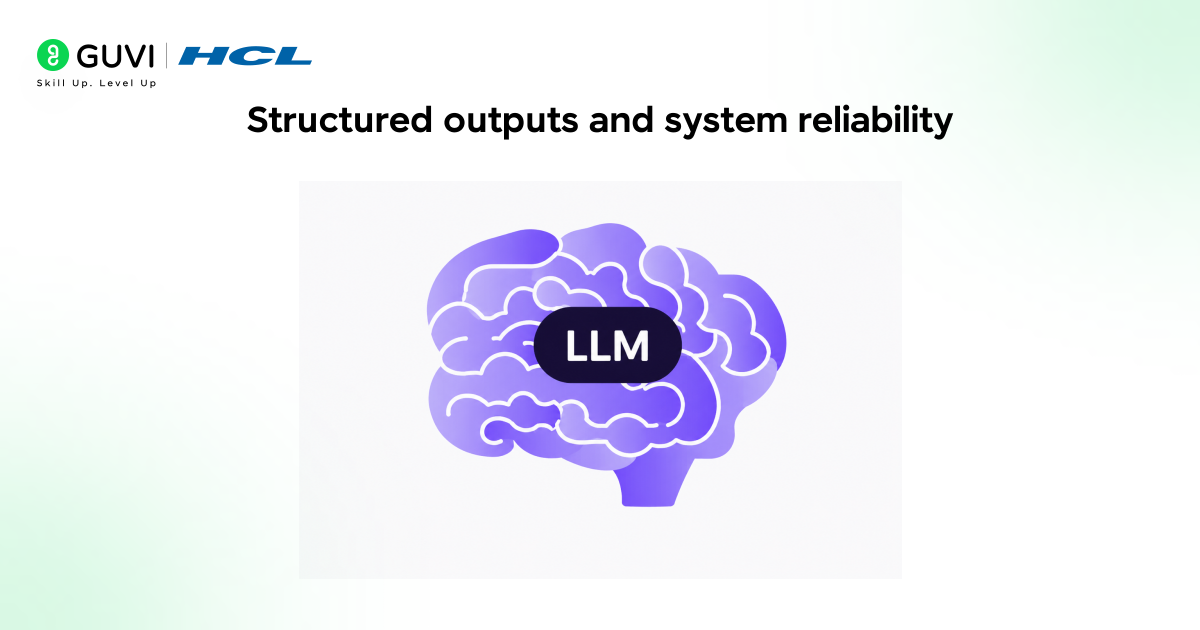
LLM outputs are unstructured, making them hard to use directly.
Structured outputs enforce schema-based responses for consistent data usage.
import { generateObject } from ‘ai.’
import { z } from ‘zod.’
const result = await generateObject({
schema: z.object({
title: z.string(),
category: z.string(),
confidence: number
}),
prompt: ‘Classify this product review’
})
This improves reliability and reduces parsing overhead.
AI agents and tool-based execution
AI agents can interact with external systems like APIs, databases, and tools.
Tool calling allows models to:
- Fetch live data
- Query databases
- Execute workflows
- Trigger API calls
- Perform multi-step reasoning
This shifts AI from passive response systems to active execution systems.

Practical AI Study Assistant
AI SDKs are being used in real-world applications like creating AI study assistants to help users understand concepts, build quizzes, summarize notes, and receive instant explanations. The key components involved in this system are streaming responses, structured quizzes, and dynamic UI.
An example workflow looks like this: A user asks an academic question. The server sends this request through the AI SDK. The model streams the answer in real time. The system then generates quiz questions based on structured output. The UI updates dynamically with all study content.
Code snippet
‘use client’
import { useChat } from ‘ai/react’
export default function StudyAssistant() {
const { messages, input, handleInputChange, handleSubmit } = useChat()
return (
<div>
{messages.map(msg => (
<div key={msg.id}>
{msg.role}: {msg.content}
</div>
))}
<form onSubmit={handleSubmit}>
<input value={input} onChange={handleInputChange} />
</form>
</div>
)
}
This abstraction removes the need for manual state synchronization or streaming logic. It allows developers to focus only on designing the learning experience instead of infrastructure handling. Modern AI development resources focused on JavaScript and LLM integration also describe similar implementation patterns.
Challenges with AI SDKs
Even with AI SDKs, several engineering challenges still exist:
- Managing rate limits
- Controlling token costs at scale
- Handling inconsistent model responses
- Securing systems from prompt injection
- Optimizing context window usage
- Ensuring stable latency
These are system-level concerns and cannot be solved by SDK usage alone.
Best Practices
When building AI systems, strong infrastructure practices are required:
- Stream all user responses
- Separate AI logic from frontend code
- Use structured outputs wherever possible
- Implement fallback models for reliability
- Monitor token usage continuously
- Optimize prompts for consistency
- Cache repeated requests
- Log and evaluate model behavior regularly
Future of AI SDKs
The AI SDK ecosystem is evolving rapidly. Future systems will include deeper agent orchestration, multimodal capabilities, voice interaction, and autonomous task execution.
The direction is moving away from direct API handling toward higher-level abstractions that manage reasoning, memory, and execution automatically. This will make AI development more accessible and scalable.
Importance of AI SDK skills
AI is becoming a core development skill. Developers need both programming knowledge and an understanding. Key skills include:
- Prompt engineering
- Streaming architecture design
- Structured output generation
- AI agent workflows
- Retrieval systems
- Model evaluation techniques
Developers who master these areas will have a strong advantage in future roles.
If you want to go deeper into AI SDK-based development, LLM integration, and building real-world AI applications with streaming, tools, and structured outputs, you can explore HCL GUVI’s AI and machine learning learning paths focused on hands-on application building and modern AI system design.
Conclusion
AI SDK frameworks have fundamentally changed how intelligent applications are built. They simplify infrastructure complexity and enable real-time, dynamic, multi-provider AI systems.
The Vercel AI SDK demonstrates how abstraction layers improve both development speed and scalability. As AI systems move toward agent-based and generative interfaces, AI SDKs will become essential for building robust real-world applications.
FAQs
1. What problems does an AI SDK solve?
An AI SDK simplifies integration of language models by handling streaming, provider communication, structured outputs, and chat state management, reducing manual development effort.
2. How does the Vercel AI SDK help developers?
It provides a unified framework for building AI applications with streaming support, multi-provider integration, and React-based UI components.
3. What is streaming in AI applications?
Streaming is a method where AI responses are delivered incrementally instead of waiting for full completion, improving speed perception and user experience.
4. Can AI SDKs work with multiple AI providers?
Yes, most modern AI SDKs support multiple providers such as OpenAI, Anthropic, and Gemini, allowing flexible model switching.
5. What are structured outputs in AI systems?
Structured outputs are AI responses formatted as validated data structures like JSON, making them easier to integrate into applications.
6. Are AI SDKs enough to build production AI systems?
No, while AI SDKs simplify development, production systems still require prompt optimization, security controls, monitoring, and performance tuning.
Success Stories

About the Author
Vishalini Devarajan
An Aerospace Engineer turned content writer, I focus on making complex concepts easy to understand through well-structured, reader-friendly blogs. Whether it’s a technical topic or a non-technical one, I love creating content that is clear, engaging, and impactful.
View all posts by Vishalini Devarajan
Connect with me @







Did you enjoy this article?