


Artificial Intelligence and Machine Learning Articles
How to Evaluate LLM Outputs in Production Deployments
AI/ML Skills Gap 2026: Why Companies Can't Find Job-Ready Talent
20 AI/ML Interview Questions Recruiters Can Use Without a Tech Background - Best Guide
How Industry-Backed AI/ML Bootcamps Are Changing the AI/ML Hiring Pipeline - Best Guide 2026

Get In Touch For Details! Request More Information
AI Agent Debug Mode: Runtime Logs That Actually Help
Sep 08, 2026 5 Min Read 747 Views
(Last Updated)
Most AI debugging today fails for a simple reason. The system is trying to fix problems it does not fully understand.
Traditional debugging worked because software was predictable. AI agents are not. They generate outputs dynamically, adapt to context, and behave differently across runs.
This unpredictability forces a shift. Debugging is no longer about stepping through code. It is about uncovering how decisions are made during execution.
Table of contents
- TL;DR
- The Real Shift: From Errors to Behavior
- Runtime Logs as Execution Narratives
- Why Traditional Debugging Breaks for AI Agents
- The Debug Mode Loop
- Core Loop
- Why Hypothesis-First Debugging Works
- Runtime Instrumentation: Where Insight Comes From
- Human Judgment Still Matters
- Minimal Fixes, Maximum Impact
- Time-Travel Debugging Is Changing Investigation
- Debugging Becomes a Learning System
- New Failure Modes Require New Thinking
- Debug Mode Is Also a Safety Mechanism
- The Gap: Logging Is Still Not Mature
- Structured Logging Is the Way Forward
- Practical Example: Understanding a Failure
- The Future of AI Debugging
- Conclusion
- FAQs
- What are AI agent debug mode runtime logs?
- Why is traditional debugging not enough for AI agents?
- What makes runtime logs different from normal logs?
- How does debug mode improve accuracy?
- Is human involvement still necessary?
- What is the future of AI debugging?
- What is the difference between an AI course and an AI & ML course?
- Why is SQL important for AI & ML professionals?
- What job roles can I apply for after completing an AI & ML course?
- How do I choose the best AI course for my career goals?
- What should I look for before enrolling in an AI & ML course?
- How should I evaluate AI & ML certifications before enrolling?
TL;DR
- AI agent debug mode runtime logs shift debugging from guesswork to a process of scientific deduction.
- Modern AI agents are non-deterministic, undermining traditional debugging.
- Runtime logs now trace agent reasoning, tool usage, and decision-making instead of just error outputs.
- Debug mode enables a process where problems can be precisely fixed, with minimal code changes.
- This represents a shift toward observability, continuous learning, and a systemic view of AIs.
What are AI Agent Debug Mode Runtime Logs?
AI agent debug mode runtime logs are a debugging approach where agents collect real execution data, including reasoning, decisions, and tool interactions, before generating fixes. It combines logging, tracing, and evaluation to identify root causes instead of guessing.
The Real Shift: From Errors to Behavior
In the past, logs provided a single answer: what error occurred. Now, this is no longer sufficient. In AI agents, a wrong output is usually the result of multiple small incorrect decisions rather than a single mistake in the code.
Debugging now involves understanding how an agent interprets inputs, the decisions it makes at each step, and where those decisions go wrong.
Observability plays a critical role in making this behavior visible.
Runtime Logs as Execution Narratives
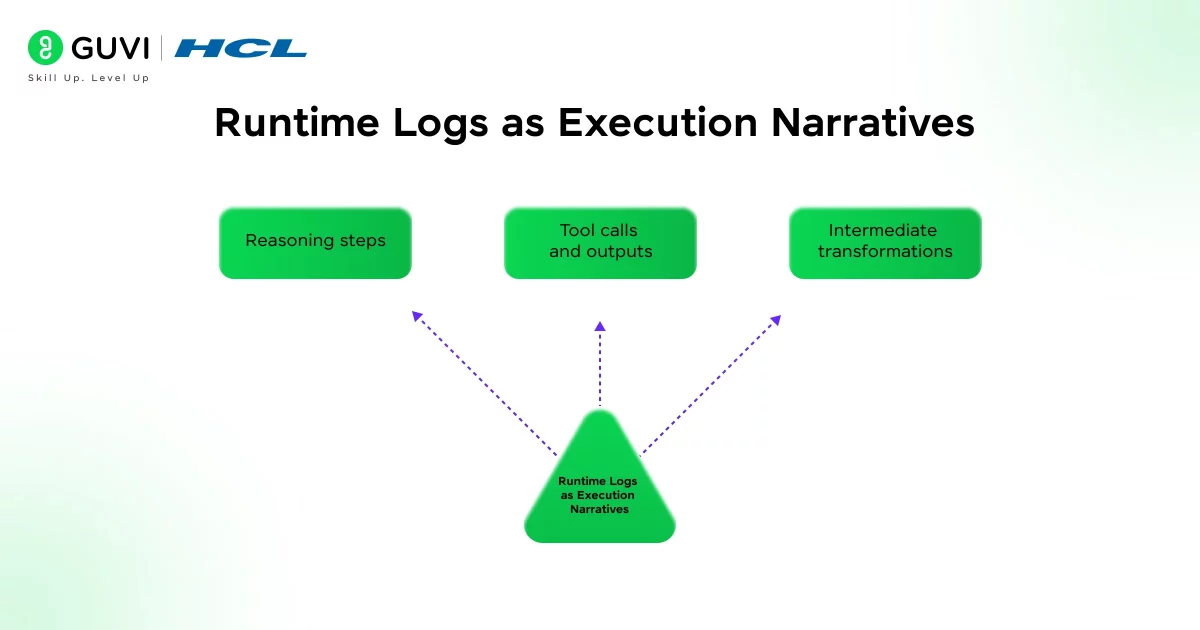
Standard logging is passive. It logs events as they occur.
Modern runtime logs are active; they reconstruct execution.
They present a structured view of:
- Reasoning steps.
- Tool calls and outputs.
- Intermediate transformations.
This provides clearer insight. They provide execution stories. Follow how the agent reached a decision instead of inferring the decision based on the outcome.
Why Traditional Debugging Breaks for AI Agents
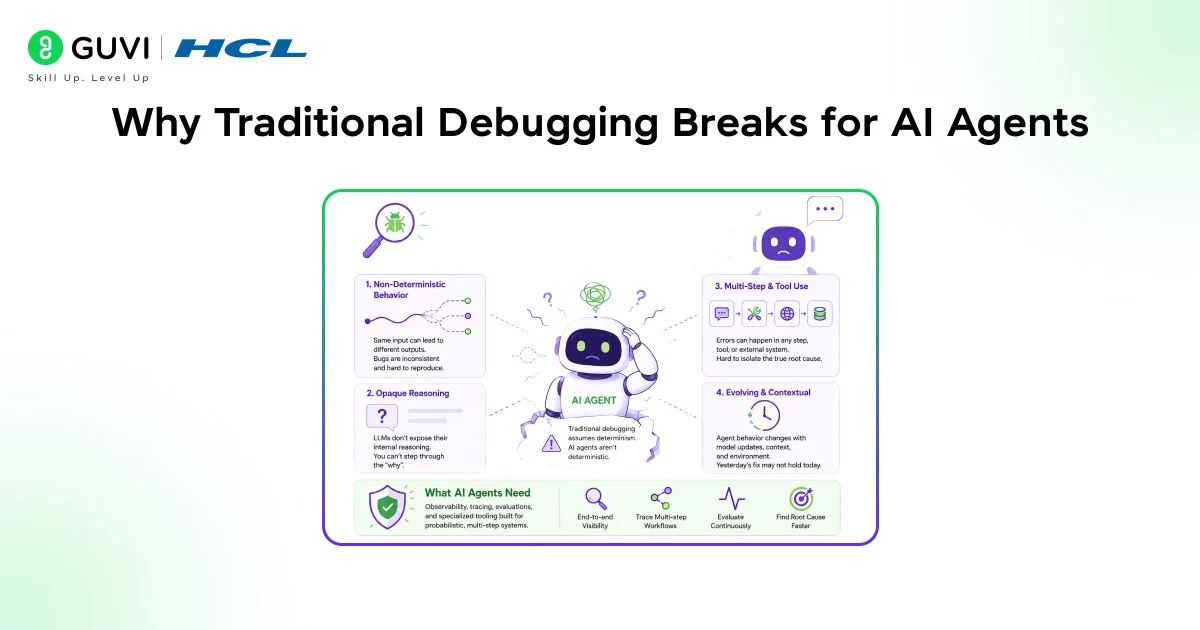
AI agents don’t just have one execution path. They may implicitly consider several possibilities, such as making API calls, generating intermediate outputs, or performing recursive reasoning, which reflects how they operate across multiple steps, as explained in the introduction to agentic coding.
The problem is not the complexity but the visibility.
Runtime logs offer visibility into:
- Internal reasoning failures.
- Misconceptions within reasoning chains.
- Tool responses that influence results.
This makes traditional debugging insufficient.
The Debug Mode Loop
What is revolutionary is not logging, but the process surrounding it.
Debug mode enables a disciplined debugging loop, which parallels how a human expert would debug a complex system and reflects how modern agents operate as workflows rather than single functions, as explained in common workflow patterns for AI agents.
Core Loop
- The agent considers multiple hypotheses rather than a single path.
- It places targeted log statements in code.
- The user triggers the issue while the logs capture the actual execution.
- The agent analyzes this data to pinpoint the error.
- It suggests a targeted fix based on the evidence.
- The user checks that the fix resolved the issue.
- Temporary log statements are removed from code.
The loop eliminates blind or speculative fixes.
Why Hypothesis-First Debugging Works
Trying a fix without investigating is quick but usually ineffective.
Hypothesis-driven debugging starts slow but makes subsequent steps much faster. By not jumping to a conclusion, it avoids narrowing the possible sources of error.
- Reduces unnecessary code changes.
- Improves the correctness of fixes.
- Aligns with industry best practices for debugging.
It’s not about speed, but correctness.
Runtime Instrumentation: Where Insight Comes From
Instrumentation is the turning point in the process.
Instead of asking the user to manually add logs, the agent inserts them intelligently.
Here is a simple illustration:
def process_payment(data):

   print("[DEBUG] Input received:", data)

   validated = validate(data)

   print("[DEBUG] Validation status:", validated)

   result = charge(validated)

   print("[DEBUG] Payment result:", result)

   return result
In debug mode, this is automated and tied to specific hypotheses.
The logs are not random. They are placed exactly where uncertainty exists.
This makes the collected data meaningful and actionable.
Human Judgment Still Matters
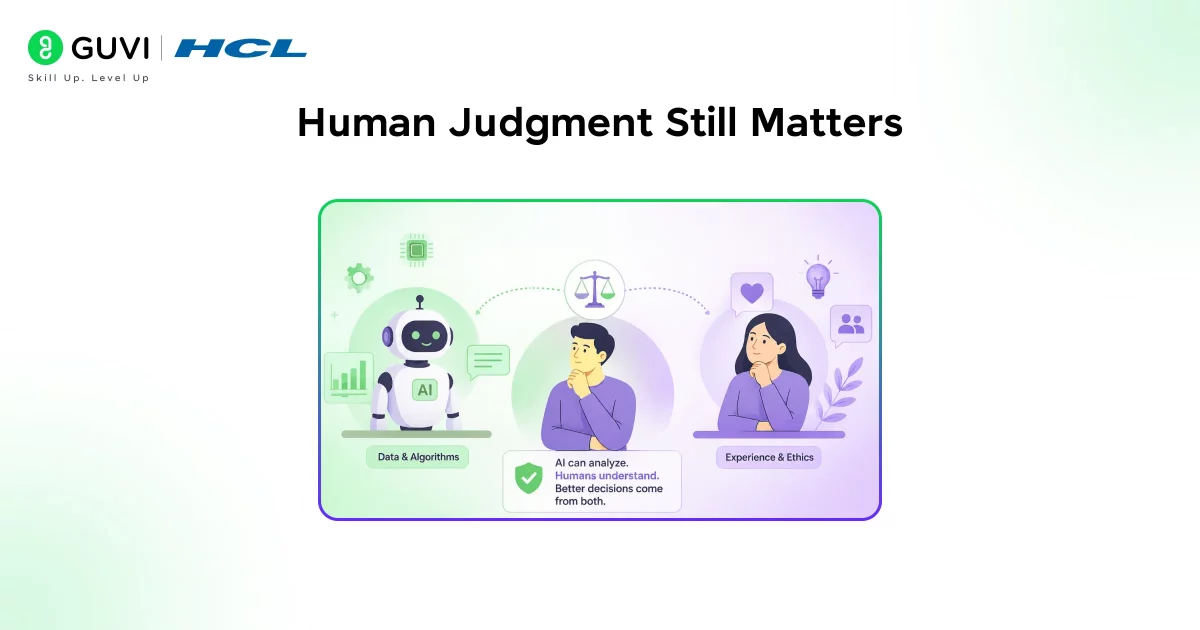
While AI can find patterns, it can’t truly understand the underlying intent. That’s where human verification still comes in.
After a fix is applied, the system prompts you for confirmation. This confirms that the proposed change is not only technically sound but also contextually appropriate.
Not all bugs are logical. Some lie in ambiguous territories and require human discernment to resolve.
Minimal Fixes, Maximum Impact
The elegance of this debugging mode lies in how little it changes.
Rather than rewriting entire chunks of code, it makes small changes at the precise point of failure.
This benefits the entire development process with:
- Minimal code changes.
- Faster code reviews.
- Reduced risk of introducing new bugs.
Precision is gained through better comprehension.
Time-Travel Debugging Is Changing Investigation
Debugging was a real-time task before, but it can now extend beyond the moment of failure with the help of runtime logs.
Sessions can be replayed step by step, allowing you to trace each decision even when the issue is no longer occurring.
This is especially valuable for intermittent bugs, where reproducing the issue is difficult.
Debugging Becomes a Learning System
Debugging now does not only have to be a one-time task. It is a valuable opportunity to learn more and, in turn, improve the system itself.
Logs become more than just historical information and can now create:
- Test cases.
- Model signals.
- Benchmarks.
This essentially creates a continuous learning loop where each bug becomes a chance to make the AI stronger.
New Failure Modes Require New Thinking
AI system failures differ from traditional ones. An AI system may not crash, but it may misunderstand, drift off target, or hallucinate.
Each of these requires a different approach to debugging, often referred to as behavioral debugging.
This approach focuses on identifying and correcting how the system reasons and produces outputs, rather than just fixing logic or syntax errors.
As a result, debugging becomes not only an engineering task but also a form of system design.
Debug Mode Is Also a Safety Mechanism
With the advent of autonomous agents, safety is an extreme priority.
Runtime logs are critical for these autonomous systems, as they act as an indisputable record of every action an agent has taken, and even what caused it to take the action.

This ensures that issues can be spotted and identified quickly and that all possible security and misuse concerns can be investigated thoroughly.
Debugging in the context of autonomous AI agents means we are learning how to build reliable systems, rather than just fixing bugs, which becomes critical in real-world deployments such as AI agents for startups.
The Gap: Logging Is Still Not Mature
Unfortunately, this is not yet fully realized.
Many AI agents suffer from the lack of:
- Relevant logging.
- Complete traces.
- Well-formatted logs.
The data collected is often insufficient. It highlights how much progress is still needed.
Structured Logging Is the Way Forward
Logging becomes most effective when logs are structured well.
Structure provides a clear distinction between what happened, why it happened, and the influencing factors.
It also enables better tooling and automation.
Practical Example: Understanding a Failure
Consider an agent pipeline:
def run_agent(query):
step1 = interpret(query)
step2 = call_api(step1)
step3 = format_response(step2)
return step3
If the output is wrong, the issue could be anywhere.
With runtime logs, you can trace:
- How the query was interpreted.
- What the API returned.
- How the response was formatted.
This eliminates guesswork.
You do not fix blindly. You fix with clarity.
For a deeper dive into AI observability and debugging frameworks, explore this ebook to understand agent evaluation and runtime tracing systems. These will help you connect concepts like logging, tracing, and feedback loops in real-world systems.
Some AI observability systems can reconstruct entire agent decision flows, including hidden intermediate reasoning steps.
This allows developers to debug issues that never appear in final outputs, providing deeper insight into how an AI system arrived at a result.
The Future of AI Debugging
Debugging is becoming less about fixing code and more about understanding systems, a shift that is also reflected in modern development tools such as the best agentic IDEs
The future will focus on:
- Better observability tools.
- Automated evaluation pipelines.
- Deeper integration between logs and model training.
The systems are getting smarter. Debugging methods are catching up.
To build strong fundamentals in AI systems, debugging workflows, and real-world deployment, explore HCL GUVI’s AI and Machine Learning course. It helps you understand how intelligent systems behave in production and how to improve them effectively.
Conclusion
AI agent debug mode runtime logs are not just a technical upgrade. They represent a shift in how debugging is approached.
Earlier, debugging focused on fixing errors and guessing causes. Now, it focuses on understanding behavior and proving causes with real data.
If AI systems are treated like traditional software, debugging will remain difficult. When their behavior is understood, debugging becomes clearer, faster, and far more reliable.
FAQs
1. What are AI agent debug mode runtime logs?
It is a debugging approach where agents use runtime data such as reasoning, execution flow, and tool usage to identify and fix issues accurately.
2. Why is traditional debugging not enough for AI agents?
Because AI systems are non-deterministic and involve multi-step reasoning, making static analysis and simple logs insufficient.
3. What makes runtime logs different from normal logs?
Runtime logs capture decision paths, intermediate steps, and reasoning, not just events or errors.
4. How does debug mode improve accuracy?
It uses a structured loop with hypotheses and real execution data, ensuring fixes are based on evidence rather than assumptions.
5. Is human involvement still necessary?
Yes. Humans validate fixes to ensure they are contextually correct and not just technically valid.
6. What is the future of AI debugging?
It will focus on observability, structured logging, replay-based debugging, and continuous improvement through feedback loops.
What is the difference between an AI course and an AI & ML course?
An AI course focuses on artificial intelligence concepts, while an AI & ML course includes machine learning, deep learning, NLP, computer vision, and practical model-building skills. If you’re looking for hands-on AI and ML training, explore the HCL GUVI AI & ML Programme.
Why is SQL important for AI & ML professionals?
SQL helps AI & ML professionals extract, clean, and analyze data from databases, making it essential for building accurate machine learning models. Most industry-focused AI & ML programmes include SQL as a core data skill.
What job roles can I apply for after completing an AI & ML course?
You can apply for roles such as AI Engineer, Machine Learning Engineer, Data Scientist, NLP Engineer, Computer Vision Engineer, and AI Developer. To prepare for these roles, consider a project-based AI & ML Programme with career support.
How do I choose the best AI course for my career goals?
Choose an AI course based on your career goals, curriculum, hands-on projects, mentor support, industry tools, and placement assistance. A structured AI & ML Programme can help you build practical skills and a strong portfolio.
What should I look for before enrolling in an AI & ML course?
Look for a structured curriculum, practical projects, experienced mentors, updated AI tools, certification value, and career support. Compare programmes carefully before enrolling in an AI & ML Programme.
How should I evaluate AI & ML certifications before enrolling?
Evaluate AI & ML certifications based on industry recognition, curriculum relevance, hands-on learning, project experience, and career outcomes. You can also compare what’s included in the HCL GUVI AI & ML Programme before making a decision.
Success Stories

About the Author
Vishalini Devarajan
An Aerospace Engineer turned content writer, I focus on making complex concepts easy to understand through well-structured, reader-friendly blogs. Whether it’s a technical topic or a non-technical one, I love creating content that is clear, engaging, and impactful.
View all posts by Vishalini Devarajan
Connect with me @






Did you enjoy this article?