


Artificial Intelligence and Machine Learning Articles
Finance Manager to Data Analytics: Career Growth, Salary and Seniority
How to Evaluate LLM Outputs in Production Deployments
AI/ML Skills Gap 2026: Why Companies Can't Find Job-Ready Talent
20 AI/ML Interview Questions Recruiters Can Use Without a Tech Background - Best Guide

Get In Touch For Details! Request More Information
Writing an AI Diligence Statement: Stand Out Guide
Jun 22, 2026 6 Min Read 829 Views
(Last Updated)
Imagine submitting a research paper, business report, or creative project only to have questions raised about which parts you wrote and which parts AI generated. As AI tools like Claude, ChatGPT, and others become standard in workplaces and classrooms, the need for transparency has never been more critical.
A student turning in an essay. A researcher publishing findings. A business professional presenting a proposal. A content creator submitting work to clients. All of these people face the same question: How do you demonstrate integrity when AI assists your work?
This guide explains what an AI diligence statement is, why it matters, when you need one, and exactly how to write one that builds trust and demonstrates professional responsibility.
Quick TL;DR Summary
- This guide explains what AI diligence statements are and why they are becoming essential in academic, professional, and creative contexts.
- You will learn when you need an AI diligence statement and when you can skip it.
- The guide provides the core components every strong AI diligence statement must include.
- Step-by-step instructions show you exactly how to write an effective statement for different situations.
- Real-world examples demonstrate what good AI diligence statements look like in practice.
- Practical tips help you avoid common mistakes and maintain credibility in AI-assisted work.
Table of contents
- What Is an AI Diligence Statement?
- Why AI Diligence Statements Matter
- When You Need an AI Diligence Statement
- Core Components of an AI Diligence Statement
- Step-by-Step: Writing Your AI Diligence Statement
- Step 1: Review Your Actual AI Use
- Step 2: Check Relevant Policies
- Step 3: Choose Your Format
- Step 4: Draft the Statement Clearly
- Step 5: Be Specific About Tasks
- Step 6: Emphasize Your Role
- Step 7: Review for Completeness
- Real-World Examples of AI Diligence Statements
- Common Formats for Different Contexts
- Top Strategies for Effective AI Diligence Statements
- What NOT to Include in Your Statement
- Common Mistakes to Avoid
- How AI Diligence Statements Build Trust
- Conclusion
- FAQs
- Do I need an AI diligence statement if I only used AI for brainstorming?
- What if my institution forbids all AI use?
- Can I lose credit for work even with a proper disclosure statement?
- How long should an AI diligence statement be?
- Should I disclose AI use in every draft or just the final version?
What Is an AI Diligence Statement?
An AI diligence statement is a clear, honest declaration of how you used AI tools in creating your work. It explains which tasks AI helped with, how you used it, and what parts you created yourself.
Think of it like citing sources in a research paper. When you quote an author, you give credit. When AI assists your work, you disclose that assistance. The statement demonstrates accountability and maintains trust.
The key difference between hiding AI use and disclosing it is credibility. Hidden AI use raises questions about authenticity. Disclosed AI use, when appropriate, shows professionalism and integrity.
Why AI Diligence Statements Matter
The rise of AI tools has created uncertainty about authorship, originality, and effort. AI diligence statements address this directly.
- What Happens Without Clear Disclosure
People question the authenticity of your work. Academic institutions may flag submissions as potential violations. Clients lose trust in your capabilities. Colleagues wonder about your actual skills. Opportunities disappear because credibility is damaged.
- The Real Impact
Careers suffer when integrity is questioned. Academic standing gets compromised by ambiguous AI use. Professional relationships deteriorate without transparency. Legal issues can arise in contexts with strict authorship requirements.
- Why Disclosure Changes Everything
An AI diligence statement protects you by establishing exactly what you did. It builds trust by showing honesty. It demonstrates that you understand professional standards. It proves you can use AI responsibly while maintaining accountability for your work.
Read More: How AI Works? A Comprehensive Guide
When You Need an AI Diligence Statement
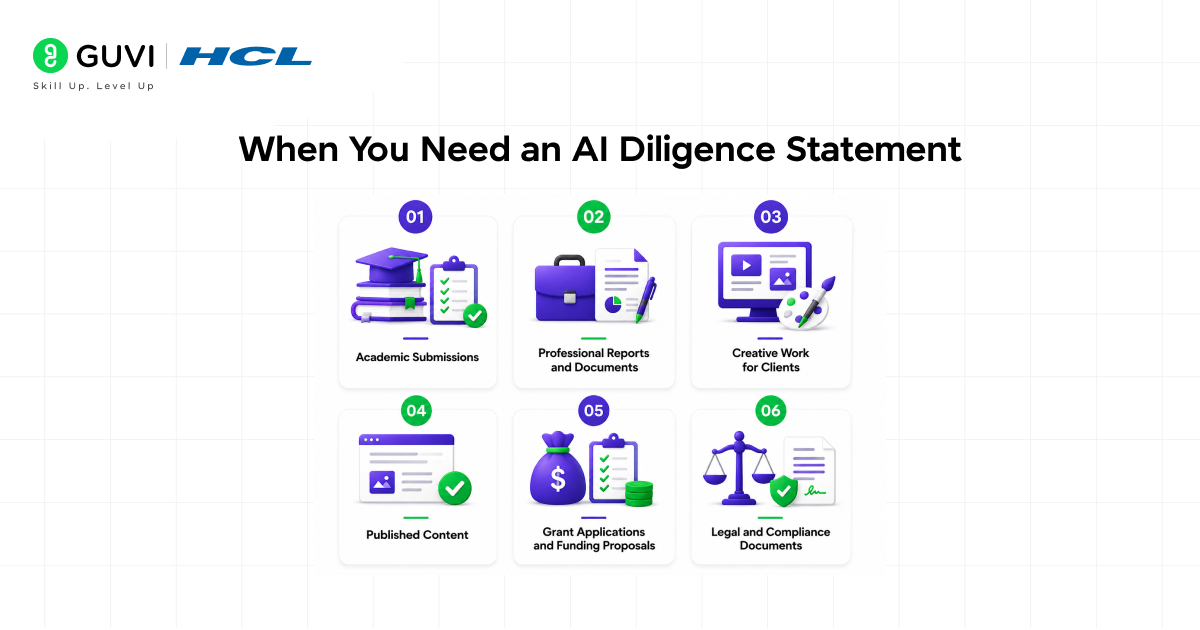
Not every situation requires formal disclosure, but knowing when to include one is crucial.
- Academic Submissions
Research papers, essays, dissertations, theses, assignments, and any graded work typically require disclosure. Most educational institutions now have specific AI use policies.
- Professional Reports and Documents
Business proposals, client deliverables, research findings, published articles, and official documentation often benefit from or require AI disclosure.
- Creative Work for Clients
Marketing copy, website content, graphic design projects, and commissioned writing should include disclosure when AI played a significant role.
- Published Content
Articles, blog posts, books, and any public-facing content where authorship matters and readers deserve transparency.
- Grant Applications and Funding Proposals
Research proposals, fellowship applications, and funding requests where originality and methodology must be clear.
- Legal and Compliance Documents
Contracts, policies, compliance reports, and legal filings where authorship has regulatory implications.
Research on academic integrity shows that students who write their AI diligence statement before starting their work produce more accurate and honest disclosures. Documenting AI usage in real time helps track exactly what the AI contributed versus your own work. In contrast, statements written after completion are 3× more likely to contain inaccuracies or omissions.
Core Components of an AI Diligence Statement
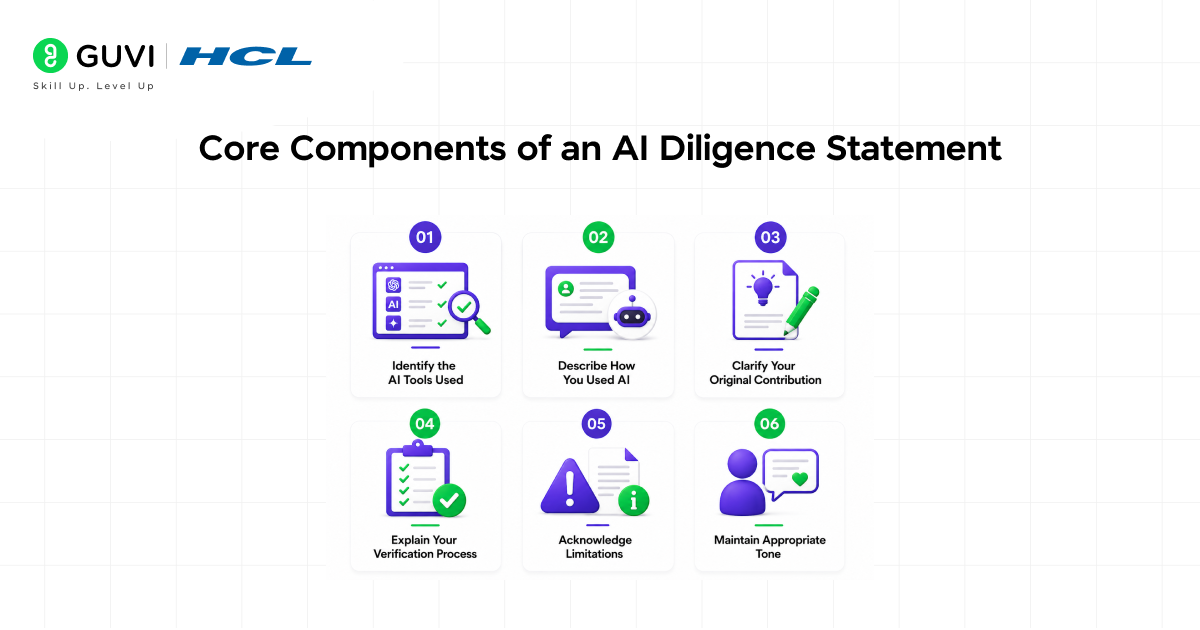
Every effective AI diligence statement includes specific elements that create transparency.
- Identify the AI Tools Used
Name the specific tools. “I used Claude Sonnet 4.5” is better than “I used AI.” Readers deserve to know exactly which tools assisted you.
- Describe How You Used AI
Explain what tasks AI performed. Did it help with research? Generate first drafts? Check grammar? Analyze data? Provide suggestions? Be specific about the role AI played.
- Clarify Your Original Contribution
State clearly what you did yourself. Your analysis, decision-making, original ideas, verification of facts, and final judgment should be evident.
- Explain Your Verification Process
Describe how you checked AI outputs. Did you verify facts against sources? Review for accuracy? Test recommendations? Revise substantially?
- Acknowledge Limitations
Note where AI could not help or where you intentionally avoided using it. This shows thoughtful, selective use rather than blanket dependence.
- Maintain Appropriate Tone
Professional, straightforward, and confident. You are disclosing assistance, not apologizing for it.
Step-by-Step: Writing Your AI Diligence Statement
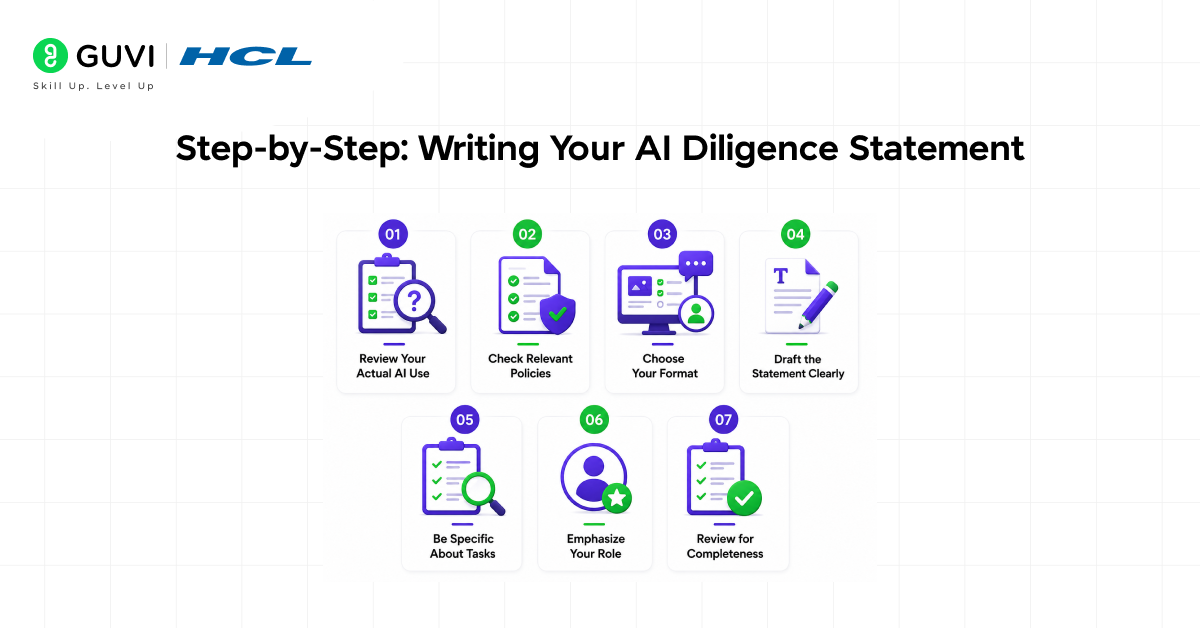
Step 1: Review Your Actual AI Use
Before writing anything, honestly assess how you used AI. List every task where AI assisted. Note which suggestions you accepted and which you rejected. Identify what you created independently.
Step 2: Check Relevant Policies
Review your institution’s AI policy, your company’s guidelines, client requirements, or publication standards. Some contexts have specific disclosure formats or requirements.
Step 3: Choose Your Format
Decide whether your statement will be a standalone section, a footnote, an appendix, or integrated into your methodology. Format depends on context and requirements.
Step 4: Draft the Statement Clearly
Write in clear, direct language. State the facts without being defensive or overly detailed. Focus on transparency, not justification.
Step 5: Be Specific About Tasks
Instead of “AI helped with writing,” say “I used Claude to generate three different outline structures, selected one, and developed all the content myself.”
Step 6: Emphasize Your Role
Make it clear that you maintained control, made all final decisions, verified information, and take full responsibility for the final work.
Step 7: Review for Completeness
Ensure nothing important is omitted. Check that the statement accurately represents your process. Confirm it meets any specific requirements.
Writing your AI usage statement as you work leads to more accurate and reliable documentation. When people try to recall their AI usage after completing a project, they are up to 3× more likely to miss details or make unintentional errors. Real-time documentation ensures clarity, honesty, and better accountability.
Real-World Examples of AI Diligence Statements
- Academic Research Paper
“I used Claude Sonnet 4.5 to assist with literature review summarization. The AI helped condense 15 academic papers into initial summaries, which I then verified against the original sources, corrected for accuracy, and synthesized into the literature review section. All analysis, interpretation, conclusions, and original research were conducted without AI assistance. Data analysis was performed using R statistical software without AI involvement.”
- Business Proposal
“This proposal was developed with assistance from Claude AI for initial market research compilation and competitive analysis structuring. I provided all strategic recommendations, financial projections, and implementation plans independently. AI-generated content was reviewed, fact-checked against primary sources, and substantially revised to align with our company methodology and client needs.”

Common Formats for Different Contexts
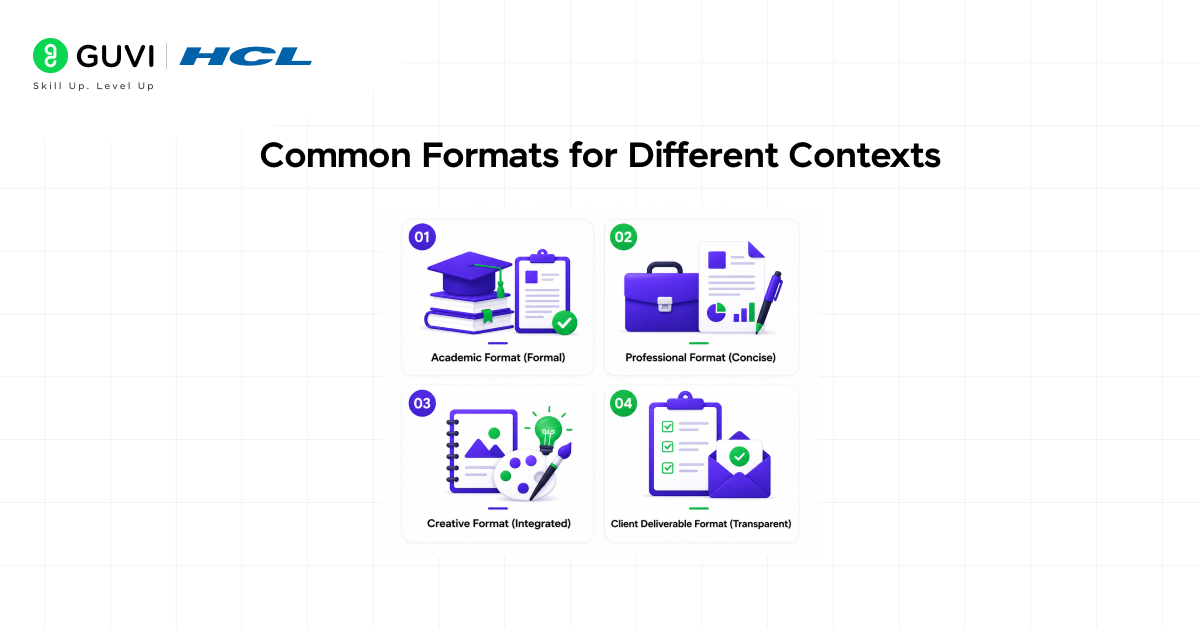
- Academic Format (Formal)
Place in a dedicated “AI Use Statement” section or in the methodology. Be thorough and specific about every instance of AI assistance.
- Professional Format (Concise)
Include in acknowledgments or as a brief footnote. Focus on high-level disclosure without excessive detail.
- Creative Format (Integrated)
Weave disclosure naturally into your process description or author’s note. Maintain a creative tone while being transparent.
- Client Deliverable Format (Transparent)
Include in cover letter or project documentation. Focus on how AI enhances efficiency without compromising quality or originality.
Top Strategies for Effective AI Diligence Statements
- Be Honest, Not Defensive
State facts clearly without over-explaining or justifying. Transparency builds trust. Defensiveness undermines it.
- Focus on Your Value Addition
Emphasize what you contributed, decided, verified, and created. The statement should highlight your expertise and judgment.
- Use Specific Examples
Instead of vague descriptions, give concrete examples of AI tasks. “Claude generated five title options, and I selected and modified the third option” is better than “AI helped with titles.”
- Avoid Minimizing or Exaggerating
Do not downplay significant AI contributions, and do not overstate minor assistance. Accuracy matters more than perception management.
- Tailor to Your Audience
Academic audiences need methodological detail. Business audiences need efficiency context. Creative audiences need process transparency. Adjust your statement accordingly.
- Update as Practices Evolve
As your AI use becomes more sophisticated or policies change, update your disclosure approach. What works today may need refinement tomorrow.
- Document Your Process
Keep notes about how you used AI during your work. This makes writing accurate statements easier and protects you if questions arise later.
What NOT to Include in Your Statement
- Unnecessary Technical Details
Readers do not need to know specific prompts, model versions, or technical parameters unless relevant to understanding your work.
- Apologies for Using AI
If AI use is allowed and appropriate, do not apologize. Disclosure is professional practice, not admission of wrongdoing.
- Comparisons to Non-AI Methods
Avoid statements like “this would have taken longer without AI” or “AI made this better.” Focus on disclosure, not justification.
- Defensive Language
Phrases like “only used AI for minor tasks” or “barely used AI at all” sound defensive. State facts neutrally.
- Information About Rejected AI Suggestions
You do not need to detail every AI output you did not use. Focus on what actually appears in your final work.
Common Mistakes to Avoid
- Being Too Vague
“I used AI to help” tells readers nothing useful. Specify tools, tasks, and your role clearly.
- Over-Disclosing Trivial Use
Using AI to fix a typo does not require elaborate disclosure. Focus on substantive assistance.
- Failing to Check Policy Requirements
Many institutions and organizations have specific AI disclosure requirements. Ignoring these can have serious consequences.
- Treating All AI Use as Equal
Using AI for brainstorming ideas is different from having AI write entire sections. Your statement should reflect these distinctions.
- Forgetting to Verify AI Information
Never include AI-generated claims without verification. Your statement should confirm your checked accuracy.
- Writing the Statement as an Afterthought
Draft your statement thoughtfully, not hastily before submission. It reflects your professionalism and integrity.
How AI Diligence Statements Build Trust
Transparency is the foundation of credibility in the AI era. When you clearly disclose how you used AI tools, you demonstrate several important qualities.
You show intellectual honesty by acknowledging assistance rather than claiming sole authorship dishonestly. You demonstrate professional maturity by understanding that using tools effectively while maintaining accountability is a valuable skill. You build confidence in your work because readers know exactly what they are evaluating.
You protect yourself from future questions by creating a clear record of your process. You contribute to establishing professional norms in a rapidly evolving landscape. You show respect for your audience by giving them the information they need to properly evaluate your work.
If you want to learn more about writing an AI Diligence Statement, do not miss the chance to enroll in HCL GUVI’s Intel & IITM Pravartak Certified Artificial Intelligence & Machine Learning course. Endorsed with Intel certification, this course adds a globally recognized credential to your resume, a powerful edge that sets you apart in the competitive AI job market.
Conclusion
AI diligence statements are not just about following rules. They are about maintaining integrity, building trust, and demonstrating professional responsibility in an era where AI assistance is increasingly common.
The best approach is to document your AI use as you work, understand the requirements of your specific context, and write statements that are clear, honest, and focused on your original contribution.
Start practicing this skill now. Write AI diligence statements even when not required. Develop your own template that you can adapt to different situations. Build the habit of transparency that will serve you throughout your career.
FAQs
1. Do I need an AI diligence statement if I only used AI for brainstorming?
It depends on context. For academic work or professional deliverables, yes. For personal projects, probably not. When in doubt, brief disclosure is better than none.
2. What if my institution forbids all AI use?
Do not use AI if it is prohibited. If you did use AI before understanding the policy, disclose it immediately to the appropriate authority and explain the circumstances.
3. Can I lose credit for work even with a proper disclosure statement?
Policies vary. Some contexts allow AI use with disclosure. Others do not. Always check specific requirements before using AI, not after.
4. How long should an AI diligence statement be?
Length depends on complexity. Simple projects might need one or two sentences. Complex research might require a paragraph or more. Aim for complete transparency in minimum space.
5. Should I disclose AI use in every draft or just the final version?
Final version disclosure is typically sufficient. However, in collaborative or supervised work, disclose AI use early so supervisors or colleagues can provide guidance.
Success Stories

About the Author
Vishalini Devarajan
An Aerospace Engineer turned content writer, I focus on making complex concepts easy to understand through well-structured, reader-friendly blogs. Whether it’s a technical topic or a non-technical one, I love creating content that is clear, engaging, and impactful.
View all posts by Vishalini Devarajan
Connect with me @






Did you enjoy this article?