


UI/UX Designing Articles
What is a Design System? The Ultimate Guide to Building Consistent UIs
What is UX Writing? A Complete Guide to Mastering Microcopy and Content Design
What is a UX Audit? A Complete & Best Guide to User Experience Evaluation
How HCL GUVI Zen Class Helps You Build a Job-Ready UI/UX Portfolio


Get In Touch For Details! Request More Information
Become a 10x Product Designer with a Visual IDE
Jun 09, 2026 4 Min Read 1720 Views
(Last Updated)
The product design landscape has shifted dramatically. What once took weeks for teams of designers, developers, and PMs can now be done by one focused designer with the right mindset and tools. This isn’t about working harderit’s smarter, cutting unnecessary steps and compressing feedback loops.
The 10x product designer emerges from this change. Borrowed from engineering’s “10x developer” concept, they deliver precise, empathetic, data-driven work at unmatched speed. Their secret? Process, perspective, and frictionless tools keeping design and production code in sync.
In this article, we’ll break down exactly what it means to be a 10x product designer, the traits that separate them from the rest, and how a Visual IDE transforms the way designers work, collapsing the traditional gap between design and development into a single, unified creative workflow.
Quick TLDR Summary
- 10x designers eliminate waste, blending empathy, data, business sense, and speed for massive impact.
- Traditional workflows lose fidelity via handoffs; Visual IDEs sync design directly to production code.
- Traits: full journey obsession, analytics, feedback resilience, triple-threat skills, refined speed.
- Path: master data/SQL, design systems, deep work; tools like Visual IDEs amplify mindset.
Table of contents
- Who is a 10x Product Designer?
- Origins of the 10x Developer Concept
- Real-World 10x Designers in Action
- True Essence of 10x Performance
- The Traditional Design Workflow Is Broken
- Building the 10x Mindset: Practical Steps
- What Is a Visual IDE and Why Does It Matter?
- How a Visual IDE Unlocks 10x Designer Potential
- Syncing Design with Real Code Components
- Rapid Idea-to-Testable Prototype Cycles
- Ending Spacing Forever
- The Future of Product Design Is Already Here
- Current Reality of 10x Designers
- Scaling Vision with Modern Tools
- Path to 10x Designer Status
- Conclusion
- FAQs
- What is a 10x product designer?
- How do Visual IDEs help?
- What traits define 10x designers?
- Why is the traditional workflow broken?
- How to become 10x?
Who is a 10x Product Designer?
A 10x product designer is someone considered ten times more effective than the average designer not just in output speed, but in the quality and impact of every design decision they make. They combine UX research, interface design, business thinking, and a deep empathy for users into one cohesive, high-velocity practice. They don’t just hand off designs, they ship them.
Origins of the 10x Developer Concept
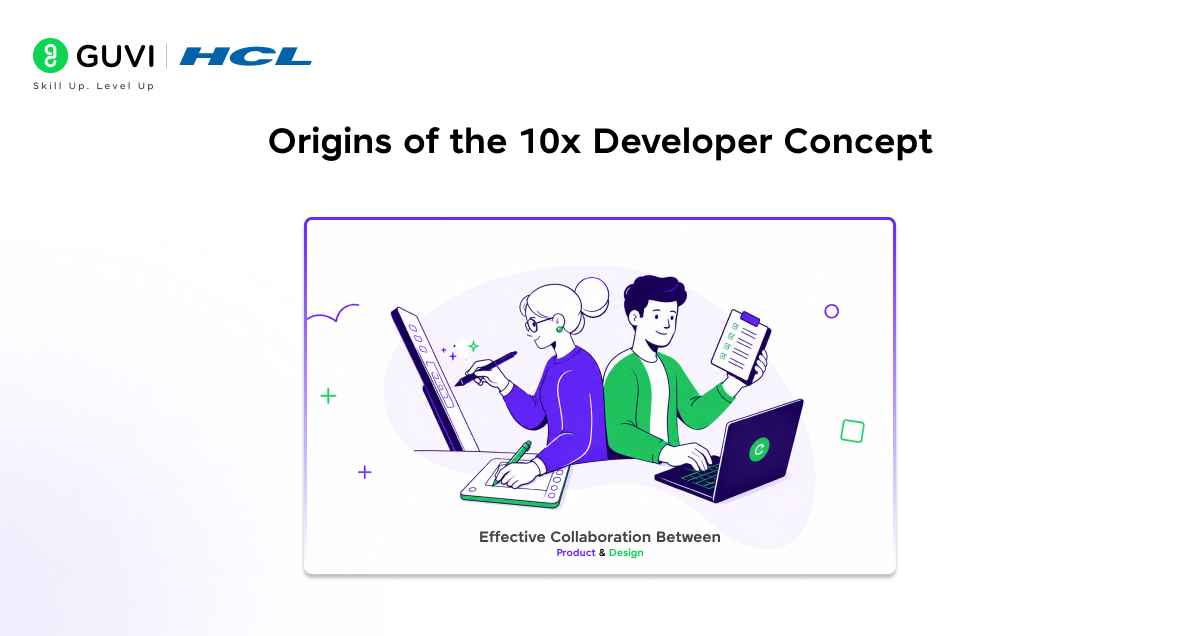
Before there was a 10x designer, there was a 10x developer. The concept originally emerged in software engineering circles to describe engineers who could write elegant, minimal code that solved what would otherwise take others ten times as many lines to achieve.
It wasn’t about bravado; it was about depth of understanding, problem-solving instinct, and the ability to move from idea to working solution with very little waste in between. The same principle eventually made its way into product design, where companies began recognizing that certain designers operated on an entirely different plane of output and impact.
Real-World 10x Designers in Action
The 10x designer isn’t a myth or a marketing term. They exist at companies like Airbnb, Stripe, and Linear places where design quality is treated as a first-class product concern.
These designers tend to share a common set of characteristics: they are obsessive about customer experience beyond just the core product, they understand the business deeply, and they move at a pace that seems almost improbable to those watching from the outside.
True Essence of 10x Performance
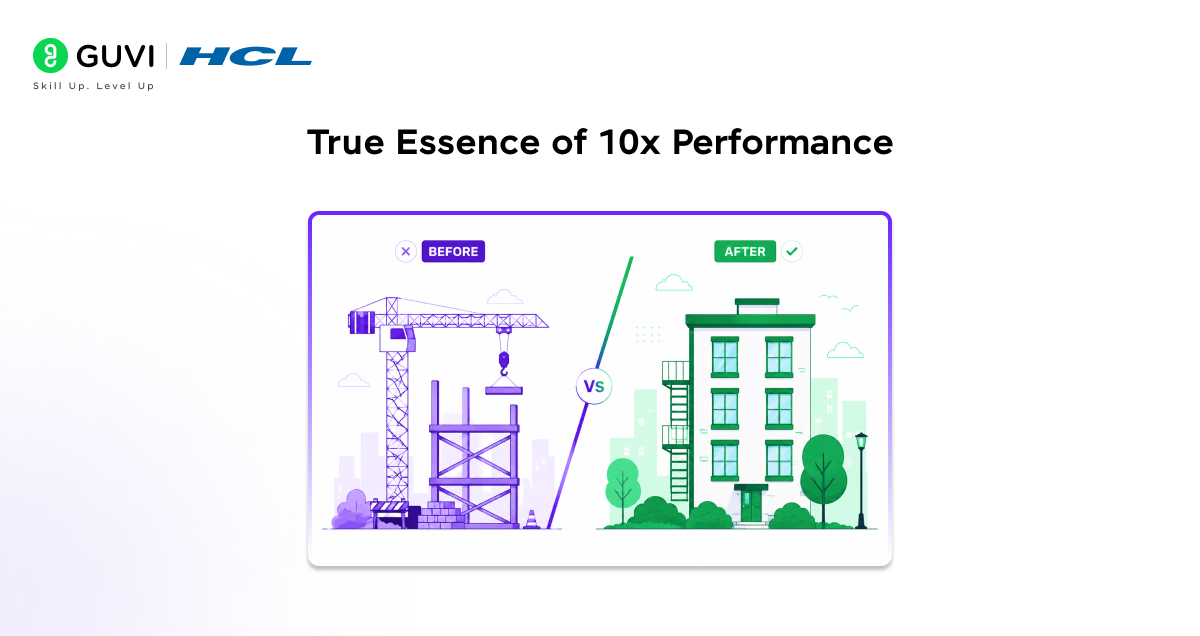
What’s important to understand is that the 10x concept is not about being a superhero or burning yourself out. It’s about the elimination of waste.
Every handoff, every back-and-forth email, every round of “can you make this pixel perfect” these are not signs of a healthy design process. They’re symptoms of a broken one.
A 10x designer, paired with the right environment, removes those bottlenecks structurally, not through heroics.
The Traditional Design Workflow Is Broken
- Information Loss in IDE
To understand why a Visual IDE changes everything for a 10x designer, you first need to understand the problem it solves.
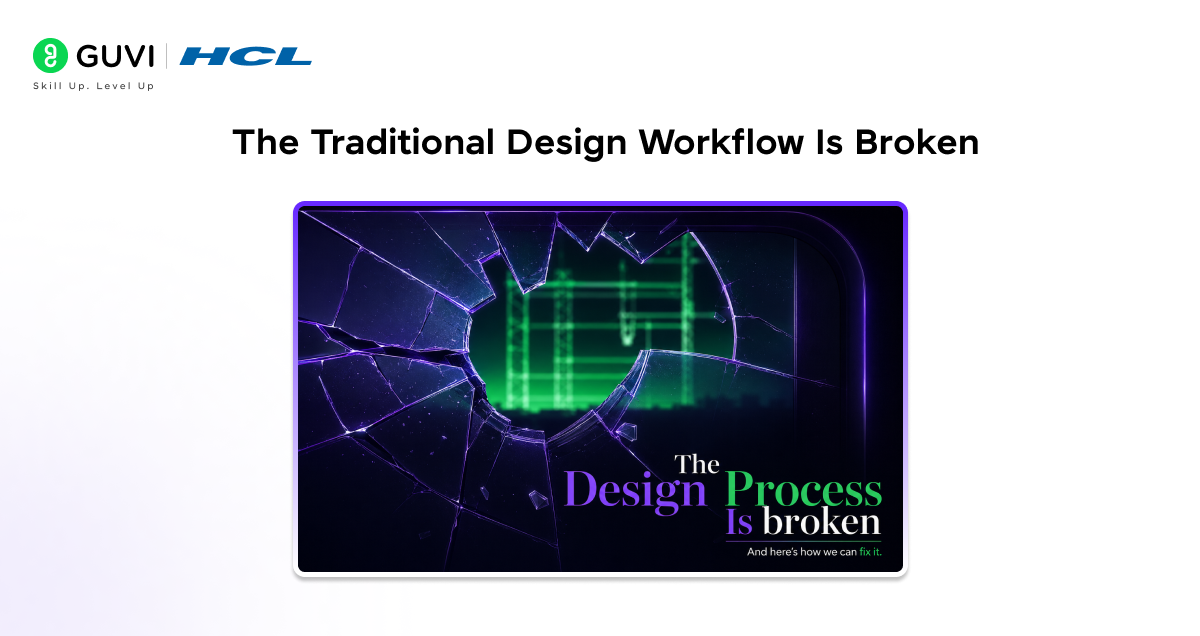
The traditional product design workflow follows a predictable chain: product requirement document → wireframes → high-fidelity designs → developer handoff → code rebuild → testing → launch. Every step in this chain involves a transfer of information from one person to another, and every transfer loses fidelity. It’s like passing a melting ice cube — by the time the product reaches the customer, it has already drifted from the original intent.
- Backlogs and Wasted Development Time
Design leaders across the industry have described sitting in backlogs for four to six weeks before a development team can even begin implementing a design.
- Product managers lose weeks or quarters to scrapped features post-testing.
- Early prototypes could validate ideas much faster.
- This costly delay is the norm, not an exception.
The pipeline was built for a slower era, and most teams are still running it on legacy assumptions about who does what and when.
- The Tragedy of Unshipped Great Design
The painful irony is that a lot of great design never ships. Designs sit in Figma. PRDs end as documents no one reads. Too many developers are already committed to other work when a design finally reaches the queue.
The handoff model inherently creates distance between the vision and the execution, and the product that reaches real users is almost always a diluted version of what the designer originally imagined.
Building the 10x Mindset: Practical Steps
- Master Product Data Habits
Build instinct by reading usage metrics, funnel dropoffs, and support tickets daily.
Learn basic SQL to query data yourself, skipping analyst delays.
This aligns designs with business needs, making opinions defensible in real time.
- Learn Real Design System Code
Study component props, states, and constraints without full engineering skills.
Design with actual code in mind to avoid Figma ideals causing dev issues.
Boosts engineer conversations through shared technical understanding.
- Protect Deep Work Time
Carve out uninterrupted blocks; skip constant Slack distractions.
Prepare meetings with options; treat feedback as data, not judgment.
Build influence via user/business-grounded opinions for faster impact.

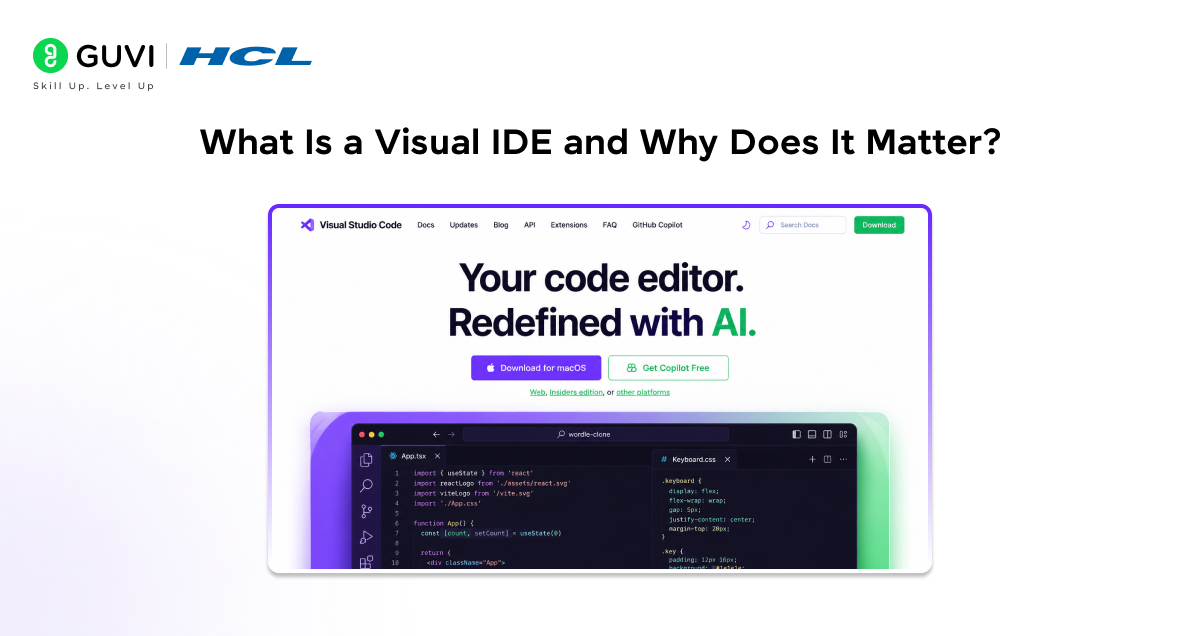
What Is a Visual IDE and Why Does It Matter?
- Direct Code Prototyping Without Engineering Expertise
A Visual IDE lets designers work in real production code using actual design system components, outputting pull requests.
It connects to your codebase and respects your component library for engineer-reviewable changes.
Unlike Figma or no-code tools, it produces mergeable code without deep dev knowledge.
- Visual IDE workflow
Visual IDEs remove workflow steps, not just speed them unlike Copilot or Figma.
Designers prototype in code, merging mockup and implementation into one artifact.
No rebuild or fidelity loss; approved designs ship as-is.
- Industry Shift to AI and Visual Tools
- Figma’s 2025 report shows 34% of teams shipped AI products (up from 22% in 2024); 56% integrated AI.
- Smaller firms adopt fast; enterprises follow under pressure.
- Visual IDEs deliver structural, measurable workflow gains.
How a Visual IDE Unlocks 10x Designer Potential
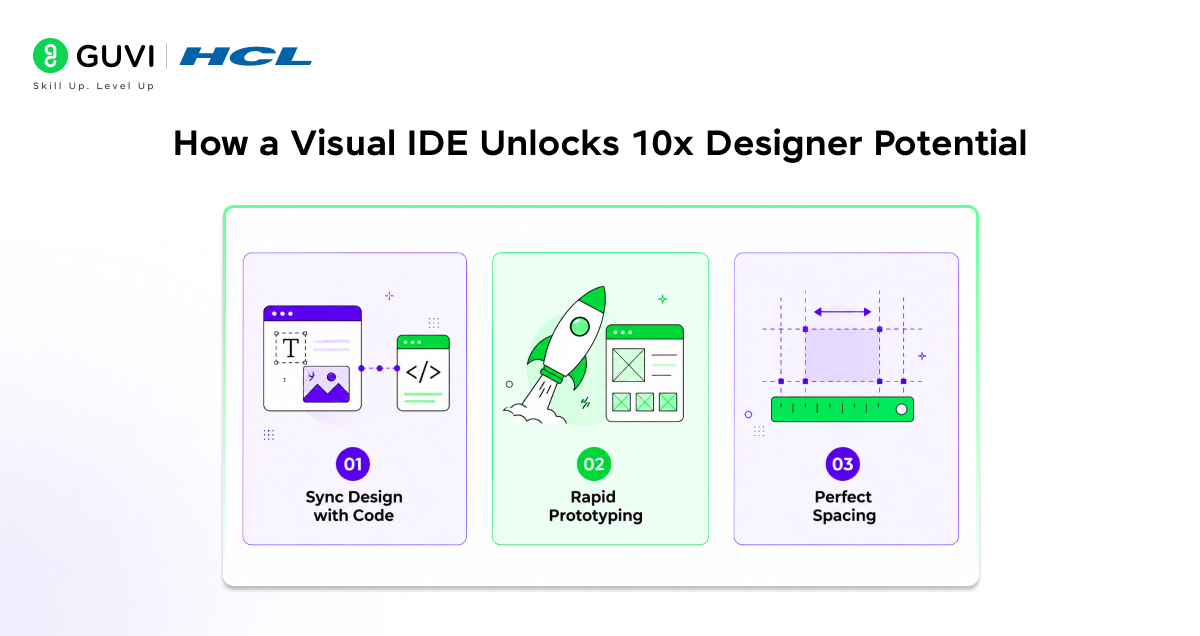
Syncing Design with Real Code Components
Designers waste time on Figma approximations that engineers rebuild differently. Visual IDEs let them use actual coded components from Git or Storybook, like UXPin Merge. What they design ships exactly; feedback reflects real interactions, speeding decisions.
Rapid Idea-to-Testable Prototype Cycles
Traditional feedback takes days/weeks; Visual IDEs shrink it to hours. Designers turn user input into coded prototypes for same-day stakeholder review. More iterations catch issues early, improving team economics.
Ending Spacing Forever
Handoffs dilute spacing, states, and edge cases. Visual IDEs make designers’ code collaborators prototypes become reviewable branches. Engineers focus on logic/backend, not UI rebuilds.
The Future of Product Design Is Already Here
Current Reality of 10x Designers
The 10x product designer is not a future archetype; they exist right now, and the gap between them and everyone else is widening.
The tools available today, particularly Visual IDEs that connect design to production code, have fundamentally changed what’s possible for a single designer working in close collaboration with a small engineering team.
The old model design in isolation, hand off to engineering, wait, review, iterate is not going away overnight.
But the teams that abandon it earliest will have a structural advantage that is very difficult for slower-moving competitors to close.
Scaling Vision with Modern Tools
The best designers at the best companies have always found ways to remove the distance between their vision and the shipped product.
What’s changed is that the tools now exist to do this at scale, within existing engineering workflows, without compromising the governance and code quality that enterprises require.
A Visual IDE doesn’t ask you to abandon your design system or your component library or your pull request process; it asks you to use all of those things as the creative medium rather than as a separate constraint.
Path to 10x Designer Status
If you’re a product designer who wants to operate at the 10x level, the path is clear: deepen your understanding of users through real data, develop your business fluency, master the design system you work with, and adopt a Visual IDE that closes the loop between design intent and production reality.The mindset comes first.The tools amplify it.
Ready to Become a 10x Product Designer? Join HCL GUVI’s UI/UX Design Course – hands-on training with Figma, Visual IDEs, Cursor. Master design systems, prototype in production code, get 1:1 expert sessions + 1000+ partner placements. Start shipping pixel-perfect production designs today!
Conclusion
The 10x product designer is defined not by raw talent but by the combination of clear thinking, emotional intelligence, business acumen, and a workflow that eliminates the friction points that slow everyone else down. A Visual IDE is the single most powerful tool available today to help a designer reach that level not because it does the creative thinking for you, but because it removes the structural waste that keeps great design from ever reaching real users.
When your designs are already built in production code, you stop losing weeks to handoffs, rebuilds, and mismatched component states. You start shipping the product you actually designed. That’s what 10x looks like in practice.
FAQs
1. What is a 10x product designer?
A designer 10x more effective, shipping high-impact work via empathy, data, business fluency, and frictionless workflows.
2. How do Visual IDEs help?
They let designers prototype in real code using actual components, eliminating handoffs and fidelity loss.
3. What traits define 10x designers?
Obsession with full user journeys, strong analytics/business sense, feedback resilience, and speed from deep systems knowledge.
4. Why is the traditional workflow broken?
Handoffs cause delays, backlogs, and diluted designs; great ideas often never ship.
5. How to become 10x?
Read metrics daily, learn SQL/design systems, protect deep work time, adopt Visual IDEs.
Success Stories

About the Author
Lukesh S
A professional content writer who has experience in freelancing and now working as a Technical Content Writer at HCL GUVI having sound knowledge in Blog Writing and Creative Writing!
View all posts by Lukesh S
Connect with me @







Did you enjoy this article?