


Product Management Articles
Enterprise Product Management: Unique Challenges, Skills & Strategy
B2B vs B2C Product Management: Key Differences, Skills, Strategy & Career Scope
Working with Engineers as a Product Manager: A Practical Guide


Get In Touch For Details! Request More Information
What Is a Product Vision Statement?
Sep 13, 2026 5 Min Read 451 Views
(Last Updated)
Product teams often spend months building features, improving user experiences, and responding to market changes. However, without a clear long-term direction, even the most successful products can lose focus over time. This is where a product vision statement becomes essential.
A product vision statement defines the future state a product aims to achieve. It gives teams a shared purpose and helps guide decisions across product development, design, engineering, marketing, and business strategy.
In this article, you’ll learn what a product vision statement is, why it matters, its key components, how to create one, common mistakes to avoid, and real-world examples.
Table of contents
- TL;DR
- What Is a Product Vision Statement?
- Why Is a Product Vision Statement Important?
- Key Components of a Product Vision Statement
- Target Audience
- Customer Need
- Future Value
- Business Impact
- Inspiration and Direction
- Product Vision Statement vs. Product Strategy
- How to Create a Product Vision Statement
- Understand Your Users
- Identify the Core Problem
- Define the Desired Future State
- Align With Business Goals
- Keep It Clear and Memorable
- Product Vision Statement Template
- Real World Product Vision Statement Examples
- Tesla
- Spotify
- Airbnb
- Common Mistakes to Avoid
- Making It Too Broad
- Confusing Vision With Features
- Ignoring Customer Needs
- Focusing Only on Revenue
- Writing an Uninspiring Statement
- Best Practices for Creating an Effective Product Vision Statement
- Keep It Customer-Focused
- Make It Future-Oriented
- Ensure Team Alignment
- Review It Regularly
- Connect It to Product Strategy
- How Product Vision Statements Influence Modern AI Products
- Conclusion
- FAQs
- What is a product vision statement?
- What makes a good product vision statement?
- How is a product vision statement different from a mission statement?
- Who creates a product vision statement?
- How often should a product vision statement be updated?
TL;DR
- A product vision statement describes the long-term future a product aims to create.
- It serves as a guiding direction for product strategy, roadmaps, and decision-making.
- Strong vision statements are clear, inspiring, customer-focused, and future-oriented.
- Product teams use vision statements to align stakeholders and prioritize initiatives.
- A well-crafted product vision statement helps organizations build products with greater consistency and impact.
What Is a Product Vision Statement?
A product vision statement is a concise description of the future a product seeks to create for its users and the business. It explains where the product is headed and the value it aims to deliver over time.
Unlike feature lists or roadmaps, a vision statement focuses on the bigger picture. It does not describe every capability a product will have. Instead, it communicates the ultimate goal that guides product decisions.
Think of a product vision statement as a North Star for the product team. While strategies, technologies, and market conditions may change, the vision provides a consistent direction that helps everyone stay aligned.
A strong product vision statement answers a simple question: What future are we trying to create for our users?
Want to turn product ideas into successful products? HCL GUVI’s Product Management Programme helps you build product vision, align strategy with business goals, and create customer-focused products with confidence.
Why Is a Product Vision Statement Important?
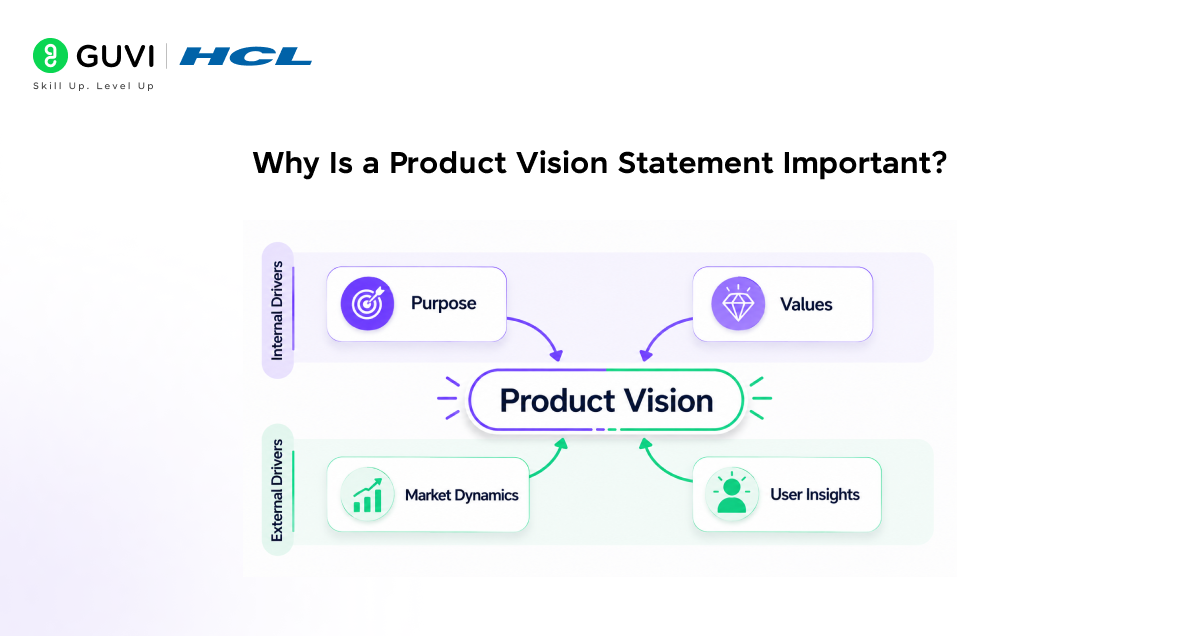
Many organizations struggle because teams focus on short-term tasks without understanding how those tasks contribute to a larger goal. A product vision statement solves this problem by creating alignment across the organization.
When everyone understands the product’s purpose, decision-making becomes easier. Teams can evaluate new ideas, features, and opportunities based on whether they support the vision.
A clear vision also helps product managers prioritize effectively. Instead of chasing every trend or customer request, they can focus on initiatives that move the product closer to its intended future state.
Additionally, vision statements inspire teams. People are often more motivated when they understand the broader impact of their work rather than simply completing tasks.
Many successful products begin with a clear product vision rather than a highly detailed feature list. A strong vision acts as a guiding direction, helping teams understand the long-term purpose and value of what they are building, while still leaving room for flexibility in execution. As products evolve, teams refine their ideas through customer feedback, experimentation, and iterative development cycles, allowing real-world usage to shape priorities and improvements. This balance between vision and adaptability is a key principle in modern product development, enabling teams to respond to changing user needs while staying aligned with a consistent strategic goal.
Key Components of a Product Vision Statement
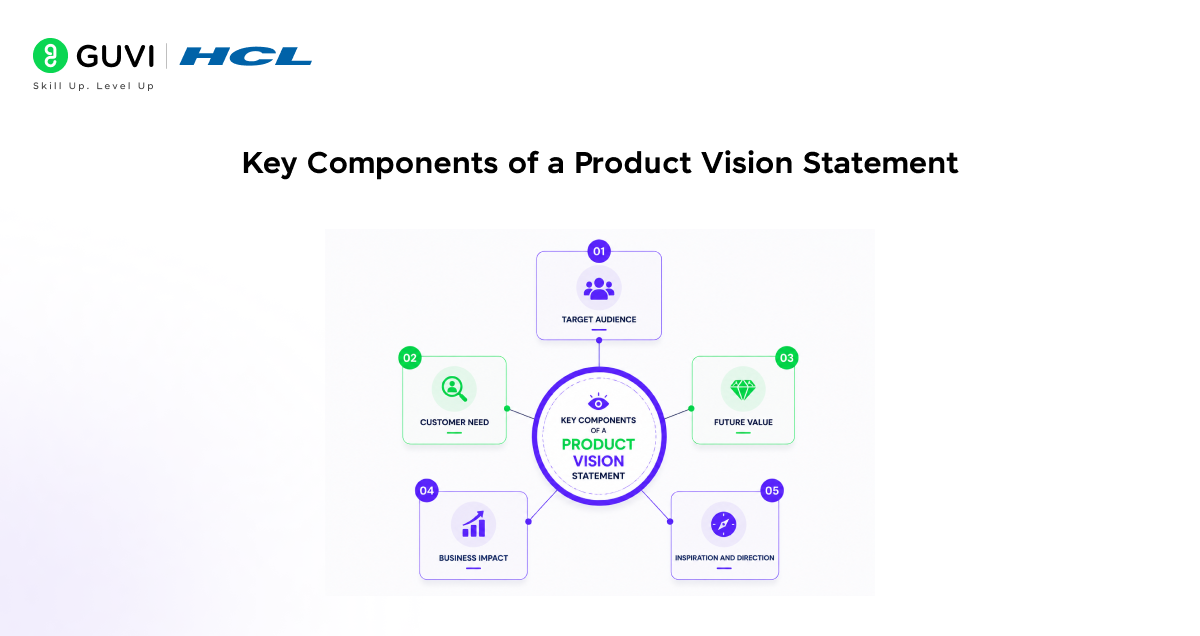
While vision statements vary across organizations, the most effective ones typically include several important elements.
1. Target Audience
Every product exists to serve a specific group of users. A strong vision statement identifies who the product aims to help and whose problems it intends to solve.
Understanding the target audience ensures that product decisions remain customer-focused rather than driven solely by internal assumptions.
2. Customer Need
A product vision should address a meaningful problem or unmet need. It should explain why the product exists and what challenge it seeks to overcome.
Products that fail to solve genuine customer problems often struggle to gain adoption regardless of how advanced their features may be.
3. Future Value
The vision should describe the value users will experience in the future. This future-oriented perspective helps teams think beyond immediate feature releases and focus on long-term outcomes.
4. Business Impact
A product vision must support organizational goals. While customer value is essential, the vision should also contribute to business growth, market positioning, competitive advantage, or operational efficiency.
5. Inspiration and Direction
The best vision statements are memorable and motivating. They provide a sense of purpose that encourages teams to work toward a common objective.
Product Vision Statement vs. Product Strategy
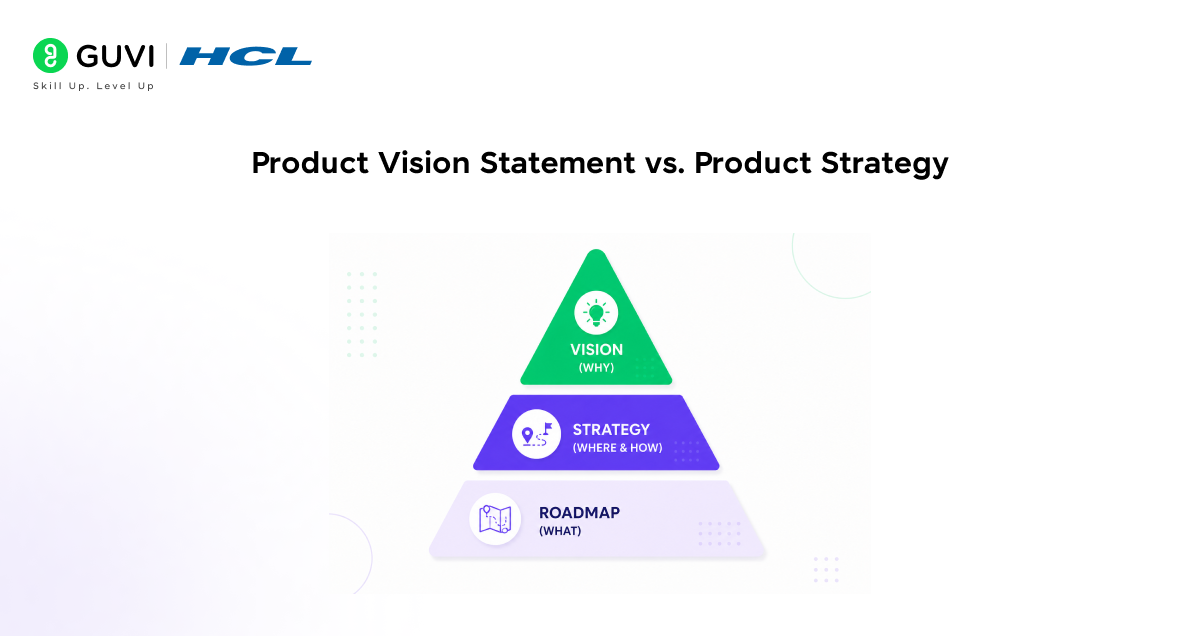
Many people confuse product vision with product strategy, but they serve different purposes.
A product vision statement describes the future destination. It explains what the product ultimately aims to achieve.
Product strategy describes how the organization plans to reach that destination. It outlines priorities, market positioning, investments, and key initiatives.
In simple terms, vision defines where you want to go, while strategy defines how you will get there.
For example, a vision might focus on making online learning accessible to everyone. The strategy would then explain the specific markets, technologies, partnerships, and product initiatives needed to achieve that vision.
To better understand how product vision connects with long-term planning and execution, explore this guide on Product Manager Roadmap 2026.
How to Create a Product Vision Statement
Creating a compelling product vision statement requires thoughtful research and collaboration.
1. Understand Your Users
Start by identifying who your customers are and what challenges they face. Conduct interviews, analyze feedback, and study user behavior to gain deeper insights.
A vision built around genuine customer needs is far more effective than one based on assumptions.
2. Identify the Core Problem
Determine the primary problem your product aims to solve. The clearer the problem, the more focused your vision will become.
Avoid trying to tackle every possible challenge at once. Concentrate on the most important need.
3. Define the Desired Future State
Imagine the ideal outcome your product could create several years from now.
Ask questions such as:
- What will customers be able to accomplish?
- How will their lives improve?
- What impact will the product have on the industry?
These answers can help shape a meaningful vision.
4. Align With Business Goals
Ensure the vision supports broader organizational objectives. The most successful product visions create value for both customers and the business.

Alignment helps secure stakeholder support and improves long-term sustainability.
5. Keep It Clear and Memorable
A product vision statement should be easy to understand and remember.
Avoid excessive jargon, technical language, and lengthy explanations. Simplicity often makes a vision more powerful.
Product Vision Statement Template
A useful template for creating a product vision statement is:
“For [target audience], our product will [future outcome] by helping them [solve key problem] and enabling them to [desired benefit].”
This structure encourages teams to focus on users, problems, and outcomes rather than features.
Looking to improve your product thinking? Download HCL GUVI’s free UI/UX Design ebook and learn user-centered design principles.
Real World Product Vision Statement Examples
1. Tesla
Tesla’s broader vision centers on accelerating the world’s transition to sustainable energy. This vision extends beyond electric vehicles and influences products related to energy storage, solar power, and transportation innovation.
2. Spotify
Spotify aims to unlock the potential of human creativity by giving creators opportunities to live from their art while enabling listeners to discover and enjoy inspiration.
This vision shapes product investments across music discovery, creator tools, and personalization.
3. Airbnb
Airbnb’s vision focuses on creating a world where people can belong anywhere. This idea influences product decisions related to travel experiences, trust, community, and global accessibility.
These examples demonstrate that effective vision statements emphasize outcomes and impact rather than product features.
Common Mistakes to Avoid
1. Making It Too Broad
A vision that tries to solve every problem often provides little practical guidance. Specificity improves focus and decision-making.
2. Confusing Vision With Features
Listing features is not the same as defining a vision. Features may change frequently, while vision remains relatively stable over time.
3. Ignoring Customer Needs
A vision should focus on customer outcomes rather than internal preferences. Products succeed when they solve meaningful user problems.
4. Focusing Only on Revenue
Financial success is important, but a vision driven solely by revenue rarely inspires teams or customers. Long-term value creation should remain the primary focus.
5. Writing an Uninspiring Statement
A vision should motivate people. Generic statements that lack purpose or ambition often fail to create meaningful alignment.
Best Practices for Creating an Effective Product Vision Statement
1. Keep It Customer-Focused
The most successful visions begin with customer needs and desired outcomes rather than technology or internal processes.
2. Make It Future-Oriented
A vision should describe an aspirational future state rather than current capabilities.
3. Ensure Team Alignment
Include stakeholders from different departments when developing the vision. Shared ownership improves commitment and execution.
4. Review It Regularly
While vision should remain stable, periodic reviews help ensure it continues to reflect market realities and organizational goals.
5. Connect It to Product Strategy
Every major product initiative should support the vision. This connection helps maintain consistency across roadmaps and priorities.
A strong product vision becomes even more effective when combined with Agile product development practices that enable teams to adapt and deliver value continuously.
Want to turn product ideas into successful products? HCL GUVI’s Product Management Programme teaches you how to create product vision statements, align product strategy with business goals, and build customer-focused products with confidence.
How Product Vision Statements Influence Modern AI Products
The rise of artificial intelligence has made product vision even more important. AI products often evolve rapidly, making it easy for teams to become distracted by new technologies and emerging trends.
A strong vision helps organizations determine where AI can create meaningful value rather than implementing technology for its own sake.
For example, an AI-powered learning platform may have a vision of making personalized education accessible to every learner. This vision guides decisions about recommendations, adaptive learning paths, automation, and services.
As AI becomes a core part of modern product development, learning about AI prototyping for product managers can help teams validate ideas and align innovations with their product vision.
Conclusion
A product vision statement is more than a simple statement of intent. It provides direction, alignment, and inspiration for everyone involved in building and improving a product.
By clearly defining the future your product aims to create, you can make better decisions, prioritize more effectively, and keep teams focused on meaningful outcomes.
Whether you are launching a startup product or managing an established platform, a well-crafted product vision statement can serve as the foundation for long-term success.
FAQs
1. What is a product vision statement?
A product vision statement is a concise description of the future state a product aims to achieve and the value it intends to deliver to users and the business.
2. What makes a good product vision statement?
A strong product vision statement is clear, customer-focused, inspiring, future-oriented, and aligned with business goals.
3. How is a product vision statement different from a mission statement?
A product vision statement focuses on the future outcome a product seeks to create, while a mission statement generally explains an organization’s broader purpose and reason for existing.
4. Who creates a product vision statement?
Product managers typically lead the process, but successful vision statements are often developed collaboratively with stakeholders, executives, designers, engineers, and customers.
5. How often should a product vision statement be updated?
Product vision statements should remain relatively stable, but organizations should review them periodically to ensure they continue to align with customer needs, market conditions, and business objectives.
Success Stories

About the Author
Vishalini Devarajan
An Aerospace Engineer turned content writer, I focus on making complex concepts easy to understand through well-structured, reader-friendly blogs. Whether it’s a technical topic or a non-technical one, I love creating content that is clear, engaging, and impactful.
View all posts by Vishalini Devarajan
Connect with me @










Did you enjoy this article?