


Software Development Articles
My Google SDE Interview Experience: From Rejection to Selection [2026 Success Story]
Apple Interview Experience for Software Developers: What to Expect
Decoding Differences between Network OS and Distributed OS
Operating System Examples: Top OS Types, Features, and Uses Explained


Get In Touch For Details! Request More Information
Software Analyst Salary in India: 2026 Overview
Feb 25, 2026 4 Min Read 2119 Views
(Last Updated)
Since the rise of the software industry, there have been significant operational changes in almost every business vertical. If we closely observe this technological evolution, we can clearly understand that the constantly changing market and user demands contribute directly to the transformation of how the software industry operates.
And over the past several years, these frequent advancements have been responsible for generating new software roles. Out of these software roles, Software Analyst is one of the most demanding positions in the job market in 2026.
To be a successful Software Analyst requires a robust understanding of software development methodologies, best coding practices, and a strong command of core engineering principles, such as modularity, scalability, and coupling.
In this blog, we will be focusing on all the essential aspects that influence a Software Analyst’s salary in India. So, let’s move forward with the discussion.
Table of contents
- Who is a Software Analyst?
- Why Are Software Analysts in High Demand in Today’s Technological Landscape?
- Software Analyst Salary in India Based on Experience Level
- Why Does the Software Analyst Salary Vary Widely in the Indian IT Industry?
- Final Thoughts
- FAQs
- What is the difference between a Software Analyst and a System Analyst?
- What is the salary range for a Software Analyst across different tech hubs in India?
- Is Software Analysis considered a high-paying career in India’s IT ecosystem?
Who is a Software Analyst?
In an organization, a Software Analyst is a professional who deals with managing and building specific software applications and components, along with assessing the scope of the project and defining requirements for each programming module. This job involves creating technical documentation for features and functionalities that are going to be integrated into the software products. With the help of these specifications, Software Analysts direct the technical team (developers & testers) in crafting cutting-edge software platforms and systems.
Why Are Software Analysts in High Demand in Today’s Technological Landscape?
- The reason behind this high demand lies in the significance and quality of responsibilities that are associated with it. As a Software Analyst, you will be assigned various essential duties such as:
- Collaborating with business stakeholders for gathering requirements.
- Monitoring the current system architecture for identifying potential areas for optimization.
- Creating comprehensive documents at every stage of product development.
- Adopting new-age tools and technologies for staying up-to-date with top industry standards and practices.
- All of these responsibilities require high-level analytical skills, which come from proven experience as a Software Analyst or similar role as a developer.
- Apart from this, the dependence on software applications for streamlining business operations has been growing exponentially, as a result of which the big tech corporations and startups are actively recruiting proficient Software Analysts.
Software Analyst Salary in India Based on Experience Level
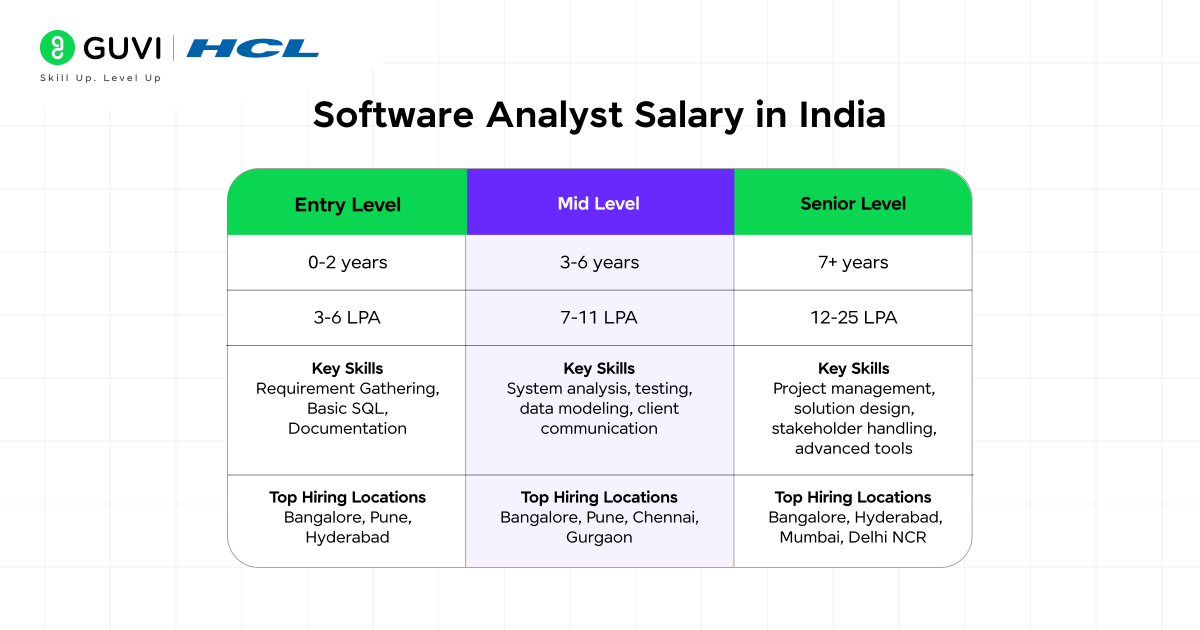
Salary ranges are an excellent indicator of the competency and experience level of tech professionals. Similarly, in India, the salary of Software Analysts varies in terms of various factors, such as the size of the company, job location, and types of software projects to which they are deployed. But the predominant factor that acts as a deciding factor is the level of professional experience. So, based on that, we have divided this particular section into three distinct categories:
- Entry-Level Software Analyst Salary
If you are a beginner who is just starting his/her career as a software analyst, you can expect to earn a salary between ₹3–6 lacs per annum ( ₹3,00,000 to ₹6,00,000 ). And the higher end of this salary bracket is for those candidates who have hands-on experience in building real-world projects like E-commerce Product Catalog Analysis, Inventory Management System, Online Transaction Monitoring Platform, etc.
Pro Tip: But as a fresher or beginner, your central focus should lie in building strong fundamentals on core Software Analyst concepts and skills; salary is the secondary thing compared to base knowledge. In simple terms, salary level is directly proportional to the level of professional experience and skill set.
- Mid-Level Software Analyst Salary
- After gaining experience of 4 to 5 years in handling advanced and complex projects and systems, you will be eligible to apply for mid-level Software Analyst roles like Functional Analyst, Lead Business Analyst, Senior Programmer Analyst, etc. At this stage, analysts in India can earn up to ₹7–11 lacs per annum ( ₹7,00,000 to ₹11,00,000 ).
- The intensity of the tasks at this level is higher than that of an entry-level Software Analyst job, as it involves designing development flowcharts like UML (Unified Modeling Language), getting involved in stakeholders’ meetings, and leading the development team.
- Senior-Level Software Analyst Salary
- A senior-level Software Analyst is a lucrative technical position. In this position, you will be directly involved in communicating the feedback and inputs of end users to the developers. As this position also requires high-quality managerial skills, your focus areas include elements such as time management, customer focus, project management, requirement gathering, analysis, etc.
- Due to the criticality of this job, the salary range is relatively high compared to other tech domains. As a senior-level Software Analyst, you can easily draw a salary between ₹12–25 lacs per annum ( ₹12,00,000 to ₹25,00,000 ).

Why Does the Software Analyst Salary Vary Widely in the Indian IT Industry?
The variation in the Software Analyst Salary is mainly because of two reasons: Qualifications and Skills. Let’s understand both of them now.
- Software Analyst Qualifications
Besides formal education, which includes a Bachelor’s degree in Computer Science or a related field, relevant certifications play a crucial role in enhancing the value of the portfolio.
These are some of the important certifications that a Software Analyst must earn to stand out from other candidates:
- Certified Business Analysis Professional (CBAP): For senior Software Analysts, mainly dedicated to covering complex and advanced analysis methodologies.
- Certification of Capability in Business Analysis (CCBA): Covers requirements gathering and analysis, along with modeling, making it one of the best certifications for mid-level Software Analyst professionals.
- Entry Certificate in Business Analysis (ECBA): Freshers or beginners can opt for this certification to establish a strong foundation by acquiring the basic knowledge required to solve business problems through software analysis.
- Agile Analysis Certification (IIBA-AAC): Software Analysts who are frequently involved in following agile development methodology for project execution should earn this certificate to develop better collaboration and task prioritizing skills.
- Software Analyst Skills
- Technical Skills
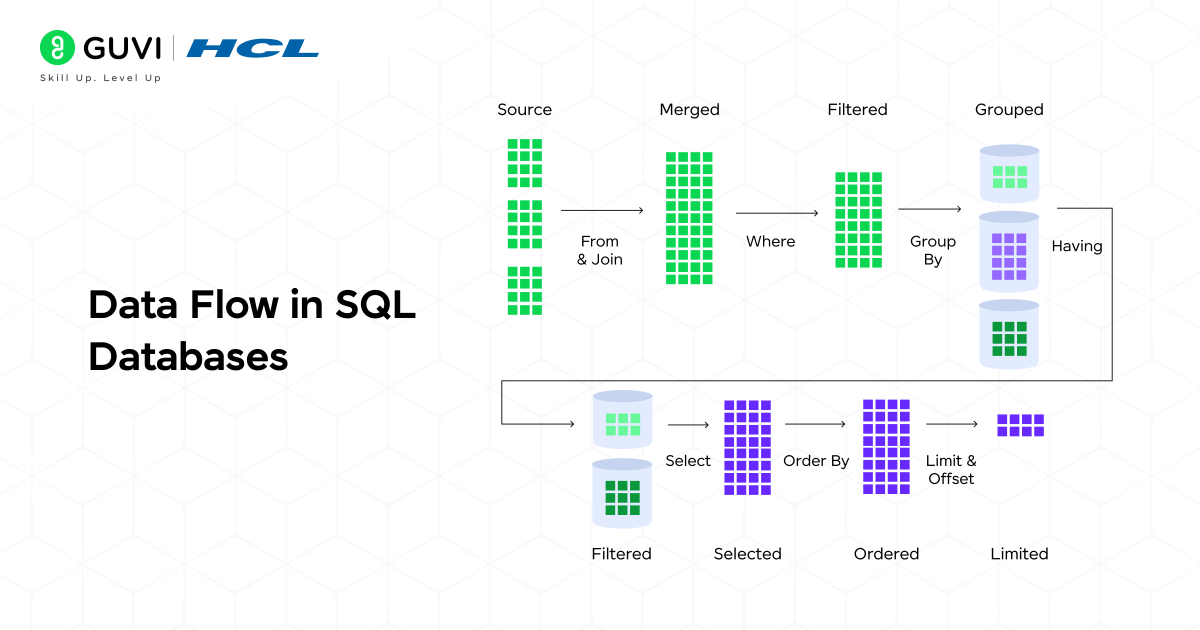
- SQL & Databases: A Software Analyst should be proficient in using SQL to retrieve data from databases, verify records, and conduct information analysis. This aids in identifying mistakes, generating reports, and ensuring that the software operates with accurate data.
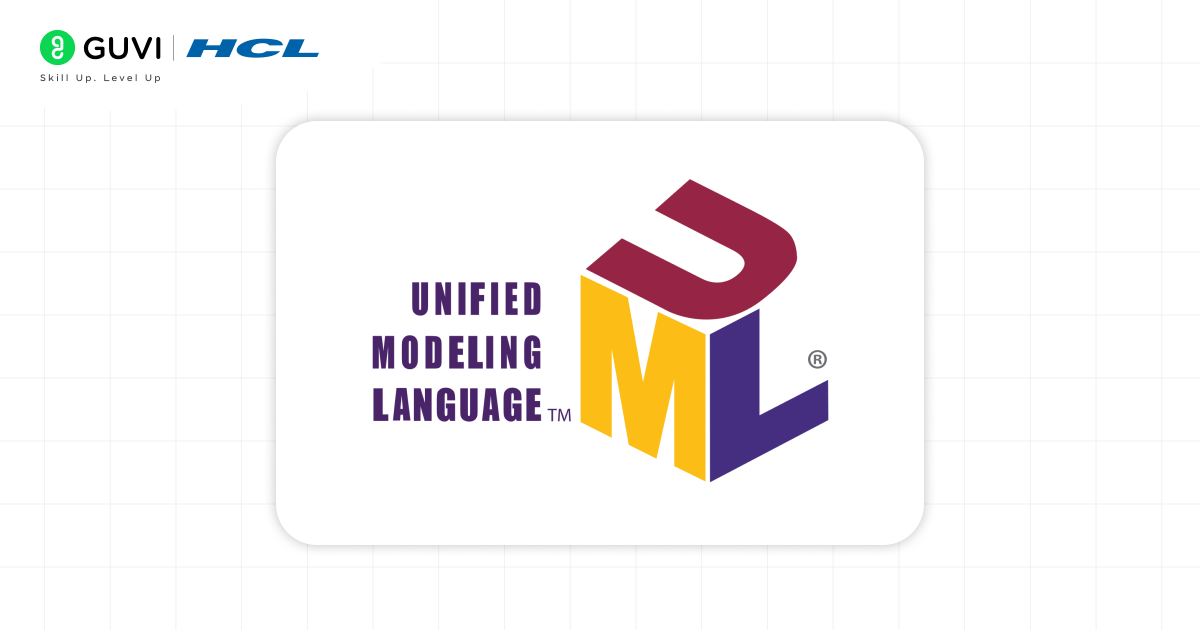
- UML and Modeling Tools: Analysts frequently develop flowcharts, diagrams, and models, such as UML diagrams, to illustrate the functionality of the system. These visual figures help both developers and clients grasp the design more effectively.
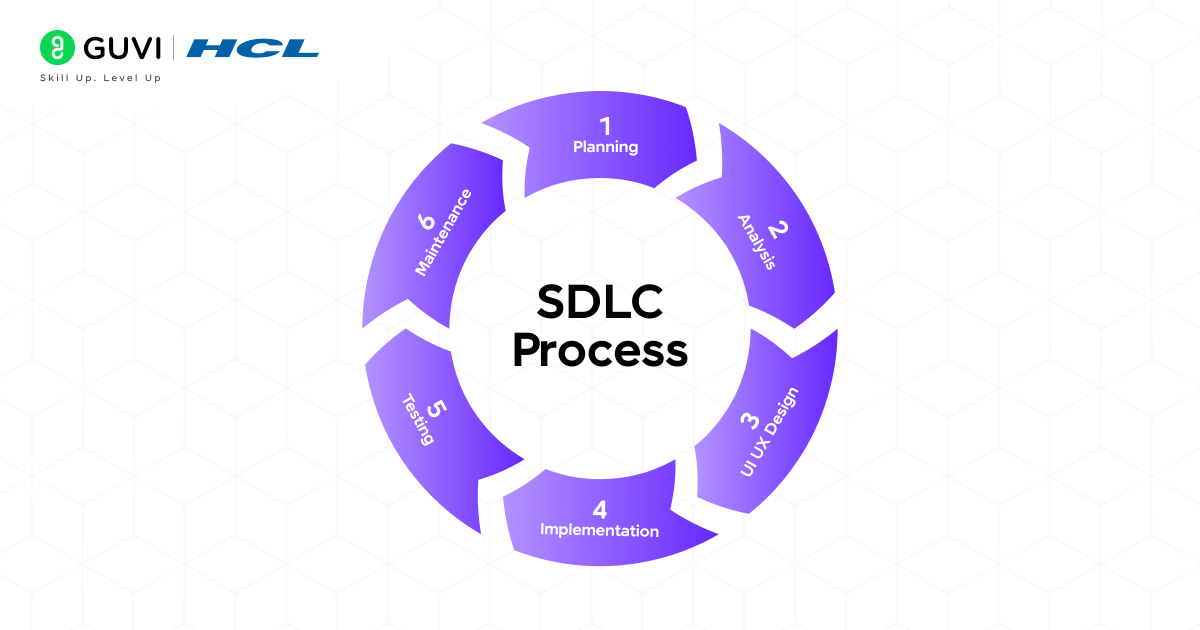
- Software Development Life Cycle (SDLC): This encompasses the entire process of software creation, including planning, design, coding, testing, deployment, and maintenance. Understanding this complete process enables analysts to effectively guide projects and ensure that every step is accounted for.
Read this blog to know more: What are the Types of Software Development Life Cycle (SDLC)
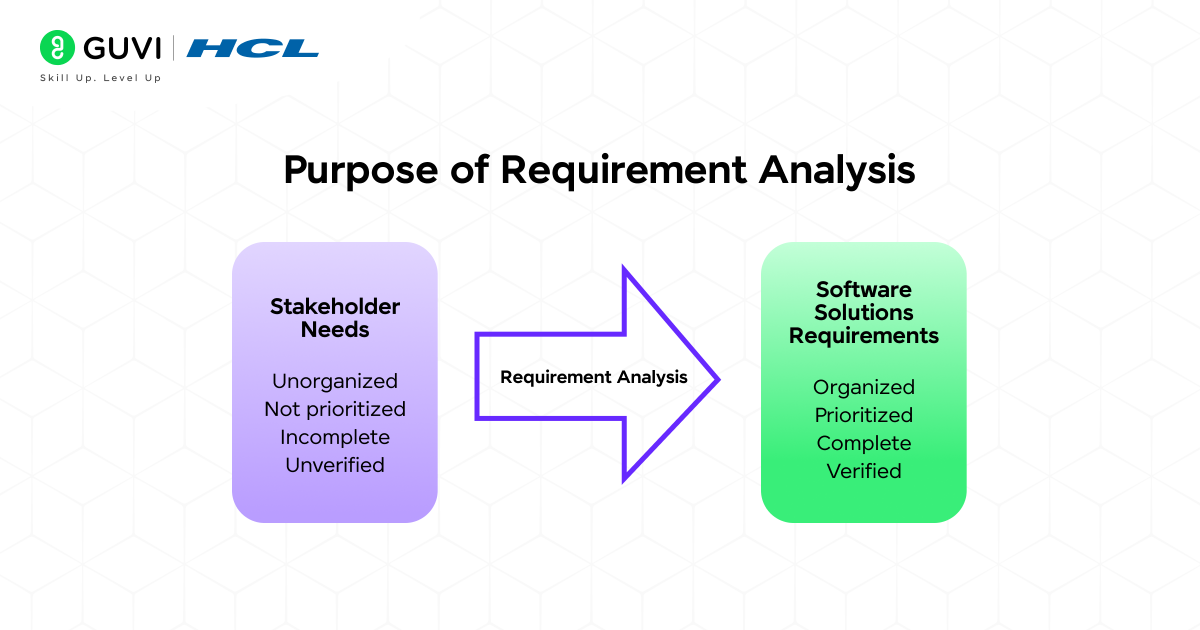
- Requirement Analysis: Analysts utilize tools such as JIRA, Confluence, and Trello to document, monitor, and oversee requirements. This guarantees that developers create precisely what the client desires and aids in maintaining project organization.
- Non-Technical Skills
- Strong Communication: Effective communication is essential for a Software Analyst, as they need to engage with both clients who may not have a strong technical background and developers. Explaining things in simple terms fosters smooth collaboration and helps prevent misunderstandings during the development process.
- Critical Thinking: This is essential, as analysts encounter intricate challenges regularly. It’s vital to divide these into small modular components, evaluate the specifics, and propose efficient, productive, and feasible solutions that conserve both time and resources.
If you are willing to delve into how software can be developed with the integration of artificial intelligence (AI), consider enrolling in HCL GUVI’s IITM Pravartak and MongoDB Certified AI Software Development Course and ensure a journey to a thriving tech career.
Final Thoughts
At last, we can conclude that the Software Analyst role is not just limited to getting highly paid. The real crux lies in the responsibilities and tasks associated with it, such as solving real business challenges and converting them into workable software solutions.
While the salaries in India do reflect the fact that demand for Software Analysts is growing, the broader picture lies in the kind of opportunities this particular career path offers. Through continuous learning and practical exposure with the latest software tools and frameworks, one can easily become an accomplished Software Analyst.
FAQs
What is the difference between a Software Analyst and a System Analyst?
A Software Analyst primarily works on specific programs, figuring out what they need, writing documentation, and making sure the software meets business needs. On the other hand, a System Analyst looks at the whole IT system, including the hardware, software, and processes, to make sure they all work together smoothly.
What is the salary range for a Software Analyst across different tech hubs in India?
Software analysts in top IT cities, such as Gurgaon, Hyderabad, Pune, Chennai, and Bangalore, may expect to earn between ₹3-6 LPA when they start, ₹7-11 LPA when they are mid-level, and ₹12-25 LPA when they reach a senior level.
Is Software Analysis considered a high-paying career in India’s IT ecosystem?
Yes, being a Software Analyst in India is a secure and well-paid tech role that gives you a lot of opportunities to move up in your career.
Success Stories













Did you enjoy this article?